Kamran Paynabar

Kamran Paynabar
kamran.paynabar@isye.gatech.edu
Departmental Bio

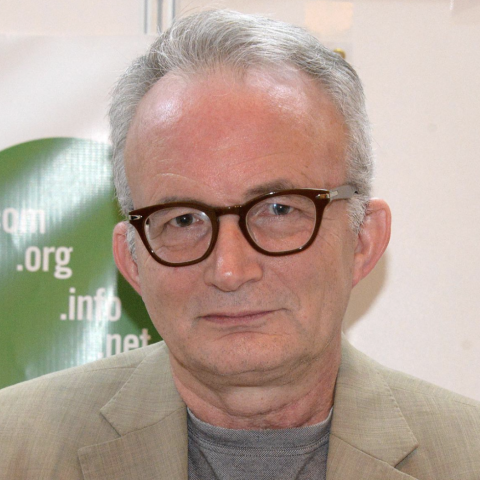
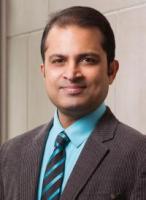
Kamran Paynabar is the Fouts Family Early Career Professor and Associate Professor in the H. Milton Stewart School of Industrial and Systems Engineering at Georgia Tech. He received his B.Sc. and M.Sc. in Industrial Engineering from Iran in 2002 and 2004, respectively, and his Ph.D. in Industrial and Operations Engineering from The University of Michigan in 2012. He also holds an M.A. in Statistics from The University of Michigan. His research interests comprise both applied and methodological aspects of machine-learning and statistical modeling integrated with engineering principles. He is a recipient of the INFORMS Data Mining Best Student Paper Award, the Best Application Paper Award from IIE Transactions, the Best QSR refereed paper from INFORMS, and the Best Paper Award from POMS. He has been recognized with the Georgia Tech campus level 2014 CETL/BP Junior Faculty Teaching Excellence Award and the Provost Teaching and Learning Fellowship. He served as the chair of QSR of INFORMS, and the president of QCRE of IISE.

Assistant Professor
Phone
404.385.3141
Office
Groseclose Building, Room 436
Additional Research
  • Aerospace
  • Artificial Intelligence
  • Automotive
  • Big Data Analytics
  • Biobased Materials
Personal Website
Kamran
Paynabar
Show Regular Profile

Milton Mueller

Milton Mueller
milton@gatech.edu
Website

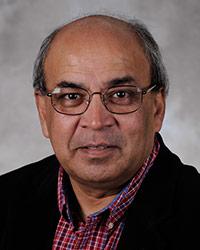
Milton Mueller is an internationally prominent scholar specializing in the political economy of information and communication. The author of seven books and scores of journal articles, his work informs not only public policy but also science and technology studies, law, economics, communications, and international studies. His books Networks and States: The global politics of Internet governance (MIT Press, 2010) and Ruling the Root: Internet Governance and the Taming of Cyberspace (MIT Press, 2002) are acclaimed scholarly accounts of the global governance regime emerging around the Internet. Mueller’s research employs the theoretical tools of institutional economics, STS and political economy, as well as historical, qualitative and quantitative methods. Mueller’s prominence in scholarship is matched by his prominence in policy practice. He is the co-founder and co-director of the Internet Governance Project (IGP), a policy analysis center for global Internet governance. Since its founding in 2004, IGP has played a prominent role in shaping global Internet policies and institutions such as ICANN and the Internet Governance Forum. He has participated in proceedings and policy development activities of ICANN, the International Telecommunications Union (ITU), the National Telecommunications and Information Administration (NTIA) and regulatory proceedings in the European Commission, China, Hong Kong and New Zealand. He has served as an expert witness in prominent legal cases related to domain names and telecommunication policy. He was recently elected to the advisory committee of the American Registry for Internet Numbers (ARIN), and appointed in 2014 to the IANA Stewardship Coordination Group. Mueller has also been a practical institution-builder in the scholarly world, where he led the creation of the Global Internet Governance Academic Network (GigaNet), an international association of scholars.

Professor, School of Public Policy
Phone
404.385.4281
Office
DM Smith 302
Additional Research
  • AI Governance
  • Cybersecurity Public Policy
  • Energy Delivery & Storage
  • Policy & Economics
University, College, and School/Department
Milton
Mueller
Show Regular Profile

Susan Lozier

Susan Lozier
susan.lozier@gatech.edu
Website

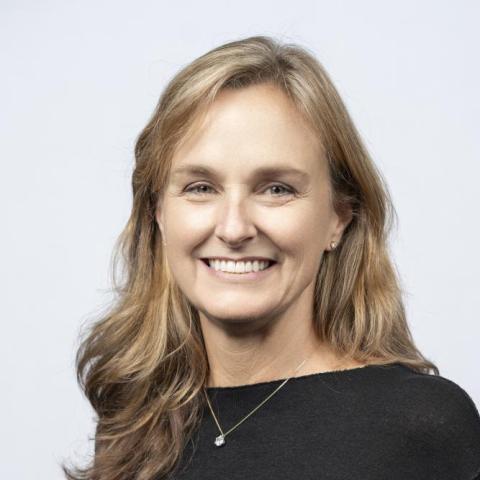
Susan Lozier is a physical oceanographer and the dean of the Georgia Institute of Technology's College of Sciences. Previously, she was the Ronie-Richelle Garcia-Johnson Professor of Earth and Ocean Sciences in the Nicholas School of the Environment at Duke University in Durham, North Carolina. Her research focuses on large-scale ocean circulation, the ocean's role in climate variability, and the transfer of heat and fresh water from one part of the ocean to another.

Lozier received her Bachelor of Science degree from Purdue University in 1979, and her Master of Science (1984) and Doctor of Philosophy (1989) degrees from the University of Washington.

Lozier was a post-doctoral fellow at the Woods Hole Oceanographic Institution before joining the faculty at Duke University. She is a principal investigator for the Overturning in the Subpolar North Atlantic Program (OSNAP), responsible for coordinating its international and national projects. She was the first woman to graduate from the University of Washington's physical oceanography doctoral program, and is active in the community mentoring program, MPOWIR (Mentoring Physical Oceanography Women to Increase Retention). In 2020 she was elected to the American Academy of Arts and Sciences.

Lozier was the featured speaker for the 16th Annual Roger Revelle Annual Commemorative Lecture, sponsored by the National Academies and held at the National Museum of Natural History in Washington, D.C., on March 4, 2015, presenting her lecture on Overturning Assumptions: Past, Present, and Future Concerns about the Ocean's Circulation. She started a two-year term as president of the American Geophysical Union in 2021.

Dean, College of Sciences
Research Focus Areas
University, College, and School/Department
Susan
Lozier
Show Regular Profile

Ashok Goel

Ashok Goel
ashok.goel@cc.gatech.edu
Design & Intelligence Laboratory

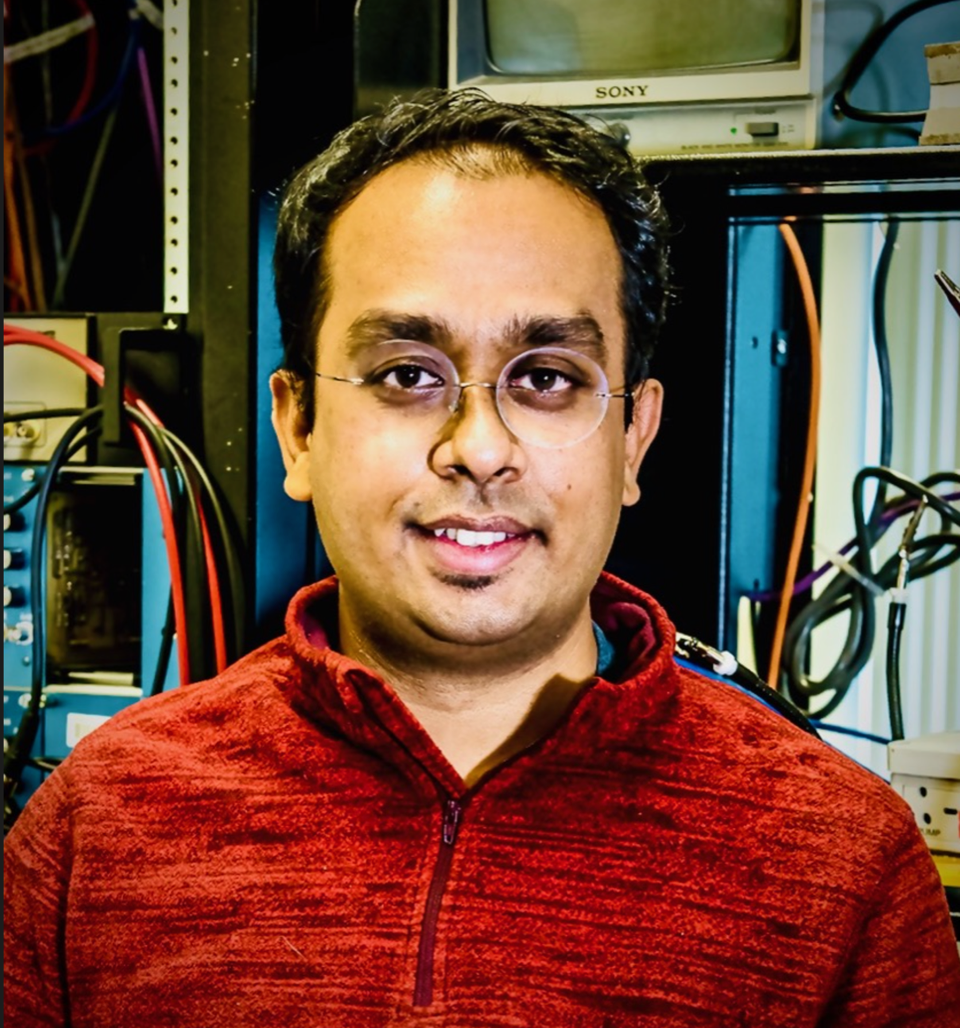
Ashok Goel is a Professor of Computer Science in the School of Interactive Computing at Georgia Institute of Technology in Atlanta, USA. He obtained his Ph.D. from The Ohio State University. At Georgia Tech, he is also the Director of the Ph.D. Program in Human-Centered Computing, a Co-Director of the Center for Biologically Inspired Design, and a Fellow of Brook Byers Institute for Sustainable Systems. For more than thirty years, Ashok has conducted research into artificial intelligence, cognitive science and human-centered computing, with a focus on computational design, modeling and creativity. His recent work has explored design thinking, analogical thinking and systems thinking in biological inspired design (https://www.youtube.com/watch?v=wiRDQ4hr9i8), and his research is now developing virtual research assistants for modeling biological systems. Ashok teaches a popular course on knowledge-based AI as part of Georgia Tech's program on Online Masters of Science in Computer Science. He has pioneered the development of virtual teaching assistants, such as Jill Watson, for answering questions in online discussion forums (https://www.youtube.com/watch?v=WbCguICyfTA). Chronicle of Higher Education recently called virtual assistants exemplified by Jill Watson as one of the most transformative educational technologies in the digital era. Ashok is the Editor-in-Chief of AAAI's AI Magazine.

Professor; School of Interactive Computing
Director| Ph.D. program in Human-Centered Computing; College of Computing
Co-Director; Center for Biologically Inspired Design
Fellow; Brook Byers Institute for Sustainable Systems
Office
GVU/TSRB
Additional Research

Artificial Intelligence; Cognitive Science; Computational Design; Computational Creativity; Educational Technology; Design Science; Learning Science and Technology; Human-Centered Computing

Google Scholar
https://scholar.google.com/citations?hl=en&user=VjNg25EAAAAJ&view_op=list_works&sortby=pubdate
Ashok
Goel
K.
Show Regular Profile

Leanne West

Leanne West
lwest@gatech.edu
Website

Leanne West is Chief Engineer of Pediatric Technologies at the Georgia Institute of Technology and Pediatric Innovation Catalyst at the Global Center for Medical Innovation where she leads innovation in pediatric medical devices. In her 25+ years working at Georgia Tech, she has led multimillion dollar programs and teams of researchers to develop products for government and industry partners. She also started her own company, Intelligent Access, to take her invention of a wireless personal captioning system to market. She serves as the technical liaison between Georgia Tech and pediatric hospitals around the world, with Children’s Healthcare of Atlanta and Shriners Hospitals being the main partners. West works closely with clinicians to understand and identify problems that need a solution to allow them to take better care of their patients. She is an invited Judge for many medical device pitch competitions and serves on several Boards in the healthcare and technology arenas. 

West is the President of the International Children’s Advisory Network (iCAN). Since 2014, iCAN fosters greater global understanding about the importance of the pediatric patient and caregiver voice in healthcare, clinical trials, and research. iCAN gives its members the opportunities to share their stories and experiences in front of organizations like the FDA, AAP, and CDC, and conferences. iCAN is an official partner of the Food and Drug Administration (FDA) Center for Devices and Radiological Health (CDRH) as an official member organization of the Patient and Caregiver Connection Partner program and the Total Product Life Cycle Advisory Program. West is also a patient advocate for one of her two rare diseases, serving on the Foundation for Sarcoidosis Research Patient Advisory Council and Speaker’s Bureau. 

She has served as the twice-elected Chair of the Georgia Tech Executive Board (2007, 2008) and was the GT Chair of the State Charitable Campaign (2017). She was recognized by Georgia Trend magazine as one of Georgia’s “40 Under 40” in 2004; she was selected for Leadership Georgia in 2008; she was a member of the team awarded the international Optical Society 2012 Paul F. Forman Engineering Excellence Award; she received Georgia Tech’s Outstanding Achievement in Research Enterprise Enhancement Award in 2014, and she was Women in Technology’s Woman of the year in 2014. In 2017, she was appointed to the board of the Georgia Technology Authority by the late Speaker of the House, David Ralston.

Chief Engineer, Pediatric Technologies, GTRI
Principal Research Scientist
Phone
404-407-6405
Office
Centergy Bldg 683
Additional Research
Assured Monitoring; Enhanced Mobility; Social Connectedness
GTRI
Geogia Tech Research Institute
Leanne
West
Show Regular Profile

N Apurva Ratan Murty

N Apurva Ratan Murty
ratan@gatech.edu
http://www.murtylab.com/

Ratan is an Assistant Professor of Cognition and Brain Science in the School of Psychology at Georgia Tech, and the Director of the Murty Lab (murtylab.com). He obtained his PhD from Indian Institute of Science (IISc) Bangalore and was a postdoctoral researcher in the Kanwisher and DiCarlo labs at MIT before moving to Georgia Tech. Research in the Murty Lab aims to uncover the neural codes and algorithms that enable us to see. The central theme of the lab's work is to integrate biological vision with artificial models of vision. The lab combines the benefits of closed-loop experimental testing (using 3T/7T human functional-MRI) with cutting-edge computational methods (like deep neural networks, generative algorithms, and AI interpretability) toward a new computationally precise understanding of human vision. This research also guides the development of neurally mechanistic biologically constrained models aimed to uncover a better understanding of the neurobiological changes that underlie perceptual abnormalities such as agnosias.

Assistant Professor
Office
131, JS Coon Building
Research Focus Areas
N Apurva Ratan
Murty
Show Regular Profile

Peter Kasson

Peter Kasson
peter.kasson@chemistry.gatech.edu
https://kassonlab.org/

Peter Kasson is an international leader in the study of biological membrane structure, dynamics, and fusion, with particular application to how viruses gain entry to cells. His group performs both high-level experimental and computational work – a powerful combination that is critical to advancing our understanding of this important problem. His publications describe inventive approaches to the measurement of viral fusion rates and characterization of fusion mechanisms, and to the modeling of large-scale biomolecular and lipid assemblies. He has applied these insights to the prediction of pandemic outbreaks and drug resistance, with particular attention to Zika, SARS-CoV-2, and influenza pathogens in recent years. See https://kassonlab.org/ for more information.

Professor of Chemistry and Biomedical Engineering
Peter
Kasson
Show Regular Profile

Saurabh Sinha, Ph.D.

Saurabh Sinha, Ph.D.
Lab

Saurabh Sinha received his Ph.D. in Computer Science from the University of Washington, Seattle, in 2002, and after post-doctoral work at the Rockefeller University with Eric Siggia, he joined the faculty of the University of Illinois, Urbana-Champaign, in 2005, where he held the positions of Founder Professor in Computer Science and Director of Computational Genomics in the Carl R. Woese Institute for Genomic Biology until 2022. He joined Georgia Institute of Technology in 2022, as Wallace H. Coulter Distinguished Chair in Biomedical Engineering, with joint appointments in Biomedical Engineering and Industrial & Systems Engineering. Sinha’s research is in the area of bioinformatics, with a focus on regulatory genomics and systems biology. Sinha is an NSF CAREER award recipient and has been funded by NIH, NSF and USDA. He co-directed an NIH BD2K Center of Excellence and was a thrust lead in the NSF AI Institute at UIUC. He led the educational program of the Mayo Clinic-University of Illinois Alliance, and co-led data science education for the Carle Illinois College of Medicine. Sinha has served as Program co-Chair of the annual RECOMB Regulatory and Systems Genomics conference and served on the Board of Directors for the International Society for Computational Biology (2018-2021). He was a recipient of the University Scholar award of the University of Illinois, and selected as a Fellow of the AIMBE in 2018.

Wallace H. Coulter Distinguished Chair in Biomedical Engineering
Professor
Office
3108 UAW
Saurabh
Sinha
Show Regular Profile

Vida Jamali

Vida Jamali
vida@gatech.edu
Jamali Lab

Vida Jamali earned her Ph.D. in chemical and biomolecular engineering from Rice University under the guidance of Professor Matteo Pasquali and her B.S. in chemical engineering from Sharif University of Technology. Jamali was a postdoctoral researcher in Professor Paul Alivisato's lab at UC Berkeley and Kavli Energy Nanoscience Institute before joining Georgia Tech. The Jamali Research Group uses experimental, theoretical, and computational tools such as liquid phase transmission electron microscopy, rheology, statistical and colloidal thermodynamics, and machine learning to study the underlying physical principles that govern the dynamics, statistics, mechanics, and self-organization of nanostructured soft materials, in and out of thermal equilibrium, from both fundamental and technological aspects.

Assistant Professor, School of Chemical and Biomolecular Engineering
Phone
404.894.5134
Office
ES&T 1222
Additional Research

Studying dynamics and self-assembly of nanoparticles and macromolecules in heterogeneous chemical and biological environmentsInvestigating individual to collective behavior of active nanomachinesHarnessing the power of machine learning to understand physical rules governing nanostructured-soft materials, design autonomous microscopy experimentation for inverse material design, and develop new statistical and thermodynamic models for multiscale phenomena

ChBE Profile Page
Vida
Jamali
Show Regular Profile

Hannah Choi

Hannah Choi
hannahch@gatech.edu
https://hannahchoi.math.gatech.edu/

Hannah Choi is an Assistant Professor in the School of Mathematics at Georgia Tech. Her research focuses on mathematical approaches to neuroscience, with primary interests in linking structures, dynamics, and computation in data-driven brain networks at multiple scales. Before coming to Georgia Tech, she was a postdoctoral fellow at the University of Washington and also a visiting scientist at the Allen Institute for Brain Science, and spent one semester at the Simons Institute for the Theory of Computing at the University of California, Berkeley as a Patrick J McGovern Research Fellow. She received her Ph.D. in Applied Mathematics from Northwestern University and her BA in Applied Mathematics from the University of California, Berkeley.

Assistant Professor
University, College, and School/Department
Hannah
Choi
Show Regular Profile