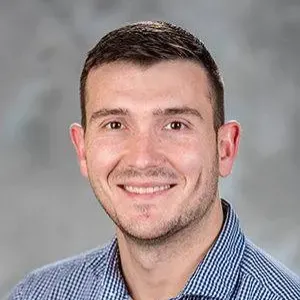
Paul Russo

Paul Russo
paul.russo@mse.gatech.edu
MSE Profile Page

Paul S. Russo is a Professor of Materials Science and Engineering with a joint appointment in the School of Chemistry and Biochemistry at the Georgia Institute of Technology with expertise in polymer, biopolymer and particle chemistry.

His research interests are rooted in rodlike polymers, such as plant viruses, cellulose derivatives and aromatic backbone materials. Particular emphasis has been paid to molecular transport in complex fluids containing rods and to related measurement methods. Static and dynamic laser light scattering have been joined by fluorescence photobleaching recovery and pulsed field gradient NMR spectroscopy to measure diffusion in dilute and concentrated solutions, gels, and liquid crystals. Dialysis implementations of these techniques have permitted stability studies of the amyloid protein responsible for Alzheimer’s disease. Other materials of interest include organophilic polypeptides, which have been coupled to silica cores to yield hybrid particles that can carry hydrophobic payloads, such as enzymes. The same particles can also form colloidal crystals and linear arrays. Small-angle x-ray scattering plays a role in the characterization of these materials. Hydrophobic proteins are being used to template the synthesis of polymers in new and unusual shapes and to disperse oil following marine spills.

Professor, Materials Science and Engineering and School of Chemistry and Biochemistry
Hightower Chair in Biopolymers
Phone
404.385.2607
Office
MRDC 3508
Additional Research

Biomaterials; Polymers; Colloids; Biomaterials; Nanocellulose Applications; Biocomposites; New Materials; Cellulosic Nanomaterials; Polymer & Fiber
Google Scholar
https://scholar.google.com/citations?hl=en&user=K4CmCWMAAAAJ&view_op=list_works&sortby=pubdate
Russo Lab
Paul
Russo
S.
Show Regular Profile

H. Jerry Qi

H. Jerry Qi
qih@me.gatech.edu
Active Materials & Additive Manufacturing Lab

H. Jerry Qi is a professor and the Woodruff Faculty Fellow in the George W. Woodruff School of Mechanical Engineering at Georgia Institute of Technology. He received his bachelor degrees (dual degree), master and Ph.D. degree from Tsinghua University (Beijing, China) and a ScD degree from Massachusetts Institute of Technology (Boston, MA, USA). After one year postdoc at MIT, he joined University of Colorado Boulder as an assistant professor in 2004, and was promoted to associate professor with tenure in 2010. He joined Georgia Tech in 2014 as an associate professor with tenure and was promoted to a full professor in 2016. Qi is a recipient of NSF CAREER award (2007). He is a member of Board of Directors for the Society of Engineering Science. In 2015, he was elected to an ASME Fellow. The research in Qi's group is in the general area of soft active materials, with a focus on 1) 3D printing of soft active materials to enable 4D printing methods; and 2) recycling of thermosetting polymers. The material systems include: shape memory polymers, light activated polymers, vitrimers. On 3D printing, they developed a wide spectrum of 3D printing capability, including: multIMaTerial inkjet 3D printing, digit light process (DLP) 3D printing, direct ink write (DIW) 3D printing, and fused deposition modeling (FDM) 3D printing. These printers allow his group to develop new 3D printing materials to meet the different challenging requirements. For thermosetting polymer recycling, his group developed methods that allow 100% recycling carbon fiber reinforced composites and electronic packaging materials. Although his group develops different novel applications, his work also relies on the understanding and modeling of material structure and properties under environmental stimuli, such as temperature, light, etc, and during material processing, such as 3D printing. Constitutive model developments are typically based on the observations from experiments and are then integrated with finite element through user material subroutines so that these models can be used to solve complicated 3D multiphysics problems involving nonlinear mechanics. A notable example is their recent pioneer work on 4D printing, where soft active materials is integrated with 3D printing to enable shape change (or time in shape forming process). Recently, his developed a state-of-the-art hybrid 3D printing station, which allows his group to integrate different polymers and conduct inks into one system. Currently, his group is working on using this printing station for a variety of applications, including printed 3D electronics, printed soft robots, etc.

Professor, Woodruff School of Mechanical Engineering
Woodruff Faculty Fellow, Woodruff School of Mechanical Engineering
Phone
404.385.2457
Office
MRDC 4104
Additional Research

Additive/Advanced Manufacturing; micro and nanomechanics; Recycling; Soft Materials; Conducting Polymers

Google Scholar
https://scholar.google.com/citations?hl=en&user=JSjlLTgAAAAJ&view_op=list_works&sortby=pubdate
ME Profile Page
H. Jerry
Qi
Show Regular Profile

Rallming Yang

Rallming Yang

In May 2000, Dr. Yang earned his doctorate degree in environmental and resource engineering from the College of environmental science and forestry, State University of New York. He also held M.S. degree and B.Sc. degree in pulping and paper. He first joined IPST, the former of RBI at Georgia Tech, in 2000 as a post doctor fellow. Soon he was hired as research scientist I. In 2006, he was promoted to be research scientist II. In 2013, he was appointed to be the manager of pulping and bleaching lab. Beginning from 2016, Dr. Yang has been teaching Pulp & Bleaching Lab (ChBE4873).

Andrew Medford

Andrew Medford

Dr. Medford is interested in leveraging materials informatics, statistics, and machine learning to maximize the practical impact of fundamental atomic-scale simulations in the field of surface science and catalysis. His research areas include heterogeneous catalysis, oxide surface chemistry, density functional theory, kinetic models, uncertainty quantification, and Bayesian optimization and inference.

Jamshad Mahmood


Jamshad Mahmood has over 23 years of experience in corrosion testing and manufacturing of recovery boilers and pressure vessels. He is a Mechanical/Research Engineer with expertise in the design, manufacturing of industrial equipments and conducting lab corrosion testing e.g., slow strain rate corrosion testing, electrochemical corrosion testing, high-temperature aqueous corrosion testing and molten salts corrosion testing.

Chris Luettgen


- - - - - - - - - - - - - - - - - - - - -
Professor of the Practice                       
School of Chemical and Biomolecular Engineering
College of Engineering, Georgia Institute of Technology

Associate Director, Pulp, Paper, Packaging and Tissue, Renewable Bioproducts Institute, an Interdisciplinary Research Institute at GT

Director, GT Pulp and Paper Engineering Undergraduate Certificate Program and Foundation