Nazanin Bassiri-Gharb

Nazanin Bassiri-Gharb
nazanin.bassirigharb@me.gatech.edu
ME Profile Page

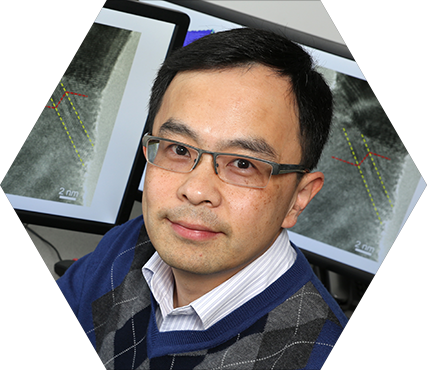
Nazanin Bassiri-Gharb joined Georgia Tech in summer 2007 as an assistant professor at the George W. Woodruff School of Mechanical Engineering. Prior to this, she was a senior engineer in the materials and device R&D group of MEMS Research and Innovation Center at QUALCOMM MEMS Technologies, Inc. Her work included characterization and optimization of optical and electric response of IMOD displays and research on novel materials for improved processing and reliability of IMOD. Bassiri-Gharb's research interests are in smart and energy-related materials (e.g. ferroelectric and multiferroic materials) and their application to nano- and micro-electromechanical systems. Her research projects integrate novel micro and nanofabrication techniques and processes and study of the fundamental science of these materials at the nanoscale, at the interface of physical and electrochemical phenomena.

Harris Saunders, Jr. Chair and Professor, School of Mechanical Engineering
Phone
404.385.0667
Office
Love 315
Additional Research

Ferroelectronic Materials; Functional Materials; In-Situ Characterization; Piezoelectronic Materials; Multiscale Modeling; Organic Electronics

Google Scholar
https://scholar.google.com/citations?hl=en&user=2hwd9xAAAAAJ
SmartLab
Nazanin
Bassiri-Gharb
Show Regular Profile

Baratunde (Bara) Cola

Baratunde (Bara) Cola
baratunde.cola@me.gatech.edu
Profile Page

Baratunde A. Cola is a professor in the George W. Woodruff School of Mechanical Engineering and the School of Materials Science and Engineering at the Georgia Institute of Technology. He received his degrees from Vanderbilt University and Purdue University, all in mechanical engineering, and was a starting fullback on the Vanderbilt football team as an undergrad. Cola has received a number of prestigious early career research awards including the Presidential Early Career Award for Scientist and Engineers (PECASE) in 2012 from President Obama for his work in nanotechnology, energy, and outreach to high school art and science teachers and students; the AAAS Early Career Award for Public Engagement with Science in 2013; and the 2015 Bergles-Rohsenow Young Investigator Award in Heat Transfer from the American Society of Mechanical Engineers. In addition to research and teaching, Cola is the founder and CEO of Carbice Corporation, which sells a leading thermal management solution for the global electronics industry.

Professor, Woodruff School of Mechanical Engineering
Phone
404.385.8652
Office
Love 316
Additional Research

Carbon Nanotubes; Electronic Materials; Heat Transfer; Integrated Photonics; Nanoelectronics

Google Scholar
https://scholar.google.com/citations?hl=en&user=KsK93bMAAAAJ&view_op=list_works&sortby=pubdate
NEST Lab
Baratunde
Cola
A.
Show Regular Profile

Wenshan Cai

Wenshan Cai
wcai@gatech.edu
ECE Profile Page

Wenshan Cai joined the faculty of the Georgia Institute of Technology in January 2012 as an associate professor in the School of Electrical and Computer Engineering, with a joint appointment in the School of Materials Science and Engineering. Prior to this, he was a postdoctoral fellow in the Geballe Laboratory for Advanced Materials at Stanford University. His scientific research is in the area of nanophotonic materials and devices, in which he has made a major impact on the evolving field of plasmonics and metamaterials. Cai has published more than 50 papers in peer-reviewed journals, and the total citations of his recent papers have reached approxIMaTely 10,000 within the past 10 years. He authored the book, Optical Metamaterials: Fundamentals and Applications, which is used as a textbook or a major reference at many universities around the world. He received his B.S. and M.S. degrees from Tsinghua University in 2000 and 2002, respectively, and his Ph.D. from Purdue University in 2008, all in electrical/electronic engineering. Cai is the recipient of several national and international distinctions, including the OSA/SPIE Joseph W. Goodman Book Writing Award (2014), the CooperVision Science & Technology Award (2016), and the Office of Naval Research Young Investigator Award (2017).

Professor, School of Electrical and Computer Engineering
Phone
404.894.8911
Office
Pettit 213
Additional Research

Metamaterials; Nonlinear optics; Photovoltaics; Integrated photonics; Plasmonics

Research Focus Areas
Google Scholar
https://scholar.google.com/citations?hl=en&user=P7s-vBQAAAAJ&view_op=list_works&sortby=pubdate
Wenshan
Cai
Show Regular Profile

Chandra Raman

Chandra Raman
craman@gatech.edu
Raman Lab at Georgia Tech

The Raman Group has two main thrusts.  The team utilizes sophisticated tools to cool atoms to temperatures less than one millionth of a degree above absolute zero. Using these tools, they explore topics ranging from superfluidity in Bose-Einstein condensates (BECs) to quantum antiferromagnetism in a spinor condensate.  In another effort the team partners with engineers to build cutting edge atomic quantum sensors on-chip that can one day be mass-produced.

Professor, School of Physics
Phone
404.894.9062
Office
Howey N04
Additional Research

Spinor Bose-Einstein Condensates

University, College, and School/Department
Google Scholar
https://scholar.google.com/citations?hl=en&user=mBHjtLEAAAAJ&view_op=list_works&sortby=pubdate
LinkedIn Physics Profile Page
Chandra
Raman
Show Regular Profile

Ting Zhu

Ting Zhu
ting.zhu@me.gatech.edu
ME Profile Page

Zhu's research focuses on the modeling and simulation of mechanical behavior of materials at the nano- to macroscale. Some of the scientific questions he is working to answer include understanding how materials fail due to the combined mechanical and chemical effects, what are the atomistic mechanisms governing the brittle to ductile transition in crystals, why the introduction of nano-sized twins can significantly increase the rate sensitivity of nano-crystals, and how domain structures affect the reliability of ferroelectric ceramics and thin films. To address these problems, which involve multiple length and time scales, he has used a variety of modeling techniques, such as molecular dynamics simulation, reaction pathway sampling, and the inter-atomic potential finite-element method. The goal of his research is to make materials modeling predictive enough to help design new materials with improved performance and reliability.

Woodruff Professor, Woodruff School of Mechanical Engineering
Phone
404.894.6597
Office
MRDC 4110
Additional Research

Ferroelectronic MaterialsMicro and NanomechanicsMultiscale ModelingThin Films 

Google Scholar
https://scholar.google.com/citations?hl=en&user=3_80JesAAAAJ&view_op=list_works&sortby=pubdate
Zhu Research Group
Ting
Zhu
Show Regular Profile

Manos Tentzeris

Manos  Tentzeris
etentze@ece.gatech.edu
ECE Profile Page

Manos Tentzeris was born and grew up in Piraeus, Greece. He graduated from Ionidios Model School of Piraeus in 1987 and he received the Diploma degree in Electrical Engineering and Computer Science (Magna Cum Laude) from the National Technical University in Athens, Greece, in 1992 and the M.S. and Ph.D. degrees in Electrical Engineering and Computer Science from the University of Michigan, Ann Arbor in 1993 and 1998. He is currently a Professor with the School of ECE, Georgia Tech and he has published more than 550 papers in refereed Journals and Conference Proceedings, 4 books and 23 book chapters, while he is in the process of writing 1 book. He has served as the Head of the Electromagnetics Technical Interest Group of the School of ECE, Georgia Tech. Also, he has served as the Georgia Electronic Design Center Associate Director for RFID/Sensors research from 2006-2010 and as the GT-Packaging Research Center (NSF-ERC) Associate Director for RF research and the leader of the RF/Wireless Packaging Alliance from 2003-2006. Also, Dr. Tentzeris is the Head of the A.T.H.E.N.A. Research Group (20 students and researchers) and has established academic programs in 3D Printed RF electronics and modules, flexible electronics, origami and morphing electromagnetics, Highly Integrated/Multilayer Packaging for RF and Wireless Applications using ceramic and organic flexible materials, paper-based RFID 's and sensors, inkjet-printed electronics, nanostructures for RF, wireless sensors, power scavenging and wireless power transfer, Microwave MEM 's, SOP-integrated (UWB, mutliband, conformal) antennas and Adaptive Numerical Electromagnetics (FDTD, MultiResolution Algorithms). He was the 1999 Technical Program Co-Chair of the 54th ARFTG Conference and he is currently a member of the technical program committees of IEEE-IMS, IEEE-AP and IEEE-ECTC Symposia. He was the TPC Chair for the IMS 2008 Conference and the Co-Chair of the ACES 2009 Symposium. He was the Chairman for the 2005 IEEE CEM-TD Workshop. He was the Chair of IEEE-CPMT TC16 (RF Subcommittee) and he was the Chair of IEEE MTT/AP Atlanta Sections for 2003. He is a Fellow of IEEE, a member of MTT-15 Committee, an Associate Member of European Microwave Association (EuMA), a Fellow of the Electromagnetics Academy, and a member of Commission D, URSI and of the the Technical Chamber of Greece. He is the Founder and Chair of the newly formed IEEE MTT-S TC-24 (RFID Technologies). He is one of the IEEE C-RFID DIstinguished Lecturers and he has served as one IEEE MTT-Distinguished Microwave Lecturers (DML) from 2010-2012. His hobbies include basketball, swimming, ping-pong and travel.

Ken Byers Professor in Flexible Electronics, School of Electrical and Computer Engineering
Phone
404.385.1478
Office
TSRB 539
Additional Research

3D-Printed/Inkjet-Printed RF Electronics, Batteries and Sensors "Green" and sustainable energy harvesting (e.g. RF, mechanical, thermal, UV) and Wireless Power Transfer systemsNanotechnology-based Ultrasensitive Sensors Origami Antennas and RF Modules with Morphing Characteristics Novel Flexible Electronics, Packaging & 3D Modules up to mm-wave Frequency-range Wearable and Implantable Wireless Body-Area Networks Internet of Things, "Smart Skin", "Zero-Power", and "Smart Energy" ApplicationsReal-Time Multiresolution Algorithms for the Analysis and Design of Wireless Communication Front-Ends.Novel RFID Antennas, Architectures and Sensor Systems

Google Scholar
https://scholar.google.com/citations?hl=en&user=zMR4S7EAAAAJ&view_op=list_works&sortby=pubdate
LinkedIn
Manos
Tentzeris
Show Regular Profile

Azad Naeemi

Azad Naeemi
azad@gatech.edu
ECE Profile Page

Azad Naeemi received his B.S. degree in electrical engineering from Sharif University, Tehran, Iran in 1994, and his M.S. and Ph.D. degrees in electrical and computer engineering from the Georgia Institute of Technology, Atlanta, Ga. in 2001 and 2003, respectively.

Prior to his graduate studies (from 1994 to 1999), he was a design engineer with Partban and Afratab Companies, both located in Tehran, Iran. He worked as a research engineer in the Microelectronics Research Center at Georgia Tech from 2004 to 2008 and joined the ECE faculty at Georgia Tech in fall 2008.

His research crosses the boundaries of materials, devices, circuits, and systems investigating integrated circuits based on conventional and emerging nanoelectronic and spintronic devices and interconnects. He is the recipient of the IEEE Electron Devices Society (EDS) Paul Rappaport Award for the best paper that appeared in IEEE Transactions on Electron Devices during 2007. He is also the first recipient of the IEEE Solid-State Circuits Society James D. Meindl Innovators Award (2022). He has received an NSF CAREER Award, an SRC Inventor Recognition Award, and several best paper awards at international conferences.

Professor, School of Electrical and Computer Engineering
Phone
404.894.4829
Office
Pettit/MiRC 216
Additional Research

Emerging nanoelectronic devices and circuitsSpintronic devices and interconnectsCarbon nanotube and graphene devices and interconnectsCircuit and system implications of emerging devicesDesign and optimization for nanoscale technologies

Google Scholar
https://scholar.google.com/citations?hl=en&user=21ojWWUAAAAJ&view_op=list_works&sortby=pubdate
LinkedIn Nanoelectronics Research Lab
Azad
Naeemi
Show Regular Profile

Benjamin Kein

Benjamin Kein
bklein@gatech.edu
Kennesaw University Profile Page

Benjamin Klein received his B.S. and M.S. in Electrical Engineering from the University of Wisconsin-Madison in 1994 and 1995, respectively. He received his Ph.D. in Electrical Engineering from the University of Illinois – Urbana-Champaign in 2000. The subject of his doctoral dissertation was the theory and modeling of vertical-cavity surface-emitting lasers (VCSELs), which are a class of semiconductor laser used for telecommunications applications.

From 2000-2003, Klein worked as a postdoctoral researcher at the National Institute of Standards and Technology in Boulder, Colorado, working on the modeling and design of semiconductor quantum-dot based devices, including single photon emitters and single electron transistors. From 2003-2020 he was a faculty member at the Georgia Institute of Technology, first on the Savannah campus, and later in Atlanta. At the time of his departure from Georgia Tech, he was an Associate Professor and the Associate Chair for Graduate Affairs in the School of Electrical and Computer Engineering.

Adjunct Associate Professor, School of Electrical and Computer Engineering
Professor and Chair, Department of Electrical and Computer Engineering, Kennesaw State University
Phone
404.385.4826
Office
TSRB 438
Additional Research

Nanowire semiconductor devicesQuantum nanostructuresSemiconductor radiation detectorsPhotonic structures

Google Scholar
https://scholar.google.com/citations?hl=en&user=z5r5l3IAAAAJ&view_op=list_works&sortby=pubdate
LinkedIn
Benjamin
Kein
Show Regular Profile

John D. Cressler

John D. Cressler
cressler@ece.gatech.edu
SiGe Circuits Lab

Cressler grew up in Georgia, and received the B.S. degree in physics from Georgia Tech in 1984. From 1984 until 1992 he was on the research staff at the IBM Thomas J. Watson Research Center in Yorktown Heights, NY, working on high-speed Silicon and Silicon-Germanium (SiGe) microelectronic devices and technology. While continuing his full-time research position at IBM, he went back to pursue his graduate studies at Columbia University in 1985, receiving his M.S. and Ph.D. degrees in applied physics in 1987 and 1990, respectively.

In 1992 Cressler left IBM Research to pursue his dream of becoming a professor, and joined the faculty at Auburn University, where he served until 2002, when he left to join Georgia Tech. He is presently a Regents Professor and the Schlumberger Chair in Electronics at Georgia Tech.

Cressler is interested in the understanding, development, and application of new types of silicon-based bandgap-engineered microelectronic devices and circuits for high-speed electronics in emerging 21st century communications systems. He and his team have published over 700 technical papers in this field, and he has written five non-fiction books (two for general audiences). He has recently become enamored with writing historical fiction. His novels are interfaith love stories set in medieval Muslim Spain, including: Emeralds of the AlhambraShadows in the Shining City, and Fortune’s Lament (with a fourth in the works). His hobbies include wine collecting, cooking, gardening, fly fishing, mushroom foraging, and hiking.

Schlumberger Chair in Electronics, School of Electrical and Computer Engineering
Professor, School of Electrical and Computer Engineering
Phone
404.894.5161
Office
TSRB 521
Additional Research

Silicon-Germanium (SiGe) microelectronic devices and technologySi-based RF/microwave/mm-wave heterostructure devices and circuitsRadiation effects in electronicsCryogenic electronicsReliability physics and modelingTransistor-level numerical simulation and compact circuit modeling

Google Scholar
https://scholar.google.com/citations?hl=en&user=TDLurWIAAAAJ&view_op=list_works&sortby=pubdate
LinkedIn ECE Profile Page
John
Cressler
D.
Show Regular Profile

Suresh Sitaraman

Suresh Sitaraman
suresh.sitaraman@me.gatech.edu
ME Profile Page

Suresh Sitaraman is a Professor in the George W. Woodruff School of Mechanical Engineering, and leads the Flexible Hybrid Electronics Initiative at Georgia Tech and directs the Computer-Aided Simulation of Packaging Reliability (CASPaR) Lab at Georgia Tech. He is a Thrust Leader/Faculty Member, Reliability/Mechanical Design Research, 3D Systems Packaging Research Center; a Faculty Member, Georgia Tech Manufacturing Institute; a Faculty Member, Interconnect and Packaging Center, an SRC Center of Excellence, Institute for Electronics and Nanotechnology; a Faculty Member, Nanoscience and Nanotechnology, Nanotechnlogy Research Center, Institute for Electronics and Nanotechnology; a Faculty Member, Institute of Materials. Dr. Suresh Sitaraman's research is exploring new approaches to develop next-generation microsystems. In particular, his research focuses on the design, fabrication, characterization, modeling and reliability of micro-scale and nano-scale structures intended for microsystems used in applications such as aerospace, automotive, computing, telecommunicating, medical, etc. Sitaraman's research is developing physics-based computational models to design flexible as well as rigid microsystems and predict their warped geometry and reliability. His virtual manufacturing tools are able to simulate sequential fabrication and assembly process mechanics to be able to enhance the overall yield, even before prototypes are built. Sitaraman's work is developing free-standing, compliant interconnect technologies that can mechanically decouple the chip from the substrate without compromising the overall electrical functionality. This work is producing single-path and multi-path interconnect technologies as well as nanowire and carbon nanotube interconnects for electrical and thermal applications, and such interconnect technologies can be employed in flexible as well as 3D microelectronic systems. Sitaraman's research is also developing innovative material characterization techniques such as the stressed super layer technique as well as magnetic actuation test that can be used to study monotonic and fatigue crack propagation in nano- and micro-scale thin film interfaces. In addition, Sitaraman has developed fundamental modeling methodologies combined with leading-edge experimentation techniques to study delamination in the dielectric material and copper interface used in back-end-of-the-line (BEOL) stacks and through-silicon vias as well as epoxy/copper and epoxy/glass interfaces as in microelectronic packaging and photovoltaic module applications. Examining the long-term operational as well as accelerated thermal cycling reliability of solder interconnects, his work has direct implications in implantable medical devices, photovoltaic modules, computers and smart devices as well as rugged automobile and aerospace applications. Through the above-mentioned fundamental and applied research and development pursuits, Sitaraman's work aims to address some of the grand challenges associated with clean energy, health care, personal mobility, security, clean environment, food and water, and sustainable infrastructure

Regents' Professor, Woodruff School of Mechanical Engineering
Morris M. Bryan, Jr. Professor, Woodruff School of Mechanical Engineering
Phone
404.894.3405
Office
MARC 471
Additional Research

Computer-Aided Engineering; micro and nanomechanics; Fabrication; Modeling; fracture and fatigue; Flexible Electronics; Emerging Technologies


CASPaR Lab
Suresh
Sitaraman
Show Regular Profile