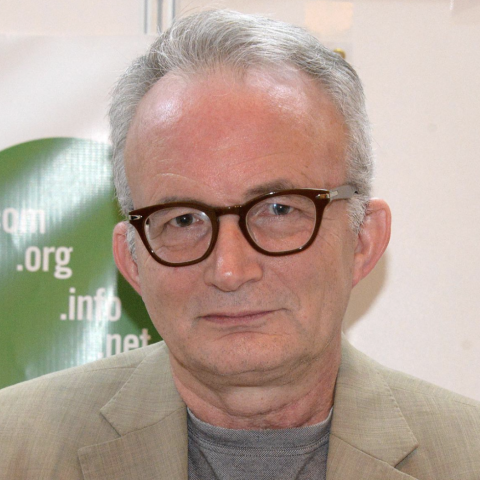
Annie Anton

Annie Anton
aa16@gatech.edu
Website

Annie Anton, Ph.D., is a professor in the School of Interactive Computing at Georgia Tech, which she chaired until 2017. Previously, she served as a professor in the Computer Science Department of the College of Engineering at North Carolina State University, where she was director of the CSC Policy and Compliance Initiative and a member of the NCSU Cyber Defense Lab. In 2010, she chaired the NC State University Reappointment, Promotion and Tenure Committee. In 2008, she chaired the NC State Public Policy Task Force. Anton's research focuses on methods and tools to support the specification of complete, correct behavior of software systems used in environments that pose risks of loss as a consequence of failures and misuse. This includes systems in which the security of personal and private information is particularly vulnerable. Current extensions to this work, include the analysis of federal security and privacy regulations, and compliance practices. Anton is the founder and director of ThePrivacyPlace.org, a research group of students and faculty at Georgia Tech, CMU, NC State and UMBC. This group is interested in technologies that assist practitioners and policy makers in meeting the challenge of eliciting and expressing policies and regulations (a form of requirements). These tools help ensure that software systems are aligned with the privacy polices and regulations that govern these systems. Her professional activities include a notable combination of multi-disciplinary research and education. She is co-founder of the annual Requirements Engineering and the Law Workshop (RELAW). She is a former associate editor for IEEE Transactions on Software Engineering, cognitive issues subject area editor for the Requirements Engineering Journal, and the International Board of Referees for Computers & Security. Antón has served on various boards, ᅠincluding: ᅠPresident Obama's Commission on Enhancing National Cybersecurity, the NIST Information Security & Privacy Advisory Board, the IEEE Computer Society Research Board, an Intel Corporation Advisory Board, the Future of Privacy Forum Advisory Board. ᅠShe is a former member of the U.S. DHS Data Privacy and Integrity Advisory Committee, the CRA Board of Directors, the NSF Computer & Information Science & Engineering Directorate Advisory Council, the Distinguished External Advisory Board for the TRUST Research Center at U.C. Berkeley, the DARPA ISAT Study Group, the USACM Public Policy Council, the Advisory Board for the Electronic Privacy Information Center in Washington, D.C., the Georgia Tech Alumni Association Board of Trustees, the Microsoft Research University Relations Faculty Advisory Board, the CRA-W, the Georgia Tech Advisory Board (GTAB), and Corporate Secretary for Trekking for Kids, Inc.

Professor
Phone
404.894.8591
Additional Research
Data Security & Privacy;
Research Focus Areas
Annie
Anton
Show Regular Profile

Rich DeMillo

Rich DeMillo
rad@gatech.edu
www.demillo.com

Richard DeMillo is the Charlotte B. and Roger C. Warren Professor of Computing at Georgia Tech. He was formerly the John P. Imlay Dean of Computing. Positions he has held prior to joining Georgia Tech include: Chief Technology Officer for Hewlett-Packard, Vice President of Computing Research for Bell Communications Research, Director of the Computer Research Division for the National Science Foundation, and Director of the Software Test and Evaluation Project for the Office of the US Secretary of Defense. He has also held faculty positions at the University of Wisconsin, Purdue University and the University of Padua, Italy. His research includes over 100 articles, books and patents in algorithms, software and computer engineering, cryptography, and cyber security. In 1982, he wrote the first policy for testing software intensive systems for the US Department of Defense. DeMillo and his collaborators launched and developed the field of program mutation for software testing. He is a co-inventor of Differential Fault Cryptanalysis and holds what is believed to be the only patent on breaking public key cryptosystems. He currently works in the area of election and voting system security. His work has been cited in court cases, including a 2019 Federal Court decision declaring unconstitutional the use of paperless voting machines. He has served as a foreign election observer for the Carter Center and is a member of the State of Michigan Election Security Commission. He has served on boards of public and private cybersecurity and privacy companies, including RSA Security and SecureWorks. He has served on many non-profit and philanthropic boards including the Exploratorium and the Campus Community Partnership Foundation (formerly the Rosalind and Jimmy Carter Foundation). He is a fellow of both the Association for Computing Machinery and the American Association for the Advancement of Science. In 2010, he founded the Center for 21st Century Universities, Georgia Tech’s living laboratory for fundamental change in higher education. He served as Executive Director for ten years. He was named Lumina Foundation Fellow for his work in higher education. His 2015 book Revolution in Higher Education, published by MIT Press, won the Best Education Book award from the American Association of Publishers and helped spark a national conversation about online education.  He co-chaired Georgia Tech’s Commission on Creating the Next in Education.  The Commission’s report was released in 2018. He received the ANAK Society’s Outstanding Faculty Member Award.

Professor
Phone
404-385-4273
Office
CODA 0962B
Additional Research
Algorithms; Computer Engineering; Architecture & Design; Data Security & Privacy; Encryption; Network Security; Software & Applications
University, College, and School/Department
Richard, Rich
DeMillo
Show Regular Profile

Peter Swire

Peter Swire
peter.swire@scheller.gatech.edu
Website

Peter Swire, J.D., is Associate Director of Policy for the Institute for Information Security & Privacy. Swire has been a privacy and cyberlaw scholar, government leader, and practitioner since the rise of the Internet in the 1990's. In 2013, he became the Nancy J. and Lawrence P. Huang Professor of Law and Ethics at the Georgia institute of Technology. Swire teaches in the Scheller College of Business, with appointments by courtesy with the College of Computing and School of Public Policy. He is senior counsel with the law firm of Alston & Bird LLP. Swire served as one of five members of President Obama's Review Group on Intelligence and Communications Technology. Prior to that, he was co-chair of the global Do Not Track process for the World Wide Web Consortium. He is a senior fellow with the Future of Privacy Forum, and a policy fellow with the Center for Democracy and Technology. Under President Clinton, Swire was the chief counselor for privacy in the U.S. Office of Management and Budget -- the only person to date to have U.S. government-wide responsibility for privacy policy. In that role, his activities included being White House coordinator for the HIPAA medical privacy rule, chairing a White House task force on how to update wiretap laws for the Internet age, and helping negotiate the U.S.-E.U. Safe Harbor agreement for trans-border data flows.Under President Obama, he was special assistant to the President for economic policy. Swire is author of five books and numerous scholarly papers. He has testified often before the Congress, and been quoted regularly in the press. He has served on privacy and security advisory boards for companies including Google, IBM, Intel, and Microsoft, as well as a number of start-ups. Swire graduated from Princeton University, summa cum laude, and the Yale Law School, where he was an editor of the Yale Law Journal.

Associate Director, Policy
Phone
404-385-3279
Office
Scheller 4163
Additional Research
Data Security & Privacy
Research Focus Areas
University, College, and School/Department
Peter
Swire
Show Regular Profile

Milton Mueller

Milton Mueller
milton@gatech.edu
Website

Milton Mueller is an internationally prominent scholar specializing in the political economy of information and communication. The author of seven books and scores of journal articles, his work informs not only public policy but also science and technology studies, law, economics, communications, and international studies. His books Networks and States: The global politics of Internet governance (MIT Press, 2010) and Ruling the Root: Internet Governance and the Taming of Cyberspace (MIT Press, 2002) are acclaimed scholarly accounts of the global governance regime emerging around the Internet. Mueller’s research employs the theoretical tools of institutional economics, STS and political economy, as well as historical, qualitative and quantitative methods. Mueller’s prominence in scholarship is matched by his prominence in policy practice. He is the co-founder and co-director of the Internet Governance Project (IGP), a policy analysis center for global Internet governance. Since its founding in 2004, IGP has played a prominent role in shaping global Internet policies and institutions such as ICANN and the Internet Governance Forum. He has participated in proceedings and policy development activities of ICANN, the International Telecommunications Union (ITU), the National Telecommunications and Information Administration (NTIA) and regulatory proceedings in the European Commission, China, Hong Kong and New Zealand. He has served as an expert witness in prominent legal cases related to domain names and telecommunication policy. He was recently elected to the advisory committee of the American Registry for Internet Numbers (ARIN), and appointed in 2014 to the IANA Stewardship Coordination Group. Mueller has also been a practical institution-builder in the scholarly world, where he led the creation of the Global Internet Governance Academic Network (GigaNet), an international association of scholars.

Professor, School of Public Policy
Phone
404.385.4281
Office
DM Smith 302
Additional Research
  • AI Governance
  • Cybersecurity Public Policy
  • Energy Delivery & Storage
  • Policy & Economics
University, College, and School/Department
Milton
Mueller
Show Regular Profile

Robert Wright

Robert Wright
Robert.Wright@gtri.gatech.edu

Robert Wright is a GTRI Senior Research Scientist in the Assured Software and Information Division within the CIPHER laboratory. He has been with GTRI since 2021 and leads research efforts in trustworthy autonomous systems. Wright started his career as a civilian research scientist for the Air Force Research Laboratory where he developed technologies and programs for autonomous command and control systems (2003-2016). In 2014, Wright received his Ph.D. in computer science from Binghamton University for his work in developing RL algorithms that learn efficiently from experience Prior to GTRI (2016-2021), Wright was a principal scientist for Assured Information Security where he was a PI for a number of DARPA and Air Force Research Laboratory efforts researching RL and AI techniques. His work has been published in many top venues and was awarded “Best Paper” at the 2013 European Conference on ML. 

Senior Research Scientist
Additional Research

Machine Learning, Artificial Intelligence, Reinforcement Learning, Generative ML, Adversarial Learning, Multi-Agent Systems, Attribution

IRI And Role
GTRI
Geogia Tech Research Institute > Cybersecurity, Information Protection, and Hardware Evaluation Research Laboratory
Geogia Tech Research Institute
Geogia Tech Research Institute > Cybersecurity, Information Protection, and Hardware Evaluation Research Laboratory
Geogia Tech Research Institute
Google Scholar
https://scholar.google.com/citations?user=v89BX9oAAAAJ&hl=en
Robert
Wright
Show Regular Profile

Paul Pearce

Paul Pearce
pearce@gatech.edu
Webpage
Paul Pearce is an Assistant Professor at the Georgia Tech School of Computer Science and a Visiting Researcher at Facebook. By developing Internet-scale measurement platforms and new empirical methods, his research brings grounding and understanding to the study of large-scale, hidden Internet security problems. His work spans the areas of cybercrime, censorship, and “advanced persistent threats” (APTs). His work has been distinguished at the IEEE Symposium on Security and Privacy, and he has been recognized as an EECS Distinguished Graduate Student Instructor.  Paul completed his Ph.D. at UC Berkeley advised by Vern Paxson and was a member of the Center for Evidence-based Security Research (CESR).
Assistant Professor, Computer Science
Additional Research
Data Security & Privacy; Defense / National Security; Internet Infrastructure & Operating Systems; Network Security;
Paul
Pearce
Show Regular Profile

Holly Dragoo

Holly Dragoo
Inquiries
Holly Dragoo is a research associate with the Advanced Concepts Laboratory (ACL) at the Georgia Tech Research Institute. Her previous work with the U.S. Department of Defense and Federal Bureau of Investigation give her a unique understanding of intelligence community requirements. Dragoo’s research interests include cybersecurity policy issues, threat attribution, metadata analysis, and adversarial network reconstruction.
Research Associate, Advanced Concepts Laboratory, Georgia Tech Research Institute
Additional Research
Defense / National Security;
Research Focus Areas
GTRI
Geogia Tech Research Institute > Advanced Concepts Laboratory
Holly
Dragoo
Show Regular Profile

Farzaneh Badiei

Farzaneh Badiei
farzi@gatech.edu
Farzaneh Badiei, Ph.D., is a research associate at the Georgia Institute of Technology School of Public Policy, and the executive director of the Internet Governance Project (IGP). For the past six years, Badiei has been a part of Internet governance research and its professional community, where she has carried out research projects at the Humboldt Institute for Internet and Society (HIIG) and the Syracuse School of Information Studies. She received her Ph.D. in Law from the University of Hamburg, Institute of Law and Economics.  Her dissertation focused on online private justice systems, institutional design, and online market intermediaries. Badiei also worked at the United Nations' Internet Governance Forum Secretariat. Currently, she is the chair of the Noncommercial Users Constituency (NCUC) at ICANN, which focuses on noncommercial rights in domain names. Badiei's current research interests revolve around online private justice systems, Internet governance and the accountability of Internet governance institutions, Internet and jurisdiction, online intermediaries, dispute resolution, as well as cybersecurity and digital trade.
Research Associate I
Additional Research
Internet Infrastructure & Operating Systems;
Research Focus Areas
University, College, and School/Department
Farzaneh
Badiei
Show Regular Profile

Margaret Kosal

Margaret Kosal
margaret.kosal@inta.gatech.edu
Website

Margaret E. Kosal's research explores the relationships among technology, strategy, and governance. Her research focuses on two, often intersecting, areas: reducing the threat of weapons of mass destruction (WMD) and understanding the role of emerging technologies for security. Her work aims to understand and explain the role of technology and technological diffusion for national security at strategic and operational levels. In the changing post-Cold War environment, the most advanced military power no longer guarantees national or international security in a globalized world in which an increasing number of nation-states and non-state actors have access to new and potentially devastating dual-use capabilities. The long-term goals of her work are to understand the underlying drivers of technological innovation and how technology affects national security and modern warfare. She is interested in both the scholarly, theoretical level discourse and in the development of new strategic approaches and executable policy options to enable US dominance and to limit the proliferation of unconventional weapons. On the question of understanding the impact of emerging technology on national and international security her research considers what role will nanotechnology, cognitive science, biotechnology, and converging sciences have on states, non-state actors, balance of power, deterrence postures, security doctrines, nonproliferation regimes, and programmatic choices. Through examination of these real applications on the science (benign and defensive) and potential (notional) offensive uses of nanotechnology, she seeks to develop a model to probe the security implications of this emerging technology. The goal of the research is not to predict new specific technologies but to develop a robust analytical framework for assessing the impact of new technology on national and international security and identifying policy measures to prevent or slow proliferation of new technology - the next generation “WMD” - for malfeasant intentions. Kosal is the author of Nanotechnology for Chemical and Biological Defense (Springer Academic Publishers, 2009), which explores scenarios and strategies regarding the benefits and potential proliferation threats of nanotechnology and other emerging sciences for international security. She is also Director of the Sam Nunn Security Fellows Program and Co-Director of the Program on Emerging Technology within the Center for International Strategy, Technology, and Policy (CISTP).  Kosal was recently appointed Adjunct Scholar to the Modern War Institute at the US Military Academy/West Point. From 2012-2013, she as a senior advisor to the Chief of Staff of the US Army as part of his inaugural Strategic Studies Group (SSG). Before joining the Sam Nunn School of International Affairs, she was Science and Technology Advisor within the Office of the Secretary of Defense (OSD). Kosal also served as the first liaison to the Biological and Chemical Defense Directorate at the Defense Threat Reduction Agency (DTRA). She has been recognized for her leadership across the U.S. federal government, specifically for efforts to coordinate across the DoD as part of the interagency Nonproliferation and Arms Control Technology Working Group, reporting to the National Security Council (NSC), and as member of the interagency federal group charged with leading the National Nanotechnology Initiative (NNI). Kosal was nominated to and led the U.S. involvement in the NATO Nanotechnology for Defense Working Group. Her awards include the 2015 CETL/BP Junior Faculty Teaching Excellence Award, 2014 Georgia Tech Junior Faculty Outstanding Undergraduate Research Mentor Award, 2012 Ivan Allen Jr Legacy Award, 2010 INTAGO Faculty Award, CETL Class of 1969 Teaching Scholar, the OSD Award for Excellence, 2007 UIUC Alumni Association Recent Alumni Award, the President’s Volunteer Service Award, American Association for the Advancement of Science (AAAS) Defense Policy Fellow, and the Society of Porphyrins and Phthalocyanines Dissertation Research Award. Currently, she serves on the editorial board of the scholarly journals Studies in Conflict and Terrorism, the Journal of Strategic Security, the Journal of Defense Management, and Global Security: Health Science and Policy. Education: Ph.D., Chemistry, University of Illinois at Urbana-Champaign B.S., Chemistry, University of Southern California Awards and Distinctions: Senior Adjunct Scholar to the Modern War Institute at the U.S. Military Grand Challenges Faculty Fellow, AY2015-2016 & AY 2016-2017 2015-2016 CETL Class of 1969 Teaching Scholar 2015 CETL/BP Junior Faculty Teaching Excellence Award Gold Star Award in Recognition of the Highest Level of Accomplishment in Research, Ivan Allen College of Liberal Arts Dean Griffith Teaching Recognition – “Thank a Teacher” Award 2014 Georgia Tech Junior Faculty Outstanding Undergraduate Research Mentor Award Ivan Allen Jr. Legacy Faculty Award, 2012 INTAGO Faculty of the Year, 2010 Office of the Secretary of Defense Award for Excellence, 2007 University of Illinois at Urbana-Champaign Recent Alumni Award, 2007 President’s Volunteer Service Award, 2007 American Associatio for the Advancement of Science (AAAS) Science & Technology Fellowship, 2005-2007 American Chemical Society’s Chemical and Engineering News Top 2002 Supramolecular Chemistry research paper Areas of Expertise: Biotechnology Emerging Technology Military Nanotechnology National Security Nonproliferation Nuclear Weapons Terrorism US Foreign & Defense Policy

Professor, Sam Nunn School of International Affairs
Director, Sam Nunn Security Program
Editor-in-Chief, Politics and the Life Sciences
Phone
404-894-9664
Office
Habersham 303
Additional Research

Defense / National Security; Cyber Technology; Policy/Economics

Google Scholar
https://scholar.google.com/scholar?hl=en&q=margaret+Kosal&btnG=&as_sdt=1,11&as_sdtp=&oq=margaret
Related Site
Margaret
Kosal
E.
Show Regular Profile

Seymour Goodman

Seymour Goodman
goodman@cc.gatech.edu
Website

Seymour E. Goodman, Ph.D., joined the Georgia Tech faculty in 2000 as Professor of International Affairs and Computing and Co-Director of the Georgia Tech Information Security Center, jointly in the Sam Nunn School of International Affairs and the College of Computing. Prof. Goodman's research interests include international developments in the information technologies (IT), technology diffusion, IT and national security, critical infrastructure protection, and related public policy issues. Areas of geographic interest include the former Soviet Union and Eastern Europe, Latin America, the Middle East, South and East Asia, and parts of Africa. Earlier research had been in areas of statistical and continuum physics, combinatorial algorithms, and software engineering. He is the author or co-author of about 150 publications in these subjects, and serves in various editorial capacities for several academic journals, including contributing editor for International Perspectives for the Communications of the ACM since 1990. He has served on numerous study and advisory committees for the ACM, the Departments of Commerce, Defense, and State, the US Congress, and the National Research Council. Prof. Goodman's work has been supported by almost three dozen funding sources, most recently by multi-year grants from the National Science Foundation and the MacArthur Foundation. He teaches several undergraduate and graduate courses in science and technology and national and international security.  In 2010, he was appointed to the Computer Science and Telecommunications Board of the National Research Council of the National Academies. Secondary research interests include the impact of S&T on the American Civil War, World War II, and the Cold War. Prof. Goodman was an undergraduate at Columbia University and obtained his Ph.D. from the California Institute of Technology.

Regents' Professor, School of Computer Science
Professor, Sam Nunn School of International Affairs
Phone
404.385.1461
Office
Habersham 302
Additional Research

Software & Applications; Algorithms; Defense / National Security; Cyber Technology

Seymour
Goodman
Show Regular Profile