Donald White

Donald White
don.white@ce.gatech.edu
CEE Profile Page

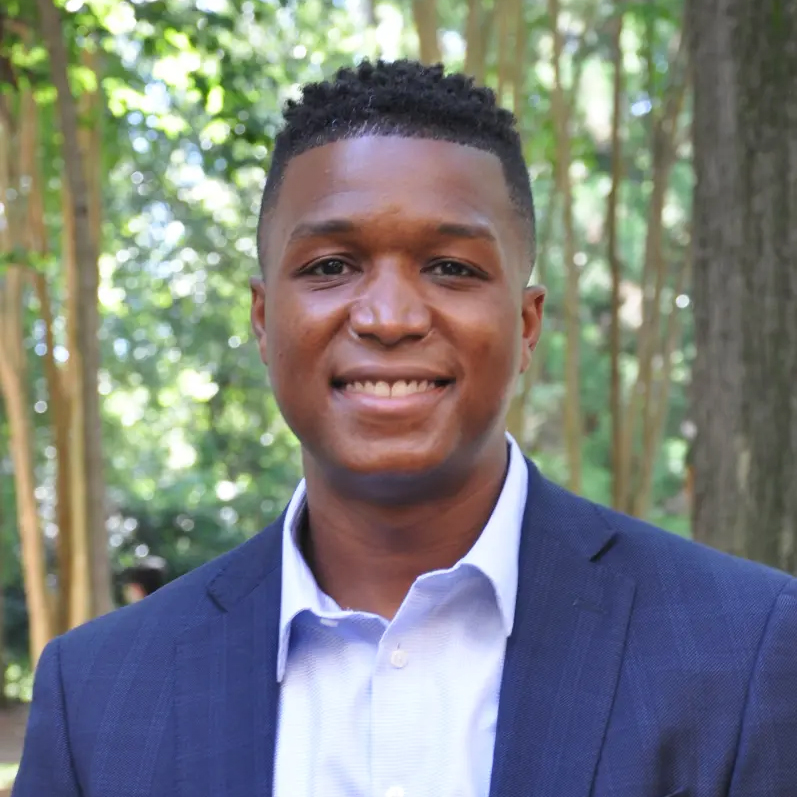
Don White is a professor in the School of Civil and Environmental Engineering (CEE). He has been a member of the CEE faculty at Georgia Tech since 1997. Prior to joining Georgia Tech, White served on the faculty at the Purdue University School of Civil Engineering from 1987 to 1996. He received his doctorate in Structural Engineering from Cornell University in 1988, and is an alumnus of North Carolina State University. Prior to graduate study, White worked as a structural engineer in Raleigh, NC.

White’s research covers a broad area of design and behavior of steel and composite steel-concrete structures as well as computational mechanics, methods of nonlinear analysis and applications to design. White is a member of the AISC Technical Committees 4, Member Design, and 10, Loads, Analysis and Stability, the AISI Bridge Design Advisory Group, the AISC Specification Committee, and several AASHTO/NSBA Steel Bridge Collaboration Task Groups. He is past Chair of the SSRC Task Group 29, Second-Order Inelastic Analysis of Frames and currently serves on the Executive Committee of the SSRC.

White has served as a major contributor to the steel design and structural analysis sections of the AASHTO LRFD Bridge Design Specifications and the ANSI/AISC Specification for Structural Steel Build­ings during the past 20 years. He was a lead author on the 1997 ASCE publication Effective Length and Notional Load Approaches for Assessing Frame Stability: Implications for American Steel Design, which was a precursor of the development of the AISC Direct analysis Method of design, referred to as the DM. Furthermore, White was a major participant ad hoc task group efforts leading to the development of the DM, which is the preferred method of stability design in the AISC Specification for Design of Steel Building Structures. Subsequent to these developments, the Metal Building Manufacturers Association (MBMA) provided White the opportunity to extend a number of these developments to updated procedures for design of frames using web-tapered members, which is captured within the AISC/MBMA Design Guide 25. White received the 2005 Special Achievement Award and the 2009 T.R. Higgins lectureship award from AISC for his research on design criteria for steel and composite steel-concrete members in bridge and building construction. He received the 2006 Shortridge Hardesty Award from ASCE for his research on advanced frame stability concepts and practical design formulations. For efforts leading to the comprehensive update to the 2005 AASHTO LRFD provisions for steel I- and box-girder bridge design, and unification of AASHTO LRFD provisions for straight and curved girder bridge design, White received the 2007 Richard S. Fountain Bridge Task Force Award and, with M. Grubb and W. Wright, the 2006 Richardson Medal from the Engineers’ Society of Western Pennsylvania.

White has conducted research on a wide range of topics relating to stability analysis and design and construction engineering of steel bridge structures. This includes work on construction simulation of curved and skewed steel bridges, investigation of the behavior of thin-web girders, and stability of components and structural systems during construction and in their final constructed condition. He was one of several researchers privileged to be involved closely with curved steel bridge experimental testing at the FHWA Turner Fairbank Highway Research Center from 1997 through 2005. White was P.I. and lead author of the NCHRP Report 725, Guidelines for Analytical Methods and Construction Engineering of Curved and Skewed Steel Girder Bridges. This work contributed additional substantive advances to the state-of-the-art in the engineering of curved and skewed steel girder bridge structures. White is currently P.I. on a multi-year FHWA-sponsored effort with the goal of modernizing the AASHTO LRFD provisions pertaining to all types of noncomposite box-section members including truss members, edge girders in cable-stayed spans, arch ribs, arch ties, and tower legs.

Professor, School of Civil and Environmental Engineering
Phone
404.894.5839
Office
Mason 5139B
Additional Research

Computer-Aided Engineering; computational mechanics; Structural Materials

Research Focus Areas
Google Scholar
https://scholar.google.com/citations?hl=en&user=XMsIVW0AAAAJ&view_op=list_works&sortby=pubdate
Donald
White
W.
Show Regular Profile

Yiyi He

Yiyi He
yiyi.he@design.gatech.edu
College of Design Profile Page

Yiyi He is an assistant professor in the School of City and Regional Planning (SCaRP) at the College of Design at Georgia Tech. Her research centers on the interdisciplinary fields of urban planning, GIScience, climate science, and artificial intelligence. She is interested in building a better understanding of the uncertainty and asymmetric impacts of climate-change-induced extreme weather events (e.g., flooding, wildfires, extreme heat) on critical components of the built environment (e.g., lifeline infrastructure networks, vulnerable neighborhoods). She leverages data-driven approaches, such as GIS, network science, hyperspectral remote sensing, machine learning, and spatial statistics to tackle complex challenges in climate change and resilience research and to inform more intelligent planning and policy directives.

Her previous work involves using 3D hydrodynamic flood models to simulate flooding under different climate change scenarios and analyze the impact of both coastal and inland flooding on critical infrastructure networks. She received her bachelor’s degree from Nanjing University and her master’s and Ph.D. degree from UC Berkeley.

Assistant Professor, School of City and Regional Planning
Additional Research

GI Science Network ScienceEnvironmental Planning

Google Scholar
https://scholar.google.com/citations?hl=en&user=xoUOI-wAAAAJ&view_op=list_works&sortby=pubdate
LinkedIn
Yiyi
He
Show Regular Profile

Dylan Brewer

Dylan Brewer
brewer@gatech.edu
Website

Dylan Brewer joined the faculty at the School of Economics in 2019. He received his PhD in Economics with a dual major in Environmental Science and Policy from Michigan State University in May 2019 as well as a Master of Arts degree in Economics from the same institution in 2016. Prior to his graduate studies, Dylan completed a Bachelor of Arts degree with majors in Economics and International Relations at the University of Virginia in 2014. Dylan's research uses the tools of applied econometrics and machine learning to answer questions in energy and environmental economics. He has published research on household energy consumption, the economics of thermostat settings, recycling, electricity demand, machine learning methodology, and air quality among other topics. He teaches courses on environmental economics at the graduate and undergraduate level, and his Principles of Microeconomics course has won awards at Georgia Tech.

Assistant Professor, School of Economics
Dylan
Brewer
Show Regular Profile

Joe F. Bozeman III

Joe F. Bozeman III
joe.bozeman@ce.gatech.edu
Departmental Bio
Assistant Professor, Civil and Environmental Engineering, Public Policy
SEI Lead: Ethics in Energy Transition
Additional Research

industrial ecology; climate change adaptation and mitigation strategies; sociodemographic impacts of the food-energy-water nexus; ethical applications in energy and environmental systems; urban carbon management strategies; life cycle assessment; scenario analysis; and survey administration; addressing the complex and ‘wicked’ challenges of our time

Joe
Bozeman
F.
Show Regular Profile

Michael Gamble

Michael Gamble
michael.gamble@coa.gatech.edu
Website

Michael’s love of design at all scales is evident in his teaching, research and practice. 

He is a registered architect, director of the Modern Cities Europe Program, and creative director at Gamble + Gamble Architects in Atlanta. From 2015 to 2022, he directed the Master of Architecture program in the School of Architecture.  His design-driven research operates at a variety of scales, from house to city, with emphasis on innovation, alternative energy, and building technology pursued within the context of a larger concern for the creation of healthy, well-conceived environments. He has received numerous awards for excellence in design and scholarship. www.gg-architects.com 

Michael was the first point of contact for the $30 million Living Building gift, a.k.a. Kendeda Building for Innovative Sustainable Design (KBISD), and actively participated in pre-planning and fund acquisition, design competition and team formation, all the way through building execution, implementation and certification.  He also led a series of interdisciplinary design studios that paralleled the effort, and chaired the Academic and Research Council connected to the project.  He is co-author of the novel organizational structure of the living building workgroups, now tested, and currently  serves as chair of the KBISD advisory council and leads the Living Building Pilot Project Program, comprised of faculty, researchers and students from across campus, now in round three of funding. 

Michael’s research has received grants from The Alcoa Foundation, The Kendeda Foundation, Center for Quality Growth and Regional Development, the National Endowments of the Arts, and received First Prize for Research in an international competition sponsored by the Environmental Design and Research Association. Gamble has published essays on the design of the public realm in Harvard Design Magazine with W. Jude Leblanc. 

Associate Professor, School of Architecture
Director of Graduate Studies; Director, Master of Architecture Program
Phone
(404) 894-4885
Additional Research

Building Technologies

Research Focus Areas
University, College, and School/Department
Michael
Gamble
Show Regular Profile

Thomas Fuller

tom.fuller@chbe.gatech.edu
ChBE Profile

Tom Fuller is Professor of Chemical Engineering at the Georgia Tech. Dr. Fuller received a BS from the University of Utah in Chemical Engineering in 1982. Dr. Fuller then served for five years in the U.S. Navy working as a Nuclear Engineer. In 1992 he obtained a Ph.D. from UC, Berkeley also in Chemical Engineering. 

Subsequently, Dr. Fuller developed advanced lithium batteries while working as a postdoctoral fellow at Lawrence Berkeley National Laboratory. He then moved to United Technologies. He was responsible for technology development, design, assembly, and test of cell stacks for UTC Fuel Cells. 

His research group at Georgia Tech is focused on durability challenges for electrochemical systems. For the last eight years Dr. Fuller has been a Technical Editor for the Journal of the Electrochemical Society. In 2009 Dr. Fuller was named a Fellow of the Electrochemical Society.

Professor, School of Chemical and Biomolecular Engineering
Phone
(404) 894-2898
Additional Research

Electric Vehicles; Energy Storage; Hydrogen; Modeling; Materials Failure and Reliability; Energy Conversion; Energy Storage; Batteries; fuel cells

University, College, and School/Department
Google Scholar
https://scholar.google.com/citations?hl=en&user=I1RqBRoAAAAJ&view_op=list_works&sortby=pubdate
Website
Thomas
Fuller
Show Regular Profile

Nga Lee (Sally) Ng

Nga Lee (Sally) Ng
ng@chbe.gatech.edu
Website

Dr. Ng is the Love Family Professor in the School of Chemical & Biomolecular Engineering and the School of Earth & Atmospheric Sciences at the Georgia Institute of Technology. She earned her Ph.D. in Chemical Engineering from the California Institute of Technology and was a postdoctoral scientist at Aerodyne Research Inc.

Dr. Ng’s research focuses on the understanding of the chemical mechanisms of aerosol formation and composition, as well as their health effects. Her group combines laboratory chamber studies and ambient field measurements to study aerosols and air quality using advanced mass spectrometry techniques. Dr. Ng leads the establishment of the first, high time-resolution, long-term aerosol measurement network in the U.S.: Atmospheric Science and Chemistry mEasurement NeTwork (ASCENT), for characterization of aerosol chemical composition and physical properties, and their impacts on climate, human health, and ecosystems.

Love Family Professor, School of Chemical & Biomolecular Engineering, School of Earth & Atmospheric Sciences
SEI Senior Advisor: Energy & Health
Phone
(404) 385-2148
Office
ES&T 2222
Additional Research

Climate/Environment

Research Focus Areas
University, College, and School/Department
Nga Lee (Sally)
Ng
Show Regular Profile

Jennifer Hirsch

Jennifer Hirsch
jennifer.hirsch@gatech.edu
Departmental Bio

Dr. Jennifer Hirsch is an applied cultural anthropologist recognized internationally for fostering university and community engagement in sustainability and climate action. At the Georgia Institute of Technology, she is the inaugural Director of the Center for Sustainable Communities Research & Education (SCoRE), creating a culture of collaboration in which students, faculty, and staff engage in long-term relationships with community, government, and industry partners to build sustainable communities.

Dr. Hirsch’s research and teaching interests focus on: 1) equity in the sustainable built environment; 2) grassroots sustainability innovation; and 3) community leadership in energy equity.

Dr. Hirsch is also a co-founder and lead coordinator of RCE Greater Atlanta – a Regional Centre of Expertise on Education for Sustainable Development - officially acknowledged in 2017 by the United Nations University. She is also Adjunct Associate Professor at Georgia Tech’s School of City and Regional Planning. She serves on the faculty of The Asset-Based Community Development Institute hosted by DePaul University and on the Board of Directors of AASHE (Association for the Advancement of Sustainability in Higher Education).

Before coming to Georgia Tech, Dr. Hirsch worked in Chicago as Associate Director of Study Abroad at Northwestern University; as Urban Anthropology Director at The Field Museum of Natural History; and as an independent consultant with clients such as the City of Cleveland, Enterprise Community Partners, the U.S. Green Building Council, The Institute of Cultural Affairs, University of Illinois at Chicago, and Joliet Junior College. Dr. Hirsch received a Bachelor’s degree in American Culture from Northwestern University in Evanston, Illinois and a Ph.D. in Cultural Anthropology from Duke University in Durham, North Carolina.

Senior Director, SCoRE
Senior Academic Professional
SEI Lead: Sustainable Communities
Additional Research

Sustainability PedagogyEquity in the Sustainable Built EnvironmentGrassroots Sustainability InnovationSustainability in Cross-cultural Perspective 

Jennifer
Hirsch
Show Regular Profile

Srinivas Garimella

Srinivas Garimella
srinivas.garimella@me.gatech.edu
Website

Dr. Garimella began at Tech in August 2003 as an Associate Professor and Director of the Sustainable Thermal Systems Laboratory. Prior, he was an Associate Professor at Iowa State University, an Assistant and Associate Professor at Western Michigan University, a Research Scientist at Battelle Memorial Institute, and a Senior Engineer at General Motors.

Professor, Woodruff School of Mechanical Engineering
Hightower Chair in Engineering
Phone
(404) 894-7479
Additional Research

Thermal Systems

University, College, and School/Department
Srinivas
Garimella
Show Regular Profile