Johnna Temenoff

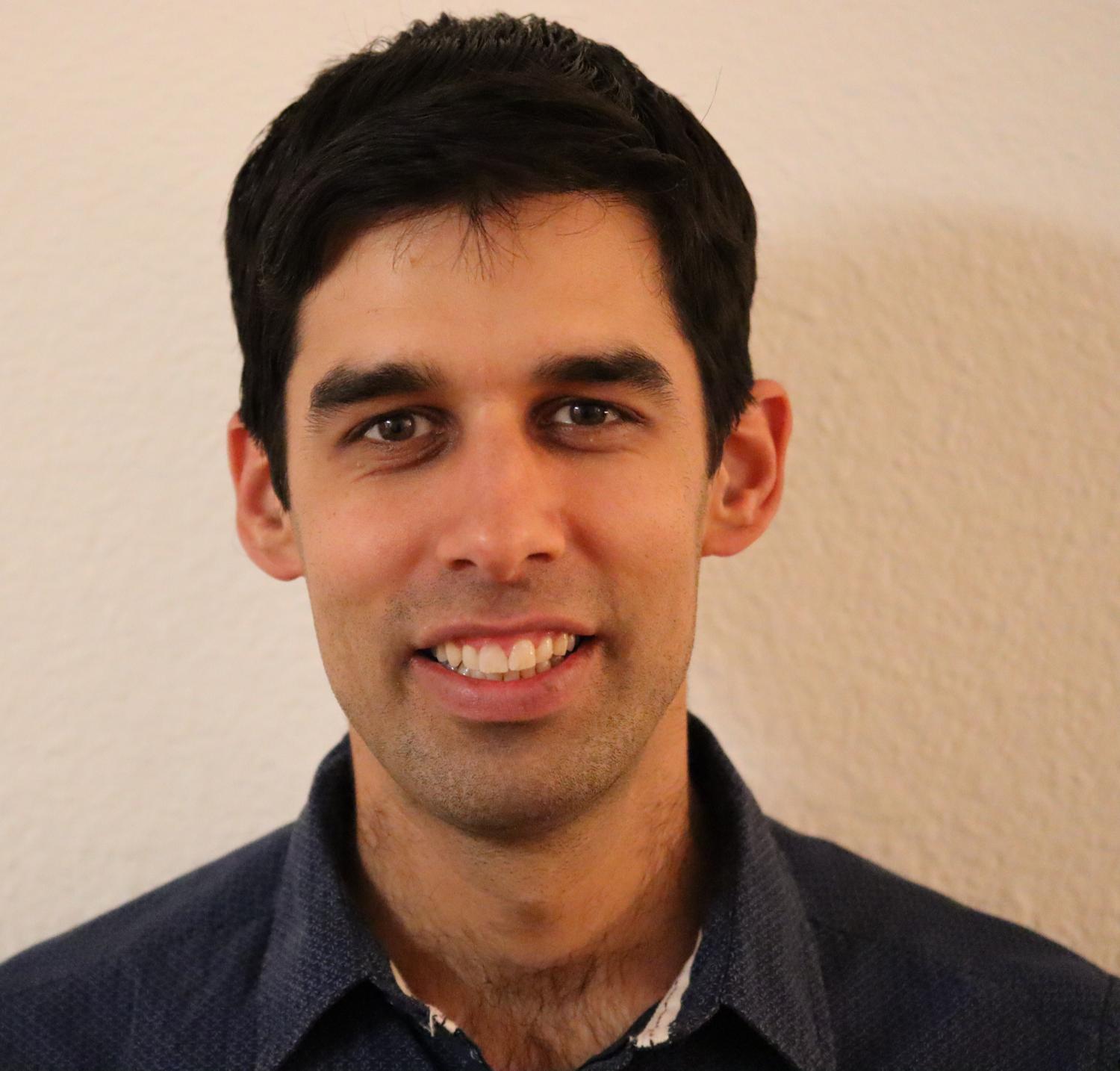
Johnna Temenoff headshot
johnna.temenoff@bme.gatech.edu
Website

Dr. Johnna S. Temenoff is the Carol Ann and David D. Flanagan Professor at the Coulter Department of Biomedical Engineering at Georgia Tech/Emory University. She is also currently the Director of the NSF Engineering Research Center in Cell Manufacturing Technologies (CMaT) and the Director of the Marcus Center for Therapeutic Cell Characterization and Manufacturing (MC3M). Scientifically, Dr. Temenoff is interested in scaling culture of therapeutic cells and tailoring the molecular interactions between glycosaminoglycans and proteins/cells for use in regenerative medicine applications.  Her laboratory focuses primarily on promoting repair after injuries to the tissues of the shoulder, including cartilage, tendon, and muscle.

Dr. Temenoff has been honored with several prestigious awards, such as the NSF CAREER Award, Arthritis Foundation Investigator Award, and Society for Biomaterials (SFB) Clemson Award for Contributions to the Literature, and was named to the College of Fellows of the American Institute for Medical and Biological Engineers (AIMBE), as a Fellow of the Biomedical Engineering Society (BMES), as a Fellow of the International Academy of Medical and Biological Engineering (IAMBE) and as a Fellow of Biomaterials Science and Engineering, International Union of Societies for Biomaterials Science and Engineering (IUSBSE).  She has co-authored a highly successful introductory textbook - Biomaterials: The Intersection of Biology and Materials Science, by J.S. Temenoff and A.G. Mikos (now in a 2nd edition), for which Dr. Temenoff and Dr. Mikos were awarded the American Society for Engineering Education’s Meriam/Wiley Distinguished Author Award for best new engineering textbook. 
Carol Ann and David D. Flanagan Professorship II
Director, NSF Engineering Research Center for CMaT
Marcus Center for Therapeutic Cell Characterization and Manufacturing (MC3M)
Phone
404-385-5026
Office
Petit 2305
Google Scholar
https://scholar.google.com/citations?user=DfhHdN8AAAAJ&hl=en&oi=ao
Coulter Department of Biomedical Engineering NSF Engineering Research Center for Cell Manufacturing Technologies (CMaT)
Johnna
Temenoff
Show Regular Profile

Julie Champion

Julie Champion
julie.champion@chbe.gatech.edu
Champion Lab

Julie Champion is the William R. McLain Endowed Term Professor in the School of Chemical and Biomolecular Engineering at Georgia Institute of Technology. She earned her B.S.E. in chemical engineering from the University of Michigan and Ph.D. in chemical engineering at the University of California Santa Barbara. She was an NIH postdoctoral fellow at the California Institute of Technology. Champion is a fellow of the American Institute for Medical and Biological Engineering and has received awards including American Chemical Society Women Chemists Committee Rising Star, NSF BRIGE Award, Georgia Tech Women in Engineering Faculty Award for Excellence in Teaching, Georgia Tech BioEngineering Program Outstanding Advisor Award. Professor Champion’s current research focuses on design and self-assembly of functional nanomaterials made from engineered proteins for applications in immunology, cancer, and biocatalysis.

Professor, School Chemical and Biomolecular Engineering
Phone
404.894.2874
Office
EBB 5015
Additional Research

Cellular Materials; Drug Delivery; Self-Assembly; "Developing therapeutic protein materials, where the protein is both the drug and thedelivery system Engineering proteins to control and understand protein particleself-assembly Repurposing and engineering pathogenic proteins for human therapeutics Creating materials that mimic cell-cell interactions to modulate immunologicalfunctions for various applications, including inflammation, cancer, autoimmune disease, and vaccination"

Google Scholar
https://scholar.google.com/citations?hl=en&user=jvuWIW4AAAAJ&view_op=list_works&sortby=pubdate
LinkedIn ChBE Profile Page
Julie
Champion
Show Regular Profile

Antonio Facchetti

Antonio Facchetti
afacchetti6@gatech.edu
MSE Profile Page

Antonio Facchetti obtained his Laurea degree in Chemistry cum laude and a Ph.D in Chemical Sciences from the University of Milan. In 2022 he joined the School of Material Science and Engineering at Georgia Tech. He is a co-founder and the Chief Technology Officer of Flexterra Corporation.

Facchetti has published more than 600 research articles, 14 book chapters, and holds more than 120 patents (H-index 141). He received the 2009 Italian Chemical Society Research Prize, the team IDTechEx Printed Electronics Europe 2010 Award, the corporate 2011 Flextech Award. In 2010 was elected a Kavli Fellow, in 2012 a Fellow of the American Association for the Advanced of Science (AAAS), in 2013 Fellow of the Materials Research Society, in 2015 he became a Fellow of the Royal Society of Chemistry, and in 2016 a Fellow of the ACS Polymeric Materials Science and Engineering. In 2010 he was selected among the "TOP 100 MATERIALS SCIENTISTS OF THE PAST DECADE (2000-2010)" by Thomson Reuters and in 2015-2023 recognized as a Highly Cited Scientist. In 2016 he has been elected a Fellow of the National Academy of Inventors and was awarded the 2016 ACS Award for Creative Invention. In 2017 he was awarded the Giulio Natta Gold Medal from the Italian Chemical Society for his work on polymeric materials and in 2019 he was inducted into the Advanced Materials Hall of Fame. In 2025 he was elected to the National Academy of Engineering. Facchetti’s research interests include organic semiconductors and dielectrics for thin-film and electrochemical transistors, metal oxides, conducting polymers, molecular electronics, sensors, batteries, and photovoltaics.

Professor
Hightower Chair in Materials Science and Engineering
Office
MRDC 4515
Google Scholar
https://scholar.google.com/citations?hl=en&user=oQ9ZPFkAAAAJ&view_op=list_works…
Facchetti Lab
Antonio
Facchetti
Show Regular Profile

Anju Toor

Anju Toor
anju.toor@mse.gatech.edu
Departmental Bio

Anju Toor is a researcher in nanomaterials for energy systems. She was a Bakar Innovation Fellow at the University of California, Berkeley, and worked on printed on-chip integrated micro batteries. She earned an M.S. in Electrical Engineering and a Ph.D. in Mechanical Engineering at University of California, Berkeley.

Her research focuses on advanced energy materials, printed electronics, energy storage systems, and nanoparticle self-assembly. She has led research on flexible and stretchable batteries for next-generation Augmented/Virtual Reality applications at Meta Reality Labs. She was named EECS Rising Star and selected for The Rising Stars Women in Engineering Workshop in Asia.

As an expert in self-assembly and energy materials, she has published over 20 research publications in the most reputed platforms in the field.

Assistant Professor, School of Materials Science and Engineering
Additional Research

Research Areas: Composites, Fibers, Nanostructures, Polymers

Research Challenges: Electronics and Communications, Energy, Environment

Research Activity: Measurements, Processing, Fabrication, & Manufacturing, Synthesis

Anju
Toor
Show Regular Profile

Itamar Kolvin

Itamar Kolvin
ikolvin@gatech.edu
https://sites.gatech.edu/ikolvinlab/

Itamar Kolvin received his B.Sc. (2007) in Physics and Mathematics and his M.Sc. (2009) from the Hebrew University in Jerusalem. In 2017, he completed his Ph.D. in Physics under Prof. Jay Fineberg in the Hebrew University. He was a HFSP cross-disciplinary postdoctoral fellow in the Physics Department, University of California, Santa Barbara with Pro. Zvonimir Dogic. His research interests are in the fundamentals of soft matter out-of-equilibrium: assembly, deformation, flow and fracture. Current efforts make use of model systems that are assembled of protein machineries to investigate active and adaptive material mechanics. 

Assistant Professor, School of Physics
Office
Howey Physics Building W304
University, College, and School/Department
Itamar
Kolvin
Show Regular Profile

Sung Jin Park

Sung Jin Park
sung.jin.park@emory.edu
http://www.biohybridlab.org/

My lab, Biohybrid System Laboratory, is interested in elucidating how biological systems coordinate the hierarchical structures and functions of their individual components, in order to produce emergent physical behaviors, and how disrupting this coordination potentiates disease. We seek to design, build, and test a hierarchy of biohybrid systems capable of reproducing the targeted behaviors. Our primary interest is coordinated activation and contraction of tissue- and organ-level cardiac and skeletal muscle systems. To pursue this goal, we focus on the development of biohybrid fabrication methods and measurement systems through the combined application of genetic tools, induced pluripotent stem cells, tissue engineering, microfabrication, electronics, optics, and feedback control. The resulting findings and technical developments will be translated into various applications such as (1) stem cell-based functional assays for personalized disease diagnosis and treatment and (2) new types of biohybrid actuators for creating biological autonomous systems.

Sung
Park
Jin
Show Regular Profile

Shuichi Takayama

Shuichi Takayama
takayama@gatech.edu
Takayama lab

Shu Takayama earned his BS and MS in Agricultural Chemistry at the University of Tokyo. He earned a Ph.D. in Chemistry at The Scripps Research Institute in La Jolla, California studying bio-organic synthesis with Dr. Chi‐Huey Wong. He then worked as a postdoc with Dr. George Whitesides at Harvard University where he focused on applying microfluidics to studying cell and molecular biology.

Takayama began his career at the University of Michigan, where led his lab in the Department of Biomedical Engineering and Macromolecular Science & Engineering for over 17 years. In 2017, the lab moved to Georgia Tech where Shu became the Georgia Research Alliance Price Gilbert Chair Professor of Biomedical Engineering in the Wallace H. Coulter Department of Biomedical Engineering.

Takayama’s research interests are diverse and motivated by clinical and biotechnology needs. He is always interested in hearing from stakeholders in these areas who are seeking engineering collaboration.

Professor, Wallace H. Coulter Department of Biomedical Engineering
GRA Eminent Scholar, Wallace H. Coulter Department of Biomedical Engineering
Price Gilbert, Jr. Chair in Regenerative Engineering andMedicine
Phone
404.385.5722
Office
EBB 4018
Additional Research

Use of micro/nanofluidics for cell analysis; diagnostics; and chromatin analysis; High throughput 3D cell cultures; Organs-on-a-chip construction and design; Role of rhythm in cell signaling; Self-switching fluidic circuits; Fracture fabrication

Google Scholar
https://scholar.google.com/citations?hl=en&user=IkhTUu4AAAAJ&view_op=list_works&sortby=pubdate
LinkedIn BME Profile Page
Shuichi
Takayama
Show Regular Profile

Andrés J. García

Andrés J. García
andres.garcia@me.gatech.edu
Website
Executive Director, Parker H. Petit Institute for Bioengineering and Bioscience
The Petit Director’s Chair in Bioengineering and Bioscience
Regents’ Professor, George Woodruff School of Mechanical Engineering
Phone
404-894-9384
Office
Petit Biotechnology Building, Office 2310
Additional Research

Dr. Garcia's research centers on cellular and tissue engineering, areas which integrate engineering and biological principles to control cell function in order to restore and/or enhance function in injured or diseased organs. Specifically, his research focuses on fundamental structure-function relationships governing cell-biomaterials interactions for bone and muscle applications. Current projects involve the analysis and manipulation of cell adhesion receptors and their extracellular matrix ligands. For example, a mechanochemical system has been developed to analyze the contributions of receptor binding, clustering, and interactions with other cellular structural proteins to cell adhesion strength. In another research thrust, bio-inspired surfaces, including micropatterned substrates, are engineered to control cell adhesion in order to direct signaling and cell function. For instance, biomolecular surfaces have been engineered to target specific adhesion receptors to modulate cell signaling and differentiation. These biomolecular strategies are applicable to the development of 3D hybrid scaffolds for enhanced tissue reconstruction,"smart" biomaterials, and cell growth supports. Finally, genetic engineering approaches have been applied to engineer cells that form bone tissue for use in the development of mineralized templates for enhanced bone repair.

Google Scholar
https://scholar.google.com/citations?user=px6Z53IAAAAJ&hl=en&oi=sra
LinkedIn Related Site Faces of Research Profile
Andrés
García
J.
Show Regular Profile

Andrew McShan

Andrew McShan, Ph.D.
andrew.mcshan@chemistry.gatech.edu
Website

The questions that keep us up at night are: How does the immune system present and recognize antigens to combat disease? What are the molecular features involved in stimulating robust and specific immune responses? How can we exploit distinct features of immune recognition to develop new treatments for disease? Our research centers on answering these important questions. We focus on the CD1 family of major histocompatibility complex class I (MHC-I) related proteins, which present both self and foreign lipids to αβ, γδ, and natural killer T cells. Examples of CD1 complexes involved in the adaptive and innate immune response to human disease include those associated with lipids derived from cancerous cells (Leukemia, Carcinoma, Lymphoma, Melanoma), wasp/bee venom including yellowjackets of the genus Vespula who represent Georgia Tech's mascot Buzz (Hymenoptera venom allergy), bacterial pathogens (Mycobacterium tuberculosis - Tuberculosis, Borrelia burgdorferi - Lyme Disease, Pseudomonas aeruginosa - Pneumonia), viral pathogens (HSV-1 - Herpes, HBV - Hepatitis B), marine sponges, and self cells in autoimmune disease (Dermatitis, Psoriasis, Lysosomal Storage Disease). Recent studies have shown that CD1 can also associate with and present a much broader range of antigens, such as skin oils that lack a discernible hydrophilic head group, lipopeptides, and non-lipid small molecules. Unlike peptide antigen presentation by high polymorphic human MHC-I complexes for which therapeutics must be tailored to a patients genetic background, the non-polymorphic nature of CD1 means that lipid/CD1 molecules are attractive candidates for donor-unrestricted (i.e. universal and patient-haplotype independent) vaccines and immunotherapy treatments. Progress in the development of lipid/CD1 mediated therapies has been hindered by an incomplete understanding in several important features of the CD1 antigen processing and presentation pathway as well as a lack of structural information for clinically relevant lipid/CD1 complexes. We aim to address these knowledge gaps with our research.
 

Assistant Professor
Phone
404.385.6052
Office
MoSE G022
Research Focus Areas
Andrew
McShan
Show Regular Profile

Anant Paravastu

Anant Paravastu
anant.paravastu@chbe.gatech.edu

Anant Paravastu holds bachelors (MIT, 1998) and Ph.D. degrees (UC Berkeley, 2004) in chemical engineering. His Ph.D. research with Jeffrey Reimer focused on the use of lasers to control nuclear spin polarizations in the semiconductor GaAs. From 2004 to 2007, he worked as a postdoc at the Laboratory of Chemical Physics at NIH with Robert Tycko, where he learned to apply nuclear magnetic resonance to structural biology. Paravastu’s early structural biology work focused amyloid fibrils of the Alzheimer’s β-amyloid peptide. He was part of the team and community that showed that amyloid fibril formation is a complex phenomenon, with individual peptides exhibiting multiple aggregation pathways capable of producing multiple distinct aggregated structures. Between 2008 and 2015, Paravastu worked as an assistant professor at Florida State University and the National High Magnetic Field Laboratory. Paravastu started his present position at Georgia Tech in 2015. Paravastu’s laboratory presently focuses on 3 general lines of inquiry: 1) structural analysis of peptides that were rationally designed to assemble into nanostructured materials, 2) nonfibrillar aggregates of the Alzheimer’s β-amyloid peptide, and 3) aggregation due to misfolding of proteins driven away from their natural folds.

Associate Professor
Phone
404-385-4604
Office
MoSE 4100N
Additional Research

Solid state NMR structural biology of self-assembled peptides and proteins Self-assembly of the Alzheimer's beta-amyloid peptide Designer self-assembling peptides for applications in regenerative medicine

Research Focus Areas
Google Scholar
https://scholar.google.com/citations?user=rIjPrg8AAAAJ&hl=en
LinkedIn Related Site
Anant
Paravastu
Show Regular Profile