Sandra "Sandy" Magnus

Sandra Magnus

Sandra "Sandy" Magnus joins the Daniel Guggenheim School of Aerospace Engineering as a professor of the practice. She will have a joint appointment between the AE School, the School of Materials Science and Engineering, and the Sam Nunn School of International Affairs.
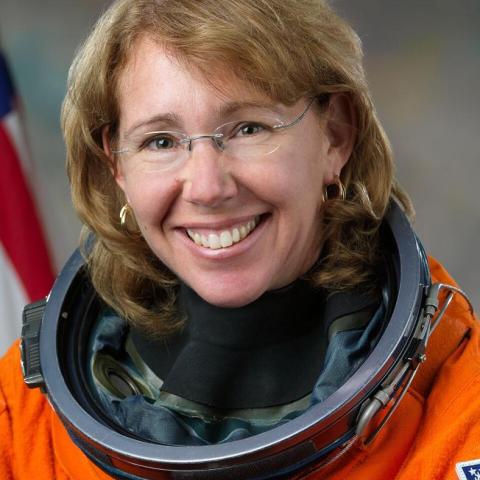
Her position will primarily focus on research advocacy, leadership and mentorship to students, as well as offering guidance to faculty related to issues in aerospace engineering.

Magnus is currently the Principal at AstroPlanetview, LLC.  Most recently she has served as the Deputy Director of Engineering in the Office of the Secretary of Defense for the Undersecretary of Research and Engineering.  In that role she served as the “Chief Engineer” for the DoD establishing engineering policy, propagating best practices and working to connect the engineering community across the department.  In addition, she is the former Executive Director of the American Institute of Aeronautics and Astronautics (AIAA), the world’s largest technical society dedicated to the global aerospace profession. Prior to leading AIAA, Magnus was a member of the NASA Astronaut Corps for 16 years.

Born and raised in Belleville, Ill., Magnus attended the Missouri University of Science and Technology, graduating in 1986 with a degree in physics and earning a master’s degree in electrical engineering in 1990. She received a Ph.D. from the School of Materials Science and Engineering at Georgia Tech in 1996.

Selected to the NASA Astronaut Corps in April, 1996, Magnus flew in space on the STS-112 shuttle mission in 2002, and on the final shuttle flight, STS-135, in 2011. In addition, she flew to the International Space Station on STS-126 in November 2008, served as flight engineer and science officer on Expedition 18, and returned home on STS-119 after four and a half months on board. Following her assignment on Station, she served at NASA Headquarters in the Exploration Systems Mission Directorate. Her last duty at NASA, after STS-135, was as the deputy chief of the Astronaut Office.

While at NASA, Magnus worked extensively with the international community, including the European Space Agency (ESA) and the Japan Aerospace Exploration Agency (JAXA), as well as with Brazil on facility-type payloads. She also spent time in Russia developing and integrating operational products and procedures for the International Space Station.

Before joining NASA, Magnus worked for McDonnell Douglas Aircraft Company from 1986 to 1991, as a stealth engineer. While at McDonnell Douglas, she worked on internal research and development and on the Navy’s A-12 Attack Aircraft program, studying the effectiveness of radar signature reduction techniques. 

Education

  • B.S., Physics, 1996, Missouri University of Science and Technology;
  • M.S., Electrical Engineering, 1990, Missouri University of Science and Technology
  • Ph.D., Materials Science and Engineering, 1996, Georgia Institute of Technology

Distinctions & Awards

Sandra Magnus has received numerous awards and honors, including the NASA Space Flight Medal, the NASA Distinguished Service Medal, the NASA Exceptional Service Medal, and the 40 at 40 Award (given to former collegiate women athletes to recognize the impact of Title IX).

Professor of the Practice, Daniel Guggenheim School of Aerospace Engineering
Additional Research
Mentor Expertise Areas

Human Factors

Space Systems

Mentor Focus Areas

Advice related to graduate school

Advice related to maximizing success at GT

General career mentoring

Government Agency (e.g. NASA, FAA, ONR, etc.) career perspectives

Private industry career perspectives
 

IRI And Role
Sandra "Sandy"
Magnus
Show Regular Profile

Yashwanth Kumar Nakka

Photo of Yashwanth Kumar Nakka
ynakka3@gatech.edu
External Website

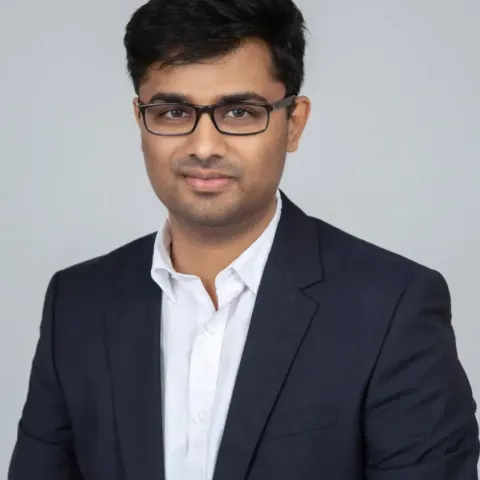
Yashwanth Nakka is the director of the Aerospace Robotics Laboratory at Georgia Tech. His research interests broadly include designing aerospace autonomous systems, spacecraft autonomy, planning (guidance) under uncertainty, and nonlinear dynamics and control. Earlier, he was a Robotics Technologist (2021-2024) at NASA Jet Propulsion Laboratory, where he led the research and development planning, controls, and estimation tasks on CADRE, EELS, and DARPA LINC. He received a B. Tech. in aerospace engineering from the Indian Institute of Space Science and Technology, India, in 2011, an M. Sc. degree in aerospace engineering from the University of Illinois Urbana-Champaign, IL, USA, in 2016, and an M. Sc. degree and a Ph.D. in space engineering from California Institute of Technology, CA, USA, in 2017, and 2021, respectively. He was an engineer for the GSAT-15 and 16 missions at the Indian Space Research Organization from 2011 to 2014. He received the JPL CADRE Team Award for his work on multi-agent autonomy. He won the best student paper award at the 2021 American Institute of Aeronautics and Astronautics Guidance, Navigation, and Controls conference and the best paper award at the 11th International Workshop on Satellite Constellations and Formation Flying.
 

Education

  • Ph.D. in Space Engineering - California Institute of Technology 2017 - 2021
  • M.S. in Space Engineering - California Institute of Technology 2016-2017
  • M.S. in Aerospace Engineering - University of Illinois Urbana-Champaign 2014-2016
  • B.Tech in Aerospace Engineering - Indian Institute of Space Science Technology 2007 - 2011

Distinctions & Awards

  • NASA Jet Propulsion Laboratory CADRE Team Award, 2024
  • Best Student Paper Award at AIAA Guidance, Navigation and Control Conference, 2021
  • David and Catherine Thompson Graduate Fellowship Fund for Space, 2020
  • Best Paper Award at 11th International Workshop on Satellite Constellations and Formation Flying, 2019
  • Keck Institute of Space Studies Affiliate, 2019
  • Excellent Reviewer Nomination, Journal of Guidance Control and Dynamics, 2018
  • Darryl G. Greenmayer Fellowship Recipient, 2016
  • Outstanding Performance Award, Indian Space Research Organization (ISRO), 2012 and 2013
  • Indian Space Research Organisation (ISRO) Scholarship Recipient, 2007 - 2011
Assistant Professor, Daniel Guggenheim School of Aerospace Engineering
Office
ESM Building 205
IRI And Role
Yashwanth
Nakka
Kumar
Show Regular Profile

John Christian

John Christian
External Website

Professor John Christian is the associate chair for graduate programs in the Daniel Guggenheim School of Aerospace Engineering at the Georgia Institute of Technology.  In addition to this role, he develops algorithms for extracting information from space sensor data. Prof. Christian is most well-known for his contributions in the use of visible/infrared space imagery, especially for celestial optical navigation (OPNAV), planetary terrain relative navigation (TRN), and star/asterism identification. His algorithms have been incorporated into numerous space exploration missions. 

Prior to joining Georgia Tech, Christian held academic positions at Rensselaer Polytechnic Institute (Associate Professor, 2020-2021; Assistant Professor, 2017-2019) and West Virginia University (Assistant Professor, 2013-2017). He was also a Summer Faculty Fellow with the Air Force Research Laboratory (AFRL) during the summer of 2021. Prior to his academic career, Christian was an engineer in the GNC Autonomous Flight Systems Branch at NASA Johnson Space Center (2010-2012).

Christian is active in numerous professional societies. He is an AIAA Associate Fellow and an associate editor of the AIAA Journal of Spacecraft and Rockets. He is also a member of the AAS Space Flight Mechanics Committee and an associate editor of the AAS Journal of the Astronautical Sciences.

He holds a Ph.D. in aerospace engineering from The University of Texas at Austin. He also holds a B.S. and M.S. in aerospace engineering from Georgia Tech.

Education

  • B.S., Aerospace Engineering, Georgia Institute of Technology;
  • M.S., Aerospace Engineering, Georgia Institute of Technology;
  • Ph.D., Aerospace Engineering, University of Texas at Austin

Distinctions & Awards

  • American Astronautical Society (AAS) Fellow, 2021
  • NASA Innovative Advanced Concepts (NIAC) Fellow, 2020
  • AIAA Associate Fellow, 2019
  • New Researcher of the Year, WVU Statler College of Engineering & Mineral Resources, 2015
  • Air Force Office of Scientific Research (AFOSR) Young Investigator Program (YIP) Award, 2015
  • AIAA Willy Z. Sadeh Graduate Award in Space Engineering and Space Sciences, 2007
Associate Professor and Associate Chair for Graduate Programs, Daniel Guggenheim School of Aerospace Engineering
Additional Research

Research

Lab/Collaborations:

  • Space Exploration Analysis Laboratory (SEAL)

Disciplines:

  • Flight Mechanics & Controls
  • Systems Design & Optimization

AE Multidisciplinary Research Areas:

  • Robotics, Autonomy, and Human Interactions
  • Space Exploration and Earth Monitoring
IRI And Role
John
Christian
Show Regular Profile

Thomas González Roberts

thomasgr@gatech.edu
Personal Website

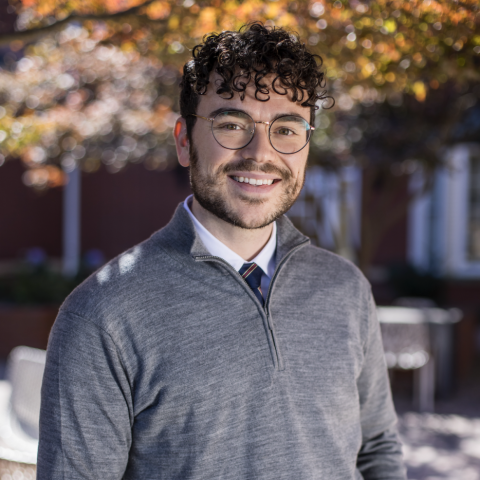
Thomas González Roberts is an Assistant Professor with a joint appointment in the Sam Nunn School of International Affairs and the Daniel Guggenheim School of Aerospace Engineering at the Georgia Institute of Technology. He is the Director of Georgia Tech’s Engineering Space Policy Laboratory. Using tools from observational astronomy and computational astrodynamics, Roberts studies the behavior of Earth-orbiting satellites to understand how space actors—from superpowers to start-ups—engage with outer space governance. His research interests include international coordination, sustainability, and security in space. Roberts’ work has been supported by the Harry S. Truman Scholarship Foundation, the National Science Foundation, and the Swiss State Secretariat for Education, Research, and Innovation, and earned recognition with the Massachusetts Institute of Technology’s (MIT) Prize for Open Data, the Geneva Centre for Security Policy’s Prize for Innovation in Global Security, and a placement on Forbes Magazine’s 30 Under 30 in Science list. He holds a PhD and SM in aeronautics and astronautics from MIT, an SM in technology and policy from MIT, and a BA in astrophysical sciences from Princeton University.


Assistant Professor, Guggenheim School of Aerospace Engineering, Sam Nunn School of International Affairs University
Office
Habersham 305
Additional Research
  • Commercial Space Activity
  • NASA And International Space Programs
  • Science And Technology Policy
  • Space Security
  • Space Sustainability
  • Flight Mechanics & Controls
  • Systems Design & Optimization
IRI And Role
Google Scholar
https://nam12.safelinks.protection.outlook.com/?url=https://scholar.google.com/citations?user=puzt2lAAAAAJ&hl=en&data=05|02|ychernet3@gatech.edu|fde24ad2170b4ba8a4c208ddeafac272|482198bbae7b4b258b7a6d7f32faa083|1|0|63892508
LinkedIn INTA Profile Page AE Profile Page
Thomas
Roberts
González
Show Regular Profile

Krishan Ahuja

Krishan Ahuja
krishan.ahuja@gtri.gatech.edu

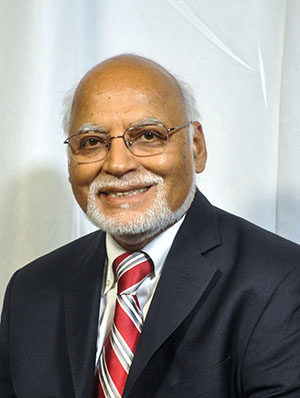
A 2019 inductee to the National Academy of Engineering, Ahuja has more than 35 years of research and development experience in aircraft noise research, acoustics facilities design, flow control, state-of-the-art instrumentation, and advanced signal processing. During his employment of 13 years at Lockheed Georgia Company in various capacities, including the head of the Aeroacoustics Research and acting manager of the Advanced Flight Sciences Department, he was the principal investigator and/or the program manager on several successfully completed projects funded by Lockheed, the U. S. Air Force and NASA. He joined the faculty of Georgia Institute of Technology as a Senior Faculty Research Leader in March 1989. He recently served in the capacity of the director of Georgia Tech Ireland. Ahuja is a former associate editor of the AIAA Journal and also a former Chairman of the AIAA Aeroacoustics Technical Committee. Ahuja has authored or co-authored over 180 technical articles or reports on a range of topics including acoustic shielding, fan noise, active flow control, flow/acoustic interactions, jet noise, cavity noise, automobile noise, sonic boom research, psychoacoustics, high-temperature fiber optics strain gauges, acoustic transducers, active noise control, tilt rotor noise, source separation, acoustic fatigue, duct acoustics, computational aeroacoustics, innovative flow visualization techniques, tornado signatures, rapid charging of batteries and others. The international media, including CNN and Beyond 2000, has covered his work.

Regents' Professor, School of Aerospace Engineering
Phone
404.385.1140
Office
Guggenheim 362
Additional Research

Propulsion; Aerodynamics; Acoustics and Dynamics

IRI And Role
Krishan
Ahuja
Show Regular Profile

Suresh Menon

Suresh Menon
suresh.menon@aerospace.gatech.edu
Website

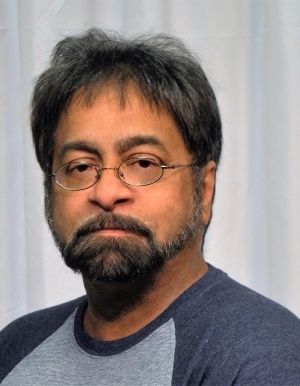
Professor Menon joined Flow Industries, Kent, Washington, as a research scientist, and in 1988, became a senior scientist and program manager for the computational fluid dynamics group in Quest Integrated, Inc. (formerly called Flow Research, Inc.). At Quest, Menon led research teams in various research projects such as the active control of combustion instability in ramjet engines, supersonic mixing studies, vertical takeoff and landing (VTOL) aircraft fluid dynamics, and hypersonic reentry problems. In 1992, he joined Georgia Institute of Technology as an associate professor and became a professor in 1997. He is currently the Hightower Professor of Engineering in Georgia Tech. Professor Menon is a world renowned expert in large-eddy simulation of turbulent reacting and non-reacting flows and has developed unique simulation capabilities to study pollutant formation, ozone depletion in high-altitude aircraft jet plumes and combustion in gas turbine and ramjet engines. He has been (and is currently) a principal investigator for a wide range of research projects funded by NASA, Department of Energy, Air Force Office of Scientific Research, Office of Naval Research, Defense Threat Reduction Agency. His work has been (and is also) supported by many industries including General Electric, Pratt & Whitney, Solar Turbines, Boeing, Safran (France), Hyundai (S. Korea), JAXA (Japan), IHI (Japan) and Rocketdyne-Aerojet. He has published and/or presented over 395 papers. Professor Menon is a Fellow of AAAS, Associate Fellow of AIAA, and a member of the American Physical Society, the American Society of Mechanical Engineers, the Combustion Institute and the Sigma Xi. He is a peer reviewer for numerous archival journals, NASA, NSF, DoD and DOE research proposals.

Professor, Guggenheim School of Aerospace Engineering
Phone
(404) 894-9126
Additional Research
  • Combustion
  • Data Driven Discovery
  • Energy Generation
  • Energy Storage, and Distribution
Suresh
Menon
Show Regular Profile

Beckett Zhou

Portrait of Beckett Zhou
beckett.zhou@gatech.edu
Departmental Bio

Beckett Y. Zhou is an Assistant Professor at the Guggenheim School of Aerospace Engineering at the Georgia Institute of Technology. His research team focuses on developing efficient aerodynamic and aeroacoustics simulation and optimization frameworks, supported by multi-fidelity methodologies and data-driven methods. 

Zhou received his master's degree from MIT in 2012 and his Ph.D. from the RWTH Aachen University in 2018 with a thesis entitled ‘Numerical Optimization for Airframe Noise Reduction. He subsequently performed post-doctoral research with NASA Langley Research Center (hosted by the National Institute of Aerospace) on the topic of adjoint-based broadband noise reduction via stochastic noise generation. He was a Lecturer in Aeroacoustics at the University of Bristol between March 2021 and October 2024, leading the computational aeroacoustics research in the Department of Aerospace Engineering.

Assistant Professor, Guggenheim School of Aerospace Engineering
Office
Guggenheim 341
IRI And Role
Beckett
Zhou
Show Regular Profile

Glen Chou

Glen Chou
chou@gatech.edu
Trustworthy Robotics Lab

Glen Chou joined Georgia Tech as an assistant professor with a joint appointment in the School of Cybersecurity & Privacy and the School of Aerospace Engineering in November 2024. He directs the Trustworthy Robotics Lab, which designs principled algorithms that can enable general-purpose robots and autonomous systems to operate capably, safely, and securely, while remaining resilient to real-world failures and uncertainty. To achieve this, his research leverages control theory and machine learning, while connecting to optimization, computer vision, formal methods, planning, human-robot interaction, and statistics. Glen is interested in broad applications of autonomy, including robotic manipulation, vision-based navigation, aerospace, and large-scale cyber-physical systems more generally.

Glen is from Northern California. He holds dual B.S. degrees in EECS and ME from UC Berkeley, as well as an M.S. and Ph.D. in ECE from the University of Michigan. Prior to joining Georgia Tech, Glen was a postdoc at MIT CSAIL.

Assistant Professor
Office
CODA E0962B
Additional Research
  • Control theory 
  • Formal methods
  • Human Robot Interaction
  • Machine learning
  • Optimization
  • Perception-based control
IRI And Role
Google Scholar
https://scholar.google.com/citations?hl=en&user=90whi3wAAAAJ&view_op=list_works&sortby=pubdate
CV Page
Glen
Chou
Show Regular Profile

Sarah H.Q. Li

Sarah H.Q. Li - Assistant Professor; Aerospace Engineering
sarahli@gatech.edu
Personal Website

Sarah Li will join the Daniel Guggenheim School of Aerospace Engineering in January 2025. Her research advances multi-agent models and algorithms to overcome challenges facing future air and space mobility systems. Her research lies at the intersection of game theory, stochastic control, and optimization to enable optimal and safe decision-making of autonomous systems in interactive settings. Sarah earned her Ph.D. in Aeronautics and Astronautics from the University of Washington and her B.A.Sc. in Engineering Physics from the University of British Columbia. She is currently a postdoctoral scholar at ETH Zurich in Information Technology and Electrical Engineering. She was a 2020 Zonta International Amelia Earhart Fellow and a 2022 University of Washington Condit Graduate Fellow. During her Ph.D., she interned with Microsoft Research to develop supply chain games and Loon to develop multi-disciplinary design optimization for stratospheric balloons.

Assistant Professor
Additional Research
  • Cyber-physical Systems
  • Game theory
  • Multi-agent Interactions
IRI And Role
Google Scholar
https://scholar.google.com/citations?hl=en&user=yZhro2IAAAAJ&view_op=list_works&sortby=pubdate
Sarah H.Q.
Li
Show Regular Profile

Wassim M. Haddad

Wassim M.  Haddad
wm.haddad@aerospace.gatech.edu
Personal page
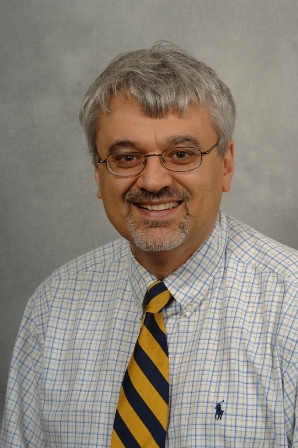
Wassim M. Haddad received the B.S., M.S., and Ph.D. degrees in mechanical engineering from Florida Tech in 1983, 1984, and 1987. Since 1994, he has been with the School of Aerospace Engineering at Georgia Tech, where he holds the rank of professor, the David Lewis Chair in Dynamical Systems and Control, and Chair of the Flight Mechanics and Control Discipline. He also holds a joint professor appointment with the School of Electrical and Computer Engineering at Georgia Tech. He is the co-founder, chairman of the board, and chief scientific advisor of Autonomous Healthcare, where from August 2012 to June 2015 he served as the president and chief executive officer. Dr. Haddad has made numerous contributions to the development of nonlinear control theory and its application to aerospace, electrical, and biomedical engineering. His transdisciplinary research in systems and control is documented in over 630 archival journal and conference publications, and seven books in the areas of science, mathematics, medicine, and engineering. Dr. Haddad is an National Science Foundation Presidential Faculty Fellow; a member of the Academy of Nonlinear Sciences; an IEEE Fellow; and the recipient of the 2014 AIAA Pendray Aerospace Literature Award.
Professor of Aerospace Engineering; David S. Lewis Professor of Dynamical Systems and Control
Additional Research
Defense / National Security; Healthcare Security; Large-Scale or Distributed Systems
Research Focus Areas
Wassim M.
Haddad
Show Regular Profile