Benjamin Emerson

Benjamin Emerson
bemerson@gatech.edu
Departmental Bio

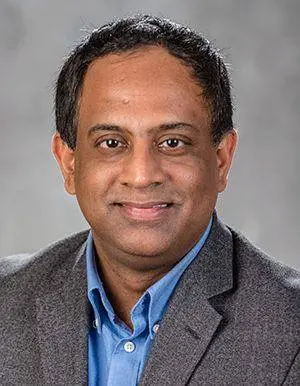
Ben Emerson completed his Ph. D. in Aerospace Engineering from Georgia Tech in August, 2013. Since then, Ben has worked as a Research Engineer at the Ben T. Zinn Combustion Lab at Georgia Tech. Ben’s research portfolio includes projects on combustion instabilities, alternative fuels, and combustion system R&D with a core focus and motivation of cleaner combustion. Ben’s research primarily consists of three core competencies, which are experimental combustion system development, combustor diagnostics, and combustion theory and modeling. Ben’s combustion system development work spans a wide variety of applications, from small lab-scale burners to combustor rigs that test full-scale gas turbine combustor hardware. His combustor diagnostics work encompasses the state of the art optical diagnostic techniques for reacting flow field measurements and imaging, and aims to implement those techniques in both laboratory-scale and large-scale rig tests. Finally, Ben’s combustion theory and modeling work is geared towards analysis of experimental datasets, development of reduced-order engineering tools, and the development of a suite of hydrodynamic stability analysis tools. Together, these core competencies form the pillars of Ben’s research, which facilitates the design of cleaner-burning combustion systems.

Senior Research Engineer, Guggenheim School of Aerospace Engineering
Phone
404-385-0413
Office
CNES, 216
Additional Research

Hydrogen Utilization, Hydrogen combustion in gas turbines, combustion instabilities, alternative fuels, cleaner combustion system R&D, experimental combustion system development, combustor diagnostics, and combustion theory and modeling

Benjamin
Emerson
Show Regular Profile

Jinho Park

Jinho Park
jinho.park@gtri.gatech.edu
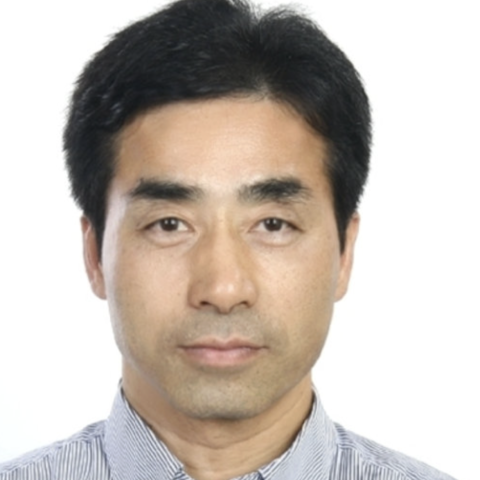
Research Scientist II
Additional Research
Hydrogen Generation, Hydrogen Utilization, Electrochemical production of green hydrogen, Design/synthesis of high-performance electrocatalysts for water electrolysis and PEMFCs, design/synthesis/characterization of functional materials for energy storage systems, energy conversion systems, fuel cells, water electrolyzers, ammonia cracking, multifunction sensors
IRI And Role
GTRI
Geogia Tech Research Institute
LinkedIn
Jinho
Park
Show Regular Profile

Ronald Chance

Ronald Chance
ronald.chance@chbe.gatech.edu
Departmental Bio

Dr. Chance retired from Global Thermostat at the end of 2022, where he served as a Senior Science Advisor. He continues at the Georgia Institute of Technology where he serves as an Adjunct Professor. Dr. Chance began his career with Honeywell Corporation, holding a number of research positions including Research Manager for Electronic Materials.

In 1986, he joined Exxon as the Director of their Polymers and Fluids Laboratory, later serving as Division Manager for their Paramins Technology division, and as Distinguished Scientific Advisor in ExxonMobil’s Corporate Strategic Research Laboratories. Dr. Chance retired from ExxonMobil in 2006 and joined the Georgia Institute of Technology as a faculty member with a joint appointment in the School of Chemical and Biomolecular Engineering and the School of Chemistry and Biochemistry, continuing also as Distinguished Scientific Advisor Emeritus at ExxonMobil from 2006-2009. 

He joined Algenol Biofuels (2009-2019) as Executive Vice President for Engineering. Dr. Chance's scientific interests are focused on CO2 capture and utilization, including Direct Air Capture, as a mitigation strategy for climate change. 

Dr. Chance has organized several international scientific meetings and served on numerous university and industrial advisory boards. He has published over 150 peer-reviewed articles, edited two books, and authored over 30 patents. He was elected Fellow in The American Physical Society in 1988 and was the 2018 recipient of the Lawrence B. Evans Award from the American Institute of Chemical Engineers, an institute level award for career achievement.

Professor of the Practice
Phone
(404) 385-1931
Office
B-H 421
Additional Research
Hydrogen Generation, Hydrogen Utilization, Energy, CO2 capture and utilization, materials for CO2 separation, biofuels from cyanobacteria
IRI And Role
Ronald
Chance
R.
Show Regular Profile

David S. Citrin

David S. Citrin
david.citrin@ece.gatech.edu
Website

Professor Citrin earned a B.A. from Williams College (1985) and a M.S. (1987) and a Ph.D. (1991) from the University of Illinois, all in physics, where his dissertation was on the optical properties of semiconductor quantum wires. Subsequently, he was a post-doctoral research fellow at the Max Planck Institute for Solid State Research, Stuttgart, Germany (1992-1993) and Center Fellow at the Center for Ultrafast Optical Science at the University of Michigan (1993-1995). Dr. Citrin was an assistant professor of physics and materials science at Washington State University (1995 to 2001).

Professor Citrin joined the faculty at Georgia Tech in 2001 where his work focuses on terahertz technology and nanotechnology. He is a recipient of a Presidential Early Career Award for Scientists and Engineers and of a Friedrich Bessel Award from the Alexander Von Humboldt Stiftung. In addition, he is Project Coordinator on Nonlinear Optics and Dynamics at Georgia Tech-CNRS UMI 2958 located at Georgia Tech-Lorraine. Professor Citrin’s research in terahertz imaging is featured in the Georgia Tech press release, ”Imaging Technique Unlocks the Secrets of 17th Century Artists"; a list of some media placements from the press release may be found at http://photonics.georgiatech-metz.fr/node/33.

Research interests: 

  • Terahertz nondestructive testing of materials
  • Terahertz characterization of art and cultural heritage
  • Chaos and nonlinear dynamics in external-cavity semiconductor lasers
  • Nanophotonics
  • High-speed electronic, photonic, and optoelectronic devices
  • Nonlinear optical properties of semiconductor materials and devices
Professor
Phone
404.894.2000
Office
MIRC 211
David
Citrin
S.
Show Regular Profile

Alan Erera

Alan Erera
alan.erera@isye.gatech.edu
Website

Alan Erera is a Manhattan Associates/Dabbiere Chair and the Associate Chair for Research in the H. Milton Stewart School of Industrial and Systems Engineering at Georgia Tech. He is also the faculty director for the M.S. in Supply Chain Engineering program, Co-Director for Global Transportation in the Supply Chain & Logistics Institute, and Co-Executive Director of the Georgia Tech Panama Logistics Innovation & Research Center.

His research focuses on transportation and logistics systems planning and control, with an emphasis on planning under uncertainty and real-time operational control.  His recent work has addressed dynamic vehicle routing systems for same-day distribution; resilient logistics network design for food supply chains; service network design, linehaul equipment management, and driver scheduling for consolidation freight carriers; robust container fleet management for global shipping companies; and robust and flexible vehicle routing system planning and control for distribution companies. He has written extensively in these subject areas, and has delivered over 100 technical presentations and invited lectures. His research program has been supported by federal agencies (DHS, USDOT, NSF) and major U.S. freight carriers and manufacturing firms.

He received his B.S. Eng. from Princeton University, and his Ph.D. from the University of California, Berkeley.

Manhattan Associates/Dabbiere Associate Chair for Research, School of Industrial and Systems Engineering
Faculty Director, MS Supply Chain Engineering
Phone
(404) 385-0358
Additional Research

Hydrogen Storage/Transport; System Design & Optimization

Alan
Erera
Show Regular Profile

Dan Kotlyar

Dan Kotlyar
dan.kotlyar@me.gatech.edu
Website

Dr. Dan Kotlyar is an Assistant Professor in the Nuclear and Radiological Engineering, G.W.W. School of Mechanical Engineering. He received his B.Sc. in Engineering in 2008, MSc in Nuclear Engineering in 2010, and PhD in Nuclear Engineering in 2013 from Ben-Gurion University, Israel. In 2014, he joined the University of Cambridge as a Research Associate in the Engineering Design Center. In 2014, he was elected as a Research Fellow at Jesus College. He is the recipient of the NRC Faculty Development Fellowship. Dr. Kotlyar’s research interests include development of numerical methods and algorithms for coupled Monte Carlo, fuel depletion and thermal hydraulic codes. In particular, he specializes in applying these methods to the analysis of advanced reactor systems. Dr. Kotlyar’s research also focuses on optimizing the performance of various fuel cycles in terms of fuel utilization, proliferation, and cost. Dr. Kotlyar profoundly believes in education through research and thus integrates practical reactor system design into his lectures.

Associate Professor, Woodruff School of Mechanical Engineering
Additional Research

Nuclear

University, College, and School/Department
Dan
Kotlyar
Show Regular Profile

Srinivas Garimella

Srinivas Garimella
srinivas.garimella@me.gatech.edu
Website

Dr. Garimella began at Tech in August 2003 as an Associate Professor and Director of the Sustainable Thermal Systems Laboratory. Prior, he was an Associate Professor at Iowa State University, an Assistant and Associate Professor at Western Michigan University, a Research Scientist at Battelle Memorial Institute, and a Senior Engineer at General Motors.

Professor, Woodruff School of Mechanical Engineering
Hightower Chair in Engineering
Phone
(404) 894-7479
Additional Research

Thermal Systems

University, College, and School/Department
Srinivas
Garimella
Show Regular Profile

William Koros

William Koros
wjk@chbe.gatech.edu
ChBE Profile Page

Materials for membranes, sorbents, and barrier packaging applications rely upon the same fundamental principles. Thermodynamically controlled partitioning of a penetrant, such as carbon dioxide into a membrane, sorbent or barrier packaging layer is the first step in the transport process. If the material is a polymer, cooperative motions of the matrix enable diffusive motion by the penetrant. In highly rigid carbon molecular sieves and zeolites, motion of the matrix is negligible, and penetrant transport is governed by the relative size of pre-existing pores and the penetrant molecule.

Koros’s group is a leader in developing advanced materials for membranes, sorbents, and barrier applications by optimization materials to either promote or retard transport of specific components. For instance, for a chosen penetrant such as carbon dioxide, the Koros group can create a barrier, a selective membrane, or a sorbent by materials engineering. Work is also underway in the Koros group to form “mixed matrix composite” materials comprised of blends of metal organic framework or other specialty components within the matrix of a conventional polymer. This approach allows further optimization of transport properties without sacrificing the ease of processing associated with conventional polymers.

Effects due to non equilibrium thermodynamic and non-Fickian transport phenomena are additional topics his group studies. Long lived conditioning effects due to exposure of membranes and barriers to elevated concentrations of certain penetrants are typical of such non equilibrium phenomena. Protracted aging of glassy polymers, carbons, and inorganic membranes after formation or conditioning treatments also are of interest to his research group. In many cases, these effects seem to defy logic—until one realizes that an expanded set of rules governs these out-of-equilibrium materials.

Professor, School of Chemical and Biomolecular Engineering
GRA Eminent Scholar in Membranes
Roberto C. Goizueta Chair for Excellence in Chemical Engineering
Phone
404.385.2845
Office
B-H 447
Additional Research

Polymers; Seperation Membranes; Heat Transfer

Google Scholar
https://scholar.google.com/citations?hl=en&user=nWxkxtgAAAAJ&view_op=list_works&sortby=pubdate
William
Koros
Show Regular Profile

Shannon Yee

Shannon Yee
shannon.yee@me.gatech.edu
ME Profile Page

Shannon Yee began as an Assistant Professor in the George W. Woodruff School of Mechanical Engineering in January 2014. He completed his Ph.D. at the University of California - Berkeley under the supervision of Prof. Arun Majumdar, Prof. Chris Dames, and Prof. Rachel Segalman. In 2010, he was named the first fellow to the U.S. Dept. of Energy 's Advanced Research Project Agency - Energy (ARPA-E) assisting to form the agency in its inaugural year. In 2008 he was awarded the prestigious Hertz Fellowship to support his graduate studies and research in energy. Yee received his Master 's degree in Nuclear Engineering in 2008 from The Ohio State University where he was a U.S. Dept. of Energy Advanced Fuel Cycle Initiative Fellow. He received his Bachelor 's degree in Mechanical Engineering in 2007, also from The Ohio State University.

Professor, George W. Woodruff School of Mechanical Engineering
Phone
404.385.2176
Office
Love 307
Additional Research

Heat Transfer; Combustion and Energy Systems; Micro and Nano Engineering; Nuclear & Radiological Engineering

Google Scholar
https://scholar.google.com/citations?hl=en&user=GSDT2XYAAAAJ&view_op=list_works&sortby=pubdate
The Scalable Thermal Engineering Lab (STEEL)
Shannon
Yee
Show Regular Profile