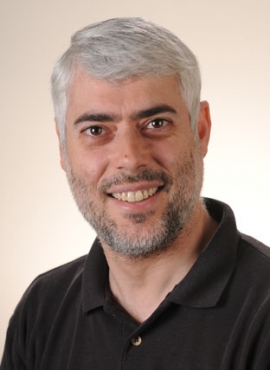
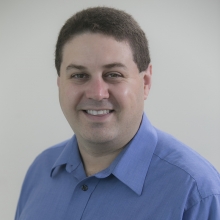
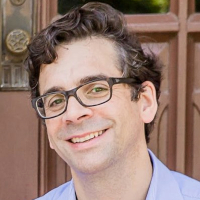
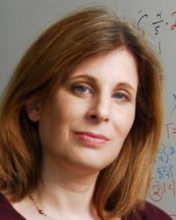
Kaye Husbands Fealing

Kaye Husbands Fealing's profile picture
khf@pubpolicy.gatech.edu

Kaye Husbands Fealing is the Assistant Director of the Social, Behavioral and Economic Sciences at the National Science Foundation (NSF) and co-chair of the Subcommittee on Social and Behavioral Sciences of the Committee on Science of the National Science & Technology Council (NSTC). She is the former Dean of the Ivan Allen College of Liberal Arts at the Georgia Institute of Technology and a former Chair of the School of Public Policy Georgia Tech, where she currently holds the title professor. She specializes in science of science and innovation policy, the public value of research expenditures, and broadening participation in STEM fields and the workforce.
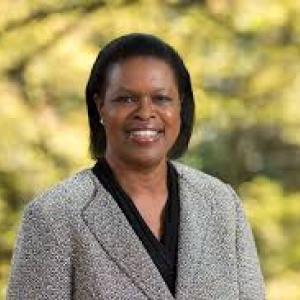
Prior to her positions at Georgia Tech, Husbands Fealing taught at the Humphrey School of Public Affairs, University of Minnesota, and she was a study director at the National Academy of Sciences. Prior to the Humphrey School, she was the William Brough professor of economics at Williams College, where she began her teaching career in 1989. She developed and was the inaugural program director for NSF's Science of Science and Innovation Policy program and co-chaired the Science of Science Policy Interagency Task Group, chartered by the Social, Behavioral and Economic Sciences Subcommittee of the NSTC. At NSF, she also served as an Economics Program director. Husbands Fealing was a visiting scholar at Massachusetts Institute of Technology’s Center for Technology Policy and Industrial Development, where she conducted research on NAFTA’s impact on the Mexican and Canadian automotive industries, and research on strategic alliances between aircraft contractors and their subcontractors.

Husbands Fealing is an elected member of the American Academy of Arts and Sciences, is an Elected Fellow of the National Academy of Public Administration, an Elected Fellow of the American Association for the Advancement of Science (AAAS). She was awarded the 2023 Carolyn Shaw Bell Award from the American Economic Association's Committee on the Status of Women in the Economics Profession, and the 2017 Trailblazer Award from the National Medical Association Council on Concerns of Women Physicians. She is a member of the International Women’s Forum-Georgia Chapter, and member of the YWCA's Academy of Women Achievers. She serves as a member on AAAS' Executive Board, the National Academy of Public Administration's board, the trustee board for the R. Howard Dobbs Jr. Foundation, and the Society for Economic Measurement's board. She has served on several committees and panels, including: AAAS committees; National Academies’ panels; Council of Canadian Academies panels; American Academy of Arts and Sciences working groups; NSF’s Social, Behavioral, and Economic Sciences Advisory Committee, STEM Education Advisory Committee, and the Committee on Equal Opportunities in Science and Engineering; NIH’s National Institute of General Medical Sciences Council; General Accountability Office’s Science, Technology Assessment, and Analytics Polaris Council; and American Economic Association’s Committee on the Status of Women in the Economic Profession. At Georgia Tech, she co-chaired the Arts@Tech Institute Strategic Planning committee, and she has served on the Institute for Data Engineering and Science Council, the Intellectual Property Advisory Board, and other committees.

Husbands Fealing holds a Ph.D. in economics from Harvard University, and a B.A. in mathematics and economics from the University of Pennsylvania.

Professor, School of Public Policy
Assistant Director of the Social, Behavioral and Economic Sciences at the National Science Foundation (NSF)
Office
Savant 171
Additional Research
  • Data Policy
  • Public Policy
University, College, and School/Department

Justin Romberg

Justin Romberg's profile picture
jrom@ece.gateach.edu

Dr. Justin Romberg is the Schlumberger Professor and the Associate Chair for Research in the School of Electrical and Computer Engineering and the Associate Director for the Center for Machine Learning at Georgia Tech.

Dr. Romberg received the B.S.E.E. (1997), M.S. (1999) and Ph.D. (2004) degrees from Rice University in Houston, Texas. From Fall 2003 until Fall 2006, he was a Postdoctoral Scholar in Applied and Computational Mathematics at the California Institute of Technology. He spent the Summer of 2000 as a researcher at Xerox PARC, the Fall of 2003 as a visitor at the Laboratoire Jacques-Louis Lions in Paris, and the Fall of 2004 as a Fellow at UCLA's Institute for Pure and Applied Mathematics. In the Fall of 2006, he joined the Georgia Tech ECE faculty. In 2008 he received an ONR Young Investigator Award, in 2009 he received a PECASE award and a Packard Fellowship, and in 2010 he was named a Rice University Outstanding Young Engineering Alumnus. He is currently on the editorial board for the SIAM Journal on the Mathematics of Data Science, and is a Fellow of the IEEE.

His research interests lie on the intersection of signal processing, machine learning, optimization, and applied probability.

Schlumberger Professor
Additional Research

Data Mining

Research Focus Areas

Joel Sokol

Joel Sokol's profile picture
jsokol@isye.gatech.edu

Joel Sokol is the Harold E. Smalley Professor in the H. Milton Stewart School of Industrial and Systems Engineering at Georgia Tech. He is also Director of the interdisciplinary Master of Science in Analytics degree (on-campus and online).

His primary research interests are in sports analytics and applied operations research. He has worked with teams or leagues in all three of the major American sports. Dr. Sokol's LRMC method for predictive modeling of the NCAA basketball tournament is an industry leader, and his non-sports research has won the EURO Management Science Strategic Innovation Prize and been a finalist for the Cozzarelli Prize.

Dr. Sokol has also won recognition for his teaching and curriculum development from IIE and the NAE, held the Fouts Family Associate Professorship for a three-year term, and is the recipient of Georgia Tech's highest awards for teaching. He served two terms as INFORMS Vice President of Education, and is a past Chair and founding officer of the INFORMS section on sports operations research.

Dr. Sokol's Ph.D. in operations research is from MIT, and his bachelor's degrees in mathematics, computer science, and applied sciences in engineering are from Rutgers University.

Fouts Family Associate Professor and Director, MS in Analytics
Additional Research
  • Data Analytics
  • Materials & Manufacturing 
Research Focus Areas

Jeffrey Young

 Jeffrey Young's profile picture
jyoung9@gatech.edu

I am currently a Senior Research Scientist at Georgia Tech working in the School of Computer Science in the College of Computing since 2015. Previously, I have worked as as a research scientist in the School of Computational Science and Engineering (CSE) from 2013 to 2015. This work focused on advanced user support and benchmarking for the Keeneland project and investigating architecture-related research topics for Dr. Jeff Vetter’s Future Technologies Group at Oak Ridge National Lab.

With a background in computer architecture, my main research interests are focused on the intersection of high-performance computing and novel accelerators including GPUs, Xeon Phi, FPGAs, and Arm SVE processors. I am currently working on a collaborative research program for near-memory computing with High Bandwidth Memory (HBM) for processors and GPUs, SuperSTARLU, which is funded by the NSF. I am co-director of Georgia Tech’s Center for High Performance Computing, and I am also the director of a novel architecture testbed, the CRNCH Rogues Gallery, that aims to simplify and democratize access to novel post-Moore accelerators in the neuromorphic, reversible, and novel networking spaces.

I defended my PhD in August 2013 in the area of computer architecture working under Dr. Sudhakar Yalamanchili. More information on this networks- and memory-related research can be found under the publications tab.

Research Scientist II
Research Focus Areas
University, College, and School/Department

Gari Clifford

 Gari Clifford's profile picture
gari@gatech.edu

Dr. Gari Clifford is a tenured Professor of Biomedical Informatics and Biomedical Engineering at Emory University and the Georgia Institute of Technology, and the Chair of the Department of Biomedical Informatics (BMI) at Emory. His research focuses on the application of signal processing and machine learning to medicine to classify, track and predict health and illness. His focus research areas include critical care, digital psychiatry, global health, mHealth, neuroinformatics and perinatal health. After training in Theoretical Physics, he transitioned to AI and Engineering for his doctorate (DPhil) at the University of Oxford in the 1990’s. He subsequently joined MIT as a postdoctoral fellow, then Principal Research Scientist where he managed the creation of the MIMIC II database, the largest open access critical care database in the world. He later returned as an Associate Professor of Biomedical Engineering to Oxford, where he helped found its Sleep & Circadian Neuroscience Institute and served as Director of the Centre for Doctoral Training in Healthcare Innovation at the Oxford Institute of Biomedical Engineering. As Chair, Dr Clifford has established BMI as a leading center for critical care and mHealth informatics, and as a champion for open access data and open source software in medicine, particularly through his leadership of the PhysioNet/CinC Challenges and contributions to the PhysioNet Resource. Despite this, he is a strong supporter of commercial translation, working closely with industry, and serves as CTO of MindChild Medical, a spin out from his research at MIT.

Chair, BMI & Professor of BMI and BME
Additional Research

Health Information Technology

Research Focus Areas
University, College, and School/Department

Dana Randall

Dana Randall's profile picture
randall@cc.gatech.edu

Dana Randall is an American computer scientist. She works as the ADVANCE Professor of Computing, and adjunct professor of mathematics at the Georgia Institute of Technology. She is also an External Professor of the Santa Fe Institute. Previously she was executive director of the Georgia Tech Institute of Data Engineering and Science (IDEaS) that she co-founded, and director of the Algorithms and Randomness Center. Her research include combinatorics, computational aspects of statistical mechanics, Monte Carlo stimulation of Markov chains, and randomized algorithms.

Professor
Research Focus Areas

Craig Tovey

Craig Tovey's profile picture
craig.tovey@isye.gatech.edu

Craig Tovey is a Professor in the H. Milton Stewart School of Industrial and Systems Engineering at Georgia Tech. He also co-directs CBID, the Georgia Tech Center for Biologically Inspired Design. 

Dr. Tovey's principal research and teaching activities are in operations research and its interdisciplinary applications to social and natural systems, with emphasis on sustainability, the environment, and energy. His current research concerns inverse optimization for electric grid management, classical and biomimetic algorithms for robots and webhosting, the behavior of animal groups, sustainability measurement, and political polarization.  

Dr. Tovey received a Presidential Young Investigator Award in 1985 and the 1989 Jacob Wolfowitz Prize for research in heuristics. He was granted a Senior Research Associateship from the National Research Council in 1990, was named an Institute Fellow at Georgia Tech in 1994, and received the Class of 1934 Outstanding Interdisciplinary Activity Award in 2011. In 2016, Dr. Tovey was recognized by the ACM Special Interest Group on Electronic Commerce with the Test of Time Award for his work as co-author of the paper “How Hard Is It to Control an Election?” He was a 2016 Golden Goose Award recipient for his role on an interdisciplinary team that studied honey bee foraging behavior which led to the development of the Honey Bee Algorithm to allocate shared webservers to internet traffic. 

Dr. Tovey received an A.B. in applied mathematics from Harvard College in 1977 and both an M.S. in computer science and a Ph.D. in operations research from Stanford University in 1981. 

Professor; School of Industrial and Systems Engineering
Phone
404.894.3034
Office
Groseclose 420
Additional Research
  • Algorithms & Optimizations
  • Energy
Research Focus Areas
University, College, and School/Department

Chao Zhang

 Chao Zhang's profile picture
zhang@gatech.edu

Chao Zhang is an Assistant Professor at the School of Computational Science and Engineering, Georgia Institute of Technology. His research area is data mining, machine learning, and natural language processing. His research aims to enable machines to understand text data in more label-efficient and robust way in open-world settings. Specific research topics include weakly-supervised learning, out-of-distribution generalization, interpretable machine learning, and knowledge extraction and reasoning. He is a recipient of Google Faculty Research Award, Amazon AWA Machine Learning Research Award, ACM SIGKDD Dissertation Runner-up Award, IMWUT distinguished paper award, and ECML/PKDD Best Student Paper Runner-up Award. Before joining Georgia Tech, he obtained his Ph.D. degree in Computer Science from University of Illinois at Urbana-Champaign in 2018.

Assistant Professor
Additional Research

Data Mining

Research Focus Areas
University, College, and School/Department

Matthew Torres

Matthew Torres's profile picture
matthew.torres@biology.gatech.edu

Matt is a former Tar Heel from UNC Chapel Hill. His training is in mass spectrometry-based proteomics and G protein signaling. He has been investigating PTMs since 2001. He is also a co-director of the Systems Mass Spectrometry Core (SYMS-C) facility at Georgia Tech.

Associate Professor
Phone
404-385-0401
Office
EBB 4009
Additional Research
Bioinformatics. My lab integrates mass spectrometry and experimental cell biology using the yeast model system to understand how networks of coordinated PTMs modulate biological function. Now well into the era of genomics and proteomics, it is widely appreciated that understanding individual genes or proteins, although necessary, is often not sufficient to explain the complex behavior observed in living organisms. Indeed, placing context on the dynamic network of relationships that exist between multiple proteins is now one of the greatest challenges in Biology. Post-translational modifications (PTMs, e.g. phosphorylation, ubiquitination and over 200 others), which can be readily quantified by mass spectrometry (MS), often mediate these dynamic relationships through enhancement or disruption of binding and/or catalytic properties that can result in changes in protein specificity, stability, or cellular localization. We use a combination of tools including quantitative mass spectrometry, yeast genetics, dose-response assays, in vitro biochemistry, and microscopy to explore testable systems-level hypotheses. My current research interests can be grouped into four main categories:(1)coordinated PTM-based regulation of dynamic signaling complexes, (2) cross-pathway coordination by PTMs, (3) PTM networks in stress adaptation, and (4) technology development for rapid PTM network detection.
Research Focus Areas
Google Scholar
https://scholar.google.com/citations?user=YU_CG7wAAAAJ&hl=en&oi=ao