SEI and EPICenter Announce James G. Campbell Fellowship and Spark Awards Recipients
Nov 30, 2023 — Atlanta, GA

Photo collage of Jordan Hale, Jake Churchill, Henry Kantrow, Betina Arkhurst, Andrew Hill, Jacob Tjards, Emily Marshall
The Strategic Energy Institute (SEI) of Georgia Tech is excited to announce that Bettina Arkhurst is the 2023 recipient of the James G. Campbell Fellowship Award. Arkhurst’s commitment to academics, research, and community service has been recognized by the award committee. She is a Ph.D. candidate advised by Katherine Fu, professor in the George W. Woodruff School of Mechanical Engineering.
Arkhurst holds a bachelor’s degree in mechanical engineering from Massachusetts Institute of Technology and a master’s degree in mechanical engineering from Georgia Tech. Her research seeks to understand how concepts of energy justice can be applied to renewable energy technology design to better consider marginalized and vulnerable populations. She strives to create frameworks and tools for mechanical engineers to apply as they design energy technologies for all communities.
As an energy equity intern at the National Renewable Energy Laboratory, Arkhurst has worked with colleagues to better understand the role of researchers and engineers in the pursuit of a more just clean energy transition. She is also a leader in the Woodruff School’s graduate student mental health committee, which seeks to improve the culture around graduate student mental health and well-being. Additionally, Arkhurst is working with the Georgia Tech Center for Sustainable Communities Research and Education (SCoRE) to develop a course on community engagement and engineering that will launch in Spring 2024.
The Energy, Policy, and Innovation Center (EPICenter) and the Strategic Energy Institute are proud to announce the 2023 Spark Award recipients: Jake Churchill, Jordan R. Hale, Andrew G. Hill, Henry J. Kantrow, Emily Marshall, and Jacob W Tjards. The award honors outstanding leadership in advancing student engagement in energy research.
Churchill is a master’s student in mechanical engineering advised by Akanksha Menon, assistant professor in the Woodruff School. Working with Menon in the Water-Energy Research Lab, his research focuses on coupling reverse osmosis desalination with renewable energy and storage technologies to provide clean, sustainable, and affordable water in the face of growing global water stress. Churchill has led the Georgia Tech Energy Club’s Solar District Cup team for three years, guiding students interested in solar energy careers. He has also been involved with several SEI initiatives, including EPICenter’s high school summer camp, Energy Unplugged. He is currently facilitating a student-led study to quantify the benefits of cleaning photovoltaic panels using the rooftop array at the Carbon Neutral Energy Solutions Lab.
Hale is pursuing a Ph.D. in chemistry, specializing in theoretical and computational chemistry under Joshua Kretchmer, assistant professor in the School of Chemistry and Biochemistry. His current research focus is utilizing various quantum dynamics formalisms and unique computational techniques to identify the microscopic mechanisms of electron transport in perovskite solar cells. Hale has mentored high school students, teaching them the fundamentals of computational chemistry and various programming skills. Additionally, he has been actively engaged with undergraduate students from other universities both in and out of Georgia through the Summer Theoretical and Computational Chemistry workshop.
Hill is a Ph.D. candidate in the Soper Lab in the School of Chemistry and Biochemistry. His research is focused on the activation of strong chemical bonds using Earth-abundant metals for energy conversion and storage. He has taken an active leadership role on campus, in part through service as the president of the Georgia Tech Chemistry Graduate Student Forum.
Marshall is a second-year graduate student working for Alan Doolittle, professor in the School of Electrical and Computer Engineering. She uses specialized molecular beam epitaxy techniques to grow high-quality III-nitride materials for next-generation power, radio frequency, and optoelectronic devices. Her current research focuses on improving the fundamental understanding of the scandium catalytic effect to optimize the growth of scandium aluminum nitride, a material that shows great promise for applications in future power grids. In addition to her research, Marshall is committed to teaching, having volunteered for five semesters serving her fellow students as a peer instructor at the Hive Makerspace and currently training junior members of her lab to grow semiconductors via molecular beam epitaxy. After earning her master’s and Ph.D., she hopes to continue teaching, mentoring, and connecting others across the world in an effort to bring about a brighter future.
Kantrow is a Ph.D. candidate in the School of Chemical and Biomolecular Engineering, co-advised by Natalie Stingelin and Carlos Silva. His research seeks to understand the photo physics of semiconducting polymers operating in dynamic dielectric environments and to provide material design guidelines for solar fuel technologies. He is an active student leader in the Center for Soft Photo-Electrochemical Systems, where he also serves on the energy justice committee. He served as the secretary of the Association for Chemical Engineering Graduate Students (AChEGS) in 2022 and continues to mentor first-year graduate students in AChEGS and through the Pride Peers Program at Georgia Tech.
Tjards is a graduate research assistant at Georgia Tech’s Sustainable Thermal Systems Laboratory. He graduated with a bachelor’s degree in mechanical engineering from Georgia Tech in 2021 before beginning his Ph.D. program, where he is studying energy systems. Tjards’ research is focused on modeling new manufacturing processes of drywall and aluminum to reduce water consumption during production. Additionally, he is working on a new technique for water purification. While in school, he has been a teaching assistant and instructor for the undergraduate mechanical engineering course on energy systems analysis and design (ME 4315). In his free time, Tjards enjoys Formula 1 racing, Georgia Tech baseball games, and woodworking.
Priya Devarajan | Research Communications Program Manager, SEI
Georgia Tech to Help Develop State’s First Climate Action Plan
Nov 28, 2023 — Atlanta, GA

Georgia Tech researchers will help the state develop its first climate action plan.
Georgia Tech researchers have spent years diving deep into climate solutions for Georgia. Now, the state Department of Natural Resources’ Environmental Protection Division has tapped them to help develop the state’s first climate action plan.
The plan will help the state compete for up to $500 million in federal funding for climate mitigation efforts under the 2022 Inflation Reduction Act. Under a contract with the agency, the Georgia Tech team will work with partners across Georgia to help the state develop its greenhouse gas inventory, develop a plan to address the most important immediate opportunities the state can take to reduce its greenhouse gas emissions, and potentially help develop policies and programs to reach those goals.
“Georgia Tech and our academic, business, and community partners from across the state are uniquely suited to help Georgia identify implementation-ready solutions that can significantly reduce emissions and have beneficial impacts on Georgia communities,” said Marilyn A. Brown, Regents’ Professor and Brook Byers Professor of Sustainable Systems in the School of Public Policy.
“As part of our work with Drawdown Georgia, we already have been deeply involved in identifying climate pollution reduction strategies to drive economic and employment growth, improve air quality, deliver benefits to under-resourced residents, and protect the environment. That work gives us a great head start in providing the state the information it needs to develop Georgia’s first climate action plan,” Brown said.
Georgia Tech-Built Emissions Tracker Key Component
Drawdown Georgia is an initiative of the Ray C. Anderson Foundation to accelerate progress toward net zero greenhouse gas emissions in Georgia. Brown led the interdisciplinary science and policy team that helped develop the plan’s recommendations.
Central to the project is the climate emissions tracker developed at Georgia Tech as part of that project. The tool provides monthly insights into carbon emissions across Georgia’s 159 counties, providing more timely, accurate, and cost-effective data than the traditional tools used in other climate planning efforts.
The U.S. Environmental Protection Agency reviewed the tracker and gave special permission for the state to use it, said William J. Drummond, associate professor in the School of City & Regional Planning and co-principal investigator on the project.
Many other states will instead have to use more traditional bottom-up inventories that take longer to create and are not as frequently updated, he said.
“The work we have done has been peer-reviewed and published, and so it has a level of authoritativeness that other states may not enjoy,” said Drummond, who led the tracker’s development. “We are uniquely positioned to identify actionable solutions for Georgia, help the state meet its incredibly tight timeline, and give Georgia a competitive advantage that other states just can’t match.”
The Atlanta Regional Commission, which received separate funding to make a plan specific to metro Atlanta, also will use the tracker in its work.
State Plan Due in March
The state’s priority plan is due in March, with the full plan due a year later.
“The Georgia Environmental Protection Division is excited to work with Georgia Tech in the development of the state's first climate action plan and appreciates all the work that Georgia Tech and other Drawdown Georgia partners have done to lay the groundwork for this project,” said DeAnna Oser, assistant branch chief of the Georgia Environmental Protection Division’s Air Protection Branch.
The effort is focused on implementation-ready solutions. Brown said proposals could include projects that advance transportation electrification, energy-efficient housing, climate-smart agriculture, forest management, and urban tree canopies, among other opportunities.
She said it is exciting to see the years of work her team has put into climate mitigation practices and policies to help move Georgia closer to being climate-neutral.
“We’ve always hoped that this work would have real policy impacts that will help improve our environment, economy, and society,” Brown said. “It’s exhilarating to see the state recognize and incorporate our work, and I look forward to seeing where it leads.”
Michael Pearson
Ivan Allen College of Liberal Arts
Omar Asensio Talks About His Work, Visiting Fellowship at Harvard Business School, and More
Nov 21, 2023 — Atlanta, GA

Omar Asensio, associate professor and director of the Data Science and Policy Lab at Georgia Tech, was awarded a Business in Global Society Visiting Fellowship by the Harvard Business School.
Associate Professor Omar Asensio in the School of Public Policy was awarded a Business in Global Society (BiGS) Visiting Fellowship at Harvard Business School, where he was interviewed about his research, his plans for the fellowship, and other topics. Asensio leads the Data Science and Policy Lab at Georgia Tech.
What’s your area of research and what led you to it?
As a climate scholar, I focus on the intersection of technology and public policy. I lead the Data Science & PolicyLab at Georgia Tech, where we use big data and field experiments to address challenges in energy, transportation, and human mobility. In recent years, we’ve leveraged generative AI and large language models (LLMs) to overcome research barriers in vehicle electrification and infrastructure. By putting humans in–the-loop during training and testing, our machine learning models have become highly accurate and scalable across languages and geographies. This work has led us to identify investment and operational barriers to electric vehicle charging in remote areas and urban centers, impacting sustainable business and policymaking on critical areas for innovation. My climate AI research on electrification and decarbonization is supported by Microsoft and the National Science Foundation.
Why is your area of research important for society?
I am fortunate to be one of 10 US scholars who contributed to the zero emission vehicles (ZEV) policy guidance for COP 26 and the Glasgow Climate Pact. We know that accelerating the switch from internal combustion to electric cars and trucks reduces emissions. However, we often forget about the enormous air quality and human health co-benefits associated with reduced air pollution, estimated to be worth hundreds of billions in value according to National Academies consensus reports.
Where are you from?
I grew up in Los Angeles, where I had the opportunity to learn from and connect with people and cultures from around the world. I speak Spanish and basic Greek. My family’s journey brought us to the US as political émigrés from Nicaragua following the Sandinista revolution.
What is something you like to do outside of your academic work?
Outside of my academic work, I’m a proud soccer dad. You’ll find me on the pitch, cheering on the Boston Bolts this season, as my son Milan has been invited to play for them, and I couldn't be more excited. I also enjoy exploring Boston by hopping on a water taxi and checking out the fish markets in Seaport.
What’s your favorite book, movie, or piece of art?
The Netflix algorithm says my favorite movie is La La Land. The algorithm thinks it knows me well because it keeps suggesting comedic tear-jerkers, but lately I’ve been trying to nudge it towards action films.
What will you be doing as a BiGS Fellow?
The federal government plans to invest $7.5 billion in a national network of EV charging points. This will bring a wealth of business and managerial decisions on electric mobility, including creative solutions for pricing externalities, smart grid integration, and understanding consumer behavior. Motivated by these policy drivers, my project explores how AI can be used to ensure a more equitable distribution of electric vehicle infrastructure and will evaluate policy effectiveness with massively distributed data.
What sort of impact would you like to have as a BiGS Fellow?
I'm thrilled to collaborate with the BiGS fellows and HBS on new products. I also welcome opportunities for broader scientific collaborations, especially cross-disciplinary ones that push the boundaries of large-scale distributed climate data and social science.
A version of this story first appeared in the Harvard Business School newsroom.
Stephanie N. Kadel
Ivan Allen College of Liberal Arts
Residential Solar Power Saves Less Energy Than Expected
Nov 20, 2023 — Atlanta, GA

Imagine a household that consumes 1,000 kilowatt hours of energy per month. Then they install solar panels on their roof that generate 500 kilowatt hours of electricity per month on average. How much should their consumption of electricity drawn from the power grid decline after they install solar? Five hundred kilowatt hours is the expectation, but in reality, it’s less than that for most people. Now, they’re consuming more than 1,000 kilowatt hours per month.
This paradox is called the solar rebound effect: the ratio of the increase in energy consumption to the amount that is generated by the solar panels. In new research out of the Georgia Institute of Technology, Matthew Oliver, an associate professor in the School of Economics, presented this argument for how the economics of solar power really work, in “Tipping the Scale: Why Utility-Scale Solar Avoids a Solar Rebound and What It Means for U.S. Solar Policy,” published in The Electricity Journal.
“Getting people to adopt this technology does reduce their reliance on conventional energy sources, but not by as much as you think,” Oliver said. “This is because people end up increasing their electricity consumption after adopting solar panels, as an economic and behavioral response.”
People may believe they are saving money due to subsidies, or might perceive that their electricity consumption isn’t as environmentally damaging as it was before — so they leave the lights on longer and appliances running.
Policymakers must account for solar rebound when determining solar subsidies, Oliver argues. Take the example of a typical household. If their solar rebound is 20%, they’re eliminating 20% of the carbon reduction benefits that they should have received from adding panels.
“You have to build the estimated rebound effect into your benefit-cost ratio with regard to how much electricity consumption you're actually displacing,” he said. “Because it's not happening on a one-for-one basis.”
If subsidizing residential solar proves to not be worthwhile, then shifting subsidies to utility-scale solar may be a good alternative. While household solar rebound effects happen because of individual consumer behavior, this is not an issue with utility providers. Utility-scale solar could enable solar to reach its full carbon reduction potential.
“Policymakers could consider reallocating subsidies in a more optimal way to support greater investment in utility-scale solar,” Oliver said. “That’s not to say policymakers wouldn’t continue to subsidize residential solar, but there has been an overwhelming policy focus on the adoption of residential solar.”
CITATION: Matthew E. Oliver, Tipping the scale: Why utility-scale solar avoids a solar rebound and what it means for U.S. solar policy, The Electricity Journal, Volume 36, Issue 4, 2023
DOI: https://doi.org/10.1016/j.tej.2023.107266
Tess Malone, Senior Research Writer/Editor
tess.malone@gatech.edu
Georgia Tech Hosts Forum to Develop Research Partnerships Between HBCUs and Industry
Nov 15, 2023 — Atlanta, GA

Dietra Trent — executive director of White House Initiatives on Advancing Educational Equity, Excellence, and Economic Opportunity through HBCUs — gave the morning keynote on day one.
Workforce diversity is imperative for innovative science and technology. Yet due to funding inequities, research infrastructure isn’t as robust at Minority Serving Institutions (MSIs), making building a diverse workforce pipeline and inclusive research collaborations challenging. With its Research Collaboration Initiative (RCI), the Georgia Institute of Technology is building MSI partnerships and recently hosted its first research collaboration forum (RCF) specifically to develop these relationships with Historically Black Colleges and Universities (HBCUs).
Nearly 170 attendees from government, industry, national labs, and other universities gathered on the Georgia Tech campus Nov. 7 – 8. The research forum featured keynotes, panels, and breakout sessions divided by research area to develop the partnerships necessary for meaningful collaboration.
Dietra Trent — executive director of White House Initiatives on Advancing Educational Equity, Excellence, and Economic Opportunity through HBCUs — gave the morning keynote.
“Research shaped by diverse experience and cultures will reduce the risk of bias and create significant opportunities for all our universities,” she said. “This collaboration represents one of the best ways to build a scholarly community. It’s the partnership our HBCUs need — not a handout but a hand up.”
Day one of the RCF featured keynotes talks from Senior Advisor Terrence Mosely of the Office of Energy Efficiency and Renewable Energy and Thyaga Nandagopal, director of the Division of Innovation and Technology Ecosystems in Tech, Innovation, and Partnerships.
The second day featured a keynote from Victoria Coleman, who currently serves as the chief scientist of the U.S. Air Force and was past director of the Defense Research Projects Agency. Coleman was instrumental in creating the first HBCU-led University Affiliated Research Center in Tactical Autonomy.
Keynotes from Kylie Patterson, director of opportunity and inclusion from CHIPS.gov, and Annette Owens-Scarsboro, the National Institutes of Health (NIH) institution program manager for HBCUs and MSIs, rounded out the second day.
Panels about funding priorities for the Department of Energy, the National Science Foundation, the Department of Commerce, NIH, and the Department of Defense offered attendees compelling federal research opportunities. In breakout sessions, attendees gathered to ideate and team build within their respective research disciplines, which included everything from climate resiliency to artificial intelligence.
“We’re looking at these breakout sessions as an opportunity to develop long-term, sustainable collaborations and partnerships between our respective institutions,” said George White, senior director for strategic partnerships in the Office of the Vice President for Interdisciplinary Research and principal research engineer at Georgia Tech. “We believe this is an enduring model that can grow well beyond Georgia Tech. The ability to seed research projects and capacity building makes this a very unique opportunity.”
Throughout the forum, there were multiple opportunities to network and build more casual partnerships.
“The goal is to exchange ideas, meet one another, and identify areas of collaborative synergy,” said Taiesha Smith, senior program manager of HBCU/MSI Research Partnerships at Georgia Tech.
Inclusivity Imperative to Research Next
The RC is just one of the projects of Research Next. Executive Vice President for Research Chaouki T. Abdallah launched the research enterprise’s planning initiative in 2020, and creating inclusive research collaborations is its third phase.
“We believe that in order to develop lasting solutions for the problems facing humanity, we need as many perspectives as possible,” he said. “We need more original ideas, the kind of ideas born from having diverse communities to not just make the solutions but to ask the right questions.”
The event was one of Georgia Tech’s many efforts in this area. The team created a software tool, CollabNext, where researchers can find partners at HBCUs with similar disciplines and interests. They also developed a memorandum of understanding for a semiconductor research initiative with HBCU/MSIs. Even the Georgia Tech Research Institute is involved, developing the Defense-University Affiliated Research Traineeship to give HBCU students opportunities in the Department of Defense.
“This event will energize and identify opportunities from companies and the federal government to make sure HBCU and MCIS can compete for the funding,” Abdallah said, “because they have built the infrastructure to conduct this research.”
Tess Malone, Senior Research Writer/Editor
tess.malone@gatech.edu
Utilizing Photoelasticity in the Quest for Dendrite-Resistant Solid Electrolytes
Nov 14, 2023 — Atlanta, GA
Researchers have documented for the first time the stresses that build up around solid-state battery electrolytes, helping set the stage for the development of improved and more efficient batteries. Scientists have long thought that stresses can build up around dendrites, thin metallic projects that can ultimately short out solid-electrolyte batteries, but they haven’t been precisely measured.
A team of scientists at Georgia Tech, Brown University, Nanyang Technological University, and MIT have measured the mechanical stresses that develop in dendrites – solving a long-standing hypothesis that high stresses can be developed around dendrites. Dendrites pierce through solid electrolytes, eventually crossing from one electrode to the other and shorting out the solid-state battery cell.
Georgia Tech Professor Christos Athanasiou and the multidisciplinary team used photoelasticity to measure the stress on batteries caused during the battery cycle. In their paper, Operando Measurements of Dendrite-Induced Stresses in Ceramic Electrolytes using Photoelasticity, they managed to overcome challenges associated with measurements of easy to break, very tiny solid electrolyte samples. The samples thickness was about 10 times smaller than the average diameter of human hair.
The team used an old - and almost forgotten - principle of photoelasticity to directly measure the stress fields during cell operation. Photoelasticity’s contactless nature also allows for the stresses to be directly measured and visualized at the dendrite tips. By shining light through the material under a special photoelastic microscope, it revealed intricate stress fields. In this case, the stress revealed from passing light through the electrolyte appeared at the tip of the propagation dendrite.
This advanced experimental setup has set the stage for profound exploration of stresses developed during battery operation across various electrolytes and conditions, revealing critical data on loading conditions and the dynamics of lithium metal penetration events.
This is just one example where creative, yet simple experimentation, can lead to fundamental discoveries. The Daedalus Lab at Georgia Tech, inspired by the ingenuity of its namesake, the mythical Greek inventor, is dedicated to decarbonizing the future through the development and promotion of sustainable materials and structures, utilizing innovative experimental approaches and artificial intelligence.
Kelsey Gulledge
Georgia Tech Authors Celebration 2024
Georgia Tech faculty and staff are invited to join the Office of the Executive Vice President for Research and the Library for the annual Georgia Tech Authors Celebration.
This event celebrates Georgia Tech book publications, showcasing the range and depth of scholarship on our campus. The 2024 event honors authors and editors who have published books between January 2022 and December 2023.
IMat Initiative Lead Q&A: Juan-Pablo Correa-Baena
Nov 03, 2023 — Atlanta, GA
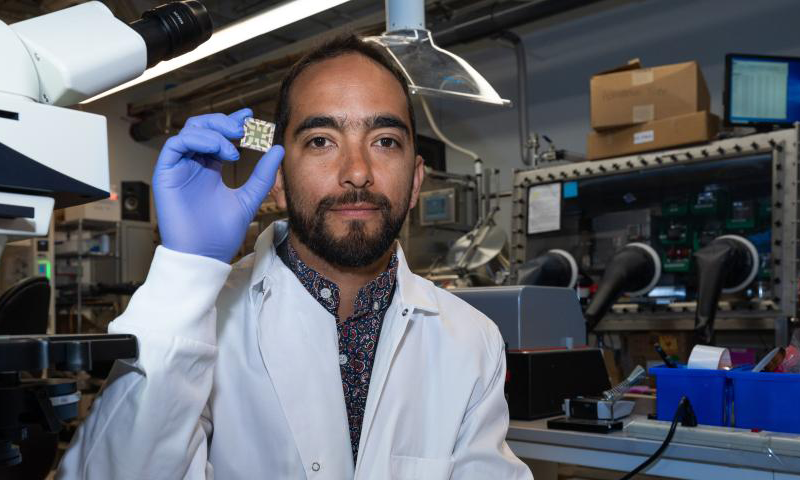
Juan-Pablo Correa-Baena leads the Materials for Solar Energy Harvesting and Conversion research initiative for the Institute for Materials (IMat) and Strategic Energy Institute at Georgia Tech. In this role, he is working to create a community around solar energy harvesting and conversion at Georgia Tech. He aims to integrate photovoltaic, photodetectors, and related devices into IMaT-related research; energize research in these areas at Georgia Tech at large; and consolidate the expertise of the many research groups working on or around photovoltaics/photodetectors that will allow researchers to target interdisciplinary research funding opportunities. He is also an assistant professor and the Goizueta Junior Faculty Rotating Chair in the School of Materials Science and Engineering.
In this brief Q&A, Correa-Baena discusses his research focus, how it relates to materials research, and the impact of this initiative.
What is your field of expertise and at what point in your life did you first become interested in this area?
I am an expert in materials for energy harvesting and conversion. I first became interested in this topic when I was an undergraduate student and started thinking about the future of energy production.
What questions or challenges sparked your current materials research?
I was born and raised in a country where fossil fuels dominate the energy production landscape, yet where renewables are readily available. Colombia is a large producer of oil but also boasts a huge potential for solar energy production. This juxtaposition always puzzled me growing up. As a researcher in this field, I want to ensure that all countries around the world have access to solar energy, by helping lower deployment cost.
Why is your initiative important to the development of Georgia Tech’s Materials research strategy?
There is a growing need to expand our research footprint at Georgia Tech with regard to photovoltaics. This is especially important with the impact of the photovoltaic industry presence in Georgia. My initiative is focusing on galvanizing activities around photovoltaic research at Georgia Tech that can benefit our footprint globally as well as locally with industry partners.
What are the broader global and social benefits of the research you and your team conduct?
The main benefit of the research we do is to the photovoltaic industry, which we hope to engage through cutting-edge research at Georgia Tech.
What are your plans for engaging a wider Georgia Tech faculty pool with IMat research?
I am planning to organize an internal workshop, as well as a session on photovoltaics in the Next Generation of Energy Materials Symposium to be held in March 2024 at Georgia Tech. In addition, as part of my efforts to engage the Georgia Tech community at large, I am working to create a website that will connect the Georgia Tech community working towards advancing photovoltaic capabilities for future manufacturing advancements.
Georgia Tech Leads Department of Energy’s Earthshots Funding with Seven Projects
Nov 09, 2023 — Atlanta, GA
Projects address basic research challenges facing the Energy Earthshots Initiative to mitigate climate change and reach a net-zero carbon economy.
Georgia Tech faculty and researchers are involved in five university-led projects and two new Energy Earthshot Research Centers that are part of a $264 million grant from the U.S. Department of Energy (DOE). The funding includes establishing 11 new Energy Earthshot Research Centers (EERC) led by DOE’s national labs and 18 university research teams addressing one or more of DOE’s Energy Earthshots initiatives focused on industrial decarbonization, carbon storage and removal, offshore wind, and more.
University Projects
University research teams will conduct crosscutting, fundamental research to address knowledge gaps that limit achievement of the Energy Earthshots goals. These teams are focused on scientific challenges spanning the Office of Science research portfolio and complement work done by the EERCs.
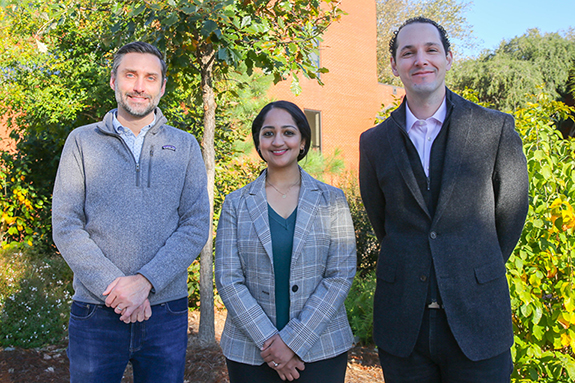
Matthew McDowell, Akanksha Menon, and Claudio Di Leo
Akanksha Menon, assistant professor in the George W. Woodruff School of Mechanical Engineering, has been awarded $3 million in funding to lead a university project titled “Understanding Thermo-Chemo-Mechanical Transformations in Thermal Energy Storage Materials and Composites.” The project will bring together Matthew McDowell, associate professor in the Woodruff School; Claudio Di Leo, assistant professor in the Daniel Guggenheim School of Aerospace Engineering; and Jeff Urban from the Lawrence Berkeley National Laboratory to provide a fundamental understanding of the coupled thermo-chemo-mechanical phenomena in thermal energy storage materials that will enable low-cost and stable storage.
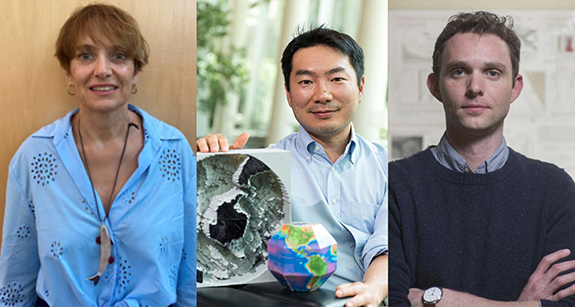
Annalisa Bracco, Taka Ito, and Chris Reinhard
Annalisa Bracco, professor and associate chair; Taka Ito, professor; and Chris Reinhard, Georgia Power Chair and associate professor — all from the School of Earth and Atmospheric Sciences — will join colleagues from Princeton, Texas A&M, and Yale University for an $8 million Earthshot project that will build an “end-to-end framework” for studying the impact of carbon dioxide (CO2) removal efforts. The project, titled “Carbon dioxide removal and high-performance computing: Planetary Boundaries of Earth Shots,” includes creating computer models to measure how well CO2 removal techniques work on land, rivers, and oceans.

Elizabeth Qian, assistant professor in the Guggenheim School and the School of Computational Science and Engineering, will join colleagues from New York University, Los Alamos National Lab, and National Renewable Energy Lab for an Earthshot project titled “Learning reduced models under extreme data conditions for design and rapid decision-making in complex systems (ROME).” The project will develop mathematical foundations and computational methods to support the design and operation of complex systems for carbon removal and renewable energy generation that will be used for simulation, design, and decision-making of the Floating Offshore Wind Shot and the Carbon Negative Shot EERCs.

David Flaherty, professor in the School of Chemical and Biomolecular Engineering will join colleagues from the University of Illinois Urbana-Champaign, Northern Arizona University, Texas State University, and Argonne National Lab to co-lead a project titled “Harnessing Electrostatics for the Conversion of Organics, Water and Air: Driving Redox on Particulate Liquids Earthshot (DROPLETS).” The overall objective of DROPLETS is to explore an approach based on microdroplet-enabled redox reactions (which involve the transfer of electrons between substances) toward H2 production (a clean and renewable energy source), CO2 activation (which can help mitigate greenhouse gas emissions), and the synthesis of redox species for long-duration energy storage.

Guoxiang (Emma) Hu, assistant professor in the School of Materials Science and Engineering, joins colleagues from Georgia State University, Carnegie Melon University, Oak Ridge National Lab, and the University of Utah on a project titled “Atomic Level Compositional Complexity for Electrocatalysis (Atomic-C2E).” Atomic-C2E will integrate fundamental electrochemistry, quantum chemical and multiscale simulations, and materials chemistry to develop an understanding of electrocatalysts that aid in the conversion of CO2 into value-added chemical fuels and hydrogen production via water electrolysis — and address technological bottlenecks challenging them.
National Lab Centers
The DOE national lab EERCs will bring together multi-institutional, multidisciplinary teams to perform energy-relevant research with a scope and complexity beyond what is possible in standard single-investigator or small-group awards. Addressing key research challenges relevant to the Energy Earthshots, the 11 new centers will be housed at eight DOE national laboratories and will receive a combined $195 million over four years.
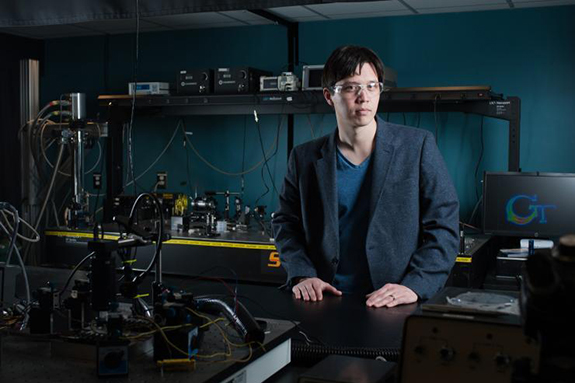
Of the 11 lab centers, the DEGradation Reactions in Electrothermal Energy Storage (DEGREES) center led by the National Renewable Energy Laboratory consists of Professor Akanksha Menon and Associate Professor Shannon Yee from the Woodruff School. DEGREES is an EERC that will provide fundamental understanding of the science behind complex degradation mechanisms and instabilities that affect the performance of thermal energy storage.
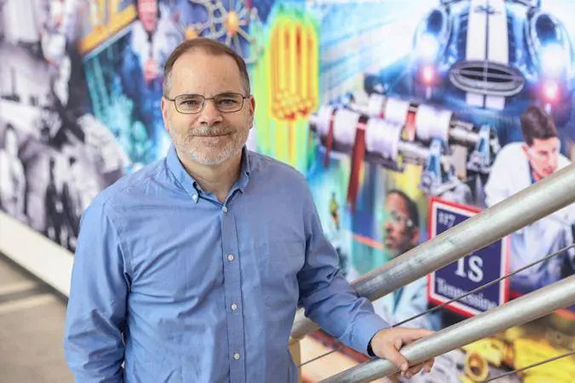
Non-Equilibrium Energy Transfer for Efficient Reactions (NEETER) is the second EERC that will be housed at the Department of Energy's Oak Ridge National Laboratory (ORNL) and involves Georgia Tech. Led by David Sholl, director of ORNL’s transformational decarbonization initiative and professor in the School of Chemical and Biomolecular Engineering, NEETER is focused on developing chemical processes that use sustainable methods instead of burning fossil fuels to radically reduce industrial greenhouse gas emissions to stem climate change and limit the crisis of a rapidly warming planet.
About DOE’s Energy Earthshots Initiative
The Department of Energy launched the Energy Earthshots Initiative to spur decarbonization efforts that will help the United States meet climate and clean energy goals. The initiative connects DOE’s basic science and energy technology offices to accelerate innovations toward more abundant, affordable, and reliable clean energy solutions; seeks to revolutionize many sectors across the United States; and will rely on fundamental science and innovative technology to be successful.
Professor Elizabeth Qian will Serve as Co-PI on DoE Energy Earthshots Project

Qian will develop computing methods to support design and operation of complex systems for carbon removal and renewable energy generation.
Three Earth and Atmospheric Sciences Researchers Awarded DOE Earthshot Funding for Carbon Removal Strategies

Bracco, Ito, and Reinhard will create computer models to measure how well CO2 removal techniques work on land, rivers, and oceans, as part of $264 million in grants.
Assistant Professor Akanksha Menon Awarded $3 Million for Research as part of DOE's Energy Earthshots Initiative

Menon and her team will address two Energy Earthshots to help achieve net-zero carbon by 2050, combat climate crisis.
Professor David Sholl Leading New Energy Earthshot Research Center to Stem Climate Change

The Department of Energy also selected David Flaherty to co-lead a second project designed to lower energy input and reactor cost for complex chemical reactions.

Writer and Media Contact:
Priya Devarajan | priya.devarajan@research.gatech.edu
LG Chem and Georgia Tech Establish Collaboration to Advance Battery Research
Oct 23, 2023 —

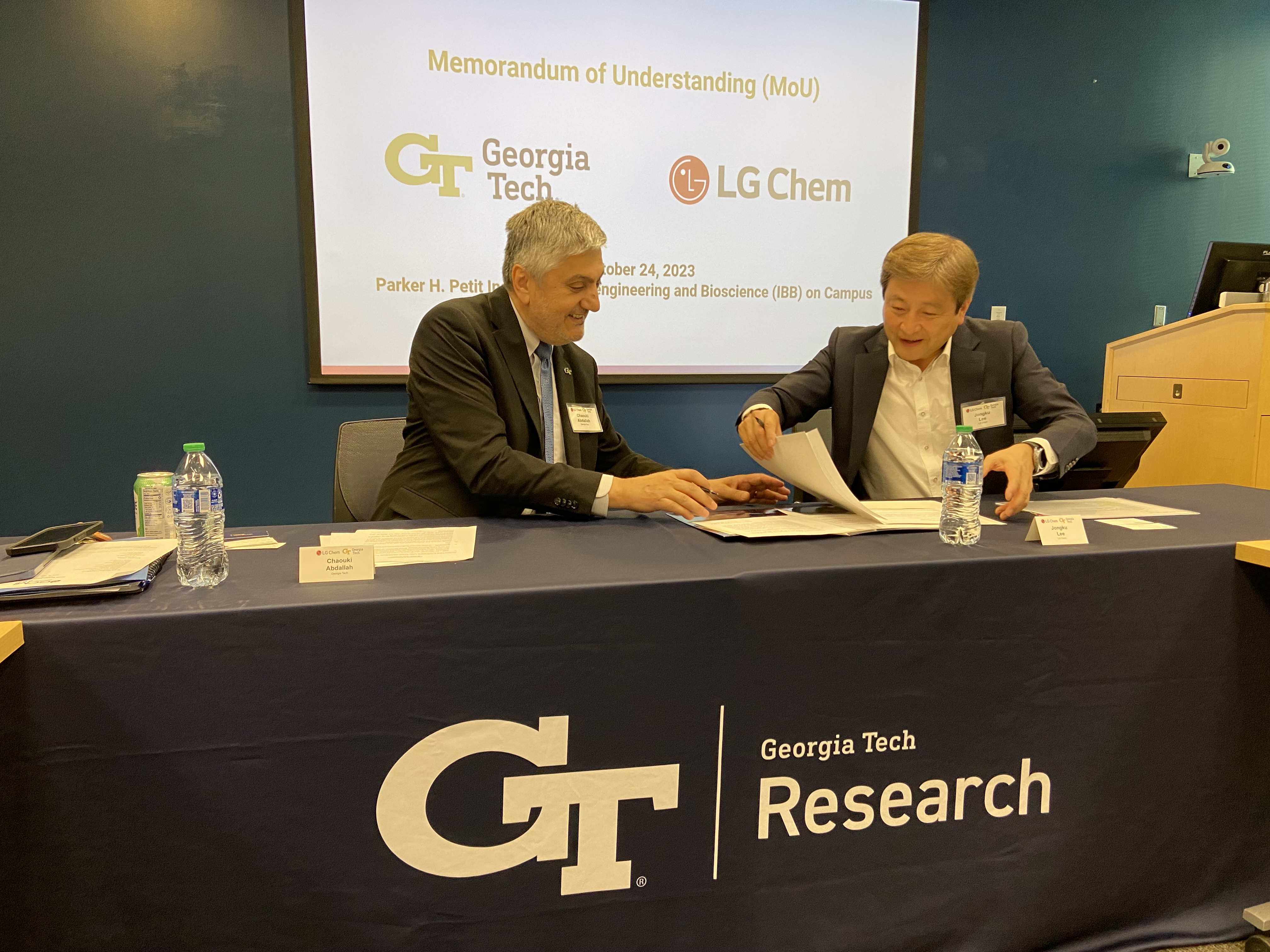
LG Chem, a leading global chemical company with a diversified business portfolio in the key areas of petrochemicals, advanced materials, and life sciences, today signed a memorandum of understanding with the Georgia Institute of Technology to promote basic and translational research, innovative business models, and related educational endeavors.
The agreement is expected to serve as an opportunity to connect LG Chem research and development, manufacturing, commercial, and operations teams with faculty thought leaders and students across the Institute.
“The combination of our industrial expertise and the university’s academic knowledge will enable us to extend our collaboration from next-generation battery materials to field,” said Jongku Lee, senior vice president and CTO at LG Chem.
“By partnering with LG Chem, we aim to foster next-level innovation in battery research, offering our students and faculty access to resources from a renowned industry leader,” said Chaouki Abdallah, executive vice president for Research at Georgia Tech. “I’m excited about the invaluable expertise LG Chem will bring to our campus community.”
LG Chem is committed to giving $2 million over five years to support student fellowships and the research collaboration. Georgia Tech intends to continue to build on its strengths, expertise, and capabilities in battery technology and related technical fields to further develop a pipeline of undergraduate and graduate students with related skills and training.
“The signing of the LG Chem-GT MOU represents a significant opportunity for our students and researchers as we develop key advances in battery and clean energy technologies while preparing the next talent pipeline to support them,” said George White, senior director for Strategic Partnerships at Georgia Tech.