
Seminar - Department of Energy Zero Carbon Energy: Progress to Net Zero
Join us on January 17th at 9am at 1128 Petit Institute for Bioscience and Bioengineering (IBB) for a seminar on "Department of Energy Zero Carbon Energy: Progress to Net Zero" by John
Researchers Find They Can Stop Degradation of Promising Solar Cell Materials
Dec 19, 2023 — Atlanta, GA

An illustration of metal halide perovskites. They are a promising material for turning light into energy because they are highly efficient, but they also are unstable. Georgia Tech engineers showed in a new study that both water and oxygen are required for perovskites to degrade. The team stopped the transformation with a thin layer of another molecule that repelled water. (Image Courtesy: Juan-Pablo Correa-Baena)
Georgia Tech materials engineers have unraveled the mechanism that causes degradation of a promising new material for solar cells — and they’ve been able to stop it using a thin layer of molecules that repels water.
Their findings are the first step in solving one of the key limitations of metal halide perovskites, which are already as efficient as the best silicon-based solar cells at capturing light and converting it into electricity. They reported their work in the Journal of the American Chemical Society.
“Perovskites have the potential of not only transforming how we produce solar energy, but also how we make semiconductors for other types of applications like LEDs or phototransistors. We can think about them for applications in quantum information technology, such as light emission for quantum communication,” said Juan-Pablo Correa-Baena, assistant professor in the School of Materials Science and Engineering and the study’s senior author. “These materials have impressive properties that are very promising.”
Joshua Stewart
College of Engineering
Georgia Tech Energy Materials Day
The Georgia Tech Energy Materials Day will bring together representatives from academia, government, and industry to accelerate energy materials research. It will also provide an opportunity for key stakeholders to interact with Georgia Tech researchers in this important area.
Alternative Energy Faculty Panel
Join three Georgia Tech faculty as they talk about alternative energy, environment, and sustainability on a panel hosted by the Honors Program. The panel will be on Wednesday, January 24th, 2024 from 5pm-6pm in the Student Center Rafael Bras Meeting Room (previously Northside room). All students are welcome!
Poor and Disadvantaged People Sit in the Dark Longer After a Storm Outage
Dec 14, 2023 —

Extreme weather events impact disadvantaged communities more harshly, and extended power outages can be dangerous and life-threatening.
Hurricanes and other extreme weather events often affect disadvantaged communities more severely, and extended power outages are some of the most harmful effects. Concerns over the intensification of hurricanes has led to new environmental justice policies that aim to mitigate the unequal impacts of major storms. Now, policy experts and engineers are directing their attention toward illuminating the causes.
Researchers at the Georgia Institute of Technology sought to investigate whether socioeconomically vulnerable households experienced longer power outage durations after extreme weather events. The team analyzed data from the top eight major Atlantic hurricanes between 2017 and 2020 that knocked out power for over 15 million customers in nine states across the southeastern U.S. The team found that people in lower socioeconomic tiers wait significantly longer to have power restored after a major storm — nearly three hours longer on average.
The interdisciplinary research team consists of Chuanyi Ji, an associate professor in the School of Electrical and Computer Engineering; Scott Ganz, a policy researcher at Georgetown University and a former Georgia Tech faculty member; and Chenghao Duan, a Ph.D. student in Ji’s lab.
Their research paper, titled “Socioeconomic Vulnerability and Differential Impact of Severe Weather-Induced Power Outages,” was published in the journal PNAS Nexus.
“Not only do extreme weather events impact disadvantaged communities more harshly, but power disruption can be dangerous and even life-threatening in certain contexts,” Ji said. “Those with fewer resources are limited in their ability to evacuate from severe weather situations, and for individuals with electric medical equipment, an extended power outage can be disastrous.”
Ji, who specializes in large-scale data analytics for power grid resilience, has done previous work on power restoration procedures involving infrastructure and utility services, but wanted to expand the work into the realm of communities. The team hypothesized that disadvantaged communities likely wait longer for power to be restored, but to get a realistic picture of the mechanisms at play, the team needed to analyze troves of data.
They obtained weather data for eight major hurricanes between 2017 and 2020 from the National Oceanic and Atmospheric Administration and additional flood databases. They also examined power failure data for 15 million customers for the same time period, which spanned nine states, 588 counties, and 108 utility service regions in the Southeast.
The team used spatial data analytics to model weather impact across regions. They then measured customers’ socioeconomic status by using the social vulnerability index, a tool produced by the Centers for Disease Control that considers indicators related to poverty, housing costs, education, health insurance, and other factors to determine socioeconomic status. Duan and Ji designed the models and estimates, and then analyzed the results to reveal the underlying relationship between customers' socioeconomic status and their power outage durations.
Their results show that, when comparing affluent communities and poor communities given the same kind of impact from weather events, poor communities experienced power outages that average 170 minutes longer. Specifically, they found that a one-decile drop in socioeconomic status is associated with a 6.1% longer outage duration. Their results indicate that there is a statistically significant relationship between socioeconomic vulnerability and the duration of time that elapses before power is restored.
“Our study also tries to rule out some possible explanations for why socioeconomically disadvantaged people take longer to get their power back on,” Ganz said. “For example, our study controls for population density in a county and the peak number of outages in that county, and we still observe that socioeconomically disadvantaged communities experience longer outages.”
He theorized that the “primary cause is that poorer communities are also likely to be more distant from critical infrastructure or require more significant repairs to power lines, but these are important questions for future research.”
The results can have important implications for policymakers, pointing to the necessity of reexamining post-storm recovery and resource allocation policies. Service and utility providers approach power recovery by adhering to procedures and regulations that are policy-driven. Current research shows that the standard procedures for restoring power following big storms, while procedurally fair, may contribute to unequal outcomes. A greater focus on communities could help to correct the issue.
“Power grid resilience is not just about the infrastructure and utility companies — it’s also about the people they serve,” Ji said. “Success in achieving policy goals depends on our ability to identify the features that contribute most to these unequal impacts, which can in turn help us design appropriate interventions to improve outcomes.”
Funding: The authors acknowledge financial support from the Georgia Tech Energy Innovation and Policy Center and the Strategic Energy Institute, Georgia Tech School of Electrical and Computational Engineering, Georgia Tech School of Public Policy, and Georgetown McDonough School of Business.
Citation: Scott C Ganz, Chenghao Duan, Chuanyi Ji, Socioeconomic vulnerability and differential impact of severe weather-induced power outages, PNAS Nexus, Volume 2, Issue 10, October 2023.
DOI: https://doi.org/10.1093/pnasnexus/pgad295
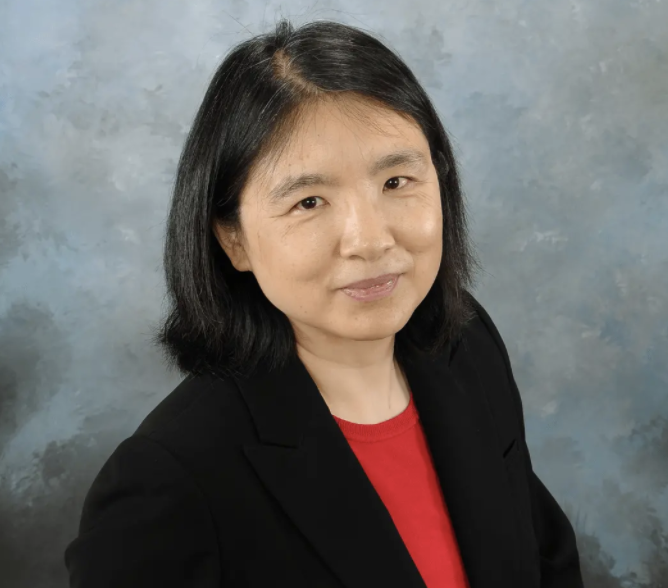
Chuanyi Ji, associate professor of Electrical and Computer Engineering at Georgia Tech
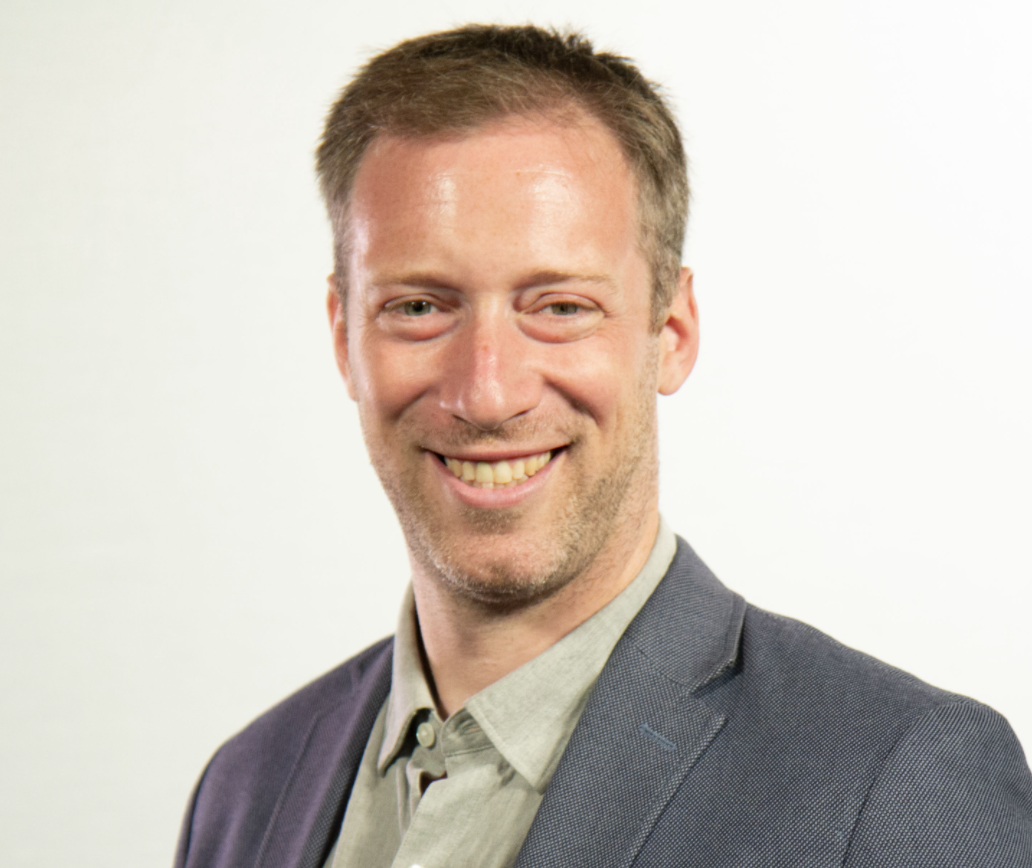
Scott Ganz, associate teaching professor at Georgetown University and research fellow at the American Enterprise Institute

Chenghao Duan, a Ph.D. student in Ji's lab at Georgia Tech.
Catherine Barzler, Senior Research Writer/Editor
SEI Initiative Lead Profile: Sam Litchfield
Dec 13, 2023 — Atlanta, GA

Portrait of Sam Litchfield
Samuel Litchfield, research engineer at the Cybersecurity, Information Protection, and Hardware Evaluation Research (CIPHER) lab of the Georgia Tech Research Institute (GTRI), leads the Cybersecurity of Critical Infrastructure Research Initiative at the Strategic Energy Institute. Litchfield serves as the associate director of research initiatives at the Institute for Cybersecurity and Resilient Infrastructure Studies (ICARIS), a joint research collaboration between Georgia Tech and the U.S. Department of Energy’s Pacific Northwest National Laboratory whose mission is to deliver the technologies, test beds, and talent necessary to secure the nation’s critical infrastructure.
Litchfield received his bachelor’s and master’s degrees from Georgia Tech in computer engineering. Focused on cybersecurity since 2012, he has worked in cyber-physical system security, network protocol reverse engineering, and large-scale systems vulnerability assessments. Below is a brief Q&A with Litchfield where he discusses his research focus areas and how it influences the cybersecurity initiatives at Georgia Tech.
- What is your field of expertise and at what point in your life did you first become interested in this area?
My field of expertise is cybersecurity of critical infrastructure and embedded systems. I started getting into it first in my undergraduate coursework when I learned about overlaps between control theory, computer architecture, and networking. These overlaps create critical infrastructure.
- What questions or challenges sparked your current energy research? What are the big issues facing your research area right now?
A lot of my day-to-day at work is focused on national security. That comes from both being at GTRI and generally looking at cybersecurity questions.
When you start applying cybersecurity to critical infrastructure, you very quickly run into national security questions like how to keep the lights on and how to keep water flowing and keep people living their lives — basically how to prevent devices or pieces from getting compromised and how to keep these systems moving/working despite people trying to break them. How do we keep the overall infrastructure working in the face of threats even if some elements are compromised? What modifications do we need to make to these sometimes decades-old systems, and what new security primitives can we invent to minimize those modifications? An example is a water system supplying water to your municipality — it is dependent on unobstructed electricity to keep its pumps moving — figuring out how to model those cross-system dependencies is an active area of my research topics as well.
- What interests you the most leading the research initiative on cybersecurity of critical infrastructure? Why is your initiative important to the development of Georgia Tech’s energy research strategy?
In addition to the above questions and figuring out how we approach this sort of research topics, one thing I always find super interesting is coming to a new domain, energy in this case, and figuring out how to use existing domain-specific tools to augment system security, or how those tools might find application in cybersecurity. Aiding PI to PI interactions to get real impacts on systems as a whole and convening researchers whose topic areas don’t traditionally overlap together and identifying projects that can come out of that interaction keeps me going.
Georgia Tech is already a leader in power engineering and cybersecurity separately. Bringing those two large pieces of campus together is going to be truly pivotal for Georgia Tech as an institution. There are other domains with leaders in those fields that we can hopefully bring more to the forefront as we combine them with security.
- What are the broader global and social benefits of the research you and your team conduct on the cybersecurity of critical infrastructure?
There are two basic benefits — one from the United States national security perspective — to keep the infrastructure secure and raise the bar on the effort and cost it takes to compromise systems or use them as a lever in international conflicts. The next one is increasing the security of systems by increasing their resilience for run of the mill things like storms, wildfires, and large climate events. This will become more relevant as climate change increases severe weather events. Another global benefit I could think of is removing energy security from the field of national security levers — see Germany’s natural gas dependence during the Russian invasion of Ukraine.
- What are your plans for engaging a wider Georgia Tech faculty pool with the broader energy community?
Cybersecurity touches on multiple domains and increasing faculty engagement by getting domain experts to talk to security experts is important. Internally, I’m hoping to build an infrastructure security community across schools that’s invested in forming collaborations between areas and subjects that might not traditionally overlap. Externally, I am planning to build a portfolio of events that engages and brings together community members around Georgia, from manufacturers to utility asset owners to external policymakers and regulators.
- What are your hobbies?
Physically, when I'm not sitting at a desk, I like to go climbing in gyms or hike through the Appalachians when it’s not July in Georgia . Outside of that, I do a lot of recreational programming at home, and I play some tabletop games with friends.
- Who has influenced you the most?
My graduate advisor Raheem Beyah set a good example of how to be passionate about my research, both in terms of technical expertise on how to formulate research questions in a tangible and approachable way and engaging with the people doing the research.
Another is one of my current bosses, Anita Pavadore, in terms of raising the bar on the quality of what I do, from interacting with others to executing research.
Priya Devarajan || Research Communications Program Manager || SEI || RBI
SEI/RBI Initiative Lead Profile: Matthew Realff
Dec 13, 2023 — Atlanta, GA

Portrait of Matthew Realff
Matthew Realff, professor and David Wang Sr. Fellow in the School of Chemical and Biomolecular Engineering, leads the Circular Carbon Economy Research Initiative in the Strategic Energy Institute and the Next Generation Refineries Research Initiative in the Renewable Bioproducts Institute at Georgia Tech. Realff co-directs the Direct Air Capture Center (DirACC), which coordinates research across the Institute aimed at the removal of carbon dioxide (CO2) from the atmosphere. Realff’s broad research interests are in the areas of process design, simulation, and scheduling. His current research is focused on the design and operation of processes that minimize waste production by recovery of useful products from waste streams, and the design of processes based on biomass inputs. In particular, he is interested in carbon capture processes both from flue gas and dilute capture from air as well as the analysis and design of processes that use biomass. Below is a brief Q&A with Realff where he discusses his research focus areas and how it influences the circular carbon economy research initiatives at Georgia Tech.
- What is your field of expertise and at what point in your life did you first become interested in this area?
My background is in chemical engineering with a focus on process design and simulation, which is part of the field of process systems engineering. I have been interested in this general topic since first setting foot on the campus of Imperial College London in 1982, and subsequently pursued it as my Ph.D. topic. I first started thinking about direct air capture of CO2 in 2011 and about circular carbon from CO2 in 2016.
- What questions or challenges sparked your current energy research? What are the big issues facing your research area right now?
I believe that managing CO2 emissions will be the biggest challenge of the next 50 to 100 years. We will need to have negative emissions, as we are emitting too much, and pulling CO2 directly out of the atmosphere will be required because we are going to continue to emit. Creating technological solutions to provide negative emissions is one of the biggest challenges, as they need to be cost-effective and environmentally and socially less damaging than the emissions they capture. The biggest issue facing my research is understanding the phenomena that are involved in direct air capture and translating that understanding into engineered systems that are low-cost, have low environmental impact, and are socially beneficial.
- What interests you the most leading the research initiative on circular carbon economy? Why is your initiative important to the development of Georgia Tech’s energy research strategy?
The circular carbon economy is a systems problem in the broadest sense. This means that we must embrace a multidisciplinary approach to synthesize effective solutions. I want to emphasize the word “effective” here — we must embrace a wide range of measures of performance from energy efficiency to social justice because without improving along many dimensions we will be unlikely to be successful. It is this multidimensional, multidisciplinary research effort that interests me, as I love to find ways to bring people together to synthesize different knowledge into effective solutions. Georgia Tech is a world leader in direct air capture technology — as demonstrated by our new Direct Air Capture Center (DirACC). Our advances in this topic area can provide a base from which to develop approaches to carbon utilization, and other research efforts in electro, bio, and thermo chemical technologies can enable closed pathways using carbon as an energy carrier.
- What are the broader global and social benefits of the research you and your team conduct on circular carbon economy?
One vision for our energy and material systems is to have a much greater local production and consumption of energy using renewable resources. A circular carbon economy based on CO2 from the air; water from local sources including the air; and solar, wind, or biomass-based energy could be local and would have many transactions between local parties. This could serve to not only reduce global emissions but also to provide more opportunities for communities to benefit from the production of energy as opposed to having many transactions that transfer money outside of the community.
- What are your plans for engaging a wider Georgia Tech faculty pool with the broader energy community?
DirACC is one way we hope to connect faculty to the ecosystem of companies that are developing and deploying DAC technology. We hope that the challenges that these companies are articulating can be translated into research topics for the faculty affiliated with the center. The Department of Energy’s efforts to establish the DAC Hubs provides us with other opportunities to engage faculty around social and environmental justice issues associated with deploying energy technologies such as direct air capture. I hope that faculty will see themselves participating in these efforts and reach out to be included in the network of researchers on these topics.
- What are your hobbies?
My main hobby is playing a card game called Magic: The Gathering. I have played this since 1994 and have enjoyed many friendships formed as a dueling wizard. I also enjoy reading, particularly science fiction and steampunk literature, as well as history.
- Who has influenced you the most?
Professor Roger Sargent at Imperial College was one of the founders of the field of process systems engineering. His speech on elevation to the position of professor at Imperial in 1963 has had a profound impact on the direction of my research and educational activities.
Priya Devarajan || Research Communications Program Manager SEI || RBI
Six Named to National Academy of Inventors
Dec 12, 2023 — Atlanta, GA

Six Georgia Tech College of Engineering faculty members are among the National Academy of Inventors (NAI) 2023 Class of Fellows. The honor is the highest professional distinction awarded solely to inventors.
No other university or organization in the world has more honorees this year than Georgia Tech. The group of six holds more than 200 patents.
- Farrokh Ayazi, electrical and computer engineering
- Maohong Fan, civil and environmental engineering
- Christopher Jones, chemical and biomolecular engineering
- Wilbur Lam, biomedical engineering
- Susan Margulies, biomedical engineering
- Karthikeyan Sundaresan, electrical and computer engineering
The Georgia Tech engineers are among 162 worldwide inventors honored in 2023. According to the NAI, “their work spans across disciplines and exemplifies their dedication and inspiration to translating research into commercial technologies that benefit society.”
The 2023 class will be honored in June at the NAI annual meeting.
Jason Maderer, College of Engineering Director of Communications
jason.maderer@coe.gatech.edu
Three Faculty Members Appointed Carter N. Paden, Jr. Distinguished Chair
Dec 07, 2023 — Atlanta, GA

Pictured left to right: Matthew McDowell, Min Zhou, and Ting Zhu.
Three faculty members in the George W. Woodruff School of Mechanical Engineering have been appointed Carter N. Paden, Jr. Distinguished Chair for innovation in Material Science and Metals Processing, effective January 1, 2024.
Associate Professor Matthew McDowell, Professor Min Zhou, and Woodruff Professor Ting Zhu will hold the position for a five-year term and receive discretionary funding to support their educational and research activities.
These appointments recognize each of the three recipients for their intellectual leadership and broader impact in the field of material processing, and the ability to help the Woodruff School grow in emerging areas of importance.
“Throughout their careers, Matt, Min, and Ting have been leaders in their fields and made significant contributions to research,” said Devesh Ranjan, Eugene C. Gwaltney, Jr. School Chair. “They are highly deserving of this endowed chair position, and I know David McDowell, who held the Paden Chair until his retirement earlier this year, is proud to pass it on to his son and former long-term collaborators and mentees.”
McDowell’s research focuses on developing materials for next-generation battery systems, as well as understanding dynamic materials transformations in electrochemical energy devices. He leads the newly established Georgia Tech Advanced Battery Center (GTABC) with co-director Gleb Yushin, a professor in the School of Materials Science and Engineering. The new center will build community at the Institute, work to enhance research and educational relationships with industry partners, and create a new battery manufacturing facility on Georgia Tech’s campus.
Zhou's research interests concern material behavior over a wide range of length scales. His research emphasizes finite element and molecular dynamics simulations as well as experimental characterization with digital diagnostics.
Zhu's research focuses on the mechanical behavior of advanced engineering materials at the nano to macro-scale. He conducts modeling and simulations using the atomistic, continuum, and multiscale methods.
The endowed chair was made possible by Georgia Tech alumnus Carter N. Paden, Jr., IM 1951, who had a lifelong career in metals processing.
Ashley Ritchie (ashley.ritchie@me.gatech.edu)
Micro Research Grants Awarded
Dec 06, 2023 — Atlanta, GA

The Kendeda Building Advisory Board has awarded 12 micro research grants ($50 – $500) for sustainability-related, small-scale, short-term studies to be conducted by members of the Georgia Tech community. The request for proposals encouraged researchers to explore ways the Georgia Tech campus can continue to innovate, demonstrate, prove, and promote the adoption of best and next practices in regenerative design and operations. Researchers were also encouraged to use the United Nations Sustainable Development Goals as a framework for research design. All members of the Georgia Tech community were encouraged to apply. The program especially sought proposals from students and staff who had little or no prior research experience. Awardees will present their work at the 2024 Micro Research Grants Symposium, to be held in April 2024.
The program has four objectives:
- To expand scientific thinking and the understanding of the research process among those not directly involved in scientific research.
- To bolster the use of the campus as a living laboratory.
- To give voice to people and communities outside of research that have culturally novel perspectives on problems and their possible solutions, and to create new pathways for partnering with them.
- To seed novel ideas and nurture nascent investigators.
The awardees are:
- Nicole Allen and Elaina Render
“An Investigation Into the Cultivability and Regenerative Potential of Various Vegetables and Herbs” - Maryam Almaian and Patrick Kastner
“Augmented Architecture: Integrating Numerical Simulations Into Regenerative Design” - Patrick Barry, Jung-Ho Lewe, and Gray Simmons
“Project: Low-Cost Current Transformer” - Nola Charles, Jaila Kimbro, and Hannah Kate Cass
“GT Be the Bridge” - Donghyun Choi, Abhinav Shubham, and Manpreet Hora
“Data Analytics on Science-Based Target Initiatives (SBTi)” - Jake Churchill, Victoria Pozzi, Dimitri Kalinin, Zihang Zhang, and Rich Simmons
“‘Cleaning’ Solar Energy at GT” - Kenneth Grant and Jung-Ho Lewe
“Adjustable Occupancy Sensor Mounting Solution” - Jung-Ho Lewe, Evan Goldstein, and Gray Simmons
“Low-Cost Building Occupancy Sensor” - Marisa L. McMichael and Scott Duncan
“Occupancy Comfort” - Arnav Patidar, Ronak Agarwal, Sohan Malladi, and Shyamanth Kudum
“BinVision — Recycle Smarter” - Hruday Shah, Jung-Ho Lewe, Scott Duncan, and Gray Simmons
“Monitoring Indoor Ventilation Efficacy Using Inexpensive, Accurate, and Modular Outdoor Air Quality Stations” - Malte Weiland, Jeannette Yen, Tamsin Leavy, Alan Booker, Gary McNay, Lakshya Sharma, Julie Chen, and Perrin Brady
“Horticulture and Permaculture Workshop”
Brent Verrill, Research Communications Program Manager, BBISS