Machelle Pardue

Machelle Pardue
machelle.pardue@bme.gatech.edu
Website

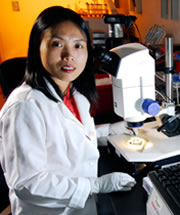
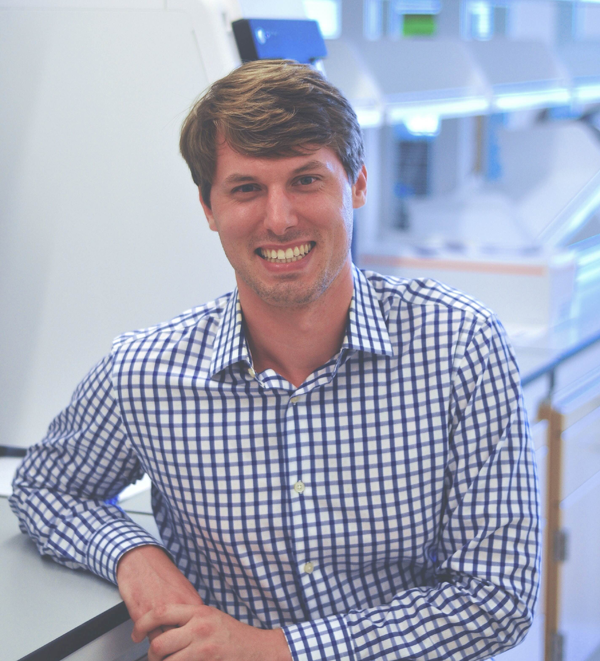
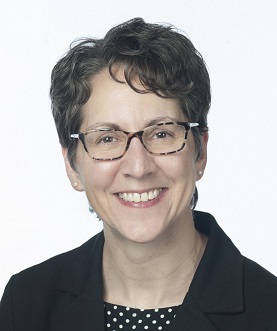
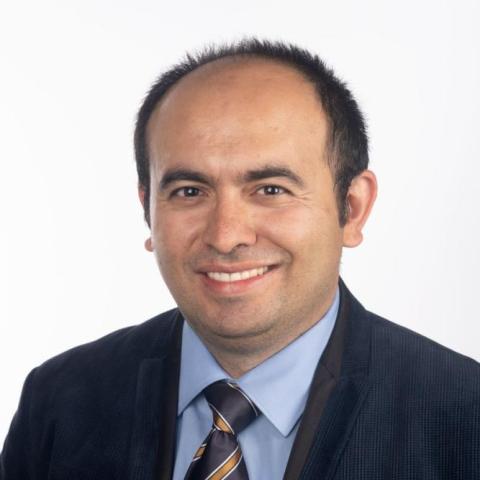
Dr. Pardue is a Research Career Scientist at the Atlanta VA Medical Center, and a Professor in Wallace H. Coulter Department of Biomedical Engineering at Georgia Institute of Technology and Emory University School of Medicine. Dr. Pardue received her B.S. in zoology from the University of Wyoming and her doctorate in vision science and biology at the University of Waterloo. Her post-doctorate training in visual electrophysiology was completed with Dr. Neal Peachey at Loyola School of Medicine and Hines VA Hospital in Chicago and focused on biocompatibility of retinal prosthetics. Dr. Pardue moved to Atlanta in 2000 to join the Atlanta VA Medical Center and Emory University Department of Ophthalmology. She moved her academic appointment to Biomedical Engineering in 2015. Her research interests are focused on developing treatments for people with vision loss. To this end, she has developed three research themes within her lab: 1) neuroprotective and restorative treatments for retinal degeneration, 2) early detection and treatment of diabetic retinopathy, and 3) retinal mechanisms of refractive development and myopia. Her research has been continuously supported by the Department of Veterans Affairs, NIH, and private companies (1999-present). She has served on several VA and NIH grant review panels and frequently reviews manuscripts for several journals including Journal of Neuroscience, Investigative Ophthalmology and Visual Sciences, Molecular Vision, Vision Research, Journal of Neuroscience Methods, Journal of Neurochemistry and PlosOne.
Professor
Research Career Scientist, Center for Visual and Neurocognitive Rehabilitation
Phone
404-385-3666
Office
UAW 4104
Additional Research
Pardue's lab is focused on developing treatments for people with vision loss. Steps to successful treatment require understanding the mechanisms of the disease and characterizing temporal changes to identify therapeutic windows, with the ultimate goal of rehabilitation of visual function. She uses behavioral electrophysiological, morphological, molecular, and imaging approaches to evaluate changes in retinal function and structure. Her research is guided by applying knowledge of retinal circuits and visual processing, often leading to studies of cognition and the interaction of retinal and visual circuits during health and disease. Her studies start in animal models and move to human trials when possible.
Research Focus Areas
Google Scholar
https://scholar.google.com/citations?user=C3KozLgAAAAJ&hl=en
LinkedIn Related Site
Machelle
Pardue
Show Regular Profile

Hee Cheol Cho

Hee Cheol Cho
HeeCheol.Cho@emory.edu
Website

Hee Cheol Cho is the Urowsky-Sahr Scholar in Pediatric Bioengineering and Associate Professor in the Department of Biomedical Engineering and Pediatrics. He received his PhD in Physiology from the University of Toronto in 2003.

Associate Professor
Urowsky-Sahr Scholar in Pediatric Bioengineering
Phone
404-727-6356
Office
Emory HSRB E184
Additional Research
The Heart Regeneration Lab focuses on using genes and chemicals to pace and regenerate the heart. We are based at Emory University in Pediatrics and BME in the Wallace H. Coulter Department of Biomedical Engineering of Georgia Tech and Emory University.
Research Focus Areas
Google Scholar
https://scholar.google.com/scholar?q=Hee Cheol Cho&hl=en
Related Site Cho Lab
Hee Cheol
Cho
Show Regular Profile

Ahmet Coskun

Ahmet Coskun
acoskun7@gatech.edu
Website

Ahmet Coskun is a Bernie-Marcus Early-Career Professor of Biomedical Engineering at Georgia Institute of Technology and Emory University. Coskun is a systems biotechnologist and bioengineer, working at the nexus of multiplexed cell imaging and quantitative tissue biology. He directs an interdisciplinary research team at the Single Cell Biotechnology and Spatial Omics Laboratory, an interdisciplinary program strategically positioned for multiparameter imaging one cell at a time by spatial context and function. Coskun holds five issued patents and is also the co-author of more than 50 peer-reviewed publications in major scientific journals. He is a recipient of the NSF CAREER Award 2024, NIH R35 MIRA Award 2023, Sigma Xi Young Faculty Award 2025, CMBE Young Innovator Award 2024, BMES-CMBE Rising Star Award 2023, American Lung Association Innovation Award 2022, Burroughs Welcome Fund CASI Award 2016, and Student Recognition of Excellence in Teaching: Class of 1934 CIOS Award, among other research and teaching awards. Previously, Coskun was an instructor at Stanford University. He received his postdoctoral training from the California Institute of Technology. He holds a Ph.D. from the University of California, Los Angeles. His research has been supported by federal and private grants, including the National Institutes of Health (NIGMS, NIA, NIAID, NCI, NIDCR, OD, and ORIP), Wellcome LEAP, Burroughs Wellcome Fund (CASI), NSF CMaT, American Cancer Society IRG, Multi-cellular engineered living systems (M-CELS), and Regenerative Medicine Center. In addition, he leads outreach programs to engage K-12 students and undergraduate students through BioCrowd Studio, an innovative crowd-sourcing program bringing together interactive virtual media, distributed biokits, and collaborative spatial discovery.

Associate Professor of Biomedical Engineering
Phone
404.894.3866
Office
Petit Biotechnology Building, Office 1311
Additional Research

The Single Cell Biotechnology Lab aims to study spatial biology in health and disease. Our research lies at the nexus of multiplex bioimaging, microfluidic biodynamics, and big data biocomputation. Using high-dimensional nanoscale imaging datasets, we address fundamental challenges in immuno-engineering, cancers, and pediatric diseases. Our lab pursues a transformative multi-omics technology to integrate spatially resolved epigenetics and spatial genomics, proteomics, and metabolomics, all in the same platform. We uniquely benefit from super-resolution microscopy, imaging mass spectrometry, combinatorial molecular barcoding, and machine learning to enhance the information capacity of our cellular data. Variability of single cell images can be used to understand differences in therapeutic responses, as well as satisfy our curiosity on understanding how cells are spatially organized in nature.

University, College, and School/Department
Google Scholar
https://scholar.google.com/citations?user=4MR2wSIAAAAJ&hl=en
LinkedIn Related Site
Ahmet
Coskun
Show Regular Profile

Yuhong Fan

Yuhong Fan
yuhong.fan@biology.gatech.edu
Associate Professor
Georgia Research Alliance Distinguished Scholar
Phone
404-385-1312
Office
Petit Biotechnology Building, Office 2313
Additional Research
  • Bioinformatics
  • Chromatin
  • Epigenetics,  Epigenomics & Epidrugs
  • Gene Expression
  • Stem Cell Biology
  • Stem Cell Differentiation
Google Scholar
http://scholar.google.com/citations?hl=en&user=ESfeLxQAAAAJ&view_op=list_works&pagesize=100
LinkedIn Biological Sciences Profile
Yuhong
Fan
Show Regular Profile

Andrés J. García

Andrés J. García
andres.garcia@me.gatech.edu
Website
Executive Director, Parker H. Petit Institute for Bioengineering and Bioscience
The Petit Director’s Chair in Bioengineering and Bioscience
Regents’ Professor, George Woodruff School of Mechanical Engineering
Phone
404-894-9384
Office
Petit Biotechnology Building, Office 2310
Additional Research

Dr. Garcia's research centers on cellular and tissue engineering, areas which integrate engineering and biological principles to control cell function in order to restore and/or enhance function in injured or diseased organs. Specifically, his research focuses on fundamental structure-function relationships governing cell-biomaterials interactions for bone and muscle applications. Current projects involve the analysis and manipulation of cell adhesion receptors and their extracellular matrix ligands. For example, a mechanochemical system has been developed to analyze the contributions of receptor binding, clustering, and interactions with other cellular structural proteins to cell adhesion strength. In another research thrust, bio-inspired surfaces, including micropatterned substrates, are engineered to control cell adhesion in order to direct signaling and cell function. For instance, biomolecular surfaces have been engineered to target specific adhesion receptors to modulate cell signaling and differentiation. These biomolecular strategies are applicable to the development of 3D hybrid scaffolds for enhanced tissue reconstruction,"smart" biomaterials, and cell growth supports. Finally, genetic engineering approaches have been applied to engineer cells that form bone tissue for use in the development of mineralized templates for enhanced bone repair.

Google Scholar
https://scholar.google.com/citations?user=px6Z53IAAAAJ&hl=en&oi=sra
LinkedIn Related Site Faces of Research Profile
Andrés
García
J.
Show Regular Profile

C. Ross Ethier

C. Ross Ethier
ross.ethier@bme.gatech.edu
Website

Prof. Ethier was originally trained as a mechanical engineer, receiving his Ph.D. from MIT in 1986 working in the lab of Roger D. Kamm. He then joined the University of Toronto, where he was a Professor of Bioengineering, Mechanical Engineering and Ophthalmology, and latterly the Director of the Institute of Biomaterials and Biomedical Engineering. Prior to joining Georgia Tech/Emory, Professor Ethier was the Head of the Department of Bioengineering at Imperial College, London from 2007-12. 

His research is in the biomechanics of cells and whole organs. His specific research topics include glaucoma (biomechanics of aqueous humour drainage in the normal and glaucomatous eye, and the mechanical and cellular response of optic nerve tissues to intraocular pressure), study of hemodynamic basis of arterial disease.

Professor
Georgia Research Alliance Lawrence L. Gellerstedt, Jr. Eminent Scholar in Bioengineering
Phone
404-385-0100
Office
Petit Biotechnology Building, Office 2306
Additional Research
"Biomechanics and mechanobiology, glaucoma, osteoarthritis, regenerative medicine, intraocular pressure control, optic nerve head biomechanics. We work at the boundaries between mechanics, cell biology and physiology to better understand the role of mechanics in disease, to repair diseased tissues, and to prevent mechanically-triggered damage to tissues and organs. Glaucoma is the second most common cause of blindness. We carry out a range of studies to understand and treat this disease. For example, we are developing a new, mechanically-based, strategy to protect fragile neural cells that, if successful, will prevent blindness. We are developing protocols for stem-cell based control of intraocular pressure. We study the mechanobiology and biomechanics of neurons and glial cells in the optic nerve head. We also study VIIP, a major ocular health concern in astronauts. Osteoarthritis is the most common cause of joint pain. We are developing paradigms based on magneto-mechanical stimulation to promote the differentiation and (appropriate) proliferation of mesenchymal stem cells."
Google Scholar
http://scholar.google.com/citations?user=YdRM39wAAAAJ
LinkedIn Related Site
C. Ross
Ethier
Show Regular Profile

Alexandra Peister

Alexandra Peister
alexandra.peister@morehouse.edu

Dr. Alexandra Peister is an associate professor in the Biology Department at Morehouse College.

Associate Professor
Phone
404-653-7879
Office
Hope Hall 315
Additional Research
Evaluation of stem cell sources for engineering 3D bone, fat, cartilage and muscle.
Research Focus Areas
University, College, and School/Department
Google Scholar
http://scholar.google.com/scholar?hl=en&q=alexandra+peister&btnG=Search&as_sdt=80001&as_ylo=&as_vis=0
Related Site
Alexandra
Peister
Show Regular Profile

James Dahlman

James Dahlman
james.dahlman@bme.gatech.edu
Website

James Dahlman is a bioengineer / molecular engineer whose work lies at the interface of chemistry, nanotechnology, genomics, and gene editing. His lab focuses on targeted drug delivery, in vivo gene editing, Cas9 therapies, siRNA therapies, and developing new technologies to improve biomaterial design. 

The DahlmanLab is known for applying 'big data' technologies to nanomedicine. The lab is pioneering DNA barcoded nanoparticles; using DNA barcodes, >200 nanoparticles can be analyzed simultaneously in vivo. These nanoparticles are studied directly in vivo, and used to deliver targeted therapies like siRNA, mRNA, or Cas9. As a result of this work, James was named 1 of the 35 most innovative people under the age of 35 by MIT Technnology Review in 2018. James has won many national / international awards, and has published in Science, Nature Nanotechnology, Nature Biotechnology, Nature Cell Biology, Cell, Science Translational Medicine, PNAS, JACS, ACS Nano, Nano Letters, and other journals. James has also designed nanoparticles that efficiently deliver RNAs to the lung and heart. These nanoparticles can deliver 5 siRNAs at once in vivo, and are under consideration for clinical development. As a result, the lab has an interest in immunology and vascular biology. 

James supports entirely new research students come up with independently. To this end, DahlmanLab students learn how to (i) generate new ideas, (ii) select the good ones, and (iii) efficiently test whether the good ideas will actually work. 

Dahlman Lab students learn how to design/characterize/administer nanoparticles, how to isolate different cell types in vivo, how to rationally design DNA to record information, Cas9 therapies, and deep sequencing. As a result, the lab is an interdisciplinary group with students that have backgrounds in medicinal chemistry, BME, bioinformatics, biochemistry, and other fields. The lab welcomes students with all types of scientific backgrounds. The lab firmly stands by students, independent of their personal beliefs, preferences, or backgrounds.

Associate Professor
Phone
404-385-5262
Office
UAW 2101
Additional Research
In the Dahlman Lab, we focus on the interface between nanotechology, molecular biology, and genomics. We design drug delivery vehicles that target RNA and other nucleic acids to cells in the body. We have delivered RNAs to endothelial cells, and have treated heart disease, cancer, inflammation, pulmonary hypertension, emphysema, and even vein graft disease. Because we can deliver RNAs to blood vessels at low doses, sometimes we decide to deliver multiple therapeutic RNAs to the same cell at once. These 'multigene therapies' have been used to treat heart disease and cancer. Why is this important? Most diseases are caused by combinations of genes, not a single gene. We also rationally design the nucleic acids we want to deliver. For example, we re-engineered the Cas9 sgRNA to turn on genes, instead of turning them off. This enabled us to easily turn on gene A and turn off gene B in the same cell.
Google Scholar
https://scholar.google.com/citations?user=aFaC4Y0AAAAJ&hl=en
Related Site
James
Dahlman
Show Regular Profile

Michelle LaPlaca

Michelle LaPlaca
michelle.laplaca@bme.gatech.edu
Website

Michelle C. LaPlaca, Ph.D. is an Associate Professor in the Department of Biomedical Engineering, a joint department between Georgia Tech and Emory University. Dr. LaPlaca earned her undergraduate degree in Biomedical Engineering from The Catholic University of America, Washington, DC, in 1991 and her M.S.E. (1992) and Ph.D. (1996) in Bioengineering from the University of Pennsylvania, Philadelphia, PA, in the area of neuronal injury biomechanics. Following post-doctoral training in Neurosurgery at the University of Pennsylvania’s Head Injury Center from 1996-98, she joined the faculty at Georgia Tech. Dr. LaPlaca’s research interests are in neurotrauma, specifically: traumatic brain injury, injury biomechanics, cell culture modeling of traumatic injury, neural tissue engineering, and cognitive impairment associated with brain injury and aging. Her research is funded by NIH, NSF, and the Coulter Foundation.

Professor
Phone
404-385-0629
Office
UAW 3109
Additional Research
LaPlaca's broad research interests are in neurotrauma, injury biomechanics, and neuroengineering as they relate to traumatic brain injury (TBI). The goals are to better understand acute injury mechanisms in order to develop strategies for neuroprotection, neural repair, and more sensitive diagnostics. More specifically, the lab studies mechanotransduction mechanisms, cellular tolerances to traumatic loading, and plasma membrane damage, including mechanoporation and inflammatory- & free radical-induced damage. We are coupling these mechanistic-based studies with –omics discovery in order to identify new biomarker candidates. In addition, LaPlaca and colleagues have developed and patented an abbreviated, objective clinical neuropsychological tool (Display Enhanced Testing for Cognitive Impairment and Traumatic Brain Injury, DETECT) to assess cognitive impairment associated with concussion and mild cognitive impairment. An immersive environment, coupled with an objective scoring algorithm, make this tool attractive for sideline assessment of concussion in athletic settings. Through working on both basic and clinical levels she is applying systems engineering approaches to elucidate the complexity of TBI and promoting bidirectional lab-to-clinical translation.
Google Scholar
https://scholar.google.com/citations?user=Zod2gNUAAAAJ
Related Site
Michelle
LaPlaca
C.
Show Regular Profile

Anant Paravastu

Anant Paravastu
anant.paravastu@chbe.gatech.edu

Anant Paravastu holds bachelors (MIT, 1998) and Ph.D. degrees (UC Berkeley, 2004) in chemical engineering. His Ph.D. research with Jeffrey Reimer focused on the use of lasers to control nuclear spin polarizations in the semiconductor GaAs. From 2004 to 2007, he worked as a postdoc at the Laboratory of Chemical Physics at NIH with Robert Tycko, where he learned to apply nuclear magnetic resonance to structural biology. Paravastu’s early structural biology work focused amyloid fibrils of the Alzheimer’s β-amyloid peptide. He was part of the team and community that showed that amyloid fibril formation is a complex phenomenon, with individual peptides exhibiting multiple aggregation pathways capable of producing multiple distinct aggregated structures. Between 2008 and 2015, Paravastu worked as an assistant professor at Florida State University and the National High Magnetic Field Laboratory. Paravastu started his present position at Georgia Tech in 2015. Paravastu’s laboratory presently focuses on 3 general lines of inquiry: 1) structural analysis of peptides that were rationally designed to assemble into nanostructured materials, 2) nonfibrillar aggregates of the Alzheimer’s β-amyloid peptide, and 3) aggregation due to misfolding of proteins driven away from their natural folds.

Associate Professor
Phone
404-385-4604
Office
MoSE 4100N
Additional Research

Solid state NMR structural biology of self-assembled peptides and proteins Self-assembly of the Alzheimer's beta-amyloid peptide Designer self-assembling peptides for applications in regenerative medicine

Research Focus Areas
Google Scholar
https://scholar.google.com/citations?user=rIjPrg8AAAAJ&hl=en
LinkedIn Related Site
Anant
Paravastu
Show Regular Profile