Ellen Dunham-Jones

Ellen Dunham-Jones
ellen.dunham-jones@coa.gatech.edu
Departmental Bio

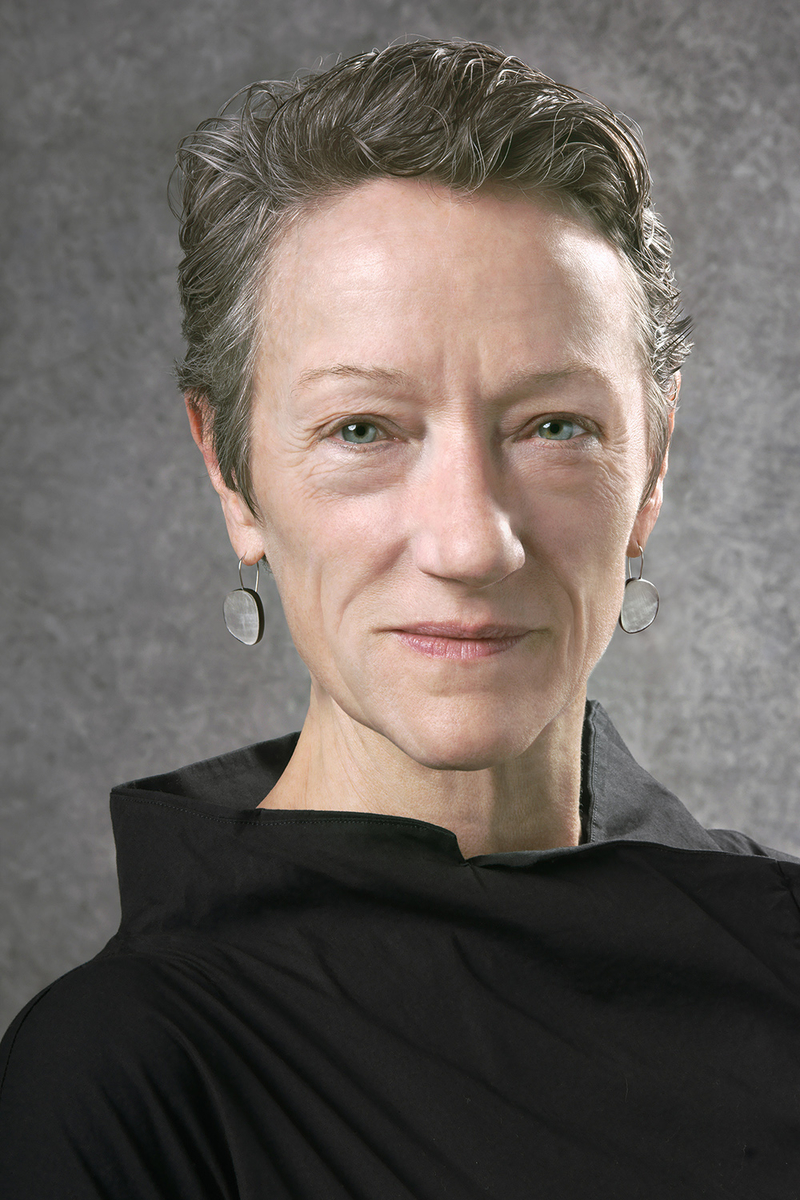
Ellen is Director of the Master of Science in Urban Design degree, an authority on sustainable suburban redevelopment, and a leading urbanist. Author of over 100 articles, she is co-author with June Williamson of the retrofitting suburbia book series documenting successful retrofits of aging big box stores, malls, and office parks into healthier and more sustainable places. Retrofitting Suburbia: Urban Design Solutions for Redesigning Suburbs, (Wiley, 2009, 2011) received a PROSE award as the best architecture and urban planning book of 2009 and has been featured in The New York Times, Time Magazine, Harvard Business Review, NPR, PBS, TED and other prominent venues. Case Studies in Retrofitting Suburbia: Urban Design Strategies for Urgent Challenges (Wiley, 2020) expands on the first book examining how new retrofits are helping communities disrupt automobile dependence, improve public health, support an aging population, leverage social capital for equity, compete for jobs, and add water and energy resilience. 

Ellen serves on several national boards and committees, is former Chair of the Board of the Congress for the New Urbanism, lectures widely and conducts community workshops. In both her teaching and research she focuses on helping communities address new challenges that they were never designed for – whether that’s through her unique database of successful suburban retrofits or studio classes on anticipating autonomous vehicles, coping with climate change or suburban blight. She taught at UVA and MIT before joining Georgia Tech as Architecture Program Director from 2000-2009.

Professor, School of Architecture
Coordinator, MS Urban Design
Phone
(404) 894-0648
Additional Research

City and Regional Planning

Research Focus Areas
Ellen
Dunham-Jones
Show Regular Profile

Manos Antonakakis

Manos Antonakakis
manos@gatech.edu
Website

Dr. Manos Antonakakis (PhD’12) is an Associate Professor in the School of Electrical and Computer Engineering (ECE) and an adjunct faculty member in the College of Computing (CoC), at the Georgia Institute of Technology. He is responsible for the Astrolavos Lab, where students conduct research in the areas of Attack Attribution, Network Security and Privacy, Intrusion Detection, and Data Mining. In May 2012, he received his Ph.D. in Computer Science from Georgia Tech.

Before joining the Georgia Tech ECE faculty ranks, Dr. Antonakakis held the Chief Scientist role at Damballa. He currently serves as the co-chair of the Academic Committee for the Messaging Anti-Abuse Working Group (MAAWG). In his tenure at Georgia Tech ECE, Dr. Antonakakis has raised several tens of millions in research funding as Primary Investigator from government agencies and the private sector. He is the author of several U.S. patents and more than 20 academic publications in top academic conferences. He has served as a program committee member for all top tier security conferences.

Associate Professor, School of Electrical and Computer Engineering
Dean's Professorship
Phone
(404) 385-2534
Office
Klaus 3366
Additional Research

Cyber Technology

Manos
Antonakakis
Show Regular Profile

Omar Asensio

Omar Asensio
asensio@pubpolicy.gatech.edu
Website

Omar I. Asensio is an Associate Professor in the Jimmy and Rosalynn Carter School of Public Policy and the Director of the Data Science & Policy Lab at Georgia Tech. During the 2023-2024 academic year, he was a fellow at the Institute for Business in Global Society at Harvard Business School. Professor Asensio’s research focuses on climate and electrification strategies at the intersection of technology, AI, and sustainability. He employs large-scale data, field experiments, and human-in-the-loop AI systems to address innovation challenges in energy systems, transportation, and human mobility. He contributed to the zero emission vehicles (ZEV) policy guidance for COP26 and the Glasgow Climate Pact.

Prof. Asensio is a member of the U.S. National Academies of Sciences, Engineering, and Medicine (NASEM) New Voices 2021 cohort, which recognizes early- to-mid career leaders for exceptional contributions to science, engineering and medicine. He is a two-time former chair of the Natural Resource, Energy, and Environmental Policy section of APPAM, and is the recipient of the 2023 Faculty Excellence in Research Award from the Ivan Allen College. At Georgia Tech, he is a Brook Byers Institute for Sustainable Systems (BBISS) Fellow and a faculty affiliate of the Institute for Data Engineering & Science (IDEaS), the Machine Learning Center, and the Strategic Energy Institute (SEI).

Professor Asensio has received multiple awards for his research, including the National Science Foundation CAREER Award, the Alliance for Research on Corporate Sustainability (ARCS) Emerging Scholar Award, and the Research Impact on Practice Award (RIPA) from the Academy of Management’s Organizations & the Natural Environment Division (ONE-NBS). His work has been published in leading journals such as Nature Energy, Nature Sustainability, and PNAS. 

Professor Asensio’s research and teaching have been supported by awards from the National Science Foundation, Microsoft, ESRI, the U.S. State Department’s Diplomacy Lab, and the U.S. Department of Energy. His work has informed policy advisory communications for the U.S. National Academy of Sciences, the UK government, the United Nations Economic Commission for Latin America and the Caribbean, and the IndiaAI initiative. His research has been featured in popular press, including Bloomberg, Scientific American, Motor Trend, Fast Company, NPR’s All Things Considered, Yahoo! News, The Huffington Post, and the Washington Post.

Dr. Asensio serves as Associate Editor of Data & Policy journal published by Cambridge University Press. He earned his doctorate in Environmental Science & Engineering with specialties in Economics from UCLA.

Associate Professor, School of Public Policy
Additional Research

Cyber/ Information Technology; Strategic Planning; Building Technologies; Electric Vehicles; Policy/Economics; Public Policy; Energy Efficiency and Conservation

Data Science and Policy Lab
Omar
Asensio
Show Regular Profile

Anjali Thomas

Anjali Thomas
anjalitb3@gatech.edu
Website

Anjali Thomas is an Associate Professor in the Sam Nunn School of International Affairs and Director of the Nunn School Program in Global Development. Her research focuses on the political economy of development, and employs quantitative analyses of data derived from India and other developing country contexts. Her specific substantive interests include the politics of service provision, democratic institutions and the link between climate change and local level politics. Prior to joining the faculty at Georgia Tech, Anjali was a faculty member in the Department of Political Science at the University of British Columbia in Vancouver. She obtained her Ph.D. from New York University in 2010.

Associate Professor
Research Focus Areas
BBISS Initiative Leeds Project - SEEDS (Southeast Exchange of Development Studi…
Anjali
Thomas
Show Regular Profile

Rebecca A. Watts Hull

Rebecca A. Watts Hull
rwattshull@gatech.edu
Departmental Bio

Rebecca Watts Hull is assistant director, faculty development for sustainability education initiatives for the Center for Teaching and Learning (CTL), with a courtesy appointment in the School of History and Sociology. Rebecca works with faculty to incorporate Education for Sustainable Development into their course design and teaching practices. She partners with other units to lead strategic initiatives related to sustainability education, including Sustainability Next’s Education for Sustainable Development implementation plan. Prior to her current role, Rebecca served as a Service Learning and Partnerships Specialist with the Center for Serve-Learn-Sustain (SLS), and she continues to collaborate closely with Georgia Tech's community-based learning initiatives. She facilitates the "Scaling up Sustainability Across the Curriculum Community of Practice" of the Association for the Advancement of Sustainability in Higher Education (AASHE) which supports collaboration among sustainability education professionals at dozens of colleges and universities. Rebecca also serves on AASHE's Advisory Council and STARS Steering Committee. Before her work at Georgia Tech, Rebecca held sustainability and educational leadership roles in the public, private and nonprofit sectors with responsibilities that included faculty development, science and environmental curriculum design, and community-based environmental education and advocacy. Rebecca earned an M.S. and Ph.D. from Georgia Tech in History and Sociology of Technology and Science, focusing her research on social movements and organizational change, and holds an M.S. in Natural Resources and Environment from the University of Michigan. She has taught Sustainability Leadership at Emory University, Environment and Sustainability Studies at Agnes Scott College, and American Environmental History, Social Movements, Community Organizing, and Organizing for Social Change at Georgia Tech.

Assistant Director
Senior Academic Professional
Faculty Development for Sustainability Education Initiatives, Center for Teaching and Learning
Research Focus Areas
University, College, and School/Department
Rebecca
Watts Hull
A.
Show Regular Profile

Margaret Kosal

Margaret Kosal
margaret.kosal@inta.gatech.edu
Website

Margaret E. Kosal's research explores the relationships among technology, strategy, and governance. Her research focuses on two, often intersecting, areas: reducing the threat of weapons of mass destruction (WMD) and understanding the role of emerging technologies for security. Her work aims to understand and explain the role of technology and technological diffusion for national security at strategic and operational levels. In the changing post-Cold War environment, the most advanced military power no longer guarantees national or international security in a globalized world in which an increasing number of nation-states and non-state actors have access to new and potentially devastating dual-use capabilities. The long-term goals of her work are to understand the underlying drivers of technological innovation and how technology affects national security and modern warfare. She is interested in both the scholarly, theoretical level discourse and in the development of new strategic approaches and executable policy options to enable US dominance and to limit the proliferation of unconventional weapons. On the question of understanding the impact of emerging technology on national and international security her research considers what role will nanotechnology, cognitive science, biotechnology, and converging sciences have on states, non-state actors, balance of power, deterrence postures, security doctrines, nonproliferation regimes, and programmatic choices. Through examination of these real applications on the science (benign and defensive) and potential (notional) offensive uses of nanotechnology, she seeks to develop a model to probe the security implications of this emerging technology. The goal of the research is not to predict new specific technologies but to develop a robust analytical framework for assessing the impact of new technology on national and international security and identifying policy measures to prevent or slow proliferation of new technology - the next generation “WMD” - for malfeasant intentions. Kosal is the author of Nanotechnology for Chemical and Biological Defense (Springer Academic Publishers, 2009), which explores scenarios and strategies regarding the benefits and potential proliferation threats of nanotechnology and other emerging sciences for international security. She is also Director of the Sam Nunn Security Fellows Program and Co-Director of the Program on Emerging Technology within the Center for International Strategy, Technology, and Policy (CISTP).  Kosal was recently appointed Adjunct Scholar to the Modern War Institute at the US Military Academy/West Point. From 2012-2013, she as a senior advisor to the Chief of Staff of the US Army as part of his inaugural Strategic Studies Group (SSG). Before joining the Sam Nunn School of International Affairs, she was Science and Technology Advisor within the Office of the Secretary of Defense (OSD). Kosal also served as the first liaison to the Biological and Chemical Defense Directorate at the Defense Threat Reduction Agency (DTRA). She has been recognized for her leadership across the U.S. federal government, specifically for efforts to coordinate across the DoD as part of the interagency Nonproliferation and Arms Control Technology Working Group, reporting to the National Security Council (NSC), and as member of the interagency federal group charged with leading the National Nanotechnology Initiative (NNI). Kosal was nominated to and led the U.S. involvement in the NATO Nanotechnology for Defense Working Group. Her awards include the 2015 CETL/BP Junior Faculty Teaching Excellence Award, 2014 Georgia Tech Junior Faculty Outstanding Undergraduate Research Mentor Award, 2012 Ivan Allen Jr Legacy Award, 2010 INTAGO Faculty Award, CETL Class of 1969 Teaching Scholar, the OSD Award for Excellence, 2007 UIUC Alumni Association Recent Alumni Award, the President’s Volunteer Service Award, American Association for the Advancement of Science (AAAS) Defense Policy Fellow, and the Society of Porphyrins and Phthalocyanines Dissertation Research Award. Currently, she serves on the editorial board of the scholarly journals Studies in Conflict and Terrorism, the Journal of Strategic Security, the Journal of Defense Management, and Global Security: Health Science and Policy. Education: Ph.D., Chemistry, University of Illinois at Urbana-Champaign B.S., Chemistry, University of Southern California Awards and Distinctions: Senior Adjunct Scholar to the Modern War Institute at the U.S. Military Grand Challenges Faculty Fellow, AY2015-2016 & AY 2016-2017 2015-2016 CETL Class of 1969 Teaching Scholar 2015 CETL/BP Junior Faculty Teaching Excellence Award Gold Star Award in Recognition of the Highest Level of Accomplishment in Research, Ivan Allen College of Liberal Arts Dean Griffith Teaching Recognition – “Thank a Teacher” Award 2014 Georgia Tech Junior Faculty Outstanding Undergraduate Research Mentor Award Ivan Allen Jr. Legacy Faculty Award, 2012 INTAGO Faculty of the Year, 2010 Office of the Secretary of Defense Award for Excellence, 2007 University of Illinois at Urbana-Champaign Recent Alumni Award, 2007 President’s Volunteer Service Award, 2007 American Associatio for the Advancement of Science (AAAS) Science & Technology Fellowship, 2005-2007 American Chemical Society’s Chemical and Engineering News Top 2002 Supramolecular Chemistry research paper Areas of Expertise: Biotechnology Emerging Technology Military Nanotechnology National Security Nonproliferation Nuclear Weapons Terrorism US Foreign & Defense Policy

Professor, Sam Nunn School of International Affairs
Director, Sam Nunn Security Program
Editor-in-Chief, Politics and the Life Sciences
Phone
404-894-9664
Office
Habersham 303
Additional Research

Defense / National Security; Cyber Technology; Policy/Economics

Google Scholar
https://scholar.google.com/scholar?hl=en&q=margaret+Kosal&btnG=&as_sdt=1,11&as_sdtp=&oq=margaret
Related Site
Margaret
Kosal
E.
Show Regular Profile

William Drummond

bill.drummond@coa.gatech.edu
Website
Associate Professor, School of City and Regional Planning
MS-GIST Program Director, Associate Director, Center for Geographic Information Systems
Phone
(404) 894-2350
Additional Research

City and Regional Planning; Climate/Environment

William
Drummond
Show Regular Profile

Subhro Guhathakurta

Subhro Guhathakurta
subhro.guha@design.gatech.edu
Website
Chair, School of City & Regional Planning
Director, Center for Spatial Planning Analytics and Visualization
Harry West Professor, School of City & Regional Planning
Phone
(404) 894-2351
Additional Research
  • City and Regional Planning
  • Cyber/ Information Technology
  • Strategic Planning
  • Visualizations
Research Focus Areas
Subhro
Guhathakurta
Show Regular Profile