Kostas Konstantinidis

Kostas Konstantinidis
kostas.konstantinidis@gatech.edu
Website

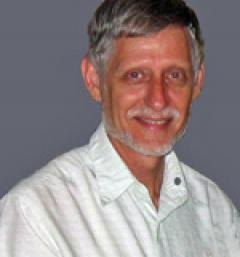
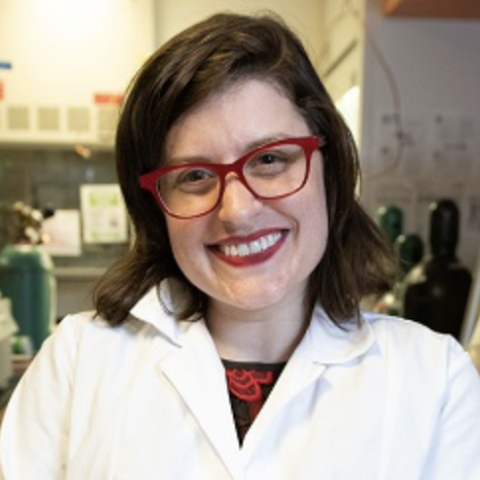
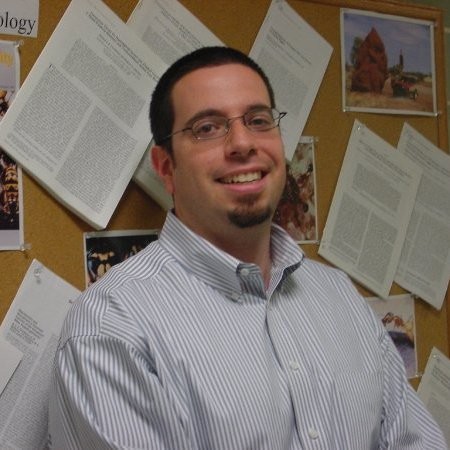
Dr. Kostas Konstantinidis joined the Georgia Institute of Technology as an Assistant Professor in November 2007. He received his BS in Agriculture Sciences from the Aristotle University of Thessaloniki (Greece) in 1999. He continued his studies at the Center for Microbial Ecology at Michigan State University (East Lansing, MI) under the supervision of Prof. James M. Tiedje, where he obtained a PhD in 2004. His PhD studies were fully supported by the Bouyoukos Fellowship program and were devoted in advancing our understanding of the ecology and physiology of soil bacteria through the comparative analysis of their whole-genome sequences. This research resulted in a NSF-funded project to advance the species definition for prokaryotes, which also fostered a short post-doc position at the Center for Microbial Ecology. He then moved to MIT and the laboratory of Prof. Edward DeLong to get trained on innovating metagenomic techniques. His work at MIT provided important new insights into the complexity and function of oceanic microbial communities as well as how life is adapting in the deep and cold Oceans. His research interests are at the interface of genomics and computational biology in the context of microbial ecology with the overarching goal to broaden understanding of the genetic and metabolic potential of the microbial world. Advancing our knowledge on these issues is essential for a better understanding of the microbes that power, by and large, the biogeochemical cycles that sustain life on Earth and cause or control important diseases in humans and animals. He is a member of the American Society for Microbiology (ASM), the International Society for Microbial Ecology (ISME) and the Association of Environmental Engineering and Science Professors (AEESP). Konstantinidis held the Carlton S. Wilder Junior Professorship for five years and subsequently received the Maulding Faculty Fellowship in the School of Civil and Environmental Engineering.

Professor
Phone
404-385-3628
Office
ES&T 3224
Additional Research

Environmental microbiology and genomics Computational approaches for studying the ecology and evolution of microorganisms Development of genomic and proteomic techniques to investigate and quantify in-situ important microbial-mediated processes Population and single-cell genomics Assessing the extent and value of biodiversity within natural assemblages of Bacteria and Archaea Biotechnological applications of microbial functional diversity Environmental relevance of microbial diseases Our laboratory focuses on the smallest organisms on the planet, the bacteria and the archaea, which represent the largest reservoir of biodiversity on Earth, drive the life-sustaining biogeochemical cycles, and cause or control diseases in humans, animals, and plants. Our scientific interests are at the interface of microbial ecology with engineering and computational biology. The long-term goals of our research is to broaden understanding of the genetic and metabolic diversity of the microorganisms and to explore this biodiversity for biotechnological applications.
Research Focus Areas
Google Scholar
http://scholar.google.com/citations?user=cT7dxlYAAAAJ&hl=en
Related Site
Kostas
Konstantinidis
Show Regular Profile

Brooks Lindsey

Brooks Lindsey
brooks.lindsey@bme.gatech.edu
Website

Dr. Lindsey previously developed matrix array transducers, adaptive beamforming strategies, and interventional devices in Stephen Smith’s lab at Duke University, where he received a Ph.D. for his work in 3D transcranial ultrasound.  While at Duke, he was the recipient of a pre-doctoral fellowship from the National Institutes of Health (NIH) as part of the Duke Medical Imaging Training Program.  He also completed postdoctoral training in the labs of Paul Dayton and Xiaoning Jiang at the University of North Carolina and North Carolina State University in contrast-enhanced ultrasound imaging and in the design and fabrication of high frequency, interventional ultrasound transducers.  During this time, he was awarded the Ruth L. Kirschstein National Research Service Award from the NIH to develop endoscopic transducers for contrast-specific imaging in pancreatic cancer.  Dr. Lindsey recently joined the Wallace H. Coulter Department of Biomedical Engineering at Georgia Tech-Emory, where he leads the Ultrasonic Imaging and Instrumentation Laboratory.  Dr. Lindsey is an active member of the IEEE Ultrasonics, Ferroelectrics, and Frequency Control Society, the Biomedical Engineering Society and the American Institute of Ultrasound in Medicine and is a member of the Technical Program Committee for the IEEE International Ultrasonics Symposium.  In 2022, Dr. Lindsey received the New Investigator award from the American Institute of Ultrasound in Medicine. At Georgia Tech, Dr. Lindsey holds a primary appointment in Biomedical Engineering.  He is also a faculty member for the Interdisciplinary Bioengineering Graduate Program and holds an adjunct appointment in the School of Electrical and Computer Engineering. Lab members have received best paper, best poster, and best student pitch awards from the IEEE UFFC Society. Research activities in the lab are currently funded by the National Institutes of Health and the National Science Foundation.

Assistant Professor
Phone
404-385-6647
Office
UAW 2107
Additional Research
Dr. Lindsey is interested in developing new imaging technologies for understanding biological processes and for clinical use.In the Ultrasonic Imaging and Instrumentation lab, we develop transducers, contrast agents, and systems for ultrasound imaging and image-guidance of therapy and drug delivery. Our aim is to develop quantitative, functional imaging techniques to better understand the physiological processes underlying diseases, particularly cardiovascular diseases and tumor progression.
Related Site
Brooks
Lindsey
Show Regular Profile

Michael Goodisman

Michael Goodisman
michael.goodisman@biology.gatech.edu
Website

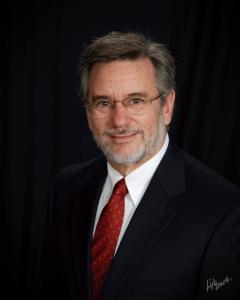
Michael Goodisman is interested in understanding how evolutionary processes affect social systems and how sociality, in turn, affects the course of evolution. His research explores the molecular basis underlying sociality, the nature of selection in social systems, the breeding biology of social animals, the process of self-organization in social groups, and the course of development in social species. His teaching interests are centered on the importance of behavior, genetics, and ethics in biological systems. Goodisman also works to improve and advance undergraduate education.

Professor
Associate Chair for Undergraduate Education
Phone
404-385-6311
Office
Cherry Emerson A124
Additional Research
The evolution of sociality represented one of the major transition points in biological history. I am interested in understanding how evolutionary processes affect social systems and how sociality, in turn, affects the course of evolution. My research focuses on the molecular basis underlying sociality, the nature of selection in social systems, the breeding biology of social animals, the process of self-organization in social groups, and the course of development in social species.
Research Focus Areas
Google Scholar
https://scholar.google.com/citations?user=EvWHHJMAAAAJ&hl=en&oi=ao
http://www.biology.gatech.edu/people/michael-goodisman
Michael
Goodisman
D.
Show Regular Profile

Roger Wartell

Roger Wartell

Roger Wartell received his B.S. degree in Physics from Stevens Institute of Technology in 1966. In 1971, he received his Ph.D. in Physics from the University of Rochester where he worked in the group of Elliot Montroll on the DNA helix-coil transition. From 1971-1973 he was a NIH postdoctoral fellow in the laboratory of Robert Wells at the University of Wisconsin-Madison. He was a Visiting Professor at the University of Wisconsin-Madison in 1978-79, and Visiting Scholar at National Institutes of Health-Bethesda from 1987-88. 

Wartell joined the faculty at Georgia Tech in 1974. Roger received a NIH Career Development Award in 1979 and served as Associate Chair in School of Physics from 1987-88, and Chair of the School of Biology from 1990-2004. He is a member of the NASA Astrobiology Institute at Georgia Tech. His current research is focused on protein-RNA interactions relating to sRNA regulation in bacteria, and the assembly and reactions of small RNAs in ice.

Professor Emeritus
Phone
404-894-8421
Office
Petit Biotechnology Building, Office 1307
Additional Research
Current research is directed at understanding the origin and evolution of RNA assemblies and activities that gave rise to RNA-based genetic and metabolic systems, and the interaction of a bacterial RNA-binding protein Hfq that is crucial for the regulation of gene expression by short regulatory RNAs. The first research area is examining the assembly and activities of RNAunder plausible early earth conditions ( e.g. anoxic environment, freeze-thaw cycles of aqueous solutions). We have shown that Fe2+can replace Mg2+and enhance ribozyme function under anoxic conditions. Fe2+was abundant on early earth and may have enhanced RNA activities in an anoxic environments. Freeze-thaw cycles can also promote RNA assembly under conditions where degradation is minimized. The second area of research is investigating the mechanism of the Hfq protein. Hfq is a bacterial RNA-binding protein that facilitates the hybridization of short non-coding regulatory RNAs (sRNA)to their target regions on specific mRNAs. sRNAs are important elements in the regulation of gene expression for bacteria.Hfq is highly conserved among bacterial phyla and has been shown to be a virulence factor in several bacterial species. The interactions of wild type and mutant Hfq proteins with various RNAs are examined using biochemical/ biophysical methods such as the electrophoresis mobility shift assay, fluorescence spectroscopy, and mass spectrometry.
Research Focus Areas
Google Scholar
http://scholar.google.com/scholar?hl=en&q=roger+wartell&as_subj=&as_sdt=80001&as_ylo=&as_vis=0
http://biosciences.gatech.edu/people/roger-wartell
Roger
Wartell
Show Regular Profile

Frank Rosenzweig

Frank Rosenzweig
frank.rosenzweig@biology.gatech.edu
Website

Frank Rosenzweig is a Professor in School of Biological Sciences. He holds Bachelors degrees in Comparative Literature and Zoology from University of Tennessee-Knoxville, and a PhD in Biology at University of Pennsylvania. He carried out postdoctoral studies at the University of Michigan. He was a professor at University of Idaho, University of Florida, and University of Montana before joining the Georgia Tech faculty in 2016. He served as the Director of the NASA Astrobiology Institute funded center “Reliving the Past” from 2015 to 2019.  His research group studies the ecological and evolutionary forces that produce and preserve genetic variation using experimental evolution  to illuminate how genetic variation maps onto organismal fitness.

Professor
Phone
404-385-4458
Office
EBB 2007
http://biosci.gatech.edu/people/frank-rosenzweig
Frank
Rosenzweig
Show Regular Profile

Adegboyega “Yomi” Oyelere

Adegboyega “Yomi” Oyelere
adegboyega.oyelere@chemistry.gatech.edu
Website

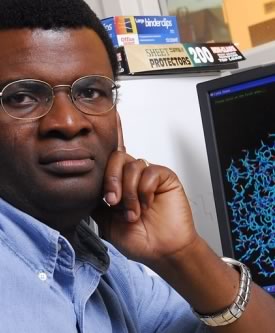
Dr. Adegboyega “Yomi” Oyelere has received PhD from Brown University in 1998. Currently, he works as an associate professor in the School of Chemistry and Biochemistry at the Georgia Institute of Technology.

Associate Professor
Phone
404-894-4047
Office
Petit Biotechnology Building, Office 3305
Additional Research
Bioorganic Chemistry, Biochemistry and Drug Design, RNA-Small Molecule Interaction, Targeted Histone Deacetylase (HDAC) Inhibition, Design and Synthesis of Novel Bioconjugates for Molecular Delivery Applications
Google Scholar
http://scholar.google.com/scholar?q=adegboyega+k+oyelere&hl=en&btnG=Search&as_sdt=80001&as_sdtp=on
Related Site
Adegboyega “Yomi” Oyelere
Oyelere
Show Regular Profile

Terry Snell

Terry Snell
terry.snell@biosci.gatech.edu

Terry Snell, an Emeritus Professor in the School of Biological Sciences, is a member of the Parker H. Petit Institute for Bioengineering and Bioscience.

Professor Emeritus
Phone
404-385-4498
Office
Cherry Emerson 201
Additional Research
Chemical ecology of zooplankton; mate recognition; evolutionary ecology; aquatic toxicology; gene expression in response to environmental stress; aquaculture. 
Research Focus Areas
Google Scholar
https://scholar.google.com/citations?user=_4PzVMEAAAAJ&hl=en
http://biosciences.gatech.edu/people/terry-snell
Terry
Snell
Show Regular Profile

Martha Grover

Martha Grover
martha.grover@chbe.gatech.edu
Grover Group

Grover’s research activities in process systems engineering focus on understanding macromolecular organization and the emergence of biological function. Discrete atoms and molecules interact to form macromolecules and even larger mesoscale assemblies, ultimately yielding macroscopic structures and properties. A quantitative relationship between the nanoscale discrete interactions and the macroscale properties is required to design, optimize, and control such systems; yet in many applications, predictive models do not exist or are computationally intractable.

The Grover group is dedicated to the development of tractable and practical approaches for the engineering of macroscale behavior via explicit consideration of molecular and atomic scale interactions. We focus on applications involving the kinetics of self-assembly, specifically those in which methods from non-equilibrium statistical mechanics do not provide closed form solutions. General approaches employed include stochastic modeling, model reduction, machine learning, experimental design, robust parameter design, and estimation.

Professor, School of Chemical and Biomolecular Engineering
James Harris Faculty Fellow, School of Chemical and Biomolecular Engineering
Member, NSF/NASA Center for Chemical Evolution
Phone
404.894.2878
Office
ES&T 1228
Additional Research

Colloids; Crystallization; Organic and Inorganic Photonics and Electronics; Polymers; Discrete atoms and molecules interact to form macromolecules and even larger mesoscale assemblies, ultIMaTely yielding macroscopic structures and properties. A quantitative relationship between the nanoscale discrete interactions and the macroscale properties is required to design, optimize, and control such systems; yet in many applications, predictive models do not exist or are computationally intractable. The Grover group is dedicated to the development of tractable and practical approaches for the engineering of macroscale behavior via explicit consideration of molecular and atomic scale interactions. We focus on applications involving the kinetics of self-assembly, specific those in which methods from non-equilibrium statistical mechanics do not provide closed form solutions. General approaches employed include stochastic modeling, model reduction, machine learning, experimental design, robust parameter design, estIMaTion, and optimal control, monitoring and control for nuclear waste processing and polymer organic electronics

Google Scholar
https://scholar.google.com/citations?hl=en&user=PgpLoqIAAAAJ&view_op=list_works&sortby=pubdate
ChBE Profile Page
Martha
Grover
A.
Show Regular Profile

Jennifer Glass

Jennifer Glass
jennifer.glass@eas.gatech.edu
Website

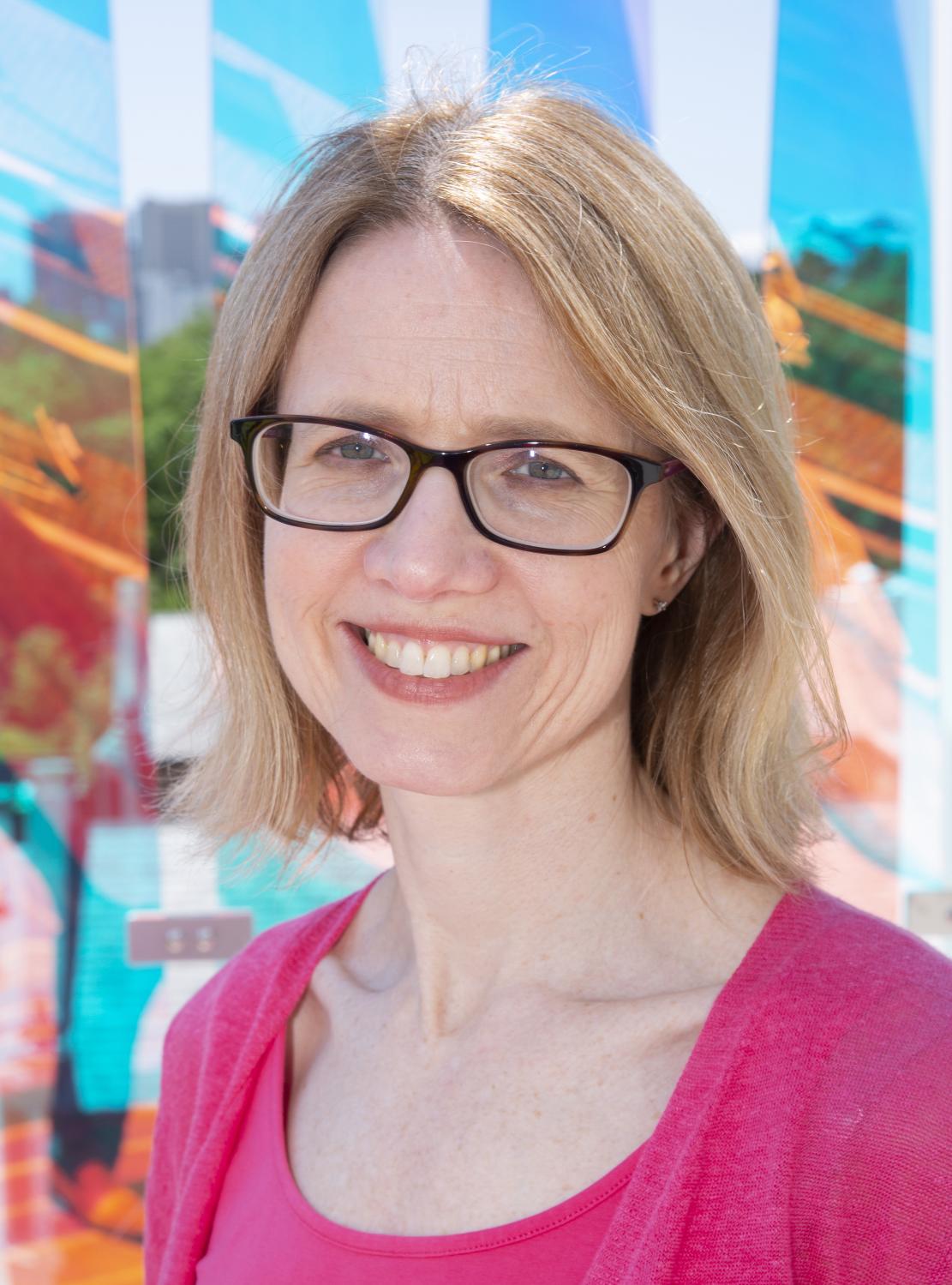
The Glass research group studies the microbes that made Earth habitable, and, more specifically, the microbial mechanisms underpinning cryptic transformations of methane and nitrous oxide in oxygen-free ecosystems. Why focus on the microbial world? The Earth has been constantly inhabited for four billion years. For three-quarters of that time, life was solely microbial. Ancient microbes produced the gases that warmed the planet to clement temperatures when the sun was faint, and that invented the molecular machines that drive biogeochemical cycles. The co-evolution of Earth and life is woven into the fabric of our research group, which examines the interplay between microbes and the greenhouses gases that control planetary temperature. Our research informs the microbial metabolisms that (i) made the early Earth habitable for life, (ii) make the deep subsurface habitable for life, (iii) serve as biosignatures for life on exoplanets, and (iv) play crucial roles in regulating atmospheric fluxes of greenhouse gases on our warming planet.

Associate Professor, School of Earth and Atmospheric Sciences
Phone
404.894.3942
Additional Research

Anaerobic oxidation of methane, Environmental controls on greenhouse gas cycling, with afocus on methane and nitrous oxide, in terrestrial and marineecosystems Biogeochemical cycles of bioessential trace elements Marine microbiology, with a focus on anaerobic metabolisms Influence of trace metal bioavailability on microbial carbon and nitrogen cycling Integrating omic and geochemical datasets Co-evolution of microbial metabolisms and ocean chemistry over Earthhistory,

Google Scholar
https://scholar.google.com/citations?user=zKOyWKQAAAAJ&hl=en
Related Site
Jennifer
Glass
B.
Show Regular Profile

David Lynn

David Lynn
dlynn2@emory.edu
Website

David G. Lynn has contributed in the general areas of molecular recognition, synthetic biology and chemical evolution, and has developed chemical and physical methods for the analysis of supramolecular self-assemblies, of signal transduction in cellular development and pathogenesis, of molecular skeletons for storing and reading information, and of the evolution of biological order.

Lynn has earned a Howard Hughes Medical Institute Professorship, the Emory Scholar-Teacher Award, a fellowship from the American Association for the Advancement of Science, and the ACS Charles H. Herty Medal.

During his tenure as Chair of the Department of Chemistry from 2006-2015, Lynn assisted in the renovation of the Atwood chemistry building. In 2018 and 2019, Lynn also served as a board member for the Atlanta Science Festival.

Asa Griggs Candler Professor
Howard Hughes Medical Institute Professor
Phone
404-727-9348
Office
Emerson E407
Additional Research
The David G. Lynn Group at Emory University works to understand the structures and forces that enable supramolecular self-assembly, how chemical information can be stored and translated into new molecular entities, and how the forces of evolution can be harnessed in new structures with new function. Some of our current research areas include the origins of prokaryotic and eukaryotic pathogenesis, template directed polymerization and dynamic combinatorial systems, amyloid diseases and protein self-assembly, and intelligent materials.
Research Focus Areas
University, College, and School/Department
Google Scholar
http://scholar.google.com/scholar?q=david+g+lynn&btnG=&hl=en&as_sdt=0,11
David
Lynn
Show Regular Profile