Lynn Kamerlin

Lynn Kamerlin received her Master of Natural Sciences from the University of Birmingham (UK), in 2002, where she remained to complete a PhD in Theoretical Organic Chemistry under the supervision

Lynn Kamerlin received her Master of Natural Sciences from the University of Birmingham (UK), in 2002, where she remained to complete a PhD in Theoretical Organic Chemistry under the supervision

Christopher E. Carr is an engineer/scientist with training in aero/astro, electrical engineering, medical physics, and molecular biology. At Georgia Tech he is an Assistant Professor in the Daniel Guggenheim School of Aerospace Engineering with a secondary appointment in the School of Earth and Atmospheric Sciences. He is a member of the Space Systems Design Lab (SSDL) and runs the Planetary eXploration Lab (PXL).

The Shoichiro's lab primary research interest is the mechanisms that regulate dynamic rearrangement of the actin cytoskeleton during various cellular events including development, cell movement, cytokinesis, and human diseases. We have been studying this problem using the nematode Caenorhabditis elegans as a model system. C. elegans has been used to study many aspects of development, because of its relative simplicity in the body patterning, and application of genetics, molecular biology, biochemistry, and cell biology.

Saurabh Sinha received his Ph.D. in Computer Science from the University of Washington, Seattle, in 2002, and after post-doctoral work at the Rockefeller University with Eric Siggia, he joined the faculty of the University of Illinois, Urbana-Champaign, in 2005, where he held the positions of Founder Professor in Computer Science and Director of Computational Genomics in the Carl R. Woese Institute for Genomic Biology until 2022. He joined Georgia Institute of Technology in 2022, as Wallace H.

Dr. Lindsey previously developed matrix array transducers, adaptive beamforming strategies, and interventional devices in Stephen Smith’s lab at Duke University, where he received a Ph.D.

After studying ecology as a biology major at Swarthmore College, Annalise Paaby learned fly pushing as a technician for Steve DiNardo and then discovered evolutionary genetics as a tech for Paul Schmidt. She joined Paul’s lab as a graduate student and earned her Ph.D. from the University of Pennsylvania in 2009. In 2015, Paaby completed her postdoctoral training with Matt Rockman at New York University and began her appointment at Georgia Tech.
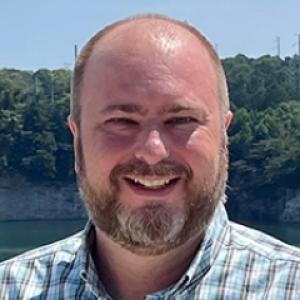
Joe Lachance is an Assistant Professor in the School of Biological Sciences at Georgia Institute of Technology and a member of the Cell and Molecular Biology Research Program at Winship Cancer Institute.
Lachance received his Ph.D. in Genetics from Stony Brook University in Stony Brook, New York. He conducted his postdoctoral studies as a NIH Kirschstein postdoctoral fellow at the University of Pennsylvania.

I am an environmental microbiologist interested in the dynamics of microbial systems. My research is motivated by the beliefs that microbes are a frontier for natural history and scientific discovery, and that exploring this frontier is necessary and important for understanding biological diversity and its changing role in ecosystem processes. The first major research theme in my lab explores how aquatic microbes respond to environmental change, notably declines in ocean oxygen content.

Greg Gibson is Professor of Biology and Director of the Center for Integrative Genomics at Georgia Tech. He received his BSc majoring in Genetics from the University of Sydney (Australia) and PhD in Developmental Genetics from the University of Basel. After transitioning to quantitative genetic research as a Helen Hay Whitney post-doctoral fellow at Stanford University, he initiated a program of genomic research as a David and Lucille Packard Foundation Fellow at the University of Michigan.
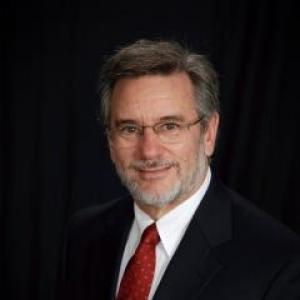
Terry Snell, an Emeritus Professor in the School of Biological Sciences, is a member of the Parker H. Petit Institute for Bioengineering and Bioscience.