Josh Kacher

Josh Kacher
josh.kacher@mse.gatech.edu
MSE Profile Page

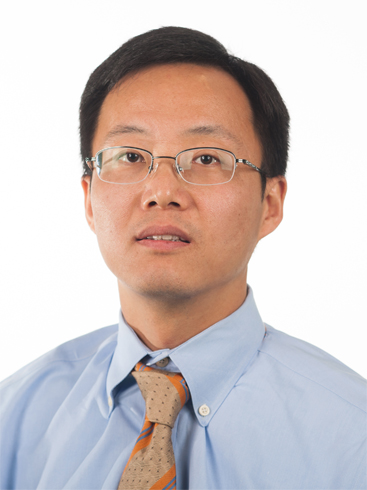
Josh Kacher joined Georgia Tech’s Materials Science and Engineering department as an assistant professor in Fall of 2015. Prior to his appointment, he was a postdoctoral scholar at the University of California, Berkeley. There, he worked in collaboration with General Motors to understand the Portevin-le Chatelier effect in Al-Mg and with the navy to develop novel rhenium-replacement alloys. His research approach centered on applying in situ TEM deformation to understand the influence of local chemistry on the behavior of defects such as dislocations and twins. This was coupled with mesoscale characterization of the defect state using EBSD for multiscale characterization of the deformation processes.

His Ph.D. and Masters work similarly focused on applying multiscale electron microscopy techniques to understanding defect behavior in a variety of systems such as ion-irradiated stainless steels, materials at elevated temperatures, and Mg alloys for light-weight alloy development.

Associate Professor, School of Materials Science and Engineering
Phone
404.894.2781
Office
Love 282
Additional Research

Materials In Extreme Environments; corrosion; deformation and degradation; Advanced Characterization; micro and nanomechanics; fracture and fatigue
Research Focus Areas
Google Scholar
https://scholar.google.com/citations?hl=en&user=SGk3pngAAAAJ&view_op=list_works&sortby=pubdate
Kacher Lab
Josh
Kacher
Show Regular Profile

Waymond R. Scott

Waymond R. Scott
waymond.scott@ece.gatech.edu
ECE Profile Page

Professor Scott was born in Calhoun, GA. He received the B.E.E., M.S.E.E., and Ph.D. degrees from the Georgia Institute of Technology in 1980, 1982, and 1985, respectively.

He joined the Georgia Tech faculty in 1986 where he teaches and performs research in the area of applied electromagnetics and acoustics. As part of the teaching, he is interested in using computers to enhance the learning experience of students and has developed computer based visualization tools and animations to help students understand some of the more difficult aspects of electromagnetics.

Joseph M. Pettit Professor, School of Electrical and Computer Engineering
Phone
404.894.3048
Office
VL W307
Additional Research

Acoustics and Dynamics; Computer-Aided Engineering; micro and nanomechanics

Research Focus Areas
Personal Research Site
Waymond R
Scott
Show Regular Profile

William Doolittle

William Doolittle
alan.doolittle@ece.gatech.edu
ECE Profile Page

During my research career I have observed “new” material systems develop and offer promise of wondrous device performance improvements over the current state of the art. Many of these promises have been kept, resulting in numerous new devices that could never have been dreamed of just a few short years ago. Other promises have not been fulfilled, due, in part, to a lack of understanding of the key limitations of these new material systems. Regardless of the material in question, one fact remains true: Without a detailed understanding of the electrical and optical interaction of electronic and photonic “particles” with the material and defect environment around them, novel device development is clearly impeded. It is not just a silicon world! Modern electronic/optoelectronic device designs (even silicon based devices) utilize many diverse materials, including mature dielectrics such as silicon dioxide/nitrides/oxynitrides, immature ferroelectric oxides, silicides, metal alloys, and new semiconductor compounds. Key to the continued progress of electronic devices is the continued development of a detailed understanding of the interaction of these materials and the defects and limitations inherent to each material system. It is my commitment to insure that new devices are continuously produced based on complex mixed family material systems.

Joseph M. Pettit Professor, School of Electrical and Computer Engineering
Phone
404.894.9884
Office
MIRC 209
Additional Research

Compund semiconductors, optical materials, III-V semiconductor devices

Google Scholar
https://scholar.google.com/citations?hl=en&user=YeyRLWAAAAAJ&view_op=list_works&sortby=pubdate
Personal Research Site
William
Doolittle
Alan
Show Regular Profile

Yang Wang

Yang Wang
yang.wang@ce.gatech.edu
Laboratory for Smart Structural Systems

Yang Wang joined Georgia Tech faculty in 2007. With a B.E. and an M.S. degree in civil engineering awarded by Tsinghua University in Beijing, China, he received a Ph.D. in civil engineering at Stanford University in 2007, as well as an M.S. in electrical engineering. Wang’s research interests include structural health monitoring and damage detection, decentralized structural control, wireless and mobile sensors, and structural dynamics. He received an NSF Early Faculty Career Development (CAREER) Award in 2012 and a Young Investigator Award from the Air Force Office of Scientific Research (AFOSR) in 2013. Wang is the author and coauthor of over 100 journal and conference papers, and currently serves as an associate editor for the ASCE (American Society of Civil Engineers) Journal of Bridge Engineering.

Professor, School of Civil and Environmental Engineering and Electrical and Computer Engineering
Phone
404.894.1851
Office
Mason 322-C
Additional Research

Structural Health Monitoring; Structural Materials; Materials Failure and Reliability

Research Focus Areas
Google Scholar
https://scholar.google.com/citations?hl=en&user=crCQeVYAAAAJ&view_op=list_works&sortby=pubdate
Yang
Wang
Show Regular Profile

Lauren Stewart

Lauren Stewart
lauren.stewart@ce.gatech.edu
Structural Engineering and Materials Laboratory

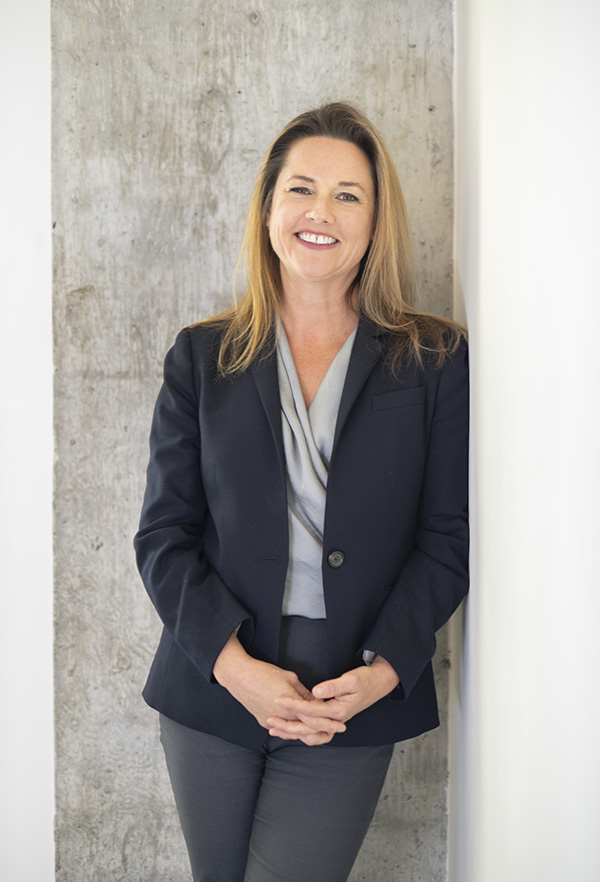
Lauren Stewart joined the Georgia Institute of Technology, Civil & Environmental Engineering faculty as an assistant professor in August 2013. She was promoted to Associate Professor, with tenure in 2019. She received her B.S. in Structural Engineering from the University of California, San Diego in 2004 and her Ph.D. in Structural Engineering also from the University of California, San Diego in 2010. She is a National Defense Science and Engineering Graduate Fellow, an US Air Force Summer Faculty Fellow, and a 2017 Rising Star in Structural Engineering. Prior to coming to Georgia Tech, Stewart was a Post Doctoral Scholar at the University of California, San Diego from 2010 to 2013. From 2006 to 2013, she worked a Senior Blast Engineer at Karagozian & Case Structural Engineers in California where she holds a PE license.

Stewart’s research is focused on experimental methods for characterized the response of structures to natural and manmade hazards. She has been involved with many blast, shock, impact and seismic experimental and computational programs. These including blast testing of steel structural columns, blast testing of steel stud wall systems, material testing for ultra high performance concrete for impulsive loads and seismic testing for Los Alamos National Laboratories. She has also conducted advanced finite element analysis for the World Trade Center 7 Collapse, AFRL Munitions Directorate small munitions program and programs supported by the Technical Support Working Group. Her design experience includes blast analysis for the Veterans Affairs and consulting projects for various companies.

Associate Professor, School of Civil and Environmental Engineering
Director, Structural Engineering and Materials Laboratory
Phone
404.385.1919
Office
Mason 3141A
Additional Research

computational mechanics; Materials In Extreme Environments; Materials Failure and Reliability; Structural Materials

Research Focus Areas
Google Scholar
https://scholar.google.com/citations?hl=en&user=nFkbwqkAAAAJ&view_op=list_works&sortby=pubdate
Lauren
Stewart
Show Regular Profile

Kimberly Kurtis

Kimberly Kurtis
kimberly.kurtis@ce.gatech.edu
CEE Profile Page

Kimberly (Kim) E. Kurtis is a professor in the School of Civil and Environmental Engineering at Georgia Institute of Technology. She has served as associate dean of faculty development and scholarship in the College of Engineering since 2014 and was interim chair of the School for the 2017-2018 academic year. Kurtis earned her BSE in civil engineering from Tulane University under a Deans Honor Scholarship and her Ph.D. in civil engineering from the University of California at Berkeley, where she was a Henry Hilp Fellow and a National Science Foundation (NSF) Fellow.  

Kurtis’s innovative research on the multi-scale structure and performance of cement-based materials has resulted in more than 100 technical publications and two US patents. In addition to her technical and educational service contributions at the American Concrete Institute (ACI), American Ceramics Society (ACerS), Portland Cement Association (PCA), Transportation Research Board (TRB), American Association of State and Highway Transportation Officials (AASHTO), and Federal Highway Administration (FHWA), she has held two leadership positions – Chairman of ACI Committee 236: Materials Science of Concrete (2006-2012) and Chair of American Ceramic Society’s Cements Division (2008-2009) – central to advancing science-based research on cement-based materials. Dr. Kurtis has served as Associate Editor of ASCE Journal of Materials in Civil Engineering and as an Editorial Board member of Cement and Concrete Composites. Having previously served six years on ACI's Educational Activities Committee (EAC), she is currently appointed to ACI's 12-member Technical Activities Committee, which oversees development of ACI standards, technical committee activities, and technical content presented at ACI conventions and in archival publications. Since 2018, she has been Trustee at the ASCE Foundation, representing District 5. 

She has been honored with ACI ’s Walter P. Moore, Jr. Faculty Achievement Award (2005), ACI’s Del Bloem Award for Service (2013), Outstanding Senior Undergraduate Research Mentor Award at Georgia Institute of Technology (2013), the ACI James Instruments Award for Research on NDE of Concrete (2008), Award for Outstanding Article in ASTM’s Journal of Testing and Evaluation (2010), and ASCE’s Huber Civil Engineering Research Prize (2013). Kurtis is a Fellow of the American Concrete Institute and the American Ceramics Society. 

Professor, School of Civil and Environmental Engineering
Associate Dean for Faculty Development and Scholarship, College of Engineering
Phone
404.385.0825
Office
Mason 4154
Additional Research

Structural Materials; Sustainable Communities; Composites; Structural Health Monitoring

Research Focus Areas
Google Scholar
https://scholar.google.com/citations?hl=en&user=lFkrYpwAAAAJ&view_op=list_works&sortby=pubdate
Kimberly
Kurtis
E.
Show Regular Profile

Ting Zhu

Ting Zhu
ting.zhu@me.gatech.edu
ME Profile Page

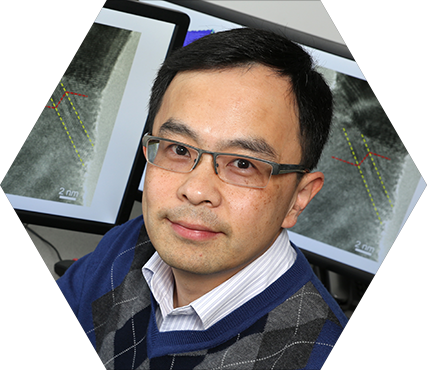
Zhu's research focuses on the modeling and simulation of mechanical behavior of materials at the nano- to macroscale. Some of the scientific questions he is working to answer include understanding how materials fail due to the combined mechanical and chemical effects, what are the atomistic mechanisms governing the brittle to ductile transition in crystals, why the introduction of nano-sized twins can significantly increase the rate sensitivity of nano-crystals, and how domain structures affect the reliability of ferroelectric ceramics and thin films. To address these problems, which involve multiple length and time scales, he has used a variety of modeling techniques, such as molecular dynamics simulation, reaction pathway sampling, and the inter-atomic potential finite-element method. The goal of his research is to make materials modeling predictive enough to help design new materials with improved performance and reliability.

Woodruff Professor, Woodruff School of Mechanical Engineering
Phone
404.894.6597
Office
MRDC 4110
Additional Research

Ferroelectronic MaterialsMicro and NanomechanicsMultiscale ModelingThin Films 

Google Scholar
https://scholar.google.com/citations?hl=en&user=3_80JesAAAAJ&view_op=list_works&sortby=pubdate
Zhu Research Group
Ting
Zhu
Show Regular Profile

Shuman Xia

Shuman  Xia
shuman.xia@me.gatech.edu
ME Profile Page

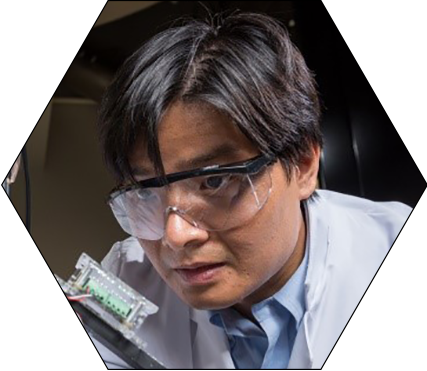
Xia began at Georgia Tech in Fall 2011. Prior to joining Georgia Tech, he was a postdoctoral researcher at the Graduate Aerospace Laboratories of the California Institute of Technology (CALCIT).

Associate Professor, Woodruff School of Mechanical Engineering
Phone
404.385.4549
Office
MRDC 4103
Additional Research

micro and nanomechanics; Energy Conversion; Energy Storage; Ferroelectronic Materials; fracture and fatigue

Research Focus Areas
Google Scholar
https://scholar.google.com/citations?hl=en&user=aDtfPaUAAAAJ&view_op=list_works&sortby=pubdate
Shuman
Xia
Show Regular Profile

Scott Bair

Placeholder for headshot
scott.bair@me.gatech.edu
Regents' Researcher, Woodruff School of Mechanical Engineering
Phone
404.894.3273
Office
MRDC 4207
Additional Research
Tribomaterials; Materials Design
Research Focus Areas
Google Scholar
https://scholar.google.com/citations?hl=en&user=QWPrXC4AAAAJ&view_op=list_works&sortby=pubdate
Scott
Bair
Show Regular Profile

Richard Neu

Richard Neu
rick.neu@me.gatech.edu
ME Profile Page

Neu's research involves the understanding and prediction of the fatigue behavior of materials and closely related topics, typically when the material must resist degradation and failure in harsh environments. Specifically, he has published in areas involving thermomechanical fatigue, fretting fatigue, creep and environmental effects, viscoplastic deformation and damage development, and related constitutive and finite-element modeling with a particular emphasis on the role of the materials microstructure on the physical deformation and degradation processes. He has investigated a broad range of structural materials including steels, titanium alloys, nickel-base superalloys, metal matrix composites, molybdenum alloys, high entropy alloys, medical device materials, and solder alloys used in electronic packaging. His research has widespread applications in aerospace, surface transportation, power generation, machinery components, medical devices, and electronic packaging. His work involves the prediction of the long-term reliability of components operating in extreme environments such as the hot section of a gas turbine system for propulsion or energy generation. His research is funded by some of these industries as well as government funding agencies.

Professor, School of Materials Science and Engineering, Woodruff School of Mechanical Engineering
Director, Mechanical Properties Characterization Facility
Phone
404.894.3074
Office
MRDC 4104
Additional Research

Nanomaterials; micro and nanomechanics; Thermoelectric Materials; fracture and fatigue

Research Focus Areas
Google Scholar
https://scholar.google.com/citations?hl=en&user=60ZYazgAAAAJ&view_op=list_works&sortby=pubdate
Mechanical Properties Characterization Facility
Richard
Neu
Show Regular Profile