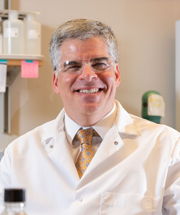
Simone Douglas-Green

Simone Douglas-Green
https://douglasgreenlab.com/

Dr. Simone Douglas-Green (@DrBlackBoots on Twitter/X and Instagram) is a new Assistant Professor in the Wallace H. Coulter Department of Biomedical Engineering at Georgia Tech and Emory University, where she has been named a BME Distinguished Faculty Fellow. She received her B.S. in Biomedical Engineering from the University of Miami, and her Ph.D. in Biomedical Engineering from the joint program at Georgia Tech and Emory University. Dr. Douglas-Green’s professional and scholarly development as a doctoral and postdoctoral trainee has been supported by a number of awards including the Alfred P. Sloan Foundation's Minority Ph.D. (MPHD) Fellowship, NASEM Ford Foundation Postdoctoral Fellowship, and Burroughs Wellcome Fund Postdoctoral Enrichment Program (PDEP). The Douglas-Green Lab focuses on developing tools/techniques to study how biology interacts with nanoparticles with an emphasis on understanding person and disease specific proteins coronas. Her goal is to train the next generation of engineers to be “EPIC”- engineering with purpose, intentionality, and compassion.

Assistant Professor
Office
UAW 4108
https://douglasgreenlab.com/
Simone
Douglas-Green
Show Regular Profile

Alyssa Panitch, Ph.D.

Alyssa Panitch, Ph.D.
alyssa.panitch@bme.gatech.edu

The Panitch lab research has focused on the extracellular matrix (ECM) and how matrix signals affect tissue regeneration, including nerve regeneration, wound healing and angiogenesis, cartilage and vascular. More recently, the lab has focused on the proteoglycan component of the ECM. Proteoglycans are critical components of tissue function. They influence matrix organization, the viscoelastic properties of the matrix, access of enzymes to the matrix and serve as a protective barrier as in the case of the glycocalyx. Proteoglycans are difficult to synthesize because of the complex post translational modifications and the complexity of carbohydrate chemistry. The Panitch laboratory has demonstrated that proteoglycan function can largely be recapitulated by conjugating short, bioactive peptide sequences to GAGs. The peptide sequences direct the GAG to its target and ensure that it is held in place, similarly to how native proteoglycans function. The lab has used proteoglycan mimetic strategies to develop therapeutics to treat osteoarthritis, improve wound healing, and treat diseased blood vessels.

Professor
Phone
404.894.4232
Office
UAW 2116
NCBI
Alyssa
Panitch
Show Regular Profile

Michelle Gaines, Ph.D.

Michelle Gaines, Ph.D.
mgaines6@spelman.edu

Michelle’s research is themed around designing and characterizing the surface chemical properties of synthetic and natural polymer systems. They will be used to develop multifunctional biomaterial substrates for regenerative medicine, cancer treatment, and personal care products. The goals of the Gaines Lab are achieved by marrying Polymer Synthesis, Materials Science, Cell Biology & Spectroscopy.

Assistant Professor
Phone
404.270.5743
Office
350 Spelman Lane, S.W.
Michelle
Gaines
Show Regular Profile

Philip J. Santangelo

Philip J. Santangelo
philip.santangelo@bme.gatech.edu
Website

Philip Santangelo is a professor in the Wallace H. Coulter Department of Biomedical Engineering at Georgia Tech School of Engineering and Emory University School of Medicine. He is a member of the Cancer Immunology Research Program at Winship Cancer Institute. 

Dr. Santangelo obtained his Ph.D. in Engineering from the University of California at Davis. He completed his postdoctoral training at Sandia National Laboratories in Livermore, California and at Georgia Tech in Atlanta, Georgia. He also holds an MS in Engineering from Purdue University. 

The overarching theme of the Santangelo lab is the spatial biology of RNA viruses and RNA regulation. Spatial biology is the study of biology in three dimensions — and the Santangelo lab develops advanced imaging tools to achieve this goal. The lab focuses their tools on the spatial biology of HIV/SIV and human respiratory synctial virus (leading cause of bronchiolitis and pneumonia in babies) and the aberrant regulation of messenger RNA during inflammation, viral infections and cancer pathogenesis. They have developed both single molecule methods and whole body imaging methods in order to work towards our goals.

Professor
Phone
404-385-2116
Office
EBB 4015
Google Scholar
http://scholar.google.com/scholar?hl=en&as_sdt=80001&q=philip+santangelo
Coulter Department of Biomedical Engineering National Library of Medicine
Philip
Santangelo
J.
Show Regular Profile

Erik Dreaden

Erik Dreaden
e.dreaden@gatech.edu
Website

Erik C. Dreaden joined the Wallace H. Coulter Department of Biomedical Engineering at Georgia Institute of Technology and Emory University in 2017. Dr. Dreaden also holds a joint faculty appointment in the Department of Pediatrics at the Emory University School of Medicine where he collaborates with researchers at Children's Healthcare of Atlanta and the Aflac Center for Cancer and Blood Disorders. Dr. Dreaden's research seeks to apply principles of molecular and nanoscale engineering to improve the therapeutic potential of drug combinations, vaccines, and immunotherapies directed against pediatric and adult cancers. 

Prior to joining Emory and Georgia Tech, Dr. Dreaden was a postdoctoral fellow at the Koch Institute for Integrative Cancer Research at MIT, where his research focused on the development of polymer-based technologies for nucleic acid and rational combination cancer therapies. 

Dr. Dreaden is a member of the Cancer Immunology Research Program at the Winship Cancer Institute of Emory University. He also holds memberships in the Biomedical Engineering Society, American Institute of Chemical Engineers, American Association of Cancer Research, Materials Research Society, American Association for the Advancement of Science, and American Chemical Society.

Assistant Professor
Phone
404-778-3033
Office
Emory HSRB E108
Additional Research
"The Dreaden Lab uses molecular engineering to impart augmented, amplified, or non-natural function to tumor therapies and immunotherapies. The overall goal of our research is to engineer molecular and nanoscale tools that can (i) improve our understanding of fundamental tumor biology and (ii) simultaneously serve as cancer therapies that are more tissue-exclusive and patient-personalized. The lab currently focuses on three main application areas: optically-triggered immunotherapies, combination therapies for pediatric cancers, and nanoscale cancer vaccines. Our work aims to translate these technologies into the clinic and beyond. Molecular Engineering, Tumor Immunity, Nanotechnology, Pediatric Cancer"
Google Scholar
https://scholar.google.com/citations?hl=en&user=Loy7OC4AAAAJ&view_op=list_works&sortby=pubdate
Releated Site
Erik
Dreaden
Show Regular Profile

Julia Babensee

Julia Babensee
julia.babensee@bme.gatech.edu
Website

Julia Babensee is an Associate Professor in the Walter H. Coulter Department of Biomedical Engineering at Georgia Tech and Emory University. Dr. Babensee is affiliated with the Petit Institute for Bioengineering and Bioscience and the Georgia Tech/Emory Center for the Engineering of Living Tissue. 

Dr. Babensee is a member of the Cell and Molecular Biology Research Program at Winship Cancer Institute. She is also a permanent member of the NIH Bioengineering, Technology and Surgical Sciences study section. She is actively involved in several professional societies with service including SFB Member-at-Large (2008-2009) and Program Chair for the 2012 Annual Meeting of the Biomedical Engineering Society in Atlanta, Georgia. 

Her research program is in the area of engineering of inflammatory and immune responses focused on understanding host responses to combination products. Her research interests also include: Biomaterial interactions with dendritic cells, tissue engineering for rheumatoid arthritis, and biomaterial-applied immunology.

Babensee received her Ph.D. from University of Toronto in Toronto, Canada. She completed her postdoctoral fellowship at Rice University and Baylor College of Medicine.

Associate Professor
Phone
404-385-0130
Office
Petit Biotechnology Building, Office 1315
Additional Research

Host responses to combination products, biomaterial interactions with dendritic cells, tissue engineering for rheumatoid arthritis, targeted DNA vaccine delivery, and biomaterial-applied immunology.

Google Scholar
https://scholar.google.com/citations?user=3p-9EfsAAAAJ&hl=en
Related Site
Julia
Babensee
E.
Show Regular Profile

Eric Gaucher

Eric Gaucher
eric.gaucher@biology.gatech.edu
Website

Gaucher was guided in biochemistry by Peter Tipton and Bayesian Theory by George Smith. Gaucher subsequently earned his Ph.D. from the University of Florida under the tutelage of Steve Benner and Michael Miyamoto.[1] Gaucher received the Walter M. Fitch Award from the Society for Molecular Biology and Evolution for his graduate work.[2] He then did postdoctoral work with NASA's Astrobiology Institute in conjunction with a National Research Council Fellowship. After the two-year fellowship, Gaucher served as President of the Foundation for Applied Molecular Evolution.

Gaucher was hired as an Associate Professor by the Georgia Institute of Technology in 2008 [1][3][4] The Gaucher group conducts basic and applied research at the interface of molecular evolution and synthetic biology. As of February 2016, his h-index, as calculated by Google Scholar, is 25.[5]

Gaucher is also the founder and president of the early-stage biotechnology company General Genomics. His company exploits novel platforms to engineer proteins for the biomedical and industrial sectors.

Adjunct Associate Professor
Phone
404-385-3265
Office
EBB 5013
Additional Research
Our laboratory has diverse research interests including: evolutionary synthetic biology, molecular biology, comparative genomics, computational biology, bioinformatics, biomedicine, molecular evolution and origins of life, and evolution and engineering of protein thermostability.
Google Scholar
https://scholar.google.com/citations?user=IrX5ZzQAAAAJ&hl=en&oi=sra
http://www.biology.gatech.edu/people/eric-gaucher
Eric
Gaucher
A.
Show Regular Profile

Andrés J. García

Andrés J. García
andres.garcia@me.gatech.edu
Website
Executive Director, Parker H. Petit Institute for Bioengineering and Bioscience
The Petit Director’s Chair in Bioengineering and Bioscience
Regents’ Professor, George Woodruff School of Mechanical Engineering
Phone
404-894-9384
Office
Petit Biotechnology Building, Office 2310
Additional Research

Dr. Garcia's research centers on cellular and tissue engineering, areas which integrate engineering and biological principles to control cell function in order to restore and/or enhance function in injured or diseased organs. Specifically, his research focuses on fundamental structure-function relationships governing cell-biomaterials interactions for bone and muscle applications. Current projects involve the analysis and manipulation of cell adhesion receptors and their extracellular matrix ligands. For example, a mechanochemical system has been developed to analyze the contributions of receptor binding, clustering, and interactions with other cellular structural proteins to cell adhesion strength. In another research thrust, bio-inspired surfaces, including micropatterned substrates, are engineered to control cell adhesion in order to direct signaling and cell function. For instance, biomolecular surfaces have been engineered to target specific adhesion receptors to modulate cell signaling and differentiation. These biomolecular strategies are applicable to the development of 3D hybrid scaffolds for enhanced tissue reconstruction,"smart" biomaterials, and cell growth supports. Finally, genetic engineering approaches have been applied to engineer cells that form bone tissue for use in the development of mineralized templates for enhanced bone repair.

Google Scholar
https://scholar.google.com/citations?user=px6Z53IAAAAJ&hl=en&oi=sra
LinkedIn Related Site Faces of Research Profile
Andrés
García
J.
Show Regular Profile

Julia Kubanek

Julia Kubanek
julia.kubanek@biosci.gatech.edu
Lab Website

Julia Kubanek serves as Georgia Tech’s Vice President for Interdisciplinary Research and is a professor in the School of Biological Sciences and the School of Chemistry and Biochemistry. In this role, she oversees and supports interdisciplinary activities at Georgia Tech including the Interdisciplinary Research Institutes (IRIs); the Pediatric Technology Center (PTC), the Novelis Innovation Hub; the Center for Advanced Brain Imaging (CABI); and the Global Center for Medical Innovation (GCMI). She also partners across the institute on developing and advancing new research initiatives based on student and faculty interests, expertise, and societal need.

Kubanek has held several previous leadership roles at Georgia Tech, including Associate Dean for Research in the College of Sciences and Associate Chair in the School of Biological Sciences. She joined the faculty at Georgia Tech in 2001. Her areas of research interest include chemical signaling among organisms (especially in aquatic systems), natural products chemistry, metabolomics, chemical biology, and drug discovery. She has authored approximately 100 research articles on marine plankton and coral reef chemical ecology, and on the discovery, mechanism of action, and biosynthesis of marine natural products. She was awarded the NSF CAREER Award in 2002, the Presidential Early Career Award for Scientists and Engineers (PECASE) in 2004, and was elected Fellow of the American Association for the Advancement of Science (AAAS) in 2012. In 2016, she served as chair of the Gordon Research Conference in Marine Natural Products; since 2016, she has chaired the Scientific Advisory Board of the Max Planck Institute for Chemical Ecology. Kubanek received her B.Sc. in Chemistry from Queen’s University, Canada, in 1991 and her Ph.D. in at the University of British Columbia in 1998, and performed postdoctoral research at the University of California – San Diego and the University of North Carolina at Wilmington.

Professor
Vice President of Interdisciplinary Research
Phone
404-894-8424
Office
ES&T 2242
Additional Research
All organisms use chemicals to assess their environment and to communicate with others. Chemical cues for defense, mating, habitat selection, and food tracking are crucial, widespread, and structurally and functionally diverse. Yet our knowledge of chemical signaling is patchy, especially in marine environments. In our research we ask, "How do marine organisms use chemicals to solve critical problems of competition, disease, predation, and reproduction?" Our group uses an integrated approach to understand how chemical cues function in ecological interactions, working from molecular to community levels. We also use ecological insights to guide discovery of novel pharmaceuticals and molecular probes. In collaboration with other scientists, our most significant scientific achievements to date are: 1) characterizing the unusual molecular structures of antimicrobial defenses that protect algae from pathogens and which show promise to treat human disease; 2) understanding that competition among single-celled algae (phytoplankton) is mediated by a complex interplay of chemical cues that affect harmful algal bloom dynamics; 3) unraveling the molecular modes of action of antimalarial natural products towards developing new treatments for drug-resistant infectious disease; 4) discovering that progesterone signaling and quorum sensing are key pathways in the alternating sexual and asexual reproductive strategy of microscopic invertebrate rotifers - animals whose evolutionary history was previously thought to preclude either cooperative behavior (quorum sensing) typically associated with bacteria and hormonal regulation via progesterone typically seen in vertebrates; 5) identifying a novel aversivechemoreception pathway in predatory fish thatresults inrapid recognition and rejectionofchemically defended foods, thereby protecting these foods (prey) from predators. Ongoing projects include: 1) Waterborne chemical cues in the marine plankton: a systems biology approach (including metabolomics); 2) Exploration, conservation, and development of marine biodiversity in Fiji and the Solomon Islands (including drug discovery, mechanisms of action, and chemical ecology); 3) The role of sensory environment and predator chemical signal properties in determining non-consumptive effect strength in cascading interactions on oyster reefs; 4) Regulation of red tide toxicity by chemical cues from marine zooplankton; 5) Chemoreception of prey chemical defenses on tropical coral reefs.
Google Scholar
https://scholar.google.com/citations?user=AxeeT2wAAAAJ&hl=en&oi=ao
http://biosciences.gatech.edu/people/julia-kubanek
Julia
Kubanek
M.
Show Regular Profile

Nicholas V. Hud

Nicholas V. Hud
nick.hud@chemistry.gatech.edu
Website

Nicholas Hud was born and raised in Los Angeles, California. He received his B.S. degree in physics from Loyola Marymount University. His Ph.D. was conferred by the University of California, Davis for physical investigations of DNA condensation by protamine. From 1992-1995 he was a postdoctoral fellow in the biology and biotechnology research program at Lawrence Livermore National Laboratory with Rod Balhorn. From 1995-1998 he was an NIH postdoctoral fellow in the Molecular Biology Institute at UCLA where he worked with Juli Feigon and Frank A. L. Anet on the application of NMR spectroscopy to the study of DNA-cation interactions. Hud joined the faculty at Georgia Tech as an assistant professor in 1999 and was promoted to full professor in 2008. He has been visiting professor of chemistry at the National NMR Center in Slovenia, and at Imperial College London. Hud currently serves as PI of the NSF Center for Chemical Evolution, as chair of the biochemistry division of the School of Chemistry and Biochemistry, as co-director of the Georgia Tech-Emory University Center for Fundamental and Applied Molecular Evolution (FAME), and as associate director of the Petit Institute for Bioengineering and Bioscience.

Associate Director, Parker H. Petit Institute for Bioengineering and Bioscience
Regents’ Professor of Chemistry & Biochemistry
Director, NSF Center for Chemical Evolution
Phone
404-385-1162
Office
Petit Biotechnology Building, Office 1108
Additional Research
Intercalation-mediated Nucleic Acid Assembly, The Molecular Midwife & the Origin of Life, Nucleic Acid-Cation Interactions, Understanding DNA & RNA Condensation. The research in our laboratory is directed towards elucidating the fundamental chemical and physical principles that govern nucleic acid (RNA and DNA) assembly. We are interested in how the physical properties of nucleic acids govern biological functions in contemporary life, and how these same properties provide clues to the origin and early evolution of life. We are also applying our knowledge of nucleic acids to problems that are of current importance in medicine and biotechnology. Specific projects include investigations of: 1) the origin and evolution of RNA; 2) cation, solvent and small molecule interactions with nucleic acids; 3) nucleic acid condensation and packaging; and 4) folding and evolution of the ribosome. Our research involves the application of a wide variety of physical and chemical techniques.
Google Scholar
https://scholar.google.com/citations?user=KJCOsVsAAAAJ&hl=en&oi=ao
LinkedIn Related Site
Nicholas
Hud
V.
Show Regular Profile