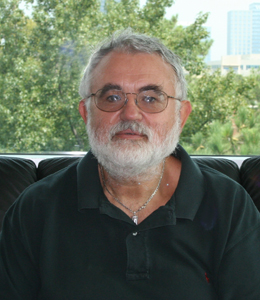
Younan Xia

Younan Xia
younan.xia@bme.gatech.edu
ChBE Profile Page

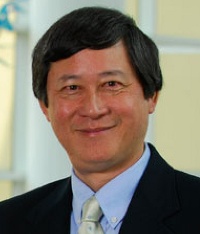
Xia is the Brock Family Chair and Georgia Research Alliance (GRA) Eminent Scholar in Nanomedicine in the Wallace H. Coulter Department of Biomedical Engineering at Georgia Institute of Technology and Emory University, with joint appointments in School of Chemistry and Biochemistry, and School of Chemical and Biomolecular Engineering. Professor Xia received his Ph.D. degree in Physical Chemistry from Harvard University (with Professor George M. Whitesides) in 1996, his M.S. degree in Inorganic Chemistry from University of Pennsylvania (with the late Professor Alan G. MacDiarmid, a Nobel Laureate in Chemistry, 2000) in 1993, and his B.S. degree in Chemical Physics from the University of Science and Technology of China (USTC) in 1987. He came to the United States of America in 1991. Xia has received a number of prestigious awards, including the 2013 Nano Today Award, the ACS National Award in the Chemistry of Materials (2013), Fred Kavli Distinguished Lecture in Nanoscience at the MRS Spring Meeting (2013), AIMBE Fellow (2011), MRS Fellow (2009 ), NIH Director's Pioneer Award (2006), ACS Leo Hendrik Baekeland Award (2005), Camille Dreyfus Teacher Scholar (2002), David and Lucile Packard Fellowship in Science and Engineering (2000), Alfred P. Sloan Research Fellow (2000), NSF Early Career Development Award (2000), ACS Victor K. LaMer Award (1999), and Camille and Henry Dreyfus New Faculty Award (1997). Xia has been an Associate Editor of Nano Letters since 2002, and has served on the Advisory Boards of Particle & Particle Systems Characterization (2013-), Chemical Physics Letters (2013-), Chemistry: A European Journal (2013-), Chinese Journal of Chemistry (2013-), Angewandte Chemie International Edition (2011-), Advanced Healthcare Materials (2011-, inaugural chairman of the advisory board), Accounts of Chemical Research (2010-), Cancer Nanotechnology (2010-), Chemistry: An Asian Journal (2010-), Journal of Biomedical Optics (2010-), Nano Research (2009-), Science of Advanced Materials (2009-), Nano Today (2006-), Chemistry of Materials (2005-2007), Langmuir (2005-2010, 2013-2015), International Journal of Nanotechnology (2004-), and Advanced Functional Materials (2001-). He has also served as a Guest Editor of special issues for Advanced Materials (six times), Advanced Functional Materials (one time), MRS Bulletin (one time), and Accounts of Chemical Research (one time).

GRA Eminent Scholar in Nanomedicine, Wallace H. Coulter Department of Biomedical Engineering
Professor, Wallace H. Coulter Department of Biomedical Engineering
Brock Family Chair, Wallace H. Coulter Department of Biomedical Engineering
Professor, School of Chemistry and Biochemistry, and School of Chemical and Biomolecular Engineering
Phone
404.385.3209
Office
MSE 3100J
Additional Research
Catalysis; Nanomedicine; Bio-Inspired Materials; Tissue Engineering
Google Scholar
https://scholar.google.com/citations?hl=en&user=3gDWh4gAAAAJ&view_op=list_works&sortby=pubdate
Nanocages Lab
Younan
Xia
Show Regular Profile

Vladimir Tsukruk

Vladimir Tsukruk
vladimir@mse.gatech.edu
SEMA Lab

Vladimir V. Tsukruk is a Dean’s Distinguished Professor of Engineering at the School of Materials Science and Engineering, Georgia Institute of Technology, a founding Director of Microanalysis Center, and founding co-director of DoD BIONIC Center of Excellence.  He received MS degree in physics from the National University of Ukraine, PhD in polymer science and DSc in chemistry from the National Academy of Sciences of Ukraine. He carried out his post-doc research at the U. Marburg, Darmstadt TU, and U. Akron.

He serves on the Editorial Advisory Boards of ten professional journals and as an Associate Editor at ACS Applied Materials and Interfaces. He has co-authored more than 400 refereed articles in archival journals and five books, which have been cited more than 15,500 times with H-index of 60 (WoS).  He has organized ten professional symposia and trained about 70 students currently employed in industry, academia, and national labs.  His research in the field of surfaces, interfaces, directed assembly of synthetic/natural polymers and nanostructures, and bioinspired hybrid nanomaterials has been recognized by The Georgia Tech Outstanding Research Author Award (2015), the Humboldt Lectureship (2011), Humboldt Research Award (2010) and the National Science Foundation Special Creativity Award (2006) among others.

Regents' Professor, School of Materials Science and Engineering
Phone
404.894.6081
Office
M Building 3100M
Additional Research

Bio-Inspired Materials; Surfaces and Interfaces; Biomolecular-Solids; Optical Materials; Smart materials. Bionanocomposites, hybrid nanomaterials, optically active materials, photonic materials, responsive materials, and sensors.


Google Scholar
https://scholar.google.com/citations?hl=en&user=vs3ogn8AAAAJ&view_op=list_works&sortby=pubdate
MSE Profile Page
Vladimir
Tsukruk
Show Regular Profile

Krishnendu Roy

Krishnendu Roy
krish.roy@gatech.edu
https://engineering.vanderbilt.edu/bio/krishnendu-roy

 In August 2023, Krishnendu Roy joined Vanderbilt University as the Bruce and Bridgitt Evans Dean of Engineering and a University Distinguished Professor in Biomedical Engineering, and Pathology, Microbiology, and Immunology, with a secondary appointment in Chemical and Biomolecular Engineering.

Previously, Roy served as Robert A. Milton Endowed Chair for the Coulter Department of Biomedical Engineering at Georgia Tech. He is also the former Director of the NSF Engineering Research Center (ERC) for Cell Manufacturing Technologies (CMaT), Center for ImmunoEngineering at Georgia Tech, and Marcus Center for Therapeutic Cell Characterization and Manufacturing. 

His overall research interests are in developing novel concepts for stem cell engineering as well as polymer controlled delivery of biological factors, especially for nucleic acid therapeutics (DNA, SiRNA and oligos) and immunoengineering. Currently, his group is involved in the following major areas of research; (a) Developing novel concepts to produce biodegradable surface functionalized micro-and nanoparticles for targeted and sustained delivery of nucleic acids, proteins, peptides and other immune modulators. In particular he is interested in developing multi-agent vaccine delivery systems for cancer and infectious diseases as well as immunotherapies for autoimmune diseases. (b) Creating spatio-temporally patterned polymer scaffolds for directed compartmental differentiation of stem cells into multiple lineages. (c) Engineering an artificial thymic niche for directed differentiation of stem cells into functional, antigen- specific T cells. (e) The development of novel nanoimprinting techniques to generate shape specific, environmentally triggered drug nanocarriers.

Faces of Research - Profile Article

Bruce and Bridgitt Evans Dean of Engineering at Vanderbilt University
University Distinguished Professor
Professor of Biomedical Engineering
Professor of Pathology, Microbiology and Immunology
Professor of Chemical and Biomolecular Engineering
Phone
404.385.6166
Additional Research
The overall goal of our research endeavor is the development of new biomaterial-based strategies for gene/drug delivery and stem cell engineering. Towards this, my laboratory focuses on three major directions: (a) design and development of novel delivery systems for nucleic-acid based immunotherapy and cancer chemotherapy (b) engineering complex microenvironments to study and manipulate stem cells and understand their behavior in biomimetic, three-dimensional conditions and (c) developing novel engineering tools and high throughput methods to generate functional T cells and Dendritic cells from stem cells.
Google Scholar
http://scholar.google.com/citations?user=c8qOg2YAAAAJ&hl=en
Roy Lab
Krishnendu
Roy
Show Regular Profile

Valeria Milam

Valeria Milam
valeria.milam@mse.gatech.edu
MSE Profile Page

Valeria Tohver Milam joined the School of Materials Science and Engineering at Georgia Institute of Technology as an assistant professor in July 2004. She received her B.S. in Materials Science and Engineering with Honors from the University of Florida in 1993. After completing her M.S. degree (1997) in MSE at the University of Illinois, Urbana-Champaign, she interned at Sandia National Laboratories. She then completed her doctoral work at UIUC studying the phase behavior, structure and properties of nanoparticle-microsphere suspensions. Experimental results suggested a novel colloidal stabilization mechanism known as nanoparticle “haloing” in which otherwise negligibly charged microspheres become effectively charge-stabilized by their surrounding shell of highly charged nanoparticles.

After finishing her Ph.D. in 2001, her postdoctoral studies at the University of Pennsylvania focused on DNA-mediated colloidal assembly. The degree of specific attraction between DNA-grafted microspheres was found to vary with sequence length, sequence concentration and ionic strength. A variety of structures such as colloidal chains, rings and satellites were formed by varying the particle size ratio and suspension composition.

Associate Professor, School of Materials Science and Engineering
Phone
404.894.2845
Office
MoSE 3100L
Additional Research

Bio-Inspired Materials; Polymers; Nanostructured Materials; Colloids; Drug Delivery

Google Scholar
https://scholar.google.com/scholar?as_q=Valeria+T+Milam
LinkedIn Marcus Center for Therapeutic Cell Characterization and Manufacturing
Valeria
Milam
T.
Show Regular Profile

David Ku

David Ku
david.ku@me.gatech.edu
Website

Selected recent publications:

➤ Robert G. Mannino, Eric J. Nehl, Sarah Farmer, Amanda Foster Peagler, Maren C. Parsell, Viviana Claveria, David Ku, David S. Gottfried, Hang Chen, Wilbur A. Lam, and Oliver Brand, “The critical role of engineering in the rapid development of COVID-19 diagnostics: Lessons from the RADx Tech Test Verification Core” Science Advances. 9, eade4962 (2023). https://www.science.org/doi/10.1126/sciadv.ade4962

➤ Liu ZL, Bresette C, Aidun CK, Ku DN. (2021) SIPA in 10 milliseconds: VWF tentacles agglomerate and capture platelets under high shear. Blood Advances doi.org/10.1182/bloodadvances.2021005692

➤ Kim DJ, Ku DN. “Structure of shear-induced platelet aggregated clot formed in an in vitro arterial thrombosis model” Blood Adv (2022) 6 (9): 2872–2883. doi.org/10.1182/bloodadvances.2021006248

➤ Kim DJ, Bressette C, Liu Z, Ku DN. Occlusive thrombosis in arteries.  APL Bioengineering  2019;3, 041502. https://doi.org/10.1063/1.5115554

Licensed Patents

➤ Ku, D.N., Wootton, D.M., Greer-Braddon, L., “Poly(vinyl Alcohol) Cryogel,” No. 5,981,826 and 6,231,605, issued May 15, 2001. Licensed; created prosthetic cartilage; acquired by Wright Medical. $645 million

➤ Denoziere, G., Ku, D.N., “Methods of Producing PVA Hydrogel Implants and Related Devices,” issued U.S. Patent No. 8,038,920, Licensed to Mimedx.  Market cap >$600 million.

Regents Professor
Lawrence P. Huang Chair in Engineering and Entrepreneurship
Executive Director, Atlantic Pediatric Device Consortium
Phone
404-894-6827
Office
Petit Biotechnology Building, Office 2307
Additional Research
New Project: Lysis of platelet clots to treat heart attacksBackground: Heart attacks and strokes come from a sudden thrombosis or accumulation of platelets in an artery.Our Findings: Our group has discovered the biophysical reason for this sudden occlusion and multiple points of therapy to prevent or dissolve the platelet-rich clot. Current Objectives: Quantify the architecture and strength of the thrombus to prevent or dissolve the thrombus using nano-devices and synthetic proteins.
Google Scholar
https://scholar.google.com/citations?user=PayZMckAAAAJ&hl=en
Related Site
David
Ku
N.
Show Regular Profile

YongTae (Tony) Kim

YongTae (Tony) Kim
yongtae.kim@me.gatech.edu
Personal Website

Kim joined the Woodruff School of Mechanical Engineering as an Assistant Professor in July 2013. Prior to his current appointment, he was a Postdoctoral Associate in the David H. Koch Institute for Integrative Cancer Research at MIT, where he developed biomimetic microsystems for probing nanoparticle behaviors in the inflamed endothelium and for synthesizing therapeutic and diagnostic nanomaterials. His doctorate research at CMU focused on closed-loop microfluidic control systems for lab-on-a-chip applications to biochemistry and developmental biology. Prior to his Ph.D., he was a researcher in areas of dynamics, controls, and robotics at R&D Divisions of Hyundai-Kia Motors and Samsung Electronics for six years.

Associate Professor, Woodruff School of Mechanical Engineering
Phone
404.385.1478
Office
Marcus 3134
Additional Research

Multifunctional Materials; Biosensors; Bio-MEMS; Tissue Engineering

Google Scholar
https://scholar.google.com/citations?hl=en&user=Q13X9mMAAAAJ&view_op=list_works&sortby=pubdate
Multiscale Biosystems and Multifunctional Nanomaterials Lab
YongTae (Tony)
Kim
Show Regular Profile

Itamar Kolvin

Itamar K.

Itamar Kolvin received his B.Sc. (2007) in Physics and Mathematics and his M.Sc. (2009) from the Hebrew University in Jerusalem. In 2017, he completed his Ph.D. in Physics under Prof. Jay Fineberg in the Hebrew University. He was a HFSP cross-disciplinary postdoctoral fellow in the Physics Department, University of California, Santa Barbara with Pro. Zvonimir Dogic. His research interests are in the fundamentals of soft matter out-of-equilibrium: assembly, deformation, flow and fracture.

Mijin Kim

Mijin Kim

Mijin Kim is an assistant professor in the School of Chemistry and Biochemistry at Georgia Tech.

Aditya Kumar

Aditya Kumar

Dr. Aditya Kumar is an Assistant Professor in the School of Civil and Environmental Engineering at the Georgia Institute of Technology. Previously, he was a Postdoctoral Researcher in Aerospace Engineering at the University of Illinois at Urbana-Champaign. He received his bachelor’s degree from the Indian Institute of Technology, Delhi, and his doctorate from Illinois.