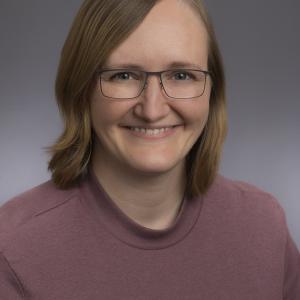
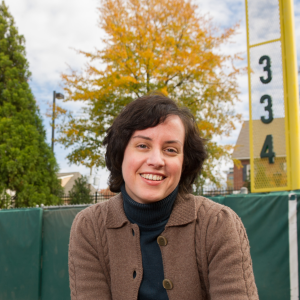
Anthony J Arduengo

Portrait of Anthony J "Bo" Arduengo

After completing his Ph.D. studies in 1976, Professor Arduengo began his professional career at the DuPont company as a member of the research staff. Within a year, he accepted a position on the chemistry faculty at the University of Illinois. Dr. Arduengo returned to DuPont in 1984 to pursue applications for a previously unknown type of phosphorus compound (ADPO) that had been discovered by his research group at Illinois. In 1999 Professor Arduengo resumed his work in academe with research groups in Germany and the United States.

Alyssa Panitch, Ph.D.


The Panitch lab research has focused on the extracellular matrix (ECM) and how matrix signals affect tissue regeneration, including nerve regeneration, wound healing and angiogenesis, cartilage and vascular. More recently, the lab has focused on the proteoglycan component of the ECM. Proteoglycans are critical components of tissue function. They influence matrix organization, the viscoelastic properties of the matrix, access of enzymes to the matrix and serve as a protective barrier as in the case of the glycocalyx.

Yunan Luo

Yunan Luo

I am an Assistant Professor in the School of Computational Science and Engineering (CSE), Georgia Institute of Technology since January 2022. I received my PhD from the Department of Computer Science at the University of Illinois Urbana-Champaign, advised by Prof. Jian Peng. Prior to that, I received my bachelor’s degree in Computer Science from Yao Class at Tsinghua University in 2016.

Michelle Gaines, Ph.D.


Michelle’s research is themed around designing and characterizing the surface chemical properties of synthetic and natural polymer systems. They will be used to develop multifunctional biomaterial substrates for regenerative medicine, cancer treatment, and personal care products. The goals of the Gaines Lab are achieved by marrying Polymer Synthesis, Materials Science, Cell Biology & Spectroscopy.

Jay Patel, Ph.D.


Jay Patel, Ph.D., is an Assistant Professor in the Department of Orthopaedics at Emory and a Health Science Specialist at the Atlanta VA. Patel joined the faculty at Emory in September 2020, and his program focuses on the repair and regeneration of musculoskeletal tissues (e.g., cartilage, meniscus), with an emphasis on using micro-scale findings to drive macro-scale therapies.

Katherine Hekman, M.D., Ph.D.

Katherine H

Dr. Hekman completed her BA in Biophysics and Spanish Literature at Johns Hopkins. She then chose to pursue medicine and completed her MD and PhD in Molecular Medicine at the University of Chicago, where she found Vascular Surgery. She completed her Vascular Surgery Integrated Residency at Northwestern University, including a post-doctoral research fellowship in the lab of Dr. Jason Wertheim, MD, PhD. There she discovered the role of autophagy in the longevity and health of endothelial cells derived from induced pluripotent stem cells.

Alexis Noel

Alexis Noel

Dr. Noel is a Research Engineer II with the Aerospace and Acoustics Technologies Division in GTRI’s Aerospace, Transportation, and Advanced Systems Laboratory (ATAS). She received her B.S. and Ph.D. degrees in Mechanical Engineering from Georgia Tech in 2009 and 2018, respectively. In her doctoral work, Dr. Noel specialized in biomechanics, with a particular focus on biological adhesive mechanisms. Her work has been highlighted in media outlets like NPR, The New York Times, Science Magazine, and the Discovery Channel. Dr.

Johnna Temenoff

Johnna Temenoff

Dr. Johnna S. Temenoff is the Carol Ann and David D. Flanagan Professor at the Coulter Department of Biomedical Engineering at Georgia Tech/Emory University. She is also currently the Director of the NSF Engineering Research Center in Cell Manufacturing Technologies (CMaT) and the Director of the Marcus Center for Therapeutic Cell Characterization and Manufacturing (MC3M). Scientifically, Dr.

Felipe Garcia Quiroz

Felipe Garcia Quiroz

Felipe trained as a biomedical engineer in his native Colombia before obtaining a PhD from the Biomedical Engineering department of Duke University. At Duke, working in the laboratory of Ashutosh Chilkoti, he focused on the engineering of genetically-encoded, self-assembling protein polymers. An important outcome of this PhD work was the elucidation of sequence rules to program the phase separation behavior of intrinsically disordered proteins (IDPs).

Erik Dreaden

Erik Dreaden

Erik C. Dreaden joined the Wallace H. Coulter Department of Biomedical Engineering at Georgia Institute of Technology and Emory University in 2017. Dr. Dreaden also holds a joint faculty appointment in the Department of Pediatrics at the Emory University School of Medicine where he collaborates with researchers at Children's Healthcare of Atlanta and the Aflac Center for Cancer and Blood Disorders. Dr.