Panagiotis Tsiotras

Panagiotis  Tsiotras
tsiotras@gatech.edu
AE Page

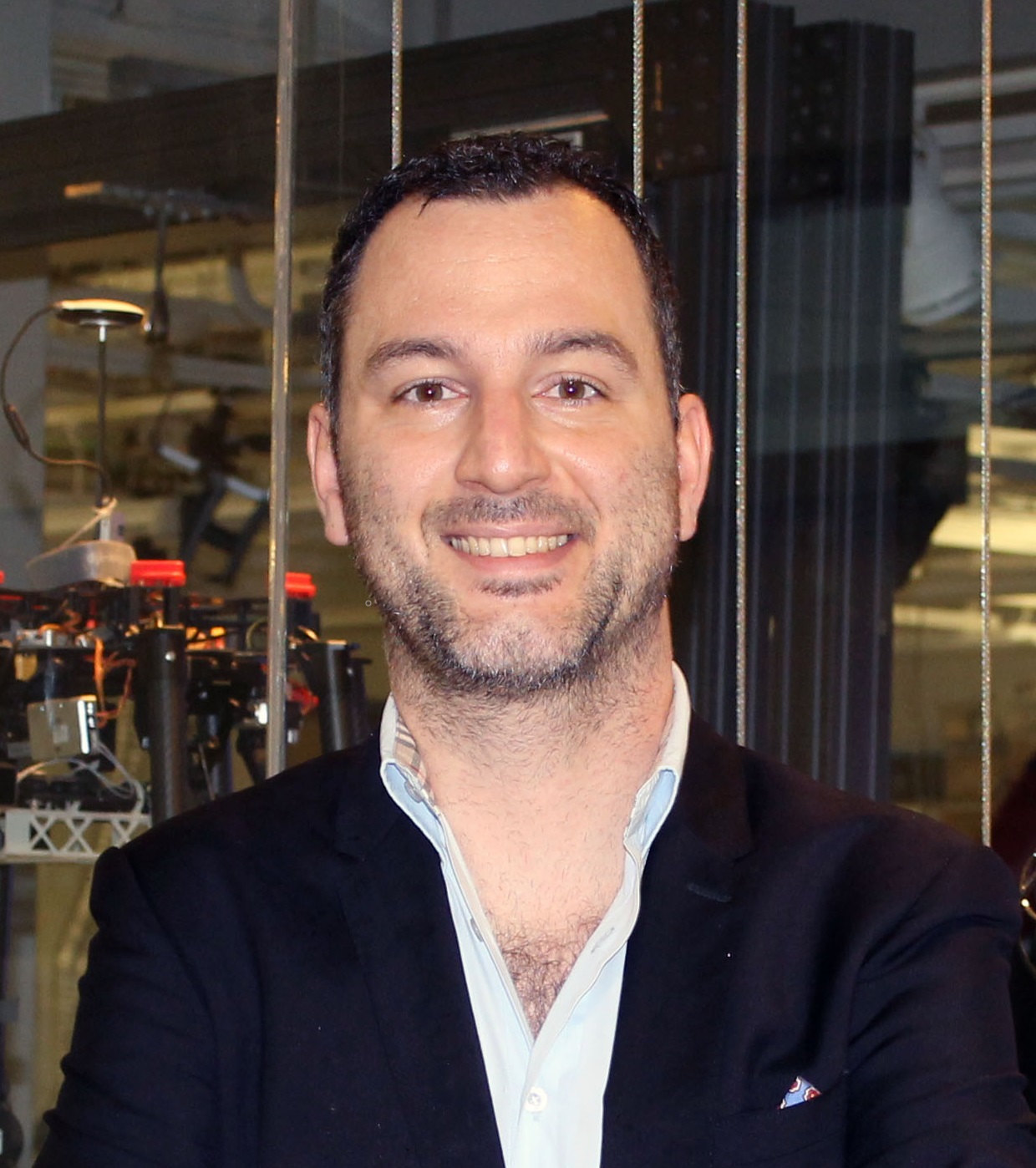
Dr. Tsiotras holds the David & Andrew Lewis Endowed Chair in the School of Daniel Guggenheim School of Aerospace Engineering at Georgia Tech. He is also associate director at the Institute for Robotics and Intelligent Machines. His current research interests include nonlinear and optimal control and their connections with AI, planning, and decision-making, emphasizing autonomous ground, aerial, and space vehicles applications. He has published more than 350 journal and conference articles in these areas. Prior to joining the faculty at Georgia Tech, Dr. Tsiotras was an assistant professor of mechanical and aerospace engineering at the University of Virginia. He has also held visiting appointments with the MIT, JPL, INRIA, Rocquencourt, the Laboratoire de Automatique de Grenoble, and the Ecole des Mines de Paris (Mines ParisTech). Dr. Tsiotras is a recipient of the NSF CAREER award, the IEEE Technical Excellence Award in Aerospace Controls, the Outstanding Aerospace Engineer Award from Purdue, the Sigma Xi President and Visitor's Award for Excellence in Research, as well as numerous other fellowships and scholarships. He is currently the chief editor of the Frontiers in Robotics & AI, in the area of space robotics, and an associate editor for the Dynamic Games and Applications journal. In the past, he has served as an associate editor for the IEEE Transactions on Automatic Control, the AIAA Journal of Guidance, Control, and Dynamics, the IEEE Control Systems Magazine, and the Journal of Dynamical and Control Systems. He is a Fellow of the AIAA, IEEE, and AAS.

Professor & David and Andrew Lewis Chair; School of Aerospace Engineering
Associate Director, Institute for Robotics & Intelligent Machines
Phone
404.894.9526
Office
Knight 415C
Additional Research

controls; robotics; artificial intelligence; flying robots; spacecraft

Research Focus Areas
Google Scholar
https://scholar.google.com/citations?hl=en&user=qmVayjgAAAAJ&view_op=list_works&sortby=pubdate
Panagiotis
Tsiotras
Show Regular Profile

Evangelos Theodorou

Evangelos Theodorou
etheodorou3@mail.gatech.edu
AE Page

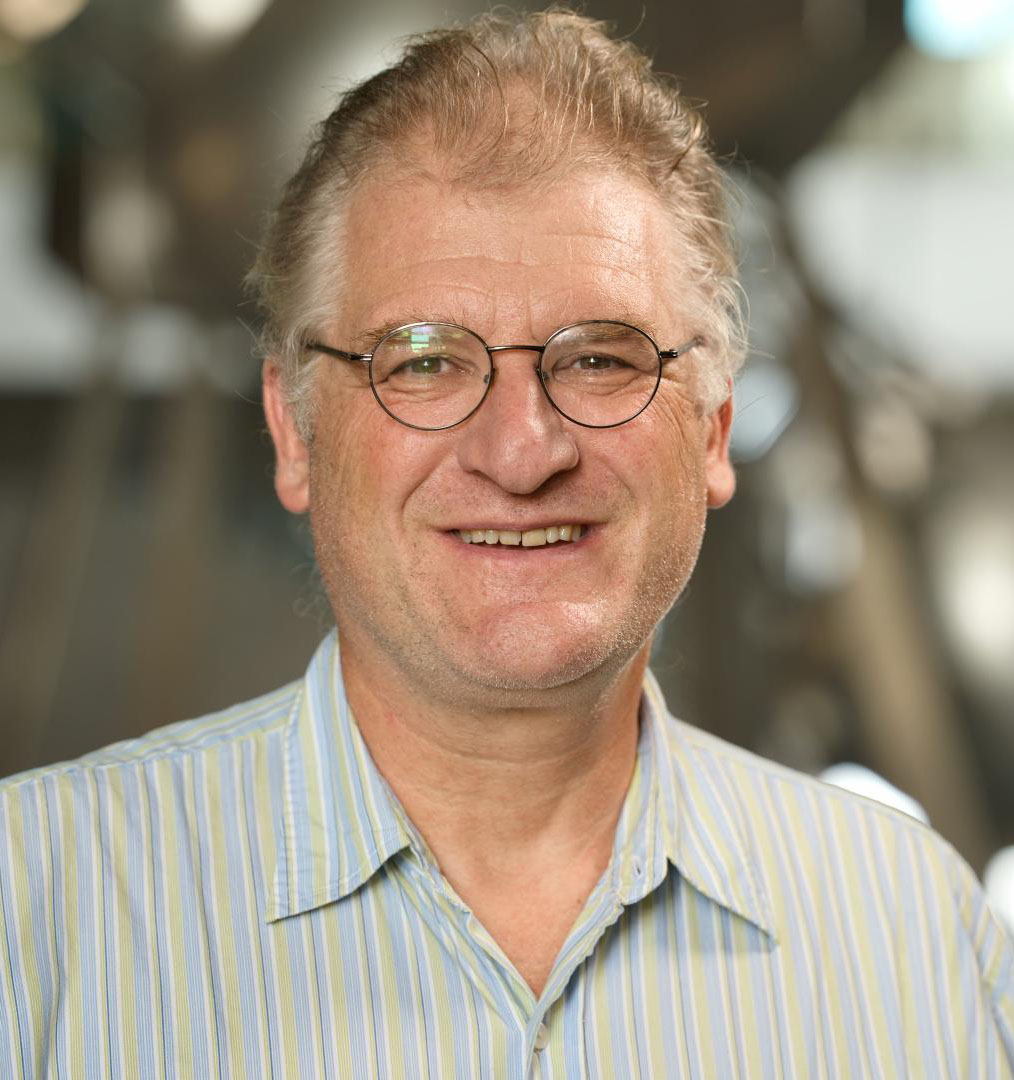
Evangelos Theodorou earned his Diploma in Electronic and Computer Engineering from the Technical University of Crete (TUC), Greece in 2001. He has also received a MSc in Production Engineering from TUC in 2003, a MSc in Computer Science and Engineering from University of Minnesota in spring of 2007 and a MSc in Electrical Engineering on dynamics and controls from the University of Southern California(USC) in Spring 2010. In May of 2011 he graduated with his Ph.D., in Computer Science at USC. After his Ph.D., he became a Postdoctoral Research Associate with the department of Computer Science and Engineering, University of Washington, Seattle. In July 2013 he joined the faculty of the school of Aerospace Engineering at Georgia Institute of Technology as Assistant Professor. His theoretical research spans the areas of control theory, machine learning, information theory and statistical physics. Applications involve autonomous planning and control in robotics and aerospace systems, bio-inspired control and design.

Associate Professor; School of Aerospace Engineering
Phone
404.894.8197
Office
Guggenheim 448A
Additional Research

Nonlinear Stochastic Optimal Control; Machine Learning and Reinforcement Learning; Statistical Mechanics; Information Theory and Connections to Control Theory; Nonlinear State Estimation and Signal Processing; Adaptive; Nonlinear and Model Predictive Control.

Research Focus Areas
IRI And Role
Google Scholar
https://scholar.google.com/citations?hl=en&user=dG9MV7oAAAAJ&view_op=list_works&sortby=pubdate
Evangelos
Theodorou
Show Regular Profile

Ye Zhao

Ye Zhao
ye.zhao@me.gatech.edu
ME Page

Dr. Ye Zhao started as an Assistant Professor at the George W. Woodruff School of Mechanical Engineering in January 2019. Previously he was a Postdoctoral Fellow at Harvard University and obtained his Ph.D. from UT Austin, where he worked on robust motion planning and decision-making for robot manipulation and locomotion problems with frictional contact behaviors. At Georgia Tech, he directs the Laboratory for Intelligent Decision and Autonomous Robots. His research interests lie broadly in planning, control, decision-making, and learning algorithms of highly agile, contact-rich, and human-cooperative robots. Dr. Zhao is especially interested in computationally efficient optimization algorithms and formal methods for challenging robotics problems with formal guarantees on robustness, safety, autonomy, and real-time performance. The LIDAR group aims at pushing the boundary of robot autonomy, intelligent decision, robust motion planning, and symbolic planning. The long-term goal is to devise theoretical and algorithmic underpinnings for collaborative humanoid and mobile robots operating in unstructured and unpredictable environments while working alongside humans. Robotic applications primarily focus on agile bipedal and quadrupedal locomotion, manipulation, heterogeneous robot teaming, and mobile platforms for extreme environment maneuvering.

Assistant Professor; School of Mechanical Engineering
Phone
404.894.3061
Office
GTMI 437
Additional Research

Robotics; Formal Methods; Optimization; Robust Motion Planning; Control

Research Focus Areas
IRI And Role
Google Scholar
https://scholar.google.com/citations?hl=en&user=YkWi5xoAAAAJ
Laboratory for Intelligent Decision and Autonomous Robots
Ye
Zhao
Show Regular Profile

Jonathan Rogers

Jonathan  Rogers
jonathan.rogers@me.gatech.edu
ME Page

Jonathan Rogers joined the Georgia Tech faculty in Fall 2013 as an Assistant Professor of Mechanical Engineering. Prior to joining Georgia Tech, he was an Assistant Professor of Aerospace Engineering at Texas A&M University from 2011 to 2013.

Associate Professor; School of Mechanical Engineering
Phone
404.385.1600
Office
MRDC Building, Room 4503
Additional Research

Automation/Mechatronics; Robotics; applied dynamics; computational automation; nonlinear control and estimation

Research Focus Areas
IRI And Role
Jonathan
Rogers
Show Regular Profile

Harish Ravichandar

Harish Ravichandar
harish.ravichandar@cc.gatech.edu
Harish Ravichandar, Ph.D.

Harish is an Assistant Professor in the School of Interactive Computing at Georgia Institute of Technology. He is also a core faculty member of Georgia Tech’s Institute for Robotics and Intelligent Machines (IRIM). His research interests span the areas of robot learning, human-robot interaction, and multi-agent systems. He directs the Structured Techniques for Algorithmic Robotics (STAR) Lab, where he and his team works on structured algorithms that help robots reliably operate and collaborate in unstructured environments alongside humans.

Assistant Professor; School of Interactive Computing
Additional Research

Robot Learning; Human-Robot Interaction; Multi-Agent Systems

Research Focus Areas
IRI And Role
Google Scholar
https://scholar.google.com/citations?hl=en&user=d2HP6SMAAAAJ&view_op=list_works&sortby=pubdate
Harish
Ravichandar
Show Regular Profile

Kyriakos Vamvoudakis

Kyriakos Vamvoudakis
kyriakos@gatech.edu
AE Profile Page

Kyriakos G. Vamvoudakis was born in Athens, Greece. He received the Diploma (a 5 year degree, equivalent to a Master of Science) in Electronic and Computer Engineering from Technical University of Crete, Greece in 2006 with highest honors. After moving to the United States of America, he studied at The University of Texas at Arlington with Frank L. Lewis as his advisor and he received his M.S. and Ph.D. in Electrical Engineering in 2008 and 2011 respectively. From May 2011 to January 2012, he was working as an Adjunct Professor and Faculty Research Associate at the University of Texas at Arlington and at the Automation and Robotics Research Institute. During the period from 2012 to 2016 he was a project research scientist at the Center for Control, Dynamical Systems and Computation at the University of California, Santa Barbara. He was an assistant professor at the Kevin T. Crofton Department of Aerospace and Ocean Engineering at Virginia Tech until 2018. He currently serves as an Assistant Professor at The School of Daniel Guggenheim School of Aerospace Engineering at Georgia Tech. His research interests include approxIMaTe dynamic programming, game theory, and optimal control. Recently, his research has focused on cyber-physical security, networked control, smart grid and multi-agent optimization. Dr. Vamvoudakis is the recipient of a 2019 ARO YIP award, a 2018 NSF CAREER award, and of several international awards including the 2016 International Neural Network Society Young Investigator (INNS) Award, the Best Paper Award for Autonomous/Unmanned Vehicles at the 27th Army Science Conference in 2010, the Best Presentation Award at the World Congress of Computational Intelligence in 2010, and the Best Researcher Award from the Automation and Robotics Research Institute in 2011. He is a member of Tau Beta Pi, Eta Kappa Nu and Golden Key honor societies and is listed in Who's Who in the World, Who's Who in Science and Engineering, and Who's Who in America. He has also served on various international program committees and has organized special sessions for several international conferences. He currently is a member of the Technical Committee on Intelligent Control of the IEEE Control Systems Society (TCIC), a member of the Technical Committee on Adaptive Dynamic Programming and Reinforcement Learning of the IEEE Computational Intelligence Society (ADPRLTC), an Associate Editor of the IEEE Computational Intelligence Magazine, an Associate Editor of the Journal of Optimization Theory and Applications, an Editor in Chief of the Communications in Control Science and Engineering, a registered Electrical/Computer engineer (PE) and a member of the Technical Chamber of Greece. He is a Senior Member of IEEE.

Assistant Professor; School of Aerospace Engineering
Phone
404.385.3342
Office
Montgomery Knight 415B
Additional Research

Control Theory; Reinforcement Learning; Cyber-Physical Systems; Defense/National Security

IRI And Role
Google Scholar
https://scholar.google.com/citations?hl=en&user=4hWyM_gAAAAJ&view_op=list_works&sortby=pubdate
Kyriakos
Vamvoudakis
G.
Show Regular Profile

Lonnie Parker

Lonnie Parker
lonnie.parker@gtri.gatech.edu

Dr. Lonnie Parker is the Collaborative Autonomy Branch Chief in the Robotics and Autonomous Systems Division of the ATAS Laboratory at GTRI and serves as the PI for multiple programs. He has 10+ years of experience in managing DoD-sponsored projects and is focused on designing collaborative behaviors for unmanned systems in both the maritime and air domains. Prior to joining GTRI, Dr. Parker spent seven years at a NAVSEA warfare center, NUWC Division Newport, where he performed research into maritime autonomy through ONR-sponsored and internally funded efforts. Lonnie received a Ph.D. in Electrical & Computer Engineering from Georgia Tech in 2012. His research advisor was Prof. Ayanna M. Howard. Lonnie received an M.S. and B.S. in Electrical Engineering from the Rochester Institute of Technology in 2006.

Collaborative Autonomy Branch Chief - Robotics and Autonomous Systems Division, ATAS Lab @ GTRI
Senior Research Scientist
Additional Research

Collaborative autonomy algorithms Multi-robot systems

IRI And Role
GTRI
Geogia Tech Research Institute > Aerospace, Transportation & Advanced Systems Laboratory
Google Scholar
https://scholar.google.com/citations?hl=en&user=LeY2uTEAAAAJ&view_op=list_works&sortby=pubdate
LinkedIn Aerospace, Transportation & Advanced Systems Laboratory
Lonnie
Parker
Show Regular Profile

Ai-Ping Hu

Ai-Ping Hu
ai-ping.hu@gtri.gatech.edu
Ai-Ping Hu | INTELLIGENT SUSTAINABLE TECHNOLOGIES DIVISION

Ai-Ping Hu is a principal research engineer in the Georgia Tech Research Institute’s Intelligent Sustainable Technologies Division. He received his BS in Mechanical & Aerospace Engineering from Cornell University and Ph.D. from the Georgia Institute of Technology. Prior to joining GTRI in 2009, Dr. Hu co-founded a start-up robotics company applying learning control to achieve high precision in lightweight flexible manufacturing robots.  His current research interests include agricultural robotics, nonlinear control and vision-guided manipulation.

Principal Research Engineer; Georgia Tech Research Institute
Adjunct Professor; Woodruff School of Mechanical Engineering
Phone
404.407.8815
Additional Research

Agricultural Robotics; Nonlinear Control; Vision-Guided Manipulation

Research Focus Areas
IRI And Role
GTRI
Geogia Tech Research Institute > Aerospace, Transportation & Advanced Systems Laboratory
Google Scholar
https://scholar.google.com/citations?hl=en&user=S5cSWVAAAAAJ&view_op=list_works&sortby=pubdate
Ai-Ping
Hu
Show Regular Profile

Stuart Michelson

Stuart Michelson
stuart.michelson@gtri.gatech.edu
Georgia Tech Research Institute

Stuart Michelson is a member of the research faculty at the Georgia Tech Research Institute and is known as a subject matter expert in Human Systems Engineering. He leads Human Factors and Ergonomics and Human Systems Integration (HSI) efforts for DoD customers specializing in tactical display design spanning command and control, training, unmanned vehicle ground control stations, Manned-unmanned teaming, and mission planning. He has expertise in digital human modeling/ergonomic/anthropometric analyses to assess cockpit accommodation and experience with wearable soldier systems and tactical equipment design.

Since 2000, Michelson has organized the American venue and annual Symposium on Dynamic Flight Behavior for Aerial Robotics for the International Aerial Robotics Competition (IARC), the longest running collegiate aerial challenge in the world focused on advancing the state of the art in aerial robotic behavior.

Michelson has held an Associate Human Factors Professional status from the Board of Certification in Professional Ergonomics, is recognized as a graphic design professional by the International Academy of Computer Training, and is certified to conduct ethical Human Subjects Research.

Michelson has supported and led numerous programs within the Georgia Tech Research Institute leveraging his knowledge of soldier loadout and autonomous unmanned systems. Notably, he has designed graphical user interfaces, developed human-centered system requirements, led programs to quantify human performance, assessed anthropometric accommodations, and supported system test and evaluation for DoD stakeholders spanning the United States Navy, Air Force, Army, and Marine Corps.

Phone
404.407.6162
Additional Research

Human Machine Teaming in Complex Environments Fully Autonomous Machines Command and Control Design of Complex Systems Human Systems Integration

GTRI
Geogia Tech Research Institute > Electronic Systems Laboratory
LinkedIn Electronic Systems Laboratory
Stuart
Michelson
Show Regular Profile

Eric Marie J. Feron

Eric Marie J. Feron
eric.feron@aerospace.gatech.edu
Personal Webpage

Eric Feron is a professor of Electrical, Computer, and Mechanical Engineering. He is the director of the Robotics, Intelligent Systems, and Control (RISC) Laboratory. He recently joined the KAUST CEMSE Division from the Georgia Institute of Technology. Prior to his time at Georgia Tech, he was an active faculty member in MIT's Aeronautics and Astronautics department from 1993 until 2005. Feron’s career in academia began in Paris, France, where he obtained his B.S. and M.S. from École Polytechnique and École Normale Superieure, respectively. He later completed his Ph.D. in aerospace engineering at Stanford University, U.S. 

Feron's research interests center around the use of elementary concepts of control systems, optimization and computer science to address key issues in modern robotic systems. More specifically, aerobatic control of uncrewed aerial vehicles, multi-agent operations, including air traffic control systems and safety-critical software system certification. Feron is also interested in geometric control systems and control theory in general. Among his latest projects, there are a fractal drone, a few positioning systems, a wheel nature could have invented, and a self-reproducing 3D printer. 

Feron has always taught at least one course per semester since the onset of his academic career. Feron believes teaching offers a fantastic outlet to communicate display his past research and inspire his new research projects with the thoughts of his classroom students. He has taught subjects as diverse as cyber-physical systems, control systems, operations research, linear programming, software engineering, and flight mechanics. Feron is a strong proponent and author of quality online education products. He also believes in communicating knowledge through all available mechanisms, including analytical and experimental, acknowledging the multiple learning modalities preferred by students, undergraduate and graduate.

Lecturer; College of Computing
Professor; King Abdullah University of Science and Technology
Research Focus Areas
University, College, and School/Department
Eric Marie
Feron
J.
Show Regular Profile