Aaron Young

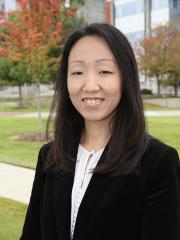
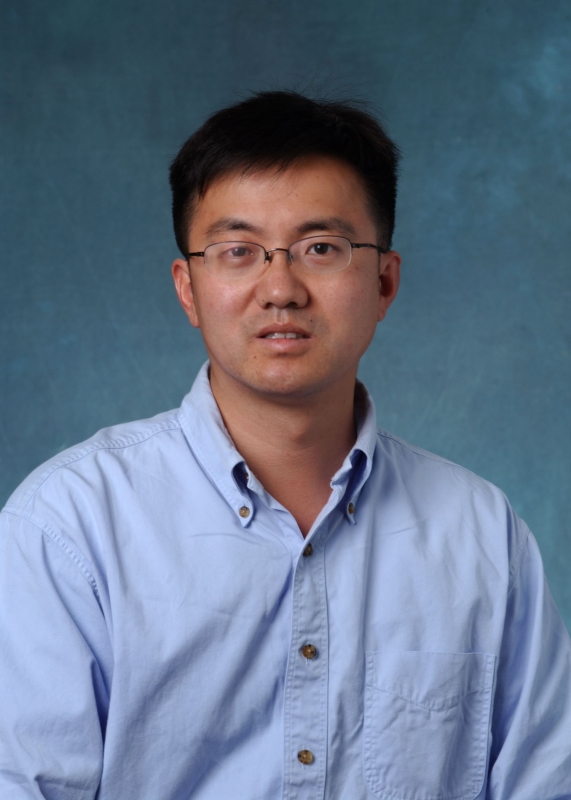
Aaron Young's profile picture
aaron.young@me.gatech.edu
Exoskeleton and Prosthetic Intelligent Controls (EPIC) Lab

Aaron Young is an Associate Professor in Mechanical Engineering and is interested in designing and improving powered orthotic and prosthetic control systems for persons with stroke, neurological injury or amputation. His previous experience includes a post-doctoral fellowship at the University of Michigan in the Human Neuromechanics Lab working with exoskeletons and powered orthoses to augment human performance. He has also worked on the control of upper and lower limb prostheses at the Center for Bionic Medicine (CBM) at the Rehabilitation Institute of Chicago. His master's work at CBM focused on the use of pattern recognition systems using myoelectric (EMG) signals to control upper limb prostheses. His dissertation work at CBM focused on sensory fusion of mechanical and EMG signals to enable an intent recognition system for powered lower limb prostheses for use by persons with a transfemoral amputation.

Associate Professor, George W. Woodruff School of Mechanical Engineering
Director, EPIC Lab
Phone
404.385.5306
Office
GTMI 433
Additional Research

Powered prosthesis; EMG signal processing. Young's research is focused on developing control systems to improve prosthetic and orthotic systems. His research is aimed at developing clinically translatable research that can be deployed on research and commercial systems in the near future. Some of the interesting research questions are how to successfully extract user intent from human subjects and how to use these signals to allow for accurate intent identification. Once the user intent is identified, smart control systems are needed to maximally enable individuals to accomplish useful tasks. For lower limb devices, these tasks might include standing from a seated position, walking, or climbing a stair. We hope to improve clinically relevant measures with powered mechatronic devices, including reducing metabolic cost, improving biomechanics and decreasing the time required to perform daily tasks of living.

Google Scholar
https://scholar.google.com/citations?hl=en&user=NkM21vEAAAAJ&view_op=list_works&sortby=pubdate
ME Profile Page

Todd Sulchek

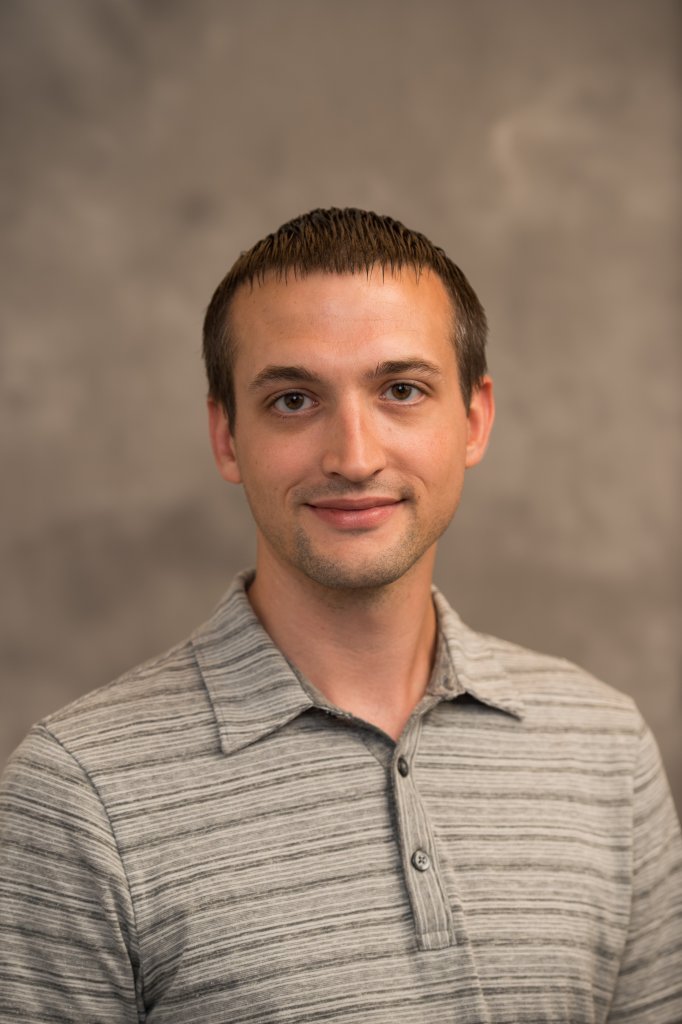
Todd Sulchek's profile picture
todd.sulchek@me.gatech.edu
Sulchek Lab

Todd Sulchek is an associate professor in Mechanical Engineering at Georgia Tech where he conducts fundamental and applied research in the field of biophysics. His research program focuses on the mechanical and adhesive properties of cell and biological systems and the development of microsystems to aid in their study. His research employs tools, including, MEMS, microfluidics, imaging, and patterning to understand or enable biological systems. His interests include cancer diagnostics, stem cell biomanufacturing, novel therapeutics, and ultracheap engineering tools. He is a member of the interdisciplinary Institute for Bioengineering and Bioscience. Dr. Sulchek also holds program faculty positions in Bioengineering and Biomedical Engineering and has a courtesy appointment in the School of Biology. He received his Ph.D. from Stanford in Applied Physics under Calvin Quate and received a bachelors in math and physics from Johns Hopkins. He was a postdoc and staff scientist at Lawrence Livermore National Lab. He joined Georgia Tech in 2008 as an Assistant Professor of Mechanical Engineering. He is a recipient of the NSF CAREER award, the BP Junior Faculty Teaching Excellence Award, the Lockheed Inspirational Young Faculty award, and the 2012 Petit Institute Above and Beyond Award. To date he has published 42 journal papers and has filed or been issued 7 patents. Prof. Sulchek is a strong supporter of undergraduate research, and he participates in a variety of undergraduate education activities including the Undergraduate Research Opportunities Program (UROP) and includes over 8 undergraduate authors in the past year.

Professor, Woodruff School of Mechanical Engineering
Appointments in Bioengineering, Biomedical Engineering, and Biology
Phone
404.385.1887
Office
Petit 2309
Additional Research

Biomedical Devices; bio-MEMS; biosensors; Drug Delivery; Advanced Characterization. Dr. Sulchek's research focuses primarily on the measurement and prediction of how multiple individual biological bonds produce a coordinated function within molecular and cellular systems. There are two complementary goals. The first is to understand the kinetics of multivalent pharmaceuticals during their targeting of disease markers; the second is to quantify the host cell signal transduction resulting from pathogen invasion. Several tools are developed and employed to accomplish these goals. The primary platform for study is the atomic force microscope (AFM), which controls the 3-D positioning of biologically functionalized micro- and nanoscale mechanical probes. Interactions between biological molecules are quantified in a technique called force spectroscopy. Membrane protein solubilized nanolipoprotein particles (NLPs) are also used to functionalize micro/nano-scale probes with relevant biological mediators. This scientific program requires the development of enabling instrumentation and techniques, which include the following: Advanced microscopy and MEMs; Nanomechanical linkers, which provide a convenient platform to control biomolecular interactions and study multivalent molecular kinetics; Biological mimetics, which provide a simple system to study cell membranes and pathogens. UltIMaTely, this work is used to optimize molecular drug targeting, improve chem/bio sensors, and develop more efficient pathogen countermeasures.

Google Scholar
https://scholar.google.com/citations?hl=en&user=J2TW91AAAAAJ&view_op=list_works&sortby=pubdate
ME Profile Page

Stephen Sprigle

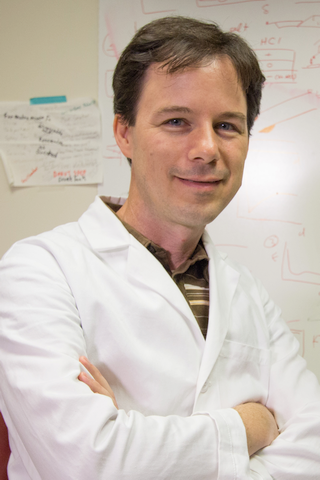
Stephen Sprigle's profile picture
stephen.sprigle@design.gatech.edu
Website

Stephen Sprigle is a Professor at the Georgia Institute of Technology with appointments in Bioengineering, Industrial Design and the George W. Woodruff School of Mechanical Engineering. 

A biomedical engineer with a license in physical therapy, Sprigle directs the Rehabilitation Engineering and Applied Research Lab (REARLab), which focuses on applied disability research and development. The REARLab’s research interests include the biomechanics of wheelchair seating and posture, pressure ulcer prevention, and manual wheelchair propulsion. Its development activities include standardized wheelchair and cushion testing and the design of assistive and diagnostic technologies. Sprigle teaches design-related classes in both the Schools of Industrial Design and Mechanical Engineering.

Professor
Phone
404-385-4302
Office
Architecture 0155
Additional Research
Applied research and device development targeting the increased heath and function of persons with disabilities. Specific areas of interest include: wheeled mobility and seating, pressure ulcer prevention and treatment; design of diagnostic tissue interrogation devices; design of assistive technology. Wheeled Mobility and Seating; Pressure Ulcer Prevention and Treatment; Design of Diagnostic Tissue Interrogation Devices; Design of Assistive Technologies
Profile

H. Jerry Qi

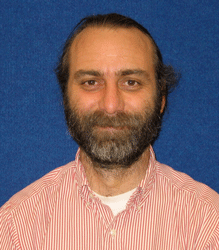
H. Jerry Qi's profile picture
qih@me.gatech.edu
Active Materials & Additive Manufacturing Lab

H. Jerry Qi is a professor and the Woodruff Faculty Fellow in the George W. Woodruff School of Mechanical Engineering at Georgia Institute of Technology. He received his bachelor degrees (dual degree), master and Ph.D. degree from Tsinghua University (Beijing, China) and a ScD degree from Massachusetts Institute of Technology (Boston, MA, USA). After one year postdoc at MIT, he joined University of Colorado Boulder as an assistant professor in 2004, and was promoted to associate professor with tenure in 2010. He joined Georgia Tech in 2014 as an associate professor with tenure and was promoted to a full professor in 2016. Qi is a recipient of NSF CAREER award (2007). He is a member of Board of Directors for the Society of Engineering Science. In 2015, he was elected to an ASME Fellow. The research in Qi's group is in the general area of soft active materials, with a focus on 1) 3D printing of soft active materials to enable 4D printing methods; and 2) recycling of thermosetting polymers. The material systems include: shape memory polymers, light activated polymers, vitrimers. On 3D printing, they developed a wide spectrum of 3D printing capability, including: multIMaTerial inkjet 3D printing, digit light process (DLP) 3D printing, direct ink write (DIW) 3D printing, and fused deposition modeling (FDM) 3D printing. These printers allow his group to develop new 3D printing materials to meet the different challenging requirements. For thermosetting polymer recycling, his group developed methods that allow 100% recycling carbon fiber reinforced composites and electronic packaging materials. Although his group develops different novel applications, his work also relies on the understanding and modeling of material structure and properties under environmental stimuli, such as temperature, light, etc, and during material processing, such as 3D printing. Constitutive model developments are typically based on the observations from experiments and are then integrated with finite element through user material subroutines so that these models can be used to solve complicated 3D multiphysics problems involving nonlinear mechanics. A notable example is their recent pioneer work on 4D printing, where soft active materials is integrated with 3D printing to enable shape change (or time in shape forming process). Recently, his developed a state-of-the-art hybrid 3D printing station, which allows his group to integrate different polymers and conduct inks into one system. Currently, his group is working on using this printing station for a variety of applications, including printed 3D electronics, printed soft robots, etc.

Professor, Woodruff School of Mechanical Engineering
Woodruff Faculty Fellow, Woodruff School of Mechanical Engineering
Phone
404.385.2457
Office
MRDC 4104
Additional Research

Additive/Advanced Manufacturing; micro and nanomechanics; Recycling; Soft Materials; Conducting Polymers

Google Scholar
https://scholar.google.com/citations?hl=en&user=JSjlLTgAAAAJ&view_op=list_works&sortby=pubdate
ME Profile Page

David Ku

David Ku's profile picture
david.ku@me.gatech.edu
Website

Selected recent publications:

➤ Robert G. Mannino, Eric J. Nehl, Sarah Farmer, Amanda Foster Peagler, Maren C. Parsell, Viviana Claveria, David Ku, David S. Gottfried, Hang Chen, Wilbur A. Lam, and Oliver Brand, “The critical role of engineering in the rapid development of COVID-19 diagnostics: Lessons from the RADx Tech Test Verification Core” Science Advances. 9, eade4962 (2023). https://www.science.org/doi/10.1126/sciadv.ade4962

➤ Liu ZL, Bresette C, Aidun CK, Ku DN. (2021) SIPA in 10 milliseconds: VWF tentacles agglomerate and capture platelets under high shear. Blood Advances doi.org/10.1182/bloodadvances.2021005692

➤ Kim DJ, Ku DN. “Structure of shear-induced platelet aggregated clot formed in an in vitro arterial thrombosis model” Blood Adv (2022) 6 (9): 2872–2883. doi.org/10.1182/bloodadvances.2021006248

➤ Kim DJ, Bressette C, Liu Z, Ku DN. Occlusive thrombosis in arteries.  APL Bioengineering  2019;3, 041502. https://doi.org/10.1063/1.5115554

Licensed Patents

➤ Ku, D.N., Wootton, D.M., Greer-Braddon, L., “Poly(vinyl Alcohol) Cryogel,” No. 5,981,826 and 6,231,605, issued May 15, 2001. Licensed; created prosthetic cartilage; acquired by Wright Medical. $645 million

➤ Denoziere, G., Ku, D.N., “Methods of Producing PVA Hydrogel Implants and Related Devices,” issued U.S. Patent No. 8,038,920, Licensed to Mimedx.  Market cap >$600 million.

Regents Professor
Lawrence P. Huang Chair in Engineering and Entrepreneurship
Executive Director, Atlantic Pediatric Device Consortium
Phone
404-894-6827
Office
Petit Biotechnology Building, Office 2307
Additional Research
New Project: Lysis of platelet clots to treat heart attacksBackground: Heart attacks and strokes come from a sudden thrombosis or accumulation of platelets in an artery.Our Findings: Our group has discovered the biophysical reason for this sudden occlusion and multiple points of therapy to prevent or dissolve the platelet-rich clot. Current Objectives: Quantify the architecture and strength of the thrombus to prevent or dissolve the thrombus using nano-devices and synthetic proteins.
Google Scholar
https://scholar.google.com/citations?user=PayZMckAAAAJ&hl=en
Related Site

YongTae (Tony) Kim

YongTae (Tony) Kim's profile picture
yongtae.kim@me.gatech.edu
Personal Website

Kim joined the Woodruff School of Mechanical Engineering as an Assistant Professor in July 2013. Prior to his current appointment, he was a Postdoctoral Associate in the David H. Koch Institute for Integrative Cancer Research at MIT, where he developed biomimetic microsystems for probing nanoparticle behaviors in the inflamed endothelium and for synthesizing therapeutic and diagnostic nanomaterials. His doctorate research at CMU focused on closed-loop microfluidic control systems for lab-on-a-chip applications to biochemistry and developmental biology. Prior to his Ph.D., he was a researcher in areas of dynamics, controls, and robotics at R&D Divisions of Hyundai-Kia Motors and Samsung Electronics for six years.

Associate Professor, Woodruff School of Mechanical Engineering
Phone
404.385.1478
Office
Marcus 3134
Additional Research

Multifunctional Materials; Biosensors; Bio-MEMS; Tissue Engineering

Google Scholar
https://scholar.google.com/citations?hl=en&user=Q13X9mMAAAAJ&view_op=list_works&sortby=pubdate
Multiscale Biosystems and Multifunctional Nanomaterials Lab