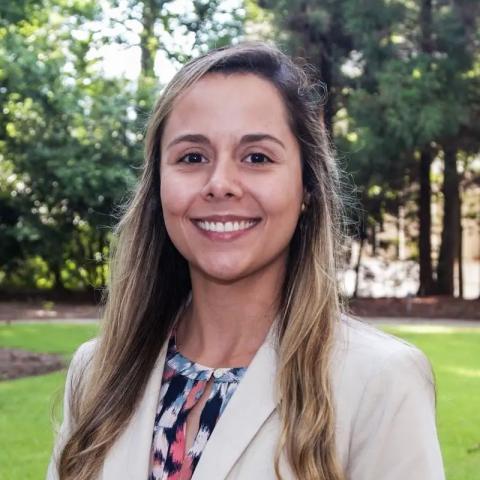
Sofía Pérez-Guzmán

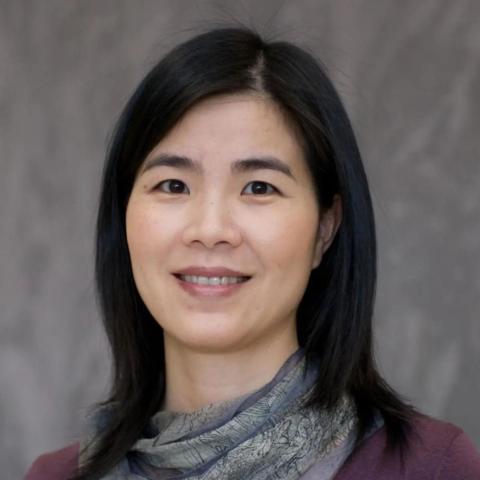
Portrait of Sofía Pérez-Guzmán
spg@gatech.edu

Dr. Sofía Pérez-Guzmán serves as an Assistant Professor within the School of Civil and Environmental Engineering at the Georgia Institute of Technology. She also holds a courtesy appointment at the H. Milton Stewart School of Industrial & Systems Engineering at Georgia Tech. Prior to this, she worked as a postdoctoral research associate at Rensselaer Polytechnic Institute's Center for Infrastructure, Transportation, and the Environment.

Dr. Pérez-Guzmán's primary interest lies in addressing wicked problems within supply chain and transportation domains. These challenges often encompass disruptions, human behavior, multiple stakeholders, and equity and sustainability objectives. Her ongoing research focuses on disaster response logistics, food systems logistics, and urban freight transportation, with an overarching aim of enhancing the social performance of supply chains. Her research methodologies include optimization, simulation, data analytics, econometrics, empirical approaches, as well as behavioral and economic theories.

Education

  • Ph.D. Transportation Engineering Rensselaer Polytechnic Institute 2022
  • M.S. Economics Rensselaer Polytechnic Institute 2022
  • M.S. Transportation Engineering Rensselaer Polytechnic Institute 2020
  • B.S. Industrial Engineering Universidad del Valle (Colombia) 2017
     

Distinctions & Awards

•    Trailblazer in Engineering Fellow from Purdue University, West Lafayette, IN, 2022.
•    Civil and Environmental Engineering Rising Star from Massachusetts Institute of Technology, Boston, MA, 2021.
•    Second place at the National Institute of Justice Challenge of the US Department of Justice, category Year 3, Female Parolees, Small Groups, 2021.
•    First place at the Supply Chain Data Analytics Competition hosted by the Quinlan School of Business at Loyola University Chicago, 2021.
•    NY State Legacy Leadership Award from the Women’s Transportation Seminar, 2018.
•    Prest & Gio scholarship from Procter & Gamble. Bogota, Colombia, 2015.

Assistant Professor
Additional Research
  • Freight transportation
  • Humanitarian logistics
  • Food supply chains
IRI And Role
Sofía
Pérez-Guzmán
Show Regular Profile

Haiying Huang

haiying.huang@ce.gatech.edu
Departmental Bio

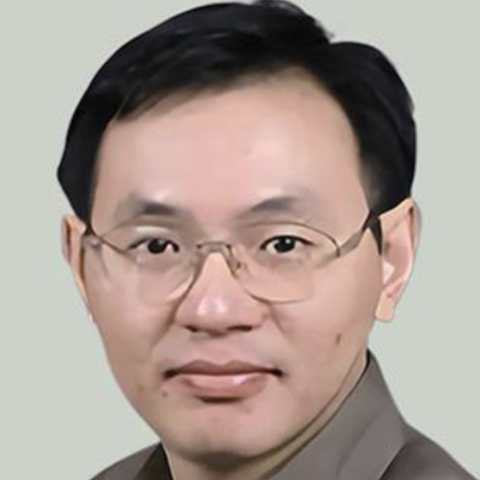
Dr. Huang obtained her Ph.D in Geological Engineering from the University of Minnesota in 1999. She then worked as a senior engineer in Schlumberger Oilfield Services in Sugar Land, TX from 2000 to 2006 before she joined the faculty in Georgia Tech in 2007. Dr. Huang is a recipient of the NSF CAREER in 2011.

Associate Professor, School of Civil and Environmental Engineering
Phone
404.385.0059
Office
Mason 2263
Additional Research

Geomechanics aspects of drilling, rock indentation and cutting., Reservoir stimulation and production, in particular, slurry flow, fluid injection in granular media, hydraulic fracturing

IRI And Role
Google Scholar
https://scholar.google.com/citations?user=Xpj-x0oAAAAJ&hl=en
LinkedIn Profile Department Page
Haiying
Huang
Show Regular Profile

Jian Luo

Jian Luo
jian.luo@ce.gatech.edu
Departmental Bio

Dr. Jian Luo completed his undergraduate and M.S. studies at Tsinghua University, Beijing, where he received a B.Sc.(Eng.) and a M.S. degree in Environmental Engineering in 1998 and 2000, respectively. He completed his Ph.D. in 2006 in Department of Civil and Environmental Engineering at Stanford University, California. The research Dr. Luo is conducting involves field, theoretical, and computational investigations of flow and reactive transport in subsurface; development and application of geostatistical methods for the spatial and temporal analysis of hydrogeologic and biochemistry data; development of computational algorithms and programs to simulate subsurface flow and reactive transport, and to assess the associated uncertainty; inverse modeling to estimate flow and transport parameters under uncertainty; and use of such computational methods and models to assess subsurface contamination, and to aid the optimal design of groundwater remediation operations.

Professor, School of Civil and Environmental Engineering
Phone
(404) 385-6390
Additional Research

Geosystems; Water

BBISS Initiative Lead Project - Coastal Urban Flooding in a Changing Climate
Jian
Luo
Show Regular Profile

Edvard P.G. Bruun

Assistant Professor Edvard P.G. Bruun
edvard.bruun@ce.gatech.edu
Bruun Automation Research Lab

Dr. Edvard Bruun joined the faculty in the School of Civil and Environmental Engineering at the Georgia Institute of Technology in August 2024. He completed his Ph.D. (2024) in Civil and Environmental Engineering at Princeton University. Dr. Bruun is also a licensed professional engineer in Canada and worked as a structural engineer at Arup before pursuing his Ph.D.

Dr. Bruun’s research centers on robotic automation for the assembly and disassembly of large-scale building components. He develops computational methods to design geometrically complex yet material-efficient structures that demand robotic fabrication for their construction. By harnessing the spatial precision and multifunctionality of cooperative multi-robot systems, Dr. Bruun coordinates multiple industrial robotic arms to execute intricate tasks. These include providing temporary structural support and facilitating the addition, removal, or repurposing of building components in collaboration with human operators.

Assistant Professor; School of Civil and Environmental Engineering
Phone
647.241.3198
Office
Mason 3140A
Additional Research
  • Cooperative Robotic Fabrication
  • Construction Automation
  • Pre-Fabrication
  • Scaffold-Free (Dis)Assembly
IRI And Role
Google Scholar
https://scholar.google.com/citations?hl=en&user=G-YOXQoAAAAJ&view_op=list_works&sortby=pubdate
LinkedIn Profile
Edvard
Bruun
P.G.
Show Regular Profile

Katherine Graham

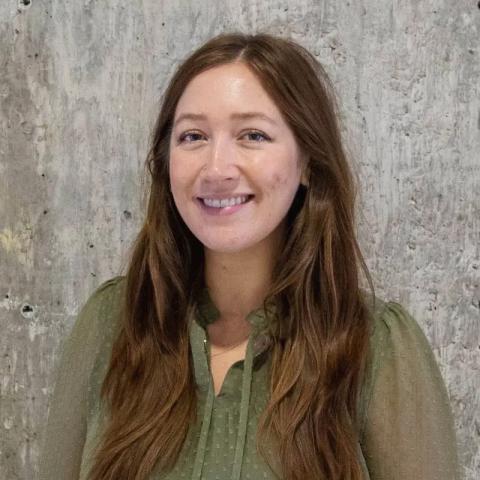
Portrait of Katy Graham.
kgraham61@gatech.edu

Dr. Graham joined Georgia Tech as an Assistant Professor in January 2023. She completed a President’s Postdoctoral Fellowship at Georgia Tech, and completed her MS and PhD in Environmental Engineering and Science at Stanford University. Prior to that, she received her undergraduate degree at the University of Michigan in Chemical Engineering.

Dr. Graham’s research interests focus on the fate and transport of pathogens and antimicrobial resistance genes in the built and natural environments. Her previous research projects have focused on wastewater-based epidemiology, quantitative microbial risk assessment (QMRA), and the removal of pathogens in green stormwater infrastructure. Her lab aims to use molecular biology, microbiology, and modeling tools to address issues of water, climate, and health domestically and internationally.

Assistant Professor
Additional Research
  • Microbial water quality
  • Water, sanitation, and hygiene
  • Public health and risk assessment
  • Environmental virology
  • One Health
IRI And Role
The Water/Climate/Health Lab
Katherine
Graham
Show Regular Profile

Arash Yavari

Arash  Yavari
arash.yavari@ce.gatech.edu
Geometric Solid Mechanics Group

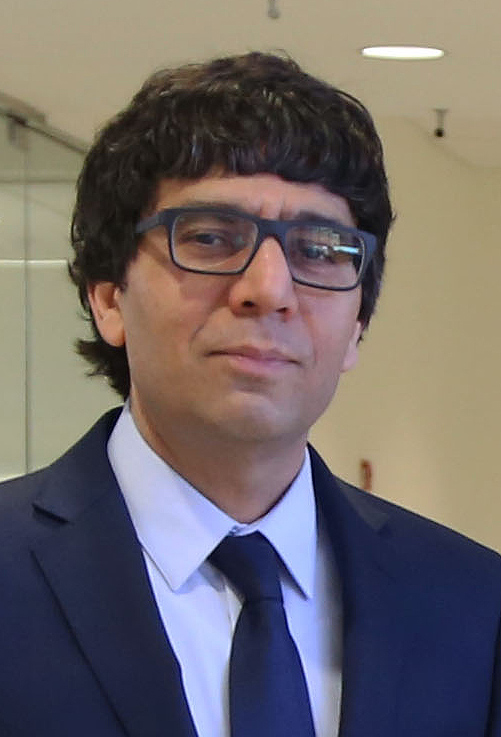
Professor Yavari joined the School of Civil and Environmental Engineering at the Georgia Institute of Technology in January 2005. He received his B.S. in Civil Engineering from Sharif University of Technology, Tehran, Iran in 1997. He continued his studies at The George Washington University where he obtained an M.S. in Mechanical Engineering in 2000. He then moved to Pasadena, CA and obtained his Ph.D. in Mechanical Engineering (Applied Mechanics option with minor in Mathematics) from the California Institute of Technology in 2005. Professor Yavari is a Fellow of the Society of Engineering Science and a member of the American Academy of Mechanics.

Professor Yavari's interests are in developing systematic theories of discrete mechanics for crystalline solids with defects. Defects play a crucial role in determining the properties of materials. The development of atomistic methods including density functional theory, bond-order potentials and embedded atom potentials has enabled a detailed study of such defects. However, much of the work is numerical and often with ad hoc boundary/far-field conditions. Specifically, a systematic method for studying these discrete yet non-local problems is lacking. Design in small scales requires solving inverse problems and this is not possible with purely numerical techniques. From a mechanics point of view, defective crystals are modeled as discrete boundary-value problems. The challenging issues are extending the existing techniques from solid state physics for non-periodic systems, new developments in the theory of vector-valued partial difference equations, existence and uniqueness of solutions of discrete boundary-value problems and their symmetries, etc. The other efforts in this direction are understanding the geometric structure of discrete mechanics and its link with similar attempts in the physics and computational mechanics literatures and investigating the rigorous continuum limits of defective crystals

Professor, School of Civil and Environmental Engineering
Phone
404.894.2436
Office
Mason 4164
Additional Research

Data AnalyticsModelingStructural MaterialsNonlinear elasticity and anelasticityGeometric mechanicsComputational mechanicsMechanics of bulk and surface growth (accretion)

Research Focus Areas
Google Scholar
https://scholar.google.com/citations?hl=en&user=c3D1_uQAAAAJ&view_op=list_works&sortby=pubdate
CEE Profile Page
Arash
Yavari
Show Regular Profile

Yang Wang

Yang Wang
yang.wang@ce.gatech.edu
Laboratory for Smart Structural Systems

Yang Wang joined Georgia Tech faculty in 2007. With a B.E. and an M.S. degree in civil engineering awarded by Tsinghua University in Beijing, China, he received a Ph.D. in civil engineering at Stanford University in 2007, as well as an M.S. in electrical engineering. Wang’s research interests include structural health monitoring and damage detection, decentralized structural control, wireless and mobile sensors, and structural dynamics. He received an NSF Early Faculty Career Development (CAREER) Award in 2012 and a Young Investigator Award from the Air Force Office of Scientific Research (AFOSR) in 2013. Wang is the author and coauthor of over 100 journal and conference papers, and currently serves as an associate editor for the ASCE (American Society of Civil Engineers) Journal of Bridge Engineering.

Professor, School of Civil and Environmental Engineering and Electrical and Computer Engineering
Phone
404.894.1851
Office
Mason 322-C
Additional Research

Structural Health Monitoring; Structural Materials; Materials Failure and Reliability

Research Focus Areas
Google Scholar
https://scholar.google.com/citations?hl=en&user=crCQeVYAAAAJ&view_op=list_works&sortby=pubdate
Yang
Wang
Show Regular Profile

Lauren Stewart

Lauren Stewart
lauren.stewart@ce.gatech.edu
Structural Engineering and Materials Laboratory

Lauren Stewart joined the Georgia Institute of Technology, Civil & Environmental Engineering faculty as an assistant professor in August 2013. She was promoted to Associate Professor, with tenure in 2019. She received her B.S. in Structural Engineering from the University of California, San Diego in 2004 and her Ph.D. in Structural Engineering also from the University of California, San Diego in 2010. She is a National Defense Science and Engineering Graduate Fellow, an US Air Force Summer Faculty Fellow, and a 2017 Rising Star in Structural Engineering. Prior to coming to Georgia Tech, Stewart was a Post Doctoral Scholar at the University of California, San Diego from 2010 to 2013. From 2006 to 2013, she worked a Senior Blast Engineer at Karagozian & Case Structural Engineers in California where she holds a PE license.

Stewart’s research is focused on experimental methods for characterized the response of structures to natural and manmade hazards. She has been involved with many blast, shock, impact and seismic experimental and computational programs. These including blast testing of steel structural columns, blast testing of steel stud wall systems, material testing for ultra high performance concrete for impulsive loads and seismic testing for Los Alamos National Laboratories. She has also conducted advanced finite element analysis for the World Trade Center 7 Collapse, AFRL Munitions Directorate small munitions program and programs supported by the Technical Support Working Group. Her design experience includes blast analysis for the Veterans Affairs and consulting projects for various companies.

Associate Professor, School of Civil and Environmental Engineering
Director, Structural Engineering and Materials Laboratory
Phone
404.385.1919
Office
Mason 3141A
Additional Research

computational mechanics; Materials In Extreme Environments; Materials Failure and Reliability; Structural Materials

Research Focus Areas
Google Scholar
https://scholar.google.com/citations?hl=en&user=nFkbwqkAAAAJ&view_op=list_works&sortby=pubdate
Lauren
Stewart
Show Regular Profile

Rafi Muhanna

Placeholder for headshot
raft.huhanna@gatech.edu
CEE Profile Page

Muhanna is an associate professor in the School of Civil and Environmental Engineering at Georgia Institute of Technology. He obtained his B.S. in Civil Engineering from the University of Damascus in 1972, and his M.S. and Ph.D. degrees in the area of Solid and Structural Mechanics in 1976 and 1979, respectively from the Higher Institute for Structure and Architecture, Sofia, Bulgaria. He joined the faculty at the University of Damascus, Syria in 1980, and has also served on the faculty at Case Western Reserve University, Ohio and the University of Maryland (1991-2000). Muhanna has won a number of international prizes, among them: the Aga Khan Award for Architecture, one of the most prestigious international architectural awards, for the his masonry shell system without steel reinforcement (1992); the Golden Prize of the World Intellectual Property Organization (WIPO), for the best displayed patent at the International Fair of Damascus (1988); and the Special Prize of the United Nations HABITAT (1989). Muhanna's research activity is in the general area of solid and structural mechanics that includes uncertainty modeling, structural reliability, computational reliability, shell theory, and optimization of masonry building materials in structural systems. This research activity has culminated in the development of the new methods for reliable engineering computing, establishment of the Center for Reliable Engineering Computing (REC), and hosting the bi-annual international NSF sponsored workshop on Reliable Engineering Computing since 2004.

Associate Professor, School of Civil and Environmental Engineering
Director, Reliable Engineering Computing (REC)
Phone
404.385.1825
Office
Mason 4156
Additional Research

computational mechanics; Structural Materials; Materials Failure and Reliability

Research Focus Areas
Google Scholar
https://scholar.google.com/citations?hl=en&user=6F6SAxQAAAAJ&view_op=list_works&sortby=pubdate
Reliable Engineering Computing (REC)
Rafi
Muhanna
L.
Show Regular Profile

Kimberly Kurtis

Kimberly Kurtis
kimberly.kurtis@ce.gatech.edu
CEE Profile Page

Kimberly (Kim) E. Kurtis is a professor in the School of Civil and Environmental Engineering at Georgia Institute of Technology. She has served as associate dean of faculty development and scholarship in the College of Engineering since 2014 and was interim chair of the School for the 2017-2018 academic year. Kurtis earned her BSE in civil engineering from Tulane University under a Deans Honor Scholarship and her Ph.D. in civil engineering from the University of California at Berkeley, where she was a Henry Hilp Fellow and a National Science Foundation (NSF) Fellow.  

Kurtis’s innovative research on the multi-scale structure and performance of cement-based materials has resulted in more than 100 technical publications and two US patents. In addition to her technical and educational service contributions at the American Concrete Institute (ACI), American Ceramics Society (ACerS), Portland Cement Association (PCA), Transportation Research Board (TRB), American Association of State and Highway Transportation Officials (AASHTO), and Federal Highway Administration (FHWA), she has held two leadership positions – Chairman of ACI Committee 236: Materials Science of Concrete (2006-2012) and Chair of American Ceramic Society’s Cements Division (2008-2009) – central to advancing science-based research on cement-based materials. Dr. Kurtis has served as Associate Editor of ASCE Journal of Materials in Civil Engineering and as an Editorial Board member of Cement and Concrete Composites. Having previously served six years on ACI's Educational Activities Committee (EAC), she is currently appointed to ACI's 12-member Technical Activities Committee, which oversees development of ACI standards, technical committee activities, and technical content presented at ACI conventions and in archival publications. Since 2018, she has been Trustee at the ASCE Foundation, representing District 5. 

She has been honored with ACI ’s Walter P. Moore, Jr. Faculty Achievement Award (2005), ACI’s Del Bloem Award for Service (2013), Outstanding Senior Undergraduate Research Mentor Award at Georgia Institute of Technology (2013), the ACI James Instruments Award for Research on NDE of Concrete (2008), Award for Outstanding Article in ASTM’s Journal of Testing and Evaluation (2010), and ASCE’s Huber Civil Engineering Research Prize (2013). Kurtis is a Fellow of the American Concrete Institute and the American Ceramics Society. 

Professor, School of Civil and Environmental Engineering
Associate Dean for Faculty Development and Scholarship, College of Engineering
Phone
404.385.0825
Office
Mason 4154
Additional Research

Structural Materials; Sustainable Communities; Composites; Structural Health Monitoring

Research Focus Areas
Google Scholar
https://scholar.google.com/citations?hl=en&user=lFkrYpwAAAAJ&view_op=list_works&sortby=pubdate
Kimberly
Kurtis
E.
Show Regular Profile