Mustaque Ahamad

Mustaque Ahamad
mustaq@cc.gatech.edu
Website

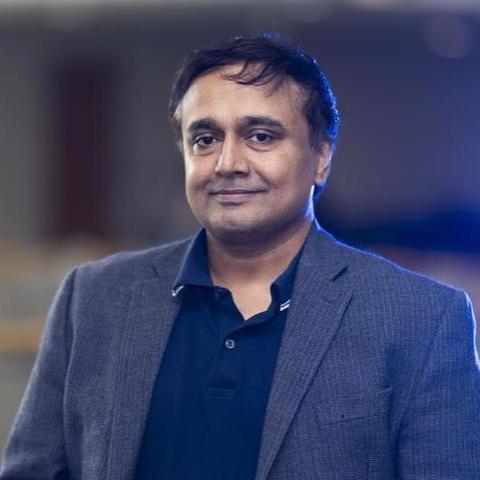
Mustaque Ahamad, Ph.D., is the Associate Director of Education & Outreach for the Institute for Information Security & Privacy (IISP) and professor in the College of Computing at Georiga Tech. Within the IISP, he seeks to proactively address challenges associated with workforce development in cybersecurity. With oversight of formal degree programs and continuing education for working professionals, he is an advocate for greater cybersecurity education and training in order to meet the collective needs of industry and government. Ahamad's research interests are in the areas of converged communications security and security of healthcare systems. As smart-phone-like devices enable ubiquitous access to web and voice channels, the convergence of telephony with the Internet gives rise to new cross-channel threats that can combine online and voice attacks. For example, voice phishing with caller-ID spoofing has been reported for stealing online banking credentials. His data-driven research approach for exploring cross-channel threats has resulted in a better understanding of these threats and more effective ways to combat them. In the healthcare security area, he has worked on monitoring for detection of abuse and fraud. Ahamad co-founded Pindrop Security, which commercialized his group's research in the telephony security area, and he continues to serve as its chief scientist. He also serves as co-chair of the Messaging Malware Mobile Anti-Abuse Working Group (M3AAWG) special interest group on voice and telephony abuse. He also served as an external advisor for the Federal Trade Commission for telephony abuse. For nearly 20 years, he has been a leading figure in information security as an associate of the IISP's predecessor -- the Georgia Tech Information Security Center -- since 1998 and including serving as its director from 2004 to 2012. He earned his Master's and Doctoral degrees in Computer Science from the State University of New York, Stony Brook, and a B.E. (Hons.) degree in Electrical and Electronics Engineering from the Birla Institute of Technology and Science, Pilani, India. Mustaque Ahamad, Ph.D., is the Associate Director of Education & Outreach for the Institute for Information Security & Privacy (IISP) and professor in the College of Computing at Georiga Tech. Within the IISP, he seeks to proactively address challenges associated with workforce development in cybersecurity. With oversight of formal degree programs and continuing education for working professionals, he is an advocate for greater cybersecurity education and training in order to meet the collective needs of industry and government. Ahamad's research interests are in the areas of converged communications security and security of healthcare systems. As smart-phone-like devices enable ubiquitous access to web and voice channels, the convergence of telephony with the Internet gives rise to new cross-channel threats that can combine online and voice attacks. For example, voice phishing with caller-ID spoofing has been reported for stealing online banking credentials. His data-driven research approach for exploring cross-channel threats has resulted in a better understanding of these threats and more effective ways to combat them. In the healthcare security area, he has worked on monitoring for detection of abuse and fraud. Ahamad co-founded Pindrop Security, which commercialized his group's research in the telephony security area, and he continues to serve as its chief scientist. He also serves as co-chair of the Messaging Malware Mobile Anti-Abuse Working Group (M3AAWG) special interest group on voice and telephony abuse. He also served as an external advisor for the Federal Trade Commission for telephony abuse. For nearly 20 years, he has been a leading figure in information security as an associate of the IISP's predecessor -- the Georgia Tech Information Security Center -- since 1998 and including serving as its director from 2004 to 2012. He earned his Master's and Doctoral degrees in Computer Science from the State University of New York, Stony Brook, and a B.E. (Hons.) degree in Electrical and Electronics Engineering from the Birla Institute of Technology and Science, Pilani, India.

Associate Director, Education and Outreach IISP; Professor
Phone
404.894.2593
Additional Research
Healthcare Security; Mobile & Wireless Communications
Mustaque
Ahamad
Show Regular Profile

Ahmed Saeed

Portrait of Amed Saeed
asaeed@cc.gatech.edu

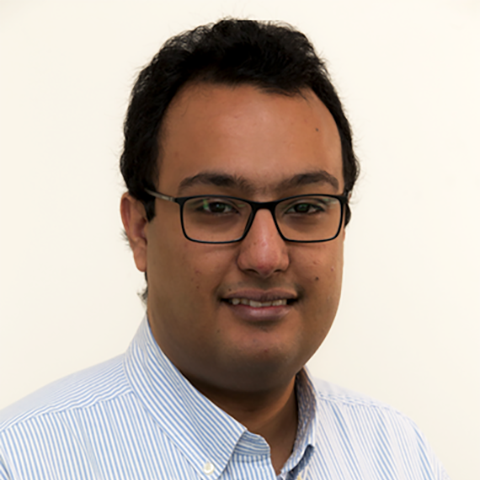
Saeed is an assistant professor at the School of Computer Science at Georgia Tech. Before joining Georgia Tech, he was postdoctoral associate at MIT working with Professor Mohammad Alizadeh. Saeed received his Ph.D. in computer science from Georgia Tech, where he was advised by Professors Mostafa Ammar and Ellen Zegura. His Ph.D. was partially supported by the Google Ph.D. Fellowship in Systems and Networking. He received his bachelor's degree from Alexandria University in 2010. His research interests broadly cover the theory, design, and implementation of scalable computer networks and systems, including resource scheduling, congestion control, wireless networks, and cyber-physical systems.

Assistant Professor
IRI And Role
Ahmed
Saeed
Show Regular Profile

Greg Eisenhauer

Greg Eisenhauer
eisen@cc.gatech.edu
Website
Greg Eisenhauer is a research scientist in the College of Computing at the Georgia Institute of Technology and Technical Director of the Center for Experimental Research in Computer Systems. His research focuses on data-intensive distributed applications in enterprise and high-performance systems. Technical topics of interest include: high-performance I/O for petascale machines; efficient methods for managing large-scale systems, techniques for runtime performance and behavior monitoring, understanding and control; middleware for high-performance data movement and in transit data processing, QoS-sensitive data streaming in pervasive and wide-area systems, and experimentation with representative applications in the high-performance computing and enterprise domains. He received the Bachelor's of Computer Science (1983) and a Master's of Computer Science (1985) from the University of Illinois, Urbana-Champaign. He received his Ph.D. from the Georgia Institute of Technology in 1998. His thesis work demonstrated object-based methods for efficient program monitoring and steering of distributed and parallel programs using event-based monitoring techniques and code annotations.
Senior Research Scientist
Phone
404.894.3227
Additional Research
Large-Scale or Distributed Systems; Software & Applications
Greg
Eisenhauer
Show Regular Profile

Eric Greenlee

Portrait of Eric Greenlee

Eric Greenlee is a Ph.D. candidate in the School of Computer Science in the College of Computing. Eric’s research focuses on designing Internet-connected environmental sensing systems in areas with limited infrastructure. By simultaneously addressing the cost, power, and usability concerns of project stakeholders, he aspires to make sensor deployments more accessible for partners who promote environmental justice. Currently, Eric is working closely with indigenous Ojibwe knowledge-holders to co-design a sensing platform to improve outcomes for Manoomin (wild rice), which is central to the Ojibwe way of life and is especially sensitive to environmental change. He recently received the Dartmouth College Postgraduate Project Fellowship to strengthen partnerships in Madagascar, as well as the Georgia Institute of Technology President’s Fellowship. Eric loves spending time outside and hopes to make field science an integral part of his research.

Eric earned a Master of Engineering degree in Electrical and Computer Engineering from the University of Maryland, College Park, and Bachelors of Arts and Engineering degrees in Electrical Engineering from Dartmouth College.

Advisor: Ellen Zegura

BBISS Graduate Fellow - Third Cohort
IRI And Role
Eric
Greenlee
Show Regular Profile

Jacob Abernethy

Jacob Abernethy
prof@gatech.edu
Website

Jacob Abernethy is an Associate Professor in the College of Computing at Georgia Tech. He started his faculty career in the Department of Electrical Engineering and Computer Science at the University of Michigan. He completed his Ph.D. in Computer Science at the University of California at Berkeley, and then spent two years as a Simons postdoctoral fellow at the CIS department at UPenn. Abernethy's primary interest is in Machine Learning, with a particular focus in sequential decision making, online learning, online algorithms and adversarial learning models. He did his Master's degree at TTI-C, and his Bachelor's Degree at MIT.

Director for Student Engagement, IDEaS
Jacob
Abernethy
Show Regular Profile

Constantine Dovrolis

Constantine Dovrolis
constantine@gatech.edu
Website
For more than a decade, Constantine Dovrolis has been exploring the evolution of our interconnected world. Dovrolis serves as a Professor in the School of Computer Science, College of Computing at the Georgia Institute of Technology and is an affiliate of the Institute for Information Security & Privacy. He received his Bachelor's of Computer Engineering from the Technical University of Crete in 1995; Master’s degree from the University of Rochester in 1996, and his Doctoral degree from the University of Wisconsin-Madison in 2000.  Prior to joining Georgia Tech in August 2002, Dovrolis held visiting positions at Thomson Research in Paris, Simula Research in Oslo, and FORTH in Crete. His current research focuses on the evolution of the Internet, Internet economics, and on applications of network measurement.  He also is interested in cross-disciplinary applications of network science as it relates to biology, clIMaTe science and neuroscience. Dovrolis has served as an editor for the IEEE/ACM’s Transactions on Networking, the ACM Communications Review, and he served as the program co-chair for PAM'05, IMC'07, CoNEXT'11, and as the general chair for HotNets'07.  He was honored with the National Science Foundation CAREER Award in 2003.                                                   
Professor
Phone
404-385-4205
Office
Klaus 3346
Additional Research
Data Mining & Analytics; IT Economics; Internet Infrastructure & Operating Systems Network science is an emerging discipline focusing on the analysis and design of complex systems that can be modeled as networks. During the last decade or so network science has attracted physicists, mathematicians, biologists, neuroscientists, engineers, and of course computer scientists. I believe that this area has the potential to create major scientific breakthroughs, especially because it is highly interdisciplinary. We have applied network science methods to investigate the "hourglass effect" in developmental biology. The developmental hourglass' describes a pattern of increasing morphological divergence towards earlier and later embryonic development, separated by a period of significant conservation across distant species (the "phylotypic stage''). Recent studies have found evidence in support of the hourglass effect at the genomic level. For instance, the phylotypic stage expresses the oldest and most conserved transcriptomes. However, the regulatory mechanism that causes the hourglass pattern remains an open question. We have used an evolutionary model of regulatory gene interactions during development to identify the conditions under which the hourglass effect can emerge in a general setting. The model focuses on the hierarchical gene regulatory network that controls the developmental process, and on the evolution of a population under random perturbations in the structure of that network. The model predicts, under fairly general assumptions, the emergence of an hourglass pattern in the structure of a temporal representation of the underlying gene regulatory network. The evolutionary age of the corresponding genes also follows an hourglass pattern, with the oldest genes concentrated at the hourglass waist. The key behind the hourglass effect is that developmental regulators should have an increasingly specific function as development progresses. Analysis of developmental gene expression profiles from Drosophila melanogaster and Arabidopsis thaliana provide consistent results with our theoretical predictions. We are currently working on the inference and analysis of functional and brain networks. More information about this project will be posted soon.
Research Focus Areas
Google Scholar
http://scholar.google.com/citations?user=gx5yJfcAAAAJ&hl=en&oi=ao
Related Site
Constantine
Dovrolis
Show Regular Profile

Wenke Lee

Wenke Lee
wenke@cc.gatech.edu
Website

Wenke Lee, Ph.D., is executive director of the Institute for Information Security & Privacy (IISP) and responsible for continuing Georgia Tech's international leadership in cybersecurity research and education. Additionally, he is the John P. Imlay, Jr. Professor of Computer Science in the College of Computing at Georgia Tech, where he has taught since 2001. Previously, he served as director of the IISP's predecessor -- the Georgia Tech Information Security Center (GTISC) research lab -- from 2012 to 2015. Lee is one of the most prolific and influential security researchers in the world. He has published several dozen, oft-cited research papers at top academic conferences, including the ACM Conference on Computer and Communications Security, USENIX Security, IEEE Security & Privacy ("Oakland"), and the Network & Distributed System Security (NDSS) Symposium. His research expertise includes systems and network security, botnet detection and attribution, malware analysis, virtual machine monitoring, mobile systems security, and detection and mitigation of information manipulation on the Internet. Lee regularly leads large research projects funded by the National Science Foundation (NSF), U.S. Department of Defense, Department of Homeland Security, and private industry. Significant discoveries from his research group have been transferred to industry, and in 2006, doing so enabled Lee to co-found Damballa, Inc., which focused on detection and mitigation of advanced persistent threats. Lee’s awards and honors include the “Internet Defense Prize” awarded by Facebook and USENIX in 2015, an “Outstanding Community Service Award” from the IEEE Technical Committee on Security and Privacy in 2013, a Raytheon Faculty Fellowship in 2005, an NSF Career Award in 2002, as well as best paper awards in the IEEE Symposium on Security and Privacy and the ACM SIGKDD International Conference on Knowledge Discovery and Data Mining. Passionate about quality education, Lee serves on the advisory boards of the Faculty of Engineering at the Chinese University of Hong Kong and the board of trustees at Pace Academy in Atlanta. He received his Ph.D. in Computer Science from Columbia University in 1999.

Executive Director, Institute for Information Security and Privacy
Co-Executive Director, SEI
Professor
Phone
404.385.2879
Additional Research

Data Security & Privacy; Encryption; Internet Infrastructure & Operating Systems; Machine Learning; Cyber Technology

Wenke
Lee
Show Regular Profile

Alberto Dainotti

Associate Professor Alberto Dainotti
dainotti@gatech.edu
Internet Intelligence Lab @ Georgia Tech

Alberto Dainotti is an Associate Professor in the School of Computer Science at the College of Computing at Georgia Tech where is the Director of the Internet Intelligence Lab. His research is at the intersection of Internet measurement, data science and cybersecurity. He is interested in understanding when and how Internet infrastructure can fail and proposing remedies. To this end, he develops methods and builds near-real-time streaming data analytics systems (IODA, BGPStream, GRIP) that combine diverse data to monitor and improve Internet infrastructure security and reliability. He is also interested in understanding political motivations and implications of Internet cybersecurity events and phenomena. Before joining Georgia Tech, he was an Associate Research Scientist and Principal Investigator at CAIDA, the Center for Applied Internet Data Analysis at the San Diego Supercomputer Center, University of California San Diego. He received my Ph.D. in Computer Engineering and Systems at University of Napoli "Federico II", Italy, in 2008.

Associate Professor
Phone
Office
Klaus Advanced Computing Building, #3336
Additional Research
  • Data Analytics
  • Internet Data Science
  • Internet & Democracy
  • Networking, Systems, Security
  • Network Measurements


Google Scholar
https://scholar.google.com/citations?hl=en&user=oZNdAREAAAAJ&view_op=list_works&sortby=pubdate
Alberto
Dainotti
Show Regular Profile

Vijay Ganesh

Vijay Ganesh, Professor of Computer Science
vganesh@gatech.edu
CoC Profile Page

Dr. Vijay Ganesh is a professor of computer science at the Georgia Institute of Technology. Prior to joining Georgia Tech in 2023, Vijay was a professor at the University of Waterloo in Canada from 2012 to 2023 and a research scientist at the Massachusetts Institute of Technology from 2007 to 2012. Vijay completed his PhD in computer science from Stanford University in 2007. Vijay's primary area of research is the theory and practice of SAT/SMT solvers, and their application in AI, software engineering, security, mathematics, and physics. In this context he has led the development of many SAT/SMT solvers, most notably, STP, Z3str4, AlphaZ3, MapleSAT, and MathCheck. He has also proved several decidability and complexity results in the context of first-order theories. More recently he has started working on topics at the intersection of learning and reasoning, especially the use of machine learning for efficient solvers, and the use of solvers aimed at making AI more trustworthy, secure, and robust. For his research, Vijay has won over 30 awards, honors, and medals to-date, including an ACM Impact Paper Award at ISSTA 2019, ACM Test of Time Award at CCS 2016, and a Ten-Year Most Influential Paper citation at DATE 2008.

Associate Director; IDEaS
Professor
Office
Klaus Advanced Computing Building, Room 2320
Additional Research
  • AI for Scientific and Mathematical Discovery
  • Automated Reasoning - SAT/SMT Solvers and Provers
  • NeuroSymbolic AI via Reasoning and Learning
  • Secure and Trustworthy AI and Machine Learning
Google Scholar
https://scholar.google.com/citations?hl=en&user=YP23eR0AAAAJ&view_op=list_works&sortby=pubdate
Personal Website
Vijay
Ganesh
Show Regular Profile