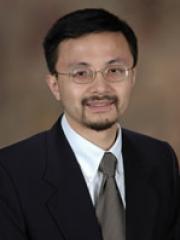
Yan Wang

Yan Wang
yan.wang@me.gatech.edu
ME Profile Page

Wang's research is in the areas of design, manufacturing, and Integrated computational materials engineering. He is interested in computer-aided design, geometric modeling and processing, computer-aided manufacturing, multiscale simulation, and uncertainty quantification.

Currently, Wang studies integrated product-materials design and manufacturing process design, where process-structure-property relationships are established with physics-based data-driven approaches for design optimization. The Multiscale Systems Engineering research group led by him develops new methodologies and computational schemes to solve the technical challenges of high dimensionality, high complexity, and uncertainty associated with product, process, and systems design at multiple length and time scales.

Computational design tools for multiscale systems with sizes ranging from nanometers to kilometers will be indispensable for engineers' daily work in the near future. The research mission of the Multiscale Systems Engineering group is to create new modeling and simulation mechanisms and tools with underlying scientific rigor that are suitable for multiscale systems engineering for better and faster product innovation. Our education mission is to train engineers of the future to gain necessary knowledge as well as analytical, computational, communication, and self-learning skills for future work in a collaborative environment as knowledge creators and integrators. 

Professor, Woodruff School of Mechanical Engineering
Phone
404.894.4714
Office
Callaway 472
Additional Research

Computer-aided engineering and design and manufacturing, modeling and simulation, nanoscale cad/cam/cae, product lifecycle management, applied algorithms, uncertainty modeling, multiscale modeling, materials design

Google Scholar
https://scholar.google.com/citations?hl=en&user=rK2ow1kAAAAJ&view_op=list_works&sortby=pubdate
Yan
Wang
Show Regular Profile

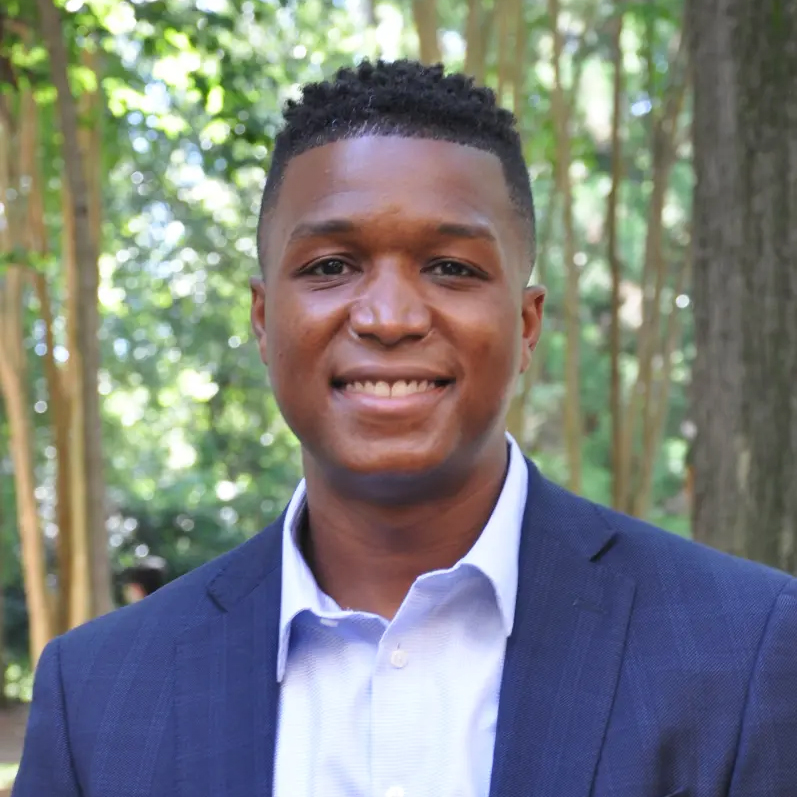
Joe F. Bozeman III

Joe F. Bozeman III
joe.bozeman@ce.gatech.edu
Departmental Bio
Assistant Professor, Civil and Environmental Engineering, Public Policy
SEI Lead: Ethics in Energy Transition
Additional Research

industrial ecology; climate change adaptation and mitigation strategies; sociodemographic impacts of the food-energy-water nexus; ethical applications in energy and environmental systems; urban carbon management strategies; life cycle assessment; scenario analysis; and survey administration; addressing the complex and ‘wicked’ challenges of our time

Joe
Bozeman
F.
Show Regular Profile

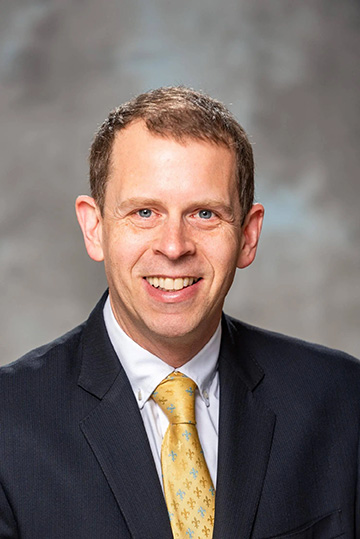
Carsten Sievers

Carsten Sievers
carsten.sievers@chbe.gatech.edu
ChBE Profile Page

Sievers’ research interests are in heterogeneous catalysis, reactor design, applied spectroscopy, and characterization and synthesis of solid materials. Combining these interests he seeks to develop processes for the production of fuels and chemicals. His research program combines fundamental and applied research.

In fundamental studies, a suite of analytical and spectroscopic techniques (e.g. IR, NMR) is used to gain knowledge on structure-reactivity relationships of heterogeneous catalysts. Moreover, surface reactions are studied on a molecular level to identify reaction pathways over different catalysts. Information obtained from these studies provides the foundation for designing innovative catalysts.

Applied studies focus specific catalytic processes. For these projects, continuously operated flow reactor systems are designed. Different catalysts are tested for reactivity, selectivity and stability and the influence of the operating conditions is investigated. Catalyst deactivation is studied in detail to develop suitable regeneration methods or to avoid deactivation entirely by improved catalyst design. Specific projects include hydrodeoxygenation of pyrolysis oils, selective hydration of polyols, conversion of sugars into lactic acid and ethylene glycol, and selective oxidation of methane.

An important goal of Sievers’ research is to enable technology for utilization of alternative resources in order to reduce the current dependence of oil. Among these biomass is a particularly promising candidate because it is renewable and can be produced CO2 neutral.

Sievers has contributed to 80 peer reviewed publications on heterogeneous catalysis in petroleum refining (isobutane/2-butene alkylation, fluid catalytic cracking, hydrotreating), alkane activation, supported ionic liquid as catalysts for fine chemical synthesis, and biomass processing.  He is Director and Past President of the Southeastern Catalysis Society, former Program Chair and Director of the ACS Division of Catalysis Technology & Engineering, former Director of the AIChE Division of Catalysis and Reaction Engineering, and Editor of Applied Catalysis A: General.
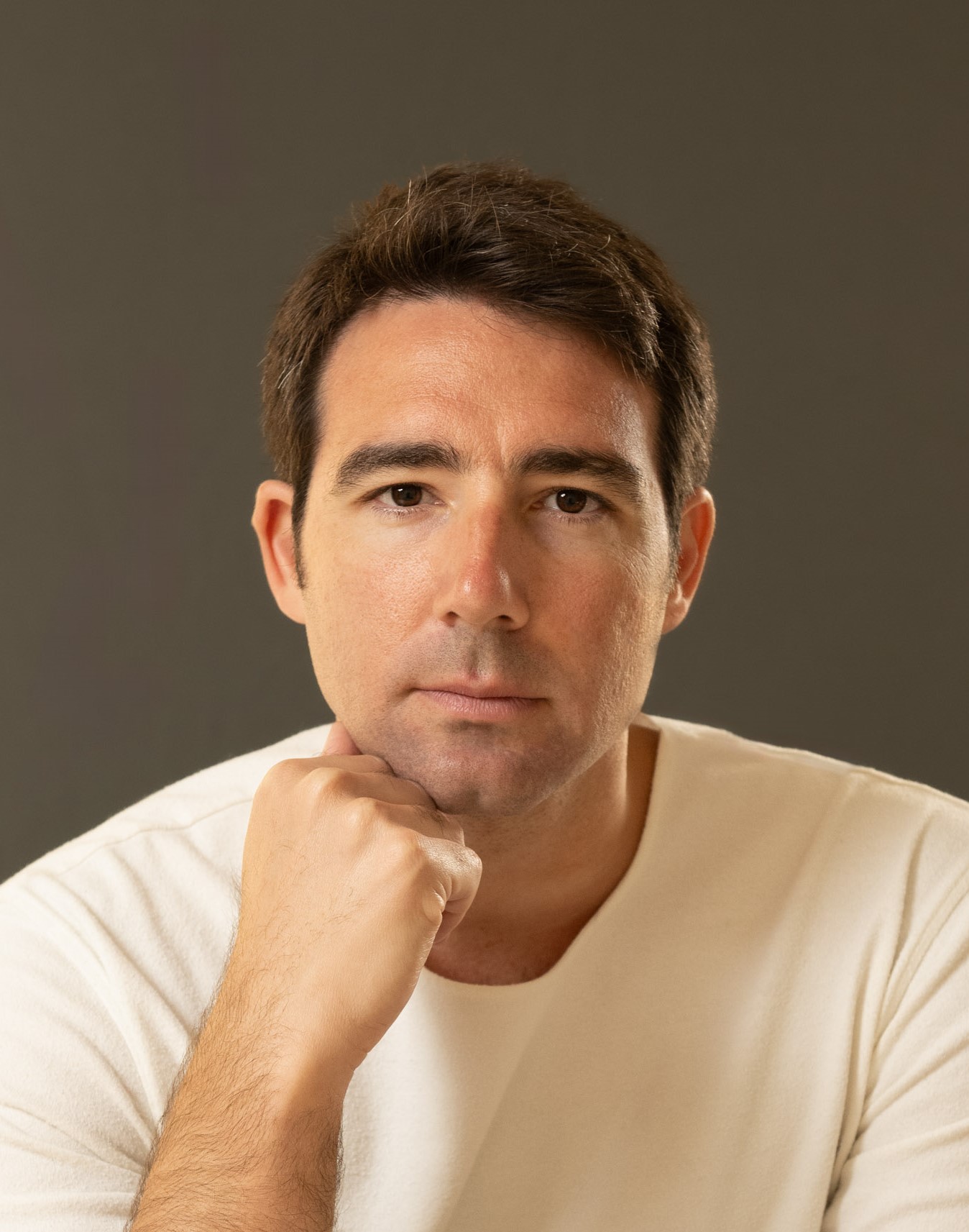
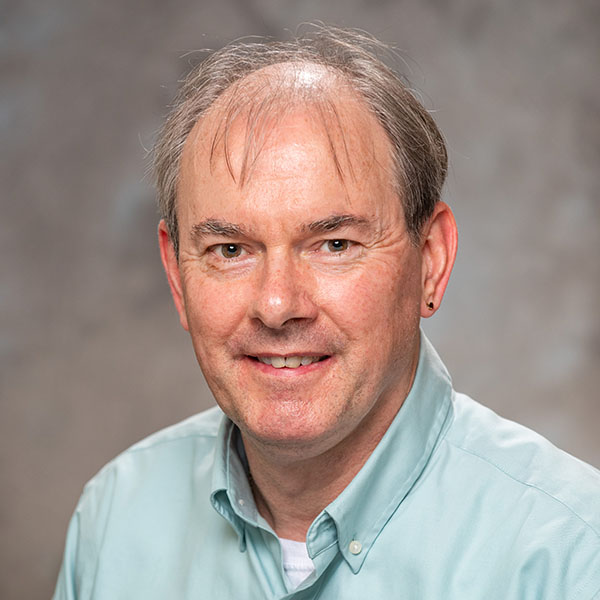
Professor, School of Chemical and Biomolecular Engineering
RBI Initiative Lead: Maximizing the Value of Products from Plastics Upcycling
Phone
404.385.7685
Office
ES&T 2218
Additional Research

Biomass; Biofuels; Catalysis; Advanced Characterization; Gasification; Biorefining; Lignin Upgrading; Catalysis; Energy & Water; Separation Technologies; Chemical Feedstocks; Sugars; Lignin & Hemicellulose

Google Scholar
https://scholar.google.com/citations?hl=en&user=qeq3njwAAAAJ&view_op=list_works&sortby=pubdate
Sievers Research Group
Carsten
Sievers
Show Regular Profile

Christos E. Athanasiou

Christos E. Athanasiou
athanasiou@gatech.edu
Christos E Athanasiou Profile

Christos Athanasiou is an Assistant Professor at Georgia Tech's Daniel Guggenheim School of Aerospace Engineering, leading the Daedalus Lab. The lab's mission is to advance science and technology in biological and man-made systems for tackling grand social and environmental challenges with a major focus on energy storage, environmental remediation, and sustainable space exploration. Christos holds a Ph.D. in Photonics from EPFL. Initially, he carried out postdoctoral research at Brown University's School of Engineering, and later jointly at Brown University and MIT Media Lab.

Assistant Professor
Additional Research

Disciplines:Structural Mechanics & MaterialsAE Multidisciplinary Research Areas:Large-Scale Computations, Data, and AnalyticsMechanics of Multifunctional Structures and MaterialsSpace Exploration and Earth MonitoringSustainable Transportation and Energy Systems

Research Focus Areas
Christos
Athanasiou
E
Show Regular Profile

Matthew Realff

Matthew Realff
matthew.realff@chbe.gatech.edu
Departmental Bio

Dr. Realff’s broad research interests are in the areas of process design, simulation, and scheduling. His current research is focused on the design and operation of processes that minimize waste production by recovery of useful products from waste streams, and the design of processes based on biomass inputs. In particular, he is interested in carbon capture processes both from flue gas and dilute capture from air as well as the analysis and design of processes that use biomass.

Professor
David Wang Sr. Fellow
Associate Director, RBI
Associate Director for Interdisciplinary Education
SEI Senior Advisor: Circular Carbon Economy; RBI Lead: Next Generation Refinery
Phone
(404) 894-1834
Additional Research

Biofuels; Carbon Capture; Separations Technology; System Design & Optimization; SMART Manufacturing; Energy & Water; Separation Technologies; Biochemicals; Chemical Feedstocks; Sugars; Lignin & Hemicellulose; Biofuels

2023 Initiative Lead Profile
Matthew
Realff
Show Regular Profile

Matthew McDowell

Matthew McDowell
mattmcdowell@gatech.edu
McDowell Lab

Matthew McDowell joined Georgia Tech in the fall of 2015 as an assistant professor with a joint appointment in the George W. Woodruff School of Mechanical Engineering and the School of Materials Science and Engineering. Prior to this appointment, he was a postdoctoral scholar in the Division of Chemistry and Chemical Engineering at the California Institute of Technology. McDowell received his Ph.D. in 2013 from the Department of Materials Science and Engineering at Stanford University.

McDowell’s research group focuses on understanding how materials for energy and electronic devices change and transform during operation, and how these transformations impact properties. The group uses in situ experimental techniques to probe materials transformations under realistic conditions. The fundamental scientific advances made by the group guide the engineering of materials for breakthrough new devices. Current projects in the group are focused on i) electrode materials for alkali ion batteries, ii) materials for solid-state batteries, iii) interfaces in chalcogenide materials for electronics and catalysis, and iv) new methods for creating nanostructured metals.

Professor, Woodruff School of Mechanical Engineering
Woodruff Faculty Fellow
Director, Georgia Tech Advanced Battery Center
SEI Senior Advisor: Energy Storage
Phone
404.894.8341
Office
MRDC 4408
Additional Research

Batteries; Nanostructured Materials; Composites; Fabrication; Energy Storage; Thermal Systems

Google Scholar
https://scholar.google.com/citations?hl=en&user=VRZVDH8AAAAJ&view_op=list_works&sortby=pubdate
MSE Profile Page
Matthew
McDowell
Show Regular Profile

Tequila A. L. Harris

Tequila A. L. Harris
tequila.harris@me.gatech.edu
Departmental Bio

Tequila A. L. Harris is a Professor in the George W. Woodruff School of Mechanical Engineering, and is the director of the Highly Advanced Roll-to-Roll iManufacturing Systems (HARRiS) group. Her research focuses on investigating the fundamental science associated with manufacture of polymer thin films from fluids (e.g., solutions, dispersions, slurries, etc.) as they are coated onto permeable or impermeable surfaces to make components or devices. She explores the connectivity between thin film functionality, based on their manufacture or structure, and their life expectancy, to elucidate mechanisms by which performance or durability can be predicted. In addition to conducting computational analysis, developing analytical models and running experiments, Harris also develops new manufacturing technologies to fabricate thin films, in wide area or discrete patterns. Target applications are well-suited for a variety of industries including food, energy, electronic, and environmental systems to name a few. In conjunction with her research activities, she is committed to the education, mentoring, and advisement of students towards scholarly achievements. She has published over fifty peer-reviewed articles. Harris has several awards including the National Science Foundation's young investigator CAREER Award and the Lockheed Inspirational Young Faculty Award.

Professor, Woodruff School of Mechanical Engineering
Director, Highly Advanced Roll-to-Roll iManufacturing Systems (HARRiS) group
SEI Lead: Energy & Manufacturing
Phone
404.385.6335
Office
MARC 436
Additional Research

Additive/Advanced Manufacturing; Flexible Electronics; Polymers; micro and nanomechanics; Thin Films; Electronics; Energy Storage; Thermal Systems; Manufacturing and Fluid Mechanics; Polymer processing; mechanical system design; fluid flow; mechanical and physical property characterization of thin film

Highly Advanced Roll-to-Roll iManufacturing Systems (HARRiS) Group
Tequila A. L.
Harris
Show Regular Profile

Suhas Jain

Suhas Jain
suhasjain@gatech.edu
Profile of Dr. Suhas Jain

Suhas S. Jain is an Assistant Professor in the Woodruff School of Mechanical Engineering at Georgia Tech. He received his bachelor’s from NIT-Karnataka (India) in 2014, M.S. and Ph.D. from Stanford University in 2018 and 2022, respectively, all in mechanical engineering. Before coming to Georgia Tech, he was a postdoctoral fellow at the Center for Turbulence Research, Stanford University (2022-2023), a researcher at the Institute of Fluid Dynamics, Helmholtz-Zentrum Dresden-Rossendorf, Germany (2014-2015), and a project assistant at the Indian Institute of Science (2015-2016).

His research interests include computational modeling of fluid flows (multiphase flows; turbulent flows; compressible flows; and fluid-structure interaction) with a current focus on modeling atomization, sprays, and phase change for propulsion applications; ice accretion and aerodynamics for sustainable energy and aerospace design; and air-sea interaction modeling for understanding climate change; and modeling of fluid-solid and solid-solid systems for biomedical and high-speed applications. Through the integration of numerical modeling, high-performance computing, and data-driven approaches, Suhas and his group aim to address key challenges in these areas.

Assistant Professor
Additional Research
  • Computational Modeling
  • Machine Learning
Suhas
Jain
Show Regular Profile

Joseph Scott

Joseph Scott
jscott319@gatech.edu
Profile of Joseph Scott

Joseph K. Scott is an associate professor in the School of Chemical and Biomolecular Engineering at the Georgia Institute of Technology. He received his BS from Wayne State Univ. and his MS and PhD from the Massachusetts Institute of Technology (MIT), all in chemical engineering. His honors include the 2012 Best Paper Award from the Journal of Global Optimization, the 2016 W. David Smith, Jr. Award from the Computing and Systems Technology Div. of AIChE, the 2014–2016 Automatica Paper Prize from the International Federation of Automatic Control, and the 2016 Air Force Young Investigator Research Program Award. His research interests include process modeling and simulation, dynamic systems, process control, and optimization theory and algorithms.

Associate Professor
Additional Research
Optimization theory and algorithms (global, dynamic, stochastic, etc.), control theory and algorithms (MPC, set-based estimation, reachability analysis, fault detection), and process modeling and simulation. Current applications include pressure swing adsorption, membrane reactors, renewable energy systems, AC power flow, aircraft flight dynamics, and robot motion planning.
Joseph
Scott
Show Regular Profile

Jake Soper

Jake Soper
jake.soper@chemistry.gatech.edu
Jake Soper Profile

Jake D. Soper is an Associate Professor in the School of Chemistry and Biochemistry at the Georgia Institute of Technology. Prof. Soper’s research program is a hybrid of organometallic and inorganic coordination chemistry, at the forefront of an emerging area that uses redox-active ligand complexes for redox control in bond activation and functionalization reactions. His research focuses on the development of new homogeneous catalysts for selective transformations of small molecules, with particular emphasis on multielectron reactions relevant to organic synthesis and energy conversion and storage. Recent research accomplishments include the rational design of Earth-abundant metal catalysts to functionally mimic palladium in coupling catalysis cycles and the demonstration of redox-active ligand-meditated radical control in catalytic dioxygen activation and oxygen atom transfer reactions. This research has appeared in top peer-reviewed chemistry journals, including the Journal of the American Chemical Society and Inorganic Chemistry. Prof. Soper has also been an invited contributor to special issues of the European Journal of Inorganic Chemistry on Cooperative & Redox Non-Innocent Ligands in Directing Organometallic Chemistry and an Inorganic Chemistry Forum on Redox-Active Ligands, consisting of “papers from leading scientists on a multidisciplinary topic of growing interest. His recent development of redox-active ligand-mediated cobalt cross coupling catalysis was hailed as a “breakthrough in the field” in a 2011 Highlights feature in Angewandte Chemie International Edition. 

Prof. Soper earned a B.S. degree in chemistry from Western Washington University in 1998 and a Ph.D. in inorganic chemistry from the University of Washington in 2003. His graduate research was performed under the direction of Prof. James M. Mayer. He was subsequently an NIH Ruth L. Kirchstein Postdoctoral Fellow in the laboratories of Prof. Daniel G. Nocera at the Massachusetts Institute of Technology. In 2009 his independent research was honored with an NSF CAREER award and a DARPA Young Faculty Award (YFA). During his tenure at Georgia Tech, he has been invited to speak at 30 universities and 12 conferences, including four Gordon Research Conferences. He was the corresponding organizer of a symposium on modern redox-active ligand chemistry that was presented at the International Chemical Congress of Pacific Basin Societies, Pacifichem 2010. He created and directs the Georgia Tech–Westlake HS Energy Challenge Program, for which he received the 2010 Georgia Tech Faculty Award for Academic Outreach.

Associate Professor and Associate Chair for Operations
Additional Research
Solutions to outstanding problems in benchtop-scale organic synthesis, pharmaceuticals and commodity chemicals production, petroleum manufacturing, and energy generation and storage all hinge on the development of new methods to selectively transform the chemical bonds in small molecules. Because selectivity in redox bond activation and functionalization reactions typically derives from 1e– versus 2e– redox control, the function of most synthetically useful transition metal catalysts is to mediate 2e– bond making and breaking while suppressing potentially competing 1e– reactions.The Soper Group reengineers the way transition metal catalysts impart selectivity in redox bond activation and functionalization reactions. Instead of suppressing 1e– transfer, we use the capacity of some metal–ligand combinations to undergo reversible low-energy electron transfer for kinetic control in free radical reactions. We apply these methods for controlled radical chemistry to stoichiometric and catalytic reactions that are challenging or inaccessible using current methods. Recent successes include:Earth-Abundant Coupling Catalysis. Palladium-mediated 2e– oxidative addition and reductive elimination steps form the basis for numerous coupling cycles leading to selective assembly of C–C bonds. We discovered that redox-active aminophenol-derived ligands can be used to effect palladium-like 2e– oxidative addition and reductive elimination reactions at square planar later first row metal centers. These elementary reaction steps have been utilized for development of unusually well defined cycles for cobalt cross coupling of alkyl halides with alkyl- and arylzinc halides, as well as manganese and iron catalyzed aerobic coupling of aryl Grignard reagents.Metal Oxyl Radical Coupling. Recent theoretical studies suggest transition metal oxyl radicals containing unpaired electron density at oxo are critical precursors to O–O bond formation in water oxidation catalysts. Through the use of redox-active ligands, we have been able to generate a new class of well-defined coordination complexes that exhibit oxyl radical reactivity. We recently showed that a rhenium oxyl reacts with carbon free radicals to make C–O bonds at the oxo ligand, and we demonstrated that that radical character in the metal–oxo bond leads to kinetic reactivity that is not rationalized by ground-state thermodynamic considerations.O2 Activation and Aerobic Oxidations. A challenging step in many oxygenase-type redox catalysis cycles is bimetallic cleavage of the dioxygen O–O bond to generate two transition metal oxo complexes. This reaction is also relevant to energy conversion and storage in artificial photosynthetic schemes because the kinetics of O2 electroreduction at fuel cell anodes are often poor. We have demonstrated how the ability of redox-active ligands to undergo reversible 1e– transfer can be used to bring about bimetallic O2 homolysis by lowering the kinetic barrier to formation of 1e– reduced O2 complex intermediates. We are applying this method to the development of new aerobic oxidation catalysis cycles and electrode materials for efficient for O2 reduction.To accomplish these goals, researchers in the Soper Group are skilled in the synthesis and handling of air-sensitive materials. We use a variety of spectroscopic techniques to characterize reaction products and intermediates and to perform detailed mechanistic studies.
Jake
Soper
Show Regular Profile