Keerthy Kishore
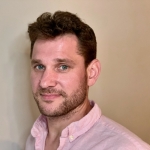
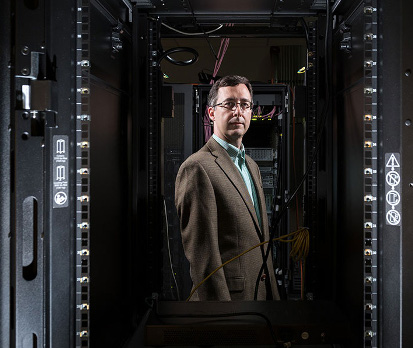
Jacob Abernethy is an Associate Professor in the College of Computing at Georgia Tech. He started his faculty career in the Department of Electrical Engineering and Computer Science at the University of Michigan. He completed his Ph.D. in Computer Science at the University of California at Berkeley, and then spent two years as a Simons postdoctoral fellow at the CIS department at UPenn. Abernethy's primary interest is in Machine Learning, with a particular focus in sequential decision making, online learning, online algorithms and adversarial learning models. He did his Master's degree at TTI-C, and his Bachelor's Degree at MIT.
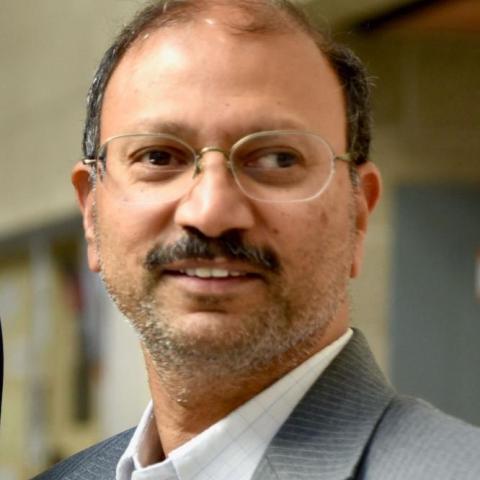
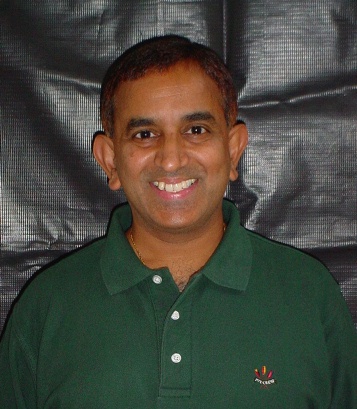
Dr. Pamidighantam is associate director of the ARTISAN center under the Institute for Data Engineering and Science at the Georgia Institute of Technology. Dr. Pamidighantam had been a senior research scientist at Indiana University, Cyberinfrastructure Integration Research Center and NCSA at the University of Illinois at Urbana-Champaign supporting computational chemistry and science gateways development in support of molecular sciences faculty.
computational chemistry
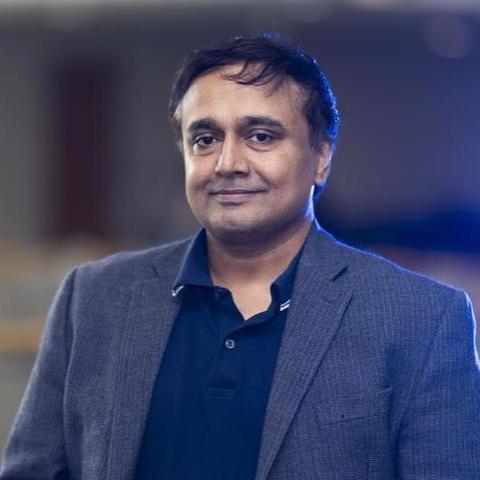
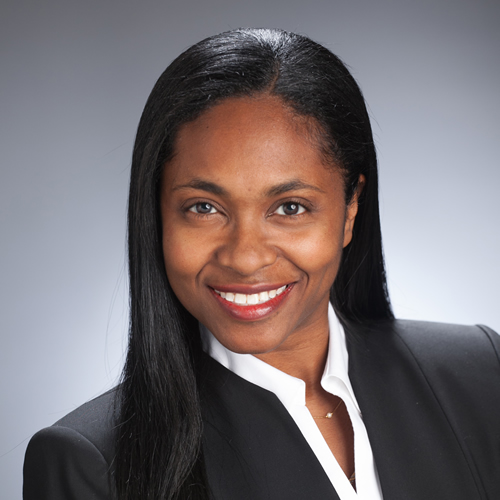
Dr. Vijay Ganesh is a professor of computer science at the Georgia Institute of Technology. Prior to joining Georgia Tech in 2023, Vijay was a professor at the University of Waterloo in Canada from 2012 to 2023 and a research scientist at the Massachusetts Institute of Technology from 2007 to 2012. Vijay completed his PhD in computer science from Stanford University in 2007. Vijay's primary area of research is the theory and practice of SAT/SMT solvers, and their application in AI, software engineering, security, mathematics, and physics. In this context he has led the development of many SAT/SMT solvers, most notably, STP, Z3str4, AlphaZ3, MapleSAT, and MathCheck. He has also proved several decidability and complexity results in the context of first-order theories. More recently he has started working on topics at the intersection of learning and reasoning, especially the use of machine learning for efficient solvers, and the use of solvers aimed at making AI more trustworthy, secure, and robust. For his research, Vijay has won over 30 awards, honors, and medals to-date, including an ACM Impact Paper Award at ISSTA 2019, ACM Test of Time Award at CCS 2016, and a Ten-Year Most Influential Paper citation at DATE 2008.
Research in the Sherrill group focuses on the development of ab initio electronic structure theory and its application to problems of broad chemical interest, including the influence of non-covalent interactions in drug binding, biomolecular structure, organic crystals, and organocatalytic transition states. We seek to apply the most accurate quantum models possible for a given problem, and we specialize in generating high-quality datasets for testing new methods or machine-learning purposes. We have developed highly efficient algorithms and software to perform symmetry-adapted perturbation theory (SAPT) computations of intermolecular interactions, and we have used this software to analyze the nature of non-covalent pi-interactions in terms of electrostatics, London dispersion forces, induction/polarization, and short range exchange-repulsion.
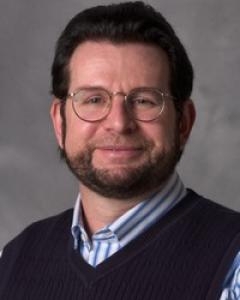
Kishore Ramachandran received his Ph.D. in Computer Science from the University of Wisconsin, Madison in 1986, and has been on the faculty of Georgia Tech since then. He led the definition of the curriculum and the implementation for an online MS program in Computer Science (OMSCS) using MOOC technology for the College of Computing, which is currently providing an opportunity for students world-wide (with an enrollment of over 10,000) to pursue a low-cost graduate education in computer science. He has served as the Director of STAR Center from 2007 to 2014, and as the Director of Korean Programs for the College of Computing from 2007 to 2011. Ramachandran has also served as the Chair of the Core Computing Division within the College of Computing. His research interests are in architectural design, programming, and analysis of parallel and distributed systems. Currently, he is leading a project that deals with large-scale situation awareness using distributed camera networks and multi-modal sensing with applications to surveillance, connected vehicles, and transportation. He is the recipient of an NSF PYI Award in 1990, the Georgia Tech doctoral thesis advisor award in 1993, the College of Computing Outstanding Senior Research Faculty award in 1996, the College of Computing Dean's Award in 2003 and 2014, the College of Computing William "Gus'' Baird Teaching Award in 2004, the "Peter A. Freeman Faculty Award" from the College of Computing in 2009 and in 2013, the Outstanding Faculty Mentor Award from the College of Computing in 2014, and became an IEEE Fellow in 2014.
AI; Health Information Technology; Network Science
Dr Krishnan is research professor in the Georgia Tech’s Interdisciplinary Research Institute, Institute for Data Engineering and Science, School of Computational Science and Engineering, College of Computing. He is an associate director of the Center for AI in Science and Engineering. His current interest is in developing AI methods for computational science problems across many domains. He is a computational neuroscientist by training, with past work spanning across a wide range of computational modeling and AI methods. His group's current focus is on generative methods for computational workflow, neural approaches for accelerating compute intensive problems and applying interpretable methods to scientific AI for advancing scientific understanding.
Prior to joining Georgia Tech, he was research scientist at UC San Diego and his research involved developing large-scale modeling of the brain to study sleep, memory and learning. In addition, he has contributed towards neuro-inspired AI and neuro-symbolic approaches. He is broadly interested in the emergence of intelligent behavior from neural computations in the brain and AI systems.
Dr Krishnan has more than 50 publications and his research has been supported by multiple grants from NIH and NSF. He is passionate about open-science and reproducible science and strongly believes that progress in science requires reproducibility.
AI : Deep learning, Neuro-symbolic ApproachesGeosciences.Molecular DynamicsNeuroscience : Theoretical and computational modeling