
Ecolabels, Innovation, and Green Market Transformation: Learning to LEED
Jan 19, 2023 — Atlanta, GA

The Kendeda Building for Innovative Sustainable Design, a certified “Living Building,” at Georgia Tech, is a case study in Matisoff's book. Credit: Daniel Matisoff
Whether they know it or not, most city dwellers have probably been inside a so-called “green” building. Plaques boasting various types of environmental or energy certifications — known as ecolabels — often hang prominently in their lobbies. They’re visible, but how can we know if ecolabels have a real impact or are mostly about showing off?
Daniel Matisoff, professor of public policy at Georgia Tech, illuminates the role and impact of green building ecolabels in his book, Ecolabels, Innovation, and Green Market Transformation: Learning to LEED, which traces the curve of ecolabel adoption in the building market, revealing how ecolabels have transformed the economy and construction industry to achieve green market transformation. Co-authored by Douglas Noonan, professor of public policy at Indiana University-Purdue University Indianapolis, it is the first book to comprehensively assess the green building movement. The book was published by Cambridge University Press in October 2022.
Green building ecolabels, simply stated, are marks or designations that indicate environmental performance and sustainability certifications. Matisoff and Noonan investigated prominent ecolabels, such as LEED, and examined how they work, exploring the theory and economics behind them. They also studied factors and initiatives that drive the adoption of green building ecolabels, breaking down the green building movement step-by-step.
“A central premise of the book is that early adopters, whether they are creating a demonstration project — such as Georgia Tech’s own Kendeda Building — or adopting an ecolabel early on produce positive information spillovers that help accelerate adoption of green technologies,” Matisoff said.
According to the authors, early adopters do this by moving both supply and demand curves for new energy and environmental technologies. When early adopters employ and experiment with new green building technologies, they help build supply chains, lowering costs for others interested in adopting the technologies. Undertaking green building projects also proves the market performance of new energy and environmental technologies, thereby reducing uncertainty and increasing demand by making them more visible and widely available.
“Early adopters often build pilot and demonstration projects largely for a marketing or reputational benefit, but then that provides positive information spillover to the market,” Matisoff said. “For example, once contractors become familiar with new energy and environmental technologies, they can recommend them to clients for new building projects.”
By looking at data, Matisoff found that there has been a rapid uptake of buildings using the LEED label. But the question that remained was, what does it ultimately accomplish? To answer that question, Matisoff and Noonan looked at several case studies. One such case study is The Kendeda Building for Innovative Sustainable Design, a certified “Living Building,” at Georgia Tech.
The Kendeda Building: Tossing a Pebble in a Pond
The goal of The Kendeda Building was to create a facility that would transform the building and construction industry in the Southeast. Matisoff considered that a testable hypothesis. The Kendeda building inspired Matisoff and his collaborators to dig into 30 years of LEED data to look at the effect of pilot and demonstration projects. They found that if you have a demonstration project in a particular geographic location, it doubles the probability that another green building is going to be built that has similar technologies.
For example, an electrical contracting company working on Kendeda noted that being forced to work with high density poly-ethylene (HDPE) piping — a sustainable alternative to using PVC piping for electrical conduit — led them to realize that HDPE was cheaper and easier to work with, in addition to being a more ecofriendly alternative. The contractor intends to switch to HDPE piping in future projects.
“We at Georgia Tech, by building the Living Building, are providing all this information to the marketplace,” Matisoff said. “And the hope is that other universities or institutions may see this building and say, ‘Hey, we want one of those.’”
Moving Forward
Lessons in Matisoff’s book include how to harness information spillover in addition to more traditional price tools such as subsidies, taxes, and cap-and-trade emissions policies. The authors highlight the importance of leveraging private actors to provide information to the market and suggest that policymakers think carefully about how to incentivize early adopters into the green building market, beyond just prices.
While recent legislation has created a lot of price incentives, subsidies, and tax breaks designed to encourage people to make greener choices, Matisoff’s work emphasizes that, especially at early stages, prices probably aren't enough.
“It's unlikely that there's enough momentum in the policy space to get to where we need to be to address climate change,” Matisoff said. “We hope the book will help us think more carefully about how we leverage information and learning to accelerate the uptake of advanced energy and environmental technologies to facilitate green market transformation.”
Matisoff also hopes the comprehensive study will show the roughly 100,000 certified green building professionals around the world that their efforts have been worth it.
“We wanted to tell a story, especially to green building professionals, about what they’ve accomplished over the past few decades, and the impact their work will have for years to come.”
Catherine Barzler, Senior Research Writer and Editor
New ebook "Climate Change and the Design of the Built Environment" by Michael Gamble Now Available!
Jan 09, 2023 — Atlanta, GA

A new eBook, "Climate Change and the Design of the Built Environment" by Michael Gamble, Academic and Research Council Chair at the Kendeda Building for Innovative Sustainable Design and associate professor in the College of Design at Georgia Tech is now available!
Written as a series of dialogues with leaders from various disciplines, the book positions design as an essential component of entrepreneurial approaches which explore the sociocultural and eco-political dimensions of climate change. Economist, Architects, Planners, Sociologist, Lawyers, Policy Makers, Landscape Architects, and MBA’s contribute to a spirited discussion around climate change and design.
Global climate change has already resulted in a wide range of impacts across every region of the country. Many sectors of the economy are expected to grow related to climate and health in the coming decades. The design and retrofit of buildings, infrastructure and cities will be a major part of future efforts.
All interviews are Kendeda Building based on Georgia Tech’s Atlanta campus with experts participating from around the world.
Sustainability Next Plan Virtual Town Hall
The campus community is invited to attend a virtual town hall to learn more about the Sustainability Next Plan and its newly unified vision for coalescing, implementing, and measuring cross-cutting sustainability initiatives across Georgia Tech in support of the Institute’s Strategic Plan.
Georgia Tech Launches Sustainable-X Entrepreneurship Program
Jan 03, 2023 — Atlanta, GA

“Georgia Tech is a beacon of innovation that aims to empower entrepreneurs to create ventures with a positive impact on society and the environment. As a hub of forward-thinking ideas, Georgia Tech is leading Atlanta, Georgia, and the United States into a more sustainable future,” said Andre Calmon, assistant professor of operations management, at the launch event for Sustainable-X. An offshoot of the successful CREATE-X entrepreneurship initiative at Georgia Tech, Sustainable-X gives students, faculty, staff, and community members the tools and confidence to create and grow startups that address social and environmental challenges.
Sustainable-X is supported by Sustainability Next, the implementation roadmap for sustainability goals within Georgia Tech’s Strategic Plan 2020-2030. The new program launches in tandem with a climate action plan, a living learning campus initiative, seed funding for teaching through the lens of the UN Sustainable Development Goals, and more.
CREATE-X and the Ray C. Anderson Center for Sustainable Business (“Center”) are partnering on Sustainable-X programming. Organizers include Scheller College of Business faculty and staff: co-directors Andre Calmon and Karthik Ramachandran (Dunn Family Professor), advisor Beril Toktay (Brady Family Chair and Regents’ Professor), and program manager Kjersti Lukens (program support coordinator for the Center).
The program kicked off with the Social and Environmental Entrepreneurs Bootcamp, held at the Kendeda Building for Innovative Sustainable Design from November 5-6, 2022. Twenty participants from Georgia Tech and the community learned how to tackle complex sustainability problems and create startup solutions. The bootcamp was facilitated by Jackie Stenson, an expert in sustainable innovation and co-founder of multiple social enterprises. Participants progressed through problem framing and ideation exercises to design solutions inspired by the UN Sustainable Development Goals.
The participants shared their projects in a pitch session, where judges and peers listened to an array of business solutions related to STEM education in under-resourced communities, meal preparation kits to help reduce food waste, water management for golf courses, and infrastructure and innovation to accelerate the transition to renewable energy. First prize was awarded to the group that focused on water management. Team members included Isha Dogra (environmental engineering graduate student at Georgia Tech), Emma Vail (student at University of North Georgia), and Michelle Wong (assistant director of the Petit Institute at Georgia Tech ).
Tanju Özdemir, a first-year materials science and engineering major who is also serving as a 2022-23 Scheller College Undergraduate Sustainability Ambassador, remarked, “I signed up for the bootcamp because it felt relevant to my future career goal of being an entrepreneur in the energy sector. The SDG innovation process was completely new to me and exposed me to how difficult and exciting it is to explore solutions to different problems.” The bootcamp revealed to Özdemir how “even the seemingly chaotic process of creativity can have structure.”
Next Steps and Resources
Participants in the bootcamp will be invited to take part in a series of forthcoming events and opportunities related to mentoring, transitioning from idea to prototype (through CREATE-X programming), and funding. The Sustainable-X 2022-23 program will culminate in a showcase in March in which selected participants, along with their counterparts in CREATE-X, will pitch their startups in hopes of obtaining support from investors.
Reflecting on the weekend launch event, Toktay said, “I enjoyed seeing how teams including students, staff members, and community participants – which we intentionally included in the bootcamp – gelled so well. They helped each other stay grounded in real problems while exploring creative solutions.” She said that she and her fellow organizers look forward to the growth of the program. “We believe that the teams have great potential to make a positive impact.”
“With the new Sustainable-X program, Scheller College is creating a new wave of impact at the intersection of sustainability, entrepreneurship, and innovation,” stated Dean Maryam Alavi. She continued, “This program will empower a new generation of Georgia Tech community members as they address some of the most pressing sustainability challenges of our time. I look forward to seeing what results.”
Co-directors Calmon and Ramachandran have worked with student and faculty entrepreneurs at Georgia Tech, INSEAD, and MIT. They recognize Georgia Tech’s potential to produce the next generation of sustainability and climate-impact startups, and look forward to building the pathway to support these startups through Sustainable-X.
Click here to sign up for updates.
Interested in getting involved? Contact Kjersti Lukens for more information.
Written by Jennifer Holley Lux
Jennifer Lux, Writer/Editor, Scheller College of Business
BBISS Appoints Nine New Faculty Fellows
Dec 13, 2022 — Atlanta, GA

L to R, Joe Bozeman, Dylan Brewer, Andre Calmon, Brian Gunter, Jenny McGuire, Jessica Roberts, Ilan Stern, Anjali Thomas, and Zhaohui Tong.
Nine new Faculty Fellows were appointed to the Brook Byers Institute for Sustainable Systems (BBISS). In addition to their own work, BBISS Fellows serve as a board of advisors to the BBISS; foster the culture and community of sustainability researchers, educators, and students at Georgia Tech; and communicate broadly the vision, mission, values, and objectives of the BBISS. Fellows will work with the BBISS for three years, with the potential for a renewed term.
The BBISS Faculty Fellows program has been in place since 2014. Fellows will number between 10 and 15, will be drawn from across all 6 colleges and GTRI at Georgia Tech. It is expected that annual allowances provided to each BBISS Fellow will range from $1000 to $1500 depending on number of fellows in the program and availability of funds.
The new BBISS Faculty Fellows are:
- Joe Bozeman – Assistant Professor, School of Civil and Environmental Engineering
- Dylan Brewer - Assistant Professor, School of Economics
- Andre Calmon – Assistant Professor, Scheller College of Business
- Brian Gunter - Associate Professor, Daniel Guggenheim School of Aerospace Engineering
- Jenny McGuire – Assistant Professor, School of Earth and Atmospheric Sciences
- Jessica Roberts – Assistant Professor, College of Computing
- Ilan Stern – Senior Research Scientist, Georgia Tech Research Institute
- Anjali Thomas - Associate Professor, Sam Nunn School of International Affairs
- Zhaohui Tong - Associate Professor, School of Chemical & Biomolecular Engineering
These faculty members join the current roster of Faculty Fellows:
- Baabak Ashuri - Associate Professor, School of Building Construction
- Kevin Caravati – Principal Research Scientist, Georgia Tech Research Institute
- Ellen Dunham-Jones – Professor, School of Architecture
- Daniel Matisoff - Associate Professor, School of Public Policy
- Kate Pride Brown - Associate Professor, School of History and Sociology
- Perry Yang – Professor, School of City and Regional Planning
More information can be found on the BBISS website.
Brent Verrill, Research Communications Program Manager, BBISS
Thomas Leads National Academy Report on Evaluating Low-Carbon Emissions
Dec 02, 2022 — Atlanta, GA

Adapted illustration from the cover of the National Academy of Sciences report titled "Current Methods for Life Cycle Analyses of Low-Carbon Transportation Fuels in the United States." Credit: NASEM
Gasoline, diesel, and jet fuel — the most commonly used transportation fuels — are among the largest sources of greenhouse gas emissions, and their use is affecting the climate in significant and long-term ways. A new national report, however, provides a powerful toolkit to help researchers and policymakers better evaluate low-carbon technologies and work toward reducing emissions.
Valerie Thomas, Anderson-Interface Chair of Natural Systems and professor in the H. Milton Stewart School of Industrial and Systems Engineering and the School of Public Policy at Georgia Tech, served as chair for the report titled “Current Methods for Life Cycle Analyses of Low-Carbon Transportation Fuels in the United States.” Issued by the National Academies of Sciences, Engineering, and Medicine, the report presents life-cycle assessment as an essential tool in helping researchers and policymakers evaluate low-carbon fuel standards to reduce emissions. Thomas, whose research focuses on energy, environmental impacts, and technology development and policy, is affiliated with Georgia Tech’s Strategic Energy Institute, Brook Byers Institute for Sustainable Systems, and Renewable Bioproducts Institute.
Alternative fuel sources such as electricity for electric vehicles, biofuels for aircraft, and hydrogen for fuel-cell trucks do emit carbon dioxide and other greenhouse gases, whether by resource extraction, production processes, or other supply-chain and market contributions. When considering low-carbon fuel standards to reduce emissions, policymakers are often met with a range of questions from stakeholders, from potential impacts of a specific policy to total emissions released from the production of a particular fuel.
“If a new transportation fuel is meant to reduce greenhouse gas emissions, we need to be confident that emissions are indeed likely to be reduced,” Thomas said. “Determining the total net emissions of alternative fuels requires an understanding of how they are made and how they affect markets.”
Life-cycle assessments are a method used to evaluate environmental impacts of fuels and technologies throughout their production and use, but according to Thomas, more research is needed to strengthen their reliability. The 16-member committee led by Thomas evaluated current methods for life-cycle analyses of low-carbon transportation fuels in the U.S., with the goal of establishing a comprehensive and reliable approach for applying life-cycle assessment to developing low-carbon fuel standards.
In preparing the report, the committee gathered input from life-cycle assessment experts, including researchers specializing in aviation fuels, biofuels, hydrogen fuels, fossil fuels, and soil carbon implications of biofuel production. The report, which includes 70 total recommendations, includes suggestions for improving models, increasing transparency, and verifying emissions. The report provides an understanding of the state-of-the-science in quantifying the climate impact of a transition to new transportation fuels.
“We suggest that the approach to life-cycle assessment needs to be guided by the question the analysis is trying to answer,” Thomas said. “Different types of assessment are better suited for answering different questions. While some methods work well for fine tuning a well-defined supply chain, other methods are needed to understand the global, economy-scale effect of a major technology or policy change.”
Thomas hopes that research programs will be created to advance key theoretical, computational, and modeling needs to better evaluate the transition to low carbon fuels.
The National Academy of Sciences was founded in 1863 by an act of Congress and it includes the National Academies of Science, Engineering, and Medicine. Its charge is to “provide independent, objective analysis and advice to the nation and conduct other activities to solve complex problems and inform public policy decisions.”
CITATION: National Academies of Sciences, Engineering, and Medicine. 2022. “Current Methods for Life Cycle Analyses of Low-Carbon Transportation Fuels in the United States.” Washington, D.C.: The National Academies Press.
DOI: https://doi.org/10.17226/26402
Catherine Barzler, Senior Research Writer/Editor
Rosenberg, Toktay Selected for USG Leadership Program
Nov 18, 2022 — Atlanta, GA
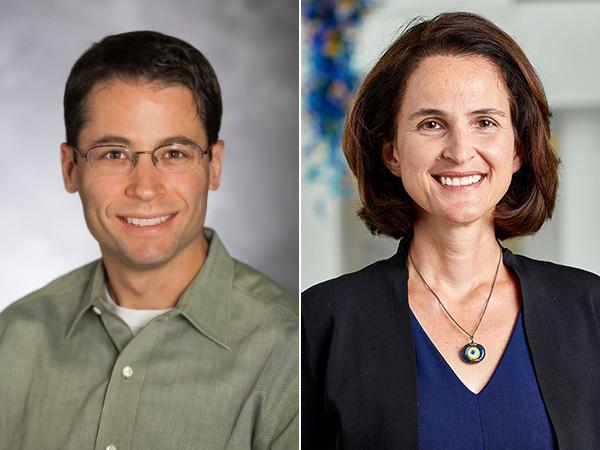
Two Georgia Tech employees are among the 35 faculty and staff members named to the University System of Georgia’s (USG) Executive Leadership Institute (ELI) class for 2022-23.
Josh Rosenberg, senior director of Grants and Contracts Accounting, and Beril Toktay, Brady Family Chair in Management and interim executive director of the Brook Byers Institute for Sustainable Systems, will represent Tech during this training cycle.
Each USG member institution nominates one academic leader and one staff leader to participate. Individuals are selected for the six-month program and participate in a curriculum that includes group learning and assessment, personal reflection, job shadowing and cross-mentoring.
“This is about supporting our own people within the university system,” USG Chancellor Sonny Perdue said. “Many times, the best talent is already among us. We want to give our people the best opportunity to experience this kind of professional development so they can reach their full potential.”
For more than a decade, the USG has hosted ELI for faculty and staff to develop new leaders within the university system and offer professional develop opportunities to help them advance their careers in Georgia.
Helping Measure the Impact of Air Pollution on South Metro Atlanta Children
Dec 06, 2022 — Atlanta, GA

Researchers from the Georgia Tech’s School of Economics will look at the impacts of air pollution on students at 11 south metro Atlanta schools as part of a $498,401 grant to a community organization from the U.S. Environmental Protection Agency.
The funding announced this week will enable the Center for Sustainable Communities — led by School of Public Policy alumnus Garry Harris, MSEEM 2022 — to install air quality monitoring stations at south metro schools located in minority and low-income communities near highways. Vehicles are a significant source of air pollution.
Dylan Brewer, an assistant professor in the School of Economics and co-principal investigator on the project, will work with his colleagues, Assistant Professor Daniel Dench, and Chair Laura Taylor to study the impact of pollution at the eleven schools. Researchers will compare pollution and test scores at those schools to a control group located further away from major roadways. One goal is to assess how pollution levels impact student test scores.
Meanwhile, researchers at the Georgia Tech Research Institute (GTRI) will develop an educational outreach program to help the students learn how to monitor air pollution at their schools in real time. Researchers hope that work will empower students to better understand the impact of air quality in their communities.
“Low-income and minority communities are often located near major sources of pollution. There’s growing evidence that these pollutants affect cognition and learning, potentially leading to worse educational outcomes. The more we know about these effects, the more we can do to mitigate the problems here in Atlanta and around the world,” said Brewer.
Kevin Caravati — the manager of the Energy and Sustainability Research Program at GTRI, Research Scientist Matthew Swarts, and Research Engineer Soniya Bhagat are the members of the GTRI educational outreach team.
Michael Chang, an atmospheric scientist in the Brook Byers Institute for Sustainable Systems, will advise the team on pollution monitoring, quality assurance, and data analysis.
Brewer said the team hopes to have research findings to share by 2025.
The award is part of EPA’s American Rescue Plan-funded program to address health disparities arising from pollution and the Covid-19 pandemic. The EPA awarded $53.4 million to 132 air monitoring projects in 37 states. The Center for Sustainable Communities project is the only one selected in Georgia.
The School of Economics and the School of Public Policy are units of the Ivan Allen College of Liberal Arts.
Michael Pearson
Ivan Allen College of Liberal Arts
Do Electric Scooters Reduce Car Use?
Nov 03, 2022 — Atlanta, GA

Banning scooters may reduce sidewalk congestion and keep would-be riders and pedestrians safer, but it comes at a cost, according to new research from Georgia Tech’s School of Public Policy.
In a study examining the impact of Atlanta's 2019 ban on e-scooters and e-bikes in the city, researchers found that average commute times increased by about 10%. Travel to stadium events such as soccer games increased by almost 12 minutes per trip or 37% increase in travel times while the ban was in effect.
For Atlantans, that adds up to 784,000 extra hours sitting in traffic each year — and that’s just between 9 p.m. and 4 a.m. when the ban was in effect. A moratorium during peak rush hour would cause even more congestion, the study’s principal investigator, Omar Asensio confirmed. Expanding the scope of their study, Asensio and his team in Georgia Tech’s Data Science and Policy Lab estimate that e-scooters, e-bikes, and other micro-mobility options can save an average of 17.4% in travel time for drivers nationally.
“These are fairly significant congestion effects that most travelers will feel and as an unintended consequence of the safety regulation,” said Asensio.
New data settle an old debate
The study, conducted in Georgia Tech’s Data Science and Policy Lab and published in Nature Energy, is the first to definitively show that investing in micro-mobility infrastructure such as e-bikes, e-scooters, and bike lanes can reduce traffic congestion and carbon emissions in cities. The research accounted for the rise in popularity of ride-sharing services and other sources of traffic.
Previous studies on micromobility were controversial and contradictory because they relied on travel surveys, which can be unreliable and are subject to biases resulting from self-reported data, Asensio said. This motivated his search for a more rigorous, data-driven approach to answering the question.
The opportunity arose when Atlanta banned scooters with a geo-fencing policy in 2019. The ban was done with a remote shutdown on all scooters within a certain perimeter, which ensured compliance across the city. Previous moratoriums in other places relied on people to choose to cooperate and follow the rules, so this 100% compliance rate was unique to Atlanta.
“I thought, okay, that's interesting because now we have near-perfect behavioral compliance in response to a policy intervention, which turns out to be extremely rare,” Asensio said. “All of a sudden, if you're without the use of the scooter, what do you do? This created a great natural experiment, to be able to precisely measure the traffic times before and after this policy intervention and in doing so, test behavioral theories of mode substitution.”
In addition, Asensio and his team received early access to the then-new Uber Movement Dataset, which gave them detailed information about commute times across the city that previously had to be collected by surveys as well. In short, the stars aligned in 2019 for the debate over the true impact of micro-mobility on city traffic to finally be settled.
Mary Feeney, program director for the Science of Science Program at the National Science Foundation, which supported the research, said “Asensio and his team are using newly available ‘big data’ sources to tackle practical questions with real policy implications. Bringing the appropriate data and analytical approaches to these problems helps empower decision-makers to enact evidence-based policy.”
Public safety vs. congestion and emissions
The regulation in Atlanta was one of many that U.S. cities put in place in response to increased accidents and hospitalizations from micro-mobility devices.
Reducing congestion also reduces emissions, noted Camila Apablaza, who worked on Asensio’s team along with Savannah Horner, Cade Lawson, and Edward Chen. “I thought this was an important question because the impact of certain modes of transportation, such as scooters, is sometimes overlooked,” she said. “We know that electric mobility will be the main contributor to decarbonizing the passenger transportation sector, therefore we need to understand the interactions between different modes of electric transportation.”
But, “the point of this paper is to present the idea that it’s not just as simple as ‘we should ban the scooters,’ right?” said Chen. “We have found that there are, in fact, trade-offs between banning them for public safety versus allowing them to relieve traffic congestion, and whether or not city governments make the decision does ultimately have an impact on people's daily lives.”
Economic impact
The researchers found that e-scooters and e-bikes do, in fact, reduce congestion on the road by substituting some personal vehicle or ridesharing use rather than only public transit or walking. When the estimated saved time for drivers nationwide is translated into monetary value, Asensio approximates that it adds up to $536 million a year.
“This is also just a personal thing,” Chen added. “I’ve lived around here my whole life. I start seeing these scooters around, and this kind of answers that fundamental question: are people actually using these, and are these actually replacing trips and inherently reducing all these carbon emissions?”
What’s Next?
The Data Science and Policy Lab partners with the private sector and city governments on data innovations in policy analysis and impact evaluation. Follow-up research to this project could dig deeper into the specific transit substitutions people choose and why, Asensio said.
“I think modeling the emissions impacts for those will continue to be an ongoing kind of investigation,” he said. “When it comes to electrification, micro-mobility is just one of many strategies that are aggressively being invested in by both the public and the private sector. It's a really exciting opportunity to meaningfully reduce emissions and to benefit from the public health co-benefit of reduced air pollution.”
The paper, “Impacts of Micromobility on Car Displacement With Evidence From a Natural Experiment and Geofencing Policy” was funded by Asensio’s 2020 NSF Faculty Early Career Development Program (CAREER) (Award No. 1945532). It is available at https://doi.org/10.1038/s41560-022-01135-1.
Di Minardi, Communications Officer I - School of Economics, School of History & Sociology
Bio-Inspired Maker Space Opens in Kendeda Building
Oct 17, 2022 — Atlanta, GA

At first glance, the new maker space opening in the Kendeda Living Building for Innovative Sustainable Design might look like many others. However, the space, named EcoMake, has some important differences. Because it is housed in the Kendeda Building, there are strict standards for what types of materials and equipment can be used there in order to maintain its Living Building Certification. For example, you will find several 3-D printers there, like almost all maker spaces, but the plastic filament used in them is made from recycled plastic, perhaps recycled on-site with equipment in the lab itself.
Some might regard such restrictions as too limiting to their creativity or design goals. Viewed another way, this approach opens up a unique set of possibilities. Biologically Inspired and Green Design (BIG-D) is a field of study (sometimes referred to by different names, like “biomimicry”) that has demonstrated a lot of promise in the past few decades. This approach aims to translate the billions of years of knowledge and design wisdom embodied in our biological world into innovative green products. However, no matter how green the design of a product, they are often manufactured with traditional processes with limited consideration for energy, toxicity, water, or material use. Having a lab like EcoMake will help to usher in the field of study of Biologically Inspired and Green Manufacturing (BIG-M). BIG-M will require knowledge, equipment, and resources that are much different than traditional fabrication methods. Like natural systems, this new facility will operate within the means of nature, using no more energy or water than can be generated from its geometric footprint, and producing no more waste than it can assimilate on site.
EcoMake has the following tools and equipment (so far):
- 8 - Prusa I3S+ 3-D Printers
- 5 - Ender 3 Pro 3-D Printers
- EinScan-SP 3-D Object Scanner
- Mark-10 ESM303 Mechanical Tester
- 300-X Digital Microscope
- 3Devo Filament Extruder
- Shini SG-16N Plastic Granulator
- Plastic Chip Dryer
- Singer Heavy Duty 4423 Sewing Machine
- Complement of Standard Fabric Crafting Equipment
EcoMake, the bio-inspired maker space will be open to students from all disciplines. It is supported by the Colleges of Design, Engineering, and Biology, and the Brook Byers Institute for Sustainable Systems. Contact Michael Gamble for more information.
Brent Verrill, Research Communications Program Manager, BBISS