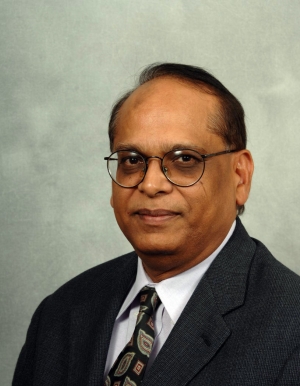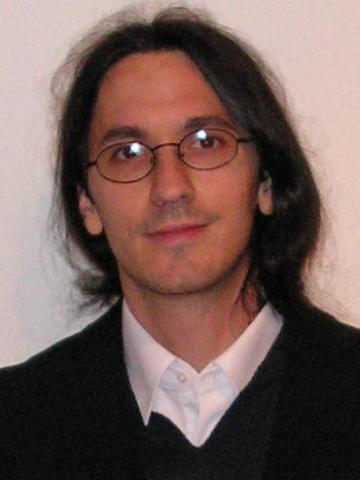
Cédric Pradalier

Cédric Pradalier
cedric.pradalier@georgiatech-metz.fr
The DREAM Lab

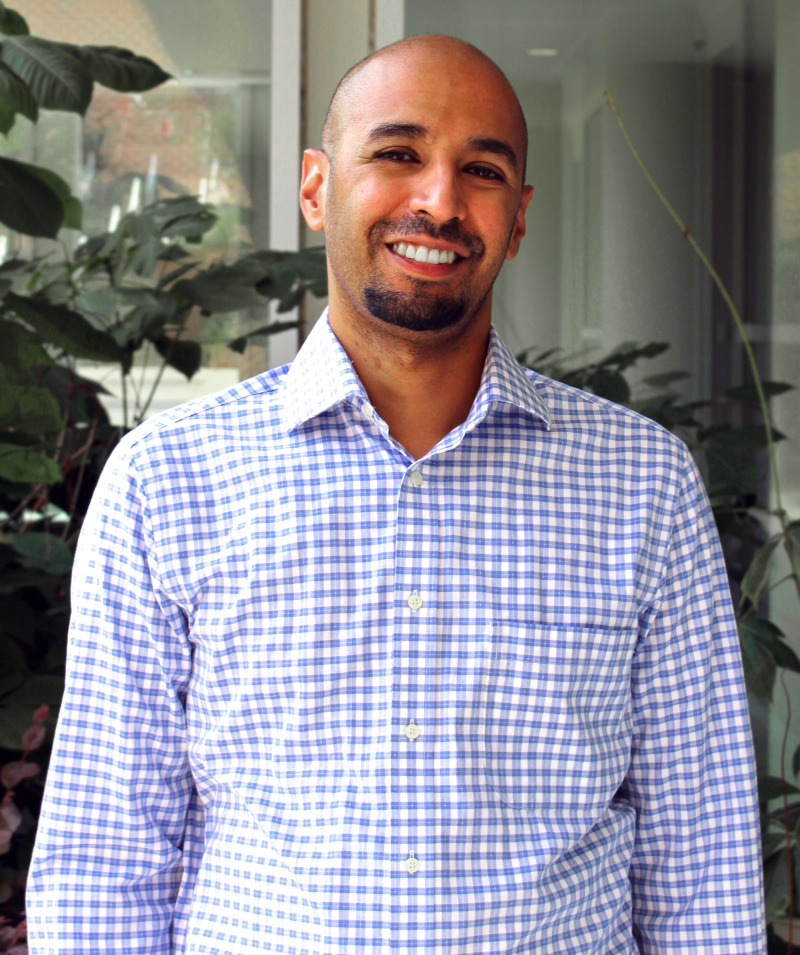
Prof. Pradalier is Associate Professor at GeorgiaTech Lorraine, the French campus of the Georgia Institute of Technology (a.k.a. GeorgiaTech) since September 2012. He defended his “Habilitation à Diriger des Recherches” (Authority to Supervise Research) in 2015 on the topic of “Autonomous Mobile Systems for Long-Term Operations in Spatio-Temporal Environments” at the National Polytechnic Institute of Toulouse (INPT). 

His objective is to extend the activity of the CNRS IRL2958 GT-CNRS towards robotics, leveraging on one side the strong robotic research inside CNRS and on the other side the collaboration potential with the Robotics and Intelligent Machines (RIM) laboratory at GTL. 

At the IRL, he is now the coordinator of the H2020 BugWright2 project, has been involved in H2020 project Flourish and PF7 project Noptilus, as well as in projects on environmental monitoring. 

From November 2007 until December 2012, Dr. Pradalier has been deputy director in the Autonomous Systems Lab at ETH Zürich. In this role, he was the technical coordinator of the V-Charge project (IP, 2010-2014) and also involved in the development of innovative robotic platforms such as autonomous boats for environment monitoring or prototype space rovers funded by the European Space Agency. He is a founding member of the ETH start-up Skybotix, within which he was responsible for software development and integration. 

From 2004 to 2007, Dr. Pradalier was a research scientist at CSIRO Australia. He was then involved in the development of software for autonomous large industrial robots and an autonomous underwater vehicle for the monitoring of the Great Barrier Reef, Australia. 

He received his Ph.D. in 2004 from the National Polytechnic Institute of Grenoble (INPG) on the topic of autonomous navigation of a small urban mobility system and he is Ingénieur from the National Engineering School for Computer Science and Applied Math in Grenoble (ENSIMAG).


Professor; Georgia Tech Lorraine
Phone
+33(0) 3 8720.3925
Office
Georgia Tech Lorraine | Unite Mixte Internationale 2958 | 2 Rue Marconi | 57070 Metz, France
Research Focus Areas
IRI And Role
Georgia Tech Lorraine
Cédric
Pradalier
Show Regular Profile

Charles Pippin

Charles Pippin
charles.pippin@gtri.gatech.edu
Charles Pippin @ Georgia Tech

Charles Pippin is a Senior Research Scientist at the Georgia Tech Research Institute, GTRI. His research interests include collaborative autonomy algorithms, machine learning, and multi-robot systems. In his current work, he is investigating cooperation between autonomous systems, as part of GTRI's Unmanned Systems Initiative. Charles received a Ph.D. in Computer Science from Georgia Tech in 2013. His research advisor was Prof. Henrik I. Christensen. Charles received an M.S. in Computer Science from Georgia Tech in 2004 and holds a B.S. in Computer Science from the University of Alabama in Huntsville.

Senior Research Scientist; Georgia Tech Research Institute
Office
GTRI
Additional Research

collaborative autonomy algorithms; machine learning; and multi-robot systems

Research Focus Areas
IRI And Role
GTRI
Geogia Tech Research Institute > Aerospace, Transportation & Advanced Systems Laboratory
Charles
Pippin
Show Regular Profile

Thomas Collins

Thomas Collins
tom.collins@gatech.edu
Professor of the Practice; School of Electrical and Computer Engineering
Phone
404.385.2637
Office
Klaus 1340
Additional Research

Autonomy

Research Focus Areas
IRI And Role
Georgia Center for Medical Robotics (GCMR)
Thomas
Collins
R.
Show Regular Profile

Anirban Mazumdar

Anirban Mazumdar
anirban.mazumdar@me.gatech.edu
DART Lab

Dr. Anirban Mazumdar joined Georgia Tech as an Assistant Professor in Mechanical Engineering in 2018. Dr. Mazumdar studies robot mobility with the goal of understanding and achieving agile, versatile, and efficient robot behaviors in unstructured environments. His previous experience includes a postdoctoral research position in the High Consequence Automation and Robotics Group at Sandia National Laboratories in Albuquerque, NM. He has broad experience with novel robotic systems including energy efficient bipedal robots, reconfigurable aerial vehicles, prosthetic devices, and relaxed stability mobile robots.

Assistant Professor; School of Mechanical Engineering
Director; Dynamic Adaptive Robotic Technologies (DART) Lab
Phone
404.385.8061
Office
Callaway Building 432
Additional Research

Mobile Robots; Human Performance; Autonomy

Research Focus Areas
Google Scholar
https://scholar.google.com/citations?hl=en&user=cRHSdPYAAAAJ&view_op=list_works&sortby=pubdate
Anirban
Mazumdar
Show Regular Profile

Gary Gray

Gary Gray
gary.gray@gtri.gatech.edu
Research Scientist; Georgia Tech Research Institute
Additional Research

Autonomy

Research Focus Areas
IRI And Role
GTRI
Geogia Tech Research Institute > Aerospace, Transportation & Advanced Systems Laboratory
Gary
Gray
E.
Show Regular Profile

Jonnalagadda V R Prasad

Jonnalagadda V R Prasad
jvr.prasad@aerospace.gatech.edu
AE Profile Page

Dr. J.V.R. Prasad is a professor in the School of Daniel Guggenheim School of Aerospace Engineering at the Georgia Institute of Technology working in the area of flight mechanics and control. He received his B.Tech degree from the Indian Institute of Technology, Madras, India and his M.S and Ph.D. degrees from the Georgia Institute of Technology, Atlanta, USA. He is currently a co-principal investigator and the associate director for the US Army, Navy and NASA sponsored Vertical Lift Rotorcraft Center of Excellence (VLRCOE) program at Georgia Tech. He has extensive research and design experience in rotorcraft system modeling and control, propulsion system modeling and control, and autonomous air vehicle modeling and control. He published parts of four books, sixty refereed journal papers, more than 250 conference papers and 80 research project reports. He has 18 invention disclosures and five patents to his credit. He is a recipient of the 2009 Melville Medal award from the American Society of Mechanical Engineers (ASME) and the 2015 Aero Lion Technologies Outstanding Journal Paper award from the International Journal of Unmanned Systems. He served as the editor-in-chief of the Journal of the American Helicopter Society (AHS), chair of the Handling Qualities and UAV Tech Committees of the AHS, and as member and secretary of the Atmospheric. Flight Mechanics Technical Committee of the American Institute of Aeronautics and Astronautics (AIAA). He currently serves as a member of the editorial board for the International Journal on Mathematical Modeling and Simulation and the advisory board for the International Journal of Unmanned Systems. He is a Fellow of the AIAA, a Technical Fellow of the AHS and a member of the ASME.

Professor; School of Aerospace Engineering
Associate Director; Vertical Lift Research Center of Excellence
Phone
404.894.3043
Office
Knight 421A
Additional Research

Flight Mechanics & Controls

Research Focus Areas
IRI And Role
Vertical Lift Research Center of Excellence
Jonnalagadda V R
Prasad
Show Regular Profile

Glenn Lightsey

Glenn Lightsey
glenn.lightsey@gatech.edu
AE Profile Page

E. Glenn Lightsey is the John W. Young Chair Professor in the Daniel Guggenheim School of Aerospace Engineering at Georgia Tech. He currently serves on the executive committee for the Space Research Initiative at Georgia Tech. Previously, he was the director of the Space Systems Design Lab from 2016-2023 and Center for Space Technology And Research at Georgia Tech from 2019-2023. 

Lightsey’s research program focuses on the technology of small satellites, including: guidance, navigation, and control systems; attitude determination and control; formation flying, satellite swarms, and cooperative control; proximity operations and unmanned spacecraft rendezvous; space based Global Positioning System receivers; radionavigation; propulsion; satellite operations; and space systems engineering. His group has built and operated several spacecraft for government sponsors. 

Lightsey has co-authored more than 180 technical articles and publications, including four book chapters. He is an AIAA Fellow and a Founding Member of the AIAA Small Satellite Technical Committee. He is Associate Editor-in-Chief of the Journal of Small Satellites. In the past he served as Associate Editor of the AIAA Journal of Guidance, Control, and Dynamics and Associate Editor of the AIAA Journal of Spacecraft and Rockets. Lightsey was previously employed at the University of Texas at Austin and NASA’s Goddard Space Flight Center.

John W. Young Chair Professor, Daniel Guggenheim School of Aerospace Engineering
Member, Space Research Initiative Steering Committee
Phone
404.385.4146
Office
ESM 110A/B
Additional Research

Small Satellites, Guidance and Control, and Spacecraft Technology.

Research Focus Areas
Google Scholar
https://scholar.google.com/citations?hl=en&user=EFUhzfYAAAAJ&view_op=list_works&sortby=pubdate
Space Research Initiative
Glenn
Lightsey
Show Regular Profile