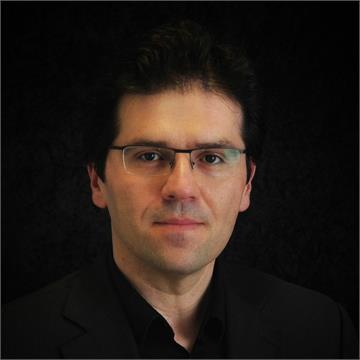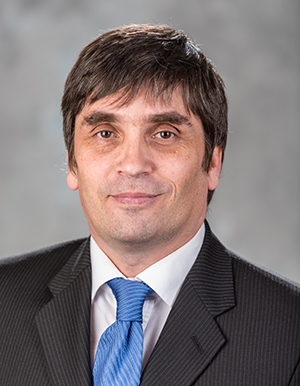
Jennifer Curtis

Jennifer Curtis
jcurtis6@gatech.edu
Cell Physics Laboratory

The Curtis lab is primarily focused on the physics of cell-cell and cell-extracellular matrix interactions, in particular within the context of glycobiology and immunobiology. Our newest projects focus on questions of collective and single cell migration in vitro and in vivo; immunophage therapy "an immunoengineering approach - that uses combined defense of immune cells plus viruses (phage) to overcome bacterial infections"; and the study of the molecular biophysics and biomaterials applications of the incredible enzyme, hyaluronan synthase. A few common scientific themes emerge frequently in our projects: biophysics at interfaces, the use of quantitative modeling, collective interactions of cells and/or molecules, cell mechanics, cell motility and adhesion, and in many cases, the role of bulky sugars in facilitating cell integration and rearrangements in tissues.

Professor, School of Physics
Phone
404.894.8839
Office
MoSE G024/G128
Additional Research

Advanced characterization, cell biophysics, soft materials, tissue engineering, cell biophysics, cell mechanics of adhesion, migration and dynamics, immunophysics, immunoengineering, hyaluronan glycobiology, hyaluronan synthase, physics of tissues


University, College, and School/Department
Google Scholar
https://scholar.google.com/citations?hl=en&user=iaWZfIsAAAAJ&view_op=list_works&sortby=pubdate
LinkedIn Physics Profile Page
Jennifer
Curtis
Show Regular Profile

Carlos A.R. Sa de Melo

Carlos A.R. Sa de Melo
carlos.sademelo@physics.gatech.edu
Physics Profile Page

My areas of interest include theoretical condensed matter and ultra-cold atomic and molecular physics. I strongly encourage my students to be broad, deep and creative. Breadth of knowledge is very important in today's physics job market, as is expert (deep) knowledge in a particular area. But most of all the development of new directions, never explored before is the dominant component of my research. Most of my interests are in many body aspects of condensed matter systems (superconductors, quantum magnets, and semiconductors) and atomic/molecular systems (ultra-cold atoms and molecules).

Professor, School of Physics
Phone
404.894.5088
Office
Howey W511
Additional Research

superconductors; quantum materials; Semiconductors

Research Focus Areas
University, College, and School/Department
Carlos A.R.
Sa de Melo
Show Regular Profile

Uzi Landman

Uzi Landman
uzi.landman@physics.gatech.edu
Physics Profile Page

Uzi Landman is an Israeli/American computational physicist, the Fuller E. Callaway Professor of Computational Materials Science at the Georgia Institute of Technology. 

He earned a B.Sc. in chemistry at the Hebrew University, Jerusalem in 1965, an M.Sc. in chemistry from the Weizmann Institute in 1966 and a D.Sc. from the Israel Institute of Technology in 1969. His research interests included surface and materials science, solid state physics and nanoscience. 

He joined the faculty of Georgia Tech in 1977 as an associate professor of physics and made professor in 1979, In 1988 he was promoted to regents professor of physics, a title he still holds. In 1992 he became director of the Center for Computational Materials science, at Georgia and in 1995 appointed Fuller E. Callaway endowed Chair in Computational Materials Science.  

In 1989, he was elected a Fellow of the American Physical Society "for applications of numerical simulation modeling of both the status structure and nonequilibrium dynamics of solid surfaces, interfaces, and small clusters."  In 2000, he was awarded the Feynman Prize in Nanotechnology by the Foresight Institute. 

He received the 2005 Aneesur Rahman Prize for Computational Physics, which is the highest honor given by the American Physical Society for work in computational physics. He was also awarded the 2008 Humboldt Research Award for Senior U.S. Scientists.

Regents' and Institute Professor, School of Physics
F.E. Callaway Chair in Computational Materials Science
Director, Center for Computational Materials Science
Phone
404.894.3368
Office
Howey W411/W410
Additional Research

quantum materials; condensed matter systems; Surfaces and Interfaces; Epitaxial Growth

Research Focus Areas
University, College, and School/Department
Google Scholar
https://scholar.google.com/citations?hl=en&user=mFl_LRcAAAAJ&view_op=list_works&sortby=pubdate
Uzi
Landman
Show Regular Profile

Leslie Gelbaum

Placeholder for headshot
leslie.gelbaum@chemistry.gatech.edu

Dr. Gelbaum manages the campus NMR service center and provides user training and support for solution NMR experiments.

Principal Research Scientist, School of Chemistry
Phone
404.894.4079
Office
MoSE G113A
Additional Research
spectroscopy
Research Focus Areas
University, College, and School/Department
Leslie
Gelbaum
Show Regular Profile

Anna Ivanova

Anna Ivanova
a.ivanova@gatech.edu
https://www.language-intelligence-thought.net/

Anna (Anya) Ivanova is an Assistant Professor of Psychology at Georgia Institute of Technology. She got her Ph.D. from MIT’s Department of Brain and Cognitive Science and carried out her postdoctoral training at MIT Quest for Intelligence. In her research, Anya is examining the language-thought relationship in humans and in large language models using a synergistic combination of human brain imaging, behavioral studies, and computational modeling.

Assistant Professor of Psychology
University, College, and School/Department
Anna
Ivanova
Show Regular Profile

Alberto Fernandez-Nieves

Alberto Fernandez-Nieves
afn3@gatech.edu
Soft Condensed Matter Laboratory

Soft materials are materials whose properties are determined by internal structures with dimensions between atomic sizes and macroscopic scales. They are characterized by energies that are typically comparable to kT. As a result, they have low elastic moduli, often ~1-10 Pascals. Typical soft materials include liquid crystals, polymers, colloidal suspensions and emulsion drops. These materials, unlike conventional simple liquids, are locally heterogeneous and can have broken symmetries that affect their physical properties. Hence, although they often exhibit liquid-like behavior, soft materials also often exhibit properties of solids. Our laboratory studies the physics of soft materials with a focus on the connection between microscopic order and macroscopic properties. The underlying theme is to pursue basic understanding and address fundamental questions. However, we also address applied problems and pursue industrial collaborations since many of the materials we study can be viewed as model systems for those that are often used in applications. Current projects include (i) studying the phase and non-equilibrium behavior and properties of dense microgel suspensions, (ii) understanding the consequences of confinement and curvature over the equilibrium states of ordered materials, which in many cases require the existence of topological defects in their ground states, and (iii) electrohydrodynamics of toroidal droplets and jets.

Associate Professor, School of Physics
Director, Soft Condensed Matter Laboratory
Phone
404.385.3667
Office
Boggs B19
Additional Research

Physics of soft materials with a focus on the connection between microscopic order and macroscopic properties, hydrodynamics, advanced characterization, polymers, computational mechanics

University, College, and School/Department
Google Scholar
https://scholar.google.com/scholar?hl=en&q=alberto+fernandez-nieves&btnG=&as_sdt=1,11&as_sdtp=
Physics Profile Page
Alberto
Fernandez-Nieves
Show Regular Profile

Martin Maldovan

Martin Maldovan
maldovan@gatech.edu
ChBE Profile Page

Martin Maldovan is an associate professor in the School of Chemical and Biomolecular Engineering and the School of Physics at the Georgia Institute of Technology. He received his Ph.D. at the Massachusetts Institute of Technology (MIT) in the Department of Materials Science and Engineering. He was also a postdoctoral associate and research scientist at MIT.  Maldovan’s group is developing novel heat and mass transport processes as an enabling technology for energy converter materials and devices, micro and nanoelectronics, chemical and biological separations, and catalysis. His group focuses on designing, predicting, and controlling heat and mass transfer in rationally engineered systems with length scales ranging from macro to nano, to advance new paradigms for energy saving materials and devices.  

Associate Professor, School of Chemical and Biomolecular Engineering and School of Physics
Phone
404.385.3753
Office
ES&T L1226
Additional Research

Thermal Management; Energy Storage; Energy Conversion; Thermal Systems

University, College, and School/Department
Google Scholar
https://scholar.google.com/citations?hl=en&user=kEMlX3sAAAAJ&view_op=list_works&sortby=pubdate
Maldovan Research Group
Martin
Maldovan
Show Regular Profile