Levi Wood

Levi Wood
levi.wood@me.gatech.edu
Website

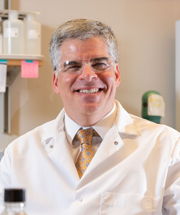
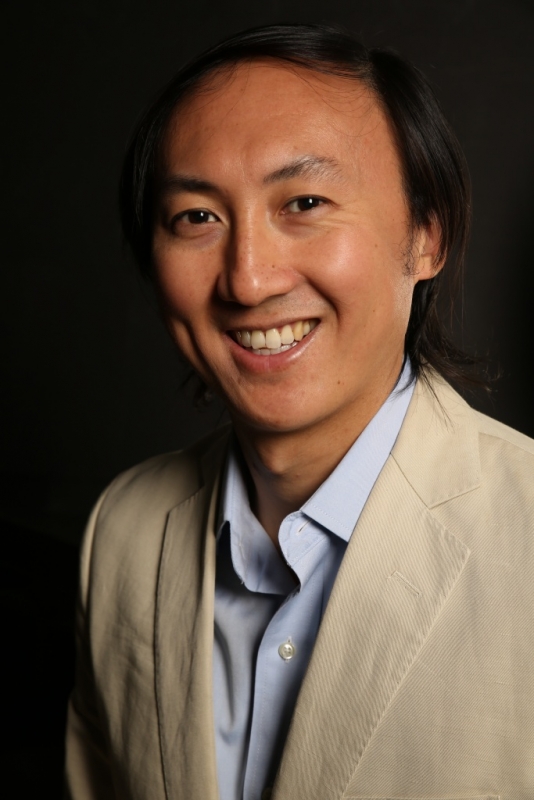
Dr. Wood completed his graduate training at the Massachusetts Institute of Technology. While there he worked under the guidance of Drs. H. Harry Asada and Roger Kamm to develop and use microfluidics to identify mechanisms governing vascular geometry. 

During his postdoc, Dr. Wood worked under Dr. Kevin Haigis (Beth Israel Deaconess Medical Center and Harvard Medical School) and Dr. Douglas Lauffenburger (Massachusetts Institute of Technology) to use systems biology to identify novel signaling mechanisms driving neuronal death in Alzheimer's disease and epithelial cell death during intestinal inflammation.

Associate Professor
Phone
404-385-4465
Office
Petit Biotechnology Building, Office 3303
Additional Research
Our research focuses on applying systems analysis approaches and engineering tools to identify novel clinical therapeutic targets for complex diseases. It is challenging to develop new treatments for these diseases, such as Alzheimer's disease(AD) and Traumatic Brain Injury (TBI), because they do not have a single genetic cause and they simultaneously present broad physiologic changes. By combining novel engineeredin vitroplatforms, mouse models, and multivariate computational systems analysis, we will be able to 1) capture a holistic systems-level understanding of complex diseases, and 2) isolate specific mechanisms driving disease. The ultimate goal of our laboratory is to use these tools to identify new mechanisms driving disease onset and progression that will translate to effective therapeutic strategies.
Google Scholar
https://scholar.google.com/citations?user=iK5nEOYAAAAJ&hl=en
Related Site
Levi
Wood
Show Regular Profile

Shaheen Dewji, Ph.D.

Shaheen Dewji, Ph.D.
shaheen.dewji@gatech.edu

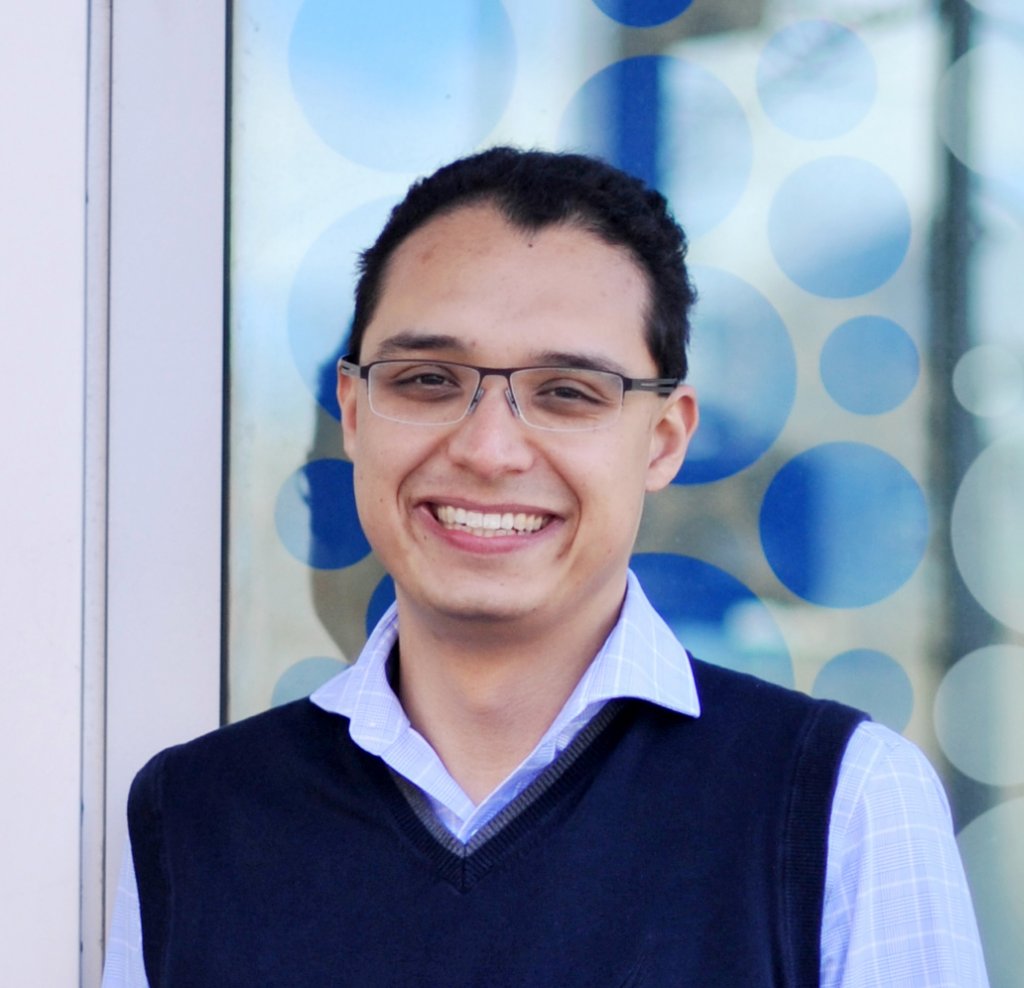
Shaheen Azim Dewji, Ph.D., (she/her/hers) is an Assistant Professor in the Nuclear & Radiological Engineering and Medical Physics Programs at the Georgia Institute of Technology, where she leads the Radiological Engineering, Detection, and Dosimetry (RED²) research group. Dewji joined Georgia Tech following three years as faculty at Texas A&M University in the Department of Nuclear Engineering, and as a Faculty Fellow of the Center for Nuclear Security Science and Policy Initiatives (NSSPI). In her prior role at Oak Ridge National Laboratory, where she remained for almost 9 years, Dewji was Radiological Scientist in the Center for Radiation Protection Knowledge. Her research interests include development of dose coefficients, shielding design, and nuclear material detection assay using gamma-ray spectroscopy. Her recent work has focused on associated challenges in uncertainty quantification in dose estimation/reconstruction associated with the external exposure and internal uptake of radionuclides associated with applications of emergency response, defense, nuclear medicine, and occupational/public safety using Monte Carlo radiation transport codes and internal dose modeling. Dewji completed her Masters and Ph.D. degrees in Nuclear and Radiological Engineering at the Georgia Institute of Technology in Atlanta, GA and was a fellow of the Sam Nunn Security Program. She received her Bachelor of Science in Physics from the University of British Columbia. Dewji currently serves on the National Academies of Science, Engineering, and Medicine – Nuclear and Radiation Studies Board and is a member of the Board of Directors for both the American Nuclear Society and Health Physics Society.
   

Assistant Professor
Phone
404.894.5800
Office
Boggs 3-15
Lab
Shaheen
Dewji
Azim
Show Regular Profile

F. Levent Degertekin

F. Levent Degertekin
levent.degertekin@me.gatech.edu

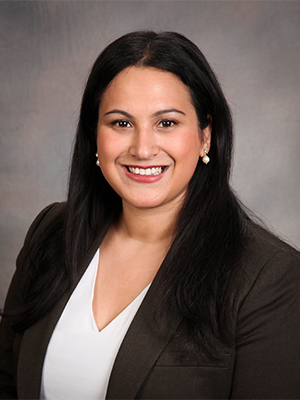
Dr. F. Levent Degertekin received his B.S. degree in 1989 from M.E.T.U, Turkey; M.S. degree in 1991 from Bilkent University, Turkey; and his Ph.D. in 1997 from Stanford University, California, all in electrical engineering. His M.S. thesis was on acoustic microscopy, and his Ph.D. work was on ultrasonic sensors for semiconductor processing, and wave propagation in layered media. He worked as an engineering research associate at the Ginzton Laboratory at Stanford University from 1997 until joining the George W. Woodruff School of Mechanical Engineering at Georgia Tech in spring 2000. 

He has published over 150 papers in international journals and conference proceedings. He holds 20 U.S. patents, and received an NSF CAREER Award for his work on atomic force microscopy in 2004. Dr. Degertekin served on the editorial board of the IEEE Sensors Journal, and on the technical program committees of several international conferences on ultrasonics, sensors, and micro-opto-mechanical systems (MOEMS).

Professor
George W. Woodruff Chair in Mechanical Systems
Phone
404-385-1357
Office
Love 311B
Additional Research

Degertekin's research focuses on understanding of physical phenomena in acoustics and optics, and utilizing this knowledge creatively in the form of microfabricated devices. The research interests span several fields including atomic force microscopy (AFM), micromachined opto-acoustic devices, ultrasound imaging, bioanalytical instrumentation, and optical metrology. Dr. Degertekin's research group, in collaboration with an array of collaborators, has developed innovative devices for applications such as nanoscale material characterization and fast imaging, hearing aid microphones, intravascular imaging arrays for cardiology, bioanalytical mass spectrometry, and microscale parallel interferometers for metrology.

Research Focus Areas
Google Scholar
https://scholar.google.com/citations?user=-WVPmUkAAAAJ&hl=en&oi=sra
LinkedIn Related Site
F. Levent
Degertekin
Show Regular Profile

David Hu

David Hu
hu@me.gatech.edu
HU Laboratory for Biolocomotion

David Hu is a fluid dynamicist with expertise in the mechanics of interfaces between fluids such as air and water. He is a leading researcher in the biomechanics of animal locomotion. The study of flying, swimming and running dates back hundreds of years, and has since been shown to be an enduring and rich subject, linking areas as diverse as mechanical engineering, mathematics and neuroscience. Hu's work in this area has the potential to impact robotics research. Before robots can interact with humans, aid in minimally-invasive surgery, perform interplanetary exploration or lead search-and-rescue operations, we will need a fundamental physical understanding of how related tasks are accomplished in their biological counterparts. Hu's work in these areas has generated broad interest across the fields of engineering, biology and robotics, resulting in over 30 publications, including a number in high-impact interdisciplinary journals such as Nature, Nature Materials, Proceedings of the National Academy of Sciences as well as popular journals such as Physics Today and American Scientist. Hu is on editorial board member for Nature Scientific Reports, The Journal of Experimental Biology, and NYU Abu Dhabi's Center for Center for Creative Design of Materials. He has won the NSF CAREER award, Lockheed Inspirational Young Faculty award, and best paper awards from SAIC, Sigma Xi, ASME, as well as awards for science education such as the Pineapple Science Prize and the Ig Nobel Prize. Over the years, Hu's research has also played a role in educating the public in science and engineering. He has been an invited guest on numerous television and radio shows to discuss his research, including Good Morning America, National Public Radio, The Weather Channel, and Discovery Channel. His ant research was featured on the cover of the Washington Post in 2011. His work has also been featured in The Economist, The New York Times, National Geographic, Popular Science and Discover His laboratory appeared on 3D TV as part of a nature documentary by 3DigitalVision, "Fire ants: the invincible army," available on Netflix.

Professor, George W. Woodruff School of Mechanical Engineering
Professor, School of Biology
Director, Hu Lab for Biolocomotion
Phone
404.894.0573
Office
LOVE 124
Additional Research

Fluid Mechanics: Fluid dynamics, solid mechanics, biomechanics, animal locomotion, and physical applied mathematics. Dr. David Hu's research focuses on fundamental problems of hydrodynamics and elasticity that have bearing on problems in biology. He is interested in the dynamics of interfaces, specifically those associated with fluid-solid and solid-solid interactions. The techniques used in his work include theory, computation, and experiment. He is also interested in pursuing biomimetic technologies based on nature's designs.


Google Scholar
https://scholar.google.com/citations?hl=en&user=pydtIvYAAAAJ&view_op=list_works&sortby=pubdate
ME Profile Page
David
Hu
L.
Show Regular Profile

Peter Hesketh

Peter Hesketh
peter.hesketh@me.gatech.edu
ME Profile Page

Peter Hesketh came to Georgia Tech in spring 2000 as a professor in the George W. Woodruff School of Mechanical Engineering. Prior, he was associate professor at the University of Illinois at Chicago. Hesketh's research interests involve sensors and micro/nano-electro-mechanical Systems (MEMS/NEMS). Many sensors are built by micro/nanofabrication techniques and this provides a host of advantages including lower power consumption, small size and light weight. The issue of manipulation of the sample in addition to introduce it to the chemical sensor array is often achieved with microfluidics technology. Combining photolithographic processes to define three-dimensional structures can accomplish the necessary fluid handling, mixing, and separation through chromatography. Hesketh is also interested in nanosensors, impedance based sensors, miniature magnetic actuators and the use of stereolithography for sensor packaging. He has published over sixty papers and edited fifteen books on microsensor systems.

Professor, Woodruff School of Mechanical Engineering
Phone
404.894.8496
Office
Love 317
Additional Research

Microfabrication; micromachining; sensors and actuators; biosensors; "Dr. Hesketh's research interests are in Sensors and Micro/Nano-electro-mechanical Systems (MEMS/NEMS).Many sensors are built by micro/nanofabrication techniques and this provides a host of advantages including lower power consumption, small size and light weight.The issue of manipulation of the sample in addition to introduce it to the chemical sensor array is often achieved with microfluidics technology.Combining photolithographic processes to define three-dimensional structures can accomplish the necessary fluid handling, mixing, and separation through chromatography.For example, demonstration of miniature gas chromatographyand liquid chromatography with micromachined separation columns demonstrates how miniaturization of chemical analytical methods reduces the separation time so that it is short enough, to consider the measurementequivalentto ""read-time"" sensing. A second focus area is biosensing. Professor Hesketh has worked on a number of biomedical sensors projects, including microdialysis for subcutaneous sampling, glucose sensors, and DNA sensors. Magnetic beads are being investigated as a means to transport and concentrate a target at a biosensor interface in a microfluidic format, in collaboration with scientists at the CDC. His research interests also include nanosensors, nanowire assembly by dielectrophoresis; impedance based sensors, miniature magnetic actuators; use of stereolithography for sensor packaging. He has published over sixty papers and edited fifteen books on microsensor systems."

Google Scholar
https://scholar.google.com/citations?hl=en&user=H41QBFQAAAAJ&view_op=list_works&sortby=pubdate
Peter
Hesketh
J.
Show Regular Profile

Frank Hammond III

Frank  Hammond III
frank.hammond@me.gatech.edu
The Adaptation Robotic Manipulation Laboratory

Frank L. Hammond III joined George W. Woodruff George W. Woodruff School of Mechanical Engineering in April 2015. Prior to this appointment, he was a postdoctoral research affiliate and instructor in the Department of Mechanical Engineering at MIT and a Ford postdoctoral research fellow at the Harvard School of Engineering and Applied Sciences. He received his Ph.D. in 2010 from Carnegie Mellon University.

Assistant Professor, School of Mechanical Engineering
Director, The Adaptation Robotic Manipulation Laboratory
Phone
404.385.4208
Office
UA Whitaker Room 4102
Additional Research

Hammond's research focuses on the design and control of adaptive robotic manipulation (ARM) systems. This class of devices exemplified by kinematic structures, actuation topologies, and sensing and control strategies that make them particularly well-suited to operating in unstructured, dynamically varying environments - specifically those involving cooperative interactions with humans. The ARM device design process uses an amalgamation of bioinspiration, computational modeling and optimization, and advanced rapid prototyping techniques to generate manipulation solutions which are functionally robust and versatile, but which may take completely non-biomorphic (xenomorphic) forms. This design process removes human intuition from the design loop and, instead, leverages computational methods to map salient characteristics of biological manipulation and perception onto a vast robotics design space. Areas of interest for ARM research include kinematically redundant industrial manipulation, wearable robotic devices for human augmentation, haptic-enabled teleoperative robotic microsurgery, and autonomous soft robotic platforms.

Google Scholar
https://scholar.google.com/citations?hl=en&user=H2QWyooAAAAJ&view_op=list_works&sortby=pubdate
LinkedIn ME Profile Page
Frank
Hammond III
L.
Show Regular Profile

Chengzhi Shi

Chengzhi Shi
chengzhi.shi@me.gatech.edu
Departmental Bio

Dr. Shi joined Georgia Tech in August 2018 as an assistant professor. Prior, he worked as a graduate student researcher at the Department of Mechanical Engineering of the University of California, Berkeley and Materials Science Division of Lawrence Berkeley National Laboratory focusing on the study of acoustic angular momentum and the design and realization of acoustic metamaterials and high-speed acoustic communication. His Ph.D. dissertation (2018) focuses on the development of acoustic metamaterials and the physics of the angular momentum of sound. Prior to his Ph.D. study at the Department of Mechanical Engineering of the University of California, Berkeley, Dr. Shi completed his M.S. degree in mechanical engineering at the University of Michigan-Shanghai Jiao Tong University Joint Institute in Shanghai, China. His M.S. thesis (2013) focuses on the dynamics and vibration of cyclically symmetric rotating mechanical systems.

Assistant Professor
Phone
404-894-2558
Office
003 Love Manufacturing Building
Additional Research

Acoustic wave interactions with different cells including neurons, and imaging and treatment techniques resulted from the interactions.

Laboratory Site
Chengzhi
Shi
Show Regular Profile