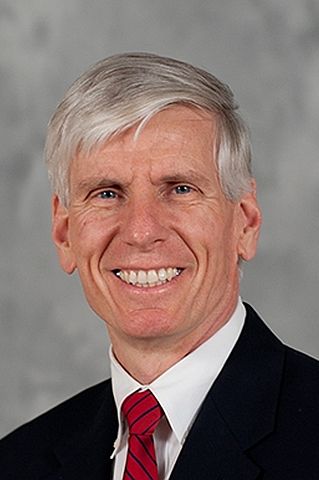
Paul Kohl

Paul Kohl's profile picture
paul.kohl@chbe.gatech.edu
ChBE Profile Page

Paul Kohl received a B.S. degree from Bethany College in 1974 and Ph.D. from The University of Texas, both in Chemistry. After graduation, Kohl was employed at AT&T Bell Laboratories in Murray Hill, NJ from 1978 to 1989. During that time, he was involved in the design and processing of electronic packages for Bell system components. He created new chemical processes for silicon, compound semiconductor, and MEMS devices. In 1989, he joined the faculty of the Georgia Institute of Technology in the School of Chemical and Biomolecular Engineering, where he is currently a Regents' Professor and holder of the Thomas L. Gossage/Hercules Inc. Chair. He is the President of The Electrochemical Society and past Editor of Journal of The Electrochemical Society and past founding editor of Electrochemical and Solid-State Letters. Kohl's research interests include the design of new materials, processes, and packages for advanced interconnect for integrated circuits and MEMS devices. He is the past Director of the Semiconductor Research Corporation/DARPA Interconnect Focus Center. The goal of this center was to create new technological solutions for future electronic devices. Current projects include creation of new photosensitive dielectric materials for electronic packaging and the design and fabrication of MEMS packages. He also has programs in new approaches to fuel cells and lithium batteries. The new direct methanol alkaline fuel cells and hybrid alkaline/acid fuel cells have the potential reduced water management and platinum free usage. The integration of high energy density lithium batteries for self-powered integrated circuits and sensors is of interest. Many of these electrochemical devices use ionic liquids as the electrolytes, including the all-sodium battery. Ionic liquids are also being used as the absorber in a new absorption refrigeration cycle. The first ever ionic liquid/fluorocarbon absorption refrigeration cycle has been demonstrated and modeled.

Regents' Professor and Fellow, School of Chemical and Biomolecular Engineering
Thomas L. Gossage Chair, School of Chemical and Biomolecular Engineering
Phone
404.894.2893
Office
B-H 386
Additional Research

Interconnect and Electronic Packaging; MEMS; Electronic Systems, Devices, Components, & Packaging; Fuel Cells; Separation Membranes
The Kohl Group

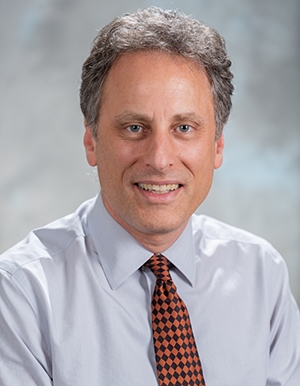
Mark Prausnitz

Mark Prausnitz's profile picture
mark.prausnitz@chbe.gatech.edu
Center for Drug Design, Development and Delivery

Professor Mark R. Prausnitz is a Regents' Professor and the Love Family Professor in Chemical and Bimolecular Engineering in the School of Chemical & Bimolecular Engineering. He received his B.S. in 1988 from Stanford University and his Ph.D. in 1994 from the Massachusetts Institute of Technology. Professor Prausnitz and his colleagues carry out research on biophysical methods of drug delivery, which employ microneedles, ultrasound, lasers, electric fields, heat, convective forces and other physical means to control the transport of drugs, proteins, genes and vaccines into and within the body. A major area of focus involves the use of microneedle patches to apply vaccines to the skin in a painless, minimally invasive manner. In collaboration with Emory University, the Centers for Disease Control and Prevention, and other organizations, Professor Prausnitz's group is advancing microneedles from device design and fabrication through pharmaceutical formulation and pre-clinical animal studies through studies in human subjects. In addition to developing a self-administered influenza vaccine using microneedles, Professor Prausnitz is translating microneedle technology especially to make vaccination in developing countries more effective. The Prausnitz group has also developed hollow microneedles for injection into the skin and into the eye in collaboration with Emory University. In the skin, research focuses on insulin administration to human diabetic patients to increase onset of action by targeting insulin delivery to the skin. In the eye, hollow microneedles enable precise targeting of injection to the suprachoroidal space and other intraocular tissues for minimally invasive delivery to treat macular degeneration and other retinal diseases. Professor Prausnitz and colleagues also study novel mechanisms to deliver proteins, DNA and other molecules into cells. Cavitation bubble activity generated by ultrasound and by laser-excitation of carbon nanoparticles breaks open a small section of the cell membrane and thereby enables entry of molecules, which is useful for gene-based therapies and targeted drug delivery. In addition to research activities, Professor Prausnitz teaches an introductory course on engineering calculations, as well as two advanced courses on pharmaceuticals and technical communication, both of which he developed. He also serves the broader scientific and business communities as a frequent consultant, advisory board member and expert witness.

Faces of Research - Profile Article

Regents' Professor, School of Chemical and Bimolecular Engineering
J. Erskine Love Jr. Chair; Chemical and Biomolecular Engineering
Director, Center for Drug Design, Development and Delivery
Phone
404.894.5135
Office
Petit 1312
Additional Research
Micro and Nano Engineering; Nanomedicine; microneedle patches; Microfabrication; nanoparticle drug delivery
Google Scholar
http://scholar.google.com/scholar?hl=en&q=mark+prausnitz&btnG=Search&as_sdt=80001&as_ylo=&as_vis=0
ChBE Profile Page