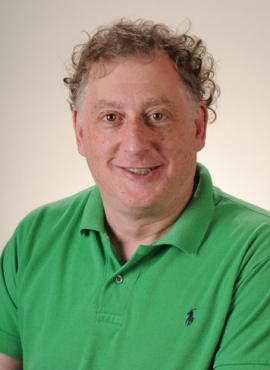
Michael Heiges

Michael Heiges
mike.heiges@gtri.gatech.edu

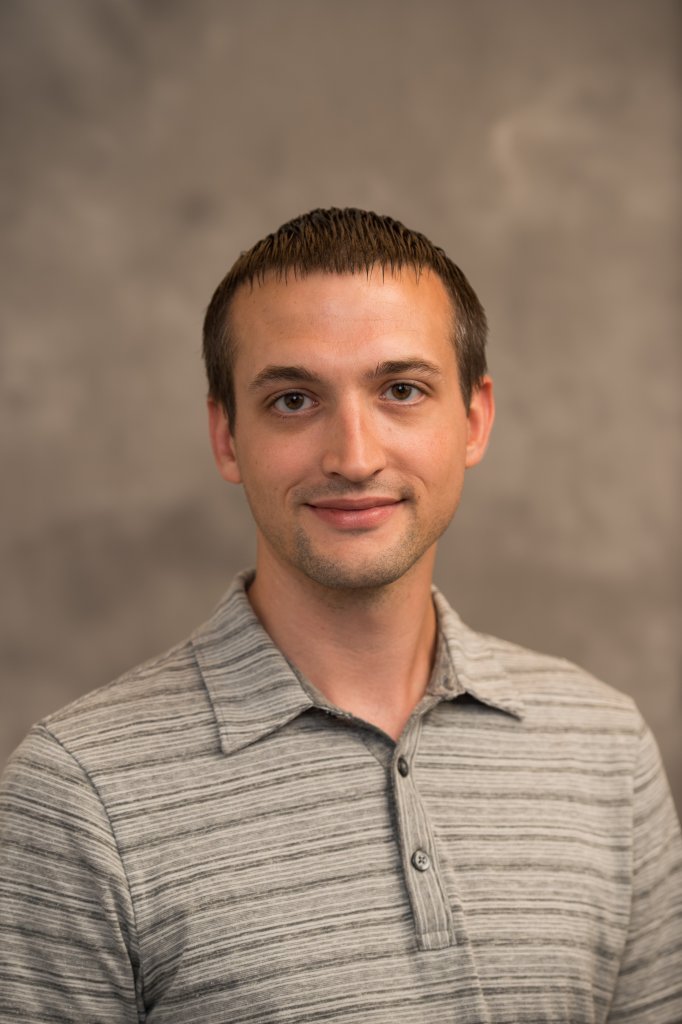
Mike Heiges received the Ph.D. degree from the Georgia Tech School of Aerospace Engineering, in 1989. He is currently a Principal Research Engineer with the Georgia Tech Research Institute, where he works as the Associate Division Chief of the Robotics and Autonomous Systems Division. His background is in aircraft flight dynamics and automatic control and he manages several of GTRI’s swarming UAV programs. He is an Associate Fellow of the American Institute of Aeronautics and Astronautics (AIAA) and a member of the Association for Unmanned Vehicle Systems International (AUVSI).

Senior Research Scientist; Georgia Tech Research Institute
Additional Research

Autonomy

Research Focus Areas
GTRI
Geogia Tech Research Institute > Aerospace, Transportation & Advanced Systems Laboratory
Michael
Heiges
W.
Show Regular Profile

Kok-Meng Lee

Kok-Meng Lee
kokmeng.lee@me.gatech.edu
ME Page

In 1979 Dr. Lee conducted radiation research as an undergraduate assistant at the State University of New York at Buffalo, where he modeled and simulated the nongray particulate radiation in an isothermal cylindrical medium. At MIT, he designed high-performance fluidic amplifiers and fluid signal transmission systems and investigated analytically and experimentally the effects of temperature changes on fluid power control systems for flight backup control applications. Dr. Lee began at Tech in 1985 as an Assistant Professor.

Professor; School of Mechanical Engineering
Director; Advanced Intelligent Mechatronics Research Laboratory (AIMRL)
Phone
404.894.7402
Office
MARC 474
Additional Research

dynamics and control; manufacturing automation; mechatronics; actuators; machine vision

Research Focus Areas
Google Scholar
https://scholar.google.com/citations?hl=en&user=FkuBe4YAAAAJ&view_op=list_works&sortby=pubdate
Advanced Intelligent Mechatronics Research Laboratory (AIMRL)
Kok-Meng
Lee
Show Regular Profile

Fan Zhang

Fan Zhang
fan.zhang@me.gatech.edu
iFAN Lab

Dr. Fan Zhang received her Ph.D. in Nuclear Engineering and M.S. in Statistics from UTK in 2019. She is the recipient of the 2021 Ted Quinn Early Career Award from the American Nuclear Society and joined the Woodruff School in July, 2021. She is actively involved with multiple international collaborations on improving nuclear cybersecurity through the International Atomic Energy Agency (IAEA) and the DOE Office of International Nuclear Security (INS). Dr. Zhang’s research primarily focuses on the cybersecurity of nuclear facilities, online monitoring & fault detection using data analytics methods, instrumentation & control, and nuclear systems modeling & simulation. She has developed multiple testbeds using both simulators and physical components to investigate different aspects of cybersecurity as well as process health management.

Assistant Professor; School of Mechanical Engineering
Phone
404.894.5735
Office
Boggs 371
Additional Research

Research interests include instrumentation & control, autonomous control, cybersecurity, online monitoring, fault detection, prognostics, risk assessment, nuclear system simulation, data-driven models, and artificial intelligence applications.  

Google Scholar
https://scholar.google.com/citations?hl=en&user=9sPScawAAAAJ&view_op=list_works&sortby=pubdate
ME Profile Page
Fan
Zhang
Show Regular Profile

Craig Tovey

Craig Tovey
craig.tovey@isye.gatech.edu
ISyE Profile Page

Craig Tovey is a Professor in the H. Milton Stewart School of Industrial and Systems Engineering at Georgia Tech. He also co-directs CBID, the Georgia Tech Center for Biologically Inspired Design. 

Dr. Tovey's principal research and teaching activities are in operations research and its interdisciplinary applications to social and natural systems, with emphasis on sustainability, the environment, and energy. His current research concerns inverse optimization for electric grid management, classical and biomimetic algorithms for robots and webhosting, the behavior of animal groups, sustainability measurement, and political polarization.  

Dr. Tovey received a Presidential Young Investigator Award in 1985 and the 1989 Jacob Wolfowitz Prize for research in heuristics. He was granted a Senior Research Associateship from the National Research Council in 1990, was named an Institute Fellow at Georgia Tech in 1994, and received the Class of 1934 Outstanding Interdisciplinary Activity Award in 2011. In 2016, Dr. Tovey was recognized by the ACM Special Interest Group on Electronic Commerce with the Test of Time Award for his work as co-author of the paper “How Hard Is It to Control an Election?” He was a 2016 Golden Goose Award recipient for his role on an interdisciplinary team that studied honey bee foraging behavior which led to the development of the Honey Bee Algorithm to allocate shared webservers to internet traffic. 

Dr. Tovey received an A.B. in applied mathematics from Harvard College in 1977 and both an M.S. in computer science and a Ph.D. in operations research from Stanford University in 1981. 

Professor; School of Industrial and Systems Engineering
Phone
404.894.3034
Office
Groseclose 420
Additional Research
  • Algorithms & Optimizations
  • Energy
Research Focus Areas
University, College, and School/Department
Craig
Tovey
Show Regular Profile

Thad Starner

Thad Starner
thad.starner@cc.gatech.edu
Interactive Computing Profile Page

Thad Starner is a Professor at the Georgia Institute of Technology's School of Interactive Computing. Thad was perhaps the first to integrate a wearable computer into his everyday life as an intelligent personal assistant. Starner's work as a Ph.D. student would help found the field of Wearable Computing. His group's prototypes and patents on mobile MP3 players, mobile instant messaging and e-mail, gesture-based interfaces, and mobile context-based search foreshadowed now commonplace devices and services. Thad has authored over 100 scientific publications with over 100 co-authors on mobile Human Computer Interaction (HCI), pattern discovery, human power generation for mobile devices, and gesture recognition, and he is a founder and current co-chair of the IEEE Technical Committee on Wearable Information Systems. His work is discussed in public forums such as CNN, NPR, the BBC, CBS's 60 Minutes, The New York Times, Nikkei Science, The London Independent, The Bangkok Post, and The Wall Street Journal.

Professor; School of Interactive Computing
Additional Research

Wearable Computing; Artificial Intelligence; Augmented Reality; Human Computer Interaction; Ubiquitous Computing

Google Scholar
https://scholar.google.com/citations?hl=en&user=qr8Vo9IAAAAJ&view_op=list_works&sortby=pubdate
Thad
Starner
Show Regular Profile

Mark Riedl

Mark Riedl
riedl@cc.gatech.edu
Departmental Bio

Mark Riedl is an Associate Professor in the Georgia Tech School of Interactive Computing and director of the Entertainment Intelligence Lab. Mark's research focuses on the intersection of artificial intelligence, virtual worlds, and storytelling. The principle research question Mark addresses through his research is: how can intelligent computational systems reason about and autonomously create engaging experiences for users of virtual worlds and computer games. Mark's primary research contributions are in the area of artificial intelligence approaches to automated story generation and interactive storytelling for entertainment, education, and training. Narrative is a cognitive tool used by humans for communication and sense-making. The goal of my narrative intelligence research is to discover new computational algorithms and models that can facilitate the development of intelligent computer systems that can reason about narrative in order to be better communicators, entertainers, and educators. Additionally, Mark has explored the following research topics: virtual cinematography in 3D virtual worlds; player modeling; procedural generation of computer game content; computational creativity; human creativity support; intelligent virtual characters; mixed-initiative problem solving; and discourse generation. Mark earned a Ph.D. degree in 2004 from North Carolina State University. From 2004-2007, Mark was a Research Scientist at the University of Southern California Institute for Creative Technologies where he researched and developed interactive, narrative-based training systems. Mark joined the Georgia Tech College of Computing in 2007 where he continues to study artificial intelligence approaches to story generation, interactive narratives, and adaptive computer games. His research is supported by the NSF, DARPA, the U.S. Army, Google, and Disney. Mark was the recipient of a DARPA Young Faculty Award and an NSF CAREER Award.

Associate Professor & Taetle Chair; School of Interactive Computing
Director; Entertainment Intelligence Lab
Phone
404.385.2860
Office
CODA S1123
Additional Research

Artificial intelligence; Machine Learning; Storytelling; Game AI; Computer Games; Computational Creativity

Google Scholar
https://scholar.google.com/citations?hl=en&user=Yg_QjxcAAAAJ&view_op=list_works&sortby=pubdate
Entertainment Intelligence Lab
Mark
Riedl
Show Regular Profile