Ushering in a New Era of Pediatric Healthcare at Georgia Tech

Stanislav Emelianov

A Georgia Tech biomedicine pioneer is poised to transform pediatric healthcare.

Following an internal search, Stanislav Emelianov, Joseph M. Pettit Endowed Chair, Georgia Research Alliance Eminent Scholar, and professor of electrical and computer engineering and biomedical engineering at Georgia Tech, has been named co-director of the Children’s Healthcare of Atlanta Pediatric Technology Center (PTC).

The PTC is a unique partnership that supports interdisciplinary research among clinicians, engineers, and scientists from Georgia Tech, Children’s, and Emory University. Together, they harness the power of artificial intelligence, data science, and cutting-edge medical devices to address the most pressing challenges in pediatric healthcare.

Emelianov is driven by a profound dedication to improving children's well-being. He said, “I am committed to accelerating pediatric research and innovation at Georgia Tech and Children’s, with a sincere aspiration for the patient-centric PTC to transform pediatric healthcare not only in Atlanta and Georgia but also beyond. Together, we aim to set a new standard, positively impacting the lives of children far and wide.”

Emelianov brings a wealth of experience to the PTC. He has served as the director of Georgia Tech’s Ultrasound Imaging and Therapeutics Research Laboratory since 2015. Among his many accolades and distinctions, he is a nationally renowned trailblazer in advanced imaging methods to diagnose, monitor, and treat cancer and other diseases.

“Professor Emelianov’s history of scholarship and innovation in medical imaging and his vision to engage and support Georgia Tech faculty and students embarking on pediatric research will be a great asset to the Pediatric Technology Center,” said Julia Kubanek, Georgia Tech vice president for Interdisciplinary Research. “We are also enormously grateful to Professor M.G. Finn who has served as the leader of the PTC at Georgia Tech for seven years, building collaborations and enabling our research community to tackle research problems of importance to kids’ health.”

Emelianov will now hold the James A. Carlos Family Chair for Pediatric Technology, which had been held by M.G. Finn since 2017. The proceeds of the chair will be used for research in the PTC. Georgia Tech extends its gratitude to the Carlos family for their generous contributions to pediatrics.

Stanislav Emelianov’s PTC co-director will be appointed by Children’s.

 
News Contact

Michelle Azriel, Institute Communications

Georgia Congressman Tours Georgia Tech’s Advanced Manufacturing Pilot Facility

Congressman Carter toured the facility on April 1, seeing live demonstrations and hearing presentations on the Institute's manufacturing research and workforce development projects.

Congressman Carter toured the facility on April 1, seeing live demonstrations and hearing presentations on the Institute's manufacturing research and workforce development projects.

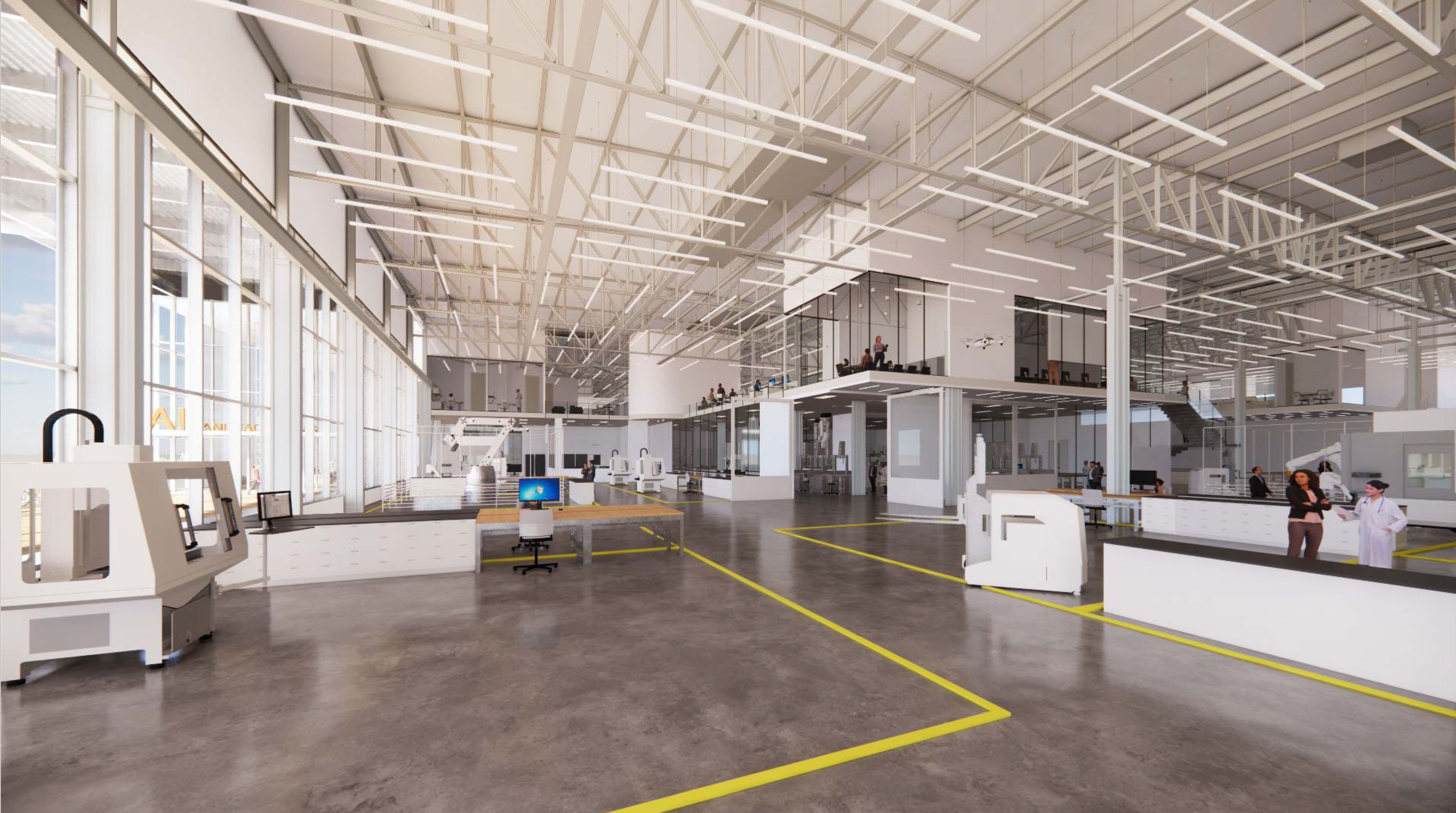
When U.S. Rep. Earl L. “Buddy” Carter from Georgia’s 1st District visited Atlanta recently, one of his top priorities was meeting with the experts at Georgia Tech’s 20,000-square-foot Advanced Manufacturing Pilot Facility (AMPF).

Carter was recently named the House Energy and Commerce Committee’s chair of the Environment, Manufacturing, and Critical Materials Subcommittee, a group that concerns itself primarily with contamination of soil, air, noise, and water, as well as emergency environmental response, whether physical or cybersecurity.

Because AMPF’s focus dovetails with subcommittee interests, the facility was a fitting stop for Carter, who was welcomed for an afternoon tour and series of live demonstrations. Programs within Georgia Tech’s Enterprise Innovation Institute — specifically the Georgia Artificial Intelligence in Manufacturing (Georgia AIM) and Georgia Manufacturing Extension Partnership (GaMEP) — were well represented.

“Innovation is extremely important,” Carter said during his April 1 visit. “In order to handle some of our problems, we’ve got to have adaptation, mitigation, and innovation. I’ve always said that the greatest innovators, the greatest scientists in the world, are right here in the United States. I’m so proud of Georgia Tech and what they do for our state and for our nation.”

Carter’s AMPF visit began with an introduction by Thomas Kurfess, Regents' Professor and HUSCO/Ramirez Distinguished Chair in Fluid Power and Motion Control in the George W. Woodruff School of Mechanical Engineering and executive director of the Georgia Tech Manufacturing Institute; Steven Ferguson, principal research scientist and managing director at Georgia AIM; research engineer Kyle Saleeby; and Donna Ennis, the Enterprise Innovation Institute’s director of community engagement and program development, and co-director of Georgia AIM.

Ennis provided an overview of Georgia AIM, while Ferguson spoke on the Manufacturing 4.0 Consortium and Kurfess detailed the AMPF origin story, before introducing four live demonstrations.

The first of these featured Chuck Easley, Professor of the Practice in the Scheller College of Business, who elaborated on supply chain issues. Afterward, Alan Burl of EPICS: Enhanced Preparation for Intelligent Cybermanufacturing Systems and mechanical engineer Melissa Foley led a brief information session on hybrid turbine blade repair.

Finally, GaMEP project manager Michael Barker expounded on GaMEP’s cybersecurity services, and Deryk Stoops of Central Georgia Technical College detailed the Georgia AIM-sponsored AI robotics training program at the Georgia Veterans Education Career Transition Resource (VECTR) Center, which offers training and assistance to those making the transition from military to civilian life.

The topic of artificial intelligence, in all its subtlety and nuance, was of particular interest to Carter.

“AI is the buzz in Washington, D.C.,” he said. “Whether it be healthcare, energy, [or] science, we on the Energy and Commerce Committee look at it from a sense [that there’s] a very delicate balance, and we understand the responsibility. But we want to try to benefit from this as much as we can.”

“I heard something today I haven’t heard before," Carter continued, "and that is instead of calling it artificial intelligence, we refer to it as ‘augmented intelligence.’ I think that’s a great term, and certainly something I’m going to take back to Washington with me.”

“It was a pleasure to host Rep. Carter for a firsthand look at AMPF," shared Ennis, "which is uniquely positioned to offer businesses the opportunity to collaborate with Georgia Tech researchers and students and to hear about Georgia AIM.

“At Georgia AIM, we’re committed to making the state a leader in artificial intelligence-assisted manufacturing, and we’re grateful for Congressman Carter’s interest and support of our efforts."


News Contact

Eve Tolpa
Senior Writer/Editor
Enterprise Innovation Institute (EI2)

NIH awards $2.9M to Annoviant to advance heart disease technology

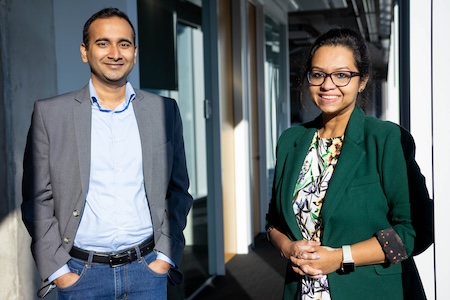
Headshots of the two co-founders.

Annoviant co-founders Ajay Houde and Naren Vyavahare, CEO and chief technology officer, respectively.

ATLANTA — Annoviant Inc. a health technology company and member startup in the Center for MedTech Excellence at Georgia Tech's Enterprise Innovation Institute, is receiving a $2.99 million National Institutes of Health (NIH) grant to further scale the development and commercialization of its TxGuard™ pulmonary-valved conduit for pediatric heart disease.

The award follows two Phase I NIH grants the company received, the most recent being in 2021.

Annoviant's patented TxGuard™ stands at the forefront of technological innovation in conduit replacements for treating congenital heart disease (CHD), the most prevalent birth defect globally and a leading cause of birth-related mortality, the company said.

CHD encompasses a broad range of abnormalities that disrupt blood flow to and from the heart. It affects approximately 40,000 newborns annually — or 1% of births in the U.S. — and 1.35 million worldwide. With an estimated 2.9 million CHD patients in the U.S. alone, the need for advanced solutions is paramount.

"This marks a significant milestone for Annoviant as we accelerate our pursuit of impactful innovation to save lives," said Annoviant CEO and co-founder Ajay Houde, Ph.D. "It validates our hypothesis and shows the NIH's confidence in our ability to make good progress. Because we are a small startup, it gives private investors the confidence to invest with us and more companies working with us across the broader ecosystem."

Addressing critical shortcomings observed in current commercial devices, TxGuard™ offers clinical advantages, notably its resistance to calcification, thrombosis, infection, and the host cell integration. This cutting-edge technology marks a new era in pediatric cardiac interventions, providing durable pulmonary valved grafts that adapt and regenerate alongside patients, minimizing the need for multiple re-operations over their lifetimes.

"Heart disease is the leading killer of men and women in the U.S. and is the most common birth defect in our newborns," said Center for MedTech Excellence Director Nakia Melecio, who worked with Annoviant to help it scale and reviewed its federal funding submissions.

The Center for MedTech Excellence, which launched in 2022, works with early-stage life sciences startups that have specific obstacles that young tech companies in other sectors don't face.

"This is a critical milestone for the company, and validates its research and work, thus far," Melicio said. "Annoviant's technology is tackling several challenges that the market currently faces and elevating the possibility for better patient outcomes in management of congestive heart failure."

Pediatric patients with CHD often undergo multiple cardiovascular surgeries throughout their lives, with associated costs totaling billions for the U.S. healthcare industry. TxGuard™ offers a transformative solution to this ongoing challenge, promising extended durability and reduced healthcare burden for patients and providers alike.

He credited the company's work with the Center for MedTech Excellence and being a health tech startup in the Advanced Technology Development Center (ATDC), the Enterprise Innovation Institute's startup incubator, as being pivotal in Annoviant's growth.

ATDC SBIR/STTR Catalyst Connie Casteel, who works with the incubator's portfolio companies to help the prepare for these federal, non-dilutive funding grants, had worked with Annoviant on its federal funding approach and strategy.

"We went through the 16-week program with the MedTech Center and it really helped us think through the various aspects of the commercialization process and operational challenges we would face," Houde said. "Greg Jungles at ATDC was also instrumental in helping us.  I'm really thankful for Nakia and his work with the MedTech Center and Greg and the team at ATDC."

 
News Contact

Péralte C. Paul
peralte@gatech.edu
404.316..1210

New Strategic Design Approach Focuses on Turning AI Mistakes into User Benefits

Two people discuss a loan application

More and more often, automated lending systems powered by artificial intelligence (AI) reject qualified loan applicants without explanation.

Even worse, they leave rejected applicants with no recourse.

People can have similar experiences when applying for jobs or petitioning their health insurance providers. While AI tools determine the fate of people in difficult situations daily, Upol Ehsan says more thought should be given to challenging these decisions or working around them.

Ehsan, a Georgia Tech explainable AI (XAI) researcher, says many rejection cases are not the applicant’s fault. Rather, it’s more likely a “seam” in the design process — a mismatch between what designers thought the AI could do and what happens in reality.

Ehsan said “seamless design” is the standard practice of AI designers. While the goal is to create a process by which users get what they need without interruption or barriers, seamless design has a way of doing just the opposite. 

No amount of thought or design input will keep AI tools from making mistakes. When mistakes happen, those impacted by them want to know why they happened.

Because seamless design often includes black-boxing — the act of concealing the AI’s reasoning — answers are never provided.

But what if there were a way to challenge an AI’s decisions and turn its mistakes into benefits for end users? Ehsan believes that can be done through “seamful design.”

n his latest paper, Seamful Explainable AI: Operationalizing Seamful Design in XAI, Ehsan proposes a strategic way of anticipating AI harms, learning their reasonings, and leveraging mistakes instead of concealing them. 

GIVING USERS MORE OPTIONS

In his research, Ehsan worked with loan officers who used automated lending support systems. The seams, or flaws, he discovered in these tools’ processes impacted applicants and lenders.

“The expectation is that the lending system works for everyone,” Ehsan said. “The reality is that it doesn’t. You’ve found the seam once you’ve figured out the difference between expectation and reality. Then we ask, ‘How can we show this to end users so they can leverage it?’”

To give users options when AI negatively impacts them, Ehsan suggests three things for designers to consider:

  • Actionability: Does the information about the flaw help the user take informed actions on the AI’s recommendation?
  • Contestability: Does the information provide the resources necessary to justify saying no to the AI?
  • Appropriation: Does identifying these seams help the user to adapt and appropriate the AI’s output in a way that is different from the provided design but helps the user make the right decision?

Ehsan uses the example of someone who was rejected for a loan despite having a good credit history. The rejection may have been due to a seam, such as a flawed discriminating algorithm, in the AI that screens the applications.

A post-deployment process is needed in cases like this to mitigate damage and empower affected end users. Loan applicants, for instance, should be allowed to contest the AI’s decision based on known issues with an algorithm. 

AGAINST THE GRAIN

Ehsan said his idea for seamful design is outside of the mainstream vernacular. However, his challenge to current accepted principles is gaining traction.

He is now working with cybersecurity, healthcare, and sales companies that are adopting his process.

These companies may pioneer a new way of thinking in AI design. Ehsan believes this new mindset can allow designers to switch to a proactive mindset instead of being stuck in a reactive state of conducting damage control.

“You want to stay a little ahead of the curve so you’re not always caught off guard when things happen,” Ehsan said. “The more proactive you can be and the more passes you can take at your design process, the safer and more responsible your systems will be.”

Ehsan collaborated with researchers from Georgia Tech, the University of Maryland, and Microsoft. They will present their paper later this year at the 2024 Association for Computing Machinery’s Conference on Computer-Supported Cooperative Work and Social Computing (CSCW) in Costa Rica. 

“Seamful design embraces the imperfect reality of our world and makes the most out of it,” he said. “If it becomes mainstream, it can help us address the hype cycle AI suffers from now. We don’t need to overhype AI’s capacity or impose unachievable goals. That’d be a gamechanger in calibrating people’s trust in the system.” 

 
News Contact

Nathan Deen

Communications Officer I

School of Interactive Computing

Researchers Blazing New Trails with Superchip Named After Computing Pioneer

NVIDIA GH200 Grace Hopper Superchip

Computing research at Georgia Tech is getting faster thanks to a new state-of-the-art processing chip named after a female computer programming pioneer.

Tech is one of the first research universities in the country to receive the GH200 Grace Hopper Superchip from NVIDIA for testing, study, and research.

Designed for large-scale artificial intelligence (AI) and high-performance computing applications, the GH200 is intended for large language model (LLM) training, recommender systems, graph neural networks, and other tasks. 

Alexey Tumanov and Tushar Krishna procured Georgia Tech’s first pair of Grace Hopper chips. Spencer Bryngelson attained four more GH200s, which will arrive later this month.

“We are excited about this new design that puts everything onto one chip and accessible to both processors,” said Will Powell, a College of Computing research technologist.

“The Superchip’s design increases computation efficiency where data doesn’t have to move as much and all the memory is on the chip.” 

A key feature of the new processing chip is that the central processing unit (CPU) and graphics processing unit (GPU) are on the same board.

NVIDIA’s NVLink Chip-2-Chip (C2C) interconnect joins the two units together. C2C delivers up to 900 gigabytes per second of total bandwidth, seven times faster than PCIe Gen5 connections used in newer accelerated systems.  

As a result, the two components share memory and process data with more speed and better power efficiency. This feature is one that the Georgia Tech researchers want to explore most.

Tumanov, an assistant professor in the School of Computer Science, and his Ph.D. student Amey Agrawal, are testing machine learning (ML) and LLM workloads on the chip. Their work with the GH200 could lead to more sustainable computing methods that keep up with the exponential growth of LLMs.

The advent of household LLMs, like ChatGPT and Gemini, pushes the limit of current architectures based on GPUs. The chip’s design overcomes known CPU-GPU bandwidth limitations. Tumanov’s group will put that design to the test through their studies. 

Krishna is an associate professor in the School of Electrical and Computer Engineering and associate director of the Center for Research into Novel Computing Hierarchies (CRNCH).

His research focuses on optimizing data movement in modern computing platforms, including AI/ML accelerator systems. Ph.D. student Hao Kang uses the GH200 to analyze LLMs exceeding 30 billion parameters. This study will enable labs to explore deep learning optimizations with the new chip.  

Bryngelson, an assistant professor in the School of Computational Science and Engineering, will use the chip to compute and simulate fluid and solid mechanics phenomena. His lab can use the CPU to reorder memory and perform disk writes while the GPU does parallel work. This capability is expected to significantly reduce the computational burden for some applications.

“Traditional CPU to GPU communication is slower and introduces latency issues because data passes back and forth over a PCIe bus,” Powell said. “Since they can access each other’s memory and share in one hop, the Superchip’s architecture boosts speed and efficiency.” 

Grace Hopper is the inspirational namesake for the chip. She pioneered many developments in computer science that formed the foundation of the field today.  

Hopper invented the first compiler, a program that translates computer source code into a target language. She also wrote the earliest programming languages, including COBOL, which is still used today in data processing. 

Hopper joined the U.S. Navy Reserve during World War II, tasked with programming the Mark I computer. She retired as a rear admiral in August 1986 after 42 years of military service.

Georgia Tech researchers hope to preserve Hopper’s legacy using the technology that bears her name and spirit for innovation to make new discoveries.

“NVIDIA and other vendors show no sign of slowing down refinement of this kind of design, so it is important that our students understand how to get the most out of this architecture,” said Powell. 

“Just having all these technologies isn’t enough. People must know how to build applications in their coding that actually benefit from these new architectures. That is the skill.” 

Will Powell NVIDIA GH200 Grace Hopper Superchip
 
News Contact

Bryant Wine, Communications Officer
bryant.wine@cc.gatech.edu

Grappling With Uncertainty Amid Cyberattacks

Ryan Shandler

Ryan Shandler's latest study looks at the effects of uncertainty on the public following a cyberattack.

“What I’ve repeatedly found is that people are terrified of cyberattacks, because, frankly, cyberattacks are scary,” said Ryan Shandler, assistant professor of political science in Georgia Tech’s School of Cybersecurity and Privacy, where his research focuses on how people react to cyberattacks. “People don’t fully understand them. They don’t know who’s behind them.”

Shandler’s latest study looks at the effect this uncertainty has on public opinion after a cyber incident.

“When faced with the unknown, people conjure visions of doom, where one bad guy in his mom’s basement clicks a button and takes over the world.”

According to Shandler, even a minor cyberattack can generate the kind of fear that “changes world views or causes people to vote a certain way, sacrificing their civil liberties for security and surveillance, regardless of how intrusive.” By way of example, Shandler refers to a digital mishap hyperbolically reported as a major cyberattack on a Florida water plant that actually resulted from an employee mistake.

“These reactions from the general public, even when they don’t know who is behind an attack, can have strong political and societal consequences,” he said.

Shifting the Focus

Sometimes he refers to this uncertainty as “a shadow of ambiguity.” Shandler and his collaborators have added a new element to the body of cyber-conflict literature, most of which deals with ambiguity from an operational or strategic perspective. His team has written an article for a special issue of the Journal of Peace Research that focuses on the uncertainty surrounding cybersecurity incidents. Shandler also co-edited the issue.

The researchers surveyed 2,025 participants, who were asked to evaluate potential cyber threat scenarios and decide on various retaliatory measures.

A typical question presented two scenarios positing a cyberattack on the U.S. In one, intelligence sources might be 70% certain that China was the perpetrator; in the other, intelligence might be 40% certain it was caused by the United Kingdom. Other options in the scenario included the proposed means of retaliation and the chance of conflict escalation. Participants were asked which strategic course they preferred — whether to retaliate and, if so, against whom.

“As the government’s certainty percentage goes down, the level of support for retaliation goes down, which is unsurprising,” said Shandler, whose collaborators on the study were Nathaniel Porter of Virginia Tech and Eric Jardine of cybersecurity firm Chainalysis. “But when we dig a little deeper, we can see that it depends on who the other country is. If we’re 50% sure China is behind it, we tend to lean more toward retaliation than if we’re 50% sure that England is behind it.”

Mental Shortcuts

Faced with the complexities of cyberspace and the potential threats inhabiting it, most people will fall back on mental shortcuts when forced to decide in the face of uncertainty, the researchers assert. As such, perceptions of countries as adversaries or allies play a role in decision-making.

Political partisanship also played a role in how people responded to the scenarios. For Republicans, the perception of another country as an ally or rival mattered more than it did for Democrats. This also wasn’t particularly astonishing to the researchers.

“We didn’t want to guess — we wanted to find out how people react when faced with the ambiguity of a cyberattack,” Shandler said. He and his colleagues hoped to identify what they called a “certainty threshold.”

That is, they wanted to answer a basic question: How sure do authorities need to be about the perpetrator to gain public support for economic, diplomatic, or military responses?  After gathering and crunching the numbers, the researchers put the threshold at 60% certainty, though it shifts depending on the identity of the presumed attacker.

Shandler’s colleagues in the School of Cybersecurity and Privacy are mostly computer scientists who work in bits, bytes, and rational logic — everything is mapped out and orderly, unlike human beings, who aren’t logical or rational.

“People are not computer code. We’re messy, emotional, and use mental shortcuts to make decisions,” Shandler said. “So, we thought a human analysis of the uncertainty that is so much a part of cyberspace would be a good idea.”

Ultimately, Shandler hopes his research will force policymakers and national security officials to pay more attention to the way the public experiences cyber threats, because voters won’t write a blank check and support retaliation in response to every attack.

“When states volley cyberattacks back and forth, the public gets caught in the crossfire, and they need to be a stakeholder in decisions about how to react,” he said.

Authorities should be more open with the public, he added. That would go a long way toward demystifying cyberattacks and avoiding the potential of a mass panic.

“In my experience, mystifying the situation is how we get to the theories of cyber doom and Armageddon and Mission Impossible and the robots coming to get us,” Shandler said. “I think what people are imagining is much worse than the reality. It’s the lack of information that scares them.”

CITATION: Eric Jardine, Nathaniel Porter, Ryan Shandler. "Cyberattacks and public opinion – The effect of uncertainty in guiding preferences," Journal of Peace Researchdoi.org/10.1177/0022343323121


News Contact

How Different Fields Are Using GenAI to Redefine Roles

headshot of Maryam Alavi

There is an expectation that implementing new and emerging Generative AI (GenAI) tools enhances the effectiveness and competitiveness of organizations. This belief is evidenced by current and planned investments in GenAI tools, especially by firms in knowledge-intensive industries such as finance, healthcare, and entertainment, among others. According to forecasts, enterprise spending on GenAI will increase by two-fold in 2024 and grow to $151.1 billion by 2027.

However, the path to realizing return on these investments remains somewhat ambiguous. While there is a history of efficiency and productivity gains from using computers to automate large-scale routine and structured tasks across various industries, knowledge and professional jobs have largely resisted automation. This stems from the nature of knowledge work, which often involves tasks that are unstructured and ill-defined. The specific input information, desired outputs, and/or the processes of converting inputs to outputs in such tasks are not known a priority, which consequently has limited computer applications in core knowledge tasks.

GenAI tools are changing the business landscape by expanding the range of tasks that can be performed and supported by computers, including idea generation, software development, and creative writing and content production. With their advanced human-like generative abilities, GenAI tools have the potential to significantly enhance the productivity and creativity of knowledge workers. However, the question of how to integrate GenAI into knowledge work to successfully harness these advantages remains a challenge. Dictating the parameters for GenAI usage via a top-down approach, such as through formal job designs or redesigns, is difficult, as it has been observed that individuals tend to adopt new digital tools in ways that are not fully predictable. This unpredictability is especially pertinent to the use of GenAI in supporting knowledge work for the following reasons.

Continue reading: How Different Fields Are Using GenAI to Redefine Roles

Reprinted from the Harvard Business Review, March 25, 2024

Maryam Alavi is the Elizabeth D. & Thomas M. Holder Chair & Professor of IT Management, Scheller College of Business, Georgia Institute of Technology.

 
News Contact

Lorrie Burroughs

Advancing Clean Energy: Georgia Tech Hosts Energy Materials Day

Chaouki Abdallah speaking at the Georgia Tech Energy Materials Day

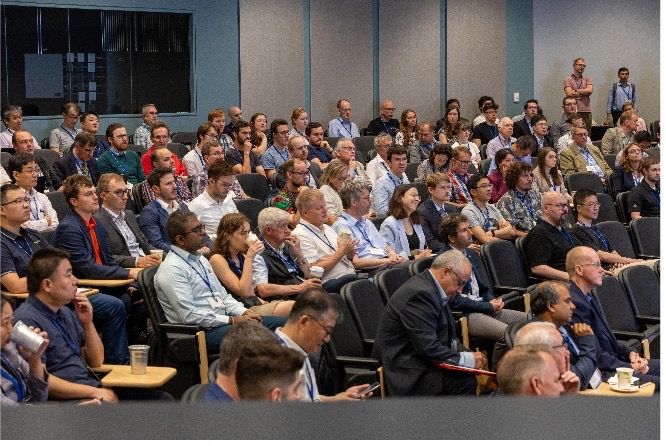
More than 400 people participated in Energy Materials Day on March 27, as researchers and industry leaders came together to discuss and advance energy materials technologies such as solar energy, carbon-neutral fuels, and batteries.

Energy materials are the things — natural, manufactured, or both — that aid the use of energy. They also play a key role in developing cleaner, more efficient energy solutions.

Energy Materials Day was co-hosted by Georgia Tech’s Strategic Energy Institute (SEI), the Institute for Materials (IMat), and the Georgia Tech Advanced Battery Center. The event evolved out of last year’s Georgia Tech Battery Day.

“As an engine of innovation in science and technology, Georgia Tech has incredible opportunities and the responsibility to conduct research to benefit society,” said Chaouki Abdallah, executive vice president for Research at Georgia Tech. “We call this ‘research that matters.’”

Events like Energy Materials Day are part of an ongoing, long-range effort to position Georgia Tech, and Georgia, as a go-to location for modern energy companies. Tech was recently ranked by U.S. News & World Report as the top public university for energy research. Abdallah also outlined why Georgia Tech, with more than 1,000 researchers across campus working in the energy space, is a natural fit for events that foster collaboration between the public and private sectors.

“Right here, right now, we have the opportunity to harness our collective powers, our collective knowledge, our collective resources to become a global engine of innovation,” he said.

Plenary speaker Danielle Merfeld, global chief technology officer at QCells, highlighted opportunities for the current and future clean energy infrastructure in the United States.

"At the heart of our discussions today [are these questions]: What is new technology, and how do you make it ... and make it at scale, in an affordable, accessible, and reliable way?” she said.

"... [The] good news is this country has taken a very deliberate step toward creating the most robust industrial policy we've had in decades. ... This is driving opportunity and creating the foundation for manufacturing. So, [we can] use that industrial base of making and consuming power [and] decarbonize the electric grid by 2035...."

“Events like this are so important to forwarding progress in research and industry,” said Eric Vogel, IMat’s executive director. “It’s important to bring together professionals throughout the industry to keep these lines of communication open.”

The day was divided into three tracks: battery materials and technologies, photovoltaics and the grid, and materials for carbon-neutral fuel production. Attendees were encouraged to listen to talks from all three areas. Each track included academic speakers who shared their research and private-sector speakers who described how technological advancements are affecting the industry.

“With its rich history in energy research, Georgia Tech remains a leader in addressing global energy challenges,” said Tim Lieuwen, executive director of SEI. “The success of Energy Materials Day is encouraging, and I eagerly anticipate continuing these discussions in 2025.”

Danielle Merfeld presents the keynote at Energy Materials Day
 
News Contact

Amelia Neumeister
Research Communications Program Manager

Georgia Tech Unveils New AI Makerspace in Collaboration with NVIDIA

Some of the NVIDIA computer hardware in Georgia Tech's new AI Makerspace.

The Georgia Tech AI Makerspace is a supercomputer hub dedicated exclusively to teaching students. The first phase of the endeavor is powered by 20 NVIDIA HGX H100 systems, housing 160 NVIDIA H100 Tensor Core GPUs (graphics processing units), one of the most powerful computational accelerators capable of enabling and supporting advanced AI and machine learning efforts. (Photo: Candler Hobbs)

Georgia Tech’s College of Engineering has established an artificial intelligence supercomputer hub dedicated exclusively to teaching students. The initiative — the AI Makerspace — is launched in collaboration with NVIDIA. College leaders call it a digital sandbox for students to understand and use AI in the classroom

Initially focusing on undergraduate students, the AI Makerspace aims to democratize access to computing resources typically reserved for researchers or technology companies. Students will access the cluster online as part of their coursework, deepening their AI skills through hands-on experience. The Makerspace will also better position students after graduation as they work with AI professionals and help shape the technology’s future applications.

“The launch of the AI Makerspace represents another milestone in Georgia Tech’s legacy of innovation and leadership in education,” said Raheem Beyah, dean of the College and Southern Company Chair. “Thanks to NVIDIA’s advanced technology and expertise, our students at all levels have a path to make significant contributions and lead in the rapidly evolving field of AI.”

Read the full story on the College of Engineering website.

 
News Contact

Jason Maderer, College of Engineering

Georgia Tech Partners with The Carter Center to Support Guinea Worm Disease Eradication

A dog in Chad is tethered to prevent the spread of Guinea worm disease. The number of human and animal cases of the disease in Chad dropped by 27% from 2021 to 2022. [Courtesy of Carter Center]

A dog in Chad is tethered to prevent the spread of Guinea worm disease. The number of human and animal cases of the disease in Chad dropped by 27% from 2021 to 2022.

Photo Courtesy of the Carter Center

Georgia Institute of Technology (Georgia Tech) researchers have teamed up with The Carter Center to support dracunculiasis eradication efforts, using mathematical modeling and analytics. Dracunculiasis, or Guinea worm disease (GWD), is caused by the parasite Dracunculus medinensis. Currently, there is no diagnostic test to detect pre-patent infection, no vaccine, and no treatment for GWD. Eradication efforts focus on community-based surveillance, health education, targeted treatment of water sources with larvicide, and most importantly, behavioral changes, such as filtering drinking water and preventing humans and animals, mainly domesticated dogs with emerging worms, from entering and contaminating water sources.  “Given the year-long life-cycle of the disease, mathematical modeling is a valuable tool for fine-tuning interventions and evaluating resource allocation decisions,” said Pinar Keskinocak, professor in the School of Industrial and Systems Engineering (ISyE) and the director of the Center for Health and Humanitarian Systems.

Disease Dynamics

Dracunculus medinensis is a parasite that infects in a vicious cycle. When a human or animal host  ingests either water contaminated with infective Guinea worm larvae or raw or undercooked aquatic animals that harbor the infectious larvae, the larvae mate in the host’s body, and, after 10-14 months, a pregnant female worm that can be as long as one meter emerges slowly and painfully from the host’s body. To seek relief, the host might immerse the affected body part into a water source (e.g., a pond), releasing the worm’s larvae into the water source, contaminating it, and continuing the infection cycle. In particular, worms emerging from dogs can contaminate drinking water sources used by people and in turn, lead to infection of people or other dogs in the community. 

Progress Toward GWD Eradication

GWD eradication efforts worldwide have been supported by the collaboration of many entities, including The Carter Center, ministries of health in endemic countries, WHO, CDC, UNICEF, and others. Since 1986, The Carter Center has led the international Guinea worm eradication campaign, which has eliminated the ancient disease in 16 countries in Africa and Asia. In 2022, Guinea worm was reported in five African countries.

Together with The Carter Center and Chad’s national Guinea Worm Eradication Program, Georgia Tech researchers have developed an agent-based simulation model that incorporates the life-cycle of the worm, daily interactions between dogs and water sources, seasonality of infections, and environmental factors such as rainfall and temperature. The models can also capture the influence of dog movement between multiple regions/water sources. Using these mathematical models in a wide range of simulated scenarios, the researchers evaluated the impact of combinations of interventions (such as water treatment or tethering of dogs). The results from the simulated scenarios suggest that historical levels of interventions in Chad, even when adjusted to regional differences, might not be sufficient to interrupt GWD transmission in dogs within the next five years. Hence, there is a need to improve intervention implementation fidelity, adjust implementation approaches, or implement new interventions.

GWD Eradication Onward

New interventions, such as a diagnostic test that can detect pre-patent infection, could help accelerate the progress toward eradication.  To guide research and development of such a test, WHO initiated the development of target product profiles (TPPs), outlining preferred and minimally acceptable criteria for novel diagnostic tests, which could be, according to WHO, “a game changer in speeding up a global eradiation of the parasite.”

Georgia Tech researchers adapted an agent-based simulation model and evaluated a wide range of scenarios to assess the impact of a new diagnostic test to detect pre-patent infection in dogs on the disease spread. In the mathematical model, each dog is represented by an "agent," which mimics the dog behavior, their interactions with the water source, and the progression of the disease within a dog.

In the absence of a treatment for GWD, the research results quantify the impact of the diagnostic accuracy (sensitivity and specificity) of the test, but also emphasize the importance of rollout decisions and the compliance of dog owners with the recommended tethering practices. “The potential benefits of testing depend on test accuracy, but also on several other factors, e.g., how the test is deployed, and how it affects owners’ behaviors regarding tethering of dogs with positive or negative test results,” said Hannah Smalley, a research engineer in ISyE. “For example, even if the test could detect pre-patent infections in dogs with perfect accuracy, if dogs are not tested frequently enough, or if owners do not consistently tether test-positive dogs, then the impact of such a diagnostic test could be limited.” The timing of when, i.e., how far in advance of worm emergence, the test can detect pre-patent infection is also important. For example, if the test could not only detect pre-patent infection but also accurately estimate the timing of worm emergence, this could increase the owners’ compliance with tethering recommendations during the time period leading to estimated worm emergence, reduce the need for long-term tethering, and reduce the resources (human and financial) needed to support the intervention.

Recommendations from the research are included in the WHO’s TPP for a diagnostic test to detect pre-patent Guinea worm infections in animals. “This important research highlights how a novel diagnostic test that can detect pre-patent Guinea worm infections could help, especially if used in conjunction with existing interventions,” said Adam Weiss [Director of The Carter Center’s Guinea Worm Eradication Program], “and we are looking forward to continuing our collaborations with Georgia Tech as a means to support GWD eradication efforts.”

“Potential Impact of a Diagnostic Test for Detecting Prepatent Guinea Worm Infections in Dogs,” Hannah Smalley, Pinar Keskinocak, Julie Swann, Christopher Hanna, and Adam Weiss, The American Journal of Tropical Medicine and Hygiene, 2024, DOI: https://doi.org/10.4269/ajtmh.23-0534

Meeting of Program Managers

Guinea Worm Eradication Program, 27th International Review Meeting of Program Managers, The Carter Center

 
News Contact

Media Contact: Tess Malone, Senior Research Writer/Editor

tess.malone@gatech.edu