
Advancing the Microelectronics Workforce Through Specialized Training

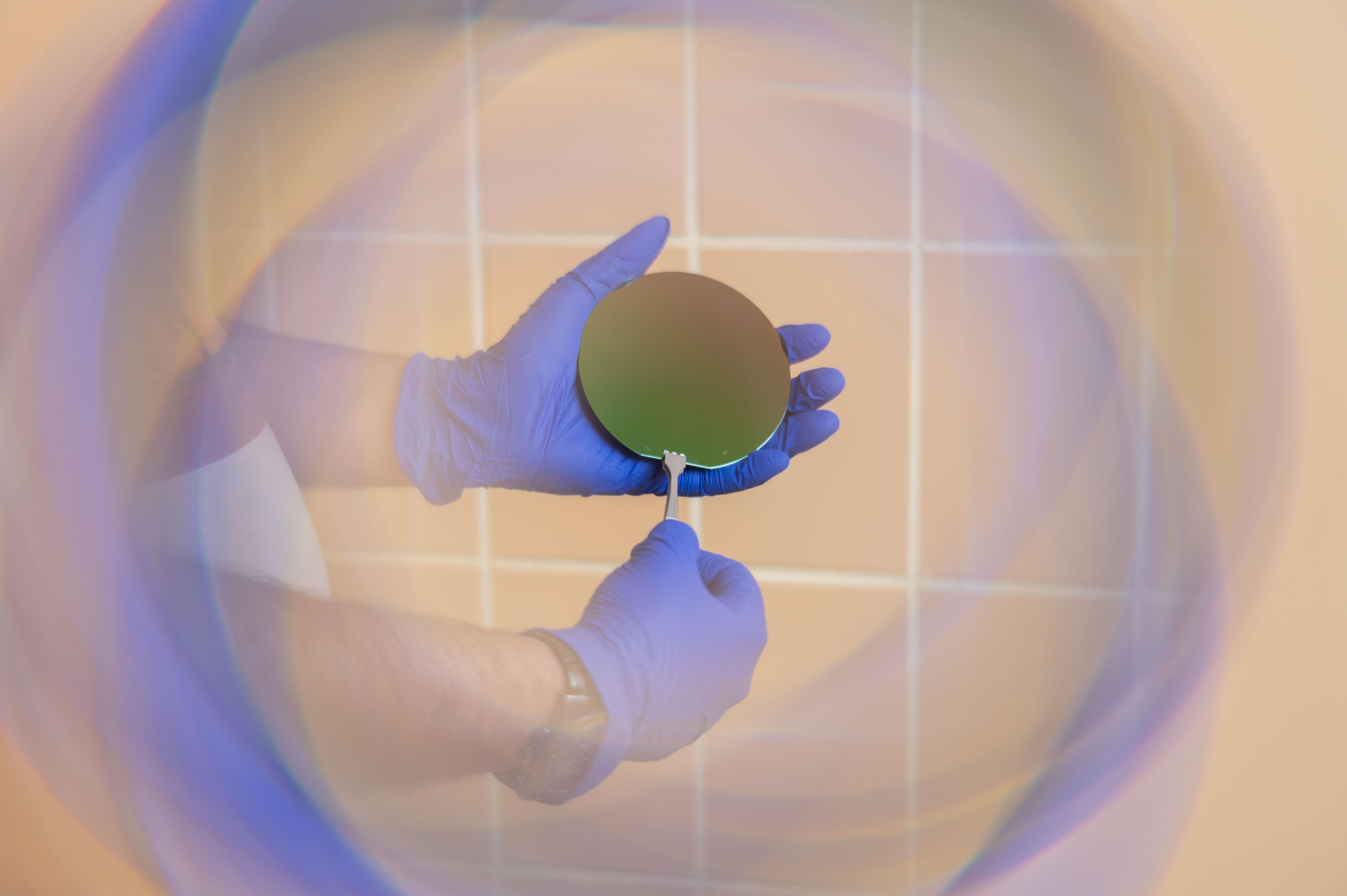
The four members of the 2025 MNCP with the wafers they made.

The most recent cohort of the Microelectronics and Nanomanufacturing Certificate Program (MNCP) have completed their training and are ready to dive into the workforce. 

The MNCP is a National Science Foundation (NSF) funded collaboration between the Institute for Matter and Systems (IMS), Georgia Piedmont Technical College (GPTC) and Pennsylvania State University’s Center for Nanotechnology Education and Utilization

The spring 2025 cohort was comprised of three individuals with non-technical backgrounds. For 12 weeks, they split time between online lectures and hands-on training in the Georgia Tech Fabrication Cleanroom where they immersed themselves in advanced microelectronic fabrication techniques. Their training included thin film deposition, photolithography, etching, metrology, laser micro-machining, and additive manufacturing. They gained hands-on experience with industry-standard equipment, even creating their own custom designs on 4-inch silicon wafers.

“The program really helps people get their head start, especially for those who don’t really have the educational background,” said Lauren Walker, one student from the cohort. Walker applied for the program after hearing about it from a colleague and was able to get a job as a laboratory technician with help from the program resources.

“[The program] gave me everything I needed to know for new skills and things like that for the industry,” said Walker. “It helped me eventually get another job. I say it helped because of the workshops they had.”

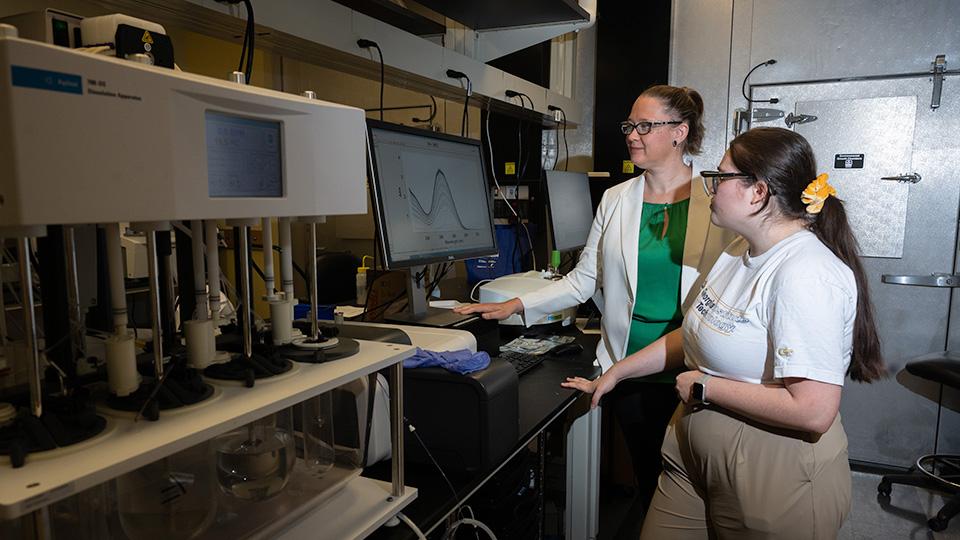
Under the direction of Seung-Joon Paik, IMS teaching lab coordinator, the cohort spent two days a week in the IMS cleanroom working on research projects with IMS staff. Michelle Wu, a research scientist in IMS, served as lab instructor throughout the program and oversaw the training on cleanroom tools. 

“As their lab instructor, I’ve been thoroughly impressed with their passion, patience, and unwavering dedication to this program,” said Wu.

The program is supported by the Advanced Technological Education program at the National Science Foundation and is free for all participants. 

Learn more about the Microelectronics and Nanomanufacturing Certificate Program

Michelle Wu and the veterans she worked with during the MNCP program
People in the cleanroom working on tools
A wafer made during the MNCP
 
News Contact

Amelia Neumeister | Research Communications Program Manager

Energy Day Showcases Georgia Tech's Leadership in Energy Research

Tim Lieuwen gives remarks at Georgia Tech Energy Day

Tim Lieuwen gives remarks at Georgia Tech Energy Day

More than 300 people from industry, government, and academia converged on Georgia Tech’s campus for Energy Day. They gathered for discussion and collaboration on the topics of energy storage, solar energy conversion, and developments in carbon-neutral fuels.

Taking place on April 23, Energy Day was cohosted by Georgia Tech’s Institute for Matter and Systems (IMS), Strategic Energy Institute (SEI), the Georgia Tech Advanced Battery Center, and the Energy Policy and Innovation Center.

“The ideas coming out of Georgia Tech and other research universities can drive greater partnerships with our local and state officials. Whether you live in Georgia or elsewhere, we are changing how energy is viewed and consumed,” said Tim Lieuwen, Georgia Tech executive vice president for Research.

Energy Day 2025 is the latest evolution in a series of events that began as in 2023 Battery Day. As local and national energy research needs have evolved, the event has grown to highlight Georgia Tech, and the state of Georgia, as a go-to location for modern energy companies.

“At Georgia Tech, we approach energy holistically, leveraging innovative R&D, economic policy, community-building and strategic partnerships,” said Christine Conwell, SEI's interim executive director. “We are thrilled to convene this event for the third year. The keynote and sessions highlight our comprehensive strategy, showcasing cutting-edge advancements and collaborative efforts driving the next big energy innovations." 

The day was divided into two parts: a morning session that included a keynote speaker and two panels, and an afternoon session with separate tracks addressing three different energy research areas. Speakers shared research being conducted at Georgia Tech, as well as updates from industry leaders, to create an open dialogue about current energy needs.

“We believe we can solve problems and build the economy when you bring various disciplines together and work from matter — the fundamental scientists and devices all the way out to final systems at large — economic systems, societal systems,” said Eric Vogel, executive director for IMS. “Not only did we share the latest research, but we discussed and debated how we can continue to transform the energy economy.”

Discussions ranged from adapting to rapid changes in battery storage to advancing photo-voltaic manufacturing in the U.S. to the environmental impacts and sustainable practices of e-fuels and renewable energy.

The day ended with a robust poster session that attracted more than 25 student posters presentations. Three were awarded best posters.

First place: Austin Shoemaker
Second Place: Roahan Zhang
Third Place: Connor Davel


Related Links:
Advancing Clean Energy: Georgia Tech Hosts Energy Materials Day
Georgia Tech Battery Day Reveals Opportunities in Energy Storage Research


SEI interim executive director Christine Conwell at the 2025 Georgia Tech Energy Day

SEI interim executive director Christine Conwell at the 2025 Georgia Tech Energy Day

Eric Vogel gives opening remarks at Georgia Tech Energy Day

Eric Vogel gives opening remarks at Georgia Tech Energy Day

Panel of speakers at Energy Day

Panel of speakers at Energy Day

Session sign for Energy Day

Session sign for Energy Day

Break out session during Energy Day

Break out session during Energy Day

Austin Shoemaker wins Energy Day poster session

Austin Shoemaker wins Energy Day poster session

 
News Contact

Amelia Neumeister | Research Communications Program Manager

Unlocking a New Class of Material — With Origami

By unlocking a new type of origami-inspired folding, a recent physics study could lead to advances in everything from heart stents to airplane wings. (Adobe Stock)

By unlocking a new type of origami-inspired folding, a recent physics study could lead to advances in everything from heart stents to airplane wings. (Adobe Stock)

Origami — the Japanese art of folding paper — could be at the next frontier in innovative materials.

Practiced in Japan since the early 1600s, origami involves combining simple folding techniques to create intricate designs. Now, Georgia Tech researchers are leveraging the technique as the foundation for next-generation materials that can both act as a solid and predictably deform, “folding” under the right forces. The research could lead to innovations in everything from heart stents to airplane wings and running shoes.

Recently published in Nature Communications, the study, “Coarse-grained fundamental forms for characterizing isometries of trapezoid-based origami metamaterials,” was led by first author James McInerney, who is now a NRC Research Associate at the Air Force Research Laboratory. McInerney, who completed the research while a postdoctoral student at the University of Michigan, was previously a doctoral student at Georgia Tech in the group of study co-author Zeb Rocklin. The team also includes researchers from Princeton University, University of Michigan, and University of Trento.

“Origami has received a lot of attention over the past decade due to its ability to deploy or transform structures,” McInerney says. “Our team wondered how different types of folds could be used to control how a material deforms when different forces and pressures are applied to it” — like a creased piece of cardboard folding more predictably than one that might crumple without any creases.

The applications of that type of control are vast. “There are a variety of scenarios ranging from the design of buildings, aircraft, and naval vessels to the packaging and shipping of goods where there tends to be a trade-off between enhancing the load-bearing capabilities and increasing the total weight,” McInerney explains. “Our end goal is to enhance load-bearing designs by adding origami-inspired creases — without adding weight.”

The challenge, Rocklin adds, is using physics to find a way to predictably model what creases to use and when to achieve the best results.

Deformable solids

Rocklin, a theoretical physicist and associate professor in the School of Physics at Georgia Tech, emphasizes the complex nature of these types of materials. “If I tug on either end of a sheet of paper, it's solid — it doesn’t separate,” he explains. “But it's also flexible — it can crumple and wave depending on how I move it. That’s a very different behavior than what we might see in a conventional solid, and a very useful one.”

But while flexible solids are uniquely useful, they are also very hard to characterize, he says. “With these materials, it is often difficult to predict what is going to happen — how the material will deform under pressure because they can deform in many different ways. Conventional physics techniques can't solve this type of problem, which is why we're still coming up with new ways to characterize structures in the 21st century.”

When considering origami-inspired materials, physicists start with a flat sheet that's carefully creased to create a specific three-dimensional shape; these folds determine how the material behaves. But the method is limited: only parallelogram-based origami folding, which uses shapes like squares and rectangles, had previously been modeled, allowing for limited types of deformation.

“Our goal was to expand on this research to include trapezoid faces,” McInerney says. Parallelograms have two sets of parallel sides, but trapezoids only need to have one set of parallel sides. Introducing these more variable shapes makes this type of creasing more difficult to model, but potentially more versatile.

Breathing and shearing

“From our models and physical tests, we found that trapezoid faces have an entirely different class of responses,” McInerney shares. In other words — using trapezoids leads to new behavior.

The designs had the ability to change their shape in two distinct ways: "breathing" by expanding and contracting evenly, and “shearing" by deforming in a twisting motion. “We learned that we can use trapezoid faces in origami to constrain the system from bending in certain directions, which provides different functionality than parallelogram faces,” McInerney adds. 

Surprisingly, the team also found that some of the behavior in parallelogram-based origami carried over to their trapezoidal origami, hinting at some features that might be universal across designs.

“While our research is theoretical, these insights could give us more opportunities for how we might deploy these structures and use them,” Rocklin shares.

Future folding

“We still have a lot of work to do,” McInerney says, sharing that there are two separate avenues of research to pursue. “The first is moving from trapezoids to more general quadrilateral faces, and trying to develop an effective model of the material behavior — similar to the way this study moved from parallelograms to trapezoids.” Those new models could help predict how creased materials might deform under different circumstances, and help researchers compare those results to sheets without any creases at all. “This will essentially let us assess the improvement our designs provide,” he explains.

“The second avenue is to start thinking deeply about how our designs might integrate into a real system,” McInerney continues. “That requires understanding where our models start to break down, whether it is due to the loading conditions or the fabrication process, as well as establishing effective manufacturing and testing protocols.”

“It’s a very challenging problem, but biology and nature are full of smart solids — including our own bodies — that deform in specific, useful ways when needed,” Rocklin says. “That’s what we’re trying to replicate with origami.”


This research was funded by the Office of Naval Research, European Union, Army Research Office, and National Science Foundation.

DOIhttps://doi.org/10.1038/s41467-025-57089-x 

 
News Contact

Written by Selena Langner

Contact: Jess Hunt-Ralston

Susan Burns, Brandon Strickland Joining the Institute's Research Enterprise Leadership Team

Susan Burns and Brandon Strickland

Georgia Tech is pleased to announce the appointment of two new leadership positions within the Office of the Executive Vice President for Research (EVPR). These positions report to the Chief Research Operations Officer. 

Susan Burns has agreed to serve as interim Associate Vice President for Research Operations and Infrastructure (AVP-ROI), effective immediately. Susan is a distinguished professor in the School of Civil and Environmental Engineering at Georgia Tech, with extensive experience in research operations and infrastructure. Her leadership and commitment to advancing research excellence will be instrumental in supporting the Institute’s strategic goals. A search for a permanent AVP-ROI will begin in the near future.

Brandon Strickland will be joining Georgia Tech as the new Associate Vice President for Research Administration (AVP-RA), effective June 16, 2025. Brandon, an engineer and attorney by training, brings a wealth of experience from his previous role as Executive Director of the Office of Research Administration at the University of Miami, where he managed a dynamic research enterprise with an annual portfolio of more than $700 million in expenditures. His expertise streamlining research administration processes, providing strong service to faculty, and fostering interdisciplinary collaborations will be invaluable to Georgia Tech.

“We’re excited and grateful to welcome Susan Burns and Brandon Strickland to our leadership team. Their combined expertise and dedication to research excellence will undoubtedly strengthen our efforts in research administration processes, operations, and infrastructure. I look forward to working with them,” said Bill Dracos, Interim Chief Research Operations Officer. 

The EVPR’s office thanks Susan Puryear for her service as interim AVP-RA over the past several months. Susan will remain at Georgia Tech into the summer during the transition to Brandon.


Restoring and Protecting Georgia’s Coast — With Oysters

Sarah Roney oversees nursery troughs in the UGA Shellfish Research Lab filled with young oysters growing on shells recycled from restaurants all over Georgia.

Sarah Roney oversees nursery troughs in the UGA Shellfish Research Lab filled with young oysters growing on shells recycled from restaurants all over Georgia.

Sarah Roney studies oysters — and coastline restoration, wave energy, erosion, blue crabs, and predator chemical cues. A Ph.D. candidate in Georgia Tech’s Ocean Science and Engineering program and a Brook Byers Graduate Fellow, Roney has spent the past four years studying how strategically placing oyster reefs along Georgia’s coast could yield significant benefits.

Georgia’s coastal ecology is being degraded by several threats. Erosion caused by a combination of traffic from water vessels, sea-level rise, increased storm intensity and frequency, and property development, are negatively impacting both coastal living systems and the state’s economy. Tourism, agriculture, recreation, fisheries, property development, and trade (through the Port of Savannah) all rely on healthy coastlines.

Roney’s interest in coastal ecology and oysters drew her to focus her doctoral thesis on this problem. She divided her project into two parts. The first involved understanding how much oyster reefs reduce the erosion caused by wave energy (ship wake) from water traffic. The second part demonstrated a method for making young oysters resistant to predation — increasing their survival rates and that of the reef colonies they call home. Roney focused her research on two major waterways in the Savannah area. The Intracoastal Waterway and the South Channel of the Savannah River, which leads to the Port of Savannah, are both subject to heavy ship and boat traffic. According to Roney’s collaborators at Georgia Tech, 65% of the wave energy lashing the South Channel’s shores is generated by cargo vessels navigating to and from the Port of Savannah. Because traffic along the Intracoastal Waterway is subject to very few speed restrictions, there is plenty of erosive wave energy there also, even though the vessels are almost exclusively small.

Roney chose one site in each waterway to place her reef structures. Mesh bags of oyster shells were seeded with young oysters by personnel working at a University of Georgia Shellfish Research Lab. Roney created her reef structures by placing these bags in a row 15 to 20 meters long and a meter wide. Once established, Roney found that constructed reefs dissipate 40% of the wave energy before it reaches the marsh edge. “This is an experimental pilot study, so the reefs are on the smaller side,” Roney explained. “Reefs as large as 100 meters long may be necessary to protect certain areas — which sounds like a big investment. But because these are living shorelines, they are self-sustaining, and will keep growing and building on themselves.”

Establishing oyster reefs can be challenging, however, because predators feast on young oysters. Blue crabs are among the most voracious. The second part of Roney’s research was to develop a method that improves adolescent oysters’ chances of surviving to adulthood — when they infrequently succumb to predation. Roney and her collaborators at Georgia Tech identified two compounds found in blue crab urine, called trigonelline and homarine, that induce young oysters to devote more energy toward growing their shells, which become 25-60% stronger than normal. Roney found that after four to eight weeks of exposure to these compounds in hatchery conditions, their overall survival rate improved by 30% once placed in a reef. Her method not only helps constructed reefs to become established, but can also help existing oyster reefs become more resilient by slowing, or reversing, their decline.

While coastal restoration projects are not new in Georgia, the techniques Roney developed are relatively novel. Conventional shoreline restoration projects involve excavation, placing gravel beds, and extensive plantings, mostly with sea grasses. Roney has shown that using living shoreline strategies are less intensive and less expensive to establish and are also effective in reducing wave energy in waterways vulnerable to erosion. Perhaps most significantly, these techniques also restore the foundational functions of the ecosystems in which they are placed. The reefs become nurseries, incubating fish, bird, plant, and crustacean species.

Roney engaged several partners over the four years of her project, many in the communities along Georgia’s coast. Over 35 coastal residents, business owners, citizen scientists, and students volunteered their time and resources to help Roney’s project succeed. Roney said, “I think the most rewarding part of the project has been seeing how many people are truly invested in our coastal resources and want oyster reefs to thrive.”

This project isn’t likely to end once Roney earns her PhD. For living shoreline restoration practices to catch on, several other problems require investigation. Roney wants to devise a way to slowly release predator cue compounds into the water near oyster reefs, so baby oysters won’t need to spend as much time in a hatchery before being placed in the wild. Perfecting such a time-release mechanism could also help rejuvenate naturally occurring oyster reefs under threat from erosion and predation.

Roney also wants to try combining constructed oyster reefs with oyster farms, integrating one of the most sustainable ways that protein can be raised with living shoreline restoration. “As the mariculture industry in Georgia grows, there will be lots of opportunities to investigate the possible intersections between the ecological benefits, engineering benefits, and cultural benefits of oyster farming,” Roney said. “Food might be a continuous byproduct of shoreline restoration projects.”

Roney’s research shows that economic development and preserving, or even regenerating, diverse and productive coastal habitats for future generations don’t have to be mutually exclusive propositions.

Roney’s thesis advisor is Marc Weissburg, Brook Byers Professor in the School of Biological Sciences. Kevin Haas, professor in the School of Civil and Environmental Engineering, helped Roney map and measure the hydrodynamic forces in her study zones. The Coastal Resources Division of the Georgia Department of Natural Resources, the National Parks Service, and the University of Georgia Marine Extension and Georgia Sea Grant program provided access, permitting, funding, and resources.

Tanner Lee (Georgia Tech, BS Biology '23) helped construct the oyster reef he observes from a boat as part of an undergraduate research project.

Tanner Lee (Georgia Tech, BS Biology '23) helped construct the oyster reef he observes from a boat as part of an undergraduate research project.

 
News Contact

Brent Verrill, Research Communications Program Manager, BBISS

Computing Framework Could Reveal Signs of Neuro Disorders Hidden within Brain Data

Instead of relying on traditional methods like cognitive tests and image scans, this new approach leverages data science and algorithms.

Instead of relying on traditional methods like cognitive tests and image scans, this new approach leverages data science and algorithms.

A Georgia Tech doctoral student’s dissertation could help physicians diagnose neuropsychiatric disorders, including schizophrenia, autism, and Alzheimer’s disease. Instead of relying on traditional methods like cognitive tests and image scans, this new approach leverages data science and algorithms.

Ph.D. candidate Md Abdur Rahaman’s dissertation studies brain data to understand how changes in brain activity shape behavior. 

Computational tools Rahaman developed for his dissertation look for informative patterns between the brain and behavior. Successful tests of his algorithms show promise to help doctors diagnose mental health disorders and design individualized treatment plans for patients.

Unsurprisingly, Rahaman successfully defended his dissertation and is on his way to graduate in a few weeks.

“I've always been fascinated by the human brain and how it defines who we are,” Rahaman said. 

“The fact that so many people silently suffer from neuropsychiatric disorders, while our understanding of the brain remains limited, inspired me to develop tools that bring greater clarity to this complexity and offer hope through more compassionate, data-driven care.”

Rahaman’s dissertation introduces a whole framework focusing on granular factoring. This computing technique stratifies brain data into smaller, localized subgroups. This makes it easier for computers and researchers to study data and find meaningful patterns.

Granular factoring overcomes the challenge of size and heterogeneity in neurological data science. Brain data is sourced from different modes, like neuroimaging, genomics, and behavioral datasets. Each of these sources are very large to study on their own, let alone analyzed at the same time to find hidden inferences. 

Rahaman’s research allows researchers and physicians to move past one-size-fits-all approaches. Instead of manually reviewing tests and scans, algorithms look for patterns and biomarkers in the subgroups that otherwise go undetected, especially ones that indicate neuropsychiatric disorders.

“My dissertation advances the frontiers of computational neuroscience by introducing scalable and interpretable models that navigate brain heterogeneity to reveal how neural dynamics shape behavior,” Rahaman said. 

“By uncovering subgroup-specific patterns, this work opens new directions for understanding brain function and enables more precise, personalized approaches to mental health care.”

Rahaman defended his dissertation on April 14, the final test in completing his Ph.D. in computational science and engineering. He will graduate on May 1 at Georgia Tech’s Ph.D. Commencement

After walking across the stage at McCamish Pavillion, Rahaman’s next step in his career is to Amazon where he will work in the generative artificial intelligence (AI) field. 

Graduating from Georgia Tech is the peak of an educational summit spanning over a decade. Rahaman hails from Bangladesh where he graduated from Chittong University of Engineering and Technology in 2013. He attained his master’s from the University of New Mexico in 2019 before starting at Georgia Tech. 

“Munna is an amazingly creative researcher,” said Dr. Vince Calhoun, Rahman’s advisor. Calhoun is the founding director of the Translational Research in Neuroimaging and Data Science Center (TReNDS).

TReNDS is a tri-institutional center spanning Georgia Tech, Georgia State University, and Emory University that develops analytic approaches and neuroinformatic tools. The center aims to translate the approaches into biomarkers that address areas of brain health and disease.    

“His work is moving the needle in our ability to leverage multiple sources of complex biological data to improve understanding of neuropsychiatric disorders that have a huge impact on an individual’s livelihood.”

Md Abdur Rahaman

Ph.D. candidate Md Abdur Rahaman’s dissertation studies brain data to understand how changes in brain activity shape behavior.

Ph.D. candidate Md Abdur Rahaman’s dissertation studies brain data to understand how changes in brain activity shape behavior.
 
News Contact

Bryant Wine, Communications Officer
bryant.wine@cc.gatech.edu

Spy vs. Spy: A New Automated Removal Tool Can Stop Most Remote-Controlled Malware

Runze Zhang

Runze Zhang presents at NDSS.

Cyberattacks can snare workflows, put vulnerable client information at risk, and cost corporations and governments millions of dollars. A botnet — a network infected by malware — can be particularly catastrophic. A new Georgia Tech tool automates the malware removal process, saving engineers hours of work and companies money. 

The tool, ECHO, turns malware against itself by exploiting its built-in update mechanisms and preventing botnets from rebuilding. ECHO is 75% effective at removing botnets. Removing malware used to take days or weeks to fix, but can now be resolved in a few minutes. Once a security team realizes their system is compromised, they can now deploy ECHO, which works fast enough to prevent the botnet from taking down an entire network.

“Understanding the behavior of the malware is usually very hard with little reward for the engineer, so we’ve made an automatic solution,” said Runze Zhang, a Ph.D. student in the School of Cybersecurity and Privacy (SCP) and the School of Electrical and Computer Engineering

The researchers presented the paper, “Hitchhiking Vaccine: Enhancing Botnet Remediation With Remote Code Deployment Reuse,” at February’s Network and Distributed System Security  (NDSS) Symposium. ECHO’s open-source code is available online.

Botnet Backstory

Botnets have been a problem since the 1980s and have grown in potency recently. In 2019, for example, a vicious malware called Retadup compromised Windows systems throughout Latin America. A Czech cybersecurity company, Avast, partnered with the French government to take down this bot. They reverse-engineered the malware, effectively creating a “vaccine” for it in the process. As effective as that solution was, it wasn’t easily replicable.

Brendan Saltaformaggio saw an opportunity, though. 

“This is a really good approach, but it was extremely labor-intensive,” said Saltaformaggio, an associate professor in SCP. “So, my group got together and realized we have the research to make this a scientific, systematic, reproducible technique, rather than a one-off, human-driven, miserable effort.”

Botnet Breakdown

ECHO eradicates malware in three stages. First, it determines how the malware deploys its malicious code. Then, ECHO identifies the capabilities of this deployment mechanism and discovers how they can be repurposed for remediation. Next, it builds a remediation code that leverages these same mechanisms to disable the malware. That code is then tested and eventually pushed out to the system. The team tested ECHO on 702 Android malware samples and successfully stopped malware in 523 of them. 

They hope ECHO’s success will halt attackers in their tracks. 

“A way we approach problems in our lab is to find the tradeoff between the attackers’ effort versus our effort to fight them,” Saltaformaggio said. “We can never achieve a perfect solution, but we can raise the bar high enough for an attacker that it wouldn't be worth it for them to use malware this way.”

With tools like ECHO, botnets can be removed before they cause economic and operational damage. Malware is ever-evolving, but Saltaformaggio and his team are improving their methods along with it. The next malware attack is imminent — but so is the solution. 

Funding from the Office of Naval Research, the Defense Advanced Research Projects Agency, and the National Science Foundation.

 
News Contact

Tess Malone, Senior Research Writer/Editor

tess.malone@gatech.edu

Tech AI Fest 2025 Showcases National Collaborations, Future of AI

The inaugural Tech AI Fest held March 26–28 at the Historic Academy of Medicine in Atlanta, brought together more than 40 leaders in artificial intelligence (AI) from academia, government, and industry for three days of panels, keynotes, and networking.

Leading up to the main event, Tech AI, the AI Hub at Georgia Tech, partnered with OpenAI to host two standout events on March 25: the OpenAI Forum and Sora Shorts. These programs explored the rapidly evolving landscape of generative AI and creativity, offering a preview of the transformative work unfolding both at the Institute and across the globe.

OpenAI Academy and Sora Shorts

The OpenAI Academy gave participants hands-on experience with the latest AI tools and methods. The workshop provided a deep dive into how generative AI can be applied across sectors.

Simultaneously, the Sora Shorts series spotlighted creative pioneers integrating AI into storytelling and design. Featured speakers included:

  • Mark Riedl, professor at Georgia Tech, who discussed the intersection of AI and storytelling and its impact on narrative innovation;
  • Minne Atairu, AI artist and researcher at Columbia University, who explored generative art and the evolving role of AI in creative disciplines;
  • Michaela Ternasky-Holland, Emmy Award-winning director, who offered insights into AI’s potential to reshape the future of filmmaking;
  • Nik Kleverov, creative director and entrepreneur, who focused on AI's capacity to inspire design and entrepreneurship;
  • Ellie Foumbi, filmmaker and member of the Directors Guild of America, who reflected on how AI tools are influencing storytelling and visual production.

Gabe Nixon, a fourth-year student at Georgia Tech, shared how these two events quickly reshaped his career ambitions. Initially on a Ph.D. track aiming for NASA, Nixon pivoted toward startups and AI innovation. After attending the OpenAI Academy, he began building his first AI-powered app, TITAN, during Tech AI Fest. Nixon's experience reflects a broader student interest in harnessing AI to fuel interdisciplinary breakthroughs.

Highlights Included:

Tech AI Fest welcomed AI experts and thought leaders across domains. Speakers included:

  • Sen. John Albers, Georgia state senator, who spoke about crafting ethical legislation to govern AI innovation;
  • Manuela Veloso, head of AI research at JPMorganChase and former AI head at Carnegie Mellon University, who discussed AI's role in finance and interdisciplinary collaboration;
  • Sophia Velastegui, former Microsoft executive, who highlighted AI’s transformative power in solving complex industry problems;
  • Konstantin Cvetanov, senior solution architect at NVIDIA, leading the adoption of enterprise AI and generative AI solutions across North America;
  • Srinivas Aluru, professor at Georgia Tech, who explored AI's intersection with scientific computing and systems modeling;
  • Sudheer Chava, professor at Georgia Tech, who discussed machine learning in financial markets and risk management;
  • Yongsheng Chen, professor at Georgia Tech, who presented on AI in agriculture;
  • Frank Dellaert, professor at Georgia Tech and CEO of Verdant Robotics, who shared insights into AI-driven autonomous systems and robotics;
  • Ashok Goel, professor at Georgia Tech and director of the National Science Foundation AI Institute for Adult Learning and Online Education (AI-ALOE), who focused on AI for education and personalized learning.

Additional speakers included:

  • Vijay Ganesh, associate professor at Georgia Tech, on real-time machine learning applications;
  • David Joyner, executive director of the Online Master of Science in Computer Science program at Georgia Tech, on scalable AI-powered personalized education;
  • Kamran Paynabar, associate professor at Georgia Tech, on AI-enabled optimization in global supply chains;
  • Christopher J. Rozell, professor at Georgia Tech, on the role of AI in neuroscience and brain modeling;
  • Suresh Marru, associate professor at Georgia Tech, on AI-enhanced cyberinfrastructure for science;
  • Bob Friday, chief scientist at Juniper Networks, on AI's impact on networking and cybersecurity;
  • Jeffrey Young, principal investigator at Georgia Tech’s Center for Scientific Software Engineering, who discussed open-source frameworks and ethical software development for AI.

Keynote: AI as a Global Force

A standout moment was the keynote from Pascal Van Hentenryck, director of Tech AI and professor in Georgia Tech’s H. Milton Stewart School of Industrial and Systems Engineering. He emphasized that AI's true potential lies in collaboration across academia, industry, and government.

“Artificial intelligence is not just a tool — it’s a revolution,” Van Hentenryck said. “But for it to be truly transformative, we need to come together as a global community to innovate responsibly. At Georgia Tech, we are proud to be at the forefront of this revolution, driving innovation and solving global challenges.”

Looking Ahead: Tech AI Career Fair

Building on the success of Tech AI Fest 2025, Tech AI will host a career fair later this year. The event will connect students, professionals, and companies to explore workforce opportunities in AI and emerging technologies.

“We’re excited about the upcoming Career Fair,” said Tim Brown, Tech AI’s Director of Professional Education and organizer of the career fair. “It will provide a platform for companies to engage with top talent, and for students to discover exciting careers in AI.”

A Lasting Impact

Tech AI Fest marked a defining moment for Georgia Tech’s role in shaping the future of artificial intelligence. From hands-on workshops to thought-provoking discussions on ethics, creativity, and policy, the event created space for new ideas and global partnerships.

As Georgia Tech continues to lead in AI research, education, and collaboration, Tech AI Fest demonstrated what’s possible when visionary thinkers come together to build a better, smarter future.

For more information about Tech AI and upcoming events, visit tech.ai.gatech.edu.

 
News Contact

Breon Martin

Professor's CNBC Course Highlights College’s Leadership in Expanding AI Literacy

Interactive Computing Professor Mark Riedl co-organized the 2024 Summit on Responsible Computing, AI, and Society, where AI literacy was a key topic. Photo by Terence Rushon/College of Computing

Interactive Computing Professor Mark Riedl co-organized the 2024 Summit on Responsible Computing, AI, and Society, where AI literacy was a key topic. Photo by Terence Rushon/College of Computing

If you’re worried about artificial intelligence (AI) taking your job, Georgia Tech’s Mark Riedl says that probably won’t happen. However, losing your job to someone who knows how to leverage AI tools in the workplace is something to be concerned about.

To help people beyond campus understand what AI tools are available and how to use them effectively, Riedl recently co-taught an online course by CNBC Make It titled How to Use AI to Be More Successful at Work.

“The running joke right now is that AI will not replace people, but people who use AI will replace people who do not use AI,” said Riedl, professor in the School of Interactive Computing

The 90-minute course offers tips and hacks to users who are:

  • Inexperienced in using AI tools in the workplace and are looking to grow in professional development
  • Small business owners who are overwhelmed with administrative tasks, marketing, industry research, and data analysis
  • Job seekers looking to stand out from the crowd
  • People seeking to improve their work-life balance

Riedl, whose research focuses on human-centered and explainable AI, taught sections of the course on the foundation of AI. One of the biggest sections of the course covers large-language models (LLMs). 

“When large language models were put forward as chatbots, this was the first time that any person out in the world could naturally interact with an AI system without having to learn to program or write code,” Riedl said.

For less than $100, the on-demand course includes a detailed workbook that helps users consider each aspect of their jobs and daily lives and how AI can improve them.

The Big Picture

CNBC’s use of Riedl’s expertise is one of many examples of how College of Computing faculty are leading the way in teaching AI literacy.

David Joyner, executive director of online education, said Georgia Tech’s Online Master of Science in Computer Science (OMSCS) program continues to innovate with AI literacy in mind.

[RELATED: Experts Say Life-long Learning is a Must to Keep Pace with Generative AI]

He said companies and employees alike are learning to navigate AI. Companies are considering AI from a general perspective, focusing on how it can make their businesses more efficient, while employees are using it to become more versatile and valuable workers.

“It’s an interesting dichotomy,” Joyner said. “If companies are trying to figure out how to operate more efficiently, and you have people using these tools to be more productive, at what point does the company need to prioritize using these tools instead of letting their use be organic? We’re still in this experimental phase.”

In a conversation with former College of Computing interim dean Alex Orso, Joyner discusses how OMSCS is staying at the forefront in equipping students with the latest technology skills they need to be successful in a fluctuating industry.

“We must figure out what generative AI can do well and properly leverage it so we’re not cutting out the foundation of a building and replacing it with sticks,” Joyner said.

The complete conversation between Joyner and Orso is available on the College's Youtube channel.

 
News Contact


Nathan Deen, Communications Officer
Georgia Tech School of Interactive Computing
nathan.deen@cc.gatech.edu

Transforming Aircraft Maintenance With Augmented Reality

RepĀR aircraft maintenance system being used with a tablet. The system uses a combination of augmented reality, computer vision, and artificial intelligence.

RepĀR aircraft maintenance system being used with a tablet. The system uses a combination of augmented reality, computer vision, and artificial intelligence.

An IPaT translational research team is working to advance aircraft maintenance.
 

In the dynamic world of aviation maintenance, precision, quickness, and meticulous documentation are essential. Maribeth Gandy Coleman, director of research and a Regents’ Researcher in Georgia Tech’s Institute for People and Technology (IPaT), has been leading an IPaT translational research team working to advance aircraft maintenance with PartWorks, an Atlanta-based aerospace engineering firm dedicated to extending the life and improving the operational efficiency and availability of commercial and military aircraft and spacecraft.

Coleman, a recognized augmented reality expert at Georgia Tech, has been working with the PartWorks’ engineering team to solve aircraft maintenance challenges, leading to measurable improvements in labor costs, training, repair quality, turnaround time, and maintenance process validation. This research partnership has led to the development of several patented and patent-pending solutions related to aircraft maintenance.

“I could not have hired anybody with the diverse skill sets that both Maribeth and the Georgia Tech team brought to bear,” said Scott Geller, CEO of PartWorks. “We’ve utilized different and complicated skill sets, sometimes in small quantities, that have made our project work very cost-effective. We’ve used an iterative research and development process that hasn’t had a shocking cost or huge surprises. And the Georgia Tech team has been both easy and fun to work with, too.”

This collaboration has led to PartWorks launching a new aircraft maintenance, repair, and overhaul (MRO) augmented reality solution called RepĀR™. Designed for both military and commercial aviation, RepĀR’s augmented reality overlay transforms structural repairs by ensuring accuracy, reducing labor costs, minimizing human error, and accelerating return-to-service timelines. 

RepĀR rapidly captures structural repair data, embedding spatial awareness and real-time validation into maintenance workflows. Novice technicians can achieve results beyond their operational experience, while seasoned technicians experience measurable productivity gains.

“RepĀR exemplifies how targeted computer vision applications can deliver immediate value in aerospace manufacturing and maintenance,” said Shelley Peterson, CEO of Wizard Wells. “By precisely identifying fastener locations and validating tool placement, it reduces rework, minimizes human error, and ensures tasks are performed right the first time.”

PartWorks demonstrated RepĀR at the Aviation Week Network’s MRO Americas, which took place April 8 – 10 at the Georgia World Congress Center in Atlanta.

“This collaborative research with industry demonstrates why Georgia Tech has interdisciplinary research institutes such as IPaT, and why you have research faculty,” said Coleman. “You’re probably not going to be able to get some Ph.D. students to do this work. The focus here with PartWorks is on translation. It’s cross-disciplinary collaboration and translation built on augmented reality work we’ve been doing for 25 years and implementing cutting-edge technology crafted to the right context to support aircraft maintenance.”

“This Georgia Tech collaboration and augmented reality MRO research and development are in conjunction with a multiyear contract we’re working on with the Air Force Research Lab (AFRL) in Dayton, Ohio,” said Geller. “We’re appreciative of their partnership and excited to be getting commercial interest in RepĀR from both military and commercial aviation OEMs and MROs as well as space industry companies.”

 
News Contact

Walter Rich, Research Communications