
Energy and Public Health Mini Symposium
Please join us at on Friday, May 10th from 11am to 1pm for EPICenter’s Energy and Public Health Mini Symposium.
Lunch will be served.
Five research teams including faculty from across three colleges will provide an overview of their interdisciplinary research at the intersection of human health and energy systems. These projects are supported through EPICenter’s 2022 Seed Grant competition.
Presenters include:
New Approach Could Make Reusing Captured Carbon Far Cheaper, Less Energy-Intensive
Apr 25, 2024 — Atlanta, GA

A new electrochemical reactor design developed with Marta Hatzell by postdoctoral scholar Hakhyeon Song (middle) and Ph.D. students Carlos Fernández and Po-Wei Huang (seated) converts carbon dioxide removed from the air into useful raw material. Their approach is cheaper and simpler while requiring less energy, making it a promising tool to improve the economics of direct air capture systems. (Photo: Candler Hobbs)
Engineers at Georgia Tech have designed a process that converts carbon dioxide removed from the air into useful raw material that could be used for new plastics, chemicals, or fuels.
Their approach dramatically reduces the cost and energy required for these direct air capture (DAC) systems, helping improve the economics of a process the researchers said will be critical to addressing climate change.
The key is a new kind of catalyst and electrochemical reactor design that can be easily integrated into existing DAC systems to produce useful carbon monoxide (CO) gas. It’s one of the most efficient such design ever described in scientific literature, according to lead researcher Marta Hatzell and her team. They published details April 16 in Energy and Environmental Science, a top journal for energy-related research.
Joshua Stewart
College of Engineering
Seed Grants Fund Research Centers for Critical Minerals, Spatial Computation and Navigation
Apr 23, 2024 — Atlanta, GA

The College of Sciences is funding two research centers through a new seed grant program.
Selected from a finalist pool of nine proposals, Associate Professors Yuanzhi Tang and Thackery Brown’s ideas were chosen for their high potential for novel interdisciplinary research and impact.
Tang’s center will focus on sustainable mineral research, and Brown’s on spatial computation and navigation. Applications for the research will span the development of more sustainable batteries, as well as seeking to improve human health and well-being.
“Improving the human condition, fostering community, and pursuing research excellence are at the forefront of Georgia Tech’s mission, and these new centers will play a critical role in furthering that goal,” says Laura Cadonati, associate dean for Research in the College of Sciences and a professor in the School of Physics. “The College of Sciences is thrilled to support these new initiatives, and is excited to continue to develop the seed grant program.”
A second call for research center proposals is planned for January 2025, with funding to start in July 2025.
The new Center for Sustainable and Decarbonized Critical Energy Mineral Solutions (CEMS), to be led by Yuanzhi Tang, an associate professor in the School of Earth and Atmospheric Sciences, will serve as a hub for sustainable procurement solutions for critical energy mineral resources, including rare earth elements and metals used for battery production.
Thackery Brown, an associate professor in the School of Psychology, will lead the second center, the Center for Research and Education in Navigation (CRaNE). CRaNE will investigate problems related to spatial computation, cognition, and navigation — which has implications for human health, animal conservation, smart architecture and urban design.
“This generous support from the College of Sciences will enable us to host a conference on spatial cognition, computation, design, and navigation; to provide collaborative multi-lab seed grants; and to establish the first of a series of explicitly co-mentored, interdisciplinary graduate student Fellowships,” Brown says. “Collectively, these are the seeds of a high-impact and self-sustaining center.”
About the Center for Sustainable Decarbonized Critical Energy Mineral Solutions (CEMS)
Yuanzhi Tang, School of Earth and Atmospheric Sciences
Co-sponsored by the College of Sciences, Strategic Energy Institute (SEI), Brook Byers Institute for Sustainable Systems (BBISS), Institute for Electronics and Nanotechnology (IEN), and Institute for Materials (iMat), CEMS began as a joint BBISS-SEI initiative lead project that has since grown into a joint center focused on critical elements and materials for sustainable energy.
Sustainably sourcing these materials provides a critical foundation for both high-tech industry and green economy. “Rare earth elements and battery metals like lithium, copper, and nickel are in high demand, but low domestic resources and production have resulted in a heavy reliance on imports,” Tang explains. “How can we domestically produce these resources, and how can we do this sustainably? Georgia Tech and the College of Sciences are in a unique position for developing a large regional research umbrella to connect these dots.”
CEMS will leverage on three key pillars: science and technology development, strengthening collaboration among the University System of Georgia (USG) universities, and developing regional resources and economy, Tang says. “By leveraging collaboration among Georgia universities, and fostering engagement with regional industries, the Center will develop new science and technology, leading the way in research on how to procure these ‘essential vitamins’ for clean energy transition in a sustainable and decarbonized manner.”
About the Center for Research and Education in Navigation (CRaNE)
Thackery Brown, School of Psychology
CRaNE will focus on solving problems related to spatial computation, cognition, and navigation. “How do we treat catastrophic loss of one’s ability to get from A to B in Alzheimer's disease? How do we build smarter cities that are easier and more carbon efficient to navigate? How can we develop robots,” Brown says, “which navigate with the flexibility and efficiency of our own minds? CRaNE will bring together experts from many different fields to help address these problems with truly creative and integrative scientific and technological solutions.”
CRaNE will support interdisciplinary collaborative research, including developing a graduate student fellowship program, and conducting K-12 outreach.
“Our goal for CRaNE is to position the College of Sciences, Georgia Tech, and our extended network of collaborator institutions as a center of gravity for cutting-edge work on how the mind, brain, and artificial systems process space — how they can be made better at it, and how we can engineer our world around us in ways that support the humans and animals that need to navigate it to survive,” Brown says.
Emphasizing the collaborative nature of CRaNE, Brown adds that “by targeting collaborative grants, research, and education, and by promoting outreach and education earlier in the STEM pipeline, we hope to accelerate progress at the frontiers of these fields — and to invest in future science that cannot be easily addressed by a single lab or discipline.”
Written by Selena Langner
Contact:
Jess Hunt-Ralston
Director of Communications
College of Sciences
Georgia Tech
2024 Frontiers in Science: Climate Action
Apr 22, 2024 — Atlanta, GA

Susan Lozier, Julia Kubanek, L. Beril Toktay, and Tim Lieuwen
This Earth Month more than 100 campus and community stakeholders gathered near the Georgia Tech EcoCommons for the 2024 Frontiers in Science: Climate Action Conference and Symposium.
On April 18, the College of Sciences hosted more than 20 speakers and panelists from across the Institute and Atlanta community presenting groundbreaking research and discussing innovations and ideas in climate change, challenges, and solutions.
Georgia Tech President Ángel Cabrera (M.S. PSY 1993, Ph.D. PSY 1995) kicked off the morning sessions by highlighting the Institute’s new Climate Action Plan, which outlines the pathway to achieve net-zero emissions by 2050. Cabrera’s remarks focused on Georgia Tech’s role on the frontlines of research and education informing how we respond to climate challenges — and noted that the Institute’s work must extend beyond our laboratories and classrooms.
“It is essential that we not only do the science, but that we also tell that science to the world,” Cabrera says.
Interdisciplinary inquiry
This year, Frontiers in Science featured an array of climate research and initiatives led by the College of Sciences, fellow colleges across Georgia Tech, and the wider Atlanta community.
Following a three-year hiatus of the Frontiers series, the 2024 edition re-envisioned the signature annual event as a research conference and symposium to convene campus experts — and to incubate seed grant proposals to support the work of early career faculty.
Frontiers previously hosted Nobel laureates and invited thought leaders for individual talks across the College’s six schools, and celebrated milestones like the International Year of the Periodic Table of the Chemical Elements.
“This year, we wanted to showcase what we are doing right here in the College of Sciences and throughout the Institute,” says Susan Lozier, dean of the College of Sciences, Betsy Middleton and John Clark Sutherland Chair and professor in the School of Earth and Atmospheric Sciences. “Our faculty are at the forefront of broadening our knowledgebase and uncovering solutions in areas critical to the planet and our well-being. We wanted to uplift that work and see what sort of connections could be made.”
Connections and collaboration were key themes of the day as faculty, staff, students, and alumni participants representing all six Georgia Tech colleges shared research results and ongoing work and discussed collaborative ideas for horizons ahead.
“Scientists alone cannot [create accurate models],” noted Annalisa Bracco, professor in the School of Earth and Atmospheric Sciences and associate chair for Research, who shared her own research alongside Lozier, who presented a version of her 2024 TED Talk on ocean overturning. “Engineers alone cannot do it. We need social scientists, policy makers, communicators.”
The importance of an interdisciplinary approach was reinforced by the Strategic Energy Institute at Georgia Tech (SEI) and Brook Byers Institute for Sustainable Systems (BBISS), which announced an interdisciplinary seed grant funding opportunity for assistant professors with ideas for new climate solutions.
Frontiers in focus
Across three themed sessions, faculty and leadership from the Colleges of Sciences, Engineering, and Design spearheaded talks on the ocean and cryosphere, biodiversity, carbon cycling, coastal wetlands, biofuels production, and beyond.
Panels on climate challenges across community, technological, and policy initiatives were hosted by Georgia Tech Vice President for Interdisciplinary Research and Professor in the School of Biological Sciences and the School of Chemistry and Biochemistry Julia Kubanek.
Following a networking lunch with climate table topics, Georgia Tech Executive Vice President for Research and Professor in the School of Electrical and Computer Engineering Chaouki T. Abdallah (M.S. ECE 1982, Ph.D. ECE 1988) kicked off the afternoon sessions — which also announced the scholarship recipients of a student video competition and featured videos with a pair of alumnae working in meteorology, climate research, and policy.
Afternoon highlights also included discussions on the Georgia Tech Climate Action Plan and Sustainability Next initiative, led by Jennifer Chirico (B.S. MGMT 1997, Ph.D. PUBP 2011), associate vice president of Sustainability for Georgia Tech Infrastructure and Sustainability, and Jennifer Leavey (B.S. CHEM 1995), assistant dean for Faculty Mentoring in the College of Sciences and interim assistant director for Interdisciplinary Education in the Brook Byers Institute for Sustainable Systems.
Although many of the presentations provided a stern outlook of the state of our ecosystems, the conference concluded with a sense of hope. This optimism was grounded in the range of opportunities that exist to address climate challenges — thanks, in part, to the body of knowledge and solutions being tested and explored by Georgia Tech researchers.
At the end of the day, Katie Griffin, a first year undergraduate student in Environmental Science, read Amanda Gorman’s poem Earthrise and provided this reminder:
All of us bring light to exciting solutions never tried before
For it is our hope that implores us, at our uncompromising core,
To keep rising up for an earth more than worth fighting for.
Experience the event in pictures with the College of Sciences’ Flickr account, and discover the highlights through the day’s live tweets on College of Sciences’ X account.
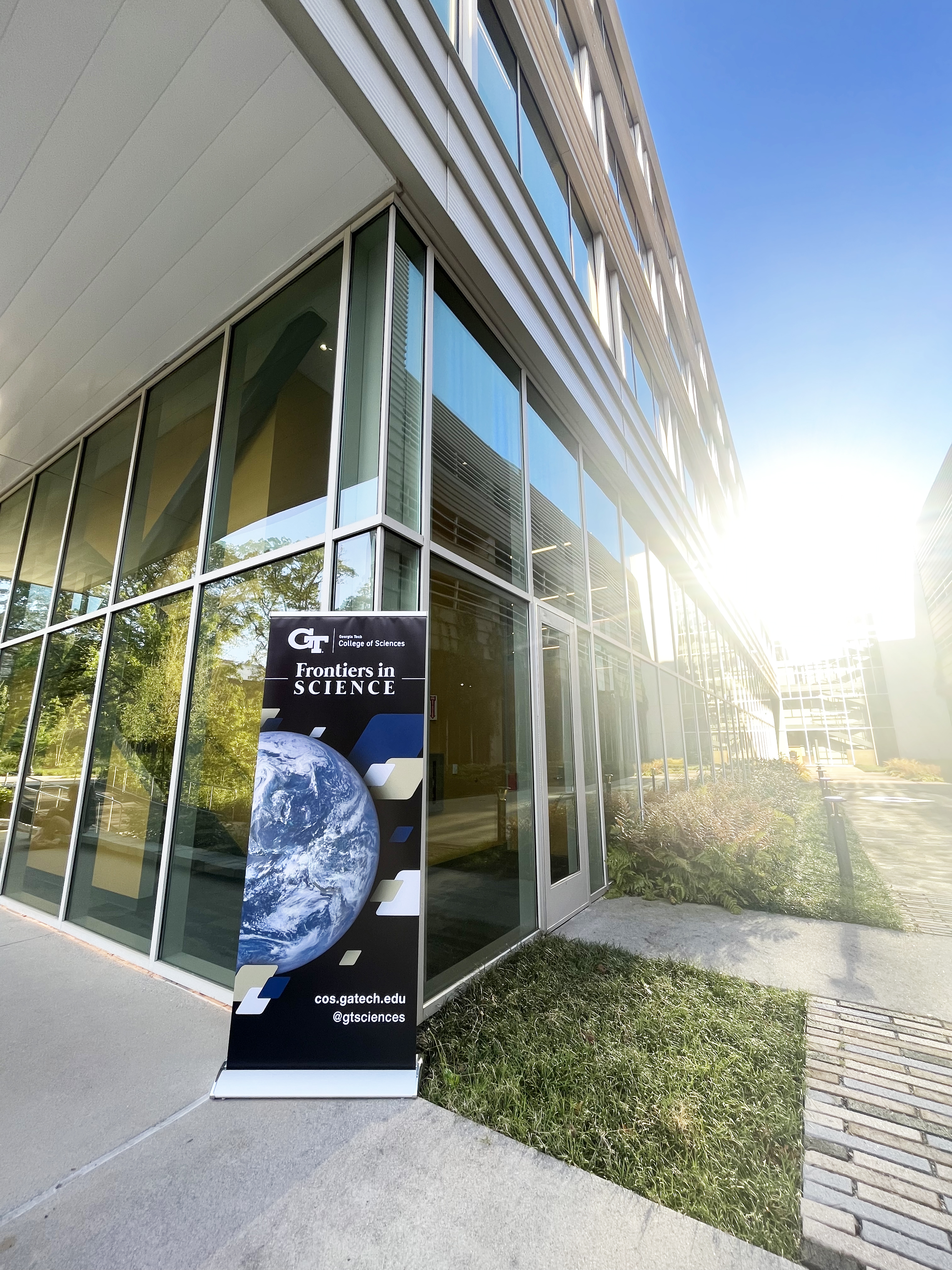
Frontiers in Science Banner Outside at Sunrise
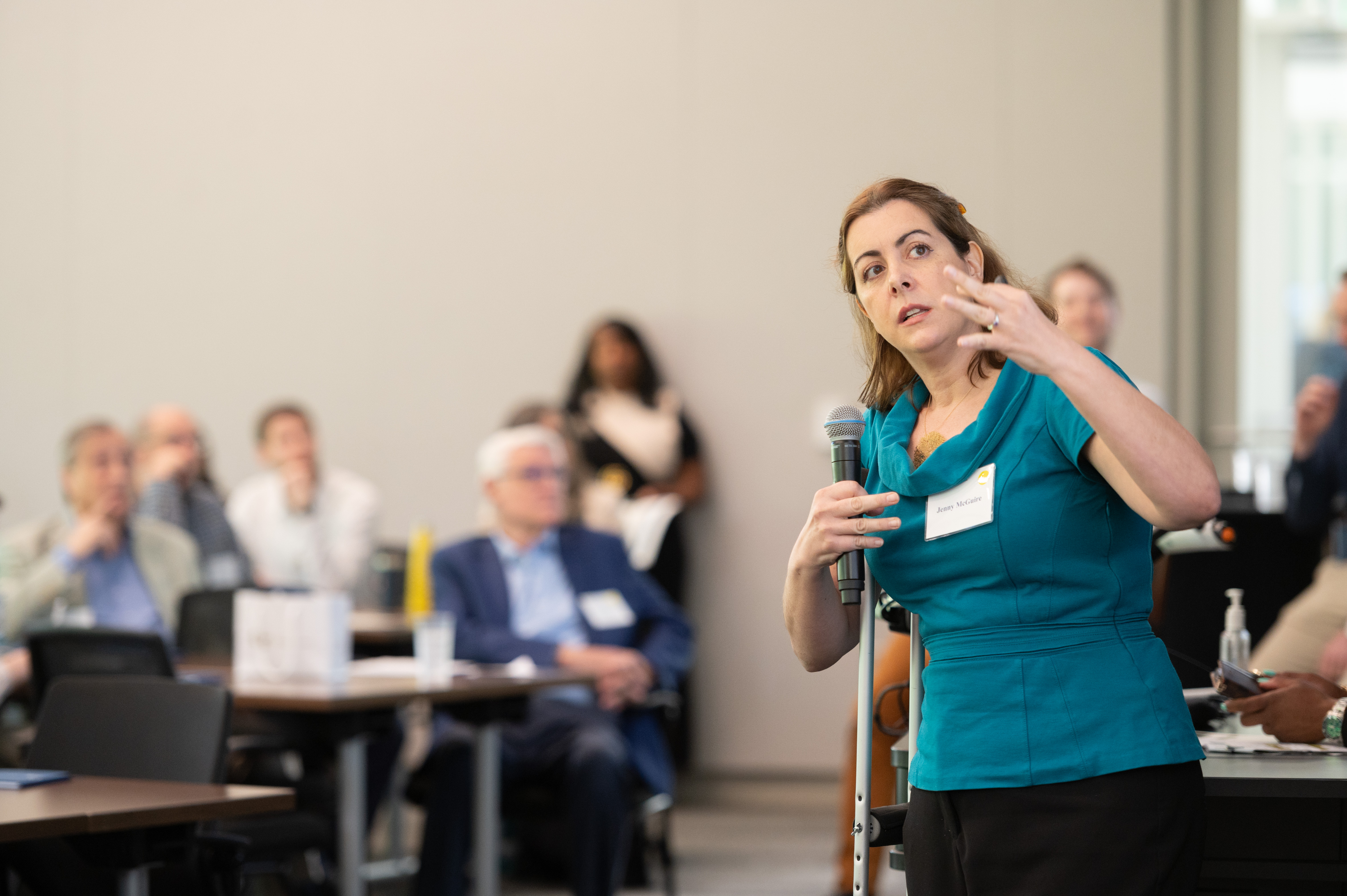
Jenny McGuire
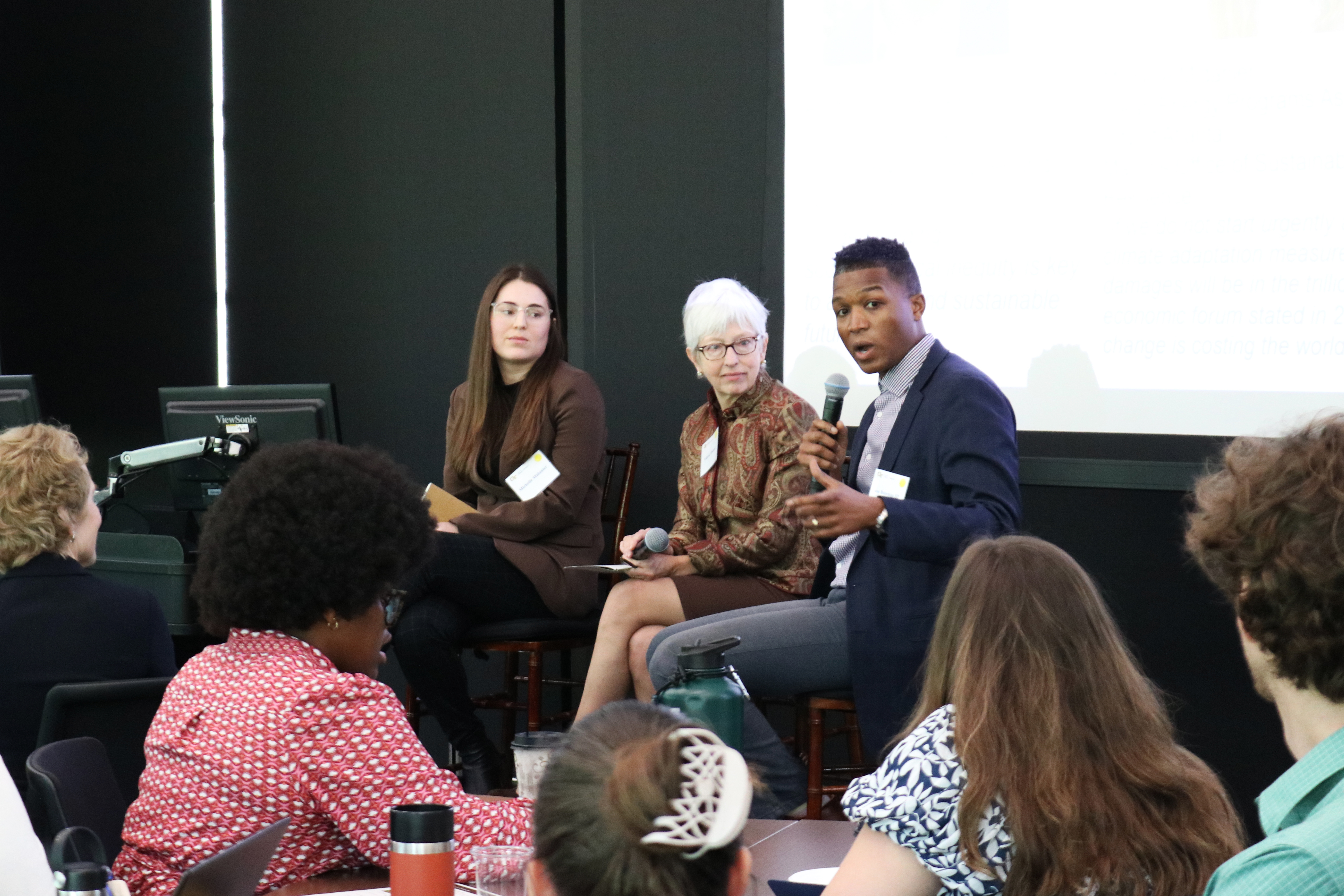
Frontiers in Science Policy Discussion Panelists: Michelle Midanier, Valerie Thomas and Joe F. Bozeman III
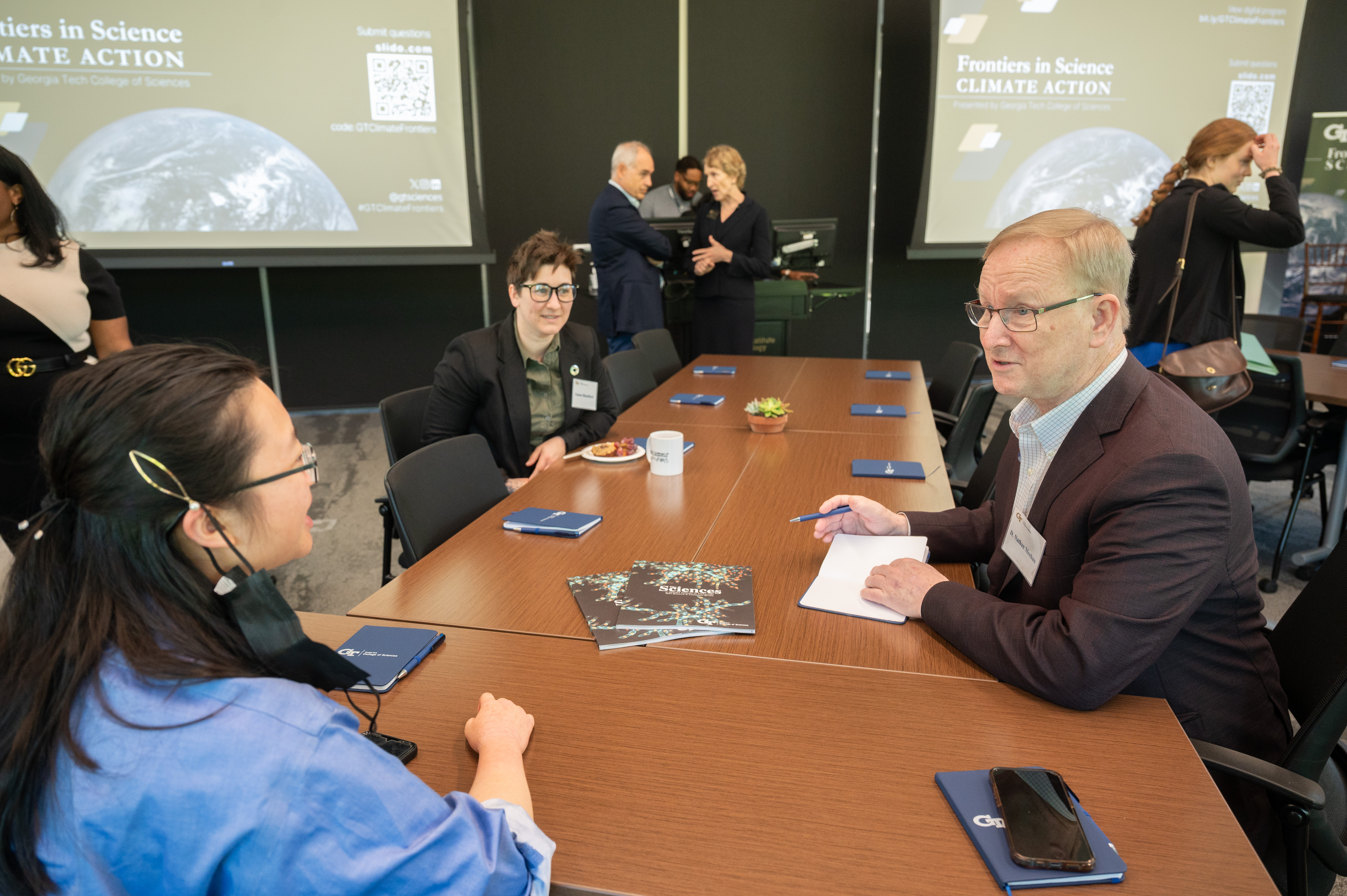
Frontiers in Science Participants
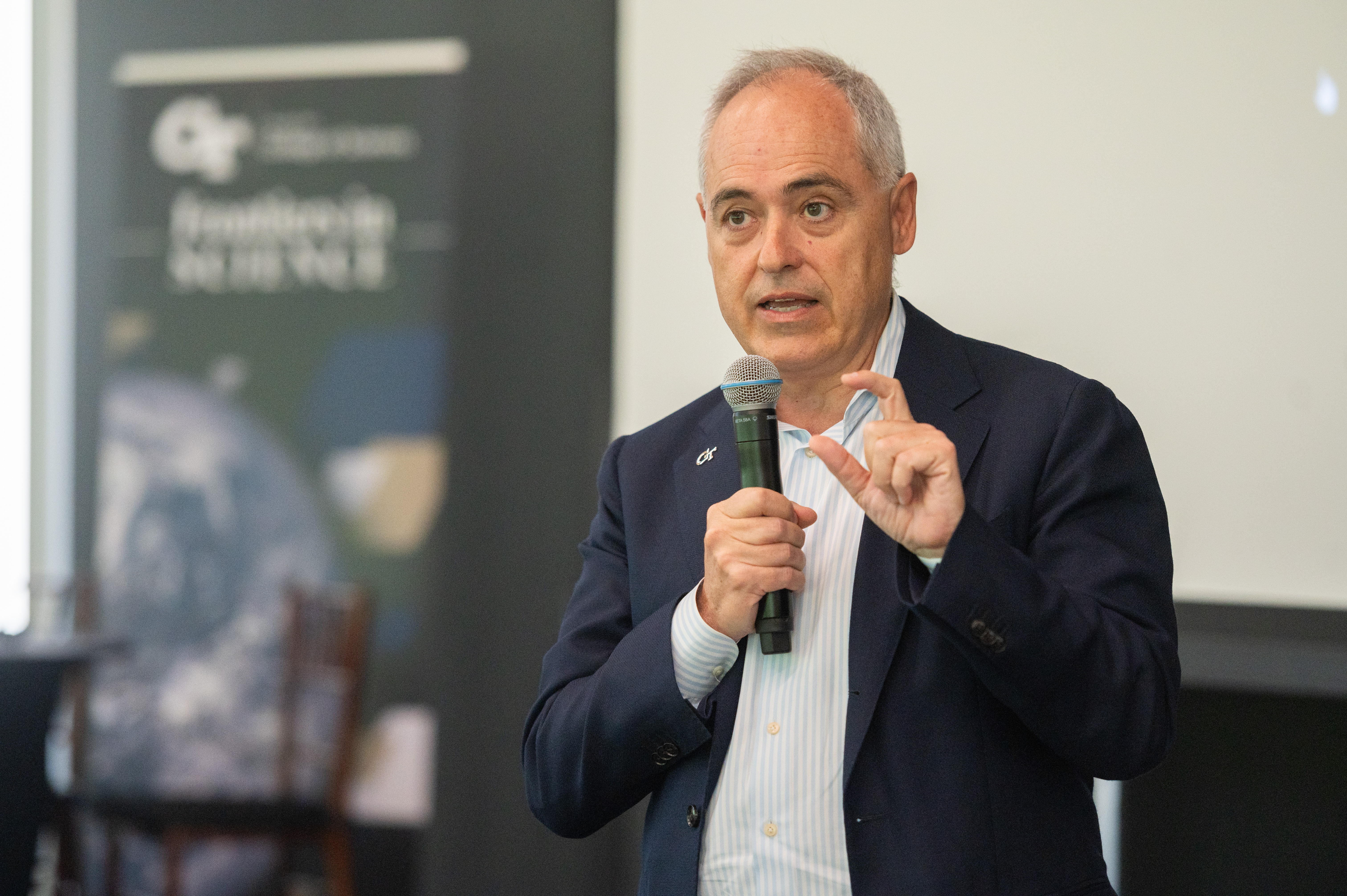
President Ángel Cabrera
By: Lindsay Vidal
Jess Hunt-Ralston
Director of Communications
College of Sciences at Georgia Tech
Advancing Clean Energy: Georgia Tech Hosts Energy Materials Day
Apr 16, 2024 —

More than 400 people participated in Energy Materials Day on March 27, as researchers and industry leaders came together to discuss and advance energy materials technologies such as solar energy, carbon-neutral fuels, and batteries.
Energy materials are the things — natural, manufactured, or both — that aid the use of energy. They also play a key role in developing cleaner, more efficient energy solutions.
Energy Materials Day was co-hosted by Georgia Tech’s Strategic Energy Institute (SEI), the Institute for Materials (IMat), and the Georgia Tech Advanced Battery Center. The event evolved out of last year’s Georgia Tech Battery Day.
“As an engine of innovation in science and technology, Georgia Tech has incredible opportunities and the responsibility to conduct research to benefit society,” said Chaouki Abdallah, executive vice president for Research at Georgia Tech. “We call this ‘research that matters.’”
Events like Energy Materials Day are part of an ongoing, long-range effort to position Georgia Tech, and Georgia, as a go-to location for modern energy companies. Tech was recently ranked by U.S. News & World Report as the top public university for energy research. Abdallah also outlined why Georgia Tech, with more than 1,000 researchers across campus working in the energy space, is a natural fit for events that foster collaboration between the public and private sectors.
“Right here, right now, we have the opportunity to harness our collective powers, our collective knowledge, our collective resources to become a global engine of innovation,” he said.
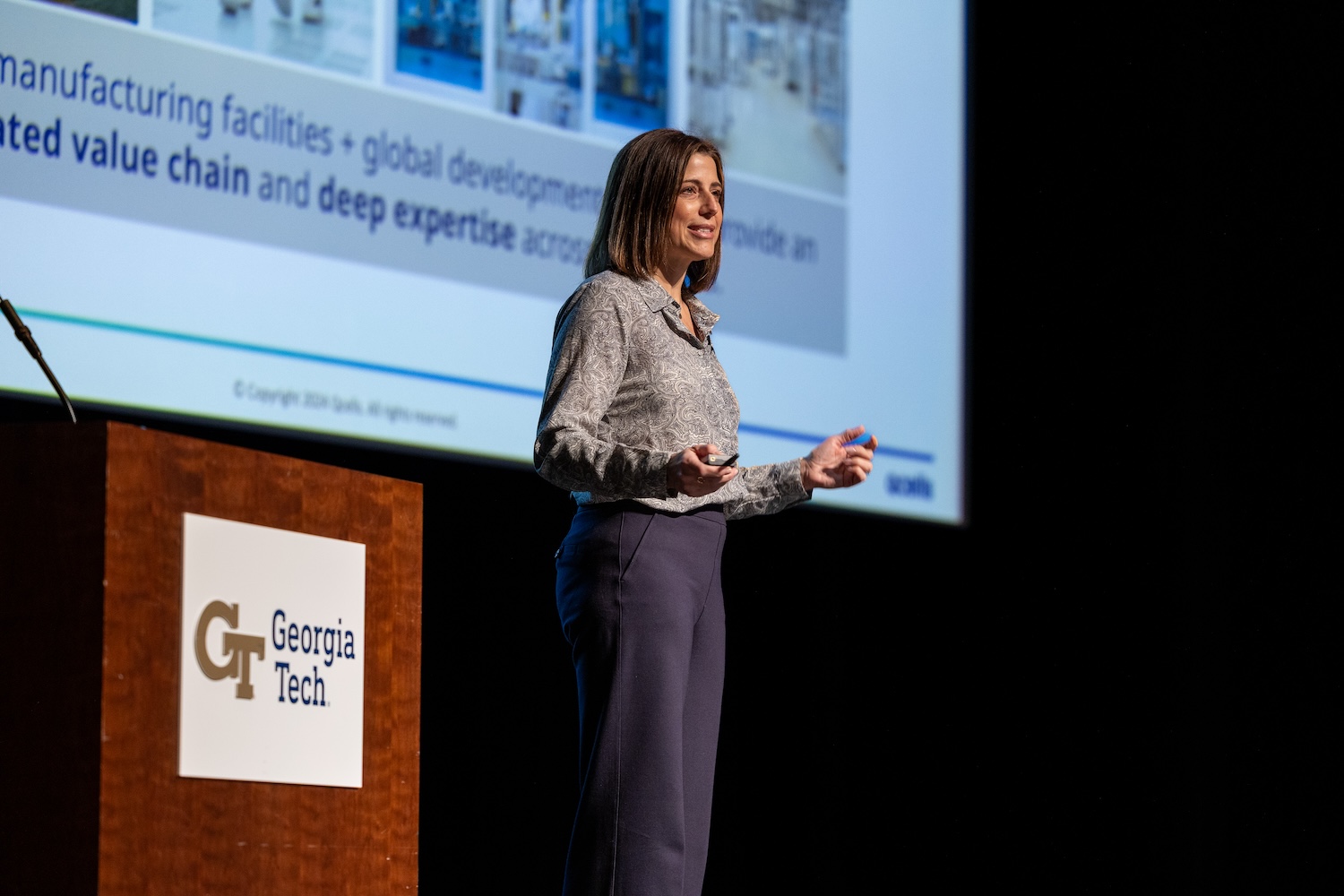
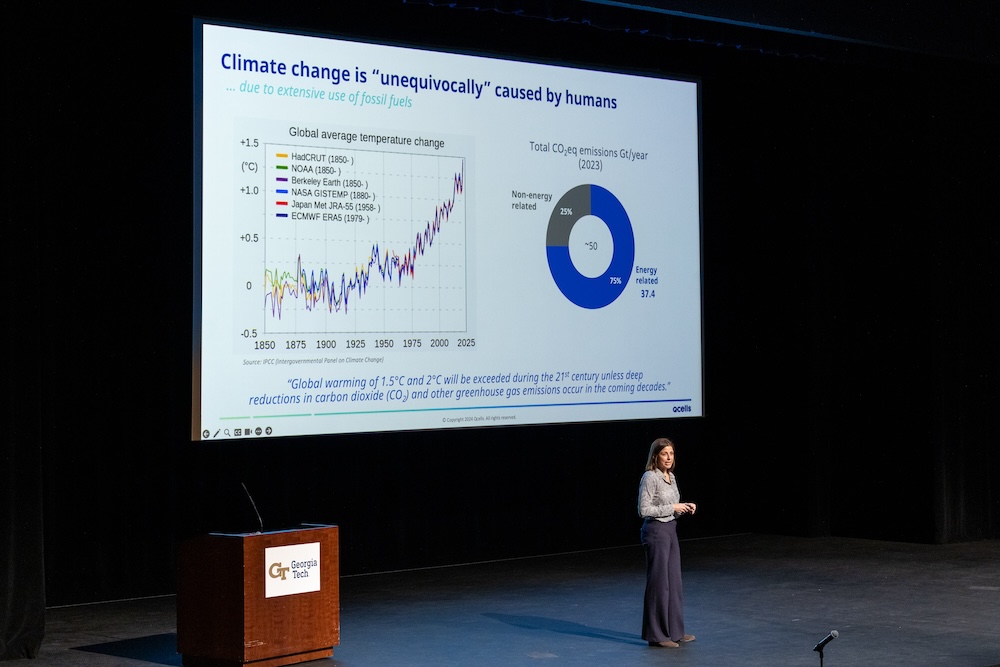
Plenary speaker Danielle Merfeld, global chief technology officer at QCells, highlighted opportunities for the current and future clean energy infrastructure in the United States.
"At the heart of our discussions today [are these questions]: What is new technology, and how do you make it ... and make it at scale, in an affordable, accessible, and reliable way?” she said.
"... [The] good news is this country has taken a very deliberate step toward creating the most robust industrial policy we've had in decades. ... This is driving opportunity and creating the foundation for manufacturing. So, [we can] use that industrial base of making and consuming power [and] decarbonize the electric grid by 2035...."
“Events like this are so important to forwarding progress in research and industry,” said Eric Vogel, IMat’s executive director. “It’s important to bring together professionals throughout the industry to keep these lines of communication open.”
The day was divided into three tracks: battery materials and technologies, photovoltaics and the grid, and materials for carbon-neutral fuel production. Attendees were encouraged to listen to talks from all three areas. Each track included academic speakers who shared their research and private-sector speakers who described how technological advancements are affecting the industry.
“With its rich history in energy research, Georgia Tech remains a leader in addressing global energy challenges,” said Tim Lieuwen, executive director of SEI. “The success of Energy Materials Day is encouraging, and I eagerly anticipate continuing these discussions in 2025.”
Amelia Neumeister
Research Communications Program Manager
ATL Cleantech Connect - April 17, 2024
In partnership between Georgia Tech and the Metro Atlanta Chamber of Commerce, these quarterly socials will engage members of the Greater Atlanta Clean Tech community to support innovation, ideation, startups and investment in Clean Tech and Sustainability focused businesses.
Industry, VC, Georgia Tech Faculty and local leaders will lead conversations related to Early-Stage Funding for Cleantech Hardtech. Keynote speakers for this event are:
CleanTech Startup Challenge
Georgia Tech’s Strategic Energy Institute and Office of Commercialization have partnered with Fusen on this challenge for budding entrepreneurs from metro-Atlanta universities who are eager to establish a business in the clean technology sector.
Jud Ready Joins National Academy of Inventors’ 2024 Class of Senior Members
Mar 26, 2024 — Atlanta, GA

Jud Ready, a principal research engineer at the Georgia Tech Research Institute (GTRI), has been selected to join the National Academy of Inventors’ (NAI) 2024 Class of Senior Members – a group of 124 academic inventors from NAI’s Member Institutions who have made significant contributions to innovation and technology.
Holding a dual appointment as Deputy Director of Innovation Initiatives for Georgia Tech’s Institute for Materials, one of Tech’s 10 Interdisciplinary Research Institutes (IRI) focused on advancing materials research and innovation, and with over two decades of experience as an adjunct professor in Tech’s School of Materials Science & Engineering, Ready has established himself as a leader in materials science and engineering.
Read the full story
Michelle Gowdy
(Interim) Director of Communications, GTRi
Georgia Tech Launches Quadrant-i, a New Unit to Enhance Research Commercialization
Apr 03, 2024 —

Georgia Tech Launches Quadrant-i, a New Unit to Enhance Research Commercialization
Georgia Tech's Office of Commercialization introduces Quadrant-i, a new unit dedicated to helping faculty, researchers, and students translate their research into startups.
The name is inspired by Pasteur’s quadrant in the Daniel Stokes innovation-impact model and will emphasize the translation of deep scientific research into products. (See more information about Pasteur’s quadrant here.)
Quadrant-i will join the other units in commercialization — the Office of Technology Licensing, VentureLab, and CREATE-X — in making Georgia Tech the premier campus for startups and commercialization.
“As we grow our efforts toward delivering impact through commercialization, creating a unit that is solely focused on helping our faculty, students, and researchers launch startups based on their research is essential,” said Raghupathy “Siva” Sivakumar, vice president of Commercialization and chief commercialization officer.
The functions of Quadrant-i have historically been supported by VentureLab, a national leader in entrepreneurship training and research. The reorganization will also allow VentureLab to amplify its impact in making Georgia Tech a thought leader for entrepreneurship.
Quadrant-i will be a comprehensive resource for the thriving research community on campus, facilitating the journey from innovations to impact. The unit will offer programs, resources, and services tailored to expedite and enhance the commercialization process, including:
- Advocating for policy changes and incentive structures to foster a culture of impact.
- Securing non-dilutive grant funding.
- Navigating conflicts of interest to maintain research integrity.
- Providing mentorship on the business aspects of innovation.
- Interfacing with customers, investors, and mentors.
- Launching startups with essential resources and support.
A search is currently underway for a director, who will report to Sivakumar.
The Office of Commercialization invites faculty, researchers, students, investors, mentors, industry leaders, and innovators to collaborate with Quadrant-i and learn more about its programs and services.
For more information, visit: commercialization.gatech.edu/quadrant-i.
Lacey Cameron
Marketing Communications Manager
Civic Data Analysis Finds New Opportunity for Federal Energy Efficiency Initiatives
Mar 18, 2024 — Atlanta, GA

Omar Asensio, GT Energy Research Faculty and HBS visiting fellow, Institute for the Study of Business in Global Society
A new study by Associate Professor Omar Isaac Asensio and a team of students in Georgia Tech’s School of Public Policy finds that federal housing policies accelerate energy efficiency participation among low and moderate-income households — even when those policies don’t directly address energy efficiency.
The research, published in Nature Sustainability, shows how community development block grants from the U.S. Department of Housing and Urban Development (HUD) generated an average of 5% to 11% energy savings in economically burdened households in Albany. The savings equate to the cost of roughly two months of groceries per household per year.
"These housing participants who didn't come in thinking about energy efficiency saved anywhere from $75 to $482 per year in energy bills," Asensio said. "Those are meaningful savings that really impact people. So, we ended up finding very significant hidden social benefits from these policies that were previously unknown."
The findings are surprising because HUD grants do not specifically target energy efficiency or sustainability measures in exchange for governmental assistance. Instead, they are given at the discretion of the local government to residents facing housing emergencies such as deteriorating roofs or broken HVAC systems in the hot summer. Because of the high amount of deferred maintenance in these homes, the fixes have a spillover effect of significantly reducing energy use — for example, by adopting more efficient technologies and bringing structures up to building codes — and saving money for people who receive them.
The multidisciplinary research team in Asensio’s Data Science & Policy Lab, including current and former Public Policy students Olga Churkina and Becky D. Rafter and industrial engineering alumna Kira E. O'Hare, also found that the cost-effectiveness of housing-based interventions rivals standalone energy efficiency policies, offering a promising alternative for reaching marginalized communities.
"For decades, we’ve struggled to get meaningful participation with conventional policies in these lower and moderate-income communities, including among renters and people in multi-family homes,” Asensio said. "Using housing block grants as an entry strategy to drive efficiency is an important policy innovation.”
With support from the National Science Foundation, ESRI, Inc., and the Georgia Smart Communities Challenge, Asensio and his co-authors spent nearly four years collecting, cleaning, and combining Albany's previously siloed city data into one community analytics repository. They linked records for 5.9 million utility bills per month from 2004 to 2019, allowing them to see long-run impacts of policy intervention, energy consumption, and payments by household — an uncommonly granular level of data.
"Overall, HUD-funded block grants in Albany reduced electricity use by 4.72 million kilowatt hours over the study period versus the control group," the researchers wrote. "The reduction in non-baseload emissions is equivalent to 3.70 million pounds of coal not being burned or the carbon sequestered by 3,695 acres of forest."
Asensio's research is timely because the Southeast has some of the country's highest energy-burdened households. In the U.S., spending over 6% of net income on energy is considered a burden. In Albany, renters' and homeowners' energy costs can surpass ten or even 20% of household budgets, Asensio said, and many housing applicants are elderly and on fixed incomes.
Unlike conventional energy initiatives that are reliant on self-selection, housing programs can provide a more equitable and localized strategy. That's because "most of the standalone policies for energy efficiency have two main outcomes," Asensio said. "First, the programs generally attract more affluent and informed homeowners, in which case, questions arise as to whether this might be a good use of public funds. Second, when these policies are restricted to certain income eligibility limits, we don't get enough participation from lower income residents for a long list of reasons. So, reaching low- and moderate-income households has become a fundamental challenge."
In contrast, housing block grants naturally target a broader range of residents with high energy burdens and help circumvent the problem of low participation. Rather than trying to market an energy-saving offer to people who aren't interested or are distrustful of the government, HUD grants have long waiting lists.
"There are thousands and thousands of communities that look very much like Albany within and outside of major metro areas,” Asensio said. "This is a relatively untapped opportunity for driving energy efficiency within households who may not necessarily have an awareness of or interest in energy efficiency measures.”
The paper, “Housing Policies and Energy Efficiency Spillovers in Low and Moderate Income Communities,” was published online in Nature Sustainability on March 18. It is available at https://doi.org/10.1038/s41893-024-01314-w. This work was partially supported by awards from the National Science Foundation (Award No. 1945332), ESRI, Inc., the Georgia Smart Communities Challenge, and the Institute for the Study of Business in Global Society at Harvard Business School.
Di Minardi
Ivan Allen College of Liberal Arts