
Welcome to IDEaS
The Institute for Data Engineering and Science (IDEaS) provides a unified point to connect government, industry, and academia to advance foundational research, and accelerate the adoption of Big Data technology. IDEaS leverages expertise and resources from throughout Georgia Tech's colleges, research labs, and external partners, to define and pursue grand challenges in data science foundations and in data-driven discovery. We are also dedicated to educating students and those already in the workforce through innovative educational and training programs.
Spotlight
Accelerating Discovery With AI
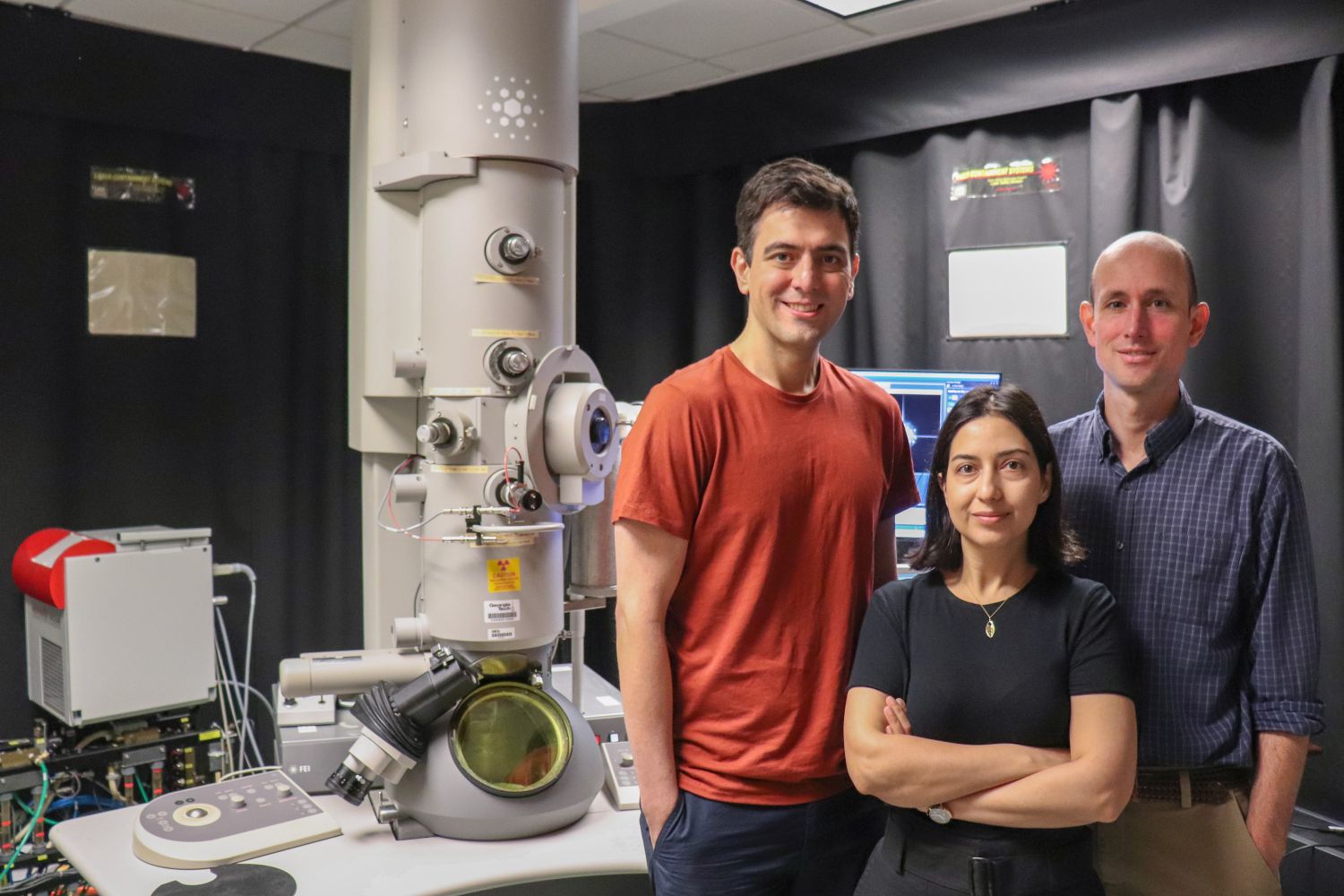
Automating Electron Microscopy Experimental Design With Agentic AI
Scientific discovery is often portrayed as the result of long hours alone in a lab, but true science is inherently collaborative. The most robust experimental processes are developed through partnerships across multiple areas of research. The need for specialized, multidisciplinary teams slows experiment design, execution, data analysis, and process updates, delaying technological validation and deployment. But if the increasingly automated tools scientists already use in the lab could contribute to this team process of experimental design, the timeline for these goals could be greatly accelerated.
This concept of “lab tool as lab assistant” is the premise of a recent paper in npj | Computational Materials titled “Thinking Microscopes: Agentic AI and the Future of Electron Microscopy,” by Vida Jamali, assistant professor the School of Chemical and Biomolecular Engineering; Amirali Aghazadeh, assistant professor in the School of Electrical and Computer Engineering; and Josh Kacher, associate professor in the School of Materials Science and Engineering.
Centers

Center for High Performance Computing
The Center for High Performance Computing (CHiPC) advances the state of the art in massive data and high-performance computing technology, and solves high-impact real-world problems. HPC scientists devise computing solutions at the absolute limits of scale and speed. In this compelling field, technical knowledge and ingenuity combine to drive systems using the largest number of processors at the fastest speeds with the least amount of storage and energy. The center's focus is primarily on algorithms and applications.

The Center for Artificial Intelligence in Science and Engineering (ARTISAN)
The Center for Artificial Intelligence in Science and Engineering (ARTISAN) aims to accelerate advances in science and engineering by integrating cutting-edge artificial intelligence techniques. We are dedicated to fostering interdisciplinary research, cultivating the next generation of AI experts, and developing innovative solutions that address complex challenges in our world.

The South Big Data Innovation Hub
Georgia Tech, along with the University of North Carolina’s Renaissance Computing Institute (RENCI), co-directs the South Big Data Regional Innovation Hub that serves 16 Southern states and the District of Columbia. It is part of the National Science Foundation’s four Regional Innovation Hubs, created to build innovative public-private partnerships addressing regional challenges from data analysis and research to data science workforce development. The Georgia Tech location is operationally run as a center of the Institute for Data Science and Engineering.
Featured Research Areas

Machine Learning
Unstructured and dynamic data analysis, deep learning, data mining, and interactive ML underpin big data foundations and applications.
Health & Life Sciences
Driving predictive, preventive, & personalized care using big data sets from genomics, systems biology, proteomics, and health records.

High Performance Computing
High-performance systems, middleware, algorithms, applications, software, and frameworks for data-driven computing.
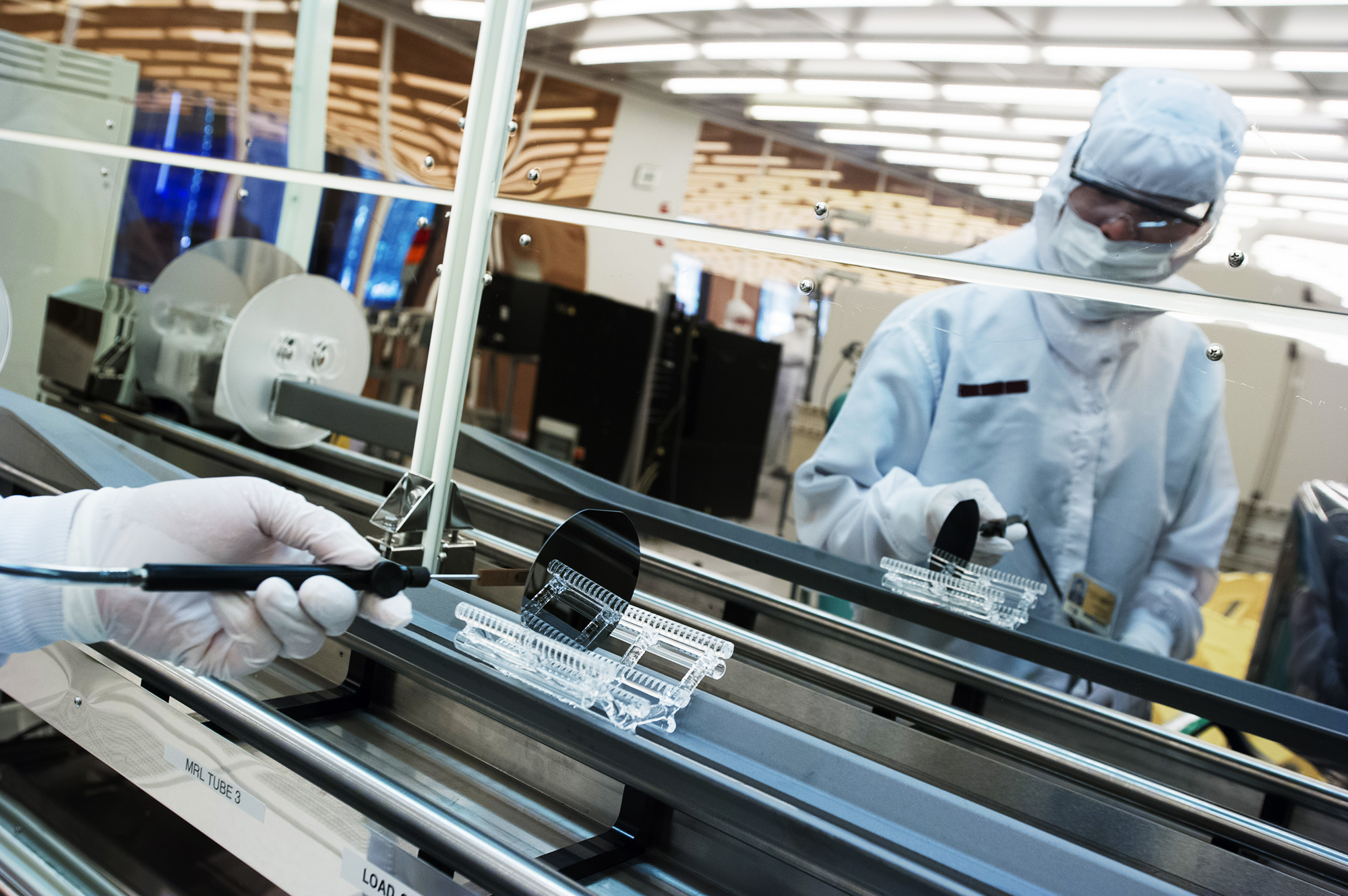
Materials & Manufacturing
Microscopic views of materials and scalable modeling and simulation technologies for accelerated development of new materials.
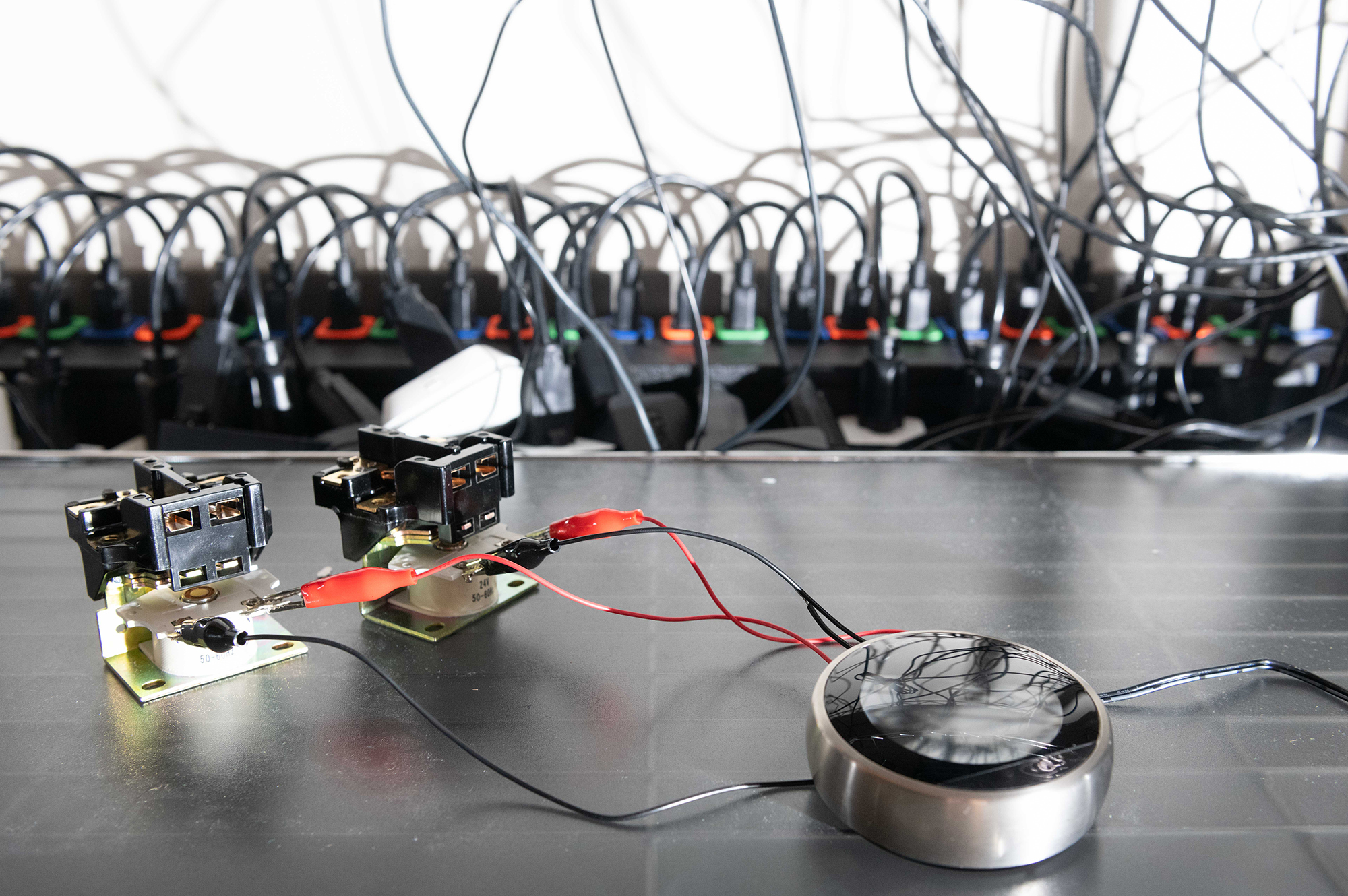
Energy Infrastructure
Sensors and Internet of Things enable infrastructure monitoring. Data analytics improves energy production, transmission, distribution, and utilization.
Algorithms & Optimization
Streaming and sublinear algorithms, sampling and sketching techniques, high-dimensional analysis for big data analytics.


