

HPC @ GT News Roundup
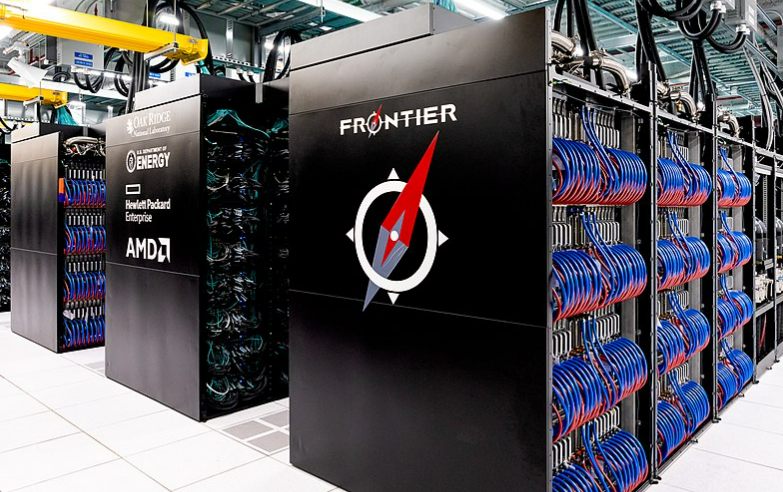
Frontier Exascale: CFD Methodology Gets Gordon Bell Nomination for Georgia Tech, NYU Reseachers
Oak Ridge National Laboratory has announced that Georgia Tech and NYU researchers used a new computational technique, called information geometric regularization (IGR), (see earlier coverage of this work) to conduct the largest computational fluid dynamics simulation of fluid flow. The simulations were run on the Frontier exascale-class HPC system at the Department of Energy’s Oak Ridge National Laboratory.
Their undertaking — and the methods behind it — earned the team a finalist selection for the Association for Computing Machinery’s 2025 Gordon Bell Prize for outstanding achievement in high-performance computing.
Lack of Charging Station Data Deters Widespread Adoption of Electric Vehicles
 Electric vehicles (EVs) can be environmentally friendly and more cost-effective — until drivers plan a road trip. Charging stations aren’t as prevalent as traditional gas stations, and even if they can be found along the route, they may not be functioning or may already be occupied by other cars.
New research from Georgia Tech, Harvard University, and Massachusetts Institute of Technology suggests that state governments should step in to help. The right policy could inspire data transparency by station hosts, ensuring that EV drivers have reliable networks — and thus encourage EV ownership. The researchers presented their findings in the paper, “Charger Data Transparency: Curing Range Anxiety, Powering EV Adoption,” in September’s Brookings.

A Nexus of Ideas : How the NSF Nexus Supercomputer at Georgia Tech will impact campus & national research
The recently awarded $20mil NSF Nexus Supercomputer grant to Georgia Tech and partner institutes promises to bring incredible computing power to the CODA building. But what makes this supercomputer different and how will it impact research in labs on campus, across disciplinary units, and across institutions?
Purpose Built for AI Discovery
Nexus is Georgia Tech’s next-generation supercomputer, replacing the HIVE. Most operational high-performance computing systems utilized for research were designed before the explosion in Machine Learning and AI. This revolution has already shown successes for scientific research and data analysis in many domains, but the compute power, complex connectivity, and data storage needs for these systems have limited their access to the academic research community. The Nexus supercomputer design process retained a robust HPC system as a base while integrating artificial intelligence, machine learning and large-scale data science analysis from the ground up.
Expert Support for Faculty and Researchers
The Institute for Data Engineering and Science (IDEaS) and the College of Computing house the Center for Artificial Intelligence in Science and Engineering (ARTISAN) group. This team has collective experience in working with national computational, cloud, commercial and institutional resources for computational activities, and decades of experience in scientific tools that aid in assisting both teaching and research faculty.
Georgia Tech Cloud Hub Advances Generative AI Research with Microsoft Support
 The Cloud Hub, a key initiative of the Institute for Data Engineering and Science (IDEaS) at Georgia Tech, recently concluded a successful Call for Proposals focused on advancing the field of Generative Artificial Intelligence (GenAI). This initiative, made possible by a generous gift funding from Microsoft, aims to push the boundaries of GenAI research by supporting projects that explore both foundational aspects and innovative applications of this cutting-edge technology.
Launched in early 2024, the Call for Proposals invited researchers from across Georgia Tech to submit their innovative ideas on GenAI. The scope was broad, encouraging proposals that spanned foundational research, system advancements, and novel applications in various disciplines, including arts, sciences, business, and engineering. A special emphasis was placed on projects that addressed responsible and ethical AI use.
How Agentic AI is Rethinking the Origins of Life on Earth
 As strange as it sounds, the key to understanding life’s origins might lie in artificial intelligence. At least, according to a new approached being pursued by researchers at Georgia Tech.
School of Electrical and Computer Engineering (ECE) Assistant Professor Amirali Aghazadeh and Ph.D. student Daniel Saeedi have developed AstroAgents, an AI system that analyzes mass spectrometry data — detailed chemical compositions from meteorites and Earth soil samples — to generate novel hypotheses about the origins of life on the planet.
What sets AstroAgents apart is its use of agentic AI. Unlike traditional AI systems that perform fixed tasks, this agentic system is designed to pursue a scientific goal. It draws from astrobiology literature, interprets complex data, and proposes original ideas that researchers can investigate further.
David Sherrill to Serve as Interim Director of the Institute for Data Engineering and Science
Effective January 1st, David Sherrill will serve as interim executive director of the Georgia Tech Institute for Data Engineering and Science (IDEaS). Sherrill is a Regents' Professor in the School of Chemistry and Biochemistry with a joint appointment in the College of Computing. Sherrill has served as associate director for IDEaS since its founding in 2016.
"David Sherrill's leadership role in IDEaS as associate director, together with his interdisciplinary background in chemistry and computer science, makes him the right person to support this transition as interim executive director," said Julia Kubanek, professor and vice president for interdisciplinary research at Georgia Tech.
Faculty Wins Award for Trailblazing Work in Computing and Biology
Georgia Tech Regents’ Professor Srinivas Aluru is the recipient of the Charles Babbage Award for 2025. Aluru was awarded for pioneering research contributions that intersect parallel computing and computational biology.
“This is a very well-deserved recognition for Srinivas as he joins the illustrious list of past recipients of the Charles Babbage Award,” said Vivek Sarkar, the John P. Imlay Jr. Dean of the College of Computing.
“Srinivas’ accomplishments reflect positively on himself and all of us at Georgia Tech. This is indeed an occasion to celebrate.”
Study: New AI Tool Deciphers Mysteries of Nanoparticle Motion in Liquid Environments
 Nanoparticles – the tiniest building blocks of our world – are constantly in motion, bouncing, shifting, and drifting in unpredictable paths shaped by invisible forces and random environmental fluctuations.
Better understanding their movements is key to developing better medicines, materials, and sensors. But observing and interpreting their motion at the atomic scale has presented scientists with major challenges.
However, researchers in Georgia Tech’s School of Chemical and Biomolecular Engineering (ChBE) have developed an artificial intelligence (AI) model that learns the underlying physics governing those movements
At the Intersection of Climate and AI, Machine Learning is Revolutionizing Climate Science
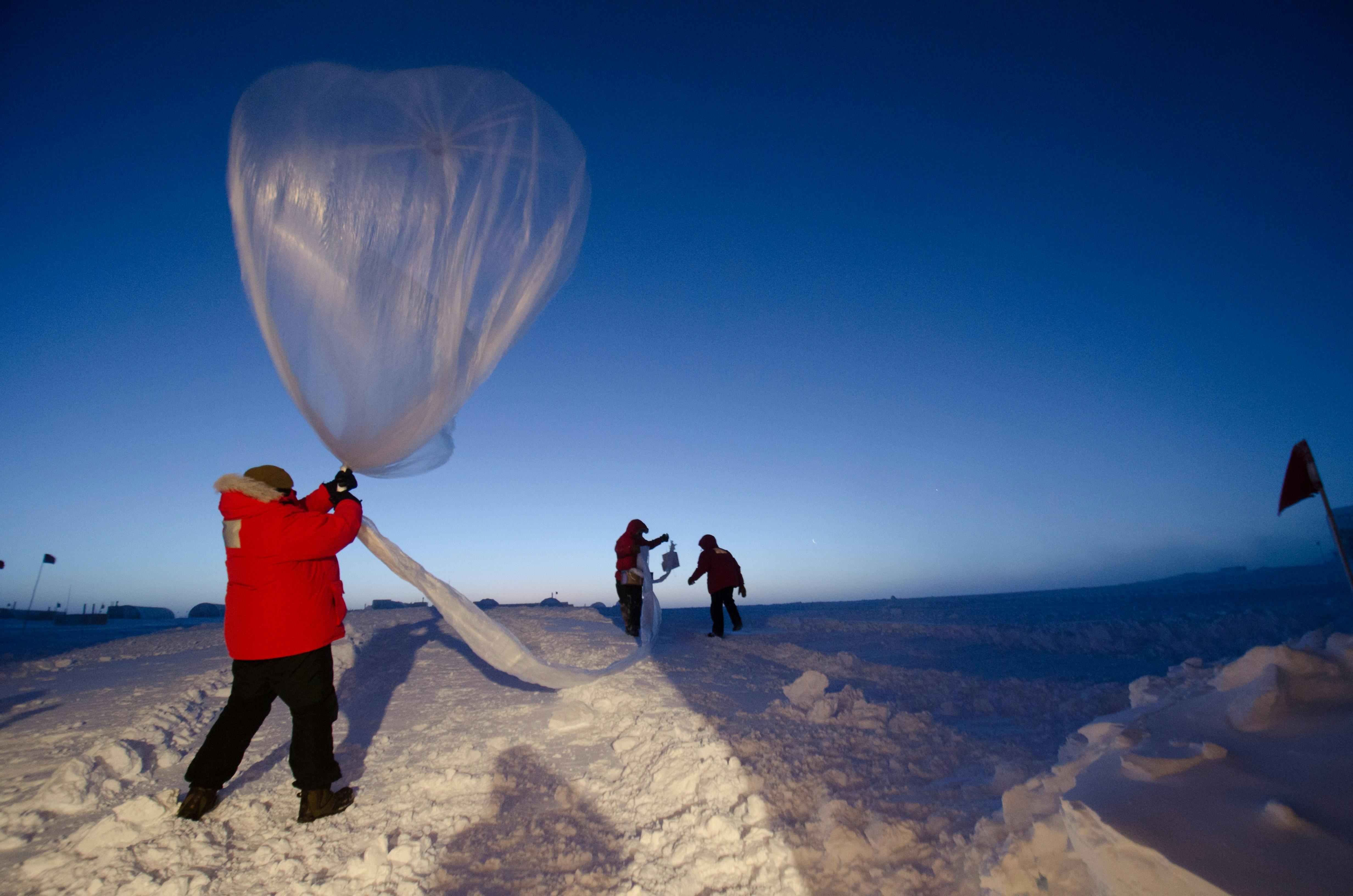 Exponential growth in big data and computing power is transforming climate science, where machine learning is playing a critical role in mapping the physics of our changing climate.
“What is happening within the field is revolutionary,” says School of Earth and Atmospheric Sciences Associate Chair and Professor Annalisa Bracco, adding that because many climate-related processes — from ocean currents to melting glaciers and weather patterns — can be described with physical equations, these advancements have the potential to help us understand and predict climate in critically important ways.
Bracco is the lead author of a new review paper providing a comprehensive look at the intersection of AI and climate physics
Georgia Tech Students Take Charge with New AI and Engineering Course
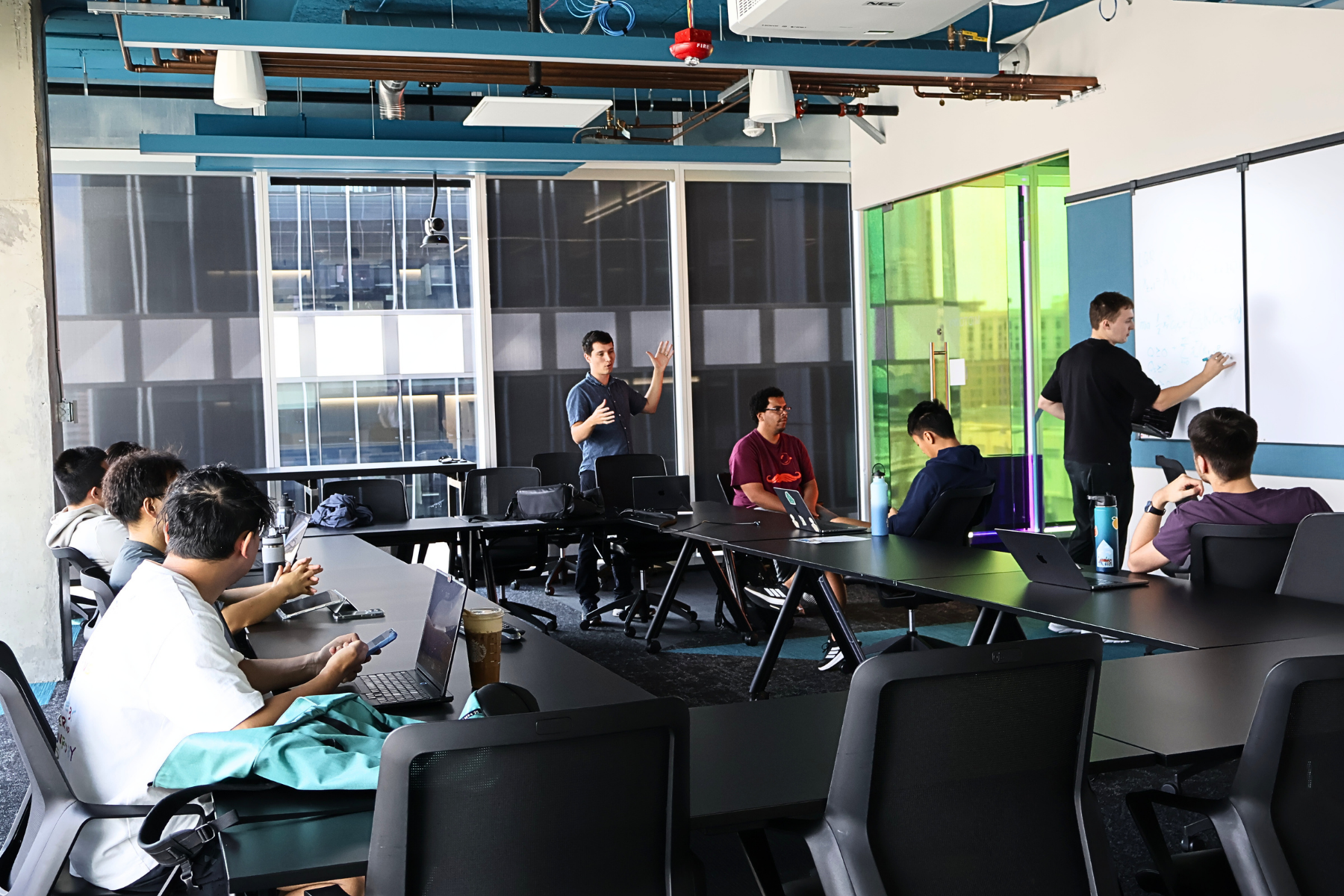 Andrew Rosemberg, with assistance from Michael Klamkin, both student researchers with the U.S. National Science Foundation AI Research Institute for Advances in Optimization (AI4OPT), designed the course to bridge gaps they saw in existing classrooms.
“While Georgia Tech offers excellent courses on optimization, control, and learning, we found no single class that connected all these fields in a cohesive way,” Rosemberg said. “In our research, it was clear these topics are deeply interconnected.”
Georgia Tech’s Jill Watson Outperforms ChatGPT in Real Classrooms
Jill Watson not only answers student questions with high accuracy. It also improves teaching presence and correlates with better academic performance. Researchers believe this is the first documented instance of a chatbot enhancing teaching presence in online learning for adult students.
AI Chatbots Aren’t Experts on Psych Med Reactions — Yet
Researchers at the Georgia Institute of Technology have developed a new framework to evaluate how well AI chatbots can detect potential adverse drug reactions in chat conversations, and how closely their advice aligns with human experts. The study was led by Munmun De Choudhury, J.Z. Liang Associate Professor in the School of Interactive Computing, and Mohit Chandra, a third-year computer science Ph.D. student. De Choudhury is also a faculty member in the Georgia Tech Institute for People and Technology.


