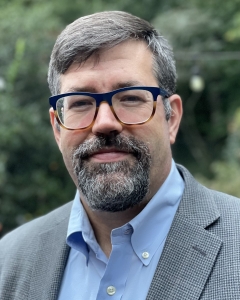
Matthew Torres

Matthew Torres
matthew.torres@biology.gatech.edu
Website

Matt is a former Tar Heel from UNC Chapel Hill. His training is in mass spectrometry-based proteomics and G protein signaling. He has been investigating PTMs since 2001. He is also a co-director of the Systems Mass Spectrometry Core (SYMS-C) facility at Georgia Tech.

Associate Professor
Phone
404-385-0401
Office
EBB 4009
Additional Research
Bioinformatics. My lab integrates mass spectrometry and experimental cell biology using the yeast model system to understand how networks of coordinated PTMs modulate biological function. Now well into the era of genomics and proteomics, it is widely appreciated that understanding individual genes or proteins, although necessary, is often not sufficient to explain the complex behavior observed in living organisms. Indeed, placing context on the dynamic network of relationships that exist between multiple proteins is now one of the greatest challenges in Biology. Post-translational modifications (PTMs, e.g. phosphorylation, ubiquitination and over 200 others), which can be readily quantified by mass spectrometry (MS), often mediate these dynamic relationships through enhancement or disruption of binding and/or catalytic properties that can result in changes in protein specificity, stability, or cellular localization. We use a combination of tools including quantitative mass spectrometry, yeast genetics, dose-response assays, in vitro biochemistry, and microscopy to explore testable systems-level hypotheses. My current research interests can be grouped into four main categories:(1)coordinated PTM-based regulation of dynamic signaling complexes, (2) cross-pathway coordination by PTMs, (3) PTM networks in stress adaptation, and (4) technology development for rapid PTM network detection.
Research Focus Areas
Google Scholar
https://scholar.google.com/citations?user=YU_CG7wAAAAJ&hl=en&oi=ao
http://biosciences.gatech.edu/people/matthew-torres
Matthew
Torres
Show Regular Profile

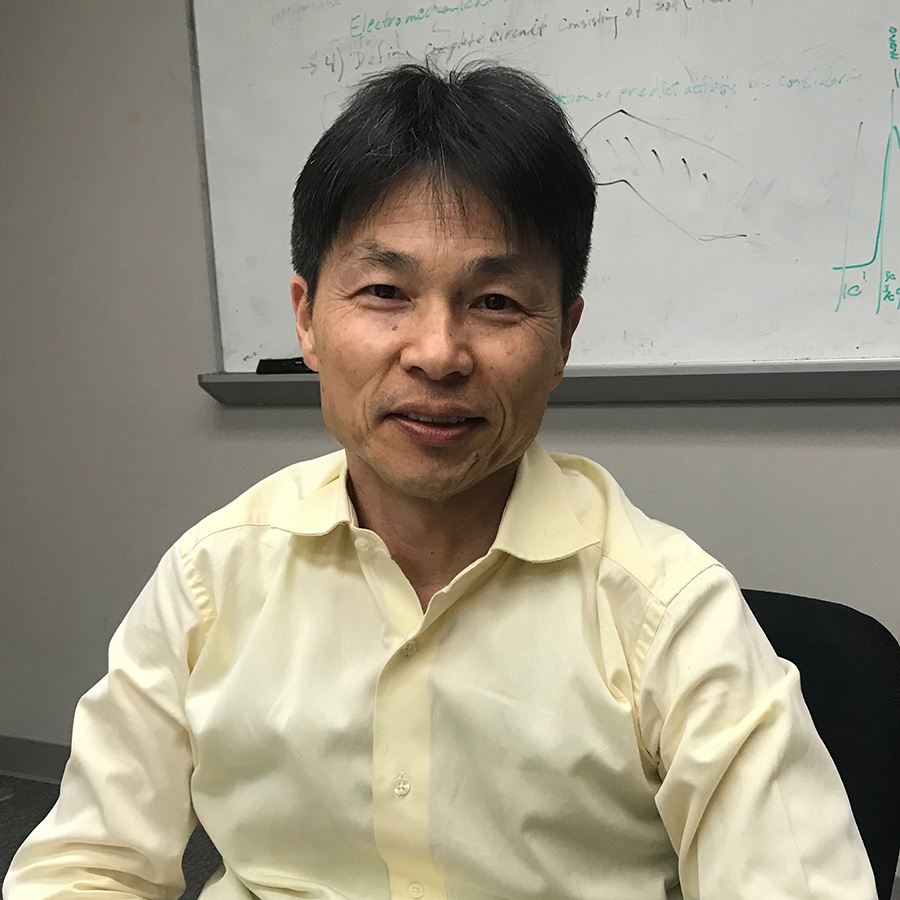
Minoru Shinohara

Minoru  Shinohara
shinohara@gatech.edu
Departmental Profile Page

Physiological and biomechanical mechanisms underlying fine motor skills and their adjustments and adaptations to heightened sympathetic nerve activity, aging or inactivity, space flight or microgravity, neuromuscular fatigue, divided attention, and practice in humans. He uses state-of-the-art techniques in neuroscience, physiology, and biomechanics (e.g., TMS, EEG, fMRI, single motor unit recordings, microneurography, mechanomyography, ultrasound elastography, and exoskeleton robot) in identifying these mechanisms.

Associate Professor; School of Biological Sciences
Phone
404.894.1030
Office
555 14th St | Suite 1309C
Additional Research

Neuromuscular Physiology

Google Scholar
https://scholar.google.com/citations?hl=en&user=oIbxZhIAAAAJ&view_op=list_works&sortby=pubdate
LinkedIn Human Neuromuscular Physiology Lab
Minoru
Shinohara
Show Regular Profile

David Ku

David Ku
david.ku@me.gatech.edu
Website

Selected recent publications:

➤ Robert G. Mannino, Eric J. Nehl, Sarah Farmer, Amanda Foster Peagler, Maren C. Parsell, Viviana Claveria, David Ku, David S. Gottfried, Hang Chen, Wilbur A. Lam, and Oliver Brand, “The critical role of engineering in the rapid development of COVID-19 diagnostics: Lessons from the RADx Tech Test Verification Core” Science Advances. 9, eade4962 (2023). https://www.science.org/doi/10.1126/sciadv.ade4962

➤ Liu ZL, Bresette C, Aidun CK, Ku DN. (2021) SIPA in 10 milliseconds: VWF tentacles agglomerate and capture platelets under high shear. Blood Advances doi.org/10.1182/bloodadvances.2021005692

➤ Kim DJ, Ku DN. “Structure of shear-induced platelet aggregated clot formed in an in vitro arterial thrombosis model” Blood Adv (2022) 6 (9): 2872–2883. doi.org/10.1182/bloodadvances.2021006248

➤ Kim DJ, Bressette C, Liu Z, Ku DN. Occlusive thrombosis in arteries.  APL Bioengineering  2019;3, 041502. https://doi.org/10.1063/1.5115554

Licensed Patents

➤ Ku, D.N., Wootton, D.M., Greer-Braddon, L., “Poly(vinyl Alcohol) Cryogel,” No. 5,981,826 and 6,231,605, issued May 15, 2001. Licensed; created prosthetic cartilage; acquired by Wright Medical. $645 million

➤ Denoziere, G., Ku, D.N., “Methods of Producing PVA Hydrogel Implants and Related Devices,” issued U.S. Patent No. 8,038,920, Licensed to Mimedx.  Market cap >$600 million.

Regents Professor
Lawrence P. Huang Chair in Engineering and Entrepreneurship
Executive Director, Atlantic Pediatric Device Consortium
Phone
404-894-6827
Office
Petit Biotechnology Building, Office 2307
Additional Research
New Project: Lysis of platelet clots to treat heart attacksBackground: Heart attacks and strokes come from a sudden thrombosis or accumulation of platelets in an artery.Our Findings: Our group has discovered the biophysical reason for this sudden occlusion and multiple points of therapy to prevent or dissolve the platelet-rich clot. Current Objectives: Quantify the architecture and strength of the thrombus to prevent or dissolve the thrombus using nano-devices and synthetic proteins.
Google Scholar
https://scholar.google.com/citations?user=PayZMckAAAAJ&hl=en
Related Site
David
Ku
N.
Show Regular Profile

Zachary Danziger

Zachary Danziger

The effortlessness of moving your body belies the lurking complexity driving it.

Roman Mezencev

Roman Mezencev

Roman Mezencev is an adjunct associate professor in the School of Biological Sciences at Georgia Tech and a scientist at the U.S.

Lynn Kamerlin

Lynn Kamerlin

Lynn Kamerlin received her Master of Natural Sciences from the University of Birmingham (UK), in 2002, where she remained to complete a PhD in Theoretical Organic Chemistry under the supervision

Alan Emanuel

Alan Emanuel

The Emanuel lab investigates how the sense of touch is generated in the mammalian brain by combining modern neurophysiology with mouse genetic manipulations. Dr.

Peter Kasson

Peter Kasson

Peter Kasson is an international leader in the study of biological membrane structure, dynamics, and fusion, with particular application to how viruses gain entry to cells. His group performs both high-level experimental and computational work – a powerful combination that is critical to advancing our understanding of this important problem. His publications describe inventive approaches to the measurement of viral fusion rates and characterization of fusion mechanisms, and to the modeling of large-scale biomolecular and lipid assemblies.

Aditi Das

Aditi Das

Aditi Das did her BSc. (Hons.) Chemistry from St. Stephen's College Delhi, followed by M.S. (Chemistry) from I.I.T (Kanpur). She received her Ph.D. in Chemistry from Princeton University. She did post-doctoral work with Prof. Steve Sligar. She joined University of Illinois, Urbana-Champaign (UIUC) as a tenure track assistant professor in 2012. In 2019, she was promoted to associate professor with tenure. In 2022, she joined School of Chemistry and Biochemistry at Georgia Institute of Technology as an associate professor with tenure.