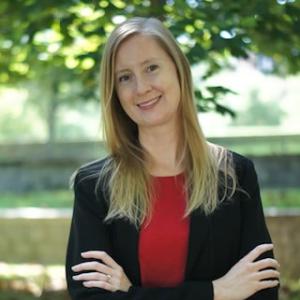
Michael Davis

Michael Davis

Dr. Davis holds positions as a Professor in both Cardiology and Biomedical Engineering at the Wallace H. Coulter Department of Biomedical Engineering at Georgia Tech and Emory University. Additionally, he serves as an associate chair for graduate studies at BME department, and a director of the Children's Heart Research and Outcomes (HeRO) Center. He received his Ph.D. in Molecular and Systems Pharmacology at Emory University in 2003 working on molecular regulation of eNOS expression by shear stress.

Lakshmi Dasi

Lakshmi Dasi

Lakshmi Prasad Dasi is an established researcher in the field of prosthetic heart valves, cardiovascular biomechanics, biomaterials, and devices. He is currently a tenure Professor of Biomedical Engineering, at Georgia Institute of Technology while holding the Rozelle Vanda Wesley Endowed Professorship as well as being the Associate Chair for Undergraduate Studies. He has held positions at The Ohio State University, and Colorado State University previously.

James Dahlman

James Dahlman

James Dahlman is a bioengineer / molecular engineer whose work lies at the interface of chemistry, nanotechnology, genomics, and gene editing. His lab focuses on targeted drug delivery, in vivo gene editing, Cas9 therapies, siRNA therapies, and developing new technologies to improve biomaterial design. 

Michelle LaPlaca

Michelle LaPlaca

Michelle C. LaPlaca, Ph.D. is an Associate Professor in the Department of Biomedical Engineering, a joint department between Georgia Tech and Emory University. Dr. LaPlaca earned her undergraduate degree in Biomedical Engineering from The Catholic University of America, Washington, DC, in 1991 and her M.S.E. (1992) and Ph.D. (1996) in Bioengineering from the University of Pennsylvania, Philadelphia, PA, in the area of neuronal injury biomechanics.

Gabe Kwong

Gabe Kwon

Dr. Gabe Kwong is an Assistant Professor in the Wallace H. Coulter Department of Biomedical Engineering at the Georgia Tech School of Engineering and Emory School of Medicine. His research program is conducted at the interface of the life sciences, medicine and engineering where a central focus is understanding how to harness the sophisticated defense mechanisms of immune cells to eradicate disease and provide protective immunity. Kwong has pioneered numerous biomedical technologies and published in leading scientific journals such as Nature Biotechnology and Nature Medicine.

Scott Hollister

Scott Hollister

I am the Patsy and Alan Dorris Chair of Pediatric Technology and Professor of Biomedical Engineering at the Georgia Institute of Technology. I also direct the Center for 3D Medical Fabrication (3DMedFab) and the Tissue Engineering and Mechanics Laboratory at Georgia Tech. We develop a range of 3D printed medical devices. We have over 25 devices implanted in patients for treatment of trachecobronchomalacia.

Shuichi Takayama

Shuichi  Takayama

Shu Takayama earned his BS and MS in Agricultural Chemistry at the University of Tokyo. He earned a Ph.D. in Chemistry at The Scripps Research Institute in La Jolla, California studying bio-organic synthesis with Dr. Chi‐Huey Wong. He then worked as a postdoc with Dr. George Whitesides at Harvard University where he focused on applying microfluidics to studying cell and molecular biology.

Robert Guldberg

Robert Guldberg

Robert E. Guldberg is the DeArmond Executive Director of the Phil and Penny Knight Campus for Accelerating Scientific Impact and Vice President of the University of Oregon. Guldberg’s research is focused on musculoskeletal mechanobiology, regenerative medicine, and orthopaedic medical devices. Over his 25+ year academic career, Dr. Guldberg has produced over 280 peer-reviewed publications, served as an advisor and board member for numerous biotechnology companies, and co-founded six start-ups. He was previously executive director of the Parker H.

Nian Liu

Nain Liu

Nian Liu began as an Assistant Professor at Georgia Institute of Technology, School of Chemical and Biomolecular Engineering in January 2017. He received his B.S. in 2009 from Fudan University (China), and Ph.D. in 2014 from Stanford University, where he worked with Prof. Yi Cui on the structure design for Si anodes for high-energy Li-ion batteries. In 2014-2016, he worked with Prof. Steven Chu at Stanford University as a postdoc, where he developed in situ optical microscopy to probe beam-sensitive battery reactions. Dr.