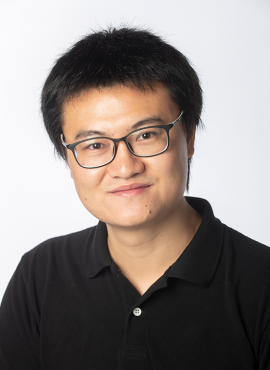
Jeffrey Young

 Jeffrey Young
jyoung9@gatech.edu
Website

I am currently a Senior Research Scientist at Georgia Tech working in the School of Computer Science in the College of Computing since 2015. Previously, I have worked as as a research scientist in the School of Computational Science and Engineering (CSE) from 2013 to 2015. This work focused on advanced user support and benchmarking for the Keeneland project and investigating architecture-related research topics for Dr. Jeff Vetter’s Future Technologies Group at Oak Ridge National Lab.

With a background in computer architecture, my main research interests are focused on the intersection of high-performance computing and novel accelerators including GPUs, Xeon Phi, FPGAs, and Arm SVE processors. I am currently working on a collaborative research program for near-memory computing with High Bandwidth Memory (HBM) for processors and GPUs, SuperSTARLU, which is funded by the NSF. I am co-director of Georgia Tech’s Center for High Performance Computing, and I am also the director of a novel architecture testbed, the CRNCH Rogues Gallery, that aims to simplify and democratize access to novel post-Moore accelerators in the neuromorphic, reversible, and novel networking spaces.

I defended my PhD in August 2013 in the area of computer architecture working under Dr. Sudhakar Yalamanchili. More information on this networks- and memory-related research can be found under the publications tab.

Research Scientist II
Research Focus Areas
University, College, and School/Department

Jeffrey
Young
Show Regular Profile

Gari Clifford

 Gari Clifford
gari@gatech.edu
Website

Dr. Gari Clifford is a tenured Professor of Biomedical Informatics and Biomedical Engineering at Emory University and the Georgia Institute of Technology, and the Chair of the Department of Biomedical Informatics (BMI) at Emory. His research focuses on the application of signal processing and machine learning to medicine to classify, track and predict health and illness. His focus research areas include critical care, digital psychiatry, global health, mHealth, neuroinformatics and perinatal health. After training in Theoretical Physics, he transitioned to AI and Engineering for his doctorate (DPhil) at the University of Oxford in the 1990’s. He subsequently joined MIT as a postdoctoral fellow, then Principal Research Scientist where he managed the creation of the MIMIC II database, the largest open access critical care database in the world. He later returned as an Associate Professor of Biomedical Engineering to Oxford, where he helped found its Sleep & Circadian Neuroscience Institute and served as Director of the Centre for Doctoral Training in Healthcare Innovation at the Oxford Institute of Biomedical Engineering. As Chair, Dr Clifford has established BMI as a leading center for critical care and mHealth informatics, and as a champion for open access data and open source software in medicine, particularly through his leadership of the PhysioNet/CinC Challenges and contributions to the PhysioNet Resource. Despite this, he is a strong supporter of commercial translation, working closely with industry, and serves as CTO of MindChild Medical, a spin out from his research at MIT.

Chair, BMI & Professor of BMI and BME
Additional Research

Health Information Technology

Research Focus Areas
University, College, and School/Department

Gari
Clifford
Show Regular Profile

Craig Tovey

Craig Tovey
craig.tovey@isye.gatech.edu
ISyE Profile Page

Craig Tovey is a Professor in the H. Milton Stewart School of Industrial and Systems Engineering at Georgia Tech. He also co-directs CBID, the Georgia Tech Center for Biologically Inspired Design. 

Dr. Tovey's principal research and teaching activities are in operations research and its interdisciplinary applications to social and natural systems, with emphasis on sustainability, the environment, and energy. His current research concerns inverse optimization for electric grid management, classical and biomimetic algorithms for robots and webhosting, the behavior of animal groups, sustainability measurement, and political polarization.  

Dr. Tovey received a Presidential Young Investigator Award in 1985 and the 1989 Jacob Wolfowitz Prize for research in heuristics. He was granted a Senior Research Associateship from the National Research Council in 1990, was named an Institute Fellow at Georgia Tech in 1994, and received the Class of 1934 Outstanding Interdisciplinary Activity Award in 2011. In 2016, Dr. Tovey was recognized by the ACM Special Interest Group on Electronic Commerce with the Test of Time Award for his work as co-author of the paper “How Hard Is It to Control an Election?” He was a 2016 Golden Goose Award recipient for his role on an interdisciplinary team that studied honey bee foraging behavior which led to the development of the Honey Bee Algorithm to allocate shared webservers to internet traffic. 

Dr. Tovey received an A.B. in applied mathematics from Harvard College in 1977 and both an M.S. in computer science and a Ph.D. in operations research from Stanford University in 1981. 

Professor; School of Industrial and Systems Engineering
Phone
404.894.3034
Office
Groseclose 420
Additional Research
  • Algorithms & Optimizations
  • Energy
Research Focus Areas
University, College, and School/Department

Craig
Tovey
Show Regular Profile

Chao Zhang

 Chao Zhang
zhang@gatech.edu
Website

Chao Zhang is an Assistant Professor at the School of Computational Science and Engineering, Georgia Institute of Technology. His research area is data mining, machine learning, and natural language processing. His research aims to enable machines to understand text data in more label-efficient and robust way in open-world settings. Specific research topics include weakly-supervised learning, out-of-distribution generalization, interpretable machine learning, and knowledge extraction and reasoning. He is a recipient of Google Faculty Research Award, Amazon AWA Machine Learning Research Award, ACM SIGKDD Dissertation Runner-up Award, IMWUT distinguished paper award, and ECML/PKDD Best Student Paper Runner-up Award. Before joining Georgia Tech, he obtained his Ph.D. degree in Computer Science from University of Illinois at Urbana-Champaign in 2018.

Assistant Professor
Additional Research

Data Mining

Research Focus Areas
University, College, and School/Department

Chao
Zhang
Show Regular Profile

Maribeth Gandy

Maribeth Gandy
maribeth@gatech.edu

Maribeth Gandy Coleman is a Regent's Researcher and Director of Research for the Institute of People and Technology at Georgia Tech. She received a B.S. in Computer Engineering as well as a M.S. and Ph.D. in Computer Science from Georgia Tech. In her 20+ as a research faculty member her work has been focused on the intersection of technology for mobile/wearable computing, augmented reality, human computer interaction, assistive technology, and gaming. She is a computer scientist focused on developing novel and scientifically validated systems at the “human technology frontier” designed for purposes such as training, rehabilitation, and cognitive training, utilizing cutting-edge technology such as augmented and virtual reality. For example, she lead an initiative (funded by National Science Foundation, Dept of Education, and ACT Inc.) to research the design of games for cognitive training and assessment for older adults, persons with disabilities, and K-12 students. She also previously led a project funded by Georgia Tech’s Health Systems Institute to develop home-based computer games for stroke rehabilitation. In her AR research, she is interested in advancing AR as a new medium by focusing on authoring, evaluation, and deployment. She was the lead architect on a large open source software project called the Designer’s Augmented Reality Toolkit (DART), which had thousands of users and was used to create a variety of large-scale AR systems. She was also co-PI on an NSF grant focused on the development of presence metrics for measuring engagement in AR environments using qualitative and quantitative data. She has also applied AR technologies to a STEM education project for teens, explored how AR interfaces can enhance user abilities during maintenance and repair tasks, and is currently studying the use AR and mobile technologies to make Internet of Things environments more approachable and useful to communities. In her Director role she is responsible for organizational leadership & strategic planning, fundraising, convening & managing diverse teams, industry/academic partnerships, and translational work including commercialization of intellectual property.

Assistant Vice Provost for Research Faculty
Director of Research for IPaT, Regents' Researcher
Phone
(404) 894-3638
Additional Research

Augmented/Mixed Reality; Mobile/Wearable Computing; Gaming; Computer Audio; Assistive and Rehabilitation Technologies; Human Computer Interaction; Virtual Reality

University, College, and School/Department

Maribeth Gandy
Coleman
Show Regular Profile

Richard Catrambone

Richard Catrambone
richard.catrambone@psych.gatech.edu
Website

Dr. Catrambone's research interests include: 

  • Creating examples to help learners form meaningful and generalizable solution procedures. I and the students in my lab have explored this issue in domains ranging from probability and physics to ballet. 
  • The use of task analysis techniques for identifying what a person needs to learn in order to solve problems or carry out procedures in some domain. 
  • Using information from task analyses to guide the construction of teaching and training materials including computer-based (multimedia) instructional environments. 
  • Exploring technology such as animations and embodied conversational agents (ECAs) for improving interfaces and helping people learn and carry out tasks more easily. 
  • Analogical Reasoning
Professor
Phone
404-894-2680
Additional Research

Instructional Design; Human-Computer Interaction; Educational Technology; Multi-Media Learning Environments; Training; Problem Solving

University, College, and School/Department

Richard
Catrambone
Show Regular Profile