2026 Frontiers in Science: Advancing Space Exploration

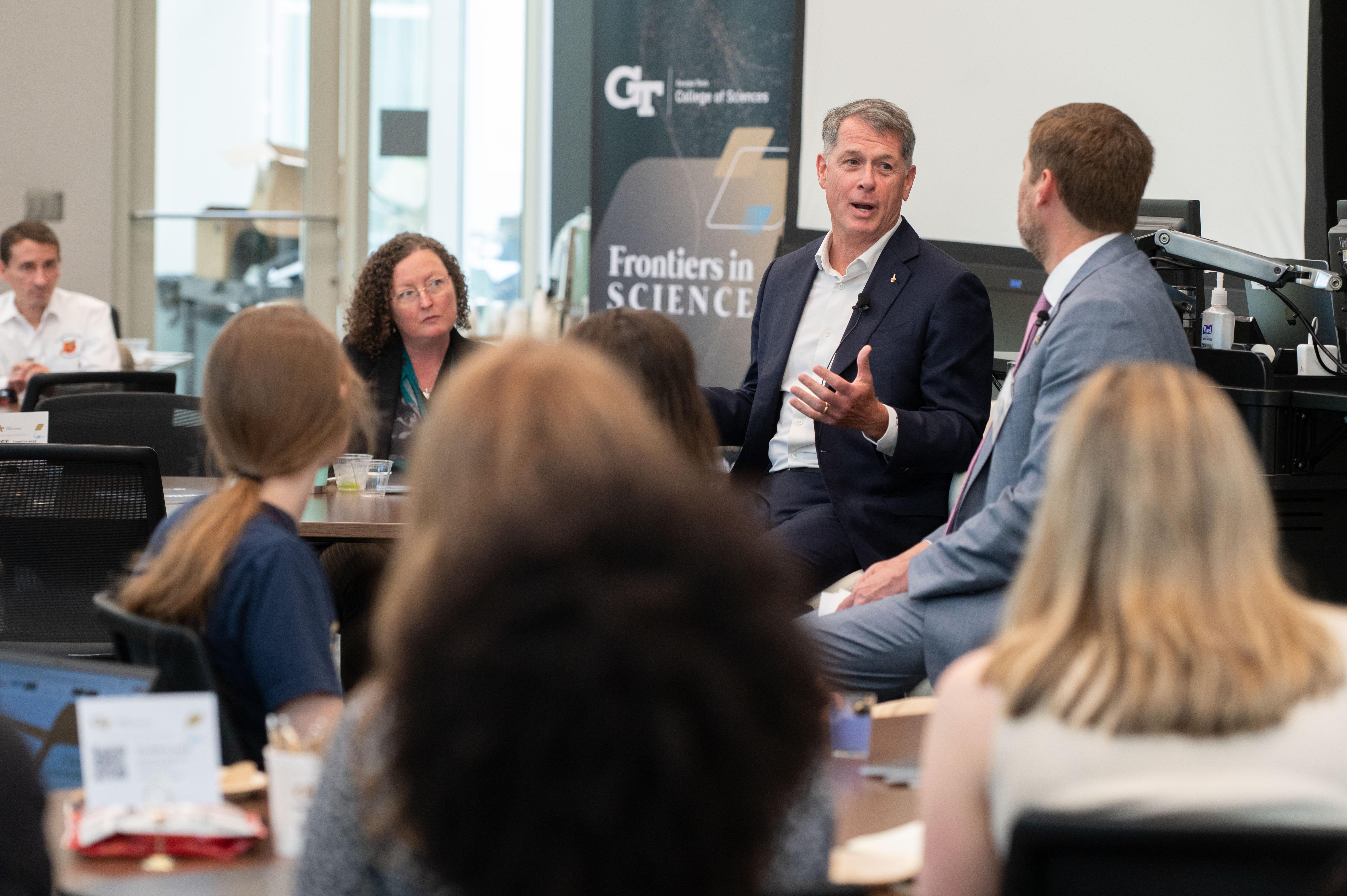
R. Shane Kimbrough speaks in front of room of people during a fireside chat

One day after the historic Artemis II launch, the College of Sciences welcomed more than 150 researchers, students, and community members to its signature Frontiers in Science conference. Held on April 2, the full-day event focused on space research guiding discovery and innovation.

As during previous editions, this year’s conference featured more than two dozen scientists, engineers, policy experts, and thought leaders from Georgia Tech and beyond, illustrating how collaboration across fields – from science and engineering to public policy and international affairs – helps to advance strategic research priorities. 

“Frontiers is about discovery and connections across disciplines and generations,” says Susan Lozier, dean of the College of Sciences and Betsy Middleton and John Clark Sutherland Chair. “This edition provided an inspiring glimpse into the future of space exploration and the many ways Georgia Tech is contributing to research and missions seeking answers to what lies beyond our planet.” 

Commitment to Space

Space research is a key institutional priority at Georgia Tech, which is home to numerous academic and research programs in planetary sciences, robotics, mission design, space policy, and other areas. 

The recently established Space Research Institute (SRI) serves as the central hub connecting the broad range of space-related research across campus. Led by Jud Ready, who also serves as principal research engineer at the Georgia Tech Research Institute, SRI has expanded support for space research and commercialization through initiatives such as the CreationsVC Space Fellows Program and Centers, Programs, and Initiatives seed grant program.

SRI’s efforts are in line with Georgia Tech’s long-standing contribution to space exploration. Hundreds of Yellow Jacket alumni work in the space sector, including several graduates who are playing key roles in the Artemis program. To date, more than a dozen Georgia Tech alumni have traveled to space.

Exploring the Final Frontier

The conference featured a series of panels and discussions led by faculty and researchers from the Colleges of Sciences and Engineering as well as the Ivan Allen College of Liberal Arts. 

Sessions explored how researchers are studying the processes and conditions that support planetary habitability, seeking to answer one of humanity’s greatest questions: Does life exist beyond Earth? Speakers also examined how analog fieldwork in Earth’s extreme environments can inform space exploration, and how space research, in turn, can deepen our understanding of our own world.

Additional conversations centered on building better space missions through improved understanding of team and individual resilience, data collection, navigation, and the development of advanced technologies like the robots developed through the NASA LASSIE Project

Frontiers also highlighted Georgia Tech’s commitment to preparing the next generation of space scientists, engineers, and leaders. Student training and engagement were recurring themes throughout the day, with speakers emphasizing opportunities for student-led and student-run missions and research. A panel of Georgia Tech alumni shared their own STEM career journeys, challenging the idea of “one right path” to success — and acknowledging the resources and opportunities available at the Institute. 

A highlight of the conference was a fireside chat with Atlanta-native, retired U.S. Army Colonel and NASA Astronaut R. Shane Kimbrough (M.S. Operations Research 1998). Kimbrough, who spent a total of 388 days in space and performed nine spacewalks across three missions, reflected on his career and the evolution of spaceflight. He emphasized the expanding role of public-private and international partnerships in advancing ambitious goals, such as creating a permanent human outpost on the Moon. 

Policy and Public

The conference also explored how policy influences space discovery and innovation, with discussions touching on such issues as space security, access, governance, sustainability — and the influence of technology and science fiction on public perception and policy. 

Panelists described current policy frameworks governing outer space as struggling to keep pace with rapidly advancing technologies and expanding activities. According to these experts, increasing tensions among commercial, research, and recreational uses of space call for greater coordination among private and government entities to balance competing priorities while maximizing opportunities for innovation and exploration. 

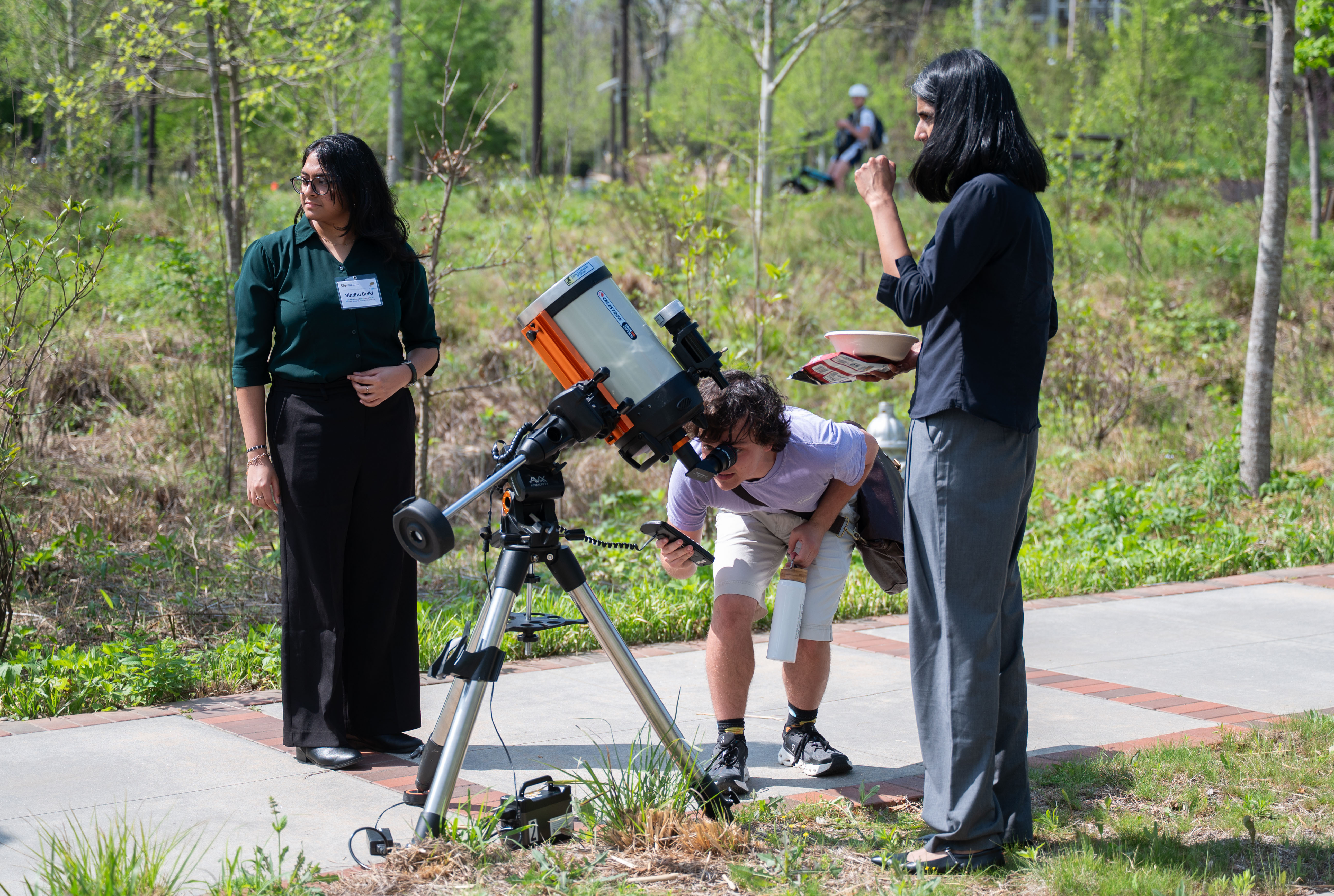
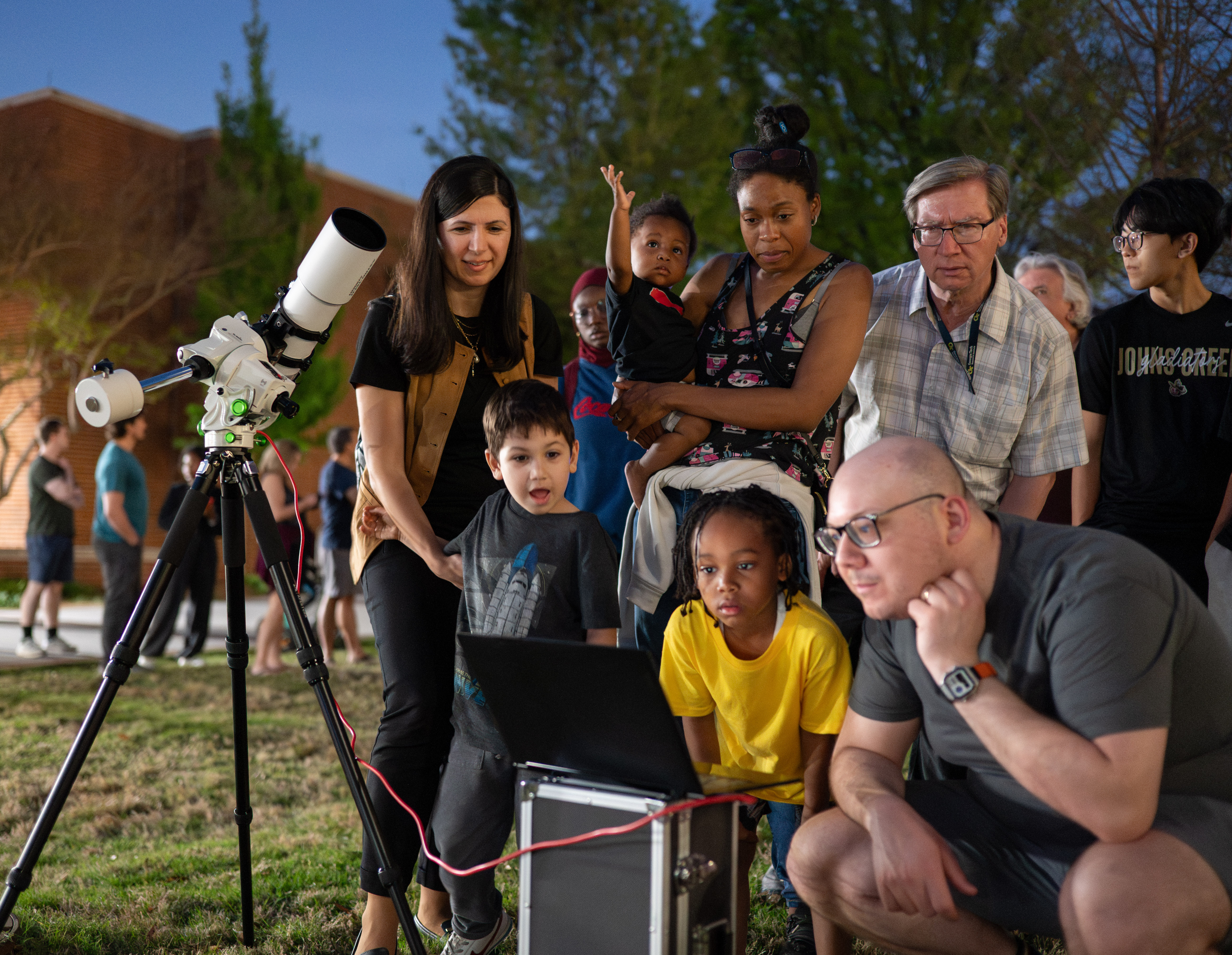
The conference was punctuated by a networking lunch connecting attendees with Atlanta’s public astronomy community – including partners at several universities and the Georgia Tech Astronomy Club, which set up telescopes for attendees to safely observe the sun. Later that evening, the Georgia Tech Observatory hosted its Public Night, welcoming the broader Atlanta community to campus for telescope views of Jupiter, the Orion Nebula, and other celestial bodies. 

The Observatory Night was a fitting conclusion to a full day focused on Georgia Tech’s commitment and contributions to inspiring future generations of space explorers through research, education, and outreach. 

Experience the Frontiers conference in pictures on the College of Sciences’ Flickr account.

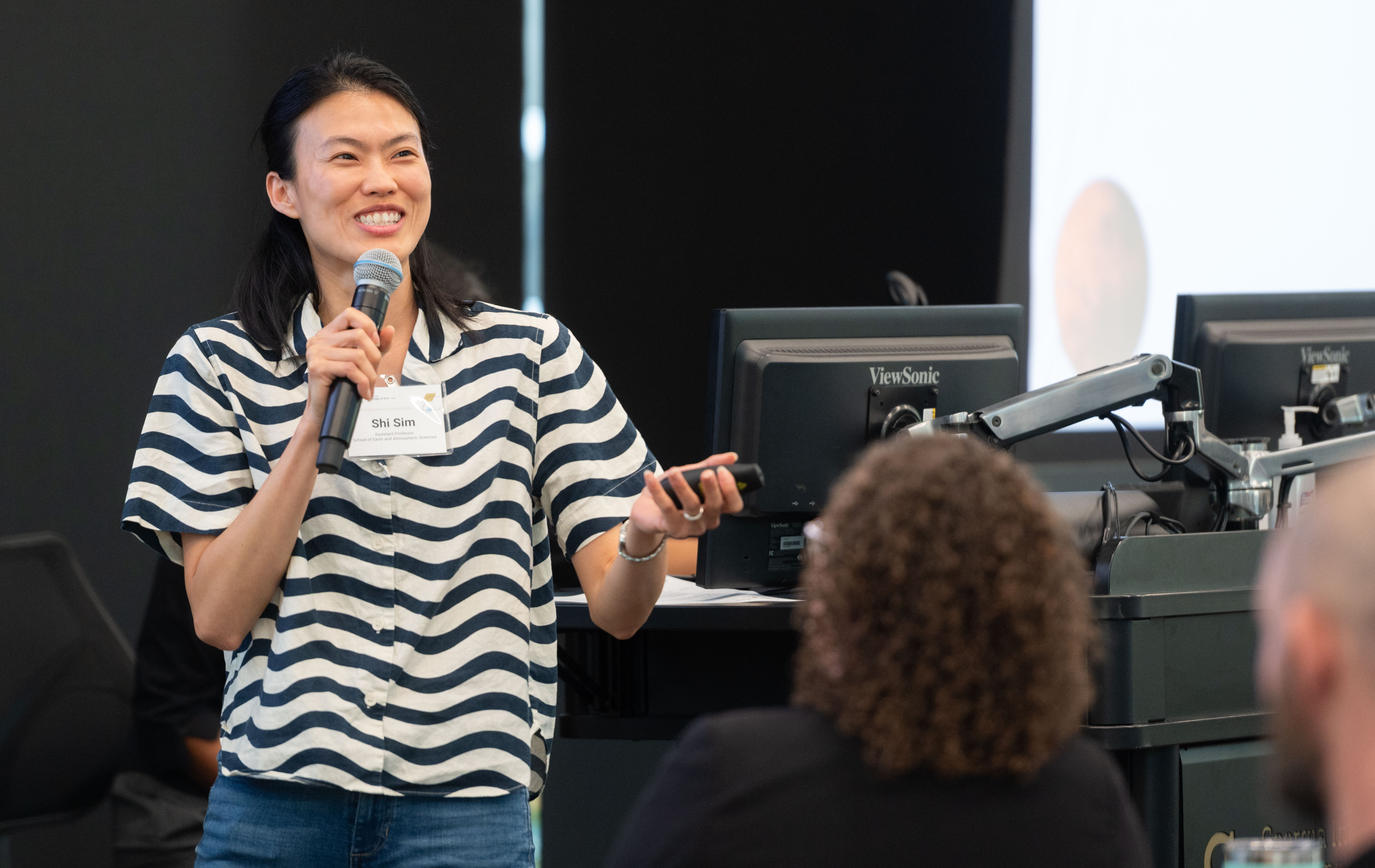
Joyce Shi Sim holds a microphone and laser pointer while presenting to room of people
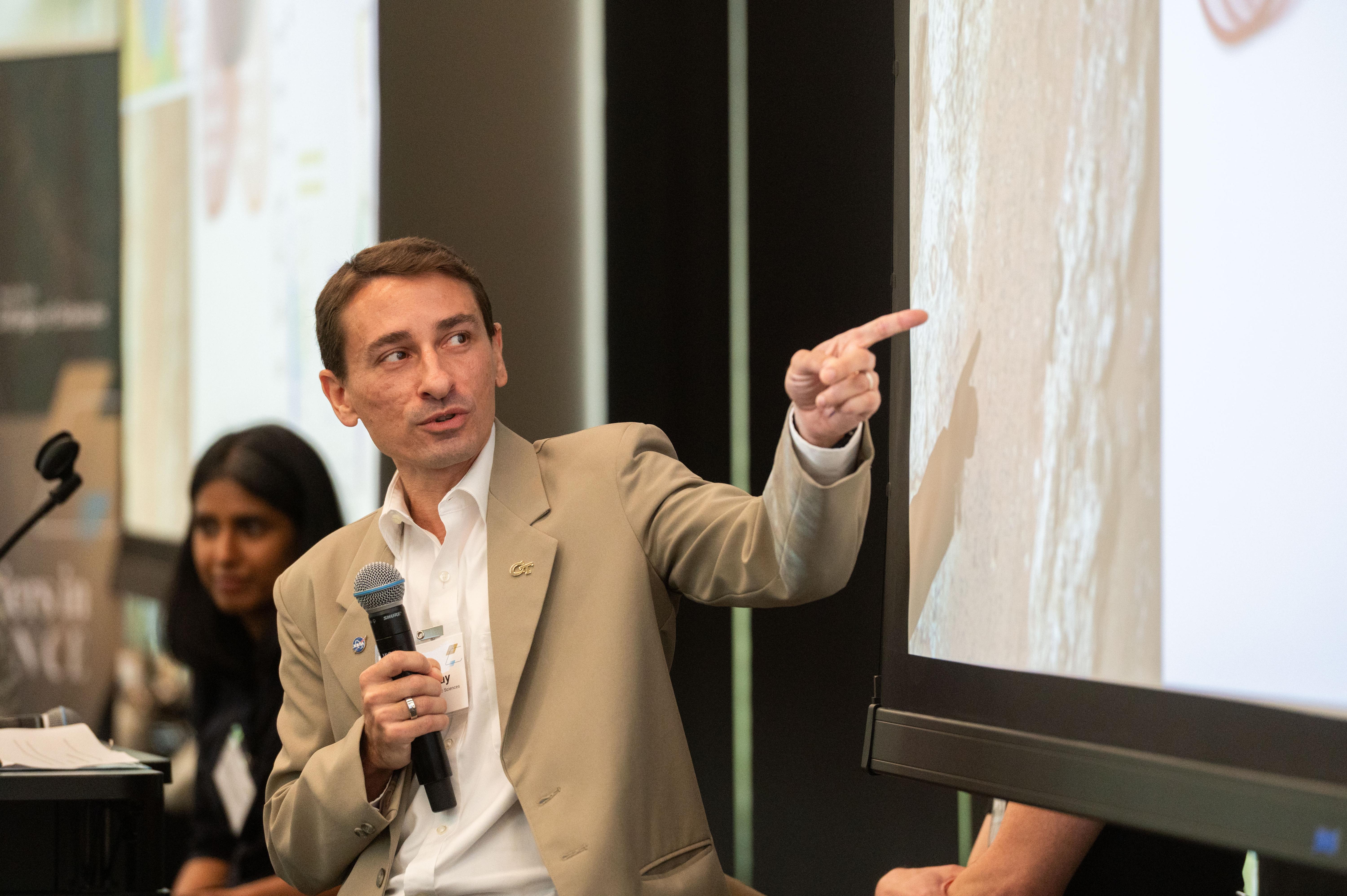
Professor James Wray holds microphone and points to powerpoint slide during his presentation
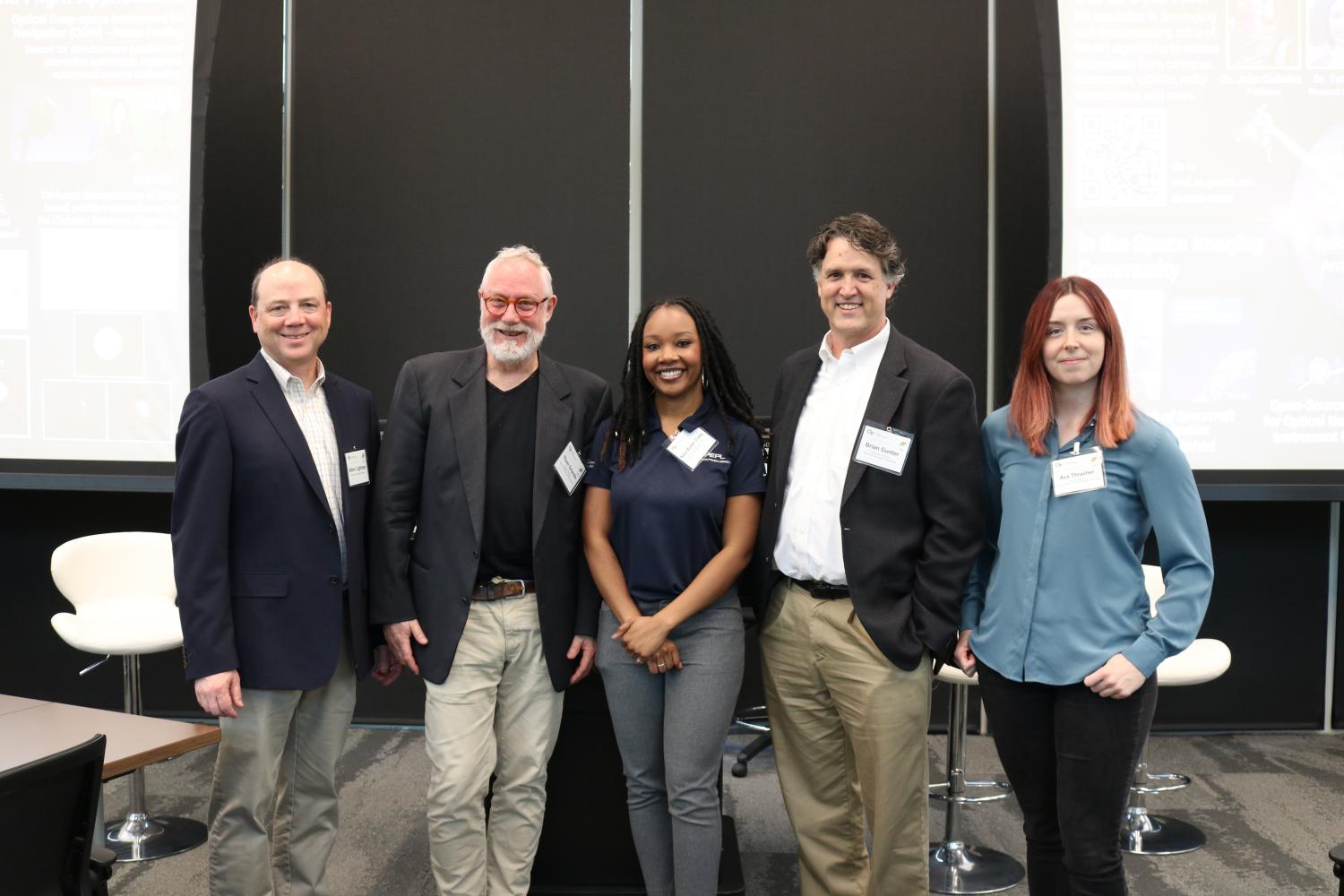
Group photo of five people, including Georgia Tech faculty
Three people stand outdoors with one person looking at the sun through a telescope
Adults and children observing the night sky through a computer that is connected to a telescope
 
News Contact

Writer: Lindsay C. Vidal

Fixing Flooding for the Southeast’s Future

Post-hurricane flooding inundates residential areas and transportation infrastructure, with low-lying terrain overwhelmed by storm surge and excessive rainfall.

Flooding dominated the headlines of summer 2025. Atypical storms and rising rivers in the Texas Hill Country washed away an entire summer camp. Glacial snow melt, combined with flash river floods, caused hundreds of deaths in Pakistan. As the Atlantic hurricane season hits its peak, Americans wait to see if another storm may be as unexpectedly devastating as 2024’s Hurricane Helene

Flooding can be an existential threat, affecting everything from infrastructure to health. Georgia Tech researchers are developing solutions to monitor and forecast flooding, as well as restore ecosystems to prevent future flooding. These efforts support communities’ resilience in the face of climate change and keep the U.S. secure.

Read more »


AI for Science and Engineering Collaboration Workshop


Artificial Intelligence (AI) and Machine Learning (ML) are transforming science and engineering — from groundbreaking achievements like protein structure prediction (AlphaFold) to the broad adoption of large language models. Building on this momentum, the Institute for Data Engineering and Science (IDEaS) will host a one-day workshop on Monday, October 13, to explore how AI/ML can drive the next wave of advances in science and engineering at Georgia Tech.

Deep Dive Into Shark Ecology Provides Path to Conservation

Whale shark in the ocean.

Cameron Perry swims alongside a whale shark on a Georgia Aquarium expedition off the coast of St. Helena in the South Atlantic Ocean. Submitted photo.

Few animals captivate people’s imagination like sharks. From the enduring cultural legacy of Jaws, which celebrated its 50th anniversary this year, to the continued popularity of the Discovery Channel's Shark Week, now in its 37th year, media portrayals of the apex predator can shape public perception, illuminate their role within Earth's ecosystems, and influence conservation efforts.  

For Cameron Perry, every week is shark week. The Georgia Tech alumnus earned his Ph.D. in ocean science and engineering in 2024 and now leads the whale shark and manta ray initiatives at Georgia Aquarium.  

As a 6-year-old listening to his mother read him Twenty Thousand Leagues Under the Sea and imagining the creatures Captain Nemo encountered, Perry had dreams of exploring the oceans for himself. When he saw his first whale shark in Georgia Aquarium's 6.3-million-gallon tank, he set out to learn as much as he could about the gentle giants and help to conserve the endangered species.  

Perry's research has taken him around the world to observe whale shark behaviors in St. Helena and the Galapagos Islands, working to understand their migration habits, reproduction, and global ecology. While most people won't encounter sharks daily as he does, Perry sees the aquarium as well as the media as effective tools in showcasing sharks in the proper light.  

"They are kind of mysterious and unknown. For many people, they've never encountered sharks in their lifetime, and part of that captivation could lead to fear, but education can turn that fear into wonder and awe. There's a narrative that these animals are mindless eating machines, but the more you learn, you realize that's not the case," he said. “These creatures have existed for 400 million years; they're older than trees, and understanding their role on our planet is important to changing the narrative around sharks." 

Perry likens sharks to the white blood cells of the ecosystems in which they live, as they help prevent the spread of disease through the consumption of dead or diseased prey, contribute to population control, and provide balance to the ocean's biodiversity.  

Understanding Our Role 

While at Georgia Tech, Perry worked alongside Regents’ Chair and Harry and Anna Teasley Chair in Environmental Biology Mark Hay, whose research has highlighted the role that sharks, and other large predators, play in habitat regulation within coral reefs. Hay explains that overfishing and other human activities have decimated shark populations in certain parts of the world, significantly affecting coral reefs and the populations that rely on them.  

As the manager of a freshwater beach in Kentucky in 1975, Hay saw firsthand the impact that Jaws had on the beachgoing public at the time — including his lifeguards.  

“I had about 25 lifeguards, and I made them swim a mile every day on our buoy line. After we all went to see Jaws, about half of them refused to swim the mile for over a week. They'd look at me and say, 'You can fire me. I'm not going in,' and I'd laugh and say, ‘We're in freshwater. Jaws isn't in there.’"   

Hay said that while the movie remains a favorite of his, its depiction of sharks isn't representative of their behavior in the wild, as shark attacks are often accidents, not predatory actions. Like Perry, Hay believes that education can help protect sharks and bring a renewed focus to solving the ongoing issues facing the oceans.  

"These ecosystems are degrading, and it's us that's doing it. What I am trying to do in my teaching is to go beyond cataloging the demise and take a more Georgia Tech-type approach by saying, 'If the bridge is broken, we have to be the ones to rebuild it,'" he said.  

Hay keeps a saber-toothed tiger fossil on his desk as a constant reminder to himself that "everything I study was shaped by what used to be here," and how understanding nature can help preserve it for the future. Sharks are a captivating species, and both Perry and Hay stress that continued research and a commitment to education are the key to their conservation. 

 
News Contact

Steven Gagliano – Institute Communications

Jenny McGuire Named Teasley Professor

A woman stands behind a row of skulls.

Jenny McGuire

The College of Sciences is pleased to announce Jenny McGuire as the recipient of the Harry and Anna Teasley Professorship in Ecology.

The newly endowed faculty position supports research and teaching that meaningfully advances the understanding and responsible stewardship of species and community dynamics amid evolving ecological interactions driven by global environmental change. 

McGuire, an associate professor in the School of Biological Sciences and the School of Earth and Atmospheric Sciences, was selected for her pioneering ecological research and exceptional teaching efforts.

“Jenny’s creative and fundamental research in spatial and community ecology is helping to position Georgia Tech as a leader in biodiversity and ecosystem conservation,” says Todd Streelman, professor and chair of the School of Biological Sciences. “Her appointment continues a trend in the School to award research endowments to our most promising early- and mid-career scientists and highlights the strong support and generosity of alumni such as the Teasley family.”

Meet Jenny McGuire

McGuire joined the Georgia Tech faculty in 2017 as an assistant professor. She earned a Ph.D. in Integrative Biology from the University of California, Berkeley, and completed postdoctoral research at the National Evolutionary Synthesis Center and the University of Washington.

Her research explores how plants and animals respond to environmental changes across space and time — from the ancient past to modern urban environments to the future. She leads the Spatial Ecology and Paleontology Lab, which integrates paleontological data, ecological modeling, and fieldwork to understand how biodiversity shifts in response to climate change and human development.

“Our goal isn’t just to preserve biodiversity, but also to help it thrive in a changing landscape,” says McGuire.

She plans to use the Teasley endowment to advance wildlife redistribution research in the Southeastern U.S.

“Georgia is a climate change highway,” explains McGuire. “Species are moving northeast toward the Appalachian Mountains, but roads, development, and fragmented habitats often block their paths.”

McGuire believes Georgia Tech is uniquely positioned to lead in this field, thanks to its technological strengths. She and her team will collaborate across campus and the Southeast, implementing cutting-edge biodiversity monitoring to better understand how species experience and respond to environmental changes.

“Conducting this research in urban areas like Atlanta — where green infrastructure can serve as vital wildlife corridors — is especially important,” adds McGuire.

The Teasley Professorship will also support student involvement at all levels. McGuire hopes to build a more connected and proactive research community that brings together students, ecologists, biologists, engineers, computer scientists, and community partners to address biodiversity challenges across the Southeast.

McGuire is a 2024 Cullen-Peck Fellow, a Brook Byers Institute for Sustainable Systems Faculty Fellow since 2023, and an NSF CAREER Award winner. Her long-running outreach program, Fossil Fridays, invites students, families, and community members into the lab to sort and study real fossil specimens.

Looking ahead, she’s eager to explore the possibilities provided by the Teasley Professorship.

“It’s an incredible opportunity to elevate Georgia Tech’s role in shaping how we understand and protect life on a changing planet.”

A legacy of excellence

Harry E. Teasley, Jr. graduated from Georgia Tech in 1959 with a degree in industrial engineering and worked for over 33 years for The Coca-Cola Company. In addition to the many leadership roles he held at Coca-Cola, Mr. Teasley is remembered for pioneering the first Life Cycle Assessment (LCA) to be used in an industrial context. LCA was a pioneering analytical framework assessing environmental impacts of a product's life from "cradle to grave," and it is used across most major industries today. 

The Harry and Anna Teasley Professorship in Ecology is the second Teasley Professorship supporting environmental research at Georgia Tech. School of Biological Sciences Regents’ Professor Mark Hay has held the Harry and Anna Teasley Chair in Environmental Biology since 1999.

Mrs. Teasley provided an official statement regarding the Harry and Anna Teasley Professorships at Georgia Tech:

“It was the intent of my late husband Harry E. Teasley Jr. that the funds he gave to Professor Mark Hay at Georgia Tech would be to support excellence in the field of environmental biology and to provide him with the freedom to study any concept, hypothesis, or organism that his experience-honed intuition guided him to.  

With time, Professor Hay has proven to have been a very worthy choice and has made my late husband and I very proud through the breadth and depth of his studies, discoveries, and highest possible awards he has received. Once this was established, and along with the profound esteem both men had developed for each other, there was the wish to leave a legacy beyond the research: the human values and scientific approach to research that Professor Hay has demonstrated from the start.  

Having been the unanimous choice of the evaluating committee, Associate Professor Jenny McGuire seems to be an excellent first recipient, and I am very proud to welcome her as I know my late husband would have been as well. 

I wish her many successes in pursuing and teaching her very promising research, and I look forward to learning about the impact she will have in her field as we have through the years admired Professor Mark Hay’s achievements.

###

To learn more about Transforming Tomorrow: The Campaign for Georgia Tech, visit transformingtomorrow.gatech.edu

 
News Contact

Laura S. Smith, writer

College of Sciences Announces Launch of AI4Science Center

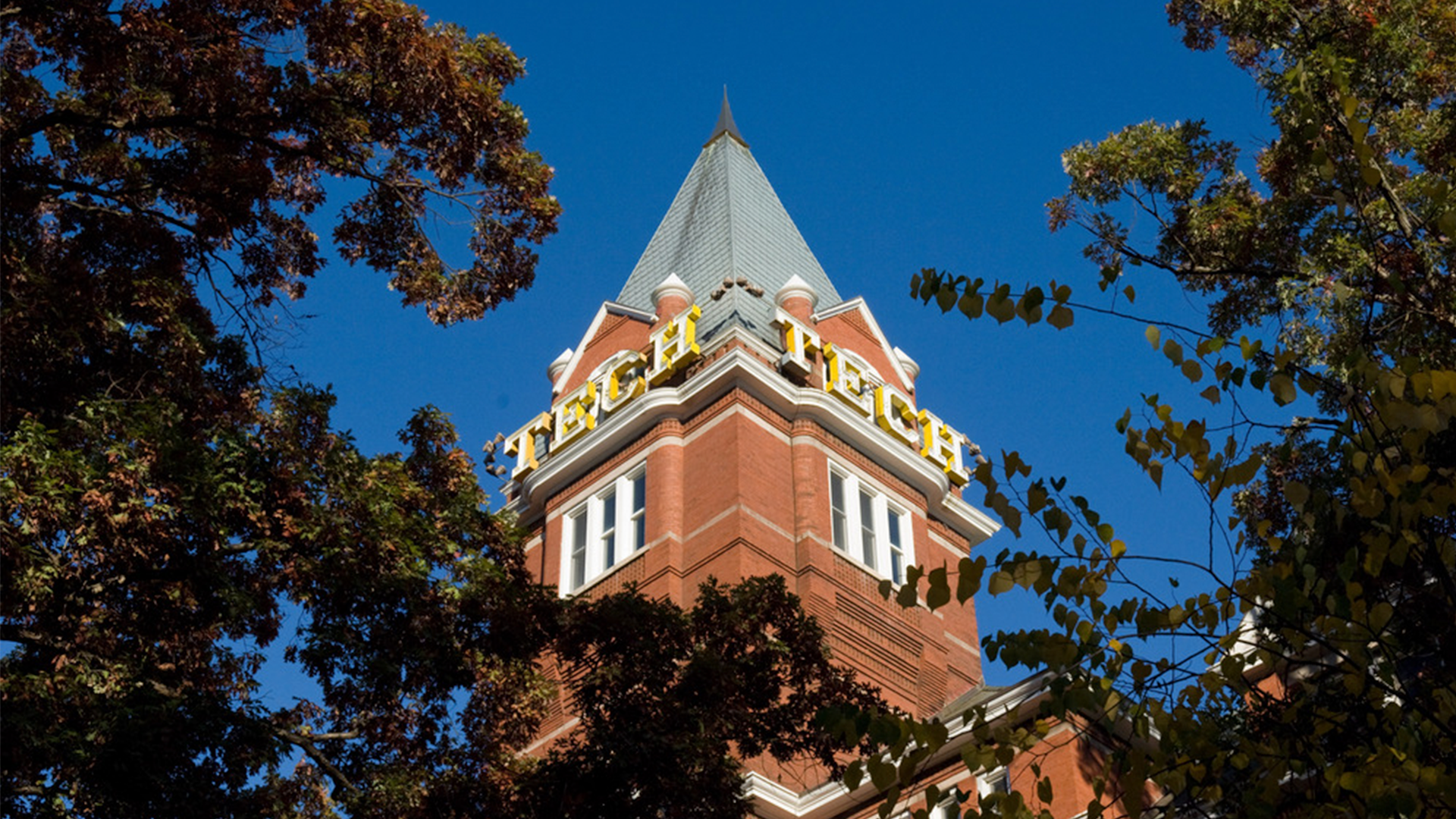
Tech Tower

The College of Sciences is pleased to announce the launch of the AI4Science Center. The center will promote research and collaboration focused on using state-of-the-art artificial intelligence (AI) and machine learning (ML) techniques to address complex scientific challenges.

“AI and ML have the potential to revolutionize scientific discovery, but there is a clear need for foundational research centered on AI/ML methodologies and application to scientific problems,” says Dimitrios Psaltis, professor in the School of Physics.

Psaltis will co-lead the center with Molei Tao, professor in the School of Mathematics, and Audrey Sederberg, assistant professor in the School of Psychology.

The new center will combine expertise and resources from various disciplines to foster the creation of robust, reusable tools and methods that can be used across scientific domains. Specifically, the center will organize seminars and an annual conference in addition to providing seed funding for collaborative projects across units. 

Nearly 40 faculty members from the College’s six schools have already agreed to participate in activities proposed by the center; additional faculty involvement is expected from across the Institute.

The center builds upon initiatives such as Tech AI, the Machine Learning Center, and the Institute for Data Engineering and Science, which seek to boost Georgia Tech’s leadership in cutting-edge, AI/ML-powered interdisciplinary research and education.

The College’s seed grant program will sponsor the center for three years, starting in fiscal year 2026. Created in 2024, this program funds new centers that seek to increase the College’s research impact and advance its strategic goal of excellence in research through a focus on novel interdisciplinary areas or discipline-specific topics of high impact. The AI4Science Center is the third initiative to be seeded by this program, following the funding of the Center for Sustainable and Decarbonized Critical Energy Mineral Solutions and the Center for Research and Education in Navigation in 2024.

“The AI4Science Center was selected for its approach, timeliness, organization, and strong support from all six of the College’s schools,” says Laura Cadonati, associate dean for Research and professor in the School of Physics. “Faculty enthusiasm about this initiative reflects the growing importance of AI/ML tools in research today and the desire for more interdisciplinary collaboration in this space at the College and beyond.”

 
News Contact

Writer: Lindsay C. Vidal

Cyberinfrastructure & Services for Science and Engineering Workshop

This one-day workshop introduces Georgia Tech faculty to the cyberinfrastructure (CI) resources, technologies, and services available to support research and teaching—both at the institute and through national platforms.
 
Participants will also have the hands-on opportunity to explore the resources available for research through Georgia Tech PACE and through ACCESS.
 

Cyberinfrastructure & Services for Science and Engineering Workshop

This one-day workshop introduces Georgia Tech faculty to the cyberinfrastructure (CI) resources, technologies, and services available to support research and teaching—both at the institute and through national platforms.
 
Participants will also have the hands-on opportunity to explore the resources available for research through Georgia Tech PACE and through ACCESS.
 

Joel Kostka Named Director of Georgia Tech for Georgia’s Tomorrow

Joel Kostka

The College of Sciences has named Professor Joel Kostka the inaugural faculty director of Georgia Tech for Georgia's Tomorrow. The new center, announced by the College in December 2024, will drive research aimed at improving life across the state of Georgia. 

“Joel is perfectly suited to lead this new initiative, especially since his research for a number of years has focused on Georgia and the vulnerability of both humans and ecosystems to climate change,” says Susan Lozier, dean of the College of Sciences, Betsy Middleton and John Clark Sutherland Chair, and professor in the School of Earth and Atmospheric Sciences. “I look forward to seeing how Science for Georgia’s Tomorrow takes shape and evolves under his thoughtful leadership.”

“I believe that my experience in research administration and in leading multidisciplinary research programs, along with the focus of my research on the vulnerability of Georgia’s communities to climate change, have prepared me well for this role,” says Kostka, who is the Tom and Marie Patton Distinguished Professor and associate chair for Research in the School of Biological Sciences with a joint appointment in the School of Earth and Atmospheric Sciences. “I am excited about the opportunity to lead the center as its inaugural director.” 

Kostka’s appointment will begin on May 1, 2025. 

Championing science in Georgia

Georgia's Tomorrow was created to foster research related to the health and resilience of Georgia’s people, ecosystems, and communities. Specifically, it will serve to boost research collaboration across the Institute, pave the way for public-private partnerships, and expand opportunities for Georgia students and communities to engage with Institute research. 

Among Kostka’s first tasks as faculty director will be the development of the center’s strategic plan and the completion of two dedicated cluster hires from within the College of Sciences’ six schools. 

Meet Joel Kostka

Kostka is known for bridging biogeochemistry and microbiology to elucidate the role of microorganisms in ecosystem function. He has emerged as an international leader in ecosystem biogeoscience, providing a quantitative predictive understanding of how ecosystems function as well as determining the mechanisms by which climate change alters ecosystem resilience. He partners with a variety of stakeholders to conduct research on the restoration and adaptive management of coastal ecosystems in Georgia.

Kostka has also served as the PI of a range of multidisciplinary research projects focused on environmental change as well as scientific advisory boards including Georgia Tech’s Strategic Energy Institute, the NSF-funded Plum Island Estuary Long-term Ecological Research program, and the Johnston Center for Coastal Sustainability on Bald Head Island.

Kostka received a B.S. in Biology from Western Illinois University and a Ph.D. in Marine Science from the University of Delaware. Prior to joining Georgia Tech in 2011, he was a professor at the Department of Oceanography and Associate Director of the Institute of Energy Systems, Economics, and Sustainability at Florida State University.

Initial support for Georgia Tech for Georgia’s Tomorrow is generously provided by the College of Sciences Betsy Middleton and John Clark Sutherland Dean's Chair fund. Cluster hire funding has been awarded by Provost Steven W. McLaughlin. The initiative will also seek funding from state, national and international organizations, private foundations, and government agencies to expand impact. Philanthropic support will also be sought in the form of professorships, programmatic support for the center, and seed funding.

Georgia Tech for Georgia's Tomorrow initially launched under the working name Science for Georgia's Tomorrow (Sci4GT)

 
News Contact

Writer: Lindsay C. Vidal