
Georgia Tech Selected as Department of Energy’s Southeastern Center of Excellence
Apr 21, 2023 — Atlanta, GA

Map of the new Industrial Assessment Centers (Source: Department of Energy)
The Department of Energy has selected Georgia Institute of Technology as the Southeastern Regional Center of Excellence to enhance and expand the Industrial Assessment Centers (IACs) program. This new Center, in partnership with Clark Atlanta University, Kennesaw State University and Florida A&M University, will serve as a regional hub that collaborates and coordinates with government, nonprofit, labor, and industry actors to train clean energy workers and support small- and medium-sized manufacturers (SMMs) in their respective regions.
The Center involves two neighboring IACs comprised of the four universities and will serve as a regional and national enrichment resource for fellow IACs.
Specifically, the proposed Center of Excellence will: 1) leverage team expertise to advance the identification of technologies and approaches which increase energy efficiency, decarbonization, and productivity in cost-effective manner; 2) provide exemplars that facilitate networking and leveraging between IACs and complementary stakeholders (e.g., National Institute of Standards and Technology’s Manufacturing Extension Partnerships); and 3) equitably develop the clean energy workforce of the future – in part via the leadership role of the two HBCUs and the expansion of the Technologies for High Efficiency Realization via Minority Scholars (THERMS) program.
The proposed Center of Excellence is a natural leverage point and extension of the team’s present activities including:
-
Applied Energy Efficiency and Renewable Energy (EERE) research projects that directly map to highlighted technology interests within the Funding Opportunity Announcement (FOA), hence vivid subject matter expertise to aid identifying implementation opportunities;
-
Direct involvement of National Institute of Standards and Technology’s Manufacturing Extension Partnerships;
-
Delivery of credentialing energy management courses that are periodically enrolled by active workforce professionals, as well as faculty and students from other IACs.
Finally, the proposed Center of Excellence will also be a hub to receive and distribute insights from IACs within the region, and there will be keen attention upon distinctive needs within the Southeast (e.g., both clean and resilient energy enhancement given disruptive possibilities such as hurricanes). The two IACs’ location in metro-Atlanta and Georgia/North Florida allows the Center of Excellence to service underserved communities both in urban and rural locations.
Comas Haynes, research engineer at Georgia Tech Research Institute (GTRI) said, “This award is both an honor and excellent opportunity to expand Georgia Tech’s regional and national service of clean energy interventions and workforce development. Our partnership with Kennesaw State University, Clark Atlanta University, and Florida A&M University brings together University System of Georgia institutions, as well as leading HBCUs, and we look forward to supporting other IACs’ increased impact within the Southeast.”
Priya Devarajan | SEI Communications Manager
Physics to Host Climate Talk with Former U.S. Secretary of Energy, Nobel Laureate
Apr 20, 2023 — Atlanta, GA

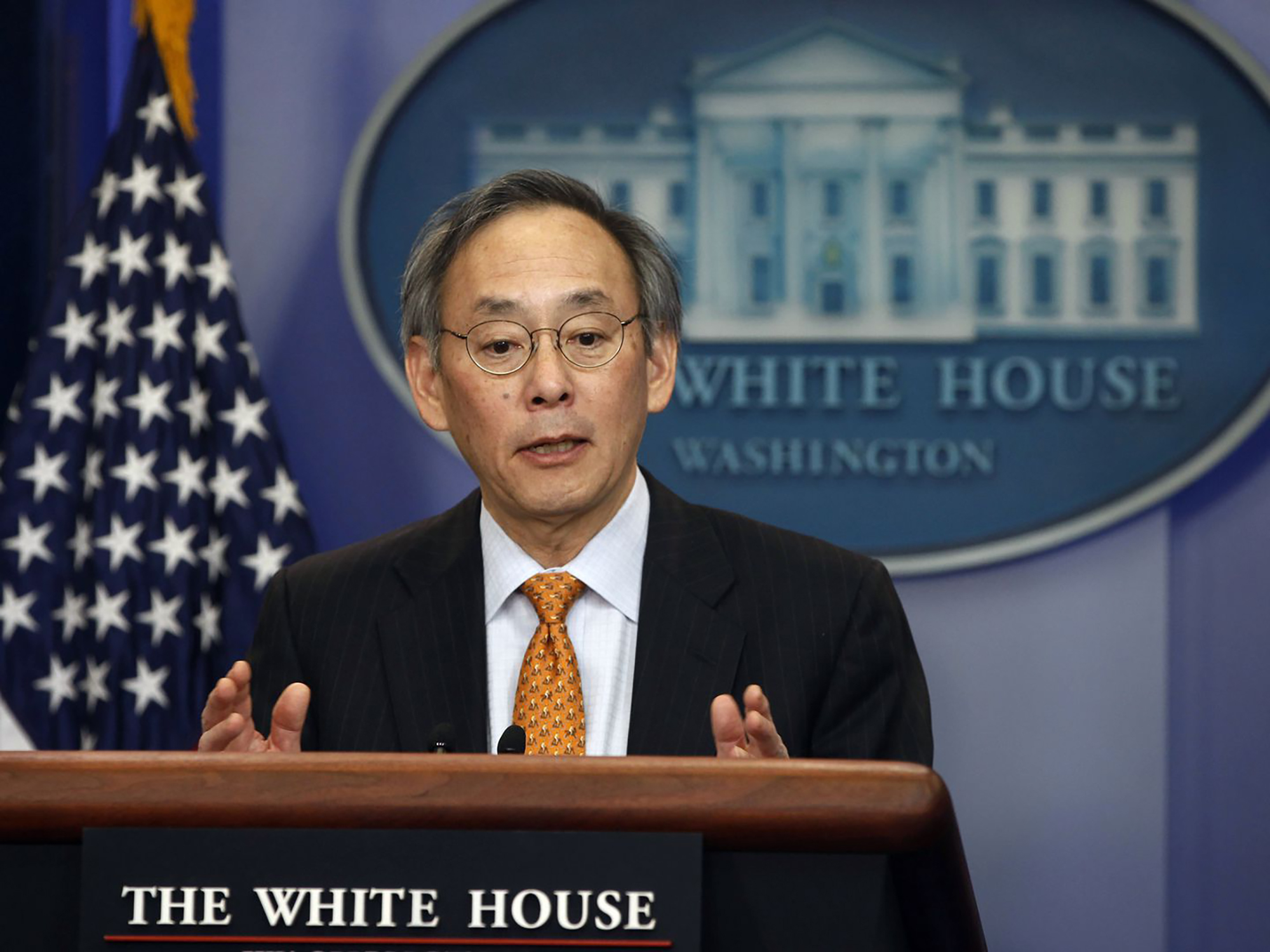
On April 26, 2023, the School of Physics and College of Sciences at Georgia Tech will welcome Stanford University physicist Steven Chu to speak on climate change and innovative paths towards a more sustainable future. Chu is the 1997 co-recipient of the Nobel Prize in Physics, and in his former role as U.S. Secretary of Energy, became the first scientist to hold a U.S. Cabinet position.
About the Talk
The event is part of the School of Physics “Inquiring Minds” public lecture series, and will be held at the Ferst Center for the Arts. The talk is free and open to campus and the Atlanta community, and no RSVP is required. Refreshments begin at 4:30, and the lecture will start at 5 p.m. ET.
“The multiple industrial and agricultural revolutions have transformed the world,” Chu recently shared in an abstract for the lecture. “However, an unintended consequence of this progress is that we are changing the climate of our planet. In addition to the climate risks, we will need to provide enough clean energy, water, and food for a more prosperous world that may grow to 11 billion by 2100.”
The talk will discuss the significant technical challenges and potential solutions that could provide better paths to a more sustainable future. “How we transition from where we are now to where we need to be within 50 years is arguably the most pressing set of issues that science, innovation, and public policy have to address,” Chu added.
The event’s faculty host is Daniel Goldman, Dunn Family Professor in the School of Physics at Georgia Tech.
About Steven Chu
Steven Chu is the William R. Kenan, Jr. Professor of Physics and a professor of Molecular and Cellular Physiology in the Medical School at Stanford University.
Chu served as the 12th U.S. Secretary of Energy from January 2009 until the end of April 2013. As the first scientist to hold a U.S. Cabinet position and the longest serving Energy Secretary, Chu led several initiatives including ARPA-E (Advanced Research Projects Agency – Energy), the Energy Innovation Hubs, and was personally tasked by President Obama to assist in the Deepwater Horizon oil leak.
In the spring of 2010, Chu was the keynote speaker for the Georgia Tech Ph.D. and Master's Commencement Ceremony.
Prior to his cabinet post, Chu was director of the Lawrence Berkeley National Laboratory, where he was active in pursuit of alternative and renewable energy technologies, and a professor of Physics and Applied Physics at Stanford, where he helped launch Bio-X, a multi-disciplinary institute combining the physical and biological sciences with medicine and engineering. Previously he also served as head of the Quantum Electronics Research Department at AT&T Bell Laboratories.
He is the co-recipient of the 1997 Nobel Prize in Physics for his contributions to laser cooling and atom trapping. He is a member of the National Academy of Sciences, the American Philosophical Society, the American Academy of Arts and Sciences, the Pontifical Academy Sciences, and of seven foreign academies. He formerly served as president, and then chair of the American Association for the Advancement of Science.
Chu earned an A.B. degree in mathematics and a B.S. degree in physics from the University of Rochester, and a Ph.D. in physics from the University of California, Berkeley, as well as 35 honorary degrees.
He has published over 280 papers in atomic and polymer physics, biophysics, biology, bio-imaging, batteries, and other energy technologies. He holds 15 patents, and an additional 15 patent disclosures or filings since 2015.
Jess Hunt-Ralston
Director of Communications
College of Sciences at Georgia Tech
Workshop on Materials for the Hydrogen Energy Value Chain
The Institute for Materials (IMat) and the Strategic Energy Institute (SEI) at Georgia Tech are jointly sponsoring a workshop having the objective to identify the materials research gaps, challenges and needs for hydrogen storage and transport.
Hitting the Brakes or the Accelerator on Electrified Semitrucks
Apr 13, 2023 —

Siemens Mobility built an overhead contact line for electric trucks on a 6.2-mile stretch of Germany’s autobahn. (Photo courtesy: Siemens)
Electrical cables have been suspended over trams and trolley tracks for more than 140 years. They’ve electrified bullet trains in Japan and Amtrak railways that connect Washington D.C and Boston. Now the United States, Germany, and Sweden are testing the technology on highways, hoping to eliminate emissions from tractor-trailers.
A new study from Georgia Tech’s College of Engineering looks closer at using overhead cable line (OCL) technology to power trucks, evaluating if they are wise environmental and economical choices.
For some countries, including the United States as a whole, Sweden and Germany, the team suggests OCL technology is ideal. It’s also beneficial at the state level for New York, Washington, and Georgia. But for other areas, it shouldn’t be implemented until the region’s electric grid is cleaner.
College of Engineering
School of Physics Public Lecture - Professor Steven Chu: Climate Change and innovative paths towards a more sustainable future
On behalf of the Georgia Tech College of Sciences and the School of Physics, we invite you to join us and our esteemed guest Professor Steven Chu, former U.S. Secretary of Energy and co-recipient of the 1997 Nobel Prize in Physics.
Speaker: Prof. Steven Chu
Host: Prof. Dan Goldman
Tool Helps Coastal Areas Find Ideal Spots for Water Level Sensors
Apr 13, 2023 —

An aerial view of the Tybee Island marina in Chatham County, Georgia.
As climate change leads to rising sea levels and more powerful storms, coastal communities increasingly are turning to networks of sensors to track water levels. The sensors — which are progressively getting cheaper and more capable — can help officials anticipate flood risks and respond in emergencies.
A tool developed by Georgia Tech researchers can help make the most of those networks, pinpointing the ideal locations for water level sensors to maximize the real-time data available to emergency managers.
In a test case in Chatham County, Georgia, the approach developed by civil engineer Iris Tien reduced 29,000 potential sensor locations to just 381. The idea, then, is that officials can use their local expertise and historical knowledge to pick where to install sensors among those spots.
Joshua Stewart
College of Engineering
Research Teams Awarded $15M to Design Materials Inspired by Deep Sea Fish and to Explore Attention Control
Apr 12, 2023 —

Randall Engle, professor in the School of Psychology; Alper Erturk, Carl Ring Family Chair and professor in the George W. Woodruff School of Mechanical Engineering; and Yuhang Hu, associate professor in the Woodruff School and the School of Chemical and Biomolecular Engineering
Two teams from Georgia Tech have been awarded a combined $15 million from the U.S. Department of Defense (DoD) for basic research projects as part of the Multidisciplinary University Research Initiative (MURI) program. MURI seeks to fund research teams with creative and diverse solutions to complex problems and is a major part of the DoD’s research portfolio.
Alper Erturk (Lead PI), Carl Ring Family Chair and professor in the George W. Woodruff School of Mechanical Engineering, and Yuhang Hu, associate professor and Woodruff Faculty Fellow in the Woodruff School and the School of Chemical and Biomolecular Engineering, were awarded $7.5 million for their project, Bio‐Inspired Material Architectures for Deep Sea (BIMADS). Randall Engle, professor in the School of Psychology, was awarded the same amount for his project titled Understanding and Building Overall Cognitive Capability Through Attention Control.
Erturk and Hu’s interdisciplinary project will explore the fundamental science behind the biological characteristics that allow deep sea fish to adapt and survive in high pressure ocean environments. They will then translate those findings to engineer bioinspired materials needed to realize the Navy’s advanced capabilities in deep sea environments.
“In the deep ocean, marine organisms have evolved to thrive in high pressure environments, and adapt to pressure changes while remaining functional,” Erturk said. “Our goal for this project is to discover, test, and translate biological mechanisms into synthetic materials and structures that can dynamically adapt to high pressures in the ocean.”
Specifically, the researchers will test and explore the origins of the biological mechanisms (both molecular and macroscopic) that underlie the ability for deep sea snailfish to adapt to high pressures, pressure changes, and pressure differentials across material interfaces. Using findings from the biological studies, the researchers will design synthetic materials and structures that will then be evaluated in high pressure chambers.
“Knowledge gained from these studies will provide insight toward the design of structures spanning from atmospheric dive suits to robotic fish for the deep ocean,” Hu said.
BIMADS brings together experts in marine biology, bioengineering, biomimetic materials, chemistry, mechanochemistry and multiphysics chemomechanical modeling, hydrogel synthesis, biohybrid material fabrication, and the design, mechanics, and dynamics of architected structures. In addition to Erturk and Hu, the team also includes Anna Balazs and Lance Davidson from the University of Pittsburgh, John Costello from Providence College, Shashank Priya from the University of Minnesota, and Andrew Sarles from the University of Tennessee.
Attention Control in Naval Training
Engle’s project will explore the brain’s mechanisms of attention control and investigate methods to potentially improve it or reduce its decline.
“We want to better understand the role that controlling attention and individual differences in that ability has in real-world, complex tasks such as flying a plane, driving a car, or even studying for a physics test,” Engle said. “We expect this work will help the Navy identify job trainees who are best able to attend to complex tasks, and also help to mitigate the effects of fatigue and mind wandering common to those tasks.”
According to Engle, the Navy trains about a thousand air traffic control professionals each year and spends over $100,000 per candidate. But nearly a quarter of candidates fail training, leading to significant financial waste.
Engle’s work with air traffic control trainees showed that current evaluations used to select candidates for training only predicts a small percentage of success. Engle found that, by using his measures of ability to control attention in evaluations, the Navy could more than double predictive success in candidate training. In addition, researchers found that Engle’s measures appeared to have less adverse impact and bias against women and minority candidates.
Engle’s collaborative research team includes researchers from MIT, the University of Chicago, Purdue University, and Michigan State University. Each team member is studying a different aspect of attention control.
Catherine Barzler, Senior Research Writer/Editor
Georgia Tech Battery Day Reveals Opportunities in Energy Storage Research
Apr 04, 2023 — Atlanta, GA

Energy researchers and members of the industry engaged in discussion during an industry panel at the 2023 GT Battery Day
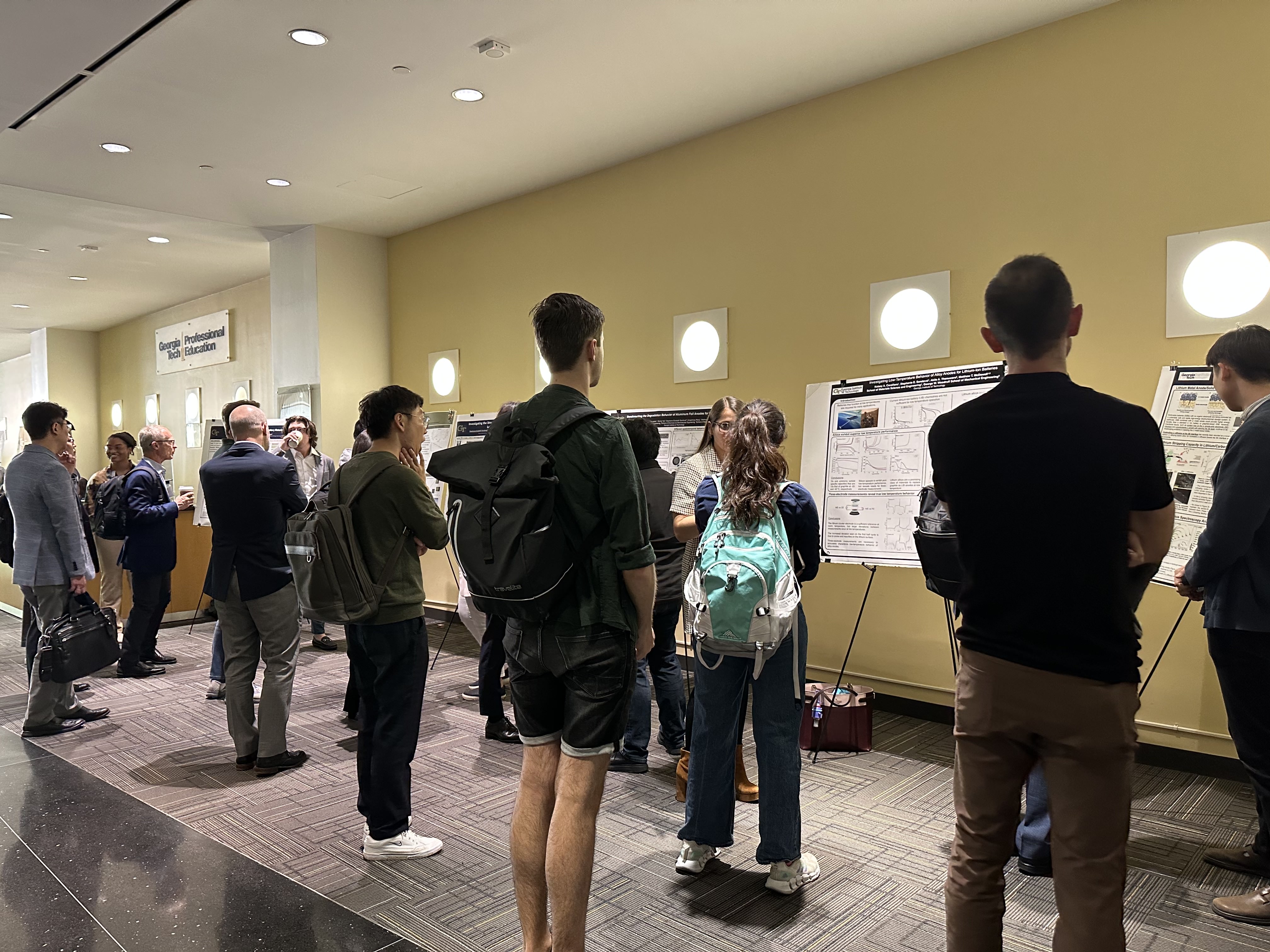
Georgia Tech Battery Day opened with a full house on March 30, 2023, at the Global Learning Center in the heart of Midtown Atlanta. More than 230 energy researchers and industry participants convened to discuss and advance energy storage technologies via lightning talks, panel discussions, student poster sessions, and networking sessions throughout the day. Matt McDowell, associate professor in the Woodruff School of Mechanical Engineering and the School of Materials Science and Engineering as well as the initiative lead for energy storage at the Strategic Energy Institute and the Institute of Materials, started the day with an overview of the relevant research at Georgia Tech. His talk shed light on Georgia becoming the epicenter of the battery belt of the Southeast with recent key industry investments and the robust energy-storage research community present at Georgia Tech.
According to the Metro Atlanta Chamber of Commerce, since 2020, Georgia has had $21 billion invested or announced in EV-related projects with 26,700 jobs created. With investments in alternate energy technologies growing exponentially in the nation, McDowell revealed Georgia Tech is well-positioned to make an impact on the next generation energy storage technologies and extended an open invitation to industry members to partner with researchers. As one of the most research-intensive academic institutions in the nation, Georgia Tech has more than $1.3 billion in research and other sponsored funds and produces the highest number of engineering doctoral graduates in the nation.
“More than half of Georgia Tech's strategic initiatives are focused on improving the efficiency and sustainability of energy storage, supporting clean energy sources, and mitigating climate change," said Chaouki Abdallah, executive vice president for research at Georgia Tech. "As a leader in battery technologies research, we are bringing together engineers, scientists, and researchers in academia and industry to conduct innovative research to address humanity's most urgent and complex challenges, and to advance technology and improve the human condition."
Rich Simmons, director of research and studies at the Strategic Energy Institute moderated the first panel discussion that included industry panelists from Panasonic, Cox Automotive, Bluebird Corp., Delta Airlines and Hyundai Kia. The panelists analyzed the opportunities and challenges in the electric transportation sector and explained their current focus areas in energy storage. The panel affirmed that while EVs have been around for more than three decades, the industry is still in its infancy and there is a huge potential to advance technology in all areas of the EV sector.
The discussion also brought forth important factors like safety, lifecycle, and sustainability in driving innovations in the energy storage sector. The attendees also discussed supply chain issues, a hot topic in almost all sectors of the nation, and the need to develop a diversity of resources for more resilient systems. The industry panelists affirmed a strong interest in partnering on research and development projects as well as gaining access to university talent.
Gleb Yushin, professor in the School of Material Science and Engineering and co-founder of Sila Nanotechnologies Inc., presented his battery research and development success story at Georgia Tech. Sila is a Georgia Tech start-up founded in 2011 and has produced the world’s first commercially available high-silicon-content anode for lithium-ion batteries in 2021. Materials manufactured in its U.S. facilities will power electric vehicles starting with the Mercedes-Benz G-class series in 2023.
The program included lightning talks on cutting-edge research in battery materials, specifically solid-state electrolytes and plastic crystal embedded elastomer electrolytes (PCEEs) by Seung Woo Lee, associate professor in the George W. Woodruff School of Mechanical Engineering and the challenges and opportunities for the successful use of energy storage for the grid by Santiago Grijalva, professor in the School of Electrical and Computer Engineering.
Tequila Harris, initiative lead for Energy and Manufacturing and professor in the George W. Woodruff School of Mechanical Engineering, spoke to energy materials and carbon-neutral applications. Presenting a case for roll-to-roll manufacturing of battery materials, Harris said that the need for quick, high yield manufacturing processes and alternative materials and structures were important considerations for the industry.
Materials, manufacturing, and market opportunities were the topic for the next panel moderated by McDowell and included panelists from Albemarle, Novelis, Solvay, Truist Securities, and Energy Impact Partners. Analyzing the current challenges, the panelists brought up hiring and workforce development, increasing capacity and building the ecosystem, decarbonizing existing processes, and understanding federal policies and regulations.
Lightning talks later in the afternoon by Georgia Tech researchers touched on the latest developments in the cross-disciplinary research bridging mechanical engineering, chemical engineering, AI manufacturing, and material science in energy storage research. Topics included safe rechargeable batteries with water-based electrolytes (Nian Liu, assistant professor, School of Chemical & Biomolecular Engineering), AI-accelerated manufacturing (Aaron Stebner, associate professor, School of Materials Science and Engineering), battery recycling (Hailong Chen, associate professor, School of Materials Science and Engineering), and parametric life-cycle models for a solid-state battery circular economy (Ilan Stern, research scientist from GTRI).
Another industry panel on grid, infrastructure and communities moderated by Faisal Alamgir, professor in the School of Materials Science and Engineering included panelists from Southern Company, Stryten Energy, and the Metro Atlanta Chamber of Commerce. Improving the grid resiliency and storage capacity; proximity to the energy source; optimizing and implementing new technology in an equitable way; standardization of the evolving business models; economic development and resource building through skilled workforce; educating the consumer; and getting larger portions of the grid with renewable energy were top of mind with the panelists.
“Energy-storage-related R&D efforts at Georgia Tech are extensive and include next-gen battery chemistry development, battery characterization, recycling, and energy generation and distribution,” said McDowell. “There is a tremendous opportunity to leverage the broad expertise we bring to advance energy storage systems. Battery Day has been hugely successful in not only bringing this expertise to the forefront, but also in affirming the need for continued interaction with the companies engaged in this arena. Our mission is to serve as a centralized focal point for research interactions between companies in the battery/EV space and faculty members on campus.”
Priya Devarajan || SEI Communications Manager
U.S. Secretary of Energy Meets Electrification Team at Energy Innovation Summit
Mar 30, 2023 —

L-R: Lukas Graber (Associate Professor at Georgia Tech), Mischa Steurer (Research Faculty III at Florida State University), Jennifer M. Granholm (Energy Secretary), Chanyeop Park (Assistant Professor at the University of Wisconsin– Milwaukee), Zhiyang Jin (Research Engineer II at Georgia Tech), Evelyn N. Wang (Director, ARPA-E), and Isik C. Kizilyalli (Associate Director of Technolofy & Program Director, ARPA-E)
Jennifer M. Granholm, the United States secretary of energy, visited a team of interdisciplinary and interinstitutional researchers led by Georgia Tech’s Lukas Graber at this week’s ARPA-E Energy Innovation Summit (The Summit) taking place this week in Washington, D.C.
Granholm and the team discussed the researchers’ current work on two ARPA-E funding projects, as well as the electrification of the economy in general.
“This was a wonderful opportunity to discuss the many exciting research areas our team is currently exploring,” said Graber, an associate professor in the School of Electrical and Computer Engineering. “We share in Secretary Granholm’s vision of preparing and equipping the country with the tools needed to create a future where power distribution is more sustainable and resilient.”
At The Summit, the team is showcasing WattEDGE, a startup company emerging from Graber's lab with the goal of commercializing the cutting-edge research and tech developed in the lab. This week, the WattEDGE team presented on ARPA-E sponsored projects in collaboration with the Center for Advanced Power Systems (CAPS) at Florida State University and University of Wisconsin– Milwaukee. Their EDISON project is developing hybrid direct-current circuit breakers for large electric ships and airplanes, while their TESLAproject aims to reduce sulfur hexafluoride (SF6) emissions in electrical power systems, respectively.
ARPA-E, or Advanced Research Projects Agency–Energy, is a United States government agency tasked with promoting and funding research and development of advanced energy technologies. The Summit serves as a platform for experts from various technical fields and professional communities to collaborate and brainstorm creative solutions to America's energy-related issues.
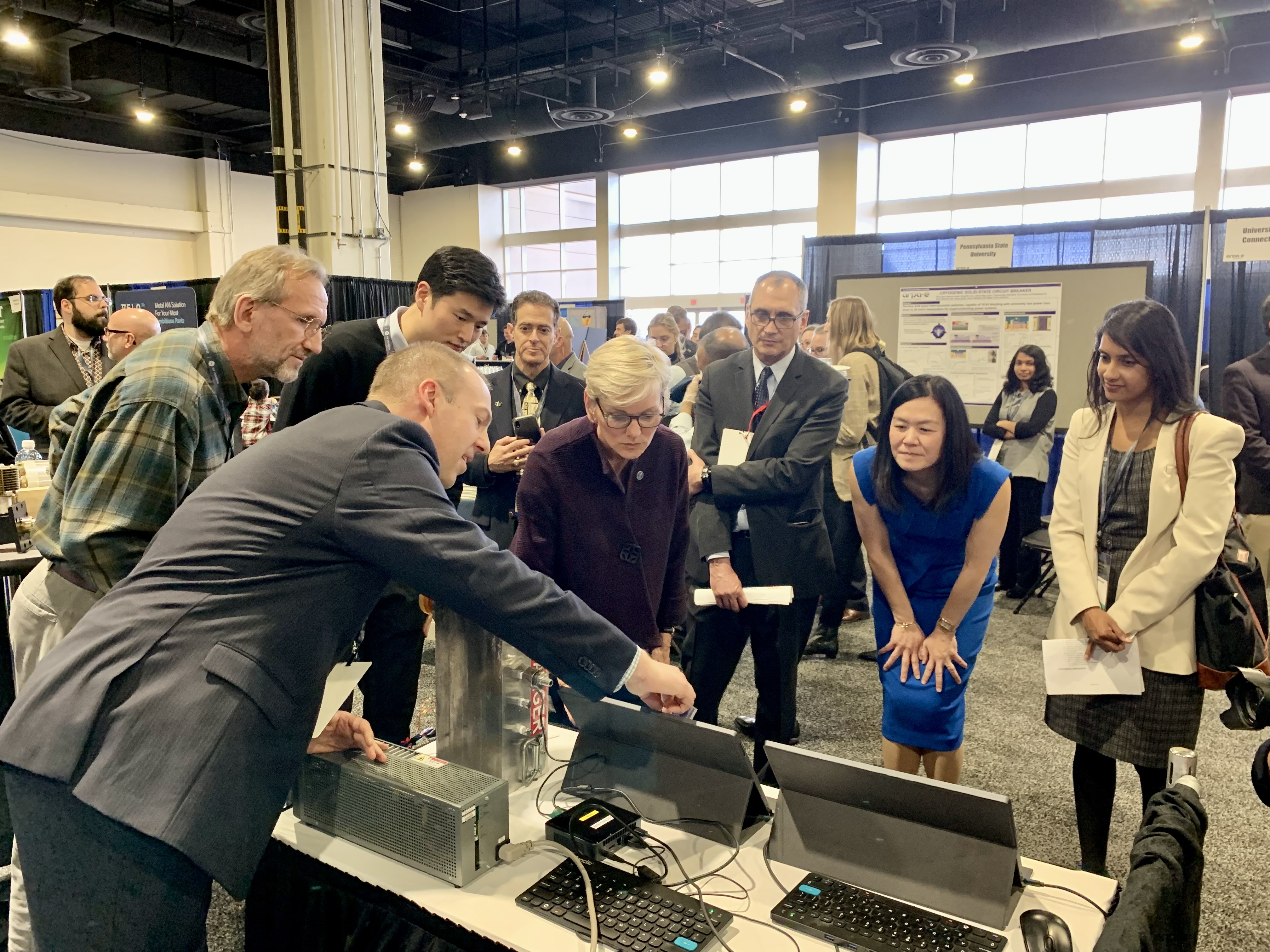
Graber showing Granholm the groups work on ARPA-E-funded projects.
Dan Watson
Driving Change: Georgia Tech Experts Lead in Electrification of America’s Roads
Mar 21, 2023 — Atlanta

Top: Rich Simmons, Marilyn Brown, Gleb Yushin; Bottom: Valerie Thomas, Hailong Chen, Tim Lieuwen
Idling at a crossroads no longer, the automotive industry is embracing electrification like never before. With more electric vehicles purchased in 2022 than any year prior, consumers are beginning to follow their lead. Yet, while opportunity abounds, new challenges will require an innovative approach to ensure a sustainable and accessible electric future for all.
With historic investments from major players in the EV space, including Rivian, Kia, and Hyundai, the state of Georgia is uniquely positioned to serve as a leader in this effort. As the state's leading research institute, Georgia Tech is on the cutting edge of the movement.
The transportation sector is the largest greenhouse gas emitter in the U.S. at nearly 30%, with passenger vehicles accounting for around 80% of the sector's total output1 as of 2019. Electric vehicles are widely regarded as a budding solution to reduce emissions, but even as both demand and production continue to increase, EVs currently account for around 1% of the cars on America's roadways.
From the supply chain to the infrastructure needed to support alternative-fuel vehicles alongside consumer hesitancy, achieving the goals set by both the public and private sectors — including the Biden Administration's target of EVs making up at least 50% of new car sales by 2030 — will not be easy. Through research and development, policy, and collaboration, Tech experts are working toward finding solutions that will serve as catalysts during this transitionary period for the environment and the way Americans drive.
Steven Gagliano - Communications Officer
Institute Communications