
Learn About Georgia Tech’s Participation in The New York Climate Exchange
Earlier this year, Georgia Tech was chosen as a core partner of the New York Climate Exchange – a first-of-its-kind international center for the rapid development of urban climate solutions
Georgia Tech Researchers Receive $11.6 Million from the Department of Energy to Establish the Transuranic Chemistry Center of Excellence
Jul 31, 2023 — Atlanta, GA

Stockpile stewardship — safeguarding and maintaining nuclear defense materials using modern techniques — is a critical mission of the U.S. Department of Energy’s National Nuclear Security Administration (NNSA). Maintaining and expanding the necessary physical and human capabilities to complete this mission is driving renewed investments into nuclear science and engineering.
Georgia Tech researchers were recently awarded $11.6 million from the NNSA to address this growing need — and to study and expand on existing models of transuranic chemistry, a branch of chemistry dedicated to studying elements with atomic numbers greater than that of uranium.
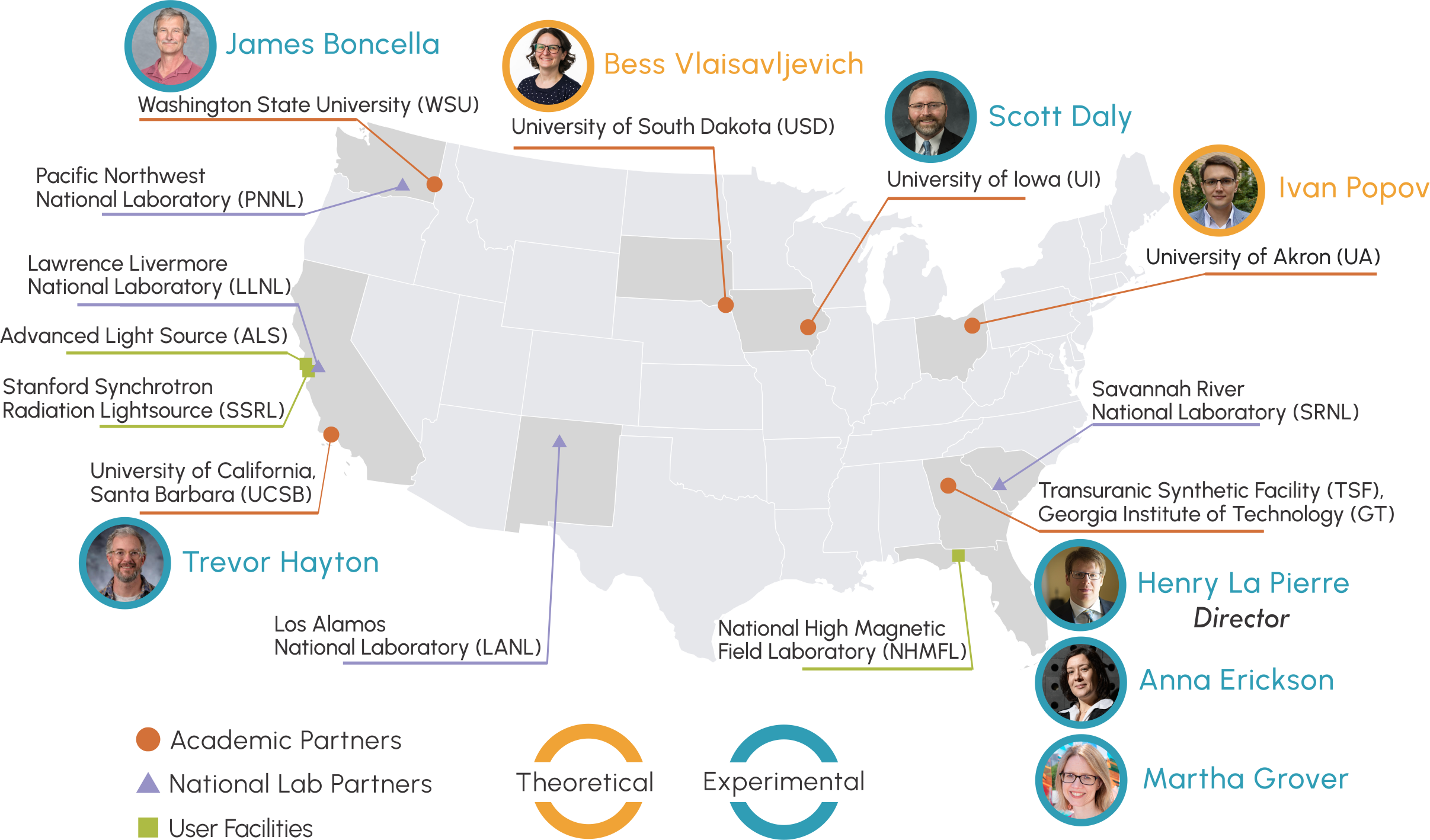
Led by School of Chemistry and Biochemistry Associate Professor Henry “Pete” La Pierre, the funding will serve to establish the Transuranic Chemistry Center of Excellence. Directed by La Pierre, the Center will house a collaborative network of five other universities and six national laboratories across the United States conducting both theoretical and applied research.
“Scientifically, actinides and transuranic elements present unique challenges to existing models of chemical bonding,” explains La Pierre. These elements are man-made radioactive metals, many of which are not available in large quantities. “There are amazing open-ended questions that are fundamental to our understanding of chemical bonding and activities, that serve to transform our knowledge of how the elements form bonds across the Periodic Table.”
Joining seven other universities, this funding comes to Georgia Tech as part of NNSA’s $100 million program establishing Stewardship Science Academic Alliances Centers of Excellence. A main goal of this program is to recruit, train, and educate the next generation of researchers in nuclear science and engineering.
“These cooperative agreements will allow NNSA to train the smartest and most skilled individuals while creating a direct pathway into our workforce with a diverse group of experts that can meet the evolving needs of the nuclear security enterprise,” said Kevin Greenaugh, Chief Science and Technology Officer for Defense Programs, in a recent press release.
“The science and engineering collaboration of this center is a true synergy,” says Martha Grover, professor and associate chair for Graduate Studies in the School of Chemical and Biomolecular Engineering and one of the collaborators for the Center. Anna Erickson, Woodruff Professor and associate chair for Research in the George W. Woodruff School of Mechanical Engineering, is another Georgia Tech collaborator. “This center provides a new example of the growing prominence of Georgia Tech in the nuclear field.”
Pushing the bounds of chemistry
“We are at core a synthetic inorganic chemistry group, which means we make new molecules and characterize them,” La Pierre explained. In his research as part of the Center, La Pierre will “be handling both radioactive and chemically reactive species to make new forms of matter.”
Characterizing new forms of matter is no easy task, requiring advanced techniques that allow scientists to envision and measure the properties of chemical bonds. Exposing the molecules to X-rays or neutrons and measuring how they scatter or diffract (depending on the experimental design), gives researchers insights into the chemical bonds that are formed.
Using a combination of these advanced techniques as well as theoretical models, La Pierre and the collaborators of the Center will be creating new molecules out of actinides and lanthanides — metallic elements on the bottom of the periodic table — and studying the details of their structures and behavior during chemical reactions. As these elements are not found naturally, the structures and properties of many of these compounds have never been studied before.
“We are creating systems that challenge existing bonding models, which we then have to go back and build new theoretical techniques in order to understand what we're seeing,” La Pierre explained. “So, this does push the forefront of our understanding of basic chemical model systems.”
To push those boundaries, scientists and engineers will be working together across the country — led by Georgia Tech.
“There are so many faculty at Georgia Tech working in nuclear science and technology,” says Grover. “This center gives me the opportunity to collaborate with Prof. La Pierre and Erickson for the first time, in the area of flow chemistry and separations.”
“I'm looking forward to working with some incredibly talented colleagues whom I don't normally get a chance to work with,” says La Pierre. “And now we have the opportunity to work together every week with fantastic students that I would never have met otherwise. That's the main draw for me.”
Writer: Audra Davidson
Communications Officer II, College of Sciences
Editor: Jess Hunt-Ralston
Director of Communications, College of Sciences
SEI Summer Faculty Fellows Presented Research Work with Takeaways to Grow and Nurture Collaborations
Jul 25, 2023 — Atlanta, GA

The 2023 Energy Faculty Fellows with their Georgia Tech Hosts
This summer, the Strategic Energy Institute’s Energy Faculty Fellow program (EFF) brought three faculty and two undergraduate students to the Georgia Tech campus. The 10-week program has been designed for Georgia Tech faculty to host a faculty member from a primarily undergraduate or minority serving Institution to engage with energy leaders, build networks, and pursue research collaborations in the energy space. Ongoing goals are to continue research collaborations well beyond this summer, with faculty and students carrying research efforts to their home institutions and into the new academic year. The Strategic Energy Institute anticipates a pipeline between the institutions, where the EFF participants encourage their colleagues to engage with Georgia Tech in future cohorts, call on each other for collaborations on federal grant proposals, and the faculty to send students to the summer undergraduate or graduate programs at Georgia Tech.
The 2023 Summer program included
- Mario Bencomo (Cal State Fresno, HSI), hosted by Comas Haynes (student - Mikayla Leggett)
- Guanyu Huang (Spelman, HBCU), hosted by Marilyn Brown (student - Nia McKenzie)
- Xingpeng Li (U Houston, HSI), hosted by Pascal Van Henternryck
The program concluded with a closeout reception where the attendees presented their research work from the past 10 weeks that they spent on the Georgia Tech campus and confirmed their key takeaway as to grow and nurture the research collaborations they have built this summer. Please scroll down to read about each of their experiences at Georgia Tech.
Mario Bencomo, Fresno State
Hosted by: Comas Haynes, Principal Research Engineer at Georgia Tech Research Institute, Hydrogen Initiative Lead at SEI
Mario Bencomo is an assistant professor in Mathematics at Fresno State and was hosted by Comas Haynes, Principal Research Engineer and Research Faculty in the Intelligent Sustainable Technologies Division at GTRI and the lead for Hydrogen initiative at the Strategic Energy Institute.
Mario's Energy Faculty Fellow experience in his own words:
"Overall this summer experience has been very productive. Personally, this program has given me the space and resources to engage in research, which is a challenge coming from a teaching intensive institution. Though I am familiar with the fundamental mathematics of the problem, the application is new to me and an opportunity to grow my research portfolio. To that end, collaborating with Comas and his team has been instrumental in the earlier stages of problem formulation.
Work done over this summer has provided the groundwork for a research program I plan on carrying out at Fresno State. In particular, we have developed baseline code that will serve as the foundation for developing more sophisticated models as well as a framework for a monitoring system. It is my plan to continue collaborating with Comas and his team as I continue this work, while engaging students from my institution in research."
Student: Mikayla Leggett
Mikayla is an undergraduate student at Fresno State and worked with Mario in the program. Mikayla mentioned the below about her experience at Georgia Tech:
"The SURE program has been an amazing opportunity to see how research is conducted and to experience a new place. During my time here I’ve learned about mathematical methods I was unfamiliar with and how to implement them. Additionally, it’s been fascinating to see how research is done, and the collaborative process between experts in different disciplines, like Dr. Haynes. I am excited to continue working on this project with Dr. Bencomo even after this program ends. I’ve also greatly appreciated the chance to see Georgia Tech and Atlanta and everything they have to offer. I was fortunate enough to be assigned fantastic roommates who I’ve really enjoyed getting to know. They’re definitely friends, and I hope we can keep in touch after the program ends. Experiencing the city and the culture has also been a highlight of my experience."
Guanyu Huang
Hosted by: Marilyn Brown, a Regents' and Brook Byers Professor of Sustainable Systems in the School of Public Policy, Georgia Tech
Guanyu Huang is an assistant professor in Environmental and Health Science at Spelman College. Read below to know what Guanyu Huang had to say about his experience at Georgia Tech.
"I had an excellent experience at Georgia Tech, and I really enjoyed working with Dr. Brown and the Strategic Energy Institute colleagues. We are working on a paper and will continue our collaboration after my fellowship. My key takeaway from this fellowship is the great opportunity to work closely with Georgia Tech Principal Investigators and form new collaborations between Spelman and Georgia Tech that we plan to continue in the future."
Student: Nia Devonne McKenzie
Nia is a sophomore at Spelman College majoring in Environmental Science, with a passion for sustainable policies, research, and service.
“The program was an enlightening experience that significantly contributed to my research and analysis skills. I have had the fantastic opportunity of working with graduate students to find innovative solutions to climate problems. The Climate Energy Policy Lab has been a joy to work with. I truly am grateful for my time at Georgia Tech with the Strategic Energy Institute.”
Xingpeng Li (University of Houston)
Hosted by: Professor Pascal Van Henternryck, School of Industrial & Systems Engineering, Georgia Tech
Xingpeng Li is an assistant professor in the College of Electrical and Computer Engineering at the University of Houston. He was hosted by Pascal Van Henternryck, a A. Russell Chandler III Chair and Professor in the H. Milton Stewart School of Industrial and Systems Engineering at Georgia Tech. Xingpeng Li shares his experience and takeaways from the Faculty Fellow program below:
My overall experience at Georgia Tech:
“It’s really an amazing experience to visit Georgia Tech for this summer. I not only got to know the city and the university here and had a lot of fun, but also gained unique experience interacting with talented students, post-docs and senior researchers, and faculties at Georgia Tech.”
Collaborations with Professor Pascal Van Hentenryck and his team during the past 10 weeks:
“In addition to several individual meetings with Professor Pascal Van Hentenryck, I attended roughly two of their meetings each week: one research group meeting and one machine learning (ML) methodology reading meeting. I got to know the cutting-edge research Professor Pascal Van Hentenryck’s team does through the research group meetings and got the opportunity to learn emerging ML technologies through the ML methodology reading meetings. I also shared my University of Houston team’s research and experience such as power system dynamics and stability-constrained energy scheduling that well complement to the current research of Professor Pascal Van Hentenryck’s team, which makes it suitable for establishing collaborations. I also shared my personal experience as a junior faculty with some Ph.D. students and post-docs here, which may help encourage them to look for academia jobs after graduation.”
Key takeaways from this program and work products:
“Get to know how a large research team is managed efficiently and effectively (by learning from my host at AI4OPT). Get to learn innovative ML approaches that may be very useful to support my own team’s research work. Complementary expertise with my host’s team makes it possible to establish and maintain long-term collaborations. Got to know many exciting energy-related initiatives by Georgia Tech Strategic Energy Institute. Got to know and interact with a number of energy-related professors, researchers and engineers. Created a concept paper that could be potentially extended to a full proposal for future grant applications with my host.”
Final comments:
“There is a weekly informal social event at Pascal Van Hentenryck’s team, which provides good interactive opportunities for people in his team (a very large and strong research team). During such informal ‘meetings’, I really enjoyed the interactions with other team members. Having a short enjoyable break can relieve pressure while working hard on daily research work.”
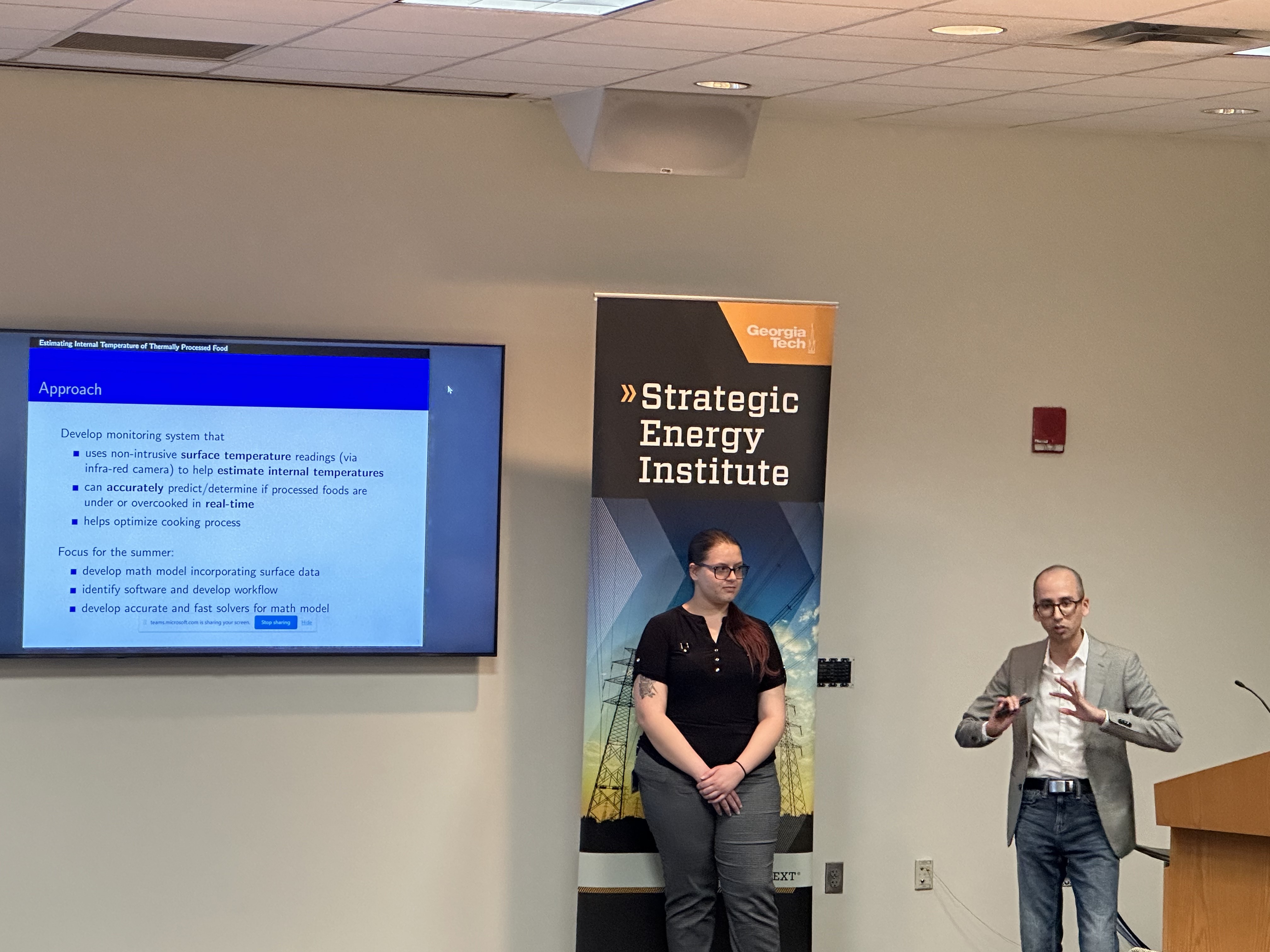
Mario Bencomo and Mikayla Leggett presenting at the EFF Closeout Reception
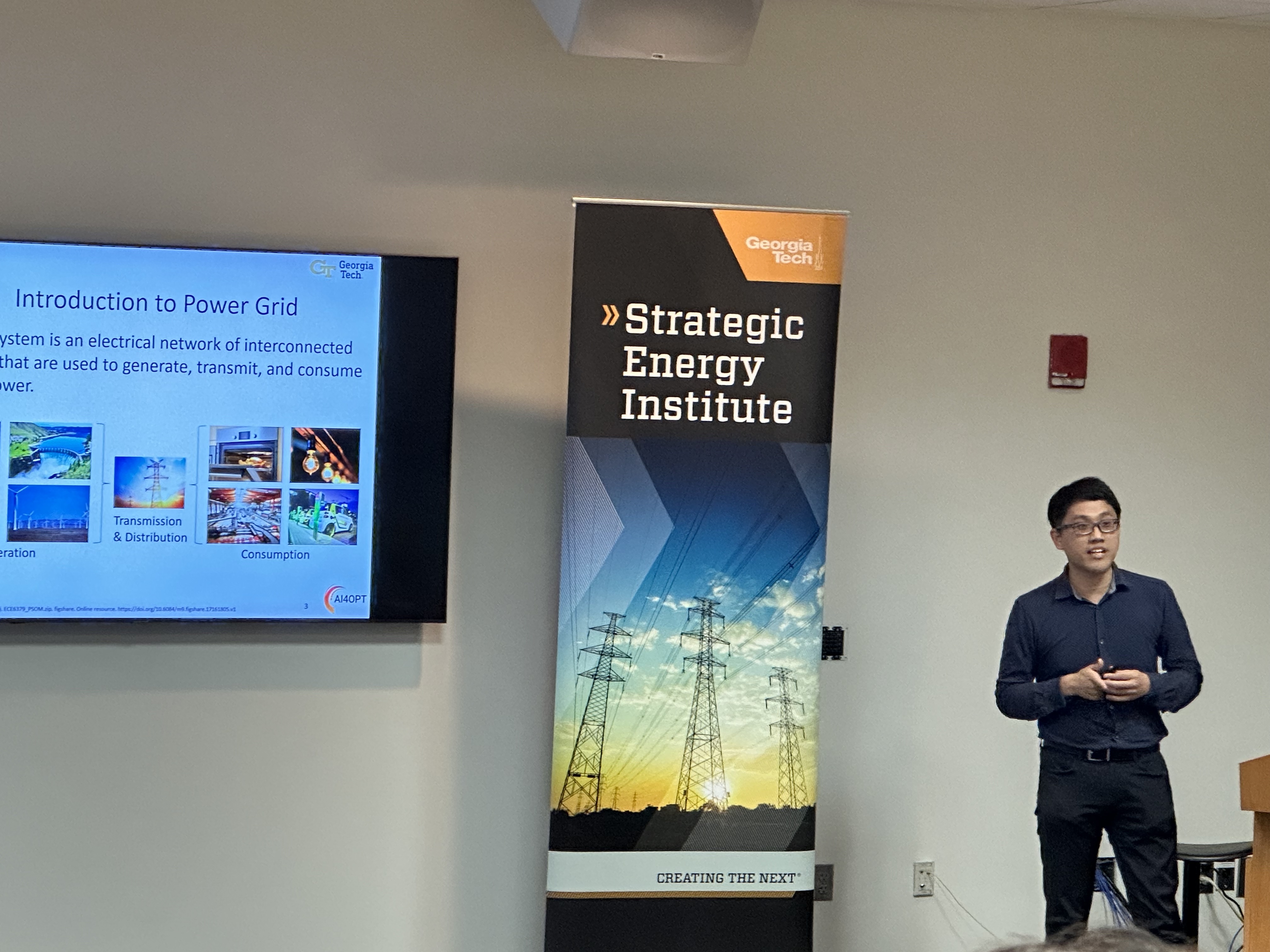
Xingpeng Li from the University of Houston presenting at the Closeout Reception
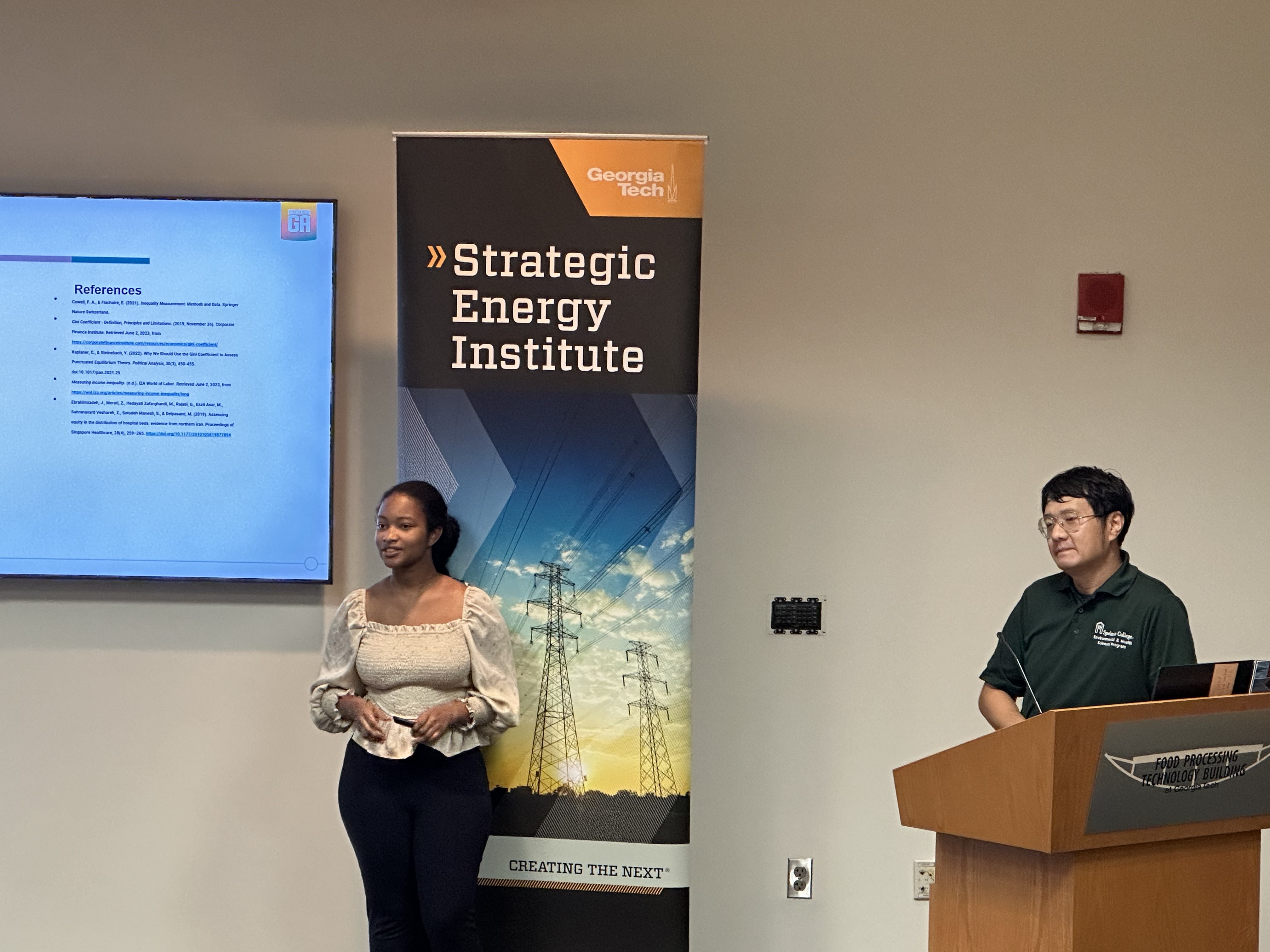
Guanyu Huang and Nia McKenzie Presenting at the Closeout Reception
Priya Devarajan || SEI Communications Program Manager
EPICenter's Summer Camp Energizes High Schoolers at the Tech Campus
Jul 24, 2023 — Atlanta, GA

Group Photo of the participants of the 2023 Energy Unplugged summer camp staged around Georgia Tech’s Koan sculpture.
The summer of 2023 has just been energized! The Energy, Policy, and Innovation Center (EPICenter) hosted the 2023 cohort of "Energy Unplugged," an energy-themed Science, Technology, Engineering, Art, and Math (STEAM) camp for high school students at the Georgia Tech campus. Rich Simmons, director of Research and Studies at the Strategic Energy Institute (SEI) along with graduate students Jake Churchill and Nia McKenzie, led 21 campers in hands-on activities and demonstrations involving solar panels, batteries, catapults, steam engines, and remote-control cars. The students were exposed to a wide variety of topics including renewable and non-renewable energy, electric vehicles, energy efficiency, energy production and delivery, environmental impacts, and electricity access. Campers gained insights into how a STEAM-oriented education can lead to exciting career paths in energy.
During the week of June 12-16, 2023, the camp was hosted in the bio-inspired makerspace at the Kendeda building, an ideal site to learn about energy. The camp kicked off with an educational tour of the ultra-efficient and sustainable Kendeda building that produces more energy than it consumes, turns wasted water into a resource, and utilizes reclaimed materials. Launching right into activities, campers were introduced to energy storage and transformation by constructing catapults and using physics to predict projectile flight distance. Next, students measured the energy consumption of household appliances and estimated their annual energy usage. A camp highlight was the remote-controlled car race on Tech Green, where campers competed to balance both being the fastest and the most energy efficient.
The camp partnered with Georgia Power to provide expert guided tours of two local generation facilities. Campers went on a field trip to Plant McDonough-Atkinson, a combined cycle natural gas plant that powers the homes of 1.7 million Atlantans, and Morgan Falls, a hydroelectric dam constructed in 1904. Students saw firsthand the sources of electricity they use every day. Parents joined as the week wrapped up with “shark-tank” style team presentations where campers applied their knowledge to develop an entrepreneurial approach to delivering basic energy services to off-grid communities in Haiti and Africa.
Energy Unplugged is administered by Georgia Tech Summer P.E.A.K.S. (Program for Enrichment and Accelerated Knowledge in STEAM) at CEISMC (the Center for Education Integrating Science, Mathematics, and Computing). CEISMC serves as the primary connection point between the faculty and students of Georgia Tech and the preK-12 STEAM education community, reducing the barriers between kids and higher education. Annually, CEISMC programs impact more than 39,000 students, 1,700 teachers, and 200 schools in over 75 school districts throughout the state of Georgia.
The Energy, Policy, and Innovation Center (EPICenter) operates as a division of the Strategic Energy Institute at the Georgia Institute of Technology. It was created to provide an unbiased and interdisciplinary framework for stimulating innovation in energy policy and technology for the Southeast region. Although based on the campus of Georgia Tech, the center will tap into regional and national expertise within academia, businesses, non-governmental organizations (NGO), and research facilities.
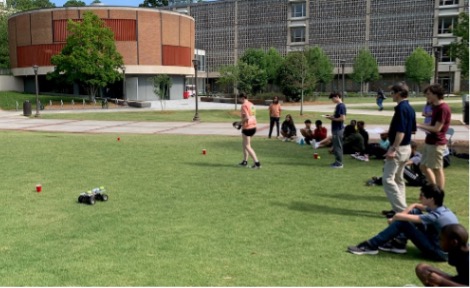
Campers compete by racing an RC car around Tech Green
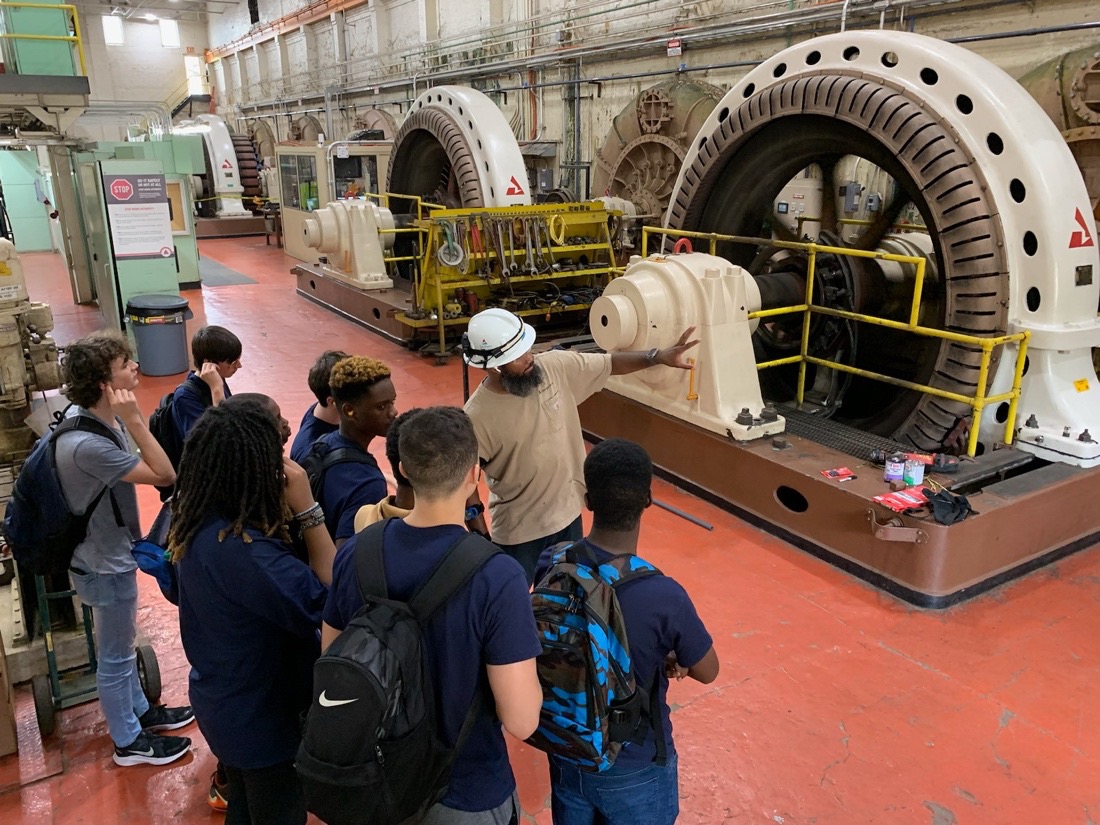
Students tour the Morgan Falls Hydro Dam generation room
Priya Devarajan || SEI Communications Manager
Content & Images: Jake Churchill
Aluminum Materials Show Promising Performance for Safer, Cheaper, More Powerful Batteries
Jul 19, 2023 — Atlanta, GA

Graduate student researcher Yuhgene Liu holds an aluminum material for solid-state batteries.
A good battery needs two things: high energy density to power devices, and stability, so it can be safely and reliably recharged thousands of times. For the past three decades, lithium-ion batteries have reigned supreme — proving their performance in smartphones, laptops, and electric vehicles.
But battery researchers have begun to approach the limits of lithium-ion. As next-generation long-range vehicles and electric aircraft start to arrive on the market, the search for safer, cheaper, and more powerful battery systems that can outperform lithium-ion is ramping up.
A team of researchers from the Georgia Institute of Technology, led by Matthew McDowell, associate professor in the George W. Woodruff School of Mechanical Engineering and the School of Materials Science and Engineering, is using aluminum foil to create batteries with higher energy density and greater stability. The team’s new battery system, detailed in Nature Communications, could enable electric vehicles to run longer on a single charge and would be cheaper to manufacture — all while having a positive impact on the environment.
“We are always looking for batteries with higher energy density, which would enable electric vehicles to drive for longer distances on a charge,” McDowell said. “It’s interesting that we can use aluminum as a battery material, because it’s cost-effective, highly recyclable, and easy to work with.”
The idea of making batteries with aluminum isn’t new. Researchers investigated its potential in the 1970s, but it didn’t work well.
When used in a conventional lithium-ion battery, aluminum fractures and fails within a few charge-discharge cycles, due to expansion and contraction as lithium travels in and out of the material. Developers concluded that aluminum wasn’t a viable battery material, and the idea was largely abandoned.
Now, solid-state batteries have entered the picture. While lithium-ion batteries contain a flammable liquid that can lead to fires, solid-state batteries contain a solid material that's not flammable and, therefore, likely safer. Solid-state batteries also enable the integration of new high-performance active materials, as shown in this research.
The project began as a collaboration between the Georgia Tech team and Novelis, a leading manufacturer of aluminum and the world’s largest aluminum recycler, as part of the Novelis Innovation Hub at Georgia Tech. The research team knew that aluminum would have energy, cost, and manufacturing benefits when used as a material in the battery’s anode — the negatively charged side of the battery that stores lithium to create energy — but pure aluminum foils were failing rapidly when tested in batteries.
The team decided to take a different approach. Instead of using pure aluminum in the foils, they added small amounts of other materials to the aluminum to create foils with particular “microstructures,” or arrangements of different materials. They tested over 100 different materials to understand how they would behave in batteries.
“We needed to incorporate a material that would address aluminum’s fundamental issues as a battery anode,” said Yuhgene Liu, a Ph.D. student in McDowell’s lab and first author on the paper. “Our new aluminum foil anode demonstrated markedly improved performance and stability when implemented in solid-state batteries, as opposed to conventional lithium-ion batteries.”
The team observed that the aluminum anode could store more lithium than conventional anode materials, and therefore more energy. In the end, they had created high energy density batteries that could potentially outperform lithium-ion batteries.
“One of the benefits of our aluminum anode that we're excited about is that it enables performance improvements, but it also can be very cost-effective,” McDowell said. “On top of that, when using a foil directly as a battery component, we actually remove a lot of the manufacturing steps that would normally be required to produce a battery material.”
Short-range electric aircraft are in development by several companies, but the limiting factor is batteries. Today’s batteries do not hold enough energy to power aircraft to fly distances greater than 150 miles or so. New battery chemistries are needed, and the McDowell team’s aluminum anode batteries could open the door to more powerful battery technologies.
“The initial success of these aluminum foil anodes presents a new direction for discovering other potential battery materials,” Liu said. "This hopefully opens pathways for reimagining a more energy-optimized and cost-effective battery cell architecture.”
The team is currently working to scale up the size of the batteries to understand how size influences the aluminum’s behavior. The group is also actively exploring other materials and microstructures with the goal of creating very cheap foils for battery systems.
“This is a story about a material that was known about for a long time, but was largely abandoned early on in battery development,” McDowell said. “But with new knowledge, combined with a new technology — the solid-state battery — we've figured out how we can rejuvenate the idea and achieve really promising performance.”
Citation: Liu, Y., Wang, C., Yoon, S.G. et al. Aluminum foil negative electrodes with multiphase microstructure for all-solid-state Li-ion batteries. Nat Commun 14, 3975 (2023).
DOI: https://doi.org/10.1038/s41467-023-39685-x
Funding: Support is acknowledged from Novelis, Inc. M.T.M. acknowledges support from a Sloan Research Fellowship in Chemistry from the Alfred P. Sloan Foundation. This work was performed in part at the Georgia Tech Institute for Electronics and Nanotechnology, a member of the National Nanotechnology Coordinated Infrastructure (NNCI), which is supported by the National Science Foundation (ECCS-2025462).
Writer: Catherine Barzler
Photography: Rob Felt
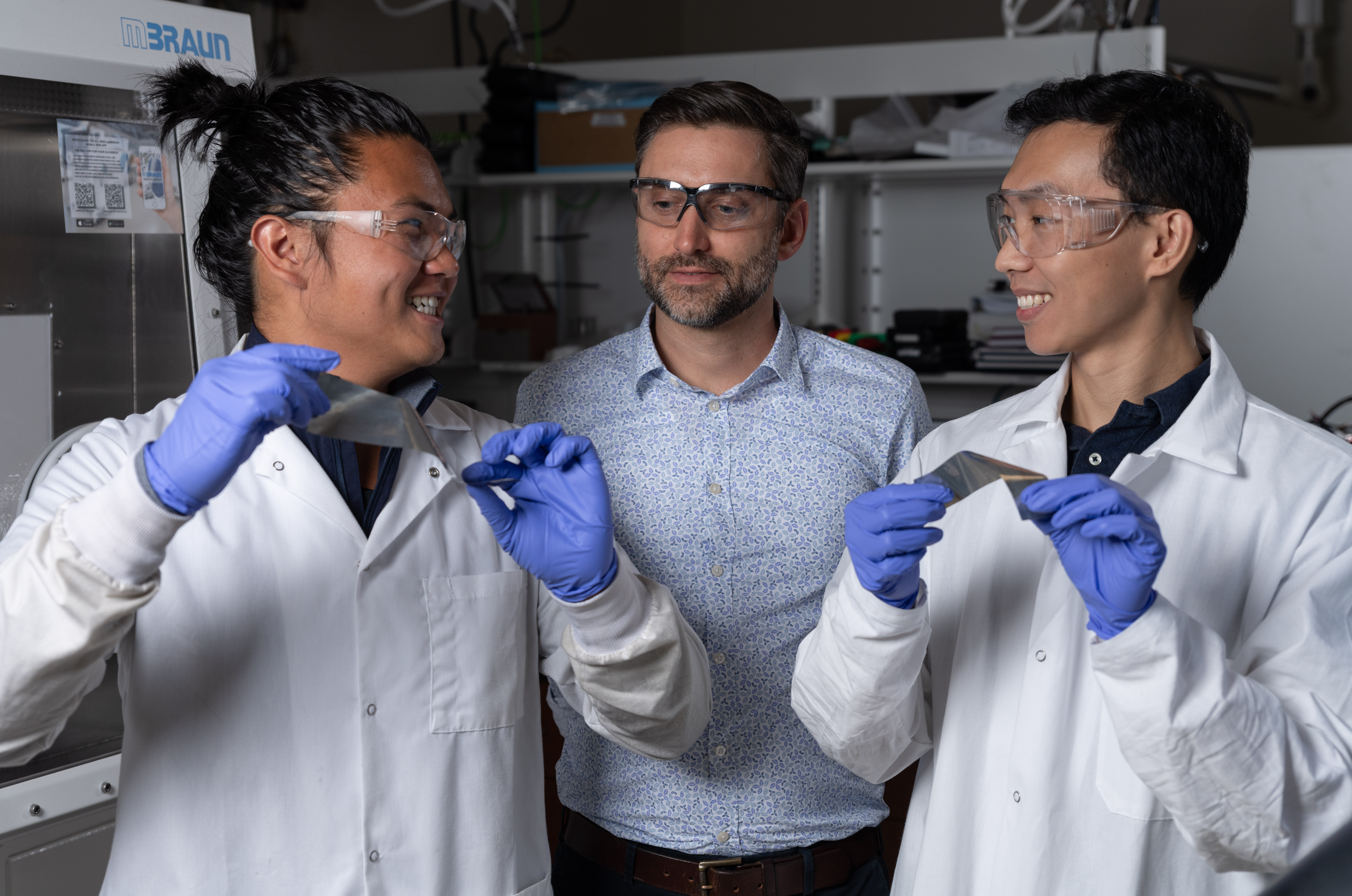
Ph.D. student Yuhgene Liu, associate professor Matthew McDowell, and postdoctoral researcher Congcheng Wang in McDowell's lab at Georgia Tech.

Postdoctoral researcher Congcheng Wang builds a battery cell.

A solid-state battery built in McDowell’s laboratory.
Catherine Barzler, Senior Research Writer/Editor
Institute Communications
Richard Gruber Joins Georgia Tech Venture Lab and the Strategic Energy Institute as Clean Energy Commercialization Lead
Jul 07, 2023 — Atlanta, GA

The Strategic Energy Institute and the Venture Lab are excited to welcome Richard Gruber to lead the clean tech commercialization efforts at Georgia Tech. Gruber will be working closely with Georgia Tech researchers helping them convert their ground-breaking research into impactful companies. His role includes cultivating relationships with constituents of the broader Atlanta area, officials in the Georgia department of economic development, the national community of business leaders, angel investors, attorneys, and venture capitalists.
Gruber will identify and grow commercialization of technology innovation in key areas of business strategy, fundraising, team development, and assist with startup efforts in close coordination with the director of Venture Lab and the broader activities of the Office of Commercialization, led by Raghupathy Sivakumar.
“With the state of Georgia emerging as a hub for clean energy, Gruber will play an integral role in coaching, creating, and growing startups related to energy, manufacturing, smart cities, and associated industry clusters,” said, Tim Lieuwen, executive director of the Strategic Energy Institute.
Throughout his career, Gruber has been focused on the development of energy, including infrastructure, markets, policy, stakeholder processes, structured transactions, joint ventures, energy system planning and operations, and startups. Investors in Gruber’s startups include two-time investor Ted Turner through Turner Renewable Energy.
Since 2007, he has been dedicated to clean energy power plant and technology development. As the vice president of project development at First Solar, Richard spearheaded the company’s initial buildout of a multi-gigawatt solar project platform, making First Solar one of the largest solar developers in North America.
In 2017, Gruber co-founded and served as the chief commercial officer for Merit Sustainable Infrastructure (Merit SI). Merit SI develops solar microgrids for infrastructure clients and utility scale renewable projects, and, through its subsidiary Merit Controls, develops advanced power system controls for solar, battery storage, and solar-hydrogen hybrid plants.
In his role at Georgia Tech, Gruber will support commercialization efforts across the entire energy and sustainability innovation space, from energy sources to energy carriers to consumers, and the necessary supporting supply chain and software innovations required to deliver cleaner, more affordable, and reliable, central, and distributed energy solutions. Researchers are encouraged to reach out to Richard Gruber (richard.gruber@venturelab.gatech.edu) with questions or ideas.
“We are so excited to have someone of Richard’s caliber on board. We believe such efforts that target a specific domain for commercialization are crucial to make Georgia Tech the #1 startup campus in the world,” said, Raghupathy Sivakumar, vice president of Commercialization and Chief Commercialization Officer at Georgia Tech.
Previously an “Executive in Residence” at Georgia Tech’s Advanced Technology Development Center, Gruber lives in Atlanta with his wife of 37 years. They have two daughters also in Atlanta, one a recent ISyE graduate of Georgia Tech, and one working with Delta.
Priya Devarajan || SEI Communications Program Manager
Secretary of Energy Discusses Clean Energy
Jun 29, 2023 — Atlanta, GA

Secretary of Energy Jennifer Granholm visited Georgia Tech to talk about clean energy. (Photo by Allison Carter)
Secretary of Energy Jennifer Granholm visited Georgia Tech Wednesday for an event, co-sponsored by the Atlanta Journal-Constitution, at The Kendeda Building for Innovative Sustainable Design. The stop in Atlanta is part of the administration’s effort to promote the value and promise of a national investment in clean energy.
“One key reason why we should focus on clean energy is to be able to focus on affordability,” she said. “A second reason is because of security. Whether it’s in supply chains or in actual fuel, we want to be able to generate the means to our own energy security, homegrown energy, and that’s why we should be going clean.
“A study from the International Finance Corporation estimates the clean energy sector is going to be worth $23 trillion globally by 2030,” she continued. “That’s a massive amount of money. That is the reason why we want to see economic opportunity here and jobs created because of clean energy.”
Tim Lieuwen, executive director of Georgia Tech’s Strategic Energy Institute, welcomed Secretary Granholm, as well as Assistant to the President and National Climate Advisor Ali Zaidi, Atlanta Mayor Andre Dickens, and guests.
“It is a privilege for us to welcome this great group of energy leaders onto our campus,” Lieuwen said. “We are deeply appreciative of the partnerships that we have with our city, state government, and federal government. We are at the center of a very exciting developing ecosystem in the region. Having our secretary of energy here is a great opportunity to just quickly highlight Georgia Tech’s multidecade partnership with the Department of Energy (DOE) across all the DOE mission spaces. Whether that’s batteries, electric vehicles, hydrogen, nuclear, or carbon capture, or policy, we have over 1,000 people on this campus working across this whole value chain engaging with our community and policymakers.”
Institute Communications
Inside-Out Heating and Ambient Wind Could Make Direct Air Capture Cheaper and More Efficient
Jun 12, 2023 — Atlanta, GA
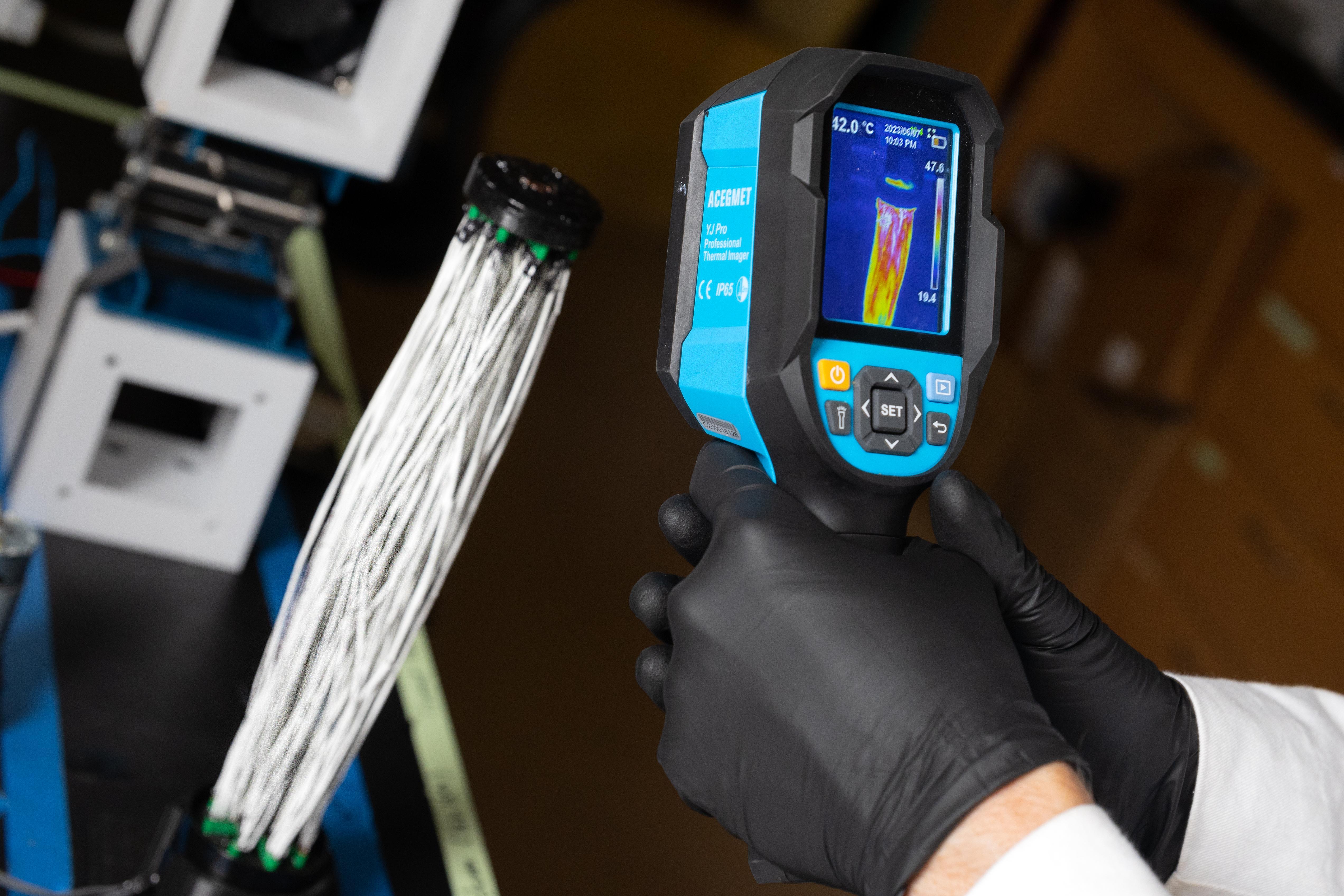
DAC Coated Carbon Fibers Heat Measurement
What started as a simple errand to deposit a check at a bank drive-through became the kind of “aha” moment found mostly in books and movies.
Georgia Tech researchers had been working on an idea to simplify traditional direct air capture (DAC) systems. Their approach used ambient wind flow to draw air across a new kind of coated carbon fiber to grab CO2. That would eliminate the loud fans used in many systems. And the carbon fiber strands could be quickly heated to release the captured carbon dioxide with minimal heat loss, boosting efficiency.
But they were struggling with how to deploy these new sorbent-coated carbon fibers for maximum effect.
“I had to go deposit a check at the bank, and I went through the drive-through. They had the old pneumatic tubes that come down to transport documents,” said Ryan Lively, Thomas C. DeLoach Professor in Georgia Tech’s School of Chemical and Biomolecular Engineering (ChBE). “There are not many times you have a light bulb moment in your career, but I saw the tubes and I realized, we could put the fibers in something like a bank teller tube canister.
“That’s pretty much what we did, and it worked.”
Joshua Stewart
College of Engineering
Georgia Tech Announces Institutionalization Plan for Serve-Learn-Sustain
Jun 12, 2023 — Atlanta, GA

Photo Credit Ben Gray, AJC.
The Vice President for Interdisciplinary Research (VPIR) and the Office of Undergraduate Education (OUE) are excited to announce an institutionalization plan for Serve-Learn-Sustain (SLS) that will advance two of Georgia Tech’s Institute Strategic Plan (ISP) initiatives - Sustainability Next and Transformative Teaching and Learning (TTL) - and strengthen our service learning, community engagement, and sustainability ecosystems at Georgia Tech. Established as Georgia Tech’s last Quality Enhancement Plan (QEP), SLS launched in 2016 as a unit in OUE and concluded its official QEP work in 2021. Its work on the QEP earned Georgia Tech a commendation from the Southern Association of Colleges and Schools Commission on Colleges and established a strong foundation to build on moving forward.
Effective July 1, 2023, the current SLS team will establish a new center, the Center for Sustainable Communities Research and Education (CSCRE), under the VPIR. The Brook Byers Institute for Sustainable Systems (BBISS), which is serving as a hub for coordinating Georgia Tech’s Sustainability Next Strategic Plan initiative, will serve as the administrative home for the new center.
CSCRE will collaborate with the sustainability cluster of the Interdisciplinary Research Institutes (IRIs), including BBISS, the Strategic Energy Institute (SEI), and the Renewable Bioproducts Institute (RBI), as well as Infrastructure and Sustainability, another key Sustainability Next hub, to enhance Georgia Tech’s competitiveness in applying for grants that require meaningful community partnerships as a key component of their research and education plans. It will also continue to support sustainable communities education, in close collaboration with the Center for Teaching and Learning (CTL), OUE, and Education and Learning, to assure the continuity of SLS’s signature programs.
Established as Georgia Tech’s last QEP, Serve-Learn-Sustain launched in 2016 as a unit in OUE and concluded its official QEP work in 2021. Georgia Tech earned a commendation from the Southern Association of Colleges and Schools Commission on Colleges in 2021 for the “exceptional execution” of the 2016 QEP, citing, among other things, that the program “inspired a closer dialogue among faculty regarding research and instructional practices, and thus serves as a model of how a QEP can transform an academic culture.”
To continue advancing and scaling undergraduate service learning and community engagement as a high-impact practice, OUE will establish a new service learning team, as a priority that supports the Transformative Teaching and Learning ISP initiative. Institutionalizing the service-learning functions of SLS within OUE and aligning it with other high impact practices - such as undergraduate research, student innovation programs, first-year seminars, co-op and internships, and learning communities - will position these programs to work collectively in support of the development of Georgia Tech’s next QEP, which will begin in 2025.
Thank you to the SLS staff and to everyone who has collaborated with and supported the work that SLS has spearheaded to make Georgia Tech a better place for our students, our faculty and staff, and our surrounding communities. We look forward to continuing to advance this work, together.
Brent Verrill, Research Communications Program Manager, BBISS
New Georgia Tech Environmental Science Degree Launches
Jun 09, 2023 —

Earth (Credit NASA_ Joshua Stevens).jpg
Georgia Tech’s newest interdisciplinary degree program, the Environmental Science B.S. degree (ENVS), developed jointly by faculty of the School of Earth and Atmospheric Sciences and the School of Biological Sciences, has launched and is now enrolling students.
The ENVS degree will provide a strong foundation in the basic sciences, requiring core content in mathematics, physics, chemistry, biology, earth sciences, and environmental policy. Flexible electives in upper-level coursework will allow students to customize their program of study to their interest and career goals.
A launch event for the degree program will take place at the Kendeda Building on the afternoon of Friday, August 25, 2023.
“The new degree will prepare students to be future leaders who are well-versed on how the Earth's systems can be influenced by human activity and contribute to human well-being,” says Greg Huey, professor and chair of the School of Earth and Atmospheric Sciences. “Graduates will be positioned to be leaders in industry, academia, education, and communication to create innovative solutions to the most significant environmental challenges of our time.”
Two faculty members in the School of Earth and Atmospheric Sciences (EAS) and a faculty member in the School of Biological Sciences will serve as inaugural leadership: Jennifer Glass, associate professor, is program director; Samantha Wilson, academic professional, is director of Undergraduate Studies; and Linda Green, senior academic professional in the School of Biological Sciences, is director of Experiential Learning.
The foundational science classes in this new degree will be complemented by courses in Public Policy and City Planning, including Geographical Information Systems (GIS) and Environmental Policy and Politics, before opening up and providing students with flexibility in course options to better fit their career paths and interests.
“Past EAS students have been interested in careers related to environmental consulting, environmental law, and continuing their studies in graduate school,” Wilson says. “The variety of environmental career paths was the driver behind allowing students to diversify their options within the degree.”
“This degree will give Georgia Tech students a unique opportunity to customize their environmental science program of study to their interests and career goals in science, policy, public service, non-profit, government, industry, academia, or beyond,” adds Glass. “We are committed to building an academic community in ENVS that values student leadership, ethics, justice, accessibility, and belonging.”
Hands-on learning opportunities will include field station experiences and field trip excursions, study abroad programs, and internships, Green says. “This major sustains the Institute’s strategic plan to lead by example, champion innovation, and connect globally — particularly in an area so critical as addressing Earth’s environmental issues.”
Glass added that the Schools of Chemistry, Biological Sciences, and Earth and Atmospheric Sciences are currently revamping several classes to meet United Nations Sustainable Development Goals (SDGs). Students will advance to be global leaders of environmental solutions that draw upon the U.N. Sustainable Development Goals and incorporate awareness of cultural relevance.
“We can’t wait for August to celebrate the ENVS launch with our incoming and current students,” Glass says.
More information on the Environment Science (ENVS) degree;
General information: jennifer.glass@eas.gatech.edu
Curriculum and enrollment: samantha.wilson@eas.gatech.edu
Co-curricular initiatives: linda.green@gatech.edu
Learn more: Three new EAS undergraduate degrees
Beginning Summer 2023, prospective and current Georgia Tech students will have three new Bachelor of Science degrees to choose from in the School of Earth and Atmospheric Sciences. The expanded undergraduate offerings target a wider range of job and research opportunities — from academia to analytics, NASA to NOAA, meteorology to marine science, climate and earth science, to policy, law, consulting, sustainability, and beyond.
The Board of Regents of the University System of Georgia has approved two new specific degrees within the School: Atmospheric and Ocean Sciences (AOS) and Solid Earth and Planetary Sciences (SEP). Regents also approved Environmental Science (ENVS) as an interdisciplinary College of Sciences degree between the School of Earth and Atmospheric Sciences and the School of Biological Sciences. The existing Earth and Atmospheric Sciences B.S. degree will sunset in two years for new students. Learn more.
Writer: Renay San Miguel
Communications Officer II/Science Writer
College of Sciences
404-894-5209
Editor: Jess Hunt-Ralston