
Georgia Tech Startup Sets Sights on Transforming Heart Failure Care
Sep 23, 2025 —
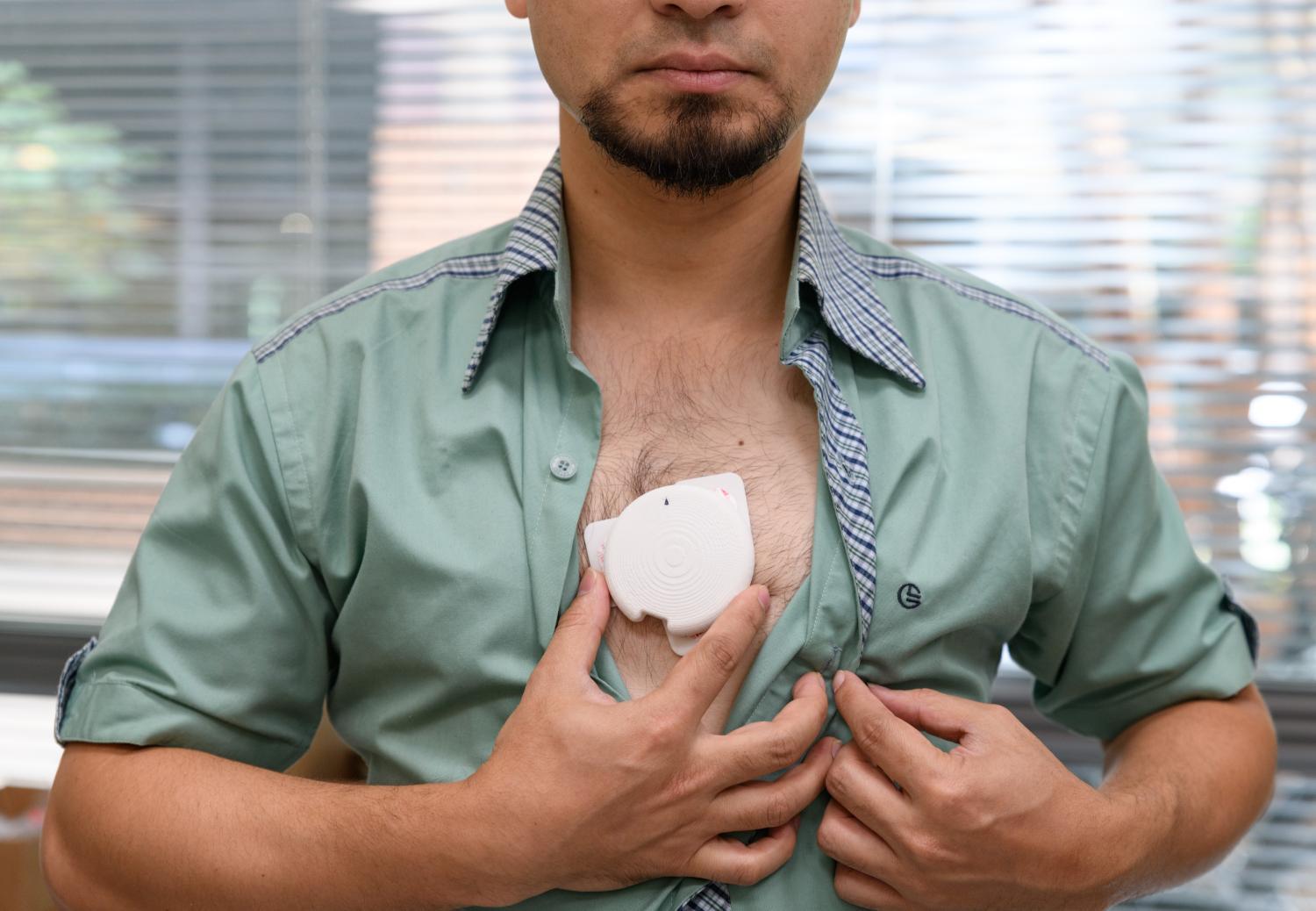
Heart failure remains one of the most challenging conditions to monitor outside the clinic. Patients may experience changes in symptoms, such as fatigue or shortness of breath, between visits, yet many current devices provide limited data, leaving physicians without continuous insight into heart function.
“Despite advances in digital health, continuous monitoring of the heart’s mechanical function has remained difficult outside clinical settings,” said Omer Inan, researcher and entrepreneur at Georgia Tech. “Patients and physicians have long needed a tool that provides deeper, real-time insights into heart performance without invasive procedures. We decided to tackle that problem head-on with a wearable device.”
Keiretsu Forum South-East - October Meeting
If you are a Georgia Tech student, faculty, employee you ARE a Keiretsu academic partner and the monthly meetings are FREE. GT spots are limited, so register ASAP.
REGISTER HERE - Registration is required by Monday, October 20 at 10:00 a.m.
Bench2Market Talks
Your pitch deck is an important and versatile tool for attracting investment and strategic partners, onboarding new stakeholders, and even driving your marketing narrative. In this talk, we’ll cover the essential slides and storylines that resonate across audiences, what decision-makers really care about, and how to make complex science easy to grasp. You’ll see how brand and design elevate credibility, how compelling visualizations can do some of the heavy lifting, and how a well-crafted deck can become one of your most powerful business assets.
Bench2Market Talks
Learn why market research is essential during the innovation process and throughout the product lifecycle of a medical product. Explore key research techniques and when to apply them. Discover how market research can help you gather critical business intelligence, such as identifying unmet needs, estimating market size, and assessing the priorities of various stakeholders across the healthcare ecosystem, to inform a path to market success.
Bench2Market Talks
Building great technology isn’t enough. Many startups focus on product development and regulatory approval, only to struggle raising funding because investors don’t see a clear path to market. The key to success? A believable go-to-market strategy early in your journey. In this session, I’ll share lessons from MedTech startups — including one that failed despite FDA clearance — and show practical steps to integrate commercial planning, de-risk your startup, and win investor confidence before launch
Bench2Market Talks
Why are European healthcare costs so much lower — and innovation so much slower? This talk dives into cultural and structural contrasts: lean European organizations vs. U.S. executive roles, risk-averse workforces, conservative investors, and heavy regulation. With a focus on Germany–U.S. contracts, we’ll explore what it really takes to break into transatlantic healthcare markets.
Bench2Market Talks
Georgia CTSA - Blue Sky Groups Seminar
REGISTER HERE for Zoom link.
Join researchers and clinicians from across the Georgia CTSA for a session on Nutrition.
Blue Sky Groups are unstructured meetings that provide a unique opportunity for attendees to drive the agenda and catalyze future collaborations and research opportunities.
From Lab to Life: Inside the Institute for Neuroscience, Neurotechnology, and Society
Sep 25, 2025 —
Researchers across Georgia Tech are joining forces to explore the brain — advancing science, technology, and society through interdisciplinary collaboration.
The brain is the most intricate system known to science — billions of cells forming dynamic networks that allow us to think, feel, move, and adapt. Yet despite decades of research, much about how the brain works remains a mystery. At the same time, neurological and neuropsychiatric conditions are on the rise, affecting more than one-third of the global population and costing trillions in healthcare and lost productivity.
Understanding the brain is key to unlocking human health and flourishing. The need has never been more urgent, but this challenge is too vast for any single discipline to solve alone.
That’s why Georgia Tech recently launched the Institute for Neuroscience, Neurotechnology, and Society (INNS). A step toward a more connected, collaborative future, INNS brings together experts from across Georgia Tech’s seven colleges and the Georgia Tech Research Institute (GTRI) to study the brain in ways that connect scientific discovery with technological innovation and real-world societal needs.
INNS supports research that crosses traditional academic boundaries. As an Interdisciplinary Research Institute (IRI), it builds community, fosters collaboration, and fills critical gaps in education, professional development, and research infrastructure.
“Georgia Tech has a long-standing culture of interdisciplinary collaboration — it’s in our DNA,” says INNS Executive Director Chris Rozell. Rozell also serves as Julian T. Hightower Chaired Professor in the School of Electrical and Computer Engineering. “INNS builds on that strength to create a space where breakthroughs in neuroscience and neurotechnology can move from lab to life, impacting real people in real ways.”
A Community Built to Collaborate
INNS is home to a growing network of faculty, students, and research centers spanning the full spectrum of Georgia Tech’s research expertise. This diversity is not just a feature, it’s the foundation.
That foundation was laid over decades of growth, vision, and grassroots momentum. Georgia Tech welcomed its first neuroscience-focused faculty member in 1990, sparking a steady expansion of brain-related research across campus. As more faculty joined and new focus areas emerged, a vibrant, cross-disciplinary community began to take shape.
In 2014, that community organized under the name GT Neuro, a grassroots initiative that united researchers who shared a passion for understanding the brain. This collective energy led to new educational programs, including the launch of Georgia Tech’s undergraduate neuroscience major in the College of Sciences.
“Our undergraduate students absolutely love teaching others about Neuroscience,” said Christina Ragan, director of Outreach for the Undergraduate Neuroscience Program and senior academic professional in the School of Biological Sciences. “I'm really excited to explore ways for INNS to connect our neuroscience community at Tech with the public.”
By 2023, the Neuro Next Initiative launched to bring together leaders from across campus and chart a strategic path forward — the result of nearly two years of community-driven planning to formalize and expand Georgia Tech’s neuroscience ecosystem.
“The launch of INNS has built on the momentum of the Neuro Next Initiative, which ignited crucial conversations and fostered new collaborations between researchers at GTRI and Georgia Tech faculty,” says Tabbitha Rosenbalm, GTRI senior research engineer. “The remarkable demonstration at Interface Neuro — witnessing a quadriplegic man walk and communicate thanks to innovative research — underscores the transformative breakthroughs possible when academic and applied researchers unite. INNS is uniquely positioned to serve as a catalyst, propelling Atlanta, Georgia Tech, and GTRI as national leaders in neurotechnology, driving advancements in both human health and engineering innovation.”
INNS is also helping shape the future of education. A new interdisciplinary Ph.D. program in neuroscience and neurotechnology welcomed its first cohort this fall, and INNS is poised to support it with professional development, research opportunities, and community engagement.
Breaking Boundaries to Advance Brain Science
Whether it’s developing neurotechnologies, designing therapeutic environments, or exploring the ethical implications of brain research, INNS is here to support work that spans fields and impacts lives.
“To responsibly address the societal and human impacts of advances in neuroscience and neurotechnology, we first need to understand them,” said Margaret Kosal, professor and director of Graduate Students in the Ivan Allen College of Liberal Arts. “That requires real and substantive collaboration beyond traditional engineering or biology labs.”
One example of INNS in action is the Smart Transitional Home Lab, a project funded by the inaugural INNS/Shepherd Center Seed Grant. This initiative brings together experts in architecture, inclusive design, neuroengineering, and rehabilitation to prototype environments that actively support stroke recovery, blending rigorous research with human-centered design.
“The establishment of INNS creates a powerful platform where diverse minds, from neuroscience to architecture to rehabilitation, can converge around a shared mission to advance human health,” says Hui Cai, professor in the School of Architecture, executive director of the SimTigrate Design Center, and co-leader of the project. “It enables interdisciplinary work with the potential to transform lives and redefine how we design for healing and recovery.”
“From whole brain recordings, to mapping the connectome, to the incredible advances in artificial intelligence, it's never been a more exciting time to study the mind and brain,” says Bob Wilson, director of the Center of Excellence for Computation and Cognition and associate professor in the School of Psychology. “I'm extremely excited for INNS to act as a central hub, building the neuroscience community at Georgia Tech and beyond.”
Join Us
INNS is more than an institute, it’s a growing, vibrant community of researchers, educators, students, and partners. Together, we’re working to understand the brain, develop technologies that improve lives, and ensure those innovations serve society responsibly.
Whether you're a student, researcher, policymaker, or simply curious about the brain, INNS is your gateway to interdisciplinary neuroscience at Georgia Tech. Get involved at neuro.gatech.edu.
Audra Davidson
Research Communications Program Manager
Institute for Neuroscience, Neurotechnology, and Society
Institute Communications
IBB Core Facilities Educational Seminar
Join us for a seminar to learn how to better leverage the incredible resources you have available via your IBB Core Facilities!