
2024 BioE Day
Presentations from the 2023 BioE Award Winners, featured BioE Alum Seminars, and a Rapid Fire Thesis Competition. Lunch served (while supplies last!).
L[ux] Lab Hosts Medical Device Usability Study
Apr 18, 2024 —

Cassidy Wang interacting with a physician who is testing Ethos' needle guidance system.
Ethos Medical recently made use of the College of Design’s L[ux] Lab to conduct a usability study of its needle guidance system prototype. Founded by Georgia Tech students (now alumni), Ethos Medical won the 2019 Georgia Tech InVenture Prize for their first-of-its-kind medical device.
Using ultrasound imaging technology coupled with a custom-built guidance tool, they invented a guidance system to help physicians navigate needles into the spine accurately and safely. In 2020, they were awarded a Phase I grant from the National Science Foundation’s Small Business Innovation Research program, followed by a Phase II grant in 2021.
Ethos Medical’s co-founders Cassidy Wang, CEO, and Lucas Muller, CTO, personally oversaw the study held in the Technology Square Research Building lab space, working with physicians from local hospitals to better understand the human factors of their novel device.
The study was designed and moderated by Maureen Carroll and Stephen Jones of Creature, an award-winning industrial design firm based in Atlanta.
“Creature and our engineering partner, Enginuity Works, are working to improve the design, human factors, and usability of the system. By using the L[ux] Lab and bringing in emergency room doctors, we can observe physicians using the system and evaluate how well our system integrates with their work process,” said Carroll, founder of Creature.
Several Georgia Tech students from the SimTigrate Design Lab were also present, gaining hands-on experience with the planning and execution of such a study.
Part of the study’s goals are to assess how emergency room clinicians may adapt their existing workflow for performing lumbar punctures to one that incorporates this new needle guidance system while considering realistic procedural and safety constraints. A second goal is to evaluate the ability of clinicians to accomplish specific tasks that require interaction with the user interfaces of the system and identify interfaces and interactions that they perceive to be unintuitive or difficult to perform.
The L[ux] Lab, part of the SimTigrate Design Lab space, is an interdisciplinary research lab using evidence-based design to improve the medical experience for patients and providers. SimTigrate – combining concepts of simulation and integration – grew out of the Healthy Environments Research Group which involved Georgia Tech and Emory University with the goal of improving healthcare outcomes. The lab is affiliated with the Georgia Tech College of Design and is led by Jennifer DuBose, executive director of the SimTigrate Design Lab and principal research associate in the College of Design.
“We’re fortunate that the L[ux] Lab’s simulated clinical environment is so conducive to medical device usability testing, and we’re grateful for all the support shown by Jennifer and the rest of the folks at SimTigrate,” said Wang, CEO of Ethos Medical. “We’ve already begun making improvements to address the friction points discovered during the clinicians’ hands-on interactions. We’re also seeing that many of these practitioners are excited about the capabilities our device brings to the point of care, both for lumbar punctures and beyond!”
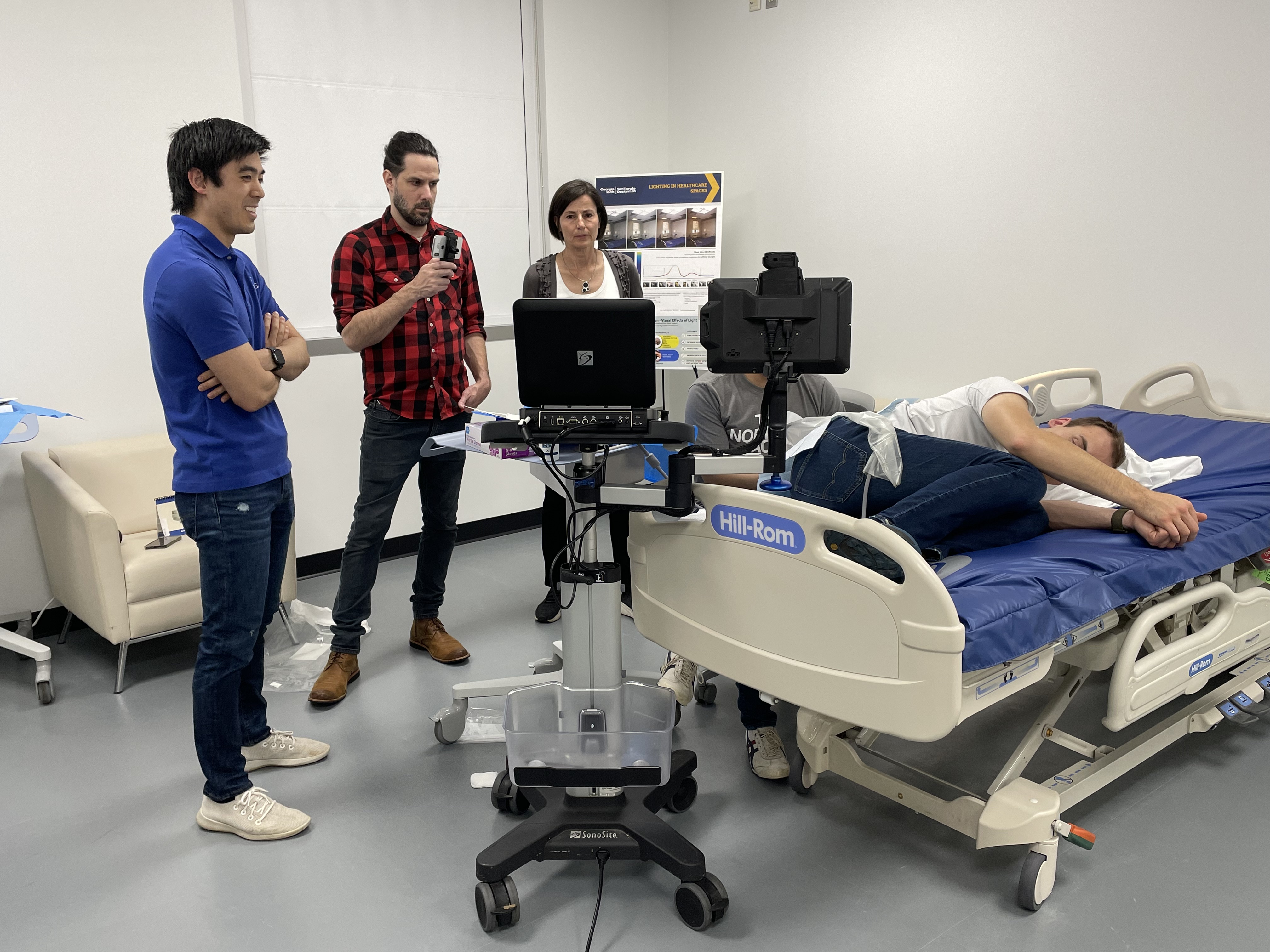
Lucas Muller plays the role of patient as a clinician tests the needle testing system as others observe.
NSF Award to Launch Study of How Older Adults Interact With Robots
Mar 01, 2024 —

Matthew Gombolay
With the number of older adults in the U.S. population rising and straining the systems in place to take care of them, Matthew Gombolay sees a solution — robots.
Gombolay received a National Science Foundation (NSF) CAREER Award for research that could make assistive robots the standard of care for older adults. The award is the most prestigious the NSF offers to early-career faculty.
“When people age, they deserve to age with dignity and not just be locked away,” said Gombolay, an assistant professor in Georgia Tech’s School of Interactive Computing. “If you don’t have enough resources or access to home nurses or adult children who have extra time to take care of you, what’s going to happen?”
Gombolay will receive nearly $600,000 to collect the largest data set of its kind on how older adults interact and communicate with assistive robots. Gombolay will then use that data to create algorithms that can be deployed in assistive robots and understand the needs of older adults.
Bench2Market Talks
REGISTER HERE
Securing funding for your early-stage startup can be one of the most challenging aspects of entrepreneurship. In addition to providing funds for your startup to develop and grow, investors often play a key role in company management and strategy. View this interactive panel discussion with investors from various firms to learn what they look for in a startup company and how to position yourself for fundraising success.
Safe and Secure Elections Require Interdisciplinary Collaboration
Apr 15, 2024 —

As nearly half of the world’s voting population heads to the polls this year, technology’s impact on elections will be front and center.
It’s a complex issue that is, unfortunately, awash in misunderstanding and misinformation. What’s more, according to Richard DeMillo, professor and founder of the School of Cybersecurity and Privacy (SCP) at Georgia Tech, there is a tendency in technology fields to hyperfocus on technical problems at the expense of complex social realities. “There are famous mathematicians who trained their students to not worry about the real world,” DeMillo says. “But the real world has a way of intruding.”
As a new dean at Georgia Tech in the early 2000s, DeMillo saw voting technology burst into national headlines after the highly contested presidential election between George W. Bush and Al Gore. Congress authorized billions of dollars for states to purchase voting machines, with little to no oversight, and Georgia’s secretary of state was one of the biggest spenders of these federal funds in an attempt to create what DeMillo remembers as “an unambiguously unbiased way of voting.” DeMillo and his cybersecurity colleagues at Georgia Tech put this idea to the test. “It didn’t take much to hack a voting machine in 2002,” he says.
DeMillo has since developed the Safe and Secure Elections research group, an interdisciplinary team from computer science, systems engineering, cognitive science, and international affairs that works on election security in the U.S. and abroad.
Read more about Georgia Tech's support of this public interest technology (PIT) >>
Researcher to Advise WHO on Addressing Loneliness and Social Isolation
Apr 12, 2024 —

Munmun De Choudhury, an associate professor in the School of Interactive Computing, is one of three U.S. experts on the internationally diverse committee.
The World Health Organization (WHO) has launched a new initiative to raise global awareness of loneliness and social isolation and to reduce their impact.
To stay informed by global experts as it plans potential policies on the subject, the WHO has created the Technical Advisory Group on Social Connection (TAG-SC). The 20-member committee will serve as an advisory body to guide the WHO on how it can increase political visibility, measure the extent of the problem, and identify effective interventions.
Munmun De Choudhury, an associate professor in the School of Interactive Computing, is one of three U.S. experts on the internationally diverse committee.
De Choudhury is renowned for her research on the role of social media and how it shapes and influences mental health. She will serve a two-year term on the advisory group, providing insight to the TAG-SC on how social media and other technologies can affect loneliness and social connection.
“TAGs are the highest level of technical advisors at WHO and are noted to wield significant power as an independent body in shaping evidence-based policies and reforms on issues threatening global health,” De Choudhury said.
“My involvement will center around how social media use relates to mental health and well-being outcomes, spanning varied populations, platforms, and cultural contexts, including the Global North and the Global South.”
The advisory group’s findings will be part of a report that the WHO shares with its member states and partners. The report could guide relevant discussions within the United Nations General Assembly.
“We’re thinking about this question on a global stage, and an organization like WHO can help make this a global focus,” she said. “It’s an issue that is of significance everywhere in the world.”
The WHO estimates that loneliness and social isolation can increase the risk of mortality by 14-32%, which is on par with other well-known risk factors such as smoking and excessive drinking. The Covid-19 pandemic has exacerbated the problem.
“The harmful effects of loneliness are not just harmful mentally, but there are physical health aspects,” De Choudhury said. “Studies have shown that people who felt lonely have shorter life spans than those who felt supported.
“There is an increased risk of things like cardiovascular disease or stroke, and suicide rates are also higher. To ensure our society wants to feel good and healthy, we must tackle this as a problem.”
The TAG-SC will advise the Secretariat of the WHO Commission on Social Connection, which comprises two co-chairs and nine commissioners tasked with making the harms of social isolation and loneliness a global health priority.
De Choudhury said the first step for TAG-SC is to measure the global impact of loneliness. They will do this by developing culturally aware measurement tools to assess the problem in different parts of the world. The process will inform any research, data collection initiatives, or interventions WHO may recommend.
“To take on this challenge, we must figure out the extent of the problem,” she said. “Before we can collect any data or identify potential mitigation strategies, we need to know what we should be measuring, and that’s where this committee plays a role.”
This recognition is the second major committee appointment De Choudhury has received in the last two years. She recently advised the National Academies of Sciences, Engineering, and Medicine (NASEM) on a 250-page report in December detailing social media’s impact on the health of adolescents and children.
Photo by Terence Rushin/College of Computing.
Nathan Deen
Georgia Tech Partners with The Carter Center to Support Guinea Worm Disease Eradication
Apr 09, 2024 —
![A dog in Chad is tethered to prevent the spread of Guinea worm disease. The number of human and animal cases of the disease in Chad dropped by 27% from 2021 to 2022. [Courtesy of Carter Center]](/sites/default/files/styles/news_first_image/public/news-images/tethered-dog-in-chad.jpg?itok=RtN2MnxA)
A dog in Chad is tethered to prevent the spread of Guinea worm disease. The number of human and animal cases of the disease in Chad dropped by 27% from 2021 to 2022.
Photo Courtesy of the Carter Center
Georgia Institute of Technology (Georgia Tech) researchers have teamed up with The Carter Center to support dracunculiasis eradication efforts, using mathematical modeling and analytics. Dracunculiasis, or Guinea worm disease (GWD), is caused by the parasite Dracunculus medinensis. Currently, there is no diagnostic test to detect pre-patent infection, no vaccine, and no treatment for GWD. Eradication efforts focus on community-based surveillance, health education, targeted treatment of water sources with larvicide, and most importantly, behavioral changes, such as filtering drinking water and preventing humans and animals, mainly domesticated dogs with emerging worms, from entering and contaminating water sources. “Given the year-long life-cycle of the disease, mathematical modeling is a valuable tool for fine-tuning interventions and evaluating resource allocation decisions,” said Pinar Keskinocak, professor in the School of Industrial and Systems Engineering (ISyE) and the director of the Center for Health and Humanitarian Systems.
Disease Dynamics
Dracunculus medinensis is a parasite that infects in a vicious cycle. When a human or animal host ingests either water contaminated with infective Guinea worm larvae or raw or undercooked aquatic animals that harbor the infectious larvae, the larvae mate in the host’s body, and, after 10-14 months, a pregnant female worm that can be as long as one meter emerges slowly and painfully from the host’s body. To seek relief, the host might immerse the affected body part into a water source (e.g., a pond), releasing the worm’s larvae into the water source, contaminating it, and continuing the infection cycle. In particular, worms emerging from dogs can contaminate drinking water sources used by people and in turn, lead to infection of people or other dogs in the community.
Progress Toward GWD Eradication
GWD eradication efforts worldwide have been supported by the collaboration of many entities, including The Carter Center, ministries of health in endemic countries, WHO, CDC, UNICEF, and others. Since 1986, The Carter Center has led the international Guinea worm eradication campaign, which has eliminated the ancient disease in 16 countries in Africa and Asia. In 2022, Guinea worm was reported in five African countries.
Together with The Carter Center and Chad’s national Guinea Worm Eradication Program, Georgia Tech researchers have developed an agent-based simulation model that incorporates the life-cycle of the worm, daily interactions between dogs and water sources, seasonality of infections, and environmental factors such as rainfall and temperature. The models can also capture the influence of dog movement between multiple regions/water sources. Using these mathematical models in a wide range of simulated scenarios, the researchers evaluated the impact of combinations of interventions (such as water treatment or tethering of dogs). The results from the simulated scenarios suggest that historical levels of interventions in Chad, even when adjusted to regional differences, might not be sufficient to interrupt GWD transmission in dogs within the next five years. Hence, there is a need to improve intervention implementation fidelity, adjust implementation approaches, or implement new interventions.
GWD Eradication Onward
New interventions, such as a diagnostic test that can detect pre-patent infection, could help accelerate the progress toward eradication. To guide research and development of such a test, WHO initiated the development of target product profiles (TPPs), outlining preferred and minimally acceptable criteria for novel diagnostic tests, which could be, according to WHO, “a game changer in speeding up a global eradiation of the parasite.”
Georgia Tech researchers adapted an agent-based simulation model and evaluated a wide range of scenarios to assess the impact of a new diagnostic test to detect pre-patent infection in dogs on the disease spread. In the mathematical model, each dog is represented by an "agent," which mimics the dog behavior, their interactions with the water source, and the progression of the disease within a dog.
In the absence of a treatment for GWD, the research results quantify the impact of the diagnostic accuracy (sensitivity and specificity) of the test, but also emphasize the importance of rollout decisions and the compliance of dog owners with the recommended tethering practices. “The potential benefits of testing depend on test accuracy, but also on several other factors, e.g., how the test is deployed, and how it affects owners’ behaviors regarding tethering of dogs with positive or negative test results,” said Hannah Smalley, a research engineer in ISyE. “For example, even if the test could detect pre-patent infections in dogs with perfect accuracy, if dogs are not tested frequently enough, or if owners do not consistently tether test-positive dogs, then the impact of such a diagnostic test could be limited.” The timing of when, i.e., how far in advance of worm emergence, the test can detect pre-patent infection is also important. For example, if the test could not only detect pre-patent infection but also accurately estimate the timing of worm emergence, this could increase the owners’ compliance with tethering recommendations during the time period leading to estimated worm emergence, reduce the need for long-term tethering, and reduce the resources (human and financial) needed to support the intervention.
Recommendations from the research are included in the WHO’s TPP for a diagnostic test to detect pre-patent Guinea worm infections in animals. “This important research highlights how a novel diagnostic test that can detect pre-patent Guinea worm infections could help, especially if used in conjunction with existing interventions,” said Adam Weiss [Director of The Carter Center’s Guinea Worm Eradication Program], “and we are looking forward to continuing our collaborations with Georgia Tech as a means to support GWD eradication efforts.”
“Potential Impact of a Diagnostic Test for Detecting Prepatent Guinea Worm Infections in Dogs,” Hannah Smalley, Pinar Keskinocak, Julie Swann, Christopher Hanna, and Adam Weiss, The American Journal of Tropical Medicine and Hygiene, 2024, DOI: https://doi.org/10.4269/ajtmh.23-0534
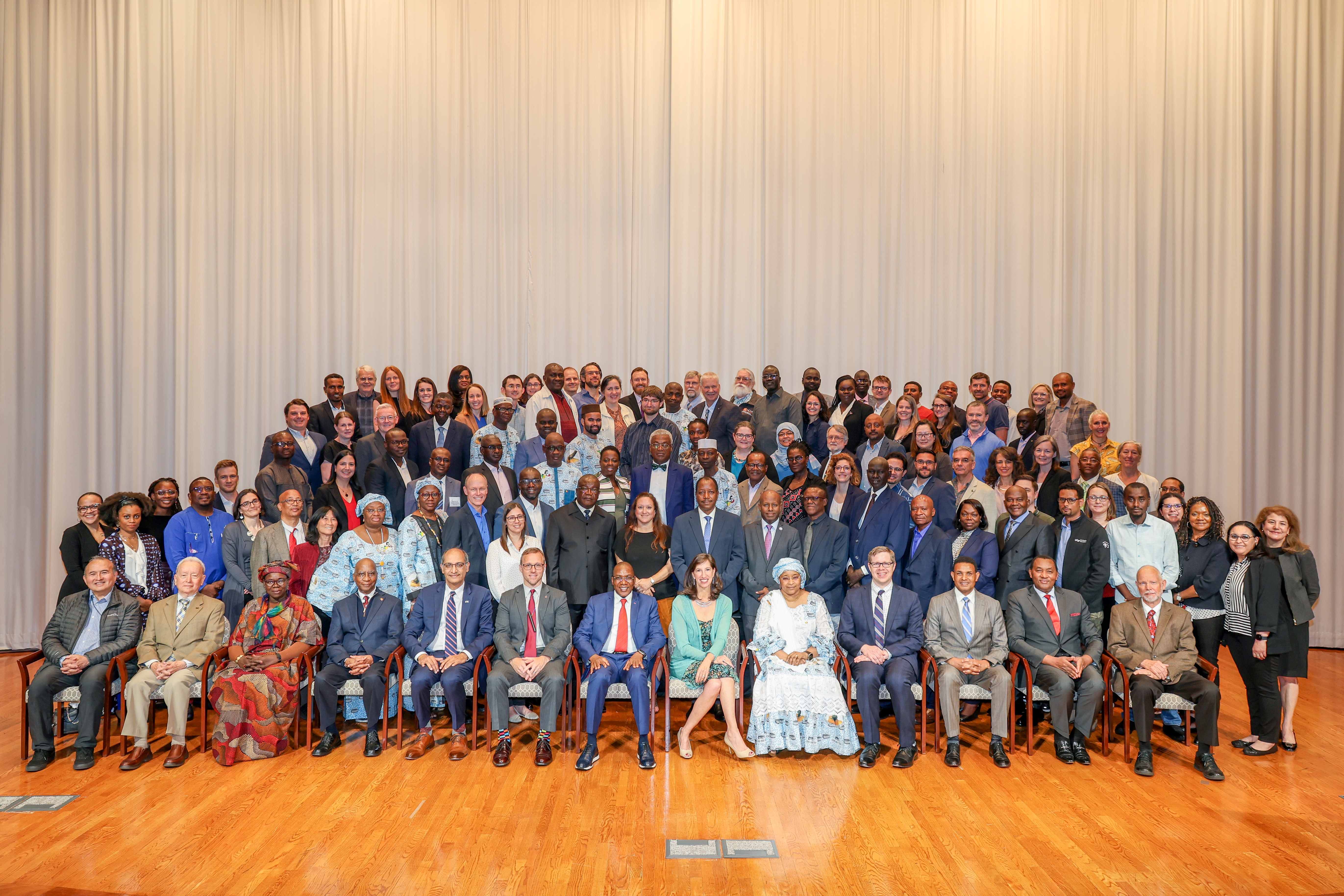
Guinea Worm Eradication Program, 27th International Review Meeting of Program Managers, The Carter Center
Media Contact: Tess Malone, Senior Research Writer/Editor
tess.malone@gatech.edu
Bringing Them Home
Hear how technology, research, soft diplomacy, relationship building, AI, and other strategies help find our missing personnel from past conflicts with Kelly McKeague, Georgia Tech alumnus and director of defense at POW/MIA Accounting Agency. Reception to follow presentation. RSVP requested.
Education in the Age of AI
Explore the future of education and unlock the power of AI in academia! dive into an enlightening exploration of how artificial intelligence is set to revolutionize the university experience.
Convergence Innovation Competition Expanding to Asia
Apr 04, 2024 —
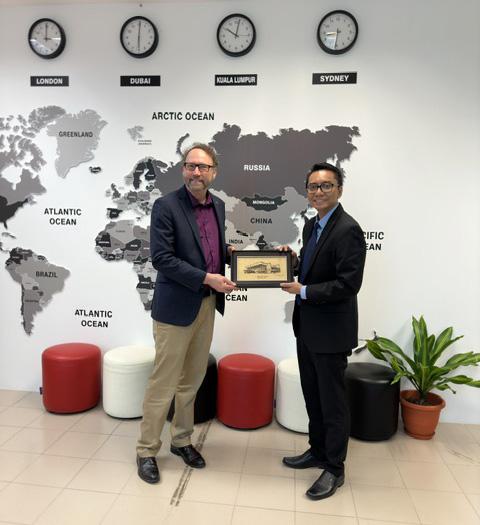
Michael Best with professor Andri Andriyana, director, International Relations Centre at the Universiti Malaya.
The Convergence Innovation Competition (CIC), one of Georgia Tech’s oldest and most storied innovation competitions, is expanding to five Asian countries: China, Malaysia, Taiwan, Thailand, and Vietnam. Founded in 2007, the competition is organized by the Institute for People and Technology (IPaT) and has been sponsored in the past by AT&T, Verizon, Google, Cisco, Siemens, Panasonic, NTT, and other companies.
CIC aims to build entrepreneurial confidence, people-centered mindsets, and encourage innovation while responding to today’s global challenges and opportunities. Innovative projects in the contest are expected to align with the 17 United Nations sustainability goals and can fall within IPaT’s current research focus areas.
“It seemed only natural that the Convergence Innovation Competition would one day expand beyond our campus walls,” said Michael Best, executive director of IPaT and professor with the Sam Nunn School of International Affairs. “Georgia Tech attracts talent across the world and our researchers collaborate with many international institutions and faculty. With the Asian expansion of CIC, we are creating a competition where global teams can tackle global challenges, showcasing meaningful innovations which align with IPaT’s people-centered research.”
During his most recent and very tightly scheduled Asian innovation competition roadshow tour this spring, Best visited Sun Yat-sen and Yuan Ze University in Taiwan; Universiti Tenaga Nasional, Universiti Malaya, Multimedia University, and Universiti Putra in Malaysia; and King Mongkut's University of Technology North Bangkok in Thailand.
All of these universities were excited to partner with Georgia Tech and be among the first southeast Asian anchor universities to help sponsor and support the competition according to Best who is also a professor in the School of Interactive Computing.
Best was specifically seeking to identify faculty fellows at each university who would be responsible for advertising the CIC Asia opportunity among students at their university, encouraging team submissions, while also providing advice and mentorship to participating student teams.
As added support, the Shenzhen Georgia Tech Education Foundation is helping to organize this year’s competition with the assistance of Shelton Chan, managing director of the foundation.
CIC semi-finalists will receive travel support to attend a gala competition on December 7th in Taiwan. The finalist will go on to receive travel support to visit innovation events and engage with entrepreneurship programs at Georgia Tech in Atlanta. In addition, the semi-finalist teams will receive $1,000 while the finalist team will receive $2,000 to help launch their ideas.
Detailed information about this year’s Asian Convergence Innovation Competition can be found here: https://research.gatech.edu/ipat/cic
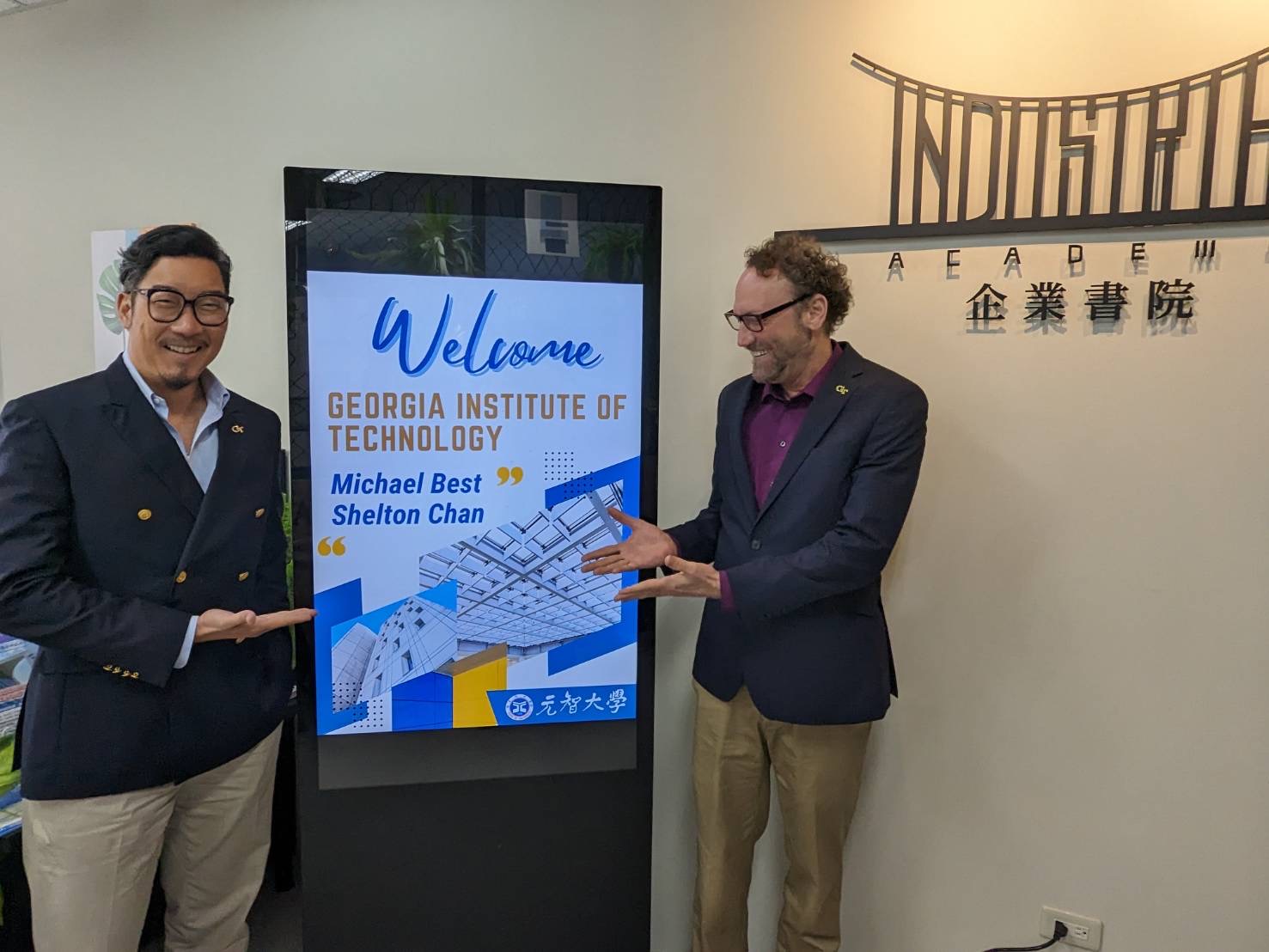
Shelton Chan, managing director of the Shenzhen Georgia Tech Education Foundation, with Michael Best
Walter Rich