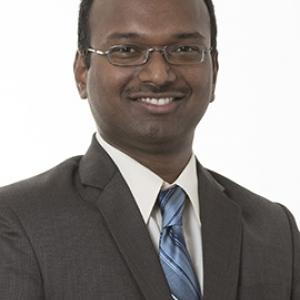
Vivek Sarkar

Vivek Sarkar

Vivek Sarkar is Chair of the School of Computer Science at Georgia Tech, where he is also the Stephen Fleming Chair for Telecommunications in the College of Computing. He conducts research in multiple aspects of parallel computing software including programming languages, compilers, runtime systems, and debuggers for parallel, heterogeneous and high-performance computer systems. Prof. Sarkar currently leads the Habanero Extreme Scale Software Research Laboratory at Georgia Tech, and is co-director of the Center for Research into Novel Computing Hierarchies (CRNCH).


Elizabeth Cherry

Elizabeth Cherry

Elizabeth Cherry is an Associate Professor in the School of Computational Science and Engineering. Her research involves modeling and simulation, high-performance computing, and numerical methods.

Ümit V. Çatalyürek

Umit Catalyurek

Ümit V. Çatalyürek is currently a Professor and the Associate Chair of the School of Computational Science and Engineering in the College of Computing at the Georgia Institute of Technology. Prior joining Georgia Institute of Technology, he was a Professor and Vice Chair of the Department of Biomedical Informatics, and Professor in the Departments of Electrical & Computer Engineering, and Computer Science & Engineering at the Ohio State University. He received his Ph.D., M.S. and B.S.

Siva Theja Maguluri


Siva is Fouts Family Early Career Professor and an Assistant Professor in the H. Milton Stewart School of Industrial & Systems Engineering at Georgia Tech.

Richard Vuduc

Richard Vuduc

Richard (Rich) Vuduc is an Associate Professor at the Georgia Institute of Technology (“Georgia Tech”), in the School of Computational Science and Engineering, a department devoted to the study of computer-based modeling and simulation of natural and engineered systems. His research lab, The HPC Garage (@hpcgarage), is interested in high-performance computing, with an emphasis on algorithms, performance analysis, and performance engineering.

Ling Liu

 Ling Liu

Ling Liu is a Professor in the School of Computer Science at Georgia Institute of Technology. She directs the research programs in Distributed Data Intensive Systems Lab (DiSL), examining various aspects of large scale big data systems and analytics, including performance, availability, security, privacy and trust. Prof. Liu is an elected IEEE Fellow and a recipient of IEEE Computer Society Technical Achievement Award (2012).

Jeffrey Young

 Jeffrey Young

I am currently a Senior Research Scientist at Georgia Tech working in the School of Computer Science in the College of Computing since 2015. Previously, I have worked as as a research scientist in the School of Computational Science and Engineering (CSE) from 2013 to 2015. This work focused on advanced user support and benchmarking for the Keeneland project and investigating architecture-related research topics for Dr. Jeff Vetter’s Future Technologies Group at Oak Ridge National Lab.

Haesun Park

Haesun Park

Dr. Haesun Park is a Regents' Professor and Chair in the School of Computational Science and Engineering, Georgia Institute of Technology, Atlanta, Georgia, U.S.A. She was elected as a SIAM Fellow in 2013 and IEEE Fellow in 2016 for her outstanding contributions in numerical computing, data analysis, and visual analytics. She was the Executive Director of Center for Data Analytics 2013-2015 and was the director of the NSF/DHS FODAVA-Lead (Foundations of Data and Visual Analytics) Center 2008-2014.

Edmond Chow

 Edmond Chow

Edmond Chow is a Professor in the School of Computati

Milos Prvulovic

Milos Prvulovic

Milos Prvulovic, Ph.D., is a professor in the School of Computer Science, College of Computing at the Georgia Institute of Technology. His research focuses on hardware and software support for program monitoring, debugging, and security. His research of side-channel emmanations and side-channel attacks has led to widespread interest from professional societies, the media and additional reserach sponsors -- most recently attracting a $9.4 million award from the Defense Advanced Research Projects Agency (DARPA) for continued study.