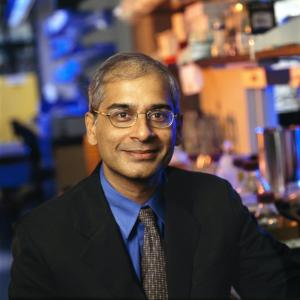
Shuichi Takayama

Shuichi  Takayama

Shu Takayama earned his BS and MS in Agricultural Chemistry at the University of Tokyo. He earned a Ph.D. in Chemistry at The Scripps Research Institute in La Jolla, California studying bio-organic synthesis with Dr. Chi‐Huey Wong. He then worked as a postdoc with Dr. George Whitesides at Harvard University where he focused on applying microfluidics to studying cell and molecular biology.

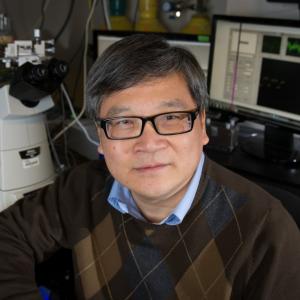
Young Jang

Young Jang

Dr. Jang’s lab uses multi-disciplinary approaches to study muscle stem cell biology and develops bioactive stem cell delivery vehicles for use in regenerative medicine. Dr. Jang’s lab studies both basic aspects of muscle stem cell biology, especially systemic/metabolic regulations of stem cell and stem cell niche, as well as more translational aspects of muscle stem cell and mesenchymal stem cell for use in therapeutic approaches for musculoskeletal aging, neuromuscular diseases, and traumatic injuries.

Marcus Cicerone

Marcus Cicerone

Marcus T Cicerone received his Ph.D. from the University of Wisconsin – Madison in 1994, under the direction of Mark Ediger. He spent three years at Johnson & Johnson Clinical Diagnostics, served as a visiting teaching professor at Brigham Young University for two years, and subsequently joined the National Institute of Standards and Technology in 2001, where he remained for 18 years, serving as a group leader and project leader. In January 2019 he joined the Georgia Institute of Technology as a Professor of Chemistry. 

Ravi Kane

Ravi Kane

Ravi Kane is the Garry Betty/V Foundation Chair and GRA Eminent Scholar in Cancer Nanotechnology. He received a B.S. in Chemical Engineering from Stanford University in 1993. Also, he received an M.S. in Chemical Engineering Practice and a Ph.D. in Chemical Engineering from MIT, working with Bob Cohen and Bob Silbey. After postdoctoral research with George Whitesides in the Department of Chemistry and Chemical Biology at Harvard University, he joined Rensselaer Polytechnic Institute (RPI) as an assistant professor in 2001.

J. Brandon Dixon

J. Brandon Dixon

Dr. Dixon began at Georgia Tech in August 2009 as an Assistant Professor. Prior to his current appointment, he was a staff scientist at Ecole Polytechnique Federal de Lausanne (Swiss Federal Institute of Technology - Lausanne) doing research on tissue-engineered models of the lymphatic system. Dr. Dixon received his Ph.D. in biomedical engineering while working in the Optical Biosensing Laboratory, where he developed an imaging system for measuring lymphatic flow and estimating wall shear stress in contracting lymphatic vessels. 

Cheng Zhu

Cheng Zhu

Our interests lie in the adhesion and signaling molecules of the immune system as well as those involved in platelet adhesion and aggregation. We are primarily focused on early cell surface interaction kinetics and their primary signaling responses, as these are critical in determining how a cell will ultimately respond upon contact with another cell.