Frank Li

Frank Li
frankli@gatech.edu
Website
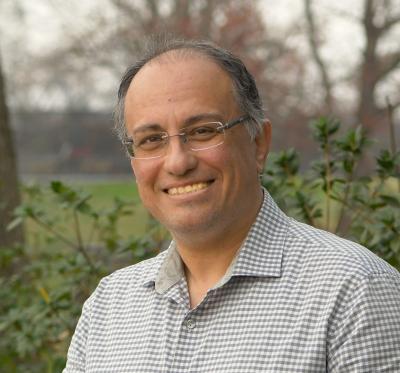
Frank Li is an incoming Assistant Professor, joining Georgia Tech ECE in Fall 2020. His research interests span network and software security, Internet measurements, and human factors in security, with a particular focus on improving security operations in practice. This work has led to top-tier conference publications, as well as Best Paper Awards at the ACM Internet Measurement Conference (IMC’14) and the USENIX Symposium on Usable Privacy and Security (SOUPS’19). Before joining the Georgia Tech ECE faculty, he currently serves as a Visiting Researcher at Facebook. He received a Ph.D. in Computer Science from UC Berkeley (2019) and a B.S. in Computer Science and Engineering from MIT (2013). During his graduate studies, he was supported by NSF GRFP and NDSEG fellowships, and received the Berkeley Outstanding Graduate Student Instructor Award. He hails originally from Minnesota and remains an ardent (yet often disappointed) fan of the Vikings and Timberwolves.
Assistant Professor
Additional Research
Data Mining & Analytics; Data Security & Privacy; Internet Infrastructure & Operating Systems;
Frank
Li
Show Regular Profile

Manos Tentzeris

Manos  Tentzeris
etentze@ece.gatech.edu
ECE Profile Page

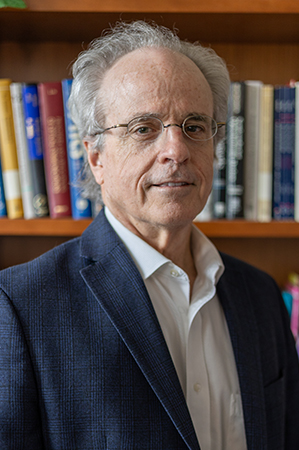
Manos Tentzeris was born and grew up in Piraeus, Greece. He graduated from Ionidios Model School of Piraeus in 1987 and he received the Diploma degree in Electrical Engineering and Computer Science (Magna Cum Laude) from the National Technical University in Athens, Greece, in 1992 and the M.S. and Ph.D. degrees in Electrical Engineering and Computer Science from the University of Michigan, Ann Arbor in 1993 and 1998. He is currently a Professor with the School of ECE, Georgia Tech and he has published more than 550 papers in refereed Journals and Conference Proceedings, 4 books and 23 book chapters, while he is in the process of writing 1 book. He has served as the Head of the Electromagnetics Technical Interest Group of the School of ECE, Georgia Tech. Also, he has served as the Georgia Electronic Design Center Associate Director for RFID/Sensors research from 2006-2010 and as the GT-Packaging Research Center (NSF-ERC) Associate Director for RF research and the leader of the RF/Wireless Packaging Alliance from 2003-2006. Also, Dr. Tentzeris is the Head of the A.T.H.E.N.A. Research Group (20 students and researchers) and has established academic programs in 3D Printed RF electronics and modules, flexible electronics, origami and morphing electromagnetics, Highly Integrated/Multilayer Packaging for RF and Wireless Applications using ceramic and organic flexible materials, paper-based RFID 's and sensors, inkjet-printed electronics, nanostructures for RF, wireless sensors, power scavenging and wireless power transfer, Microwave MEM 's, SOP-integrated (UWB, mutliband, conformal) antennas and Adaptive Numerical Electromagnetics (FDTD, MultiResolution Algorithms). He was the 1999 Technical Program Co-Chair of the 54th ARFTG Conference and he is currently a member of the technical program committees of IEEE-IMS, IEEE-AP and IEEE-ECTC Symposia. He was the TPC Chair for the IMS 2008 Conference and the Co-Chair of the ACES 2009 Symposium. He was the Chairman for the 2005 IEEE CEM-TD Workshop. He was the Chair of IEEE-CPMT TC16 (RF Subcommittee) and he was the Chair of IEEE MTT/AP Atlanta Sections for 2003. He is a Fellow of IEEE, a member of MTT-15 Committee, an Associate Member of European Microwave Association (EuMA), a Fellow of the Electromagnetics Academy, and a member of Commission D, URSI and of the the Technical Chamber of Greece. He is the Founder and Chair of the newly formed IEEE MTT-S TC-24 (RFID Technologies). He is one of the IEEE C-RFID DIstinguished Lecturers and he has served as one IEEE MTT-Distinguished Microwave Lecturers (DML) from 2010-2012. His hobbies include basketball, swimming, ping-pong and travel.

Ken Byers Professor in Flexible Electronics, School of Electrical and Computer Engineering
Phone
404.385.1478
Office
TSRB 539
Additional Research

3D-Printed/Inkjet-Printed RF Electronics, Batteries and Sensors "Green" and sustainable energy harvesting (e.g. RF, mechanical, thermal, UV) and Wireless Power Transfer systemsNanotechnology-based Ultrasensitive Sensors Origami Antennas and RF Modules with Morphing Characteristics Novel Flexible Electronics, Packaging & 3D Modules up to mm-wave Frequency-range Wearable and Implantable Wireless Body-Area Networks Internet of Things, "Smart Skin", "Zero-Power", and "Smart Energy" ApplicationsReal-Time Multiresolution Algorithms for the Analysis and Design of Wireless Communication Front-Ends.Novel RFID Antennas, Architectures and Sensor Systems


Google Scholar
https://scholar.google.com/citations?hl=en&user=zMR4S7EAAAAJ&view_op=list_works&sortby=pubdate
LinkedIn
Manos
Tentzeris
Show Regular Profile

Madhavan Swaminathan

Madhavan Swaminathan
Professor Emeritus
Additional Research

Numerical methods in electromagneticsMixed signal designSignal, power, and thermal integrityPower deliveryIC-Package Co-design

Google Scholar
https://scholar.google.com/citations?hl=en&user=jkhJfqQAAAAJ&view_op=list_works&sortby=pubdate
ECE Profile Page
Madhavan
Swaminathan
Show Regular Profile

Shyh-Chiang Shen

Shyh-Chiang Shen
shyh.shen@ece.gatech.edu
ECE Profile Page

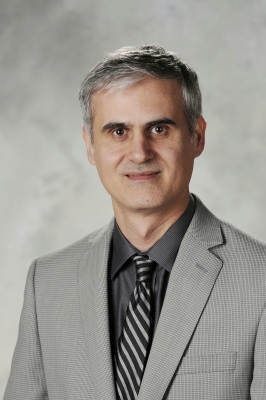
Shyh-Chiang Shen received his Ph.D. degree in electrical engineering at the University of Illinois at Urbana-Champaign (UIUC) in 2001. He was a key contributor of high-cycle low-voltage radio-frequency (RF) microelectromechanical system (MEMS) switches and GaAs metal-semiconductor field effect transistors (MESFETs) millimeter-wave integrated circuits (MMICs) during his tenure at UIUC. At Xindium Technologies (2000-2004), he developed a proprietary commercial-grade InP single-heterojunction bipolar transistor (SHBT) technology that led to the first demonstration of monolithically integrated 40Gb/s PIN+TIA differential-output optical receivers.

Shen joined the Georgia Institute of Technology in 2005 as an Assistant Professor and was promoted a Full Professor in 2018. His research has yielded 8 awarded U.S. patents, 5 book chapters, 170+ publications in refereed journals and conferences, and many invited seminar talks to date. He is also an editor of a book entitled Nitride Semiconductor LEDs (2nd Ed., October 2017.) His current research is focused on wide bandgap semiconductor (WBG) microelectronics and optoelectronic devices with emphasis on physical device study, fabrication processing technique development, and device characterizations.

Professor, School of Electrical and Computer Engineering
Phone
404.894.1884
Office
BH 307
Additional Research

High sensitivity, III-nitride-based UV photodetectorsAdvanced III-nitride coherent light emittersIII-nitride transistor technologies (unipolar and bipolar transistors)WBG high power electronicsCompound-semiconductor Integrated circuit technologiesSustainable, “green” technologies

Google Scholar
https://scholar.google.com/citations?hl=en&user=qFL4GfcAAAAJ&view_op=list_works&sortby=pubdate
Semiconductor Research Lab (SRL) at Georgia Tech
Shyh-Chiang
Shen
Show Regular Profile

Stephen E. Ralph

Stephen E. Ralph
stephen.ralph@ece.gatech.edu
Georgia Electronic Design Center

Stephen E. Ralph is a Professor with the School of Electrical and Computer Engineering at Georgia Tech. He received the BEE degree in Electrical Engineering with highest honors from the Georgia Institute of Technology in 1980. He received a Ph.D. in Electrical Engineering from Cornell University in 1988 for his work on highly nonequilibrium carrier transport in semiconductor devices. He is currently the director of the Georgia Electronic Design Center, a cross-disciplinary electronics and photonics research center focused on the synergistic development of high-speed electronic components and signal processing to enable revolutionary system performance. He is also the founder and director of the new Terabit Optical Networking Consortium, an industry led communications and information technology consortium. Prior to Georgia Tech he held a postdoctoral position at AT&T Bell Laboratories and was a visiting scientist with the Optical Sciences Laboratory at the IBM T. J. Watson research center. He has widely published in peer-reviewed journals and conferences and holds more than 10 patents in the fields of optical communications, optical devices and signal processing. His current research focuses on high-speed optical communications systems including modulation formats, coherent receivers, microwave photonics, integrated photonics and signal processing. Ralph is an Associate Editor of the IEEE Transactions on Electronic Devices. He is a Fellow of the Optical Society (OSA).

Professor, School of Electrical and Computer Engineering
Director, Georgia Electronic Design Center
Glen Robinson Chair in Electro-Optics, School of Electrical and Computer Engineering
Phone
404.894.5268
Office
TSRB 505
Additional Research

Integrated photonicsMachine learning and signal processingPhotonics in aerospace applicationsUltra high capacity optical communication systemsSimulation and modeling of communication systems

Google Scholar
https://scholar.google.com/citations?hl=en&user=ufG_N44AAAAJ&view_op=list_works&sortby=pubdate
LinkedIn ECE Profile Page
Stephen
Ralph
E.
Show Regular Profile

Azad Naeemi

Azad Naeemi
azad@gatech.edu
ECE Profile Page

Azad Naeemi received his B.S. degree in electrical engineering from Sharif University, Tehran, Iran in 1994, and his M.S. and Ph.D. degrees in electrical and computer engineering from the Georgia Institute of Technology, Atlanta, Ga. in 2001 and 2003, respectively.

Prior to his graduate studies (from 1994 to 1999), he was a design engineer with Partban and Afratab Companies, both located in Tehran, Iran. He worked as a research engineer in the Microelectronics Research Center at Georgia Tech from 2004 to 2008 and joined the ECE faculty at Georgia Tech in fall 2008.

His research crosses the boundaries of materials, devices, circuits, and systems investigating integrated circuits based on conventional and emerging nanoelectronic and spintronic devices and interconnects. He is the recipient of the IEEE Electron Devices Society (EDS) Paul Rappaport Award for the best paper that appeared in IEEE Transactions on Electron Devices during 2007. He is also the first recipient of the IEEE Solid-State Circuits Society James D. Meindl Innovators Award (2022). He has received an NSF CAREER Award, an SRC Inventor Recognition Award, and several best paper awards at international conferences.

Professor, School of Electrical and Computer Engineering
Phone
404.894.4829
Office
Pettit/MiRC 216
Additional Research

Emerging nanoelectronic devices and circuitsSpintronic devices and interconnectsCarbon nanotube and graphene devices and interconnectsCircuit and system implications of emerging devicesDesign and optimization for nanoscale technologies

Google Scholar
https://scholar.google.com/citations?hl=en&user=21ojWWUAAAAJ&view_op=list_works&sortby=pubdate
LinkedIn Nanoelectronics Research Lab
Azad
Naeemi
Show Regular Profile

Saibal Mukhopadhyay

Saibal Mukhopadhyay
saibal.mukhopadhyay@ece.gatech.edu
ECE Profile Page

Saibal Mukhopadhyay received the bachelor of engineering degree in electronics and telecommunication engineering from Jadavpur University, Calcutta, India in 2000 and the Ph.D. degree in electrical and computer engineering from Purdue University, West Lafayette, IN, in August 2006. He joined the faculty of the Georgia Institute of Technology in September 2007. Mukhopadhyay worked at IBM T. J. Watson Research Center, Yorktown Heights, N.Y. as research staff member from August 2006 to September 2007 and as an intern in summers of 2003, 2004, and 2005. At IBM, his research primarily focused on technology-circuit co-design methodologies for low-power and variation tolerant static random access memory (SRAM) in sub-65nm silicon technologies. Mukhopadhyay has (co)-authored over 90 papers in reputed conferences and journals and filed seven United States patents

Joseph M. Pettit Professor, School of Electrical and Computer Engineering
Phone
404.894.2688
Office
KL 2356
Additional Research

Low-power, variation tolerant, and reliable VLSI systemsDevice/circuit level modeling/estimation of power, yield, and reliabilityTechnology-circuit co-design methodologiesSelf-adaptive systems with on-chip sensing and repair techniqueMemory design for VLSI applicationsUltra-low power and fault-tolerant nanoelectronics: technology, circuit, and computing platforms

Google Scholar
https://scholar.google.com/citations?hl=en&user=5KRtMEkAAAAJ&view_op=list_works&sortby=pubdate
LinkedIn Gigascale Reliable Energy-Efficient Nanosystem (GREEN) Lab
Saibal
Mukhopadhyay
Show Regular Profile

Sung Kyu Lim

Sung Kyu Lim
limsk@ece.gatech.edu
ECE Profile Page

Sung Kyu Lim was born and grew up in Seoul, Korea, and moved to Los Angeles with his family at the age of 19. He received B.S. (1994), M.S. (1997), and Ph.D. (2000) degrees all from the Computer Science Department of University of California at Los Angeles (UCLA). During 2000-2001, he was a post-doctoral scholar at UCLA, and a senior engineer at Aplus Design Technologies, Inc. In August 2001, he joined the School of Electrical and Computer Engineering at Georgia Institute of Technology an assistant professor. He is currently the director of the GTCAD (Georgia Tech Computer Aided Design) Laboratory at the School. He recently released a CD with his rock band in Los Angeles and spends his leisure time writing/recording music

Professor, School of Electrical and Computer Engineering
Phone
404.894.0373
Office
Klaus 2360
Additional Research

Physical design automation for VLSI circuits3D circuit/packaging layout automationQuantum circuit layout automationMicro-architecture design space explorationLayout automation for reconfigurable circuitsGraph theory and combinatorial optimization

Google Scholar
https://scholar.google.com/citations?hl=en&user=kEh-m1sAAAAJ&view_op=list_works&sortby=pubdate
LinkedIn Georgia Tech Computer-Aided Design Laboratory
Sung Kyu
Lim
Show Regular Profile

Asif Khan

Asif Khan
asif.khan@ece.gatech.edu
Electrons Lab

Asif Khan is an Associate Professor in the School of Electrical and Computer Engineering with a courtesy appointment in the School of Materials Science and Engineering at the Georgia Institute of Technology. Khan’s research focuses on microelectronic devices, specifically on ferroelectric devices that address the challenges faced by the semiconductor industry due to the end of transistor miniaturization. His research group at Georgia Tech focuses on all aspects of ferroelectricity ranging from materials physics, growth, and electron microscopy to micro-/nano-fabrication of electronic devices, all the way to ferroelectric circuits and systems for artificial intelligence, machine learning, and data-centric applications.

Associate Professor, School of Electrical and Computer Engineering and School of Materials Science and Engineering
Office
Pettit 212
Additional Research

VLSI Systems and Digital Design; Microelectronics/Microsystems

Research Focus Areas
Google Scholar
https://scholar.google.com/citations?hl=en&user=oVz2tJMAAAAJ&view_op=list_works&sortby=pubdate
ECE Profle Page
Asif
Khan
Show Regular Profile

J. Stevenson Kenney

J. Stevenson Kenney
jskenney@ece.gatech.edu
ECE Profile Page

J. Stevenson Kenney was born in St. Louis, MO in 1962. He received the BSEE, MSEE, and Ph.D. in Electrical Engineering, all from the Georgia Institute of Technology in 1985, 1990, and 1994, respectively. Kenney has over 14 years of industrial experience in wireless communications. He has held engineering and management positions at Electromagnetic Sciences, Scientific Atlanta, Pacific Monolithics, and Spectrian. He is a Senior Member of the IEEE and the Microwave Theory and Techniques Society. In January 2000, Kenney returned to Georgia Tech as Associate Professor in Electrical and Computer Engineering. Kenney has authored or co-authored more than 100 technical papers in the areas of microwave electronics, acoustics, and signal processing.

Professor, School of Electrical and Computer Engineering
Phone
404.894.5170
Office
TSRB 545
Additional Research

RF and Microwave Power Amplifier DesignBehavioral Simulation and PA LinearizationAdvanced RFIC DesignPhase Shifters and Beam Forming Networks for Smart Antennas

Google Scholar
https://scholar.google.com/citations?hl=en&user=AYYESGQAAAAJ&view_op=list_works&sortby=pubdate
LinkedIn
J. Stevenson
Kenney
Show Regular Profile