Georgia Tech’s Space Research Initiative Hosts Yuri’s Day Symposium
Apr 30, 2024 —
April 12 is a significant date in the history of exploration, as it marks the first space flight of a human, Yuri Gagarin, in 1961. This year on April 12, the Georgia Tech Space Research Initiative (Space RI) hosted an event highlighting the Institute’s interdisciplinary space research. The Yuri’s Day Symposium was Space RI’s first public event.
A multidisciplinary initiative, the Space RI brings together faculty, researchers, and students from across campus who share a passion for space exploration. Their combined research explores a broad array of space-related topics, all considered from a human perspective.
“Launching Georgia Tech’s Space Research Initiative reinforces our commitment to advancing our understanding of space and our universe,” said Executive Vice President for Research Chaouki Abdallah. “It is also a testament to Georgia Tech's unwavering dedication to pushing the limits of what is possible and to fostering innovations that benefit humankind.”
The symposium was organized by Glenn Lightsey, interim executive director of the Space RI, and the Space RI steering committee, which consists of representatives from the Georgia Tech Research Institute (GTRI) and the Colleges of Engineering, Computing, and Sciences, the Ivan Allen College of Liberal Arts, and the Scheller College of Business. The day began with remarks from Research leadership and an overview of the Space RI and its mission. “This is an exciting time for space exploration at Georgia Tech and across the world,” Lightsey said. “Space research is a critical part of solving our world’s most challenging problems and improving life for everyone on Earth.”
Space research and exploration yield many societal benefits that improve life on Earth and even foster economic growth. These advances include rapidly evolving technologies, improvements in medicine, and the development of enhanced materials — such as self-healing materials and those designed for extreme environments. Additionally, space research provides essential tools, data, and insights for climate scientists.
Sessions and panels throughout the day covered space science, space media, NASA’s Moon to Mars program, GTRI’s space research program, commercial space initiatives, and space in popular culture. A.C. Charania, NASA’s chief technologist and a Georgia Tech alumnus, delivered the keynote address. He shared insights into his work at NASA and Moon to Mars.
Following the symposium, the Space RI hosted a “star party” at the Georgia Tech Observatory. People of all ages gathered at the event, where they could use the observatory’s telescope to observe the moon, Jupiter, and the Orion Nebula, an immense cloud of dust and gas from which new stars are born.
“It was a clear night, and we were able to view the lunar terminator — the boundary where the sun is setting on the moon — which accentuates craters and mountains,” said Lightsey. “It was exciting to officially launch our initiative on a day when the world celebrated space exploration and the star party was a fantastic way to end our event.”
In July 2025, the Space RI will transition into one of Georgia Tech’s Interdisciplinary Research Institutes. Learn more about the initiative at space.gatech.edu.
Sign up to receive space news and event updates from the Space RI.
Laurie Haigh
Research Communications
David Bridges Receives Fulbright Specialist Award to Slovak Republic at Digital Coalition
Apr 26, 2024 —
David Bridges, vice president of Georgia Tech's Enterprise Innovation Institute.
The U.S. Department of State and the Fulbright Foreign Scholarship Board are pleased to announce that David Bridges, vice president of the Georgia Institute of Technology's Enterprise Innovation Institute, has received a Fulbright Specialist Program award.
Bridges, who was named Fulbright Specialist in February of 2024, will complete a project at the Digital Coalition in the Slovak Republic that aims to exchange knowledge and establish partnerships benefiting participants, institutions, and communities both in the U.S. and overseas through a variety of educational and training activities within Public Administration.
Bridges is one of over 400 U.S. citizens who share expertise with host institutions abroad through the Fulbright Specialist Program each year. Recipients of Fulbright Specialist awards are selected on the basis of academic and professional achievement, demonstrated leadership in their field, and their potential to foster long-term cooperation between institutions in the U.S. and abroad.
The Fulbright Program is the flagship international educational exchange program sponsored by the U.S. government and is designed to build lasting connections between the people of the United States and the people of other countries. The Fulbright Program is funded through an annual appropriation made by the U.S. Congress to the U.S. Department of State. Participating governments and host institutions, corporations, and foundations around the world also provide direct and indirect support to the Program, which operates in over 160 countries worldwide.
Since its establishment in 1946, the Fulbright Program has given more than 400,000 students, scholars, teachers, artists, and scientists the opportunity to study, teach and conduct research, exchange ideas, and contribute to finding solutions to shared international concerns.
Fulbrighters address critical global issues in all disciplines, while building relationships, knowledge, and leadership in support of the long-term interests of the United States. Fulbright alumni have achieved distinction in many fields, including 60 who have been awarded the Nobel Prize, 88 who have received Pulitzer Prizes, and 39 who have served as a head of state or government.
For further information about the Fulbright Program or the U.S. Department of State, please visit eca.state.gov/fulbright or contact the Bureau of Educational and Cultural Affairs Press Office by telephone 202.632.6452 or e-mail eca-press@state.gov.
Péralte C. Paul
peralte@gatech.edu
404.316.1210
New Science and Medical Research Hub Opens in Atlanta
Apr 25, 2024 —
Trammell Crow Company delivers first phase of Georgia Tech district devoted to advancing sciences that improve the human condition.
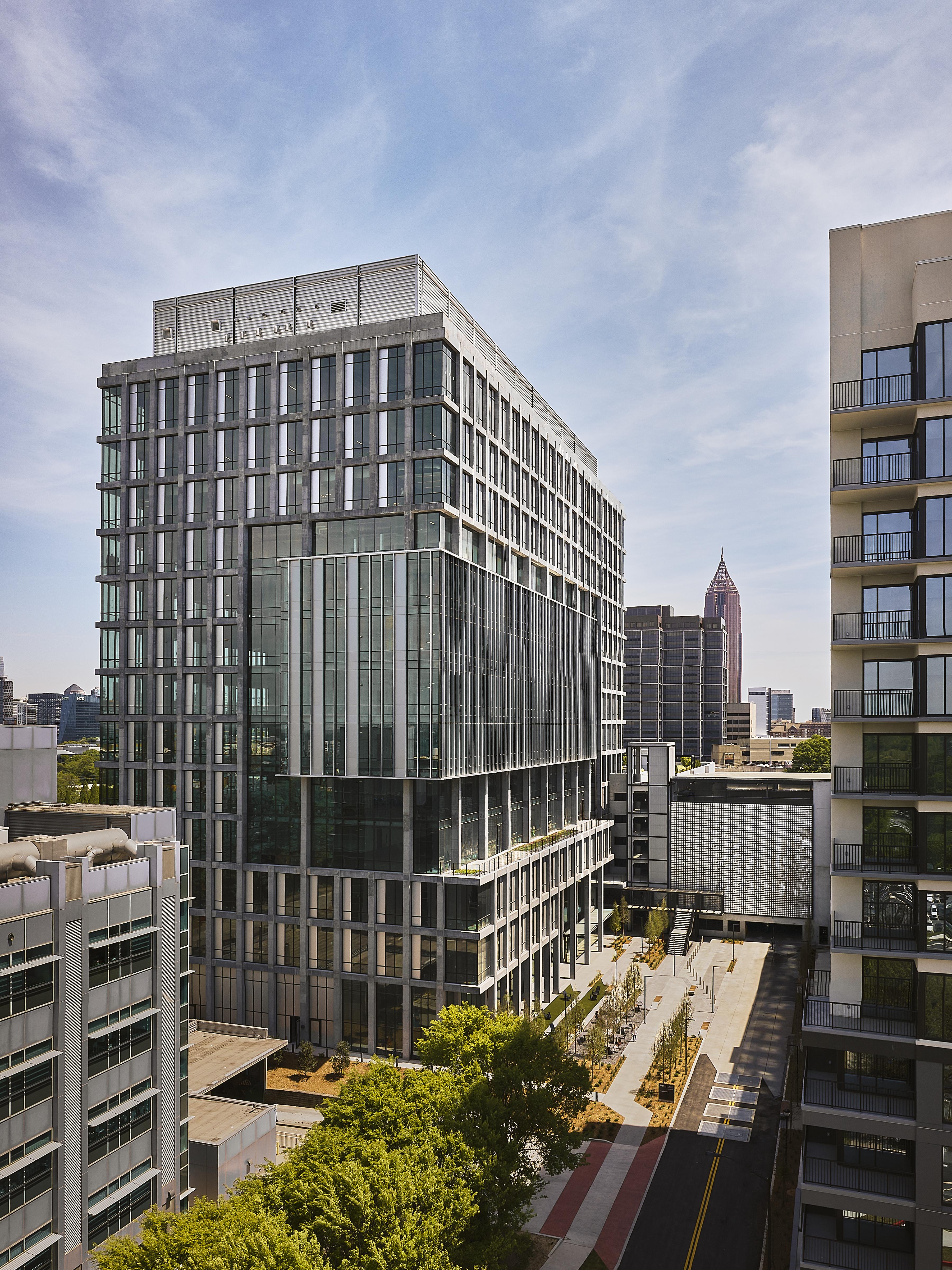
Georgia Institute of Technology and the Trammell Crow Company are transforming Atlanta’s booming skyline with the launch of the first phase of Science Square, a pioneering mixed-use development dedicated to biological sciences and medical research and the technology to advance those fields. A ribbon-cutting ceremony is planned for April 25.
“The opening of Science Square’s first phase represents one of the most exciting developments to come to Atlanta in recent years,” said Ángel Cabrera, president of Georgia Tech. “The greatest advances in innovation often emerge from dense technological ecosystems, and Science Square provides our city with its first biomedical research district, which will help innovators develop and scale their ideas into marketable solutions.”
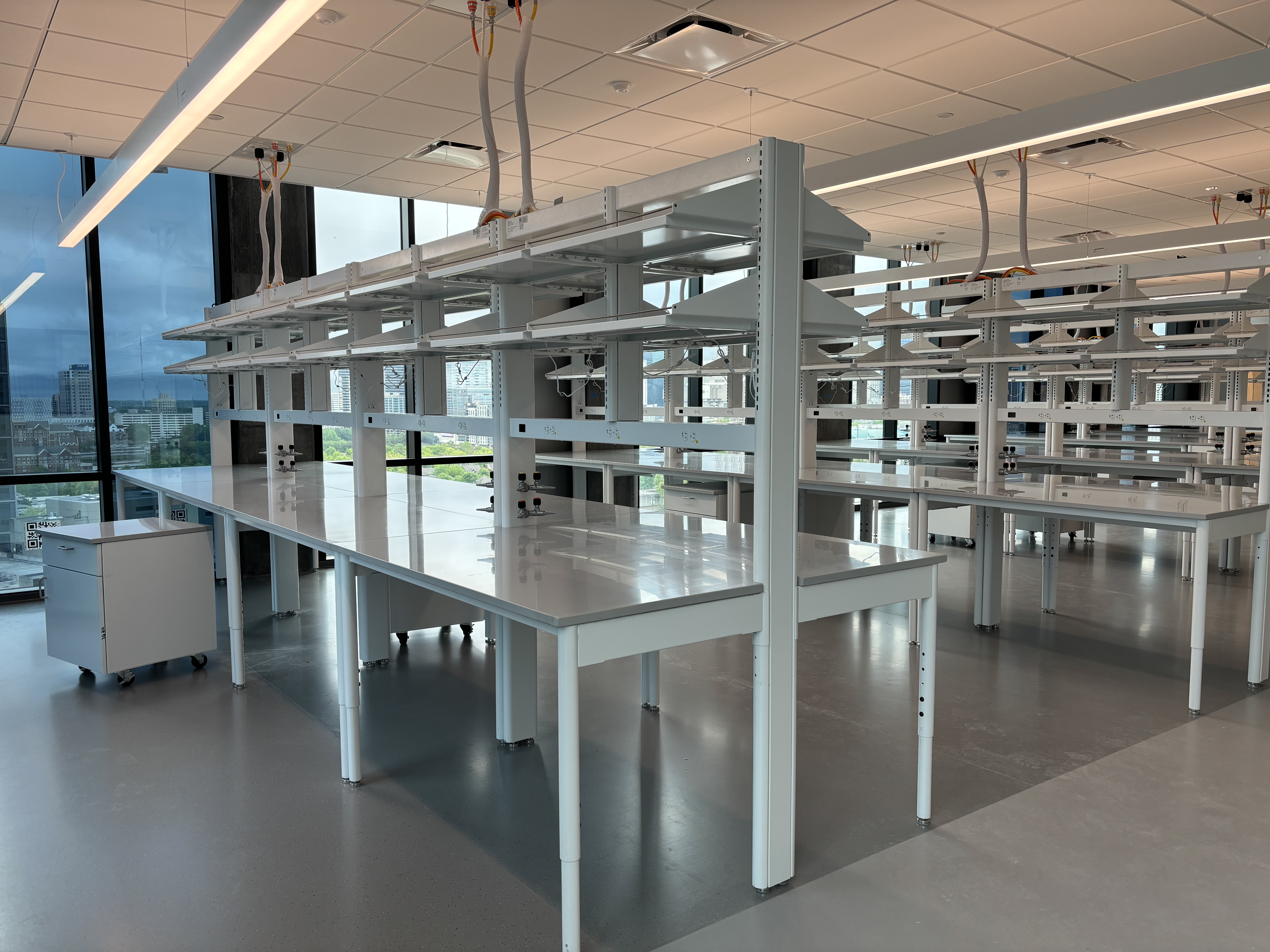
Science Square’s first phase includes Science Square Labs, a 13-story purpose-built tower with state-of-the-art infrastructure to accommodate wet and dry labs and clean room space. To promote overall energy efficiency as well as sustainability, the complex houses a massive 38,000-square-foot solar panel. The solar panel system is in addition to an energy recovery system that extracts energy from the building’s exhaust air and returns it to the building’s HVAC system, reducing carbon dioxide emissions. Electrochromic windows, which tint during the day to block ultraviolet rays and steady the temperature while also controlling the environment — key in research labs — are also featured throughout the building.
Equipped with technologically advanced amenities and infrastructure, Science Square Labs serves as a nexus for groundbreaking research, enabling collaboration between academia, industry, and startup ventures. Portal Innovations, a company specializing in life sciences venture development, is among the first tenants to establish operations at Science Square, as Atlanta takes center stage as the country’s top city for research and development employment growth.
The opening of the complex’s first phase, just south of Georgia Tech’s campus and totaling 18 acres, also features retail space and The Grace Residences developed by High Street Residential, TCC's residential subsidiary. The 280-unit multifamily tower, already welcoming tenants, is named in honor of renowned Atlanta leader and Georgia State Representative Grace Towns Hamilton who spent many years championing this community.
Beyond its scientific endeavors, Science Square embodies Georgia Tech’s commitment to uplifting the local community. By collaborating with organizations like Westside Works, Science Square aims to empower residents through targeted workforce development initiatives and economic opportunities.
“This mixed-use development adds immense value to Atlanta’s west side and will lead the development of pioneering medical advances with the power to improve and save lives,” President Cabrera added.
Director, Media Relations
Georgia Institute of Technology
Senior Media Relations Representative
New Approach Could Make Reusing Captured Carbon Far Cheaper, Less Energy-Intensive
Apr 25, 2024 — Atlanta, GA
A new electrochemical reactor design developed with Marta Hatzell by postdoctoral scholar Hakhyeon Song (middle) and Ph.D. students Carlos Fernández and Po-Wei Huang (seated) converts carbon dioxide removed from the air into useful raw material. Their approach is cheaper and simpler while requiring less energy, making it a promising tool to improve the economics of direct air capture systems. (Photo: Candler Hobbs)
Engineers at Georgia Tech have designed a process that converts carbon dioxide removed from the air into useful raw material that could be used for new plastics, chemicals, or fuels.
Their approach dramatically reduces the cost and energy required for these direct air capture (DAC) systems, helping improve the economics of a process the researchers said will be critical to addressing climate change.
The key is a new kind of catalyst and electrochemical reactor design that can be easily integrated into existing DAC systems to produce useful carbon monoxide (CO) gas. It’s one of the most efficient such design ever described in scientific literature, according to lead researcher Marta Hatzell and her team. They published details April 16 in Energy and Environmental Science, a top journal for energy-related research.
Joshua Stewart
College of Engineering
Why Can’t Robots Outrun Animals?
May 02, 2024 —
Can this small robot outrun a spider? Photo Credit: Animal Inspired Movement and Robotics Lab, CU Boulder.
Robots that can run, jump, and even talk have shifted from the stuff of science fiction to reality in the past few decades. Yet even in robots specialized for specific movements like running, animals are still able to outmaneuver the most advanced robotic developments.
Georgia Tech’s Simon Sponberg recently collaborated with researchers at the University of Washington, Simon Fraser University, University of Colorado Boulder, and Stanford Research Institute to answer one deceptively complex question: Why can’t robots outrun animals?
“This work is about trying to understand how, despite have some really amazing robots, there still seems to be a gulf between the capabilities of animal movement and what we can engineer,” says Sponberg, who is Dunn Family Associate Professor in the School of Physics and School of Biological Sciences.
Recently published in Science Robotics, their study systematically examines a suite of biological and robotic runners to figure out how to further advance our best robotic designs.
“In robotics design we are often very component focused — we are used to having to establish specifications for the parts that we need and then finding the best component solution,” said Sponberg, who also serves on the executive committee for Georgia Tech's Neuro Next Initiative. “This is of course not how evolution works. We wondered if we systematically analyzed the performance of animals in the same component way that we design robots, if we might see an obvious gap.”
The gap turns out not to be in the function of individual robotic components, but rather the ability of those components to work together in the seamless way biological components do, highlighting a field of opportunity for new research in robotic development.
“This means that the frontier is not necessarily figuring out how to design better motors or sensors or controllers,” says Sponberg, “but rather how to integrate them together — this is where biology really excels.”
Read more about man versus machine and the future of bioinspired robotics here.
Audra Davidson
Research Communications Program Manager
Neuro Next Initiative
Neurotech Moonshot: Georgia Tech Researcher Shares Impact of BRAIN Initiative in Congressional Briefing
Apr 24, 2024 —
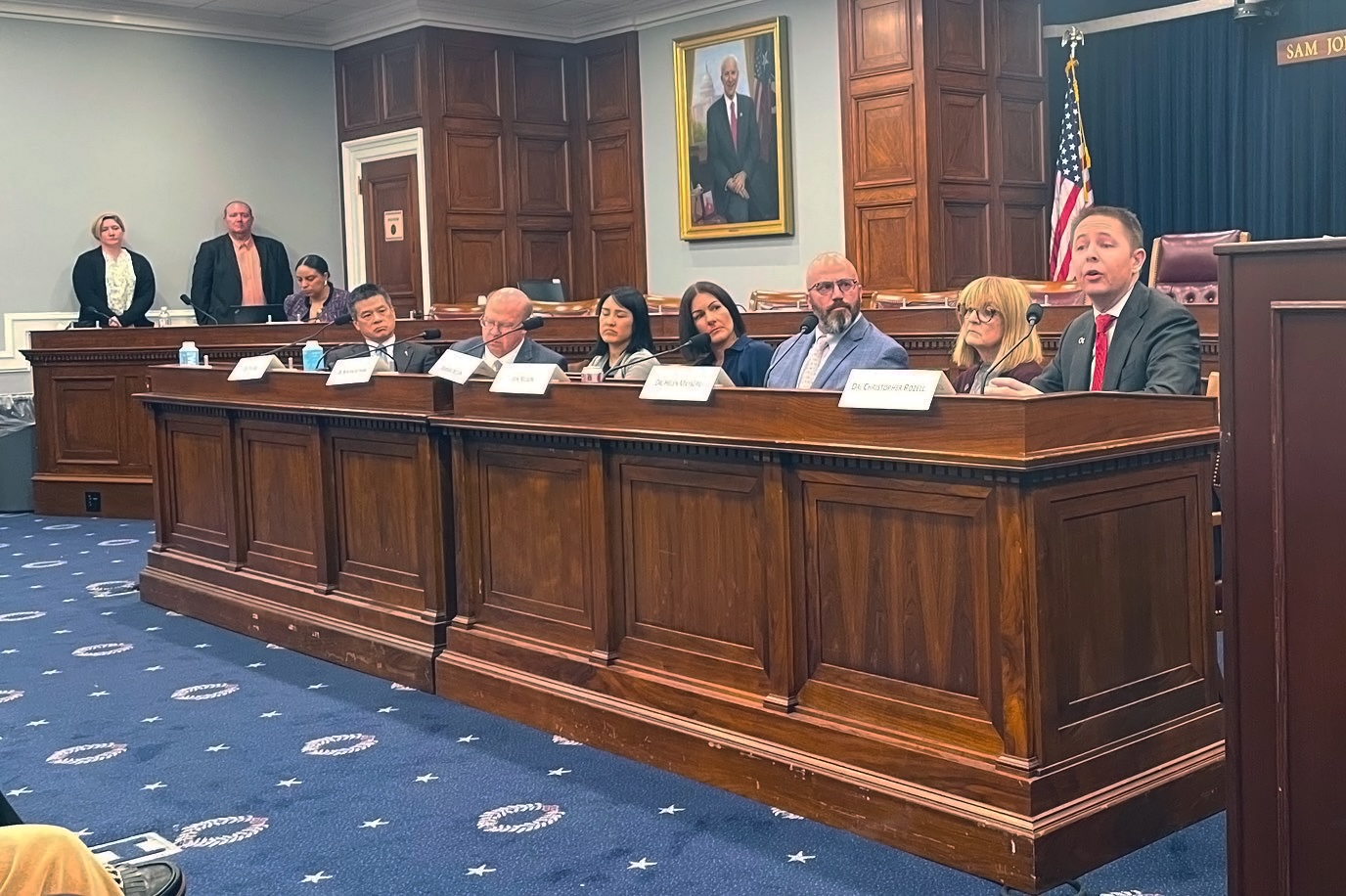
Rozell was joined by BRAIN Initiative Director John J. Ngai, clinical collaborators, and a family whose lives have been transformed by this work.
For the past 10 years, the National Institutes of Health have led an unprecedented effort to revolutionize our understanding of the human brain. The aptly named BRAIN (Brain Research Through Advancing Neurotechnologies) Initiative has led to remarkable technological advancements, insights into the structure and function of the brain, and budding therapies.
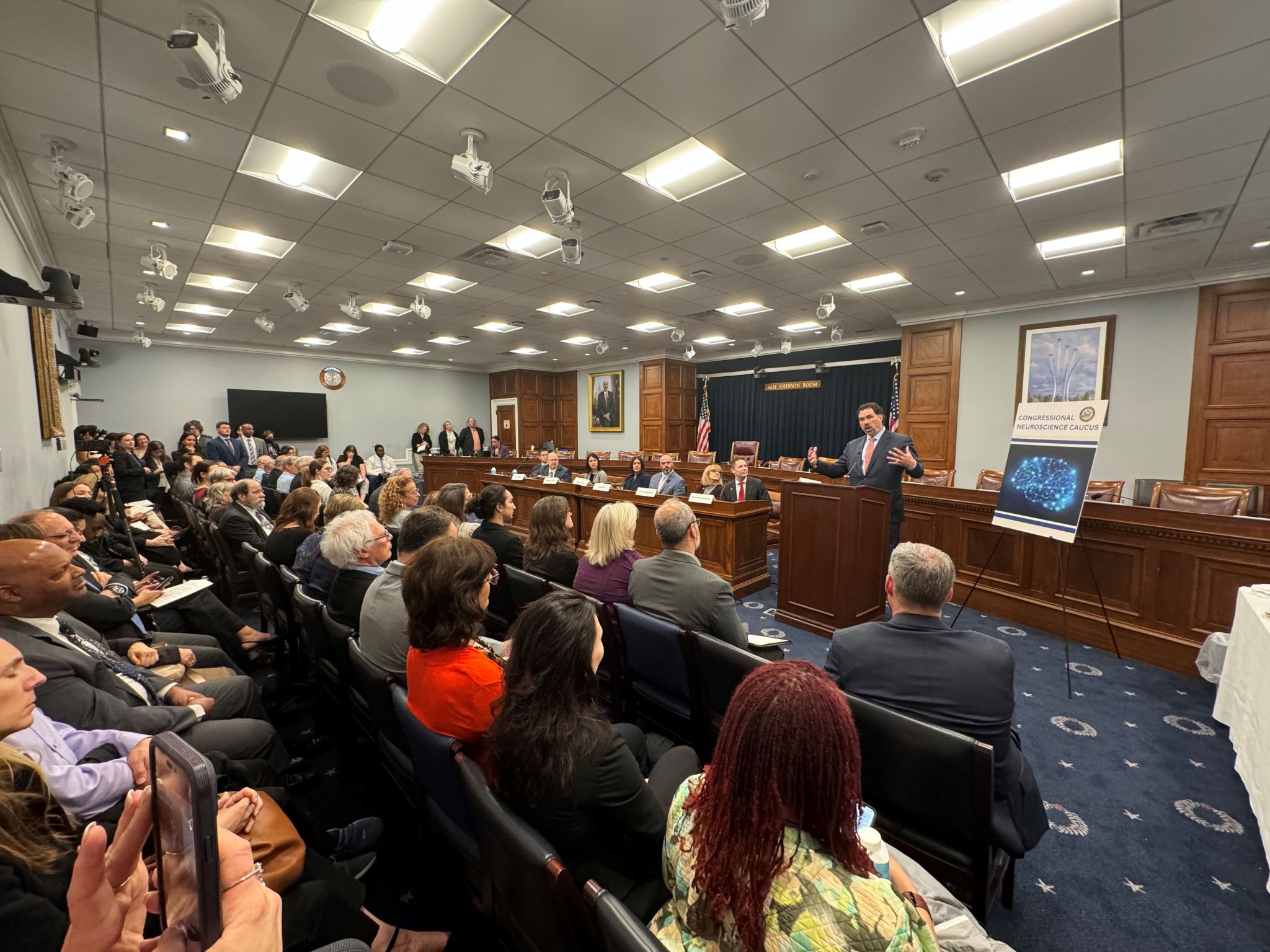
Recently, School of Electrical and Computer Engineering (ECE) Professor Chris Rozell traveled to Washington, D.C. to share the impact of his BRAIN Initiative research with U.S. Congressional offices — and offer insights on how critical this program is to society. The briefing took on a particular urgency because BRAIN Initiative funding was cut over 40% this year, and future funding appears to be in jeopardy in the current federal budget climate.
“The millions of patients suffering with intractable neurologic disorders and mental illness deserve a moonshot to develop new solutions for their conditions,” said Rozell, who also holds the Julian T. Hightower Chair in ECE and serves on the executive committee for Georgia Tech’s Neuro Next Initiative. “You can't get to the moon with a paper plane, and you can’t get there without a map. The BRAIN Initiative is a vital program because it's one of the few places that brings together interdisciplinary teams that include the scientists who have been building maps of brain circuits and the engineers who have been building rockets to understand and intervene with those circuits.
“I'm proud to have had the chance to represent not only our own research, but the incredible community here at Georgia Tech and around the country working to understand many different aspects of the brain, developing new neurotechnologies, and advancing therapies for neurologic disorders.”
Interdisciplinary impacts
“The main message we presented to Congress is that the interdisciplinary combination of rigorous science and technical innovation can have enormous societal impact over the next few decades,” said Rozell.
A stark example of that impact was published in Nature this past fall. In this research, Rozell and his collaborators at the Icahn School of Medicine at Mount Sinai and Emory University School of Medicine identified the first known biomarker of disease recovery with deep brain stimulation in treatment-resistant depression.
“The fact that an engineer can advance clinical therapies is a testament to the new era we're in,” says Rozell, “where disciplinary boundaries are fading, and technological innovation accelerates our scientific and translational breakthroughs.”
This research served as a focal point of the congressional briefing, where Rozell presented with BRAIN Initiative Director John J. Ngai, clinical collaborators, and a family whose lives have been transformed by this work.
“Events like last week are dream come true,” shared Jon Nelson, who was treated with deep brain stimulation as part of the study and presented with Rozell in D.C. After living through 10 years of debilitating, treatment-resistant depression, Nelson says “remission of depression still doesn't feel real. It's been a year and a half, and I still am in awe every single day.
“The fact that I have come out of this study and found that the disease is purely an electrical deficiency in my brain has fueled me to completely pulverize the stigma of mental illness,” Nelson explained. “When you have an opportunity to go speak to Congress — that’s about as great of a platform as you can get for that. Being able to put a face to what the BRAIN Initiative funding can do for people was just amazing.”
When meeting with local representatives, Rozell also relayed his work as co-executive leader of the Neuro Next Initiative, a budding Interdisciplinary Research Institute at Georgia Tech.
“I was thrilled to highlight that Georgia Tech is leading the charge with the Neuro Next Initiative, which will evolve into a full Interdisciplinary Research Institute in 2025,” said Rozell. “Georgia Tech has the ingredients to become a leading center for modern technology-driven interdisciplinary brain research and workforce development.
“This visit was a reminder to me that research funding is not guaranteed and it’s important to keep communicating the critical value that research plays in advancing our understanding, training our workforce, fueling our economy, and ultimately making a better tomorrow for society.”
Rozell presented to members of U.S. Congress as well as local representatives during his visit.
Georgia Tech Engineering Professor Chris Rozell shared his research and the impacts of the past decade of brain research funded by the NIH BRAIN Initiative with Congress.
Audra Davidson
Research Communications Program Manager
Neuro Next Initiative
19 Tech Faculty Receive Regents' Distinctions
Apr 24, 2024 —
The University System of Georgia's Board of Regents has honored 19 Georgia Tech faculty members with 2024 Regents' Distinctions. These accolades recognize the recipients’ outstanding contributions and excellence in education, research, and innovation.
“These amazing colleagues exemplify the spirit of excellence and dedication that defines Georgia Tech's faculty,” said Steve McLaughlin, provost and executive vice president for Academic Affairs. “Their contributions not only advance knowledge within their respective fields but also positively impact our community at large. Working alongside these faculty members is an honor and inspires me every day.”
Georgia Tech faculty named as Regents’ Professors include:
Amy Bruckman (renewal), Senior Associate Chair, School of Interactive Computing, College of Computing
John Cressler (renewal), Schlumberger Chair in Electronics, School of Electrical and Computer Engineering, College of Engineering
Greg Gibson (renewal), Tom and Marie Patton Chair in Biological Sciences and Director of the Center for Integrative Genomics, School of Biological Sciences, College of Sciences
Thomas Kurfess, Professor and HUSCO/Ramirez Distinguished Chair in Fluid Power and Motion Control, George W. Woodruff School of Mechanical Engineering, College of Engineering
Wenke Lee, Professor and John P. Imlay Jr. Chair in Software, School of Computer Science and School of Cybersecurity and Privacy, College of Computing
Brian Magerko, Professor and Director of Graduate Studies in Digital Media, Head of the Expressive Machinery Lab, School of Literature, Media, and Communication, Ivan Allen College of Liberal Arts
Patricia Mokhtarian, Clifford and William Greene Jr. Professor, School of Civil and Environmental Engineering, College of Engineering
Charles David Sherrill (renewal), Professor, School of Chemistry and Biochemistry, College of Sciences and Associate Director for Research and Education, Institute for Data Engineering and Science
Georgia Tech faculty named as Regents’ Researchers include:
David Gottfried (renewal), Senior Assistant Director and Principal Research Scientist, Institute for Electronics and Nanotechnology, College of Engineering
Gregory Showman (renewal), Fellow and Principal Research Engineer, Sensors and Electromagnetic Applications Laboratory, GTRI
Jeffrey Sitterle, Principal Research Scientist and Chief Innovation Officer, Information and Cyber Sciences Directorate, GTRI
Leanne West, Chief Engineer of Pediatric Technology and Principal Research Scientist, Georgia Tech Pediatric Innovation Network
Jie Xu, Head of Chemical and Biological Systems Branch and Principal Research Scientist, GTRI
David Zurn, Test Engineering Division Chief and Principal Research Scientist, GTRI
Georgia Tech faculty named as Regents’ Entrepreneurs include:
Mustaque Ahamad, Professor, School of Computer Science and School of Cybersecurity and Privacy, College of Computing
Omer Inan, Professor and Linda J. and Mark C. Smith Chair, School of Electrical and Computer Engineering, College of Engineering
Rampi Ramprasad, Professor and Michael E. Tennenbaum Family Chair, Georgia Research Alliance Eminent Scholar in Energy Sustainability, School of Materials Science and Engineering, College of Engineering
Georgia Tech faculty named as Regents’ Innovators include:
Alexander Alexeev, Professor and Joseph Anderer Faculty Fellow, George W. Woodruff School of Mechanical Engineering, College of Engineering
Georgia Tech faculty named to the Georgia Mining Association Early Career Professorship:
Sheng Dai, Associate Professor and Group Coordinator in Geosystems Engineering, School of Civil and Environmental Engineering, College of Engineering
Writer: Brittany Aiello, Faculty Communications Program Manager, Organizational and Academic Communications, Institute Communications
Office of the Provost
Georgia Congressman Tours Georgia Tech’s Advanced Manufacturing Pilot Facility
Apr 24, 2024 —
Rep. Earl "Buddy" Carter stopped by the Advanced Manufacturing Pilot Facility in April 2024 to learn about Georgia AIM. The visit included examples of the ways Georgia AIM is connecting manufacturers with smart technologies, and workforce development initiatives taking place across the state.
When U.S. Rep. Earl L. “Buddy” Carter from Georgia’s 1st District visited Atlanta recently, one of his top priorities was meeting with the experts at Georgia Tech’s 20,000-square-foot Advanced Manufacturing Pilot Facility (AMPF).
Carter was recently named the House Energy and Commerce Committee’s chair of the Environment, Manufacturing, and Critical Materials Subcommittee, a group that concerns itself primarily with contamination of soil, air, noise, and water, as well as emergency environmental response, whether physical or cybersecurity.
Because AMPF’s focus dovetails with subcommittee interests, the facility was a fitting stop for Carter, who was welcomed for an afternoon tour and series of live demonstrations. Programs within Georgia Tech’s Enterprise Innovation Institute — specifically the Georgia Artificial Intelligence in Manufacturing (Georgia AIM) and Georgia Manufacturing Extension Partnership (GaMEP) — were well represented.
“Innovation is extremely important,” Carter said during his April 1 visit. “In order to handle some of our problems, we’ve got to have adaptation, mitigation, and innovation. I’ve always said that the greatest innovators, the greatest scientists in the world, are right here in the United States. I’m so proud of Georgia Tech and what they do for our state and for our nation.”
Carter’s AMPF visit began with an introduction by Tom Kurfess, executive director of the Georgia Tech Manufacturing Institute; Steven Ferguson, principal research scientist and managing director at Georgia AIM; research engineer Kyle Saleeby; and Donna Ennis, the Enterprise Innovation Institute’s director of community engagement and program development, and co-director of Georgia AIM.
Ennis provided an overview of Georgia AIM, while Ferguson spoke on the Manufacturing 4.0 Consortium and Kurfess detailed the AMPF origin story, before introducing four live demonstrations.
The first of these featured Chuck Easley, Professor of the Practice in the Scheller College of Business, who elaborated on supply chain issues. Afterward Alan Burl of EPICS: Enhanced Preparation for Intelligent Cybermanufacturing Systems and mechanical engineer Melissa Foley led a brief information session on hybrid turbine blade repair.
Finally, GaMEP project manager Michael Barker expounded on GaMEP’s cybersecurity services, and Deryk Stoops of Central Georgia Technical College detailed the Georgia AIM-sponsored AI robotics training program at the Georgia Veterans Education Career Transition Resource (VECTR) Center, which offers training and assistance to those making the transition from military to civilian life.
The topic of artificial intelligence, in all its subtlety and nuance, was of particular interest to Carter.
“AI is the buzz in Washington, D.C.,” he said. “Whether it be healthcare, energy [or] science, we on the Energy and Commerce Committee look at it from a sense [that there’s] a very delicate balance, and we understand the responsibility. But we want to try to benefit from this as much as we can.”
He continued: “I heard something today I haven’t heard before, and that is instead of calling it artificial intelligence, we refer to it as ‘augmented intelligence.’ I think that’s a great term, and certainly something I’m going to take back to Washington with me.”
Said Ennis, “It was a pleasure to host Rep. Carter for a firsthand look at AMPF, which is uniquely positioned to offer businesses the opportunity to collaborate with Georgia Tech researchers and students and to hear about Georgia AIM.”
She added, “At Georgia AIM, we’re committed to making the state a leader in artificial intelligence-assisted manufacturing, and we’re grateful for Congressman Carter’s interest and support of our efforts.”
Eve Tolpa
eve.tolpa@innovate.gatech.edu
Georgia Tech Researchers Identify Novel Gene Networks Associated with Aggressive Type of Breast Cancer
Apr 23, 2024 —
Breast cancer is the second-most common cancer diagnosis for U.S. women, and the second-leading cause of female cancer deaths. In recent years, breast cancer treatments have improved significantly, thanks to targeted gene therapy and immunotherapy. However, for the small group of patients diagnosed with the most aggressive basal-like type of breast cancer, such approaches are less successful.
Recently, scientists in the Georgia Tech Integrated Cancer Research Center (ICRC) have found that this particular breast cancer displays a unique interactive gene network structure. Using a type of mathematics called “graph theory,” which models relationships between a pair of objects, the researchers computationally detected changes in gene-gene interactions as this breast cancer occurs and develops.
“The discovery of novel gene networks associated with basal-like breast cancers has helped us identify potential new gene targets to treat this very aggressive type of breast cancer,” said John McDonald, ICRC founding director, professor emeritus in the School of Biological Sciences, and the study’s corresponding author. “We would not have discovered these possible treatments through analyses of gene expression alone.”
While causing just 10-20% of breast cancer diagnoses, basal-like breast cancer is much more aggressive than other subtypes — and if not identified early, when it can be treated by surgery and/or radiation therapy, effective anti-cancer drug treatment can be challenging. The basal-like subtype does not respond to traditional hormonal therapies.
One theory as to why, advocated by many cancer researchers, is that individual genes do not function autonomously; as such, changes in how genes interact with one another in cancer may be as important as the cancer-driving genes themselves.
“The components of any complex system, like the human genome, are certainly important,” said McDonald. “The way in which these independent components interact with one another is also critical.”
For this study, the researchers analyzed three major subtypes of breast cancer, with particular emphasis on the most aggressive basal-like subtype. The researchers found that gene-gene interactive networks are quite different in the aggressive basal-like subtype, compared to the more prevalent luminal A and luminal B subtypes.
Many of the genes comprising these unique networks were found to be involved in functions not previously associated with breast cancer. Stephen Housley, a neurobiology researcher in the School of Biological Sciences and a co-author on the paper, noted that “an unexpected and intriguing result from our study is that neural processes appear to play a prominent role in distinguishing the highly aggressive basal-like tumors from the less aggressive luminal A and luminal B subtypes.”
In total, the researchers examined more than 300 million pairs of genes, comparing healthy women to those with breast cancer. Study co-author Zainab Ashard, a computational biologist who recently worked in McDonald’s lab, explained, “Differences in the gene network structure between healthy individuals and breast cancer patients allowed us to identify changes in patterns of gene-gene interactions within breast cancer development.”[s1]
The team’s results are detailed in a new paper, “Changes in Gene Network Interactions in Breast Cancer Onset and Development,” which appeared in the April 2024 issue of GEN Biotechnology. Based on the results of this study and their previously published analyses of eight other types of cancer, the researchers believe they have established the usefulness of network analysis in identifying potential new candidates for the diagnosis of and targeted gene therapy treatment for breast and other types of cancers.
In addition to McDonald, Housley, and Ashard, Kara Keun Lee, a former bioinformatics Ph.D. student who worked in McDonald’s lab, is also a co-author on the paper.
The results shown here are in whole or in part based on data generated by the TCGA Research Network. The Genotype-Tissue Expression (GTEx) Project was supported by the Common Fund of the Office of the Director of the National Institutes of Health, and by NCI, NHGRI, NHLBI, NIDA, NIMH, and NINDS.
This research was supported by the Mark Light Integrated Cancer Research Center Student Fellowship, the Deborah Nash Endowment Fund, Northside Hospital (Atlanta), and the Ovarian Cancer Institute (Atlanta).
Citation: “Changes in Gene Network Interactions in Breast Cancer Onset and Development,” Zainab Arshad, Stephen N. Housley, Kara Keun Lee, and John F. McDonald, GEN Biotechnology, April 2024,
DOI: https://doi.org/10.1089/genbio.2024.0002
Savannah Williamson
Research Communications