
Georgia Tech’s New Tool Can Detect Malware on Android Phones
Oct 11, 2024 —

Screen readers, voice-to-text, and other accessibility features have enabled people with disabilities to use smartphones. Yet these same features make the phones more accessible to hackers, too.
Malware uses these accessibility tools to read screens and click on things it shouldn’t — with disastrous consequences, like transferring large sums of money from a banking app or even preventing the malware from being uninstalled. All it takes is a user clicking on a phishing link or downloading the wrong app on the Google Play Store to install malware on a phone. Then everything from cryptocurrency apps to rideshare apps that have credit cards stored in a virtual wallet become vulnerable.
Researchers at Georgia Tech have developed a new tool, Detector of Victim-specific Accessibility (DVa), that can check for malware. DVa runs on the cloud to check the phone for this malware, then sends the user a report of its findings that shows which apps are malware and how to delete them. It will also tell them which victim apps the malware was targeting and how to contact those companies to check for damages. DVa also sends a report to Google, so the company can attempt to eradicate this malware from apps.
“As we continue to design systems that are more and more accessible, we also need security experts in the room,” said Brendan Saltaformaggio, an associate professor in the School of Cybersecurity and Privacy (SCP) and the School of Electrical and Computer Engineering. “Because if we don't, they're going to get abused by hackers.”
Modeling Malware
To determine how vulnerable smartphones are to this type of hack, the team set up five Google Pixel phones and performed a malware analysis. The Georgia Tech researchers teamed up with Netskope — an industry leader in cloud, data, and network security — to help protect smartphones everywhere from this type of powerful malware. Then they installed some of the sample malware on each phone to see how it debilitated the system and used DVa to report this behavior.
While DVa can detect current attacks, the researchers note the challenge is ensuring that removing malware doesn’t remove accessibility.
“In the future, we need to look at how accessibility services work overall to figure out what's fundamentally different from a benign use and a malicious use,” said Haichuan (Ken) Xu, a Ph.D. student in SCP.
Tess Malone, Senior Research Writer/Editor
tess.malone@gatech.edu
Soil-Powered Fuel Cell Makes List of Best Sustainability Designs
Oct 11, 2024 —

An Adobe stock conceptual image of a lighted bulb in the dirt illustrating new technology that draws energy from dirt.
A newly designed soil-powered fuel cell that could provide a sustainable alternative to batteries was recognized as an honorable mention in the annual Fast Company Innovation by Design Awards.
Terracell is roughly the size of a paperback book and uses microbes found in soil to generate energy for low-power applications.
Previous designs for soil microbial fuel cells required water submergence or saturated soil. Terracell can function in soil with a volumetric water content of 42%
Terracell placed in Fast Company’s list of the best sustainability-focused designs of 2024.
Researchers at Northwestern University lead the multi-institution research team that designed Terracell.
Josiah Hester, an associate professor in Georgia Tech's School of Interactive Computing who previously worked at Northwestern, directs the Ka Moamoa Lab, where the project was conceived.
The team includes researchers from Northwestern, Georgia Tech, Stanford, the University of California-San Diego, and the University of California-Santa Cruz.
Their research was published in January in the Proceedings of the Association for Computing Machinery on Interactive, Mobile, Wearable, and Ubiquitous Technologies. The researchers will also present this work at the ACM international joint conference on Pervasive and Ubiquitous Computing (Ubicomp), Oct. 5-9.
According to the Fast Company website, the Innovation by Design Awards recognize “designers and businesses solving the most crucial problems of today and anticipating the pressing issues of tomorrow.” Winners are published in Fast Company Magazine and are honored at the Fast Company Innovation Festival in the fall.
“Terracell could reduce e-waste and extend the useful lifetime of electronics deployed for agriculture, environmental monitoring, and smart cities,” Hester said. “We were honored to be recognized for the design innovation award. It is a testament to the promise of sustainable computing and our hope for a more sustainable world.”
For more information about Terracell, see the story featured on Northwestern Now, or visit the project’s website.
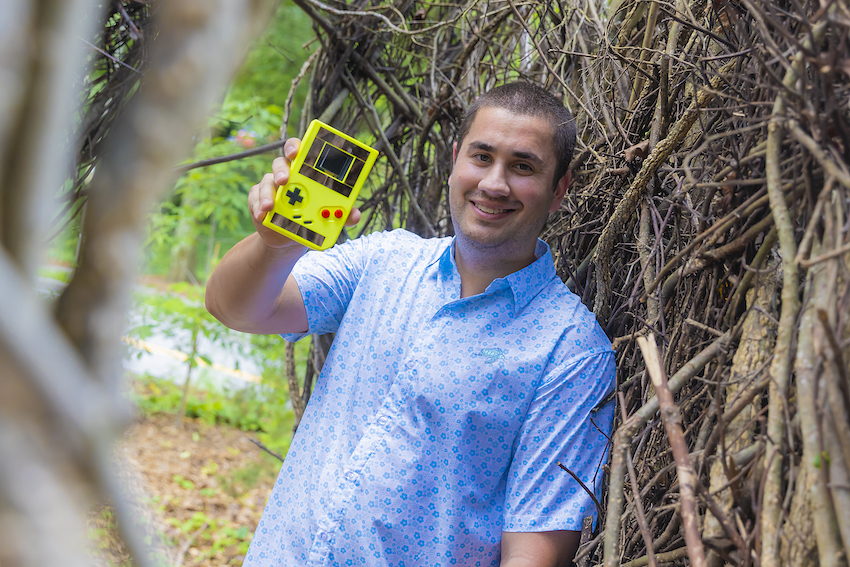
Nathan Deen, Communications Officer
Georgia Tech School of Interactive Computing
nathan.deen@cc.gatech.edu
Georgia Tech Researchers Achieve World-Record Resolution in Turbulence Simulations
Oct 10, 2024 —

R. Vaideswaran, Prof. P.K Yeung, and D.L. Dotson pictured at a recent User Meeting at the Oak Ridge Leadership Computing Facility. [Photo Courtesy: Carol Morgan/Oak Ridge National Laboratory]
From the water that comes out of the faucet to the chemical reactions in jet engines that propel planes, turbulence affects our everyday lives. Researchers at Georgia Tech are studying the complex physics of turbulence in simplified settings that could help us better understand nature and engineering.
At its most basic, turbulence comprises disorderly fluctuations over a wide range of scales in both time and three-dimensional space. These complexities mean that many fundamental aspects are still not understood. Computers can help unravel the mystery, but direct numerical simulations based on exact physical laws have always been very resource-intensive. Their challenges are greatest when investigating rare, very large fluctuations.
Now, Frontier, the world's first — and still fastest — Exascale computer, capable of a quintillion operations per second, is helping researchers to better understand turbulence.
“Turbulence is very complex, theories are incomplete, and laboratory measurements are arduous,” said P.K. Yeung, a professor in the Daniel Guggenheim School of Aerospace Engineering with a courtesy joint appointment in the George W. Woodruff School of Mechanical Engineering. “A world-leading resolution of over 35 trillion grid points on Frontier is expected to lead to new discoveries, which in turn can facilitate advances in modeling where both assumptions and predictions can be tested numerically."
Yeung and his team accessed Frontier, located at the Oak Ridge National Laboratory, when it first went online and also received large allocations of time on the machine from the prestigious INCITE program, which is run by the U.S. Department of Energy's Office of Science. The power of Frontier resides primarily in powerful graphical processing units (GPUs), which compute rapidly. Yeung's group published a journal article that describes a highly successful algorithm specifically designed to take maximum advantage of Frontier's features to make simulations at extremely high resolution feasible and efficient.
“In many scientific fields, people thought calculations of this magnitude were not possible, but now we are there, perhaps earlier than anticipated,” Yeung said. “Our work on turbulence simulations also demonstrates several principles of advanced GPU programming of interest in other fields, especially those where so-called pseudo-spectral methods are important. The science impacts of our extreme scale simulations are expected to be further enhanced by public data-sharing in partnership with the National Science Foundation-supported Johns Hopkins Turbulence Database project."
Tess Malone, Senior Research Writer/Editor
tess.malone@gatech.edu
Georgia Tech Scientist Boosts Forestry Industry With Cutting-Edge Tree Cloning
Oct 10, 2024 — Atlanta, GA

Ulrika Egertsdotter, a principal research scientist at the Renewable Bioproducts Institute and a renowned expert in seed cloning, designs and develops automated technologies that produce valuable plants for the state’s forestry, agriculture, and horticulture industries. (Credit: Chris McKenney)
Georgia’s forestry industry generates $40 billion annually, providing 140,000 jobs. The state is known for its timber, fiber, paper pulp, and other wood-derived products, which are exported worldwide.
Ulrika Egertsdotter, a principal research scientist at Georgia Tech’s Renewable Bioproducts Institute, plays a key role in supporting the industry. Through her work, she helps Georgia tree growers propagate new plants that provide higher-quality wood products and offer greater resilience to climate change.
“Some say we shouldn't interfere with nature, but humans are demanding more and more from the Earth, faster than it can provide,” Egertsdotter said. “We need to help nature produce at a sustainable rate and quality necessary for human requirements.”
Her primary research involves applying new technologies and automation to produce improved conifer trees, which include spruce, cedar, and — most notably in Georgia — pine. These needle-bearing trees are some of the most important globally for providing wood and fiber.
Plant breeders want to reproduce trees or plants with excellent traits — for example, those that can grow in dry environments or resist fungal attacks. Developing a robust plant that meets these requirements can take decades, particularly with trees, which need many years to grow.
That’s where Egertsdotter’s work comes in. Scientific advancements have enabled researchers to design new plants, including trees that yield better wood products or are more resilient against extreme weather conditions such as drought. Producing enough of these special, superior plants requires efficient cloning techniques — otherwise, it would take years or even generations.
Cloning plants in vitro, or micropropagation, is exponentially faster than traditional cloning by cuttings and helps growers produce more trees and harvest high-quality timber on shorter timelines. For conifers, the favored micropropagation method is to clone the seeds by a technique called somatic embryogenesis (SE), which is the basis for making new and better conifer trees using biotechnological methods.
“In the lab, with one plant seed, we can make millions of plants from that same seed,” Egertsdotter said.
Cloning Trees in the Lab
Cloning conifers like pines always starts with picking seeds from the cone. Then, in a sterile lab environment, researchers clean a single seed and extract an embryo from inside it. They place the embryo in a small dish with nutrients and plant-growth regulators that stimulate the embryo to form new embryos.
By repeatedly feeding the culture with the same treatments, the new embryos will continue to multiply into identical copies of the initial seed. Once the number of embryos has increased significantly, the researchers split them up into new plates. When, finally, many embryos have developed, other treatments are applied to make the embryos mature and eventually germinate into a new plant.
“The biological process the lab (somatic) embryo goes through to form the plant is the same biological process a seed embryo would go through if it was planted in the ground,” Egertsdotter explained. “This method allows us to generate many plants from each valuable seed, instead of just one.”
Automated Technologies
While micropropagation methods have been around for decades, they are expensive and labor-intensive and are not widely used outside of research labs. Egertsdotter works closely with engineers to develop and implement novel automation technologies that can produce affordable, high-quality plants through a system based on fluidics technology, image analysis, and AI-based selection.
The SE Fluidics System is a unique facility developed at Georgia Tech for the fast processing of somatic embryos of any species. The system carries out rapid imaging of each embryo and then produces datasets to develop algorithms that select viable embryos for further processing.
In addition to cloning selected plants from breeding programs, SE can also be used to add desired characteristics to trees and plants. Researchers have also started experimenting with the gene-editing tool CRISPR to modify the DNA sequences of some tree species.
Moving Forward
Because of human-caused climate change, the natural habitats of many important plants and crops have already been permanently altered or destroyed. For Egertsdotter, this adds urgency to her work.
She is currently investigating how to develop pine trees more resistant to climate-related stresses, including pests and drought. Egertsdotter is also studying how to use biotechnological tools to create trees that capture carbon dioxide more efficiently.
“We must support the plants we rely on by multiplying the specific plants that can survive in the future environment,” Egertsdotter said. “We can also help other plants survive by genetic or genomic modifications to increase their adaptability.”
She added, “We will lose a lot of the natural resources we currently rely on if we wait for nature to, through natural selection, correct the negative impact of climate change. We are changing the natural world faster than evolution can keep up, so we must help accelerate the adaptation process.”
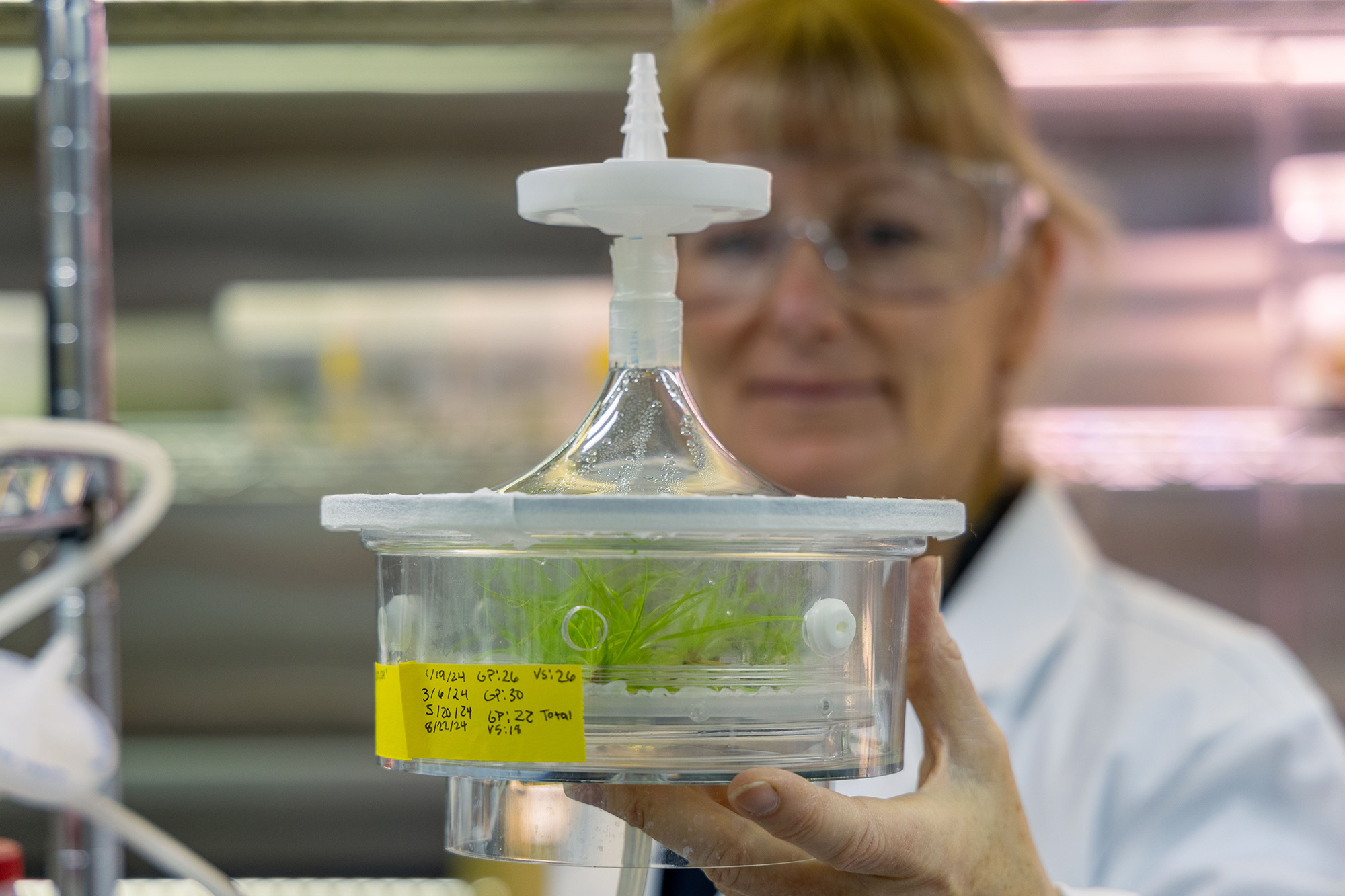
The team uses bioreactors for fast multiplication of young plants or maturation of somatic embryos which will later be harvested. Feeding is controlled electronically through a solenoid valve. (Credit: Chris McKenney)
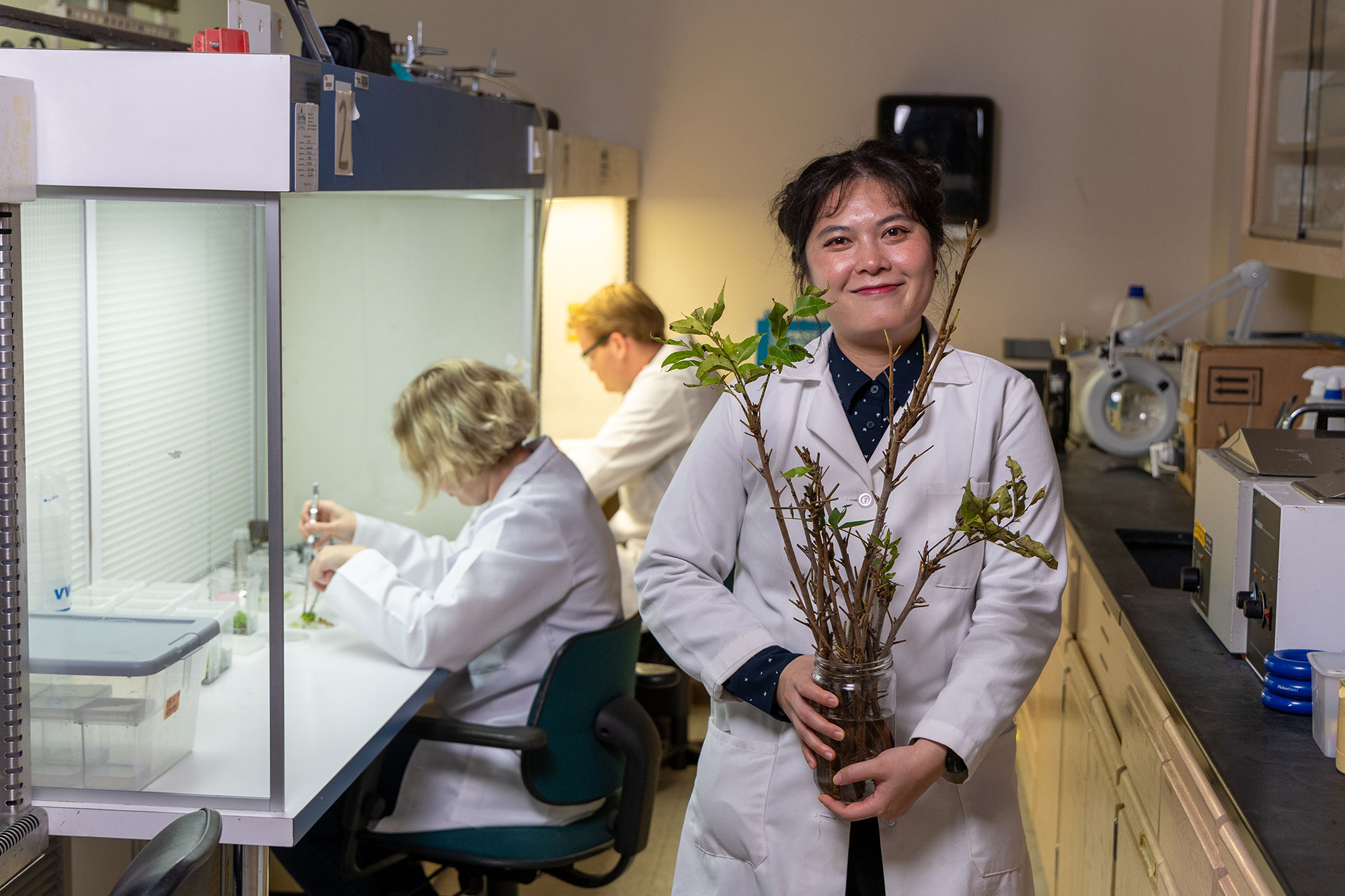
Postdoctoral fellow Cuong Le holds pecan tree shoots used to start in vitro cultures while researchers work to maintain established in vitro cultures under sterile conditions. Pecan trees in Georgia are susceptible to pests and natural disasters, and Egertsdotter's team works to produce more resilient pecan plants. (Credit: Chris McKenney)
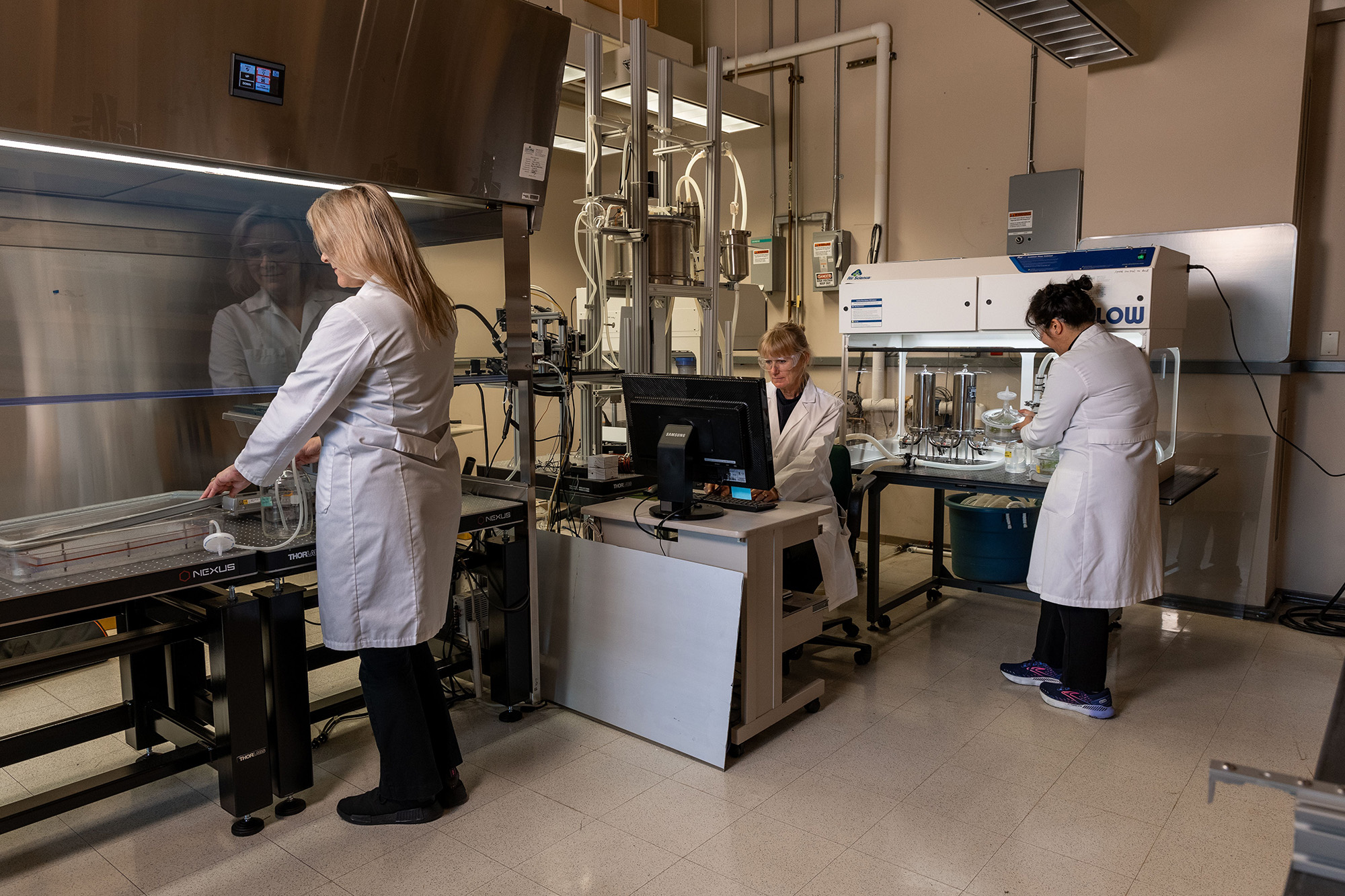
Egertsdotter and faculty from the School of Mechanical Engineering developed the SE Fluidics System (pictured). It is a unique facility at Georgia Tech designed for fast processing of somatic embryos of any species. The system carries out rapid imaging of each embryo and then produces datasets to develop algorithms (including machine learning) to select viable embryos for further development into plants. (Credit: Chris McKenney)
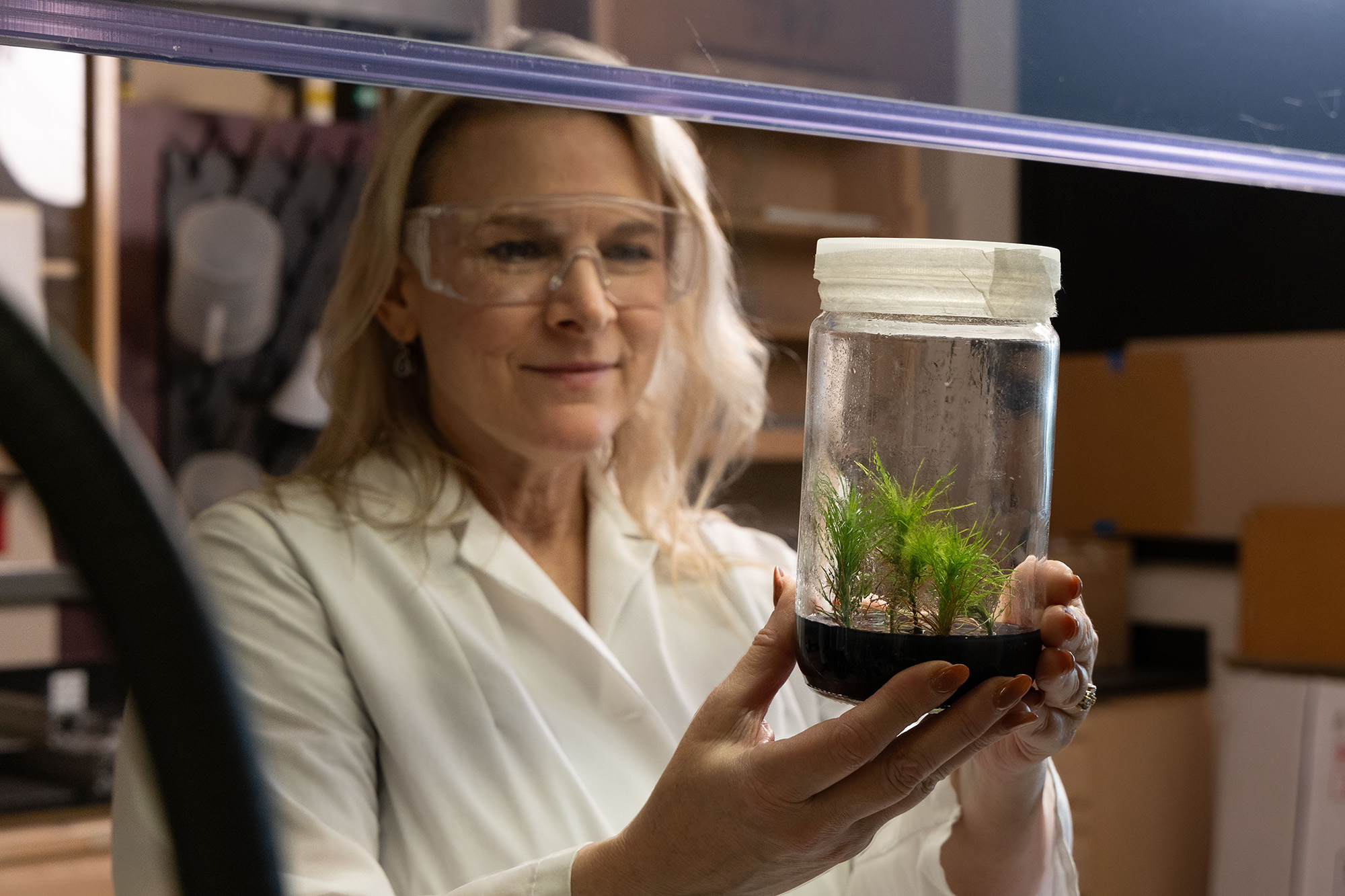
Shannon Johnson, research scientist III in the School of Mechanical Engineering, examines a young plant while working with the SE Fluidics System. (Credit: Chris McKenney)
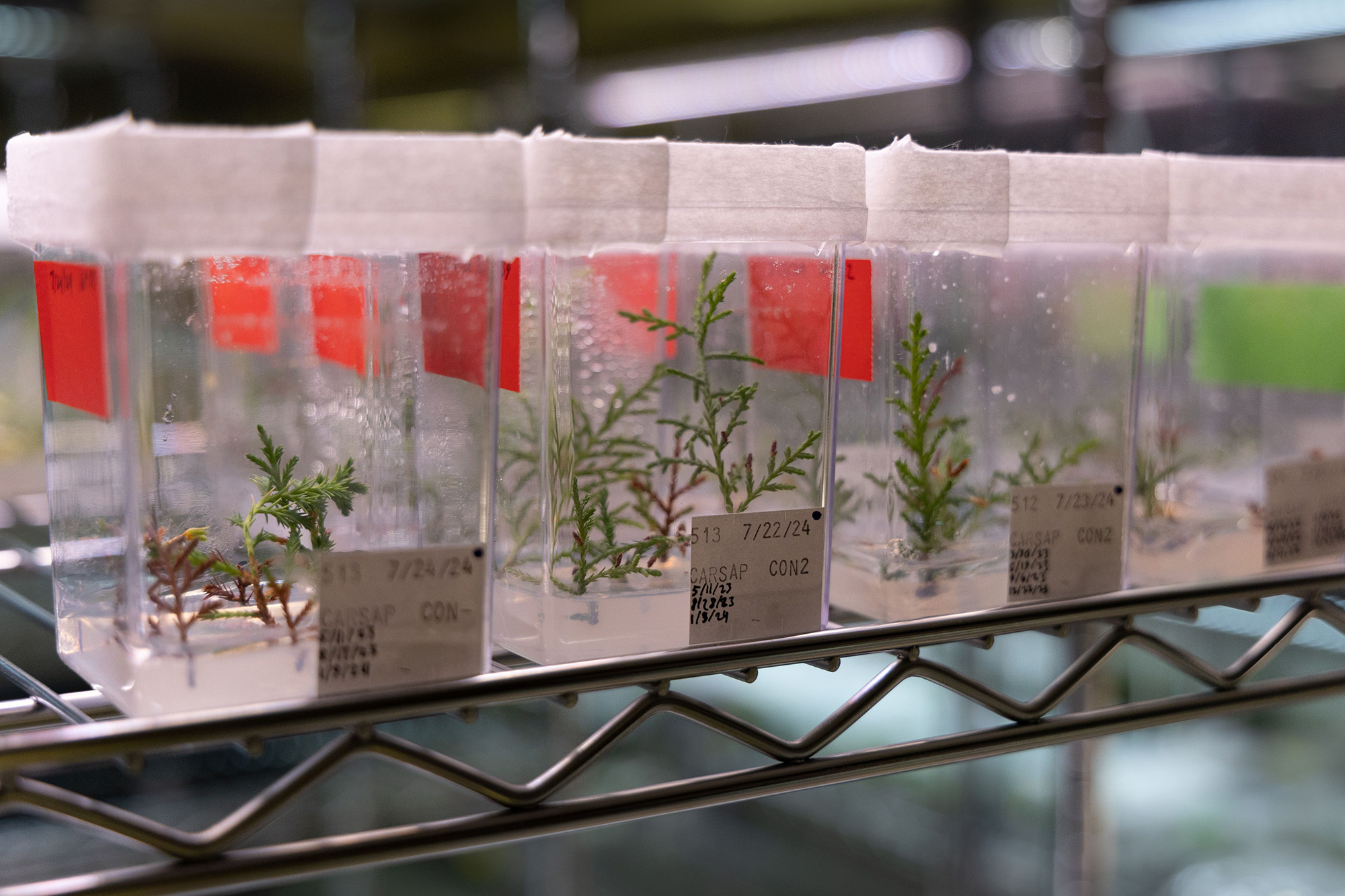
Baby conifer seedlings from elite plant lines that have been cultivated in Egertsdotter's lab. (Credit: Chris McKenney)
Catherine Barzler, Senior Research Writer/Editor
The Intersection Podcast: Wendy Hagenmeier, Evening MBA ‘24, Explores Library Emulation Networks Via Independent Study
Oct 08, 2024 —

The Georgia Tech Scheller College of Business pushes students to think about how to use new technologies and other innovations to solve problems. Within the MBA program, students can conduct an independent study project with a Scheller professor to explore their interests more deeply.
Wendy Hagenmeier, Evening MBA '24, did her independent study with Eric Overby, Catherine and Edwin Wahlen Professor, before graduating this summer from the Evening MBA program. Building on the framework she learned in Eric’s Analysis of Emerging Technologies course, Wendy conducted a comprehensive analysis of library emulation networks, which provide access to historical information stored in outdated software formats to users around the world.
Listen to the episode as Wendy and Eric discuss the potential of emulation networks, the challenges they face, and how those challenges might be overcome.
Camille Moore
Weather Radar Supports Research and Education, Helps Fill Coverage Gaps
Oct 04, 2024 —

Radar returns from the X-band weather radar shows storms over Northeast Georgia. (Credit: John Trostel, GTRI)
Collaboration among three Georgia institutions of higher education on the operation of a new weather radar system will enhance student learning, provide new opportunities for research, and help improve severe weather coverage in north Georgia.
Installed recently at Georgia Gwinnett College (GGC), an X-band weather radar purchased two years ago by the Georgia Institute of Technology and the University of Georgia (UGA) is now providing data for a section of north Georgia where information on severe storms such as tornados can be limited by terrain.
The radar will also be used for research into weather and severe storms, and by students at the three institutions for learning about everything from physics and engineering to weather, rainfall, and the effects of changing climate on the migration patterns of birds and insects. The instrument will be one of just a handful of weather radars operated by universities in the United States.
“We are really excited about this partnership with Georgia Tech, the Georgia Tech Research Institute, the University of Georgia, and Georgia Gwinnett College,” said Marshall Shepherd, Associate Dean for Research, Scholarship and Partnership at UGA’s Franklin College of Arts and Sciences and Director of UGA’s Atmospheric Sciences Program. “The radar will be a real-time component of classes, so it’s creating new instructional and service capabilities. It will also enable researchers at the University of Georgia and Georgia Tech to pursue new research opportunities in the areas of severe weather, frozen precipitation – and perhaps even studies of birds and insects.”
The radar will provide a new data source for UGA’s WeatherDawgs service, which provides hyperlocal weather data not only for the Athens community, but also for residents of eastern and northeastern Georgia. The system will also provide a real-time component for the mesoscale meteorology course taught at the university.
For Georgia Tech, the radar will support the work of the Severe Storms Research Center (SSRC), a state-funded initiative that serves as a focal point for severe storms research in the state. The radar will also support research and education at Georgia Tech, including courses on weather radar systems and studies of lightning being done in the School of Electrical and Computer Engineering.
“The new radar will help fill some low-level gaps in weather radar coverage in north Georgia, and give higher-resolution data for the Georgia Gwinnett campus, University of Georgia campus, Georgia Tech campus and areas in between,” said John Trostel, director of the SSRC. “This is an area where both UGA and Georgia Tech have interests because it goes from urban to suburban, then back to urban. We might see some very interesting weather phenomena going on in those transition areas.”
The National Weather Service has access to a feed from the radar and will use it to obtain information about low-altitude weather activity that can’t be seen as well from sources such as the NEXRAD radar based in Peachtree City and the Terminal Doppler Weather Radar at Hartsfield-Jackson Atlanta International Airport, Trostel added.
For Georgia Gwinnett College, the radar will provide real-world examples of how physics and engineering concepts are applied. Data from the radar system, which will be accessible to the college, would also provide students with a new research opportunity that is a required component of the science curriculum.
“Our Physics and Pre-Engineering courses already cover the concepts of electromagnetic waves and the Doppler effect, which are the main principles behind radar,” said Neelam Khan, the Chair of the Physics and Pre-Engineering Department at Georgia Gwinnett College. “Through this radar, students will learn about the applications of Doppler radar to track weather patterns and visualize the data it produces.”
Connections with the University of Georgia, Georgia Tech, and the Georgia Tech Research Institute will also help broaden the experience of students at Georgia Gwinnett College, a four-year public college that was founded in 2005 and now has more than 11,000 students, Khan said. All three collaborating institutions are part of the University System of Georgia.
The Furuno WR-2100 X-band weather radar was purchased in 2022 using funding from Georgia Tech and the University of Georgia. It was initially placed atop a building on GTRI’s Smyrna campus, where it underwent tests while Trostel and Shepherd searched for the best location for a more permanent installation. The researchers have used the device to look at storms, generate data, and practice data analysis.
The Georgia Gwinnett location was selected because the campus location enables coverage for both Atlanta and Athens. The Gwinnett County location also helps fill potential gaps in northeast Georgia and brings a unique resource for GGC’s educational mission. The radar is now fully operational.
Owning and operating a weather radar is unusual for colleges and universities, but not surprising given the impact of severe weather in Georgia, Shepherd noted.
“Weather is a significant threat to our lives and property, particularly in Georgia,” Shepherd said. “While we have an adequate radar network from the National Weather Service and the Terminal Doppler Weather Radar, there are often gaps and needs for higher resolution, more detailed information. Our institutions have entered very rare air in owning and operating a weather radar that will benefit our students, the state, and our research enterprise in the University System of Georgia institutions.”
Because they’ll be able to control the geographic areas covered by the radar and the level of detail in the information gathered, the new weather radar will be a useful tool not only for tracking storms, but also for conducting research, Trostel said. Its ability to provide highly detailed information even allows it to track the movement of insects and birds, for example.
“We can see things at higher resolution, and we have complete control over how we manipulate the radar beam to look at things,” Trostel said. “The radar is much less expensive to purchase and operate than other weather radars, which makes it a budget-friendly tool for university research.”
The instrument cost approximately $150,000 to purchase and was acquired through donations and internal funding at UGA and Georgia Tech. Shepherd and Tom Mote, the founding director of the Atmospheric Sciences Program at UGA, contributed funds from institutional research budgets. A significant financial gift was also acquired from Elaine Neal, an alumna of the UGA Department of Geography and longtime donor to the University of Georgia.
At Georgia Tech, funds were provided by GTRI’s Sensors and Electromagnetic Applications Laboratory, and the Aerospace, Transportation and Advanced Systems Laboratory, the Georgia Tech Office of the Executive Vice President for Research, and Georgia Tech’s College of Engineering.
Writer: John Toon (john.toon@gtri.gatech.edu)
GTRI Communications
Georgia Tech Research Institute
Atlanta, Georgia USA
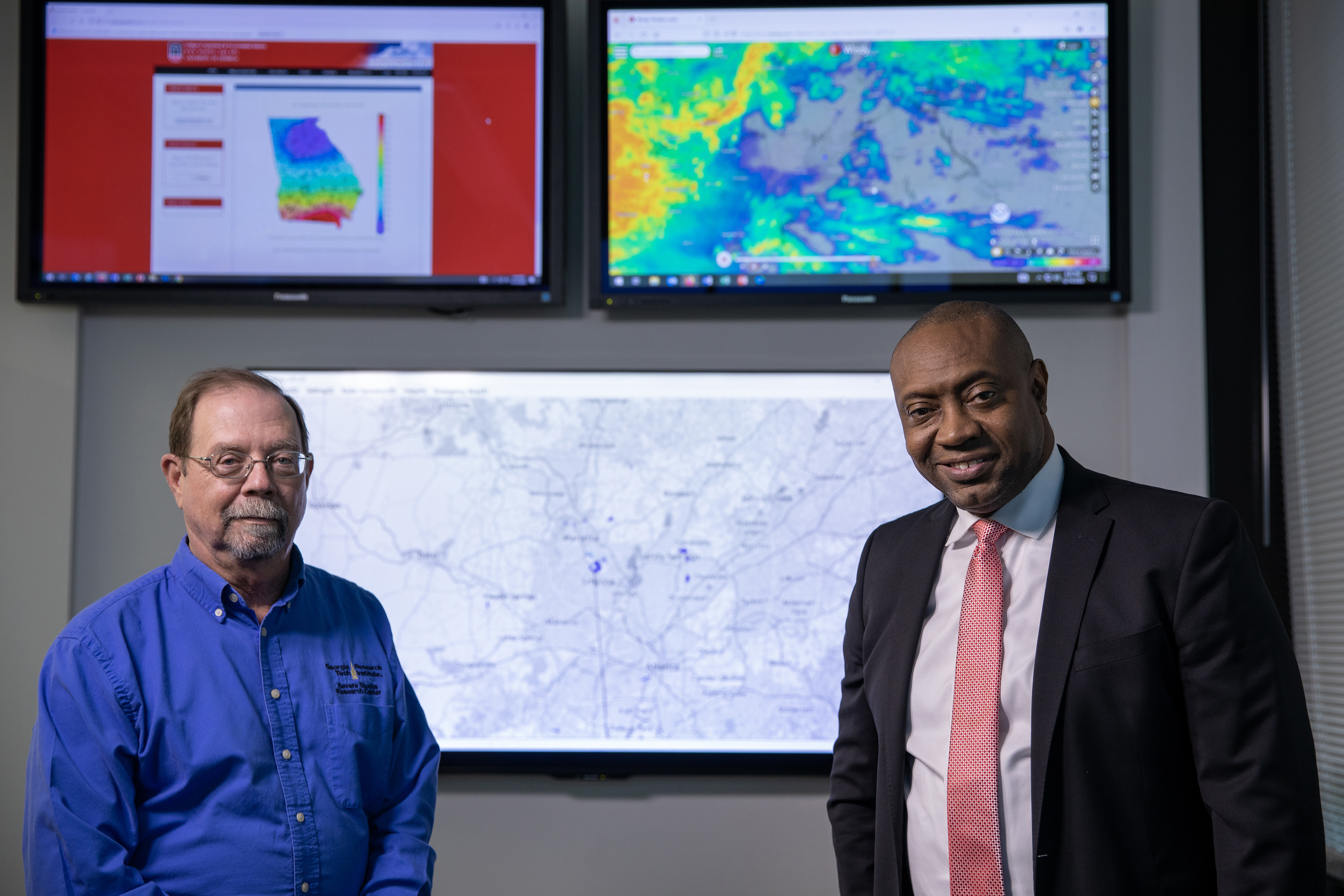
John Trostel, director of the Severe Storms Research Center (SSRC) at Georgia Tech, and Marshall Shepherd, Associate Dean for Research, Scholarship and Partnership at UGA’s Franklin College of Arts and Sciences and Director of UGA’s Atmospheric Sciences Program, at the SSRC. (Credit: Sean McNeil, GTRI)
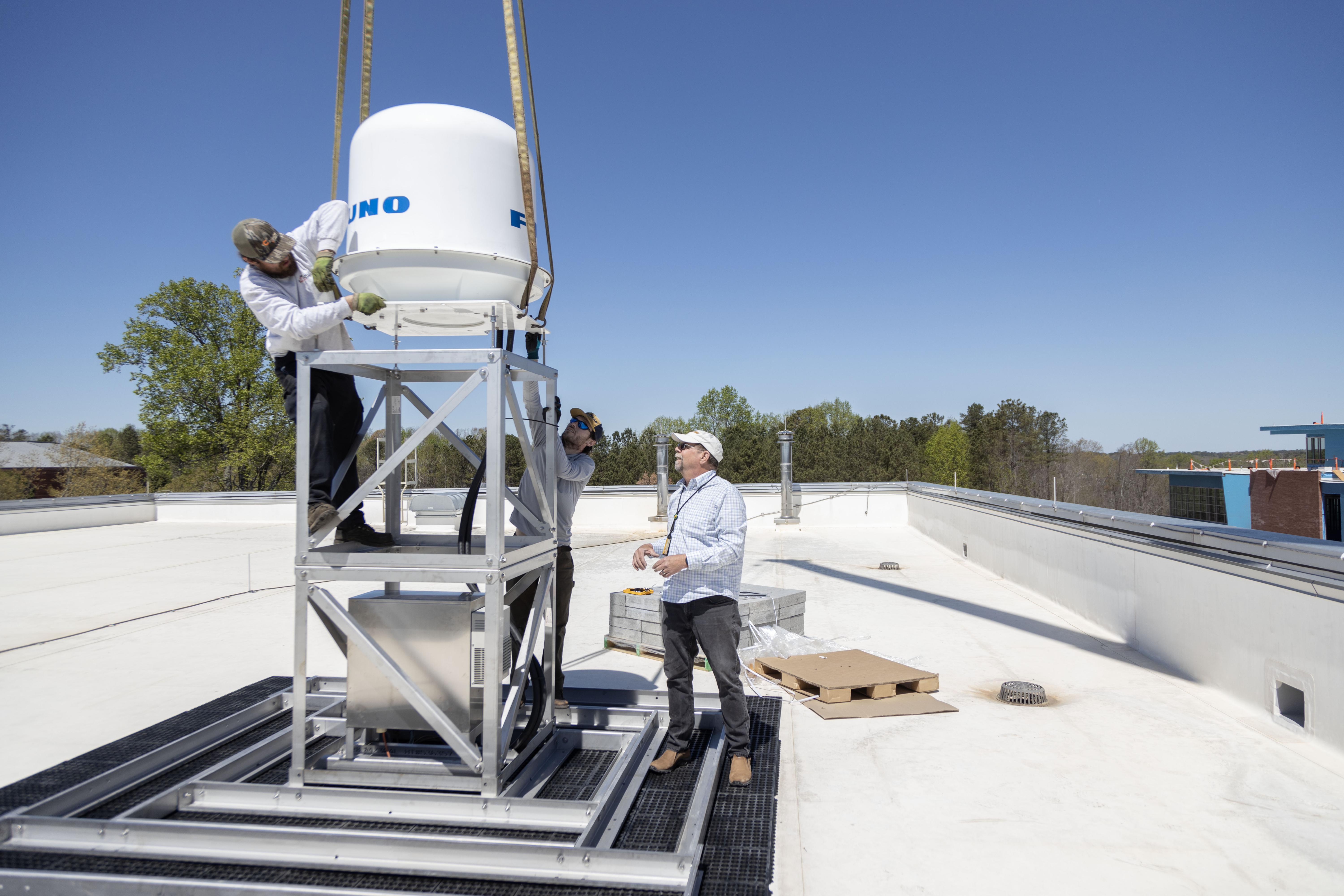
The new X-band weather radar being installed on the roof of a building at Georgia Gwinnett College. (Credit: Christopher Moore, GTRI)
(Interim) Director of Communications
Michelle Gowdy
Michelle.Gowdy@gtri.gatech.edu
404-407-8060
Award-winning Software Tool Uses Innovative Approach
Oct 02, 2024 —

School of Computer Science Professor Vijay Ganesh is leading the way in the innovation of SMT solvers, a class of tools key to software engineering, security, and trustworthy artificial intelligence (AI).
Ganesh and his student, John Lu, have been working on their own solver, Z3-alpha, for several years. It recently won several categories at SMT-COMP 2024, a competition held to determine the best solvers from around the world.
SMT solvers are automated logical reasoning tools used widely to test and analyze programs. They are also used to identify potential security issues.
“SMT solvers are like a Swiss Army Knife for all kinds of tasks for software engineering and trustworthy AI. You need a tool that can understand and analyze formulas obtained from analysis of programs,” Ganesh said.
The Z3-alpha solver is derived from the z3 solver from Microsoft Research, but Ganesh and Lu implemented machine learning (ML) into their solver to automatically synthesize strategies, making it more efficient.
Ganesh said the solver illustrates one of his biggest research goals: effectively combining the fields of automated reasoning and ML.
“With this solver, we’re using ML to make automated reasoning more efficient. In another line of research, we are going in the reverse direction by using automated reasoning to analyze, test, and improve ML models,” he said.
Using ML with SMT solvers this way is a relatively new line of research that Ganesh has been working on. He said this is among the first known instances of the successful use of machine learning for SMT solver strategy synthesis.
Ganesh said they want to work to further improve the Z3-alpha solver and apply these ML techniques to other solvers.
Morgan Usry, Communications Officer at the School of Computer Science
SKYSCENES Leverages New Algorithms to Improve Safety for Autonomous Flying Vehicles
Oct 02, 2024 —

Ph.D. student Sahil Khose worked with Assistant Professor Judy Hoffman to curate SKYSCENES, a new benchmark dataset that provides well-annotated aerial images of cities that computer vision algorithms can use to operate autonomous flying vehicles. Photos by Kevin Beasley/College of Computing.
An artificial intelligence (AI) training dataset developed at Georgia Tech is setting a new standard for the safety and reliability of autonomous drones and flying vehicles.
SKYSCENES compiles more than 33,000 annotated computer-generated aerial images. With applications in urban planning, disaster response, and autonomous navigation, the dataset trains computer vision models to better detect and identify objects in aerial images, which can be challenging for existing AI models.
Read the full story to learn how School of Interactive Computing Ph.D. student Sahil Khose and Assistant Professor Judy Hoffman developed this groundbreaking dataset to pave the way for the future of autonomous aviation.
Nathan Deen, Communications Officer
Georgia Tech School of Interactive Computing
nathan.deen@cc.gatech.edu
Innovation at Scale: Georgia Tech Unveils New Roll-to-Roll Manufacturing Pilot Facility
Oct 03, 2024 —

Partners of the facility gathered for an official ribbon cutting ceremony. From left to right: Eric Vogel, Hightower Professor in MSE and executive director for the Institute for Matter and Systems; Devesh Ranjan, Eugene C. Gwaltney, Jr. school chair and professor in the George W. Woodruff School of Mechanical Engineering; Julia Kubanek, vice president of Interdisciplinary Research; Tequila Harris, professor in the Woodruff School and facility leader; Christine Conwell, interim executive director for the Strategic Energy Institute; Tim Liewen, interim executive vice president for Research; Thomas Kurfess, Regent's Professor in the Woodruff School and executive director of the Georgia Tech Manufacturing Institute; J. Carson Meredith, professor and James Preston Harris Faculty Fellow in the School of Chemical and Biomolecular Engineering, executive director of the Renewable Bioproducts Institute. Photo: Christopher McKenney.
Whether it’s developing new products, reducing costs, or increasing accessibility, innovations in manufacturing stand to improve the lives of companies and consumers alike. Georgia Tech recently took another step toward ensuring those innovations make it from lab to market with the launch of a Modular Pilot Scale Roll-to-Roll Manufacturing Facility.
“As researchers develop new materials, one of the key aspects we’re missing is how to make them at scale. This is a major oversight because if we can’t make them at scale, we can’t transition from basic research to commercialization,” said Tequila Harris, a professor in the George W. Woodruff School of Mechanical Engineering. “With this new facility, we can prove our discoveries beyond lab-scale studies — and can go from materials innovation to product development at scale.”
Led by Harris, the new facility is the result of a partnership between the Georgia Tech Manufacturing Institute (GTMI), the Strategic Energy Institute, and the Woodruff School. As a pilot facility, it will serve as a testbed for scaling up manufacturing research open for Georgia Tech researchers as well as academic, government, and industry partners around the world.
“The larger vision I see at Georgia Tech involves innovation in manufacturing for large-scale industries,” said Georgia Tech’s Interim Executive Vice President for Research Tim Lieuwen at the facility’s unveiling event on Sept. 19. “It’s crucial that we’re innovating in basic science and technology, but we also need to be innovating in large-scale manufacturing.”
Roll-to-roll (R2R) manufacturing transforms flexible rolls of substrate materials, such as paper, metal foils, and plastics, into more complex, transportable rolls upon coating the surface with one or more fluids, such as inks, suspensions, and solutions, which are subsequently dried or cured on the base substrate. Its high yield and efficiency make R2R an ideal method for the sustainable, large-scale production of components for solar cells, batteries, flexible electronics, and separations — all industries that have expanded in Georgia in recent years.
“As a state institution, we’re ultimately here to serve our state,” said Lieuwen, who is also Regents’ Professor and David S. Lewis Jr. Chair in the Daniel Guggenheim School of Aerospace Engineering. “We’re seeing Georgia emerge as the national leader in terms of recruiting corporate investments in this space and in industries that will be served by this facility.”
Roll-to-Roll Innovations
The R2R process is similar to the production of newspapers, where a large roll of blank paper goes through a series of rollers printing text and photos. “The roll-to-roll aspect is the process of using a specialized tool to force fluid onto a moving surface,” says Harris. It’s one of the fastest-growing methods for producing thin film materials — photovoltaics used in solar cells, transistors in flexible electronics, and micro-batteries, for example — at a large scale.
Harris’s group works to develop novel manufacturing tools, with a particular focus on understanding and improving the dynamics of thin film manufacturing to increase efficiency and minimize waste. Her group is particularly interested in slot die coating, an R2R technique where a liquid material is precisely deposited onto a substrate through a narrow slot. With the new pilot facility, researchers like Harris will be able to take their work to the next level.
“Slot die coating on a roll-to-roll can handle the broadest viscosity range of most coating methods. Therefore, you can process a lot of different materials very quickly and easily,” says Harris. “It’s one of the fastest-growing technologies in the U.S. — and currently, this is the most advanced modular pilot scale facility at an academic university in the United States.”
“Georgia Tech is way ahead of the curve in terms of our facilities,” says GTMI Executive Director and Regents’ Professor Thomas Kurfess. “This will grow our capability in the battery area, membranes, flexible electronics, and more to allow us to support the development of new technologies.”
“As technologies around cleantech continue to advance at an unprecedented pace, pilot manufacturing facilities provide a critical bridge between innovative benchtop research and commercial-scale production and manufacturing,” says Christine Conwell, interim executive director of the Strategic Energy Institute. “We are excited about the opportunities this R2R facility will provide to the Georgia Tech energy community and our industry partners.”
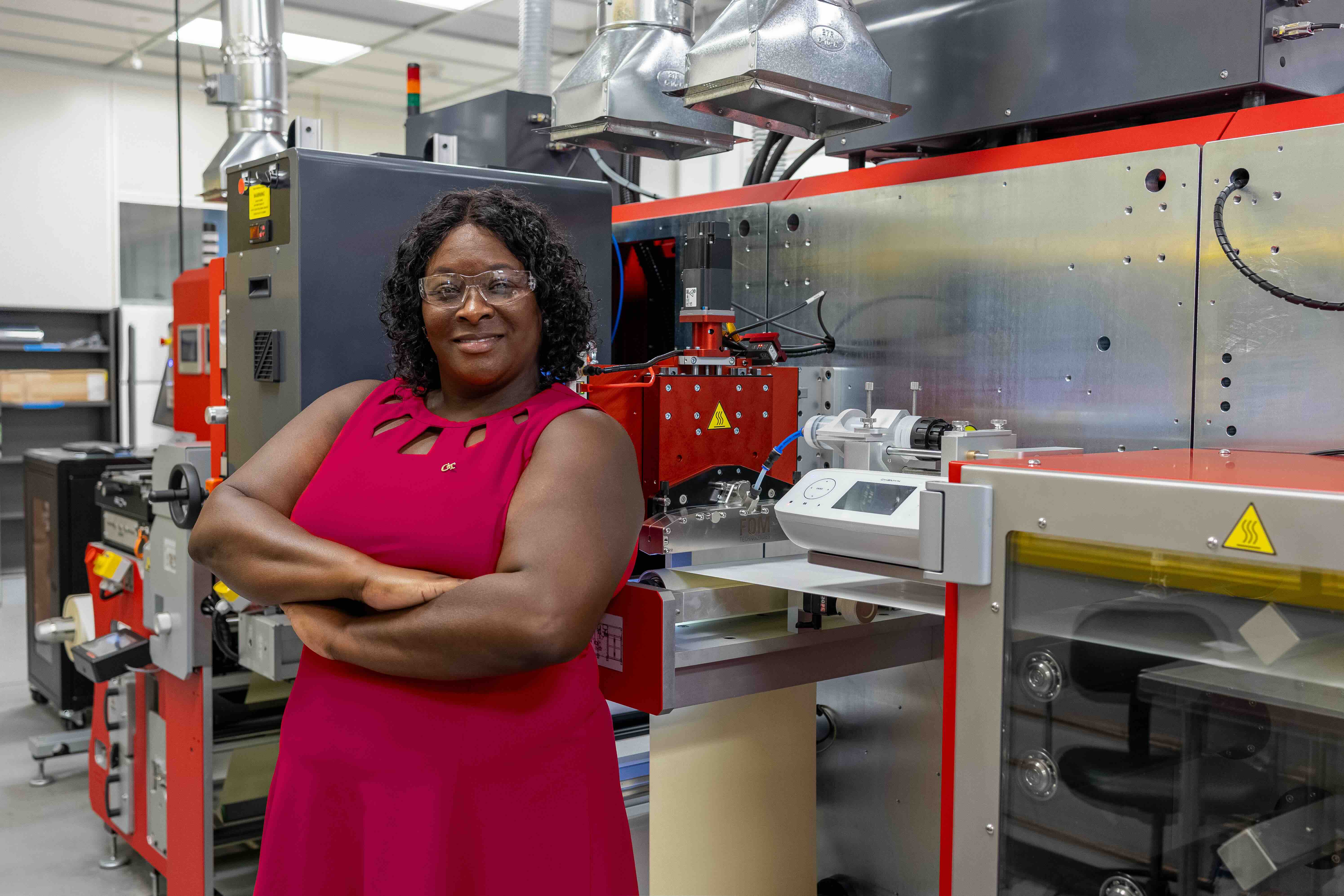
Tequila Harris, professor in the George W. Woodruff School of Mechanical Engineering, next to the modular R2R equipment. Photo: Christopher McKenney.
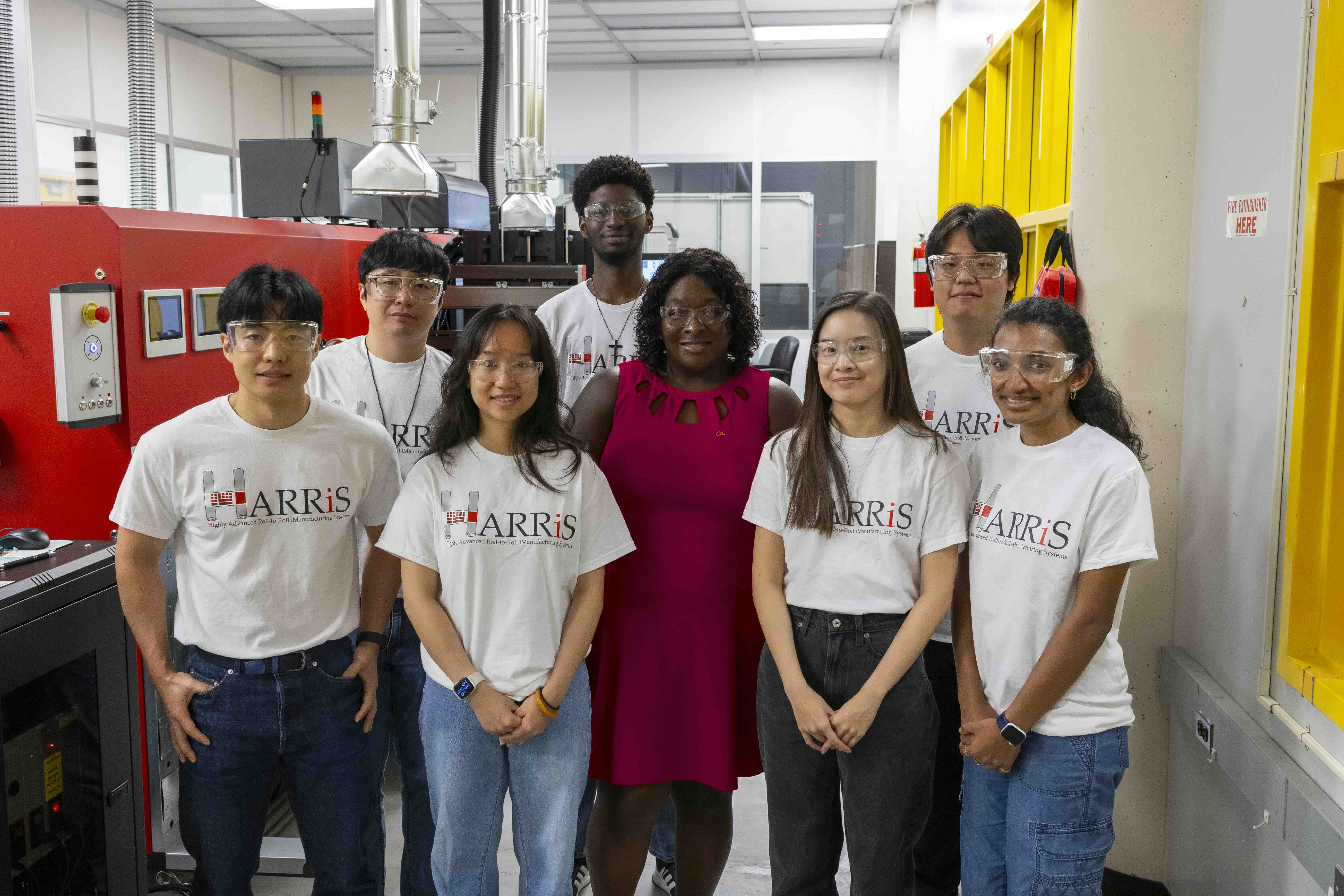
The Highly Advanced Roll-to-Roll iManufacturing Systems (HARRiS) research group in the new R2R facility. Photo: Christopher McKenney.
Audra Davidson
Research Communications Program Manager
Georgia Tech Manufacturing Institute
BBISS Executive Director Search
Oct 01, 2024 —

Please visit this page for up-to-date information about the progress of this search.
The Georgia Institute of Technology (Georgia Tech) invites applications and nominations for the Executive Director (ED) position in the Brook Byers Institute for Sustainable Systems (BBISS). BBISS, one of Georgia Tech’s Interdisciplinary Research Institutes (IRIs), brings together researchers from across Georgia Tech, including academic and research units, to support world-class sustainability-focused research, student engagement, and industry, government, and nonprofit collaboration toward achieving systemic change.
The BBISS ED will be a dynamic, collaborative, and entrepreneurial leader who will unite a broad range of stakeholders around a vision to elevate and grow sustainability at Georgia Tech. As a systems thinker and inclusive relationship builder, the ED will expand and enhance BBISS collaborations and partnerships within and beyond Georgia Tech to broaden its sustainability footprint in local, regional, national, and international arenas.
The ED will catalyze the formation of interdisciplinary teams to support high-impact programming and grants in areas such as climate science, solutions, and policy; ecosystem and environmental health; sustainable cities and infrastructure; sustainable resource and material use; just and equitable sustainable development; and the economics and business of sustainability.
Applications, Inquiries, and Nominations
To apply for the Executive Director position in the Brook Byers Institute for Sustainable Systems, candidates are requested to submit the following:
- A curriculum vitae
- A letter of interest (not to exceed four pages) that summarizes your qualifications and includes a brief statement of your vision for BBISS
- Contact information for five references (to be contacted with candidate’s permission at a later date)
Candidates are requested to send their application materials (in Word or PDF) to the AGB Search Portal at this link by November 19, 2024, for best consideration.
Nominations and expressions of interest for this opportunity are encouraged. Please direct them to BBISSGATech@agbsearch.com or to the AGB search consultants listed below.
Monica Burton, Principal
monica.burton@agbsearch.com
C: 917.825.2961
Nancy Targett, Ph.D., Executive Search Consultant
nancy.targett@agbsearch.com
C: 302.233.5202
Brent Verrill, Research Communications Program Director, BBISS