Search Begins for Georgia Tech’s Executive Vice President for Research
Sep 03, 2024 — Atlanta
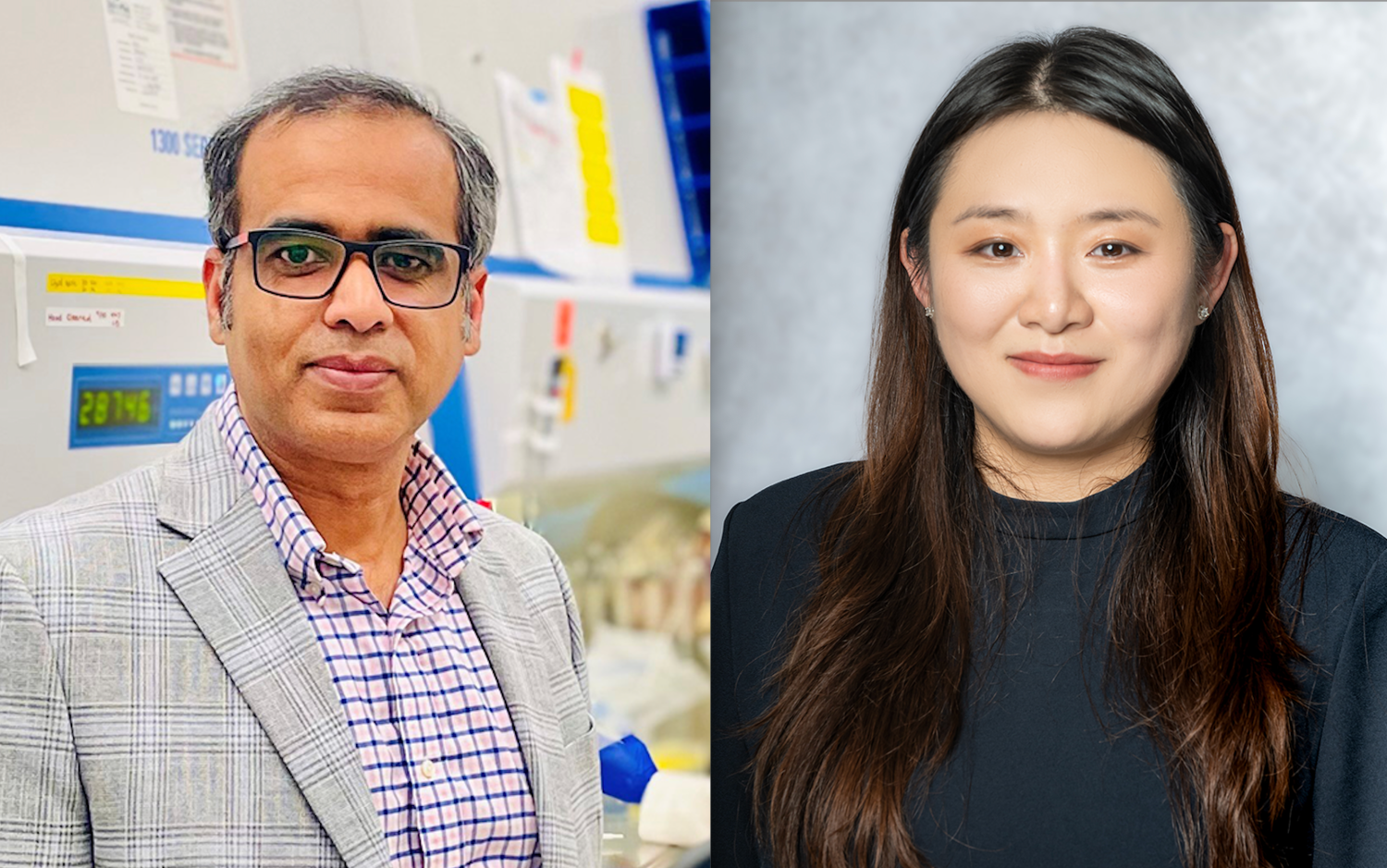
President Ángel Cabrera has convened a search committee, chaired by College of Sciences Dean Susan Lozier, charged with selecting Georgia Tech’s next executive vice president for research (EVPR). To assist with the process, the Institute has retained the services of executive search firm WittKieffer.
“I thank all the members of the search committee and committee chair Dean Lozier, for conducting a thorough search to identify our next executive vice president for research,” said President Cabrera. “As one of the nation’s foremost academic research institutions, Georgia Tech is looking for a leader who can sustain the growth of our research enterprise, build the infrastructure necessary to support it, and deliver on our mission to advance technology and improve the human condition.”
WittKieffer will host several town halls to gather input from the Georgia Tech community on the preferred qualifications of the next EVPR.
Community Engagement Schedule
Georgia Tech Staff Town Hall
Tuesday, September 10 at 10:00 a.m.
Hybrid: Marcus Nanotechnology Building, 345 Ferst Drive, Room 1116 / Register for virtual attendance)
GTRI Town Hall
Tuesday, September 10 at 12:00 p.m.
Virtual only (Details forthcoming for GTRI faculty and staff)
Georgia Tech Faculty Town Hall
Tuesday, September 10 at 2:00 p.m.
Hybrid: Howey Physics L3 Classroom / (Register for virtual attendance)
Open Georgia Tech and GTRI Town Hall
Wednesday, September 11 at 11:00 a.m.
Virtual only (Register online)
Additional Information
Both internal and external candidates are invited to apply. For more details, including the position description and the application process, a list of the search committee members, and the key dates, visit the EVPR search webpage.
Regents’ Professor Tim Lieuwen has been appointed interim EVPR and will serve until the new EVPR is in place.
Shelley Wunder-Smith
Director of Research Communications
shelley.wunder-smith@research.gatech.edu
Research Centers Supported by the Space Research Initiative
Sep 03, 2024 —
Across Georgia Tech, researchers are exploring the universe — its origins, possible futures, and humanity and Earth’s place in it. These investigations are the efforts of hundreds of astrobiologists, astrophysicists, aerospace engineers, astronomers, and experts in space policy and science fiction — and all of this work is brought together under the Institute’s new Space Research Initiative (SRI).
The SRI is the hub of all things space-related at Georgia Tech. It connects research institutes, labs, facilities, Schools, and Colleges to foster the conversation about space across Georgia and beyond. As a budding Interdisciplinary Research Institute (IRI), the SRI currently encompasses three core centers that contribute distinct interdisciplinary perspectives to space exploration.
Center for Space Technology and Research
The Center for Space Technology and Research (CSTAR) is a hub dedicated to furthering the expansion of Georgia’s aerospace industry, which is already the state’s No. 1 economic driver. The center's team at Georgia Tech conducts cutting-edge research in fields such as astrophysics, Earth science, planetary science, robotics, space policy, space technology, materials science, and space systems engineering.
CSTAR boasts a collaborative network of more than 100 Georgia Tech faculty members and research staff, supported by annual funding exceeding $20 million. Its contribution to space research is highlighted by its active multiyear research grants totaling over $100 million. Each year, CSTAR also contributes to the academic community with around 100 peer-reviewed journal articles and provides mentorship to dozens of graduate and undergraduate students, shaping the next generation of space research.
Members of CSTAR have contributed to a variety of spaceflight projects, from observing the atmosphere of Jupiter, to creating carbon nanotube-based technology on CubeSats, to building an innovative, dual-use antenna that is simultaneously a critical life-saving handrail and a radio emitter inside an airlock on the International Space Station. Several examples of this research will soon be part of a new permanent display in the National Air and Space Museum in Washington, D.C.
“The work done by the Georgia Tech research community in space is phenomenal,” said CSTAR Director Jud Ready. “We have worked on the International Space Station, launched numerous free-flying CubeSats in low Earth orbit, as well as our current crowning achievement, the Lunar Flashlight CubeSat, which is the world’s only heliocentric spacecraft currently owned and operated by an academic institution that recently demonstrated planetary optical navigation techniques for the first time, by any organization — including NASA.” Future missions include materials demonstrations on a lunar lander, as well as additional orbital activities of both the Earth and moon.
“The SRI will increase our reach and impact over and above these prior activities by at least an order of magnitude,” he said. “I am excited for what the future holds for Georgia Tech students, faculty, and research partners as a result of this new organization.”
Director: Jud Ready
Associate Directors: Morris Cohen and Jennifer Glass
Center for Relativistic Astrophysics
The Center for Relativistic Astrophysics (CRA) is housed within the College of Sciences’ School of Physics. The center’s mission is to provide students with education and training in the key research areas of astroparticle physics, theoretical astrophysics, and gravitational wave astrophysics.
CRA researchers study the breadth of space, ranging from the early universe’s large-scale structure to particle interactions. They also study black holes and the merger of compact objects, the potential outcome of the evolution of stellar binary systems, and — closer to home — exoplanets and stars found in the Milky Way. Of particular strength are computational astrophysics and multi-messenger astrophysical studies with neutrinos, photons, and gravitational waves.
In addition, CRA researchers actively participate in major international collaborations, such as the operations and development of existing and future detectors, including the IceCube Neutrino Observatory, the LIGO and LISA gravitational wave observatories, X-ray observatories NuSTAR and Athena, and gamma-ray detectors VERITAS and CTA.
“Bringing together all space research under a single umbrella will be a huge boon to the CRA’s research efforts and visibility,” said John Wise, CRA director. “I am excited about the opportunities the SRI will bring forth within such a collaborative environment, especially the prospect of Georgia Tech leading a space mission that can test the theoretical work performed within the CRA.”
Director: John Wise
Associate Director: Tamara Bogdanović
Astrobiology research at Georgia Tech, which includes experts in biochemistry, physics, aerospace engineering, planetary science, and astronomy, as well as others, seeks to answer these age-old questions: What is the origin of life? Does life exist on other worlds?
Georgia Tech’s astrobiology community includes students, staff, and faculty across campus, the educational curriculum, the Exploring Origins student-run group, an astrobiology fellows program, and keystone events.
Many globally recognized researchers in this field are at Georgia Tech, and their recent discoveries hint at the potential for life on Mars and ocean worlds like Europa. Astrobiology at Tech brings together these faculty with scholars in the humanities and social sciences to share their research with the public and give it a broader cultural context.
The Georgia Tech Astrobiology Graduate Certificate Program, an interdisciplinary initiative across several Schools and Colleges, is designed to broaden student participation in astrobiology. An undergraduate minor is in development. The purpose of these programs is to expand opportunities for both undergraduate and graduate students in the interdisciplinary field of astrobiology.
“One of the main reasons I came to Georgia Tech in 2020 is its vibrant astrobiology program,” said Christopher E. Carr, co-director of Georgia Tech Astrobiology. “It’s a true pleasure to have such amazing colleagues.”
Co-directors: Frances Rivera Hernández and Christopher E. Carr
Laurie Haigh
Research Communications
IMS Receives NSF Funding for Education and Outreach Programs
Sep 03, 2024 —
The Institute for Matter and Systems (IMS) has received $700,000 in funding from the National Science Foundation (NSF) for two education and outreach programs.
The awards will support the Research Experience for Undergraduates (REU) and Research Experience for Teachers (RET) programs at Georgia Tech. The REU summer internship program provides undergraduate students from two- and four-year programs the chance to perform cutting-edge research at the forefront of nanoscale science and engineering. The RET program for high school teachers and technical college faculty offers a paid opportunity to experience the excitement of nanotechnology research and to share this experience in their classrooms.
“This NSF funding allows us to be able to do more with the programs,” said Mikkel Thomas, associate director for education and outreach. “These are programs that have existed in the past, but we haven’t had external funding for the last three years. The NSF support allows us to do more — bring more students into the program or increase the RET stipends.”
In addition to the REU and RET programs, IMS offers short courses and workshops focused on professional development, instructional labs for undergraduate and graduate students, a certificate for veterans in microelectronics and nano-manufacturing, and community engagement activities such as the Atlanta Science Festival.
Amelia Neumeister | Communications Program Manager
Georgia Tech Cloud Hub Advances Generative AI Research with Microsoft Support
Oct 30, 2025 —
A lighted pathway through a sea of clouds.
The Cloud Hub, a key initiative of the Institute for Data Engineering and Science (IDEaS) at Georgia Tech, recently concluded a successful Call for Proposals focused on advancing the field of Generative Artificial Intelligence (GenAI). This initiative, made possible by a generous gift funding from Microsoft, aims to push the boundaries of GenAI research by supporting projects that explore both foundational aspects and innovative applications of this cutting-edge technology.
Call for Proposals: A Gateway to Innovation
Launched in early 2024, the Call for Proposals invited researchers from across Georgia Tech to submit their innovative ideas on GenAI. The scope was broad, encouraging proposals that spanned foundational research, system advancements, and novel applications in various disciplines, including arts, sciences, business, and engineering. A special emphasis was placed on projects that addressed responsible and ethical AI use.
Recognizing Microsoft’s Generous Contribution
This successful initiative was made possible through the generous support of Microsoft, whose contribution of research resources has empowered Georgia Tech researchers to explore new frontiers in GenAI. By providing access to Azure’s advanced tools and services, Microsoft has played a pivotal role in accelerating GenAI research at Georgia Tech, enabling researchers to tackle some of the most pressing challenges and opportunities in this rapidly evolving field.
Looking Ahead: Pioneering the Future of GenAI
The awarded projects, set to commence in Spring 2025, represent a diverse array of research directions, from improving the capabilities of large language models and AI-based systems to innovative applications in data use through interdisciplinary collaborations. These projects are expected to make significant contributions to the body of knowledge in GenAI and are poised to have a lasting impact on the industry and beyond.
IDEaS and the Cloud Hub are committed to supporting these teams as they embark on their research journeys. The outcomes of these projects will be shared through publications and highlighted on the Cloud Hub web portal, ensuring visibility for the groundbreaking work enabled by this initiative.
Congratulations to the Spring 2025 Winners
- Neha Kumar; IC | “Social Audits of AI: Towards Participatory Impact Evaluations of AI-Based Systems”
- Amirali Aghazadeh; ECE & Amanda Stocton; Chem and Biochem | “Agentic AI in Pursuit of Life’s Origins: Reassessing Histidine’s Prebiotic Viability”
- Peng Chen; CSE | “Generative AI for Advanced Bayesian Data Assimilation in Real-Time Flood Prediction”
- Yunan Luo; CSE | “Programmable Protein Design with Multi-Modal Generative AI”
- Anqi Wu; CSE | “Diffusion-Guided Discovery of Semantic Neural Codes in Higher Visual Cortex”
- Chao Zhang; CSE & Rampi Ramprasad; MSE | “MM-ChemAgent: A Multi-modal and Agentic LLM for Chemical Discovery”
Christa M. Ernst - Research Communications Program Manager
christa.ernst@research.gatech.edu
$3 Million NSF Grant Will Support Training in Sustainable Medical Devices
Aug 30, 2024 — Atlanta
W. Hong Yeo is leading a $3 million NSF research training program to develop a new generation of engineers focused on creating sustainable medical devices.
Georgia Tech researcher W. Hong Yeo has been awarded a $3 million grant to help develop a new generation of engineers and scientists in the field of sustainable medical devices.
“The workforce that will emerge from this program will tackle a global challenge through sustainable innovations in device design and manufacturing,” said Yeo, Harris Saunders Jr. Professor and associate professor in the George W. Woodruff School of Mechanical Engineering and the Wallace H. Coulter Department of Biomedical Engineering at Georgia Tech and Emory University.
The funding, from the National Science Foundation (NSF) Research Training (NRT) program, will address the environmental impacts resulting from the mass production of medical devices, including the increase in material waste and greenhouse gas emissions.
Under Yeo’s leadership, the Georgia Tech team comprises multidisciplinary faculty: Andrés García (bioengineering), HyunJoo Oh (industrial design and interactive computing), Lewis Wheaton (biology), and Josiah Hester (sustainable computing). Together, they’ll train 100 graduate students, including 25 NSF-funded trainees, who will develop reuseable, reliable medical devices for a range of uses.
“We plan to educate students on how to develop medical devices using biocompatible and biodegradable materials and green manufacturing processes using low-cost printing technologies,” said Yeo. “These wearable and implantable devices will enhance disease diagnosis, therapeutics, rehabilitation, and health monitoring.”
Students in the program will be challenged by a comprehensive, multidisciplinary curriculum, with deep dives into bioengineering, public policy, physiology, industrial design, interactive computing, and medicine. And they’ll get real-world experience through collaborations with clinicians and medical product developers, working to create devices that meet the needs of patients and care providers.
The Georgia Tech NRT program aims to attract students from various backgrounds, fostering a diverse, inclusive environment in the classroom — and ultimately in the workforce.
The program will also introduce a new Ph.D. concentration in smart medical devices as part of Georgia Tech's bioengineering program, and a new M.S. program in the sustainable development of medical devices. Yeo also envisions an academic impact that extends beyond the Tech campus.
“Collectively, this NRT program's curriculum, combining methods from multiple domains, will help establish best practices in many higher education institutions for developing reliable and personalized medical devices for healthcare,” he said. “We’d like to broaden students' perspectives, move past the current technology-first mindset, and reflect the needs of patients and healthcare providers through sustainable technological solutions.”
Jerry Grillo
Fostering Industry Innovation: Manufacturing 4.0 Consortium Celebrates First Year of Operation
Aug 29, 2024 —
Manufacturing 4.0 Consortium members gathered at the June quarterly meeting. Photo: Audra Davidson.
Between revitalized investments in America’s manufacturing infrastructure and an increased focus on AI and automation, the U.S. is experiencing a manufacturing renaissance. A key focus of this resurgence lies in improving the resiliency of supply chains in the U.S., particularly in crucial sectors like defense.
“If we were to suddenly have a seismic shift in defense manufacturing needs,” asks Aaron Stebner, professor and Eugene C. Gwaltney Jr. Chair in Manufacturing in the George W. Woodruff School of Mechanical Engineering, “do we have the supply chain and manufacturers who could meet that sudden increase in demand? How do we do that in a way that’s sustainable for long periods of time as a nation if that need arises?”
The Georgia Tech Manufacturing Institute (GTMI) officially launched the Manufacturing 4.0 Consortium in 2023 to address that need. Designed to form a network of engaged manufacturers from across the country, the Consortium serves as a key connection point between Georgia Tech and industry partners — and as fertile ground for collaborative innovation.
“By bringing us all together,” says Stebner, who serves on the board of the Consortium, “we can do bigger, more meaningful things and find unique ways and opportunities to get money flowing back to the companies and Georgia Tech.”
With over 25 founding company members, the Consortium celebrated its first official year of operation in August.
Creating a Resilient Network
The Manufacturing 4.0 Consortium originally grew out of an 18-month pilot project funded by the Department of Defense Office of Local Community Cooperation aiming to increase defense supply chain resilience, assist Georgia manufacturers in adopting new technologies, and foster collaboration by connecting manufacturers across Georgia.
Those goals and more are tackled by the Consortium’s focus on “networking, engagement, and collaboration,” says Stebner. “It's not just a consortium for Georgia Tech to take money from industry and do stuff with their money — the goal is to create new resources that enable us to collaborate in bigger ways than we could otherwise.”
To join the Consortium, industry members pay up to $10,000 annually to access its network, intellectual property, and facilities. With a 10% membership discount for Georgia businesses and a 75% discount for small businesses, the Consortium especially aims to promote growth for small Georgia manufacturers.
“Memberships come with time at the Advanced Manufacturing Pilot Facility, which we’re expanding to be this test bed for autonomous maturation of research and development,” says Stebner. “The fact that we have what’s going to be an almost $60 million facility behind us as a mechanism and a playground for all these companies is unique.”
“Having a shared use facility that is fully equipped to solve manufacturing’s most interesting challenges is not only a perk of Consortium memberships,” said Executive Director Steven Ferguson, “but it also serves as a hub for innovation in manufacturing.”
Industry Innovation
Many consortiums founded by academic institutions are primarily focused on academic research.
“The Manufacturing 4.0 consortium has an industry focus,” said Branden Kappes, founder and president of Consortium member company Contextualize LLC. “It's more about how we take this capability that, at the moment, is trapped in a lab and transition from a wonderful concept into a wonderful product.”
The Consortium achieves that translation through shared intellectual property agreements, collaborative research initiatives, and an emphasis on creating an engaged and open network of members.
“I see camaraderie inside the Manufacturing 4.0 Consortium,” says Kappes. “I see companies that overlap and compete in some areas, are complementary in others, and are willing to build a bridge to advance the capabilities of both sides and the community as a whole. That type of mentality is very exciting.”
“This is one of the most highly engaged groups I have interacted with in a professional setting,” said John Flynn, vice president of Sales at Consortium member company Endeavor 3D. “It is an incredibly dynamic melting pot of all the different facets of industry 4.0 and digital manufacturing, bringing everyone together from that part of the supply chain to create what I know will be important and value-added projects, ultimately resulting in intellectual property.”
“We are able to connect Consortium members with subject matter experts at Georgia Tech and within the Consortium who have ‘been there and done that,’” said Ferguson. “At the same time, we are working with manufacturers to create novel solutions to complex problems through research engagements. Blending all of those activities into one organization is part of the magic that is the Consortium.”
Audra Davidson
Communications Manager
Georgia Tech Manufacturing Institute
The Mathematics of Connection: Cheng Mao awarded CAREER Grant for Unraveling Information Hidden in Networks
Aug 28, 2024 —
Photo by Clint Adair, Unsplash
Networks can be found everywhere: in our daily social exchanges, the food webs that connect every living thing on Earth, and the interactions between proteins in the living body. From the global scale to the cellular level, they are a way of mapping and understanding the interactions within and between systems.
While many connections are immediately apparent in a network, these systems also contain a large amount of hidden information. For example, a social network might connect the last 15 people you interacted with, but hidden in that network could be information about age, ethnicity, location, and more.
“When scientists are given a network, their interest is typically to extract some information or structure hidden in the network,” Cheng Mao, an assistant professor in the School of Mathematics, explains.
To do so, scientists engage in network analysis, leveraging mathematics and statistics. Now, a new $450,000 NSF CAREER grant will help Mao research and develop new mathematical methods and models to facilitate this work.
The National Science Foundation Faculty Early Career Development Award is a five-year grant designed to help promising researchers establish a foundation for a lifetime of leadership in their field. Known as CAREER awards, the grants are NSF’s most prestigious funding for untenured assistant professors.
The award, for “Statistical Inference on Random Graphs and Hypergraphs: Geometry, Combinatorics, and Computation” will also support Mao as he integrates the research into his teaching, with an emphasis on supporting students from diverse backgrounds. “I taught a topics course on Statistical Inference on Random Graphs at Georgia Tech and look forward to further developing the course,” he adds. “I aim to expand the lecture notes into a long-form text that can be used by students and junior researchers interested in this area.”
Reading between the lines
“Statistics are playing an increasingly significant role in network analysis by providing a toolbox for extracting information from noisy network data.” Mao explains. “This project aims to develop statistical models and computational methods for uncovering such hidden information so that we can make sense of large complex networks.”
Imagine a network of researchers, where each person is represented as a dot on a page — a node on a graph, in mathematical terms. Every researcher who has co-authored a paper might be connected with a line, creating a web, or network of collaborators. And while this graph does immediately convey some information, additional information is hidden within it.
“What information is hidden in this network?” Mao asks. “One example is the geographic locations of these researchers. Researchers based in the same institution or the same country may collaborate more often, so there may be more links between them in the network.” This is where Mao’s research comes in.
Using tools from statistics and information theory, Mao aims to leverage mathematical models to characterize these connections in order to decode them — and reveal information that might not be immediately available. “This part of research is closely connected to the areas of theoretical computer science and machine learning, where a major task is to develop fast algorithms and then rigorously analyze their performance,” he explains.
Mathematics, and beyond
Mao underscores the intersectionality of his research: networks are studied by economists and ecologists, psychologists, and mathematicians. “It is common that researchers in different scientific and engineering fields study a similar problem but develop their own ways to solve it,” he says, adding that “we aim to widely disseminate the research results to statisticians, computer scientists, and any researchers who study or use network analysis.” He hopes the research can facilitate the analysis of social and biological networks, leading to discoveries and innovations across many fields.
In turn, these real-word applications could lead to theoretical breakthroughs on the mathematical side of things. “While mathematical research can evolve on its own, real-world problems can also provide guidance for developing theoretical mathematics,” Mao explains. “So our goal is to make this research impactful for everyone — both theorists and practitioners.”
School of Physics Assistant Professor Zeb Rocklin has also been awarded a CAREER grant for his research on flexible metamaterials and deformable solids. Read “Smart Solids: Zeb Rocklin Awarded NSF CAREER for Flexible Metamaterials Research” to learn more.
Cheng Mao
Written by Selena Langner
NSF Awards $2M to Clark Atlanta University in Collaboration With the HBCU CHIPS Network
Aug 28, 2024 —
The National Science Foundation has awarded $2 million to Clark Atlanta University in partnership with the HBCU CHIPS Network, a collaborative effort involving historically black colleges and universities (HBCUs), government agencies, academia, and industry that will serve as a national resource for semiconductor research and education.
“This is an exciting time for the HBCU CHIPS Network,” said George White, senior director for Strategic Partnerships at Georgia Tech. “This funding, and the support of Georgia Tech Executive Vice President for Research Chaouki Abdallah, is integral for the successful launch of the CHIPS Network.”
The HBCU Chips Network works to cultivate a diverse and skilled workforce that supports the national semiconductor industry. The student research and internship opportunities along with the development of specialized curricula in semiconductor design, fabrication, and related fields will expand the microelectronics workforce. As part of the network, Georgia Tech will optimize the packaging of chips into systems.
Georgia Tech Contact:
Amelia Neumeister | Research Communications Program Manager
Clark Atlanta University Contact:
Frances Williams
Science and Engineering Day Buzzes with Excitement
Mar 13, 2023 —
A young participant that is experiencing virtual reality for the first time at Georgia Tech
More than 1,500 parents and children across the Atlanta metropolitan area attended a jam-packed second annual Georgia Tech Science and Engineering Day held on Saturday, March 11 in conjunction with the tenth annual 2023 Atlanta Science Festival. Located across five campus buildings, more than 40 demonstrations, hands-on STEAM activities, tours, and learning opportunities designed to engage and educate participants were offered by students, staff, and faculty volunteers.
Some of this year’s demonstration topics included battery fuel cells, nanotechnology, DNA, immunoengineering, chemistry, engineering, superconductivity levitation, wastewater treatment, aerospace, space outreach, virtual reality, biology, robotics, computing, 3D printing, paper making, and much more.
A parent attending from Peachtree City said, “we’ve discovered our son has an affinity for math and science. He’s handling tenth grade science level coursework, yet he’s only in the seventh grade and can understand math formulas ahead of his age group. We brought him here to expose him to a variety of technologies and advanced equipment that he won’t see or be exposed to in his middle school. The staff and professors here have been very kind to show him how to use some of the equipment we’ve seen. And his eyes have gotten bigger all day because of these interactions.”
Virginia Howell, director of the Roberts C. Williams Museum of Paper Making in the Renewable Bioproducts Institute at Georgia Tech said, “the paper museum is delighted to be part of the Georgia Tech Science and Engineering Day. It's a great opportunity for people to learn more about the paper museum and get hands-on experience in making a sheet of paper to take home. We offer workshops, classes, and tours to students across the state of Georgia. Kids have been lined up all day to participate at our tables today.”
Demonstrations included how to extract DNA, seeing LIDAR in action, experiencing heat sensing sensors, how x-rays are used, viewing scanning electron microscopes, playing a virtual reality game, experiencing chemical reactions, watching 3D printing, making slime, showing atom-level nano materials in synthesized materials, neuroscience demos, liquid nitrogen experiments, and many more.
Presentation areas were hosted by the Institute for Electronics and Nanotechnology, the Institute for Robotics and Intelligent Machines, and the Institute for Bioengineering and Biosciences who provided valuable space in their buildings to house demonstrations. The Ford Environmental Science & Technology Building and Molecular Science & Engineering Building also donated space for demonstrations.
Another tour offering during Science and Engineering Day was the Flowers Invention Studio at Georgia Tech which offers more than 5,000 square feet of industrial makerspace equipment.
“We are the largest student-run maker space in the nation,” said Lillian Tso, president of the Invention Studio and a fourth-year mechanical engineering student. “We house industrial grade equipment for prototyping and manufacturing—we support anything that students want to build. We're open for all students of all majors of all years. They can use our equipment for free which includes CNC machines, more than 50 3D printers, waterjets, laser cutters, and many other professional-level tools. This is our first year participating in the Georgia Tech Science and Engineering Day. We wanted to do a lot more outreach to the Georgia Tech campus and the greater Atlanta community."
Lucas Garza, president-elect of the Invention Studio, added, “we’ve had a busy day offering tours of our studio throughout the festival.”
Located in the mezzanine of the Marcus Nanotechnology Building, Ethan Sirak, a fourth-year aerospace student with the Georgia Space Grant Consortium, was providing kids with exposure to space facts and allowing them to perform crafts related to planets and space. The consortium is an organization under NASA which aims to promote STEM exposure to kids of all ages. He also assists with the Aerospace Engineering Outreach Program. He was partnered at his hands-on learning table with Bill McNutt Jr., a senior aerospace engineering student.
A young participant from Suwanee, Georgia, said, “I want to go to school at Georgia Tech because of aerospace engineering. I want to go on good adventures in future space flight and design things.”
His mom, a sixth-grade science teacher added, “I love coming to science fairs to get new ideas for my students and I love to bring my family because we just have a great time. This is our very first science fair here at Georgia Tech. We've been to ones in north Georgia because that's pretty close to where we live. But when we saw this was available, we're like, yeah, we're coming down to Tech for this today—and having a great time.”
While attendees were able to get a peek into one of the nation’s most research-intensive universities, the event also allowed the many researchers and students participating the opportunity to share their science and engineering work with the public.
One of the more unique tables was manned by Alison Reynolds, an instruction archivist with research services in the Georgia Tech library. She was displaying a selection of unique items from Georgia Tech’s science fiction archives and special collections. She said, “we’ve been teaching with science fiction since 1971 and our collection is now one of the largest science fiction collections in the United States. We wanted to display part of our special collection.”
“I had several Georgia school systems reach out to me that were interested in attending this event,“ said Leslie O 'Neill, education outreach manager with the Southeastern Nanotechnology Infrastructure Corridor (SENIC) at Georgia Tech. “Georgia Tech plays a vital part in its community. We wanted to showcase the campus; the student, faculty and staff research; and the amazing science and engineering being done. We’ve had a fantastic turnout this year for this event.”
Walter Rich
How Georgia Tech Is Using AI to Solve Sustainability Problems
Aug 21, 2024 —
L to R, T to B: Josiah Hester, Peng Chen, Yongsheng Chen, Rosemarie Santa González, and Joe Bozeman.
- Written by Benjamin Wright -
As Georgia Tech establishes itself as a national leader in AI research and education, some researchers on campus are putting AI to work to help meet sustainability goals in a range of areas including climate change adaptation and mitigation, urban farming, food distribution, and life cycle assessments while also focusing on ways to make sure AI is used ethically.
Josiah Hester, interim associate director for Community-Engaged Research in the Brook Byers Institute for Sustainable Systems (BBISS) and associate professor in the School of Interactive Computing, sees these projects as wins from both a research standpoint and for the local, national, and global communities they could affect.
“These faculty exemplify Georgia Tech's commitment to serving and partnering with communities in our research,” he says. “Sustainability is one of the most pressing issues of our time. AI gives us new tools to build more resilient communities, but the complexities and nuances in applying this emerging suite of technologies can only be solved by community members and researchers working closely together to bridge the gap. This approach to AI for sustainability strengthens the bonds between our university and our communities and makes lasting impacts due to community buy-in.”
Flood Monitoring and Carbon Storage
Peng Chen, assistant professor in the School of Computational Science and Engineering in the College of Computing, focuses on computational mathematics, data science, scientific machine learning, and parallel computing. Chen is combining these areas of expertise to develop algorithms to assist in practical applications such as flood monitoring and carbon dioxide capture and storage.
He is currently working on a National Science Foundation (NSF) project with colleagues in Georgia Tech’s School of City and Regional Planning and from the University of South Florida to develop flood models in the St. Petersburg, Florida area. As a low-lying state with more than 8,400 miles of coastline, Florida is one of the states most at risk from sea level rise and flooding caused by extreme weather events sparked by climate change.
Chen’s novel approach to flood monitoring takes existing high-resolution hydrological and hydrographical mapping and uses machine learning to incorporate real-time updates from social media users and existing traffic cameras to run rapid, low-cost simulations using deep neural networks. Current flood monitoring software is resource and time-intensive. Chen’s goal is to produce live modeling that can be used to warn residents and allocate emergency response resources as conditions change. That information would be available to the general public through a portal his team is working on.
“This project focuses on one particular community in Florida,” Chen says, “but we hope this methodology will be transferable to other locations and situations affected by climate change.”
In addition to the flood-monitoring project in Florida, Chen and his colleagues are developing new methods to improve the reliability and cost-effectiveness of storing carbon dioxide in underground rock formations. The process is plagued with uncertainty about the porosity of the bedrock, the optimal distribution of monitoring wells, and the rate at which carbon dioxide can be injected without over-pressurizing the bedrock, leading to collapse. The new simulations are fast, inexpensive, and minimize the risk of failure, which also decreases the cost of construction.
“Traditional high-fidelity simulation using supercomputers takes hours and lots of resources,” says Chen. “Now we can run these simulations in under one minute using AI models without sacrificing accuracy. Even when you factor in AI training costs, this is a huge savings in time and financial resources.”
Flood monitoring and carbon capture are passion projects for Chen, who sees an opportunity to use artificial intelligence to increase the pace and decrease the cost of problem-solving.
“I’m very excited about the possibility of solving grand challenges in the sustainability area with AI and machine learning models,” he says. “Engineering problems are full of uncertainty, but by using this technology, we can characterize the uncertainty in new ways and propagate it throughout our predictions to optimize designs and maximize performance.”
Urban Farming and Optimization
Yongsheng Chen works at the intersection of food, energy, and water. As the Bonnie W. and Charles W. Moorman Professor in the School of Civil and Environmental Engineering and director of the Nutrients, Energy, and Water Center for Agriculture Technology, Chen is focused on making urban agriculture technologically feasible, financially viable, and, most importantly, sustainable. To do that he’s leveraging AI to speed up the design process and optimize farming and harvesting operations.
Chen’s closed-loop hydroponic system uses anaerobically treated wastewater for fertilization and irrigation by extracting and repurposing nutrients as fertilizer before filtering the water through polymeric membranes with nano-scale pores. Advancing filtration and purification processes depends on finding the right membrane materials to selectively separate contaminants, including antibiotics and per- and polyfluoroalkyl substances (PFAS). Chen and his team are using AI and machine learning to guide membrane material selection and fabrication to make contaminant separation as efficient as possible. Similarly, AI and machine learning are assisting in developing carbon capture materials such as ionic liquids that can retain carbon dioxide generated during wastewater treatment and redirect it to hydroponics systems, boosting food productivity.
“A fundamental angle of our research is that we do not see municipal wastewater as waste,” explains Chen. “It is a resource we can treat and recover components from to supply irrigation, fertilizer, and biogas, all while reducing the amount of energy used in conventional wastewater treatment methods.”
In addition to aiding in materials development, which reduces design time and production costs, Chen is using machine learning to optimize the growing cycle of produce, maximizing nutritional value. His USDA-funded vertical farm uses autonomous robots to measure critical cultivation parameters and take pictures without destroying plants. This data helps determine optimum environmental conditions, fertilizer supply, and harvest timing, resulting in a faster-growing, optimally nutritious plant with less fertilizer waste and lower emissions.
Chen’s work has received considerable federal funding. As the Urban Resilience and Sustainability Thrust Leader within the NSF-funded AI Institute for Advances in Optimization (AI4OPT), he has received additional funding to foster international collaboration in digital agriculture with colleagues across the United States and in Japan, Australia, and India.
Optimizing Food Distribution
At the other end of the agricultural spectrum is postdoc Rosemarie Santa González in the H. Milton Stewart School of Industrial and Systems Engineering, who is conducting her research under the supervision of Professor Chelsea White and Professor Pascal Van Hentenryck, the director of Georgia Tech’s AI Hub as well as the director of AI4OPT.
Santa González is working with the Wisconsin Food Hub Cooperative to help traditional farmers get their products into the hands of consumers as efficiently as possible to reduce hunger and food waste. Preventing food waste is a priority for both the EPA and USDA. Current estimates are that 30 to 40% of the food produced in the United States ends up in landfills, which is a waste of resources on both the production end in the form of land, water, and chemical use, as well as a waste of resources when it comes to disposing of it, not to mention the impact of the greenhouses gases when wasted food decays.
To tackle this problem, Santa González and the Wisconsin Food Hub are helping small-scale farmers access refrigeration facilities and distribution chains. As part of her research, she is helping to develop AI tools that can optimize the logistics of the small-scale farmer supply chain while also making local consumers in underserved areas aware of what’s available so food doesn’t end up in landfills.
“This solution has to be accessible,” she says. “Not just in the sense that the food is accessible, but that the tools we are providing to them are accessible. The end users have to understand the tools and be able to use them. It has to be sustainable as a resource.”
Making AI accessible to people in the community is a core goal of the NSF’s AI Institute for Intelligent Cyberinfrastructure with Computational Learning in the Environment (ICICLE), one of the partners involved with the project.
“A large segment of the population we are working with, which includes historically marginalized communities, has a negative reaction to AI. They think of machines taking over, or data being stolen. Our goal is to democratize AI in these decision-support tools as we work toward the UN Sustainable Development Goal of Zero Hunger. There is so much power in these tools to solve complex problems that have very real results. More people will be fed and less food will spoil before it gets to people’s homes.”
Santa González hopes the tools they are building can be packaged and customized for food co-ops everywhere.
AI and Ethics
Like Santa González, Joe Bozeman III is also focused on the ethical and sustainable deployment of AI and machine learning, especially among marginalized communities. The assistant professor in the School of Civil and Environmental Engineering is an industrial ecologist committed to fostering ethical climate change adaptation and mitigation strategies. His SEEEL Lab works to make sure researchers understand the consequences of decisions before they move from academic concepts to policy decisions, particularly those that rely on data sets involving people and communities.
“With the administration of big data, there is a human tendency to assume that more data means everything is being captured, but that's not necessarily true,” he cautions. “More data could mean we're just capturing more of the data that already exists, while new research shows that we’re not including information from marginalized communities that have historically not been brought into the decision-making process. That includes underrepresented minorities, rural populations, people with disabilities, and neurodivergent people who may not interface with data collection tools.”
Bozeman is concerned that overlooking marginalized communities in data sets will result in decisions that at best ignore them and at worst cause them direct harm.
“Our lab doesn't wait for the negative harms to occur before we start talking about them,” explains Bozeman, who holds a courtesy appointment in the School of Public Policy. “Our lab forecasts what those harms will be so decision-makers and engineers can develop technologies that consider these things.”
He focuses on urbanization, the food-energy-water nexus, and the circular economy. He has found that much of the research in those areas is conducted in a vacuum without consideration for human engagement and the impact it could have when implemented.
Bozeman is lobbying for built-in tools and safeguards to mitigate the potential for harm from researchers using AI without appropriate consideration. He already sees a disconnect between the academic world and the public. Bridging that trust gap will require ethical uses of AI.
“We have to start rigorously including their voices in our decision-making to begin gaining trust with the public again. And with that trust, we can all start moving toward sustainable development. If we don't do that, I don't care how good our engineering solutions are, we're going to miss the boat entirely on bringing along the majority of the population.”
BBISS Support
Moving forward, Hester is excited about the impact the Brooks Byers Institute for Sustainable Systems can have on AI and sustainability research through a variety of support mechanisms.
“BBISS continues to invest in faculty development and training in community-driven research strategies, including the Community Engagement Faculty Fellows Program (with the Center for Sustainable Communities Research and Education), while empowering multidisciplinary teams to work together to solve grand engineering challenges with AI by supporting the AI+Climate Faculty Interest Group, as well as partnering with and providing administrative support for community-driven research projects.”
Brent Verrill, Research Communications Program Manager, BBISS